It was with a little trepidation that we set forth from Lucknow to Varanasi. Varanasi is a city of around 2 million on the banks of the Ganges (or Ganga, as locals always are saying) in eastern Uttar Pradesh, and is widely held to be the holiest city in India for Hindus. As it is a major pilgrammage site, it also has a reputation for being loud, hugely busy, and dirty. Almost everyone we had met, foreigners and Indians, took a sharp intake of breath when we mentioned we were in Varanasi for 7 days. So, on Wednesday morning we set out again by train, not knowing what we were to find.
NB – Varanasi has been, as expected, a very busy week! As such, it is only on the train from Varanasi to Kolkata that we’ve been able to finish off the blog. Once we’ve got enough signal I will upload both Varanasi blogs in one go.
Wednesday –
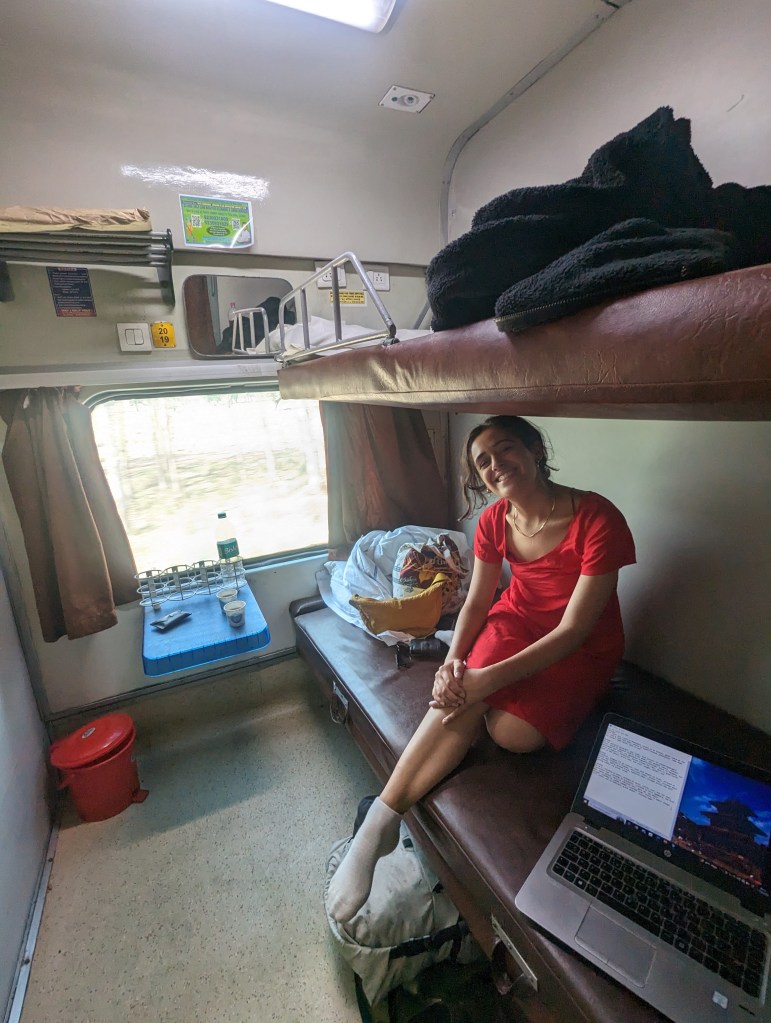
The train from Lucknow Central was at 8.10am, so we didn’t have a chance for breakfast before heading off from Hotel Ganga Maiya despite Vishnu’s protestations (hotel manager, not God). We found our train carriage with slightly less running and shoving compared to our experience at Jaipur, which again we had booked several months before. Our tickets were in the first class cabins, but for some reason Ellie and I had been put in different ones. We settled into our respective berths for an hour or so (the trip being around 5 hours), until the ticket collector came through and kindly juggled some things around to put Ellie and I not only in the same cabin, but in a private 2-person cabin all to ourselves.
The rest of the journey we spent here, flagging down the chai-vendors as they prowled up and down outside the cabins, and finally getting some lunch delivered from the catering carriage at around midday. The food was of course curry, served in a plastic tray like aeroplane food, with rice and a foil wrapped roti. It was surprisingly tasty and welcome after the morning’s accidental fast, and by the time we had finished we were nearing Varanasi Junction.
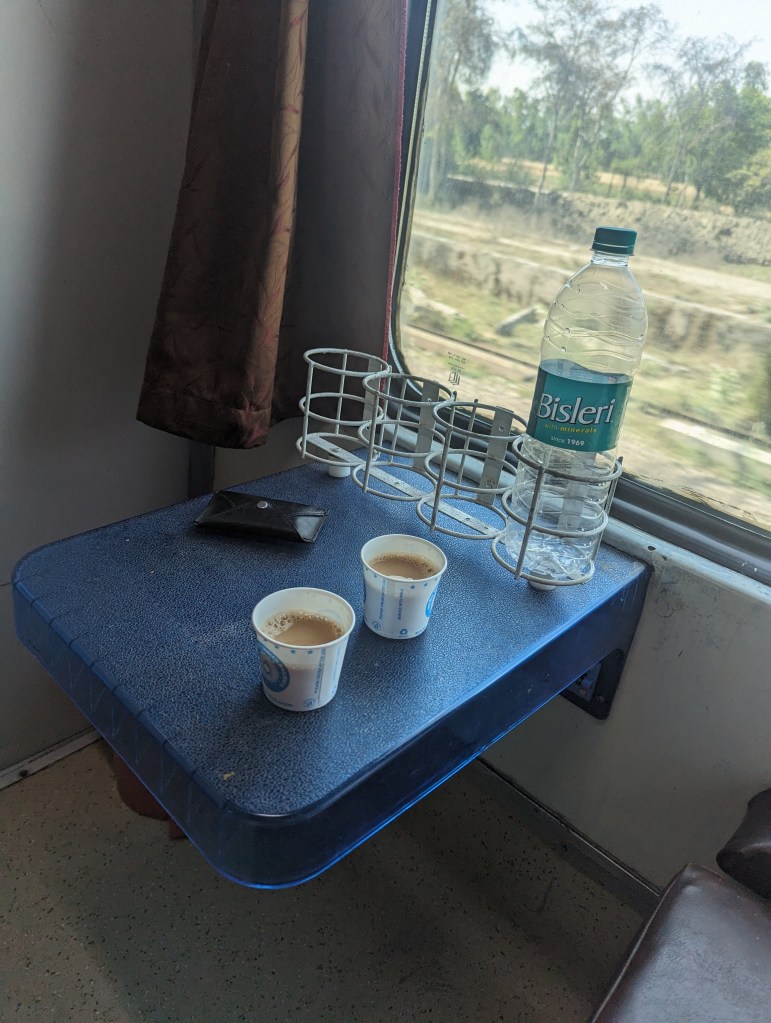
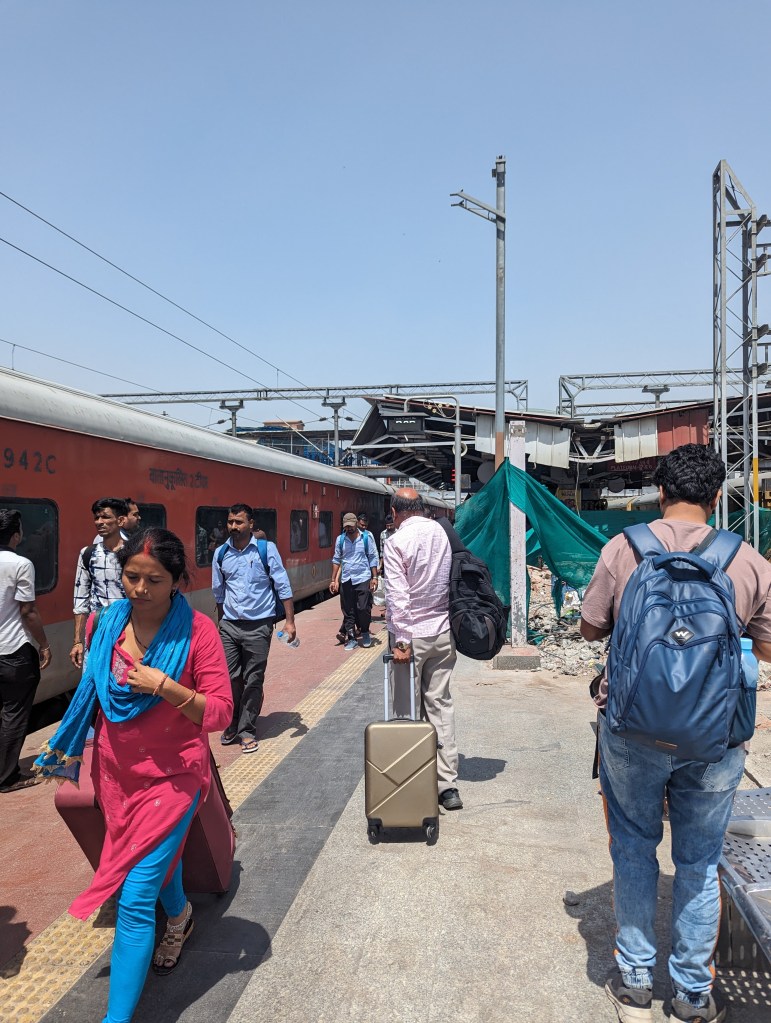
The train pulled into the station right on time at 1pm, and we ran the usual gauntlet of rickshaw drivers. Most of them offered outrageous mark-ups though one offered to “take us anywhere” for only 50/- (50p), which was somehow a significantly more unappealing proposition than paying through the nose. We found a driver willing to accept a semi-reasonable price, and headed off towards our homestay. Varanasi is centred around the western bank of the Ganges, where a stretch of bank for 2 miles or so is a continuous strip of different ghats (steps to the river). Extending back from here is the city itself, and our homestay was in a suburb about a 10 minute drive from the river. As with some of the other homestays we’ve been in, this can make it quite difficult for the rickshaw drivers to find but we managed to direct him with some pointing and waving and were dropped off outside of the Varanasi Homestay, run by our host Harish.
We were welcomed into the homestay by Harish’s son, who went through the usual signing in process and showed us to our ground floor room. Harish and his son also run a business exporting silks and other materials which clearly paid well as they kept a staff of several men who wandered around the place watering plants and tending to things, and the property was made from a big, lavishly decorated house for the family which also contained their shop, and another building with containing all the homestay rooms. Harish passed through briefly and gave us a warm hello, but clearly the man was busy and had limited time to talk at length to the guests (which we didn’t mind after the overbearing presence of Rijesh).
Travelling with the bags, even on a relatively short trip, was quite tiring and so we spent a few hours in the afternoon in the room enjoying the relative cool. Varanasi was (and remains) a grade hotter than Rajasthan, with the daytime temperatures reaching the low 40s. Once it had started to ease off slightly, we popped up to the rooftop terrace to get in some much needed exercise as it had been neglected recently what with stomach bugs and all the travelling, then went back down to the room to get ready to go out.
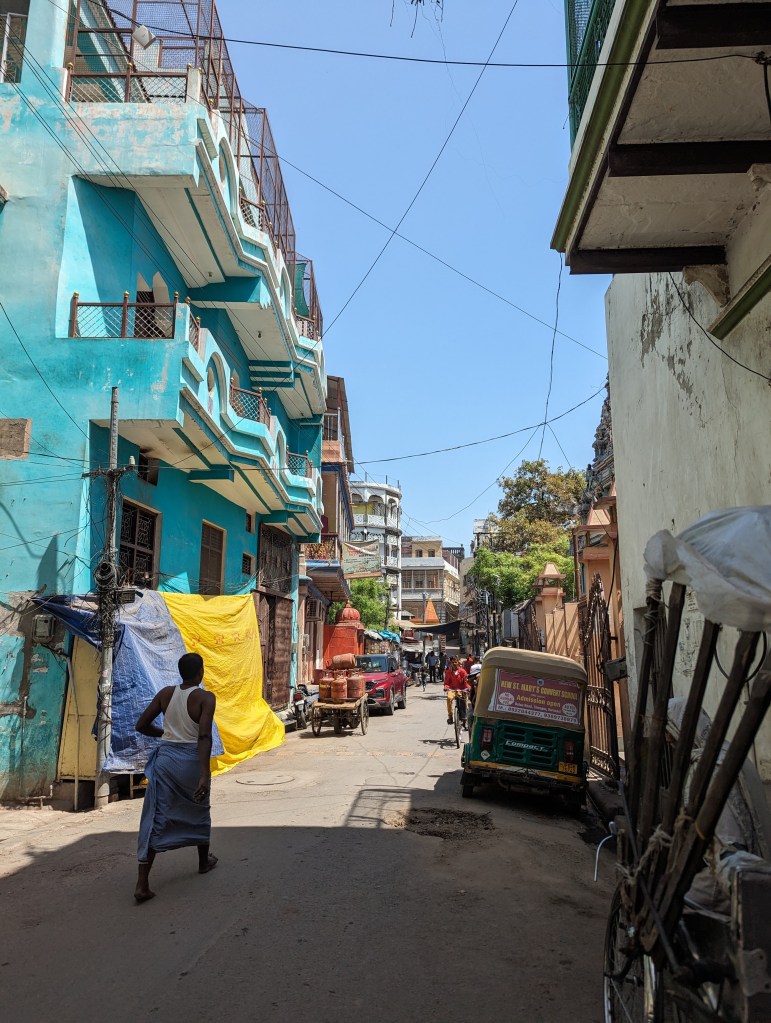
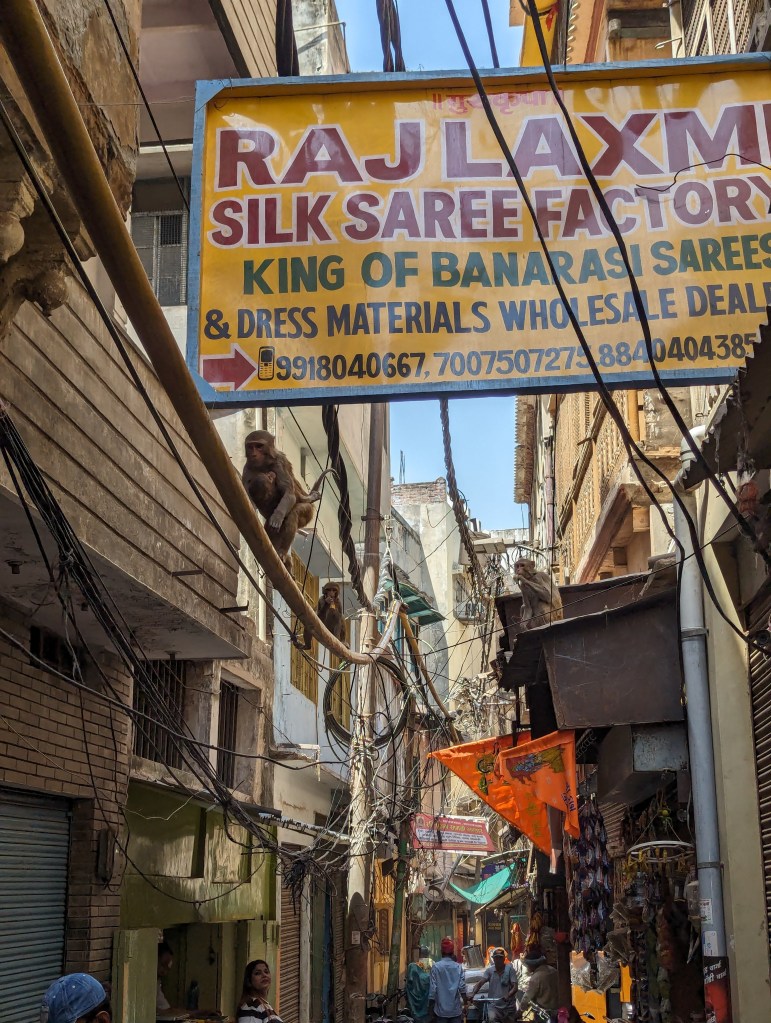
We headed out, aiming for a restaurant that had been recommended in the guidebook as having a nice view over some of the main ghats, and having reasonable food. The rickshaw took us through the backstreets of Varanasi and, as we approached the ghats, the streets became choked with cars, rickshaws, pedestrians, push-bikes, horses, and vegetable carts all trying to get through. The rickshaw driver gave up trying to get us any closer, and we went the rest of the way by foot.
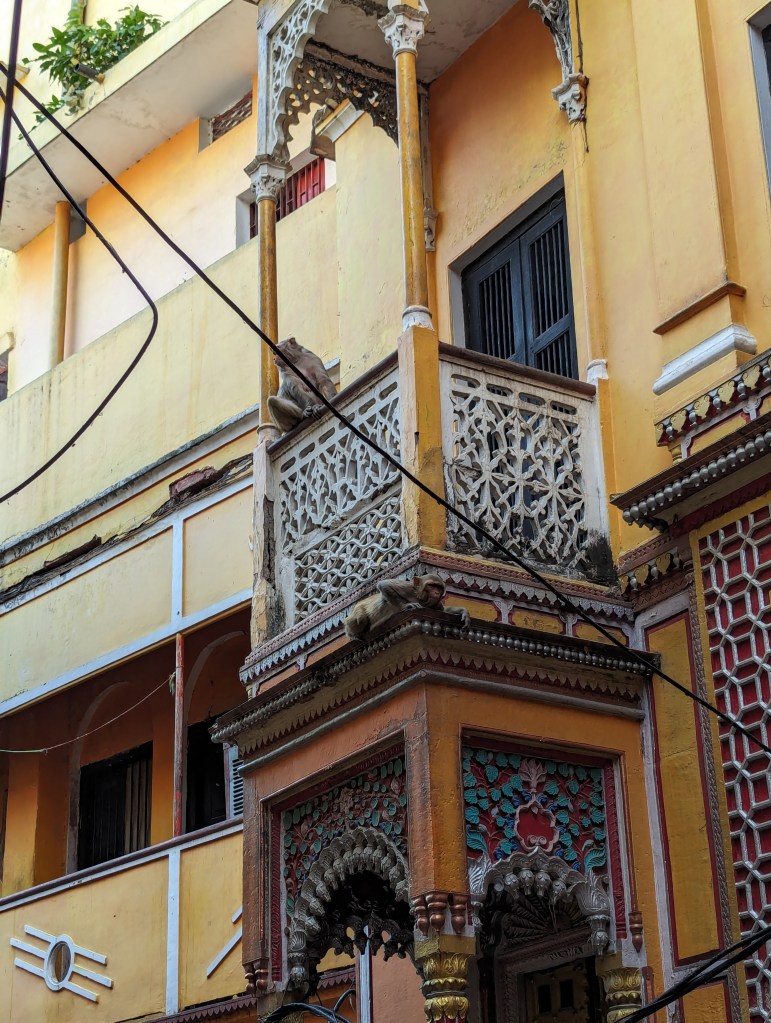
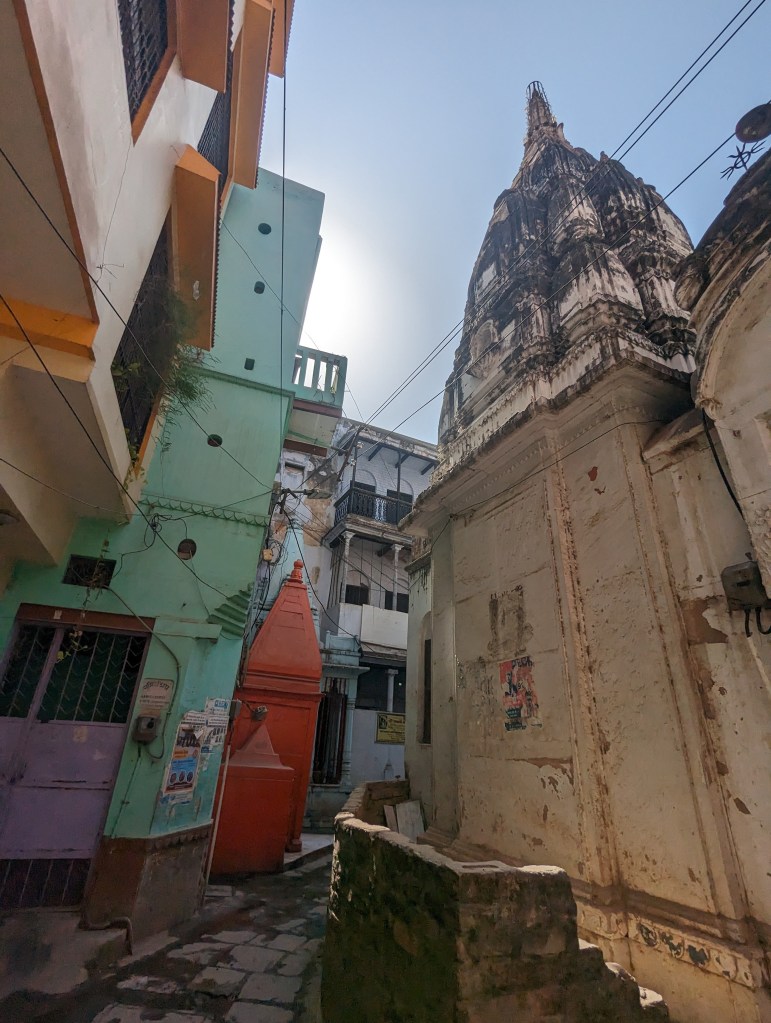
It atmosphere is difficult to describe, and hopefully some of the photographs will help. It was late dusk by the time we approached the ghats on the banks of the Ganges, and we walked with a swell of people towards the river. Largely, the crowd consisted of Hindu pilgrims in usual clothing, but there were also a number of Sadhus and holy men (though in Varanasi the beggars dress in the same way) in their orange or black robes, some with their faces painted white with ash, others with necklaces of miniature skulls around their necks.
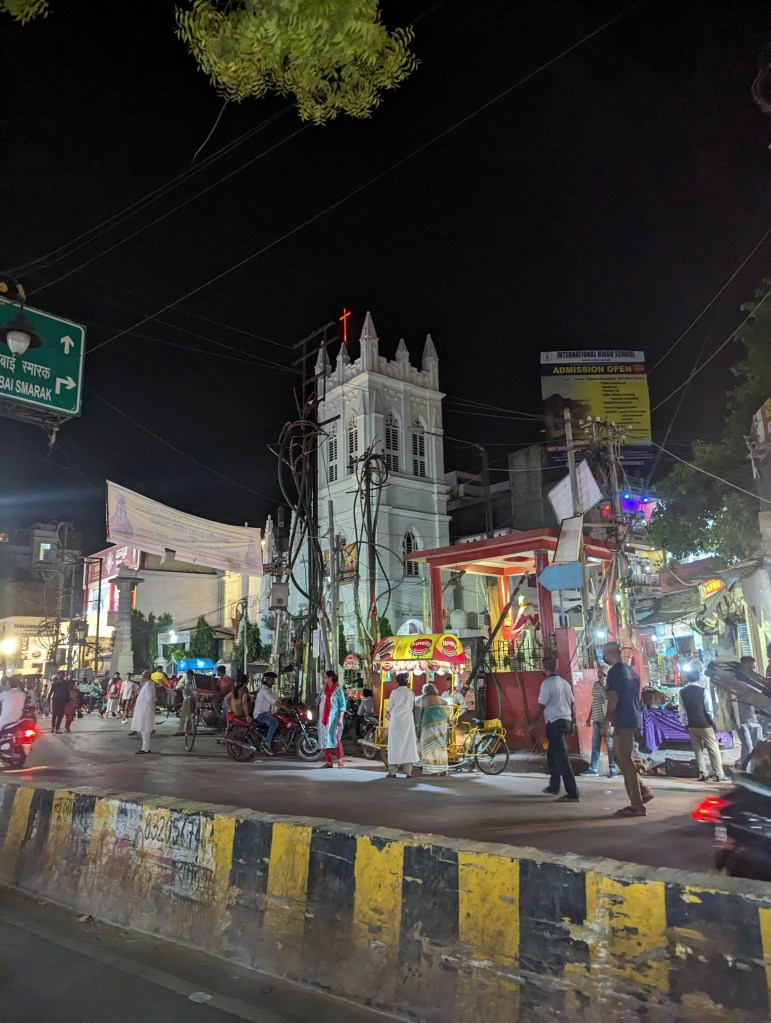

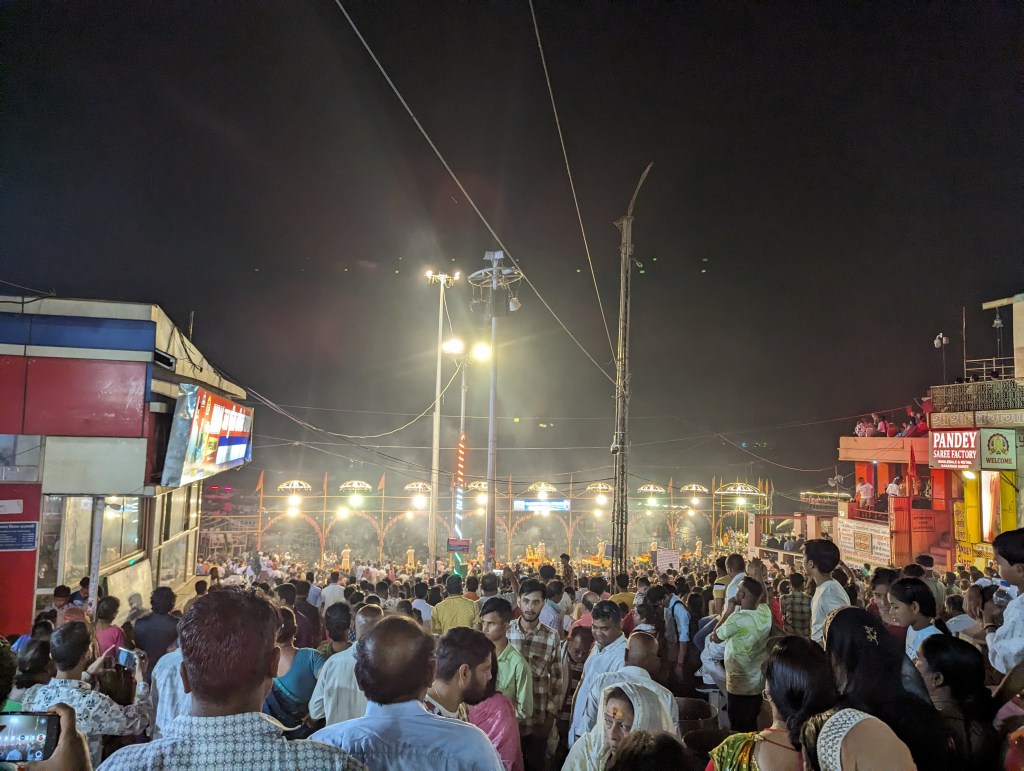
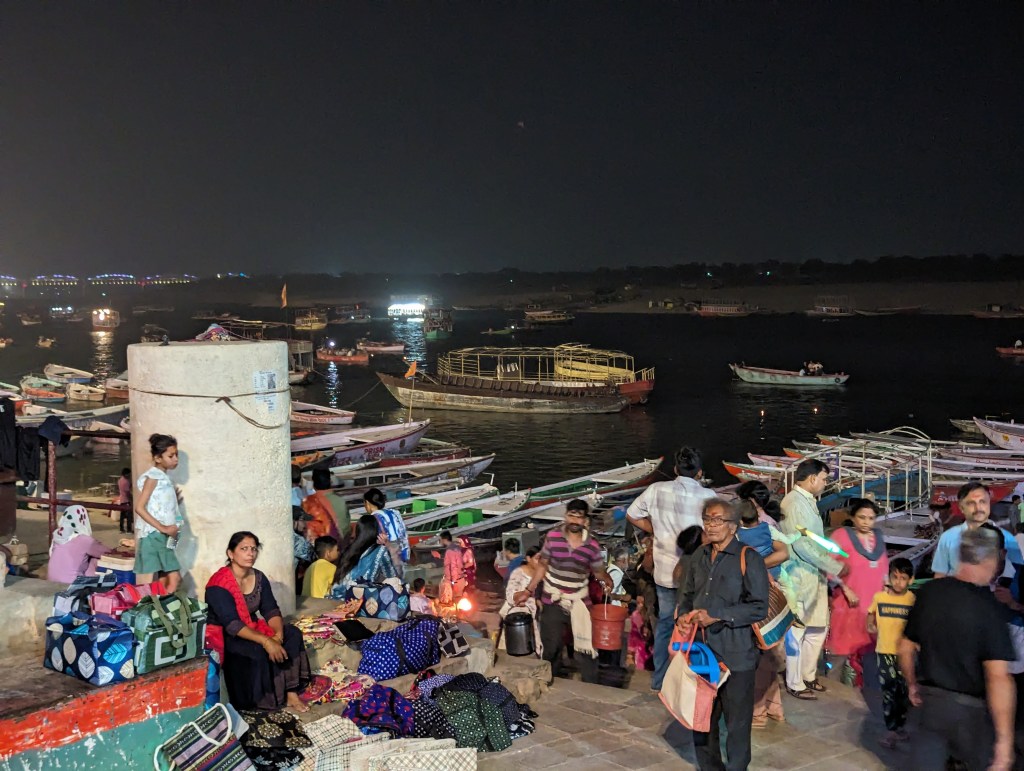
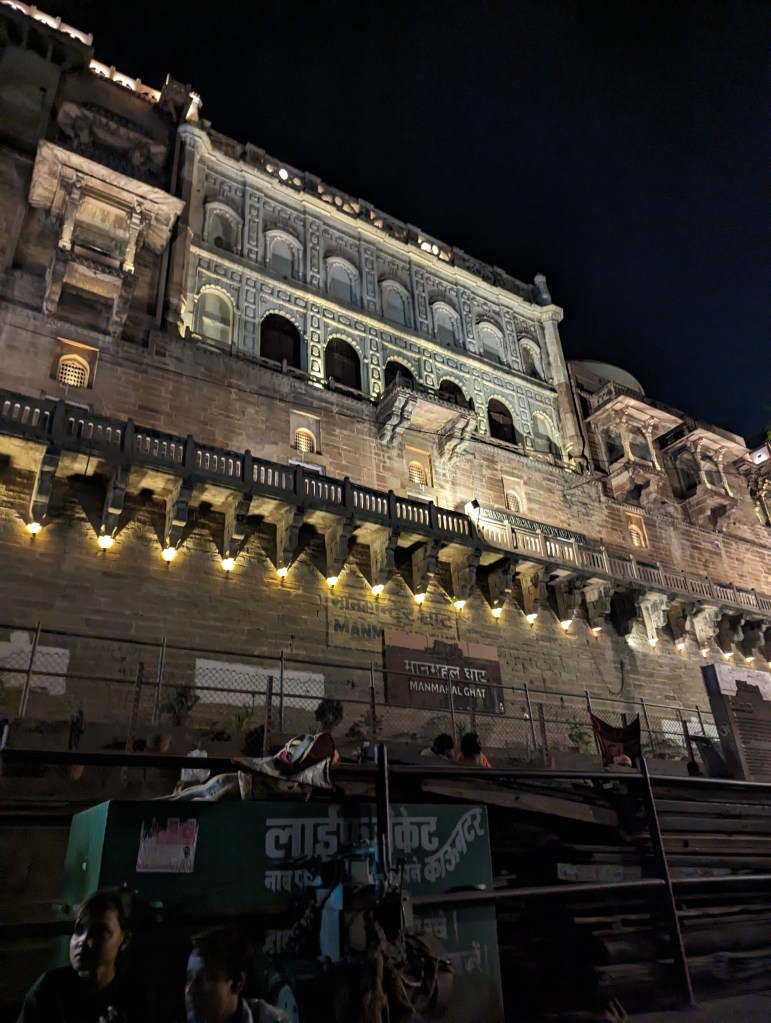
It was magical seeing the Ganges for the first time from the top of the Dashashwamedh ghat steps as below the fire (aarti) ceremonies begun to worship the Ganga personified as a goddess on a crocodile mount. We cut around a corner to reach the banks of the river another way as it was impassible via the steps of the main ghat. Soon, we found the restaurant we were looking for – one of the classic Indian restaurants largely for tourists previously described with Indian and Chinese menus, and more waiters than customers (which wasn’t difficult given we were the only people there). The food was pretty good, however, and they served illicit cans of beer that you’re not supposed to be able to get on the ghats.
Once we had eaten, we walked for a short time down the ghats to the south to soak in the atmosphere. The aarti ceremonies had finished by this point, and a lot of people had started to drift away. Even so, the steps down the river were still lively. Boys played badminton and cricket on the broad walkways, and there were lines of brahmin priests under umbrellas who could be rented to any pilgrims that needed a ceremony conducted by or in the river. All around people milled about, some swimming, some giving offerings to the hundreds of shrines and temples lining the river bank.
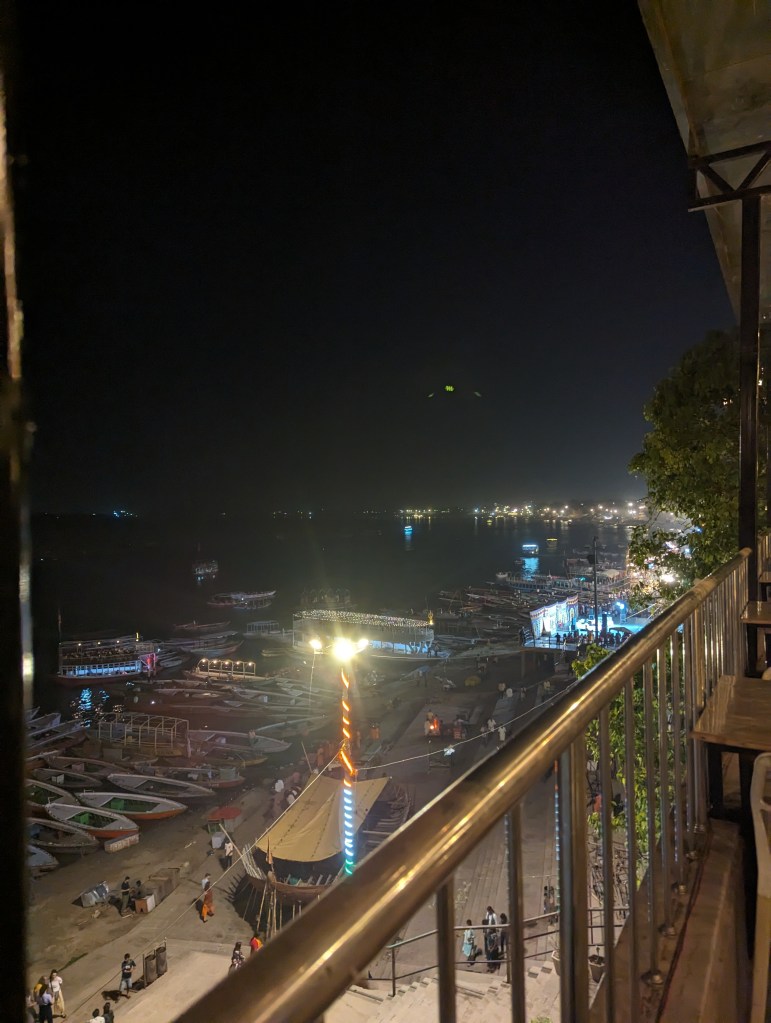
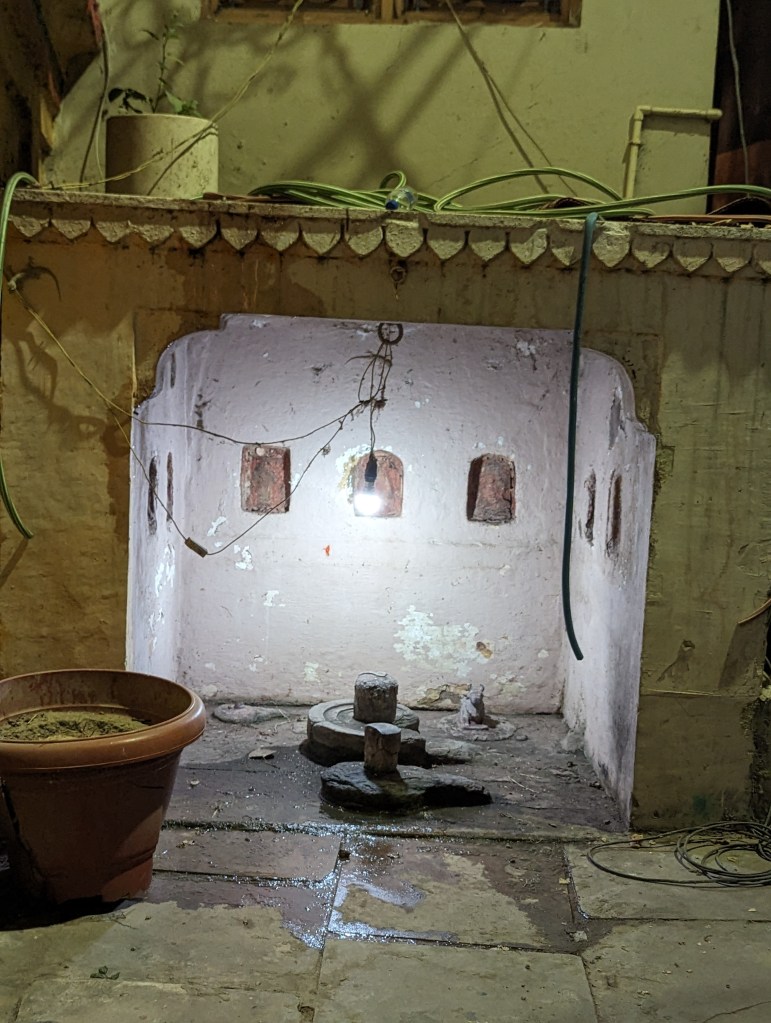

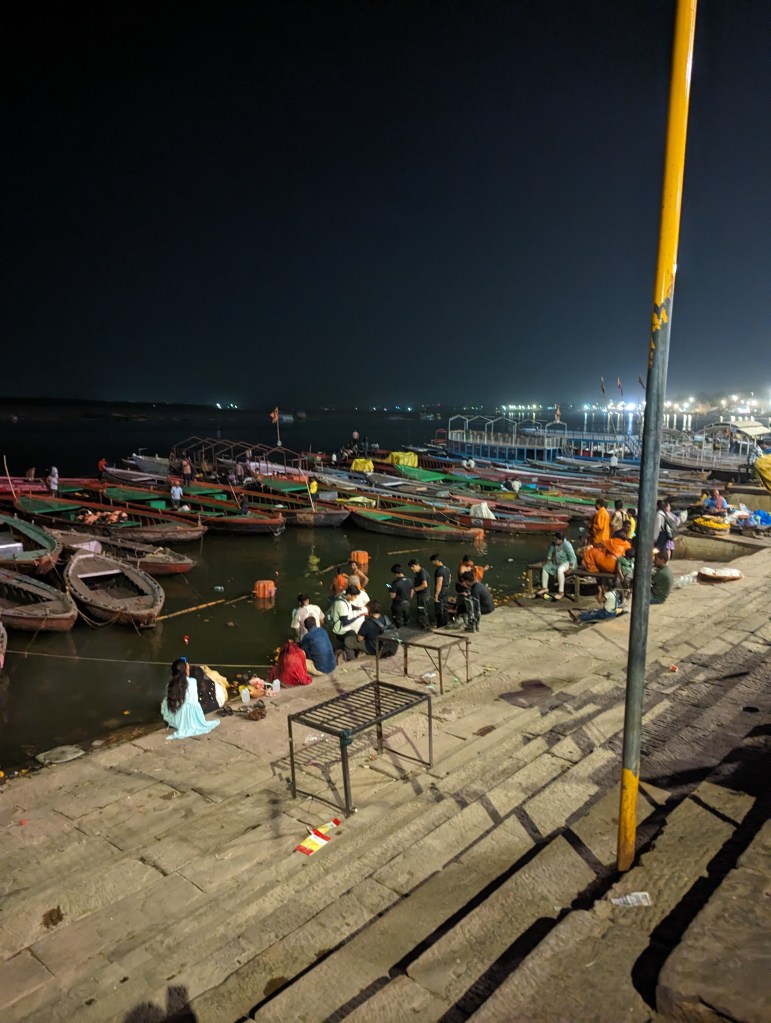
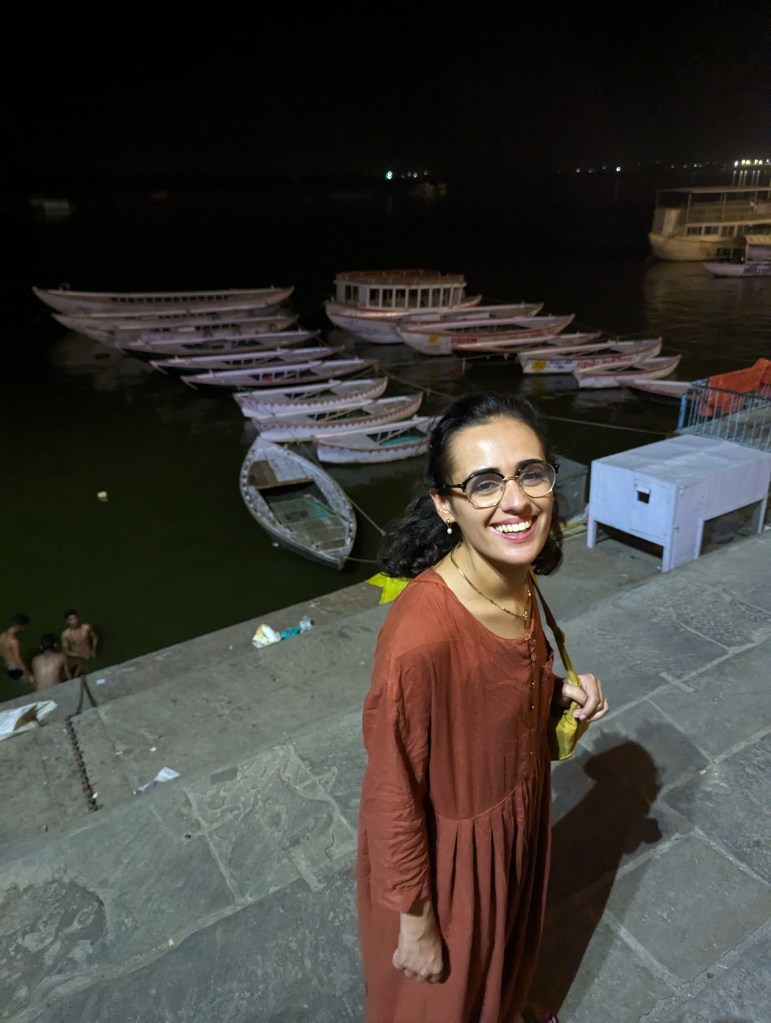
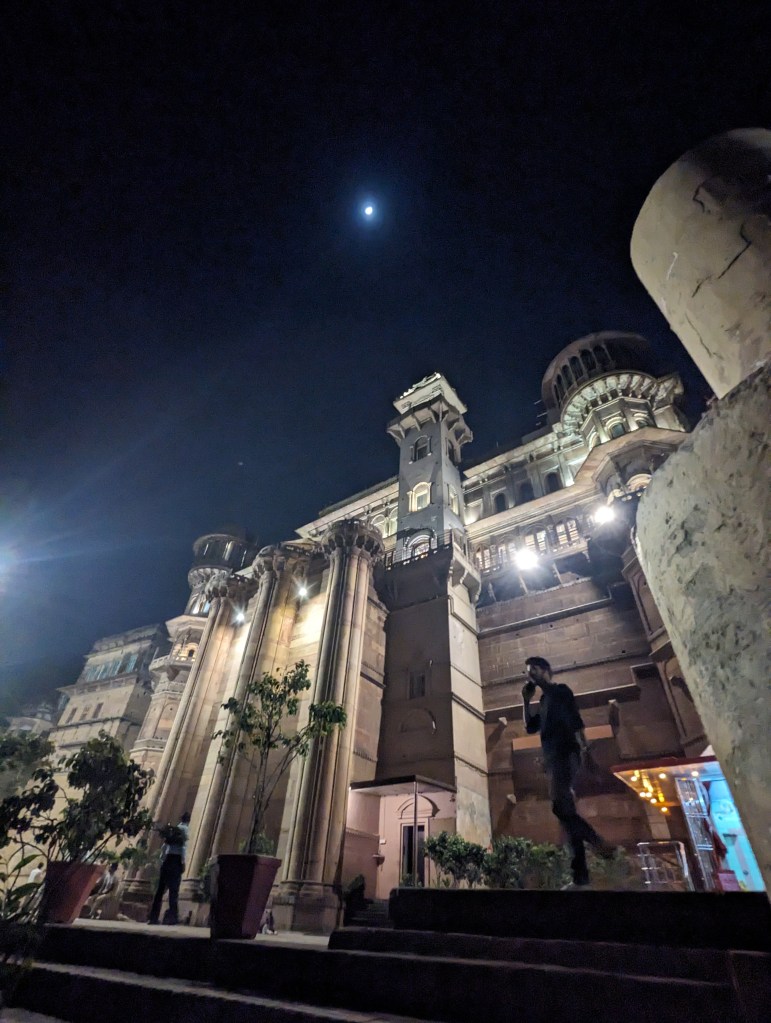
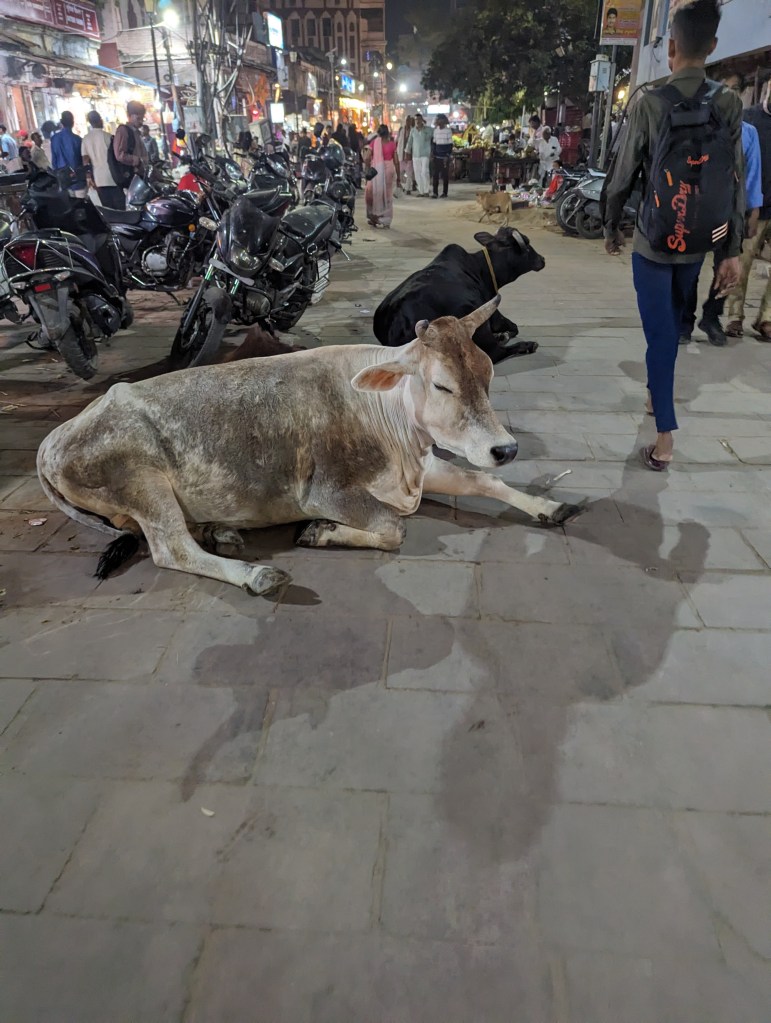
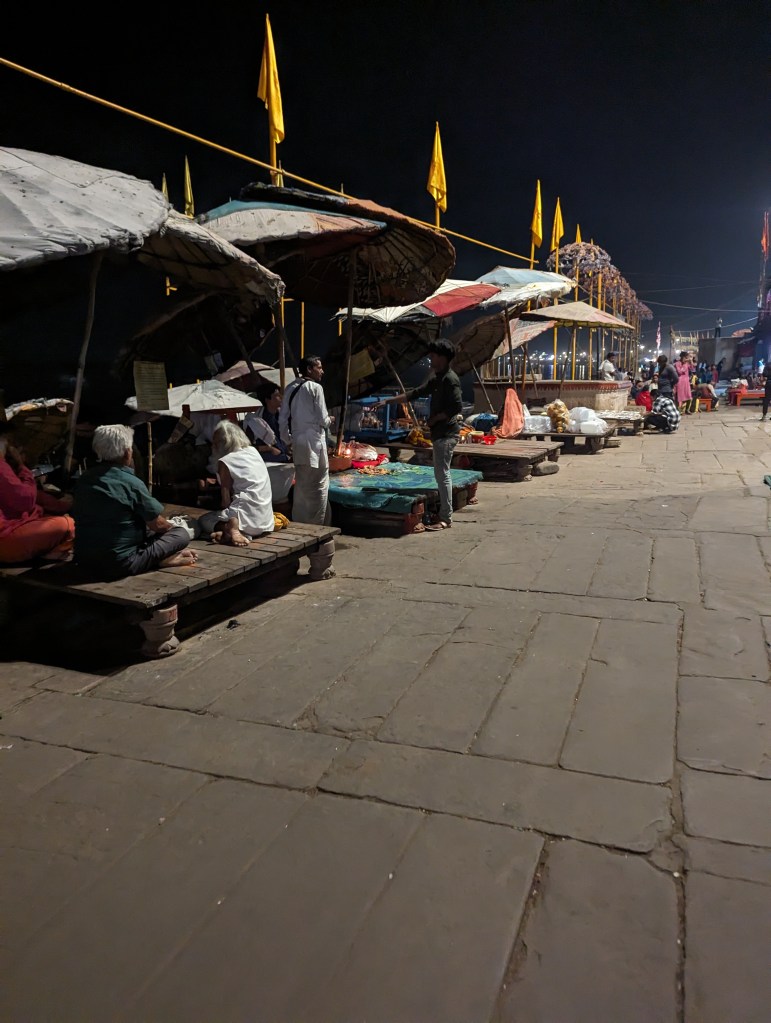
We circled back to Dashashwamedh ghat and found a rickshaw. The rickshaw driver looked non-plussed at the names of any location I gave him near our homestay (rickshaw drivers in India in general aren’t like cabbies in the UK, they tend to rely on the punters to direct them to the destination). He was keen, however, not to lose our fare and so instead sat me upfront next to him and we made our way back via Google Maps on my phone. Although we had only been out for a short time our initial impression of Varanasi was overwhelmingly positive, and we looked forward to more exploration the following morning.
Thursday –
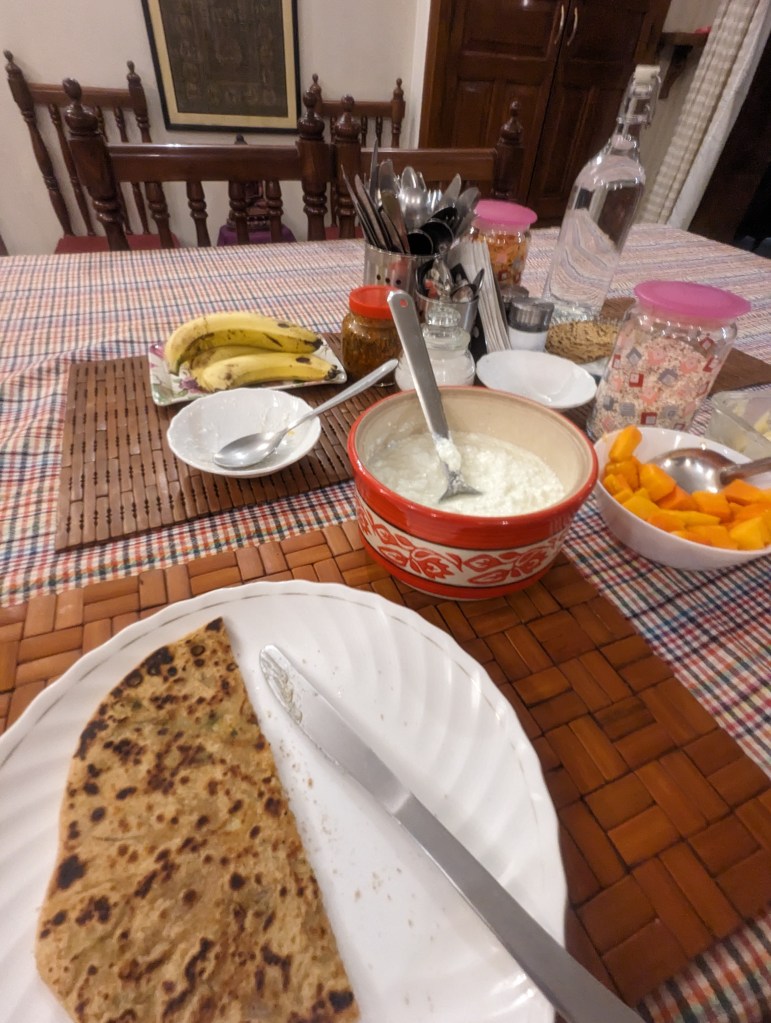
On Thursday morning we’d arranged to have breakfast at the homestay, so we made our way up into the main house for 8:45am. Our breakfast table was set and again it struck us how well Harish’s silk business must be doing, because the dining room was large and beautiful, with ornately carved heavy wooden alcoves around all walls. It was just us at breakfast, other then who we assume to be Harish’s daughter-in-law bringing out food and a brief ‘I hope you slept well’ from a smiley but busy-looking Harish passing through. The peace and lack of observation were again welcome and we were served fresh papaya which practically melted in your mouth, a huge bowl of curd, toast with my highlight of homemade apple and cinnamon jam and aloo parathas – flatbreads stuffed with potato and onion. Happily full, we headed out to meet the the guide and driver Harish had arranged for us on his doorstep.

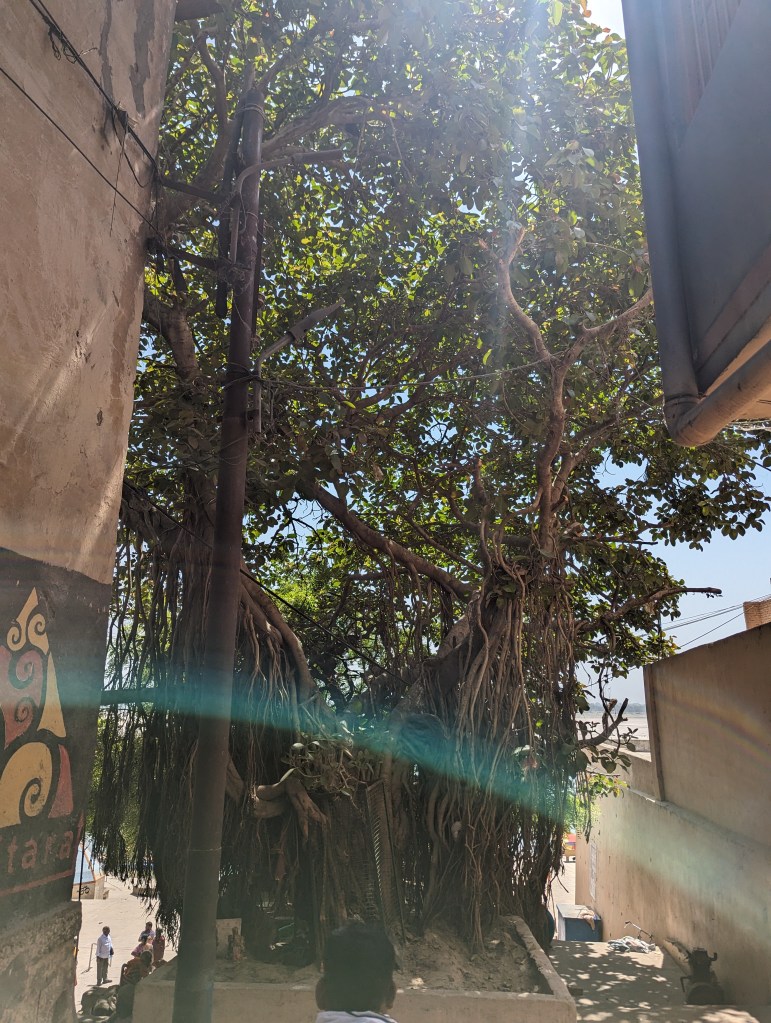
Harish’s message when we asked for a walking tour had informed us that we had ‘their best guide’ and he seemed like a man who would employ a heavy vetting process, but we remained a little nervous after a few guides in a row that frankly we’d have paid to cut the tour a bit shorter. This time, however, a sweet man with perfect English stepped out of the car, shook our hands and explained both the plan for the morning and his various qualifications in tourism and we knew we had broken the curse. We were all dropped near to the ghat area and we walked to through the southern ghats, with our guide (we’ve sadly forgotten his name!) giving just the right amount of information about the various shrines, traditions, and areas of Varanasi streets inhabited by people from different parts of India complete with shops and restaurants selling Tamil Nadu or Bengali cuisine respectively. We passed practicing young wrestlers who chatted to the guide, Banyon trees with small shrines people were pouring water from the Ganges in front of and buskers with Rajasthani puppets on the river banks.
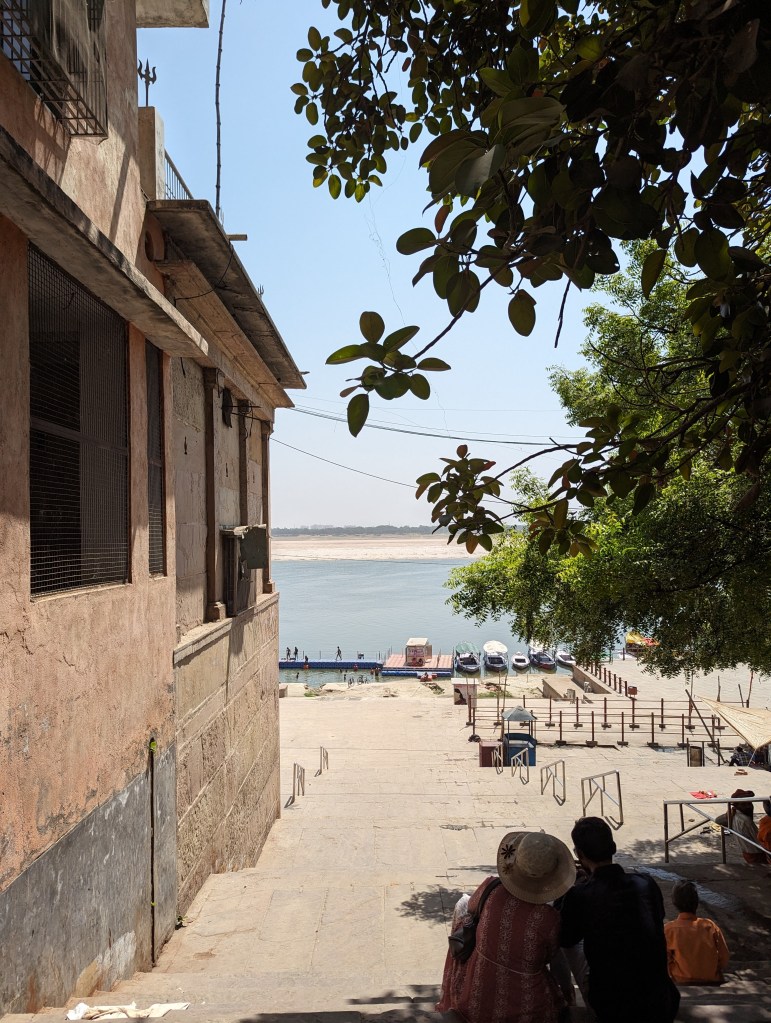
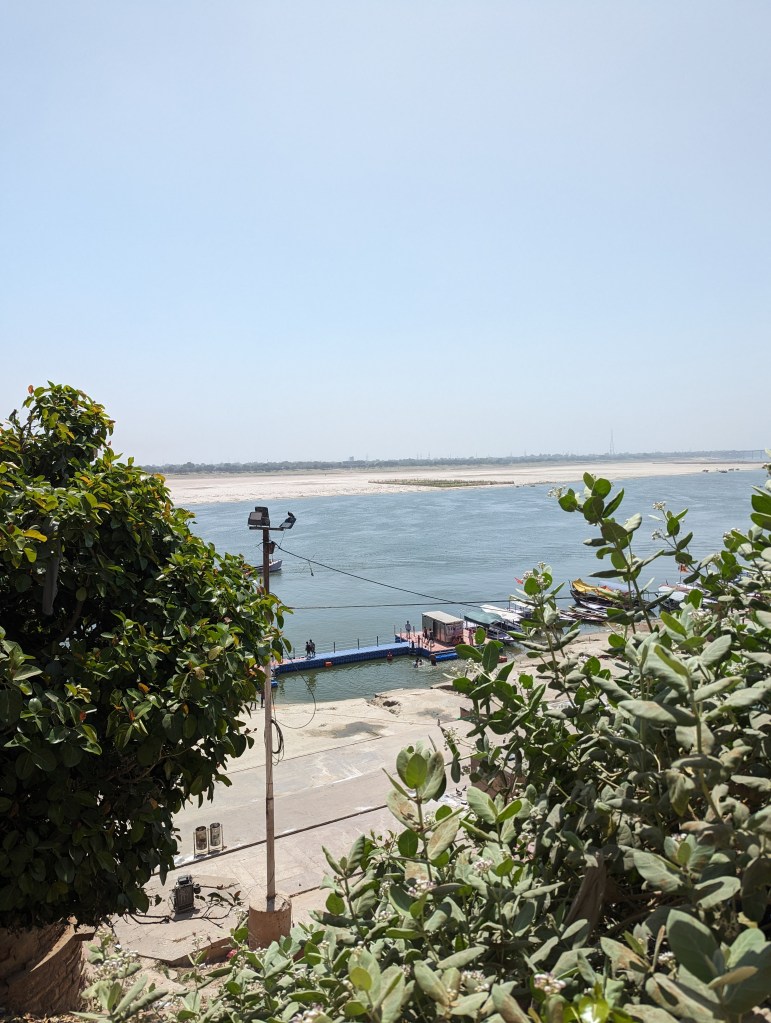
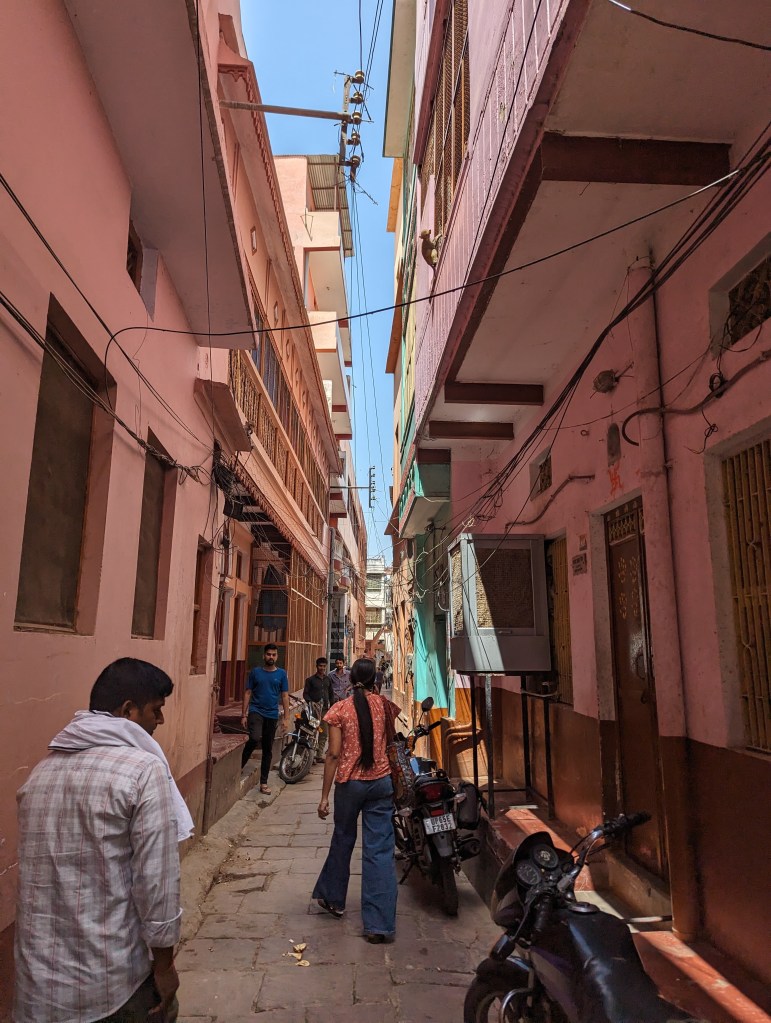
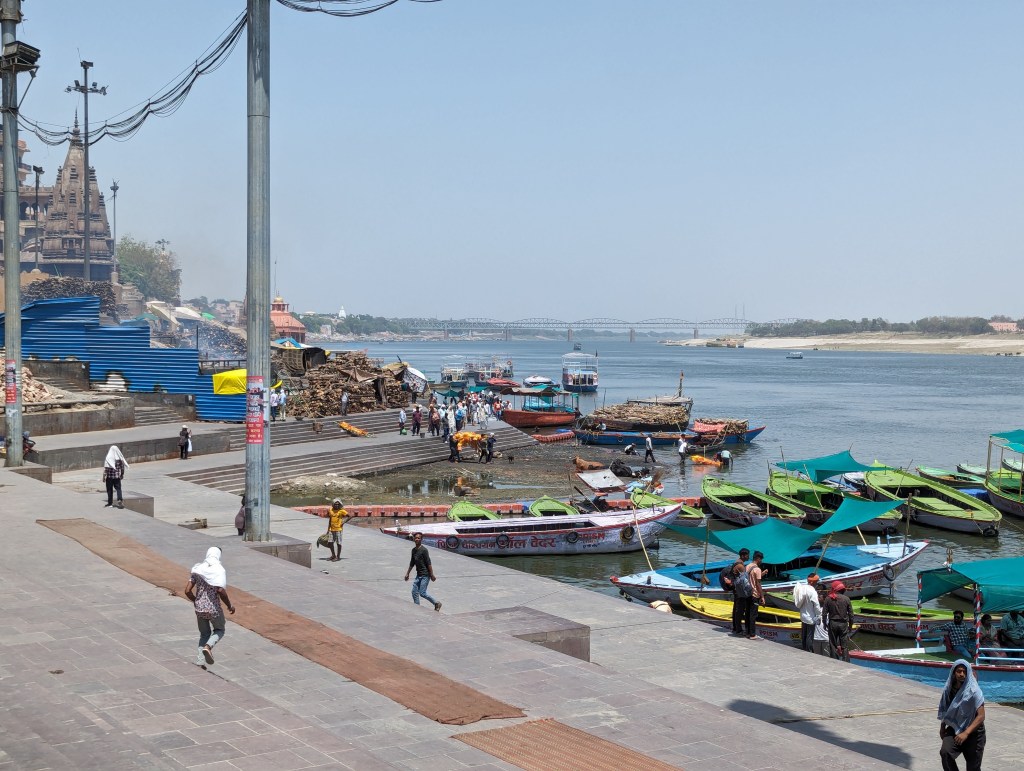
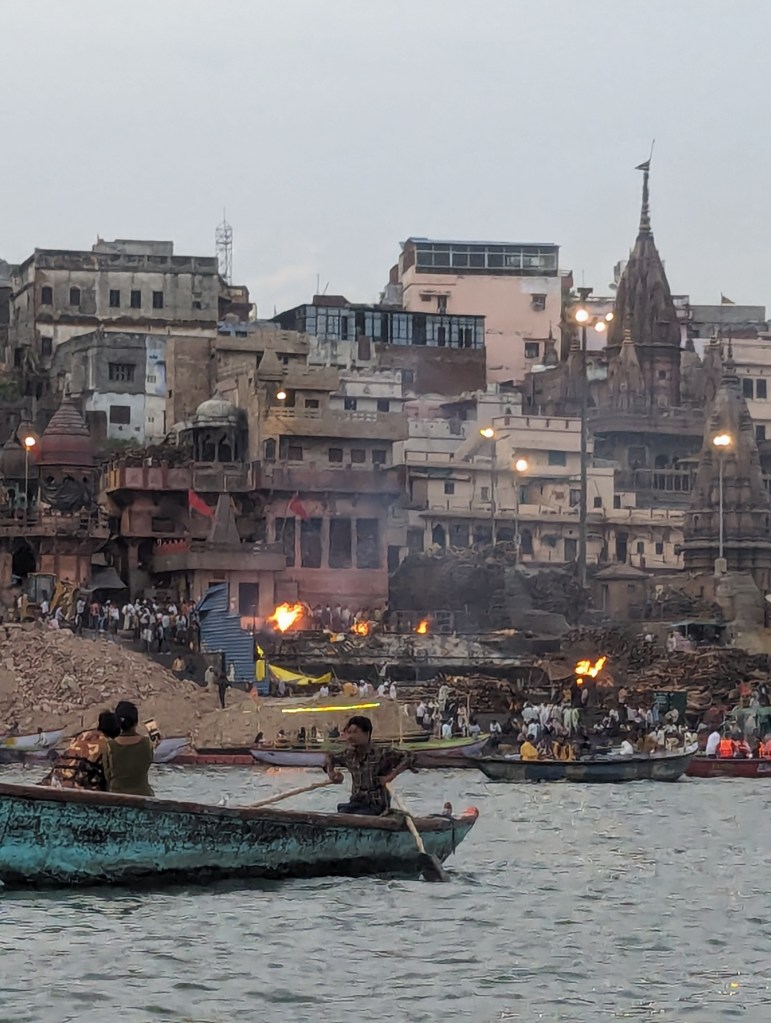
Before long we arrived at Harishchandra ghat, the smaller of the two ghats used for Hindu cremations. At the end of the street leading down to the ghat, we saw a boy who can’t have been older than 15 having all but 1 tuft at the back of his head shaved in front of piles of wood being sold to families for the cremation and the construction of bamboo stretchers used to carry the bodies. Our guide explained that the male who was the remaining head of the family would have his head shaved in this way prior to the cremation. We walked down onto the ghat itself and stood just above the area where 2 bodies were wrapped in yellow and gold scarves surrounded by male relatives of all ages, the youngest ones looking maybe 7 or 8.
One of the bodies was washed in the ganges, and the other was already laid on a pyre of wood. The colorful scarves were removed from the body on the pyre leaving only white ones and more sticks were placed on top by relatives. The boy who we had just seen having his head shaved, wearing white cloths, walked down to the river and led what looked like 3 younger brothers around the body of presumably one of his parents on the pyre around it 5 times, as our guide told us is custom. The fire was lit and all of the relatives walked away, as we were told it is believed if they stay near the fire will take longer to burn completely due to the attachment between the nearby relative and the deceased. Meanwhile, the body which was being washed when we arrived was being placed on pyre just a metre or so away from this one and the same process being repeated by an shaven-headed son there.
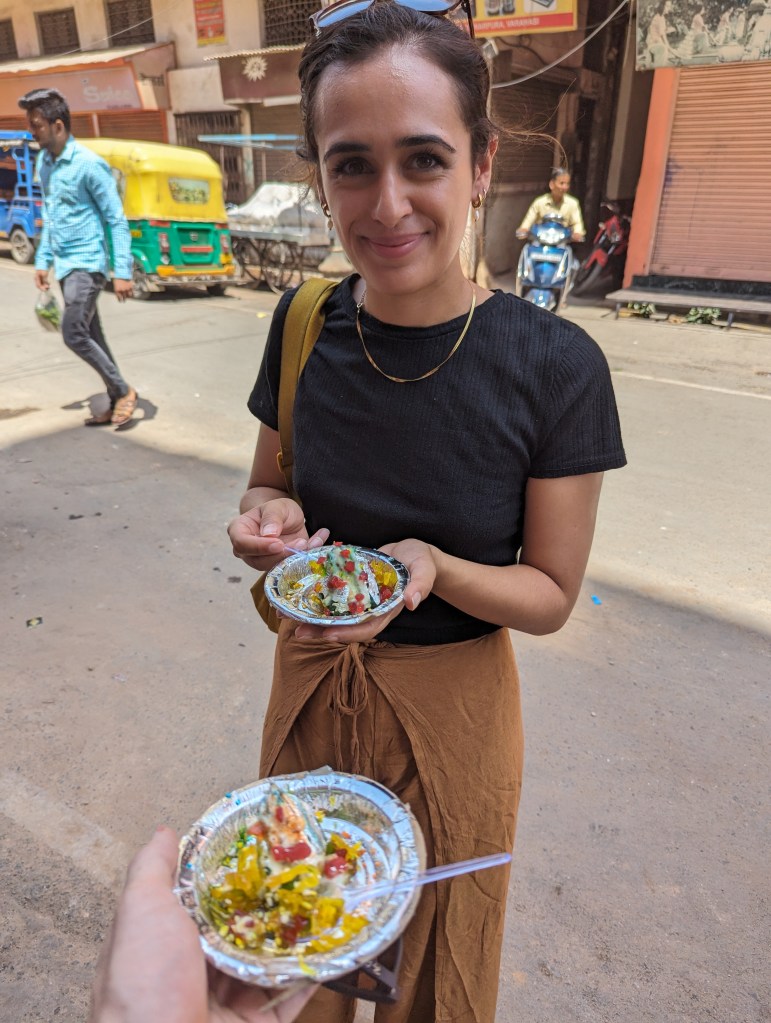
(I, Rob, have taken over from Ellie here as we are now on the train to Kolkata and Ellie is nursing a stomach bug from yesterday evening). Once we had seen the second funeral pyre lit, we walked away from the river and towards the tiny backstreets of the ghats area. We stopped off to try a classic North Indian mouth-freshener of little jelly sweets surrounding a beetle nut leaf containing fennel seeds and an aniseed paste. The flavour was a little overwhelming, but it was as fresh as brushing your teeth.
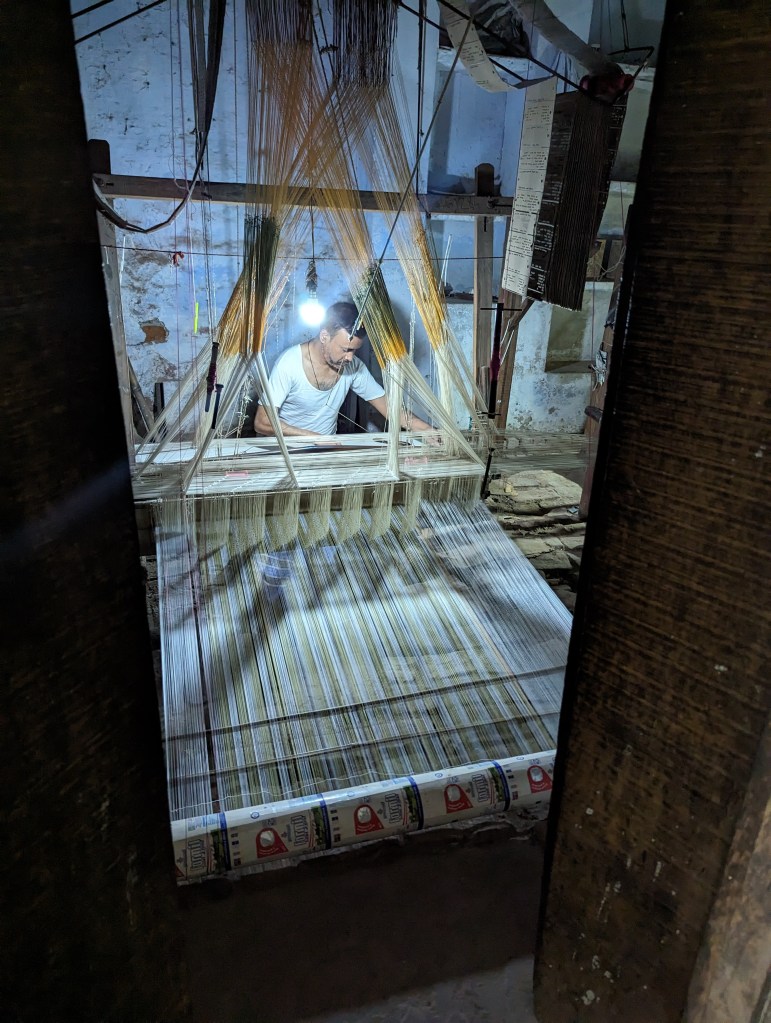
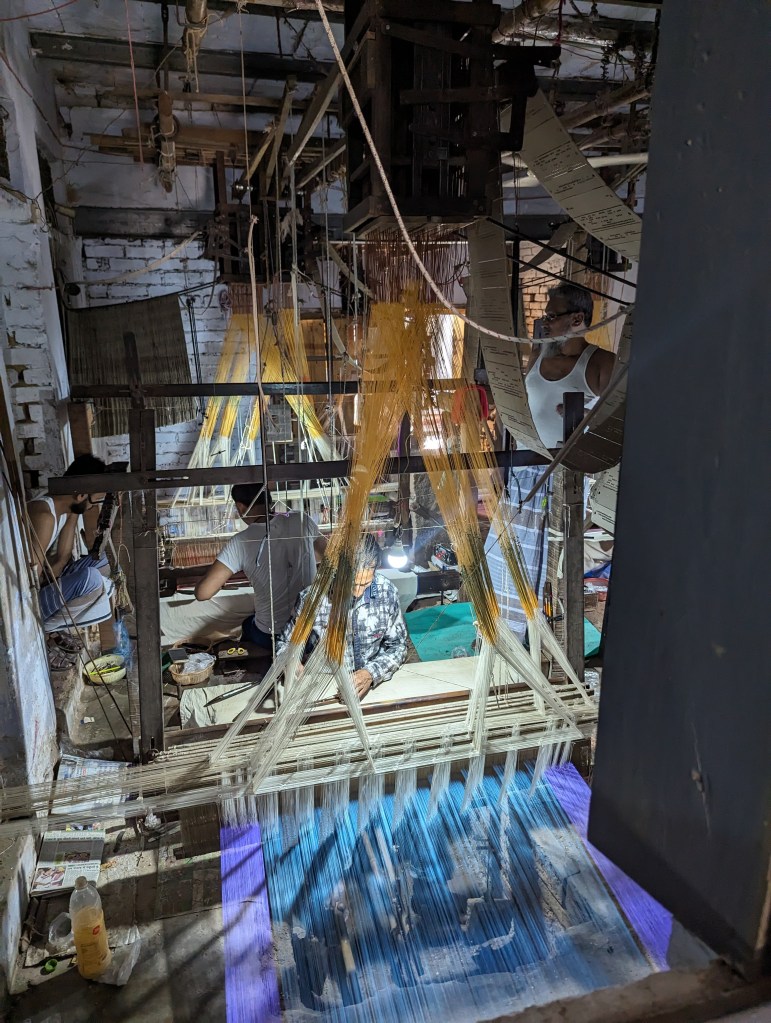
Our guide took us to the Muslim quarter where saris were being woven by hand on looms in the semi dark. It was incredible to see the way the different colours were threaded through the white material to make intricate patterns on the hems and edges. The weavers, who were all men, took no notice of us, asked for no money, and didn’t try to get us to buy anything. We had been out for a couple of hours by this point, and the day as beginning to heat up. We took a small break at a tea shop where I got a surprisingly good americano from an ancient espresso machine that was practically hand-cranked, and Ellie a cup of chai which used freshly ground cardamom and cloves rather than the usual spice powder.
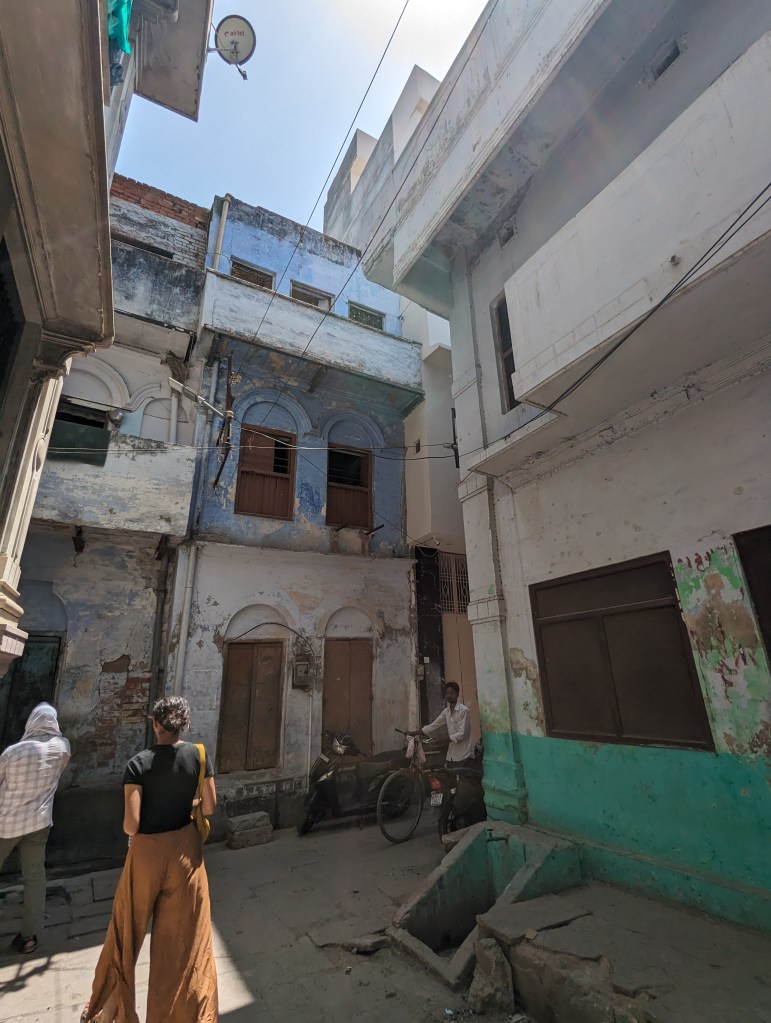
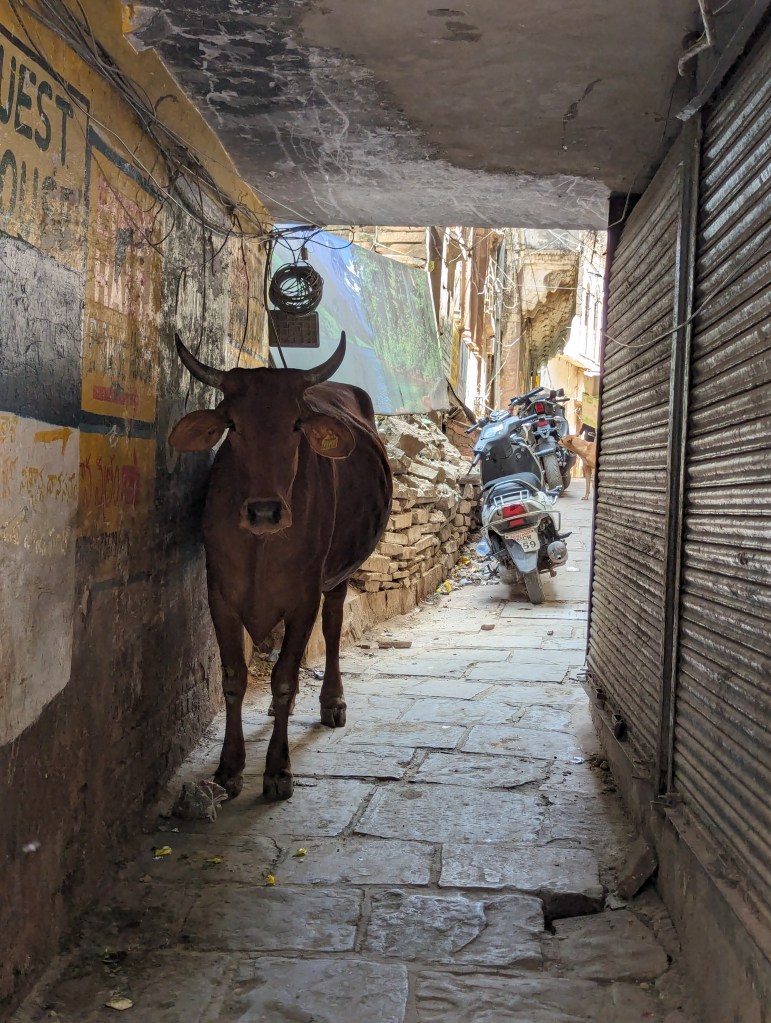
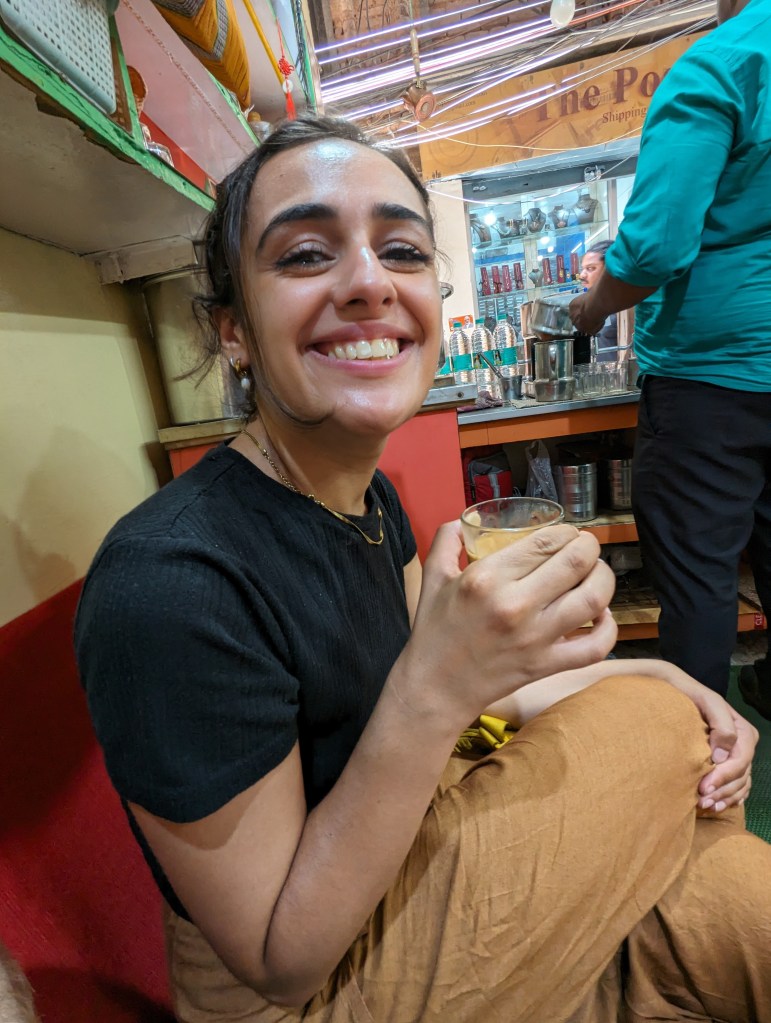
Setting out again, we walked back out to the more northern ghats, passing through the main Dashashwamedh ghat we had been to the previous night. Heading north from there, we made our way to the larger burning ghat, Manikarnika ghat. Here, there were always several bodies on pyres at any given time, which were partially hidden by a rocky embankment leading to the water’s edge.


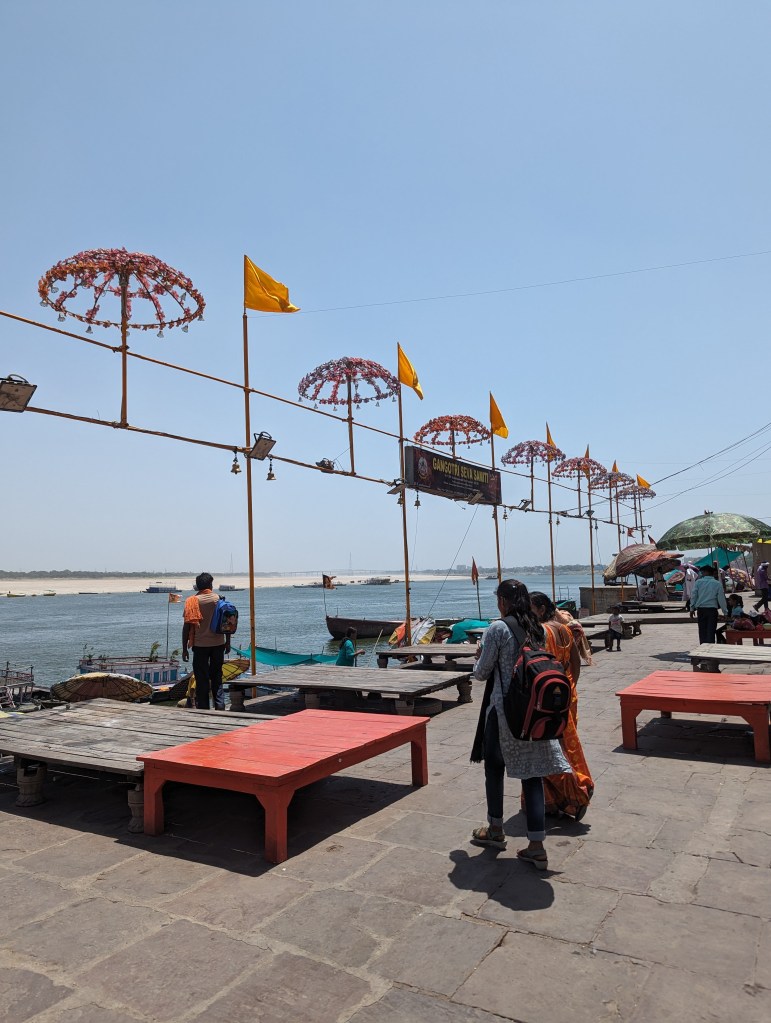
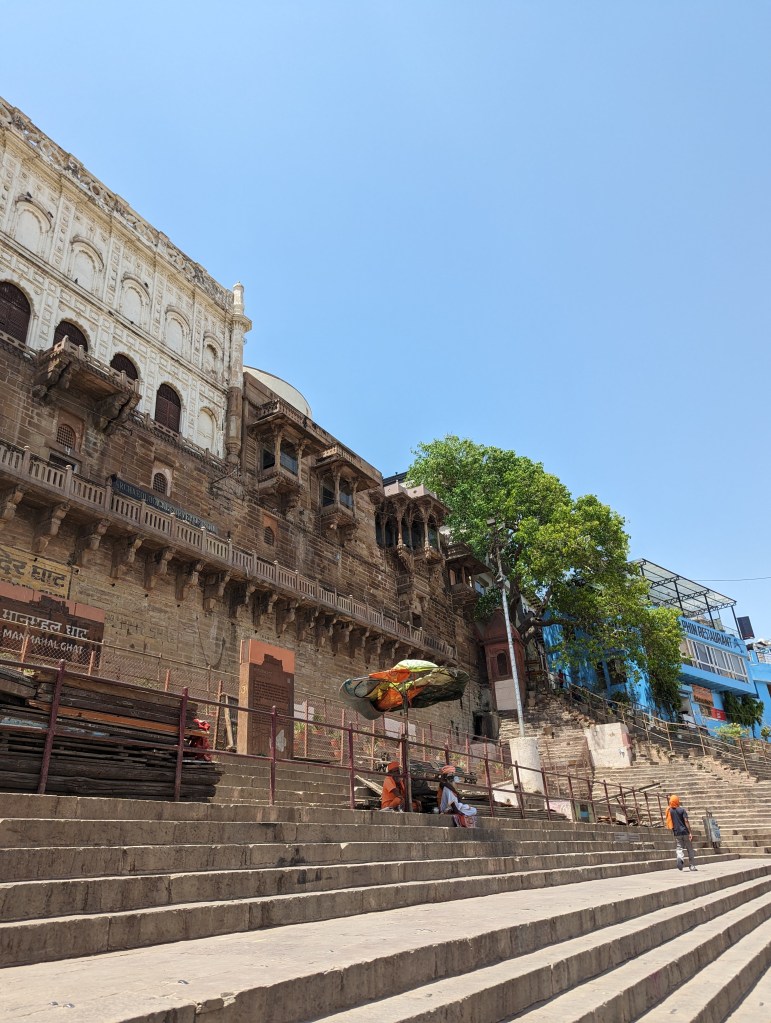
Another major site of pilgrimmage in Varanasi is the Shri Kashi Vashwanath temple. This was just inland from the Manikarnika ghat and was a temple dedicated to Shiva. Although most of the temples in Varanasi are relatively new as any old Hindu temples were destroyed by Islamic conquests, the site the temple was built on was sacred to Shiva, and the city of Varanasi itself was dedicated to Lord Shiva by whom, it was said, the waters of the Ganges were calmed as they flowed out from their source at the top of his head. It was a rigmarole to get into the temple itself, requiring passport and visa proof and a big queue, but around the complex there was an immaculate plaza with clean toilets and a food court that we walked through.
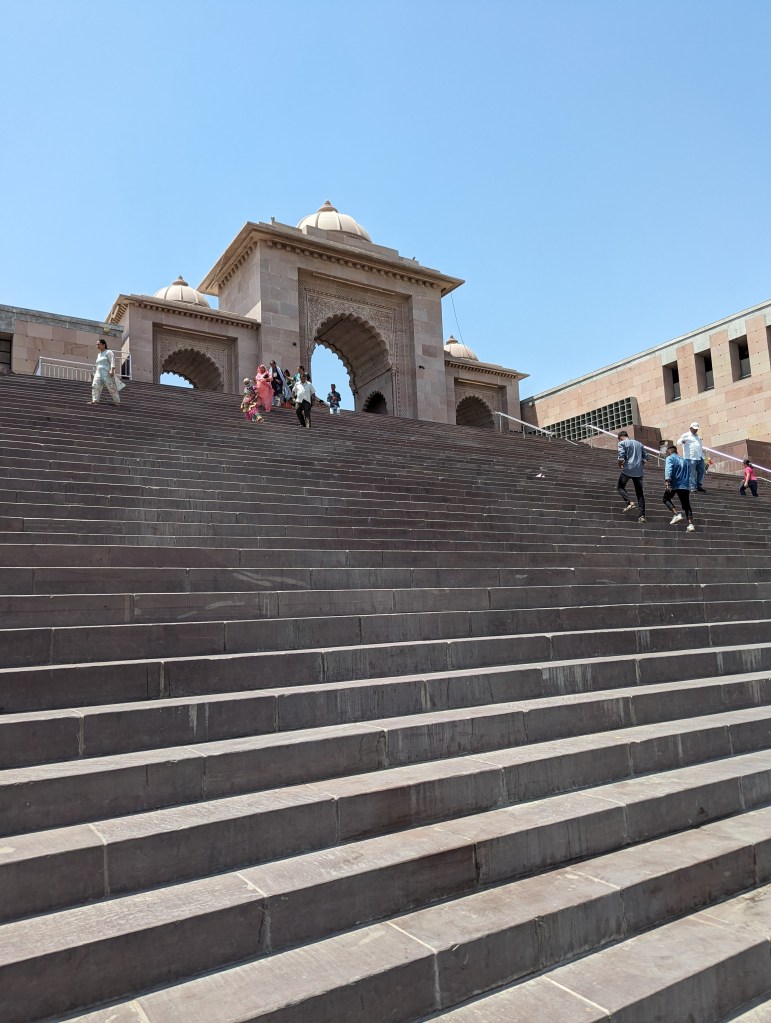
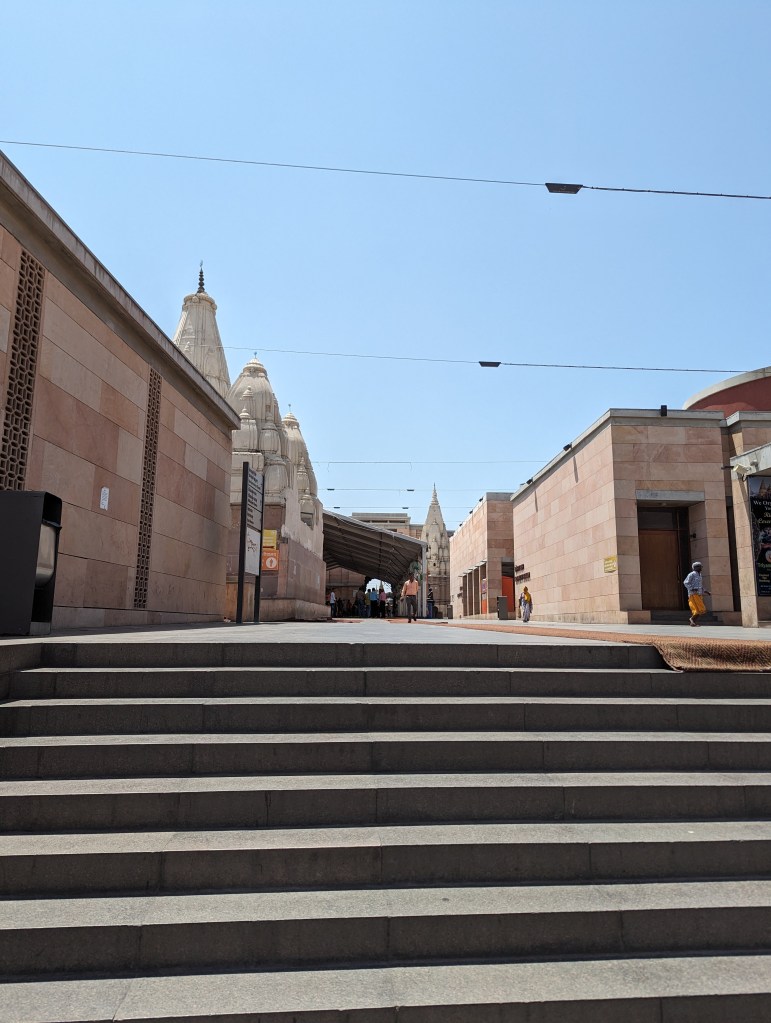
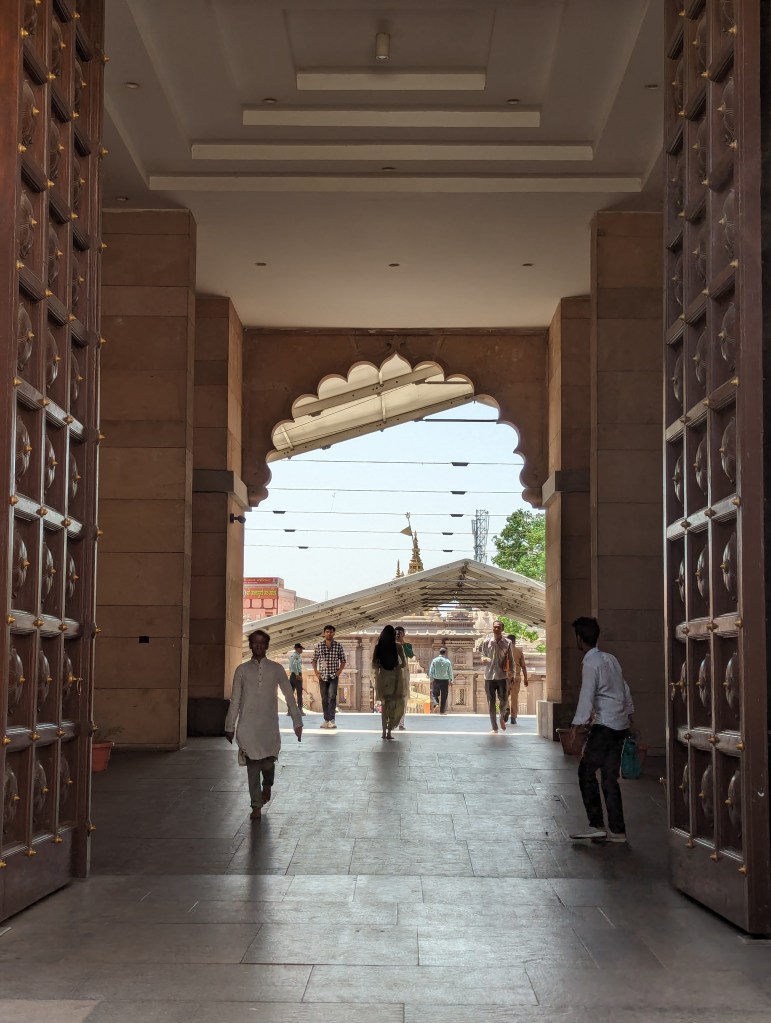
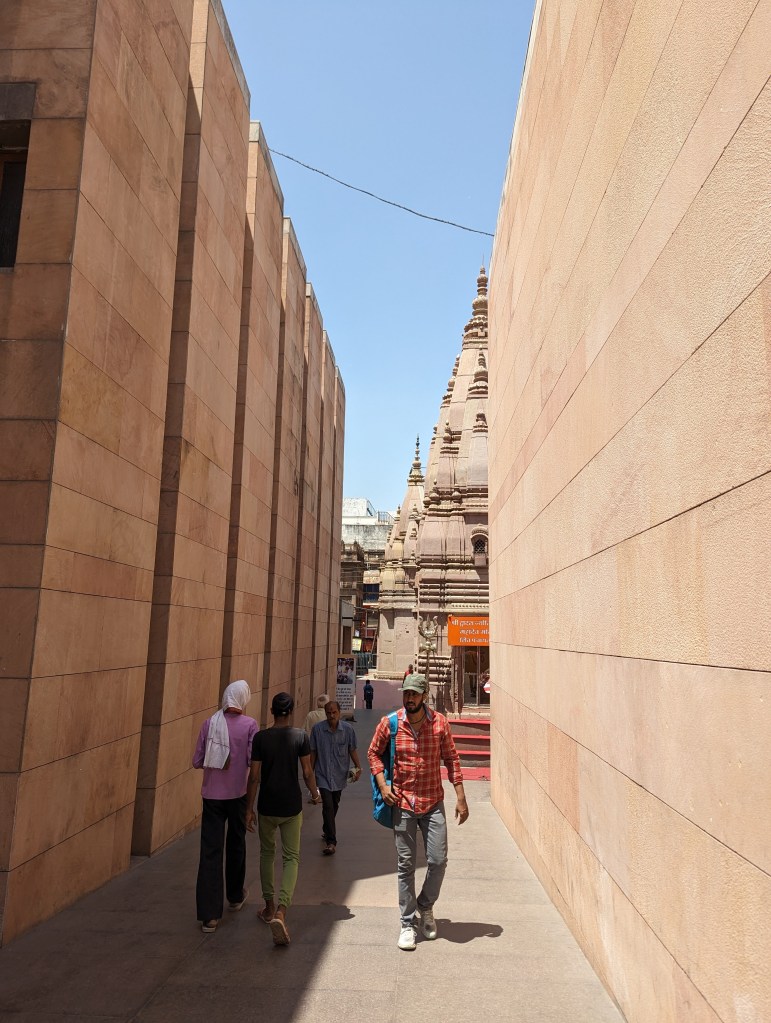
Our guide told us that the stretch of houses between Manikarnika ghat and Shri Kashi Vashwanath temple had been the epicentre of the packed, dirty ghats backstreets that were famed around India. Prime Minister Modi, who was the MP for Varanasi before become prime minister, had started his “clean up India” project in Varanasi 10 years ago. As part of the project, he had bought out the owners of the houses between Manikarnika and the temple, and bulldozed the entire area, building the stone stairs and plaza that we visited. In addition, considerable amounts of money were spent on rubbish collection and street cleaning, the result of which being Varanasi was one of the cleanest cities we have visited in the North. Evidently, everyone who had told us it was unspeakably dirty had been reading guidebooks from the 1990s.
Leaving the temple grounds, we popped into the Blue Lassi shop we had read about, which offered pages of different fruit combination lassis served out of clay pots for 90/- (90p) a piece. We both had an apple and mango lassi, which were just what the doctor(s) ordered in the searing heat of the day. Our last stop of the tour was a nearby hospice which offered rooms for the dying and their families to allow them to pass away in Varanasi, which was meant to garauntee freedom from the cycle of death and rebirth. Interestingly, the hospice was empty when, several years ago, it had to impose a 2 week limit to stays such where the pressures for beds.
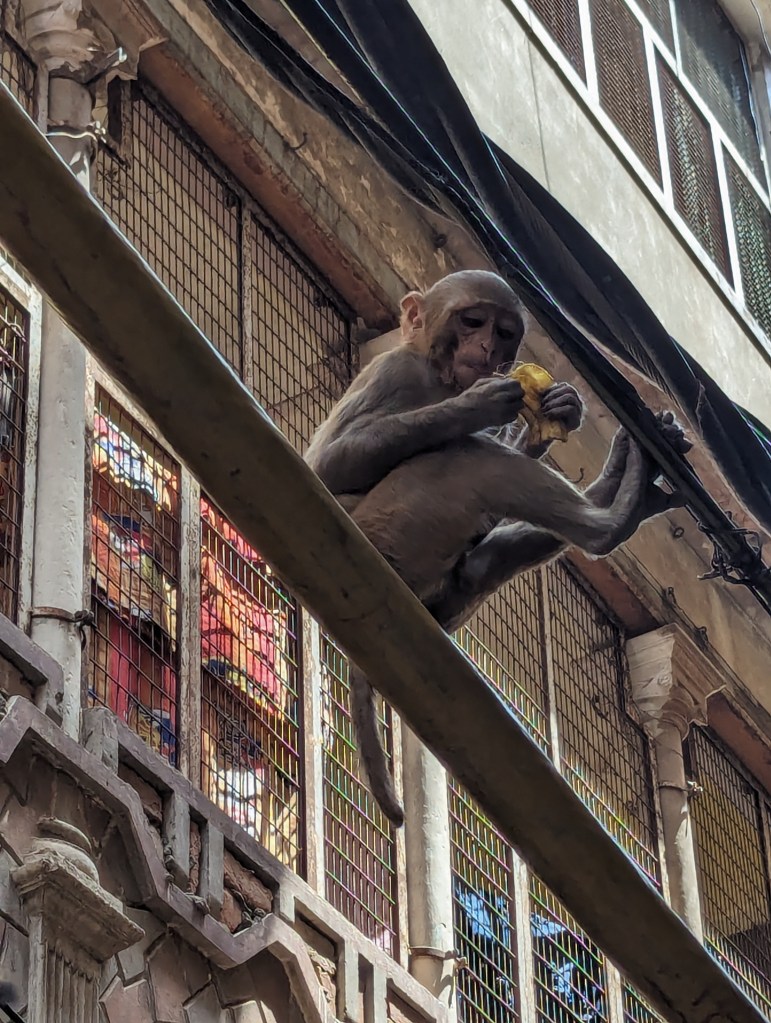
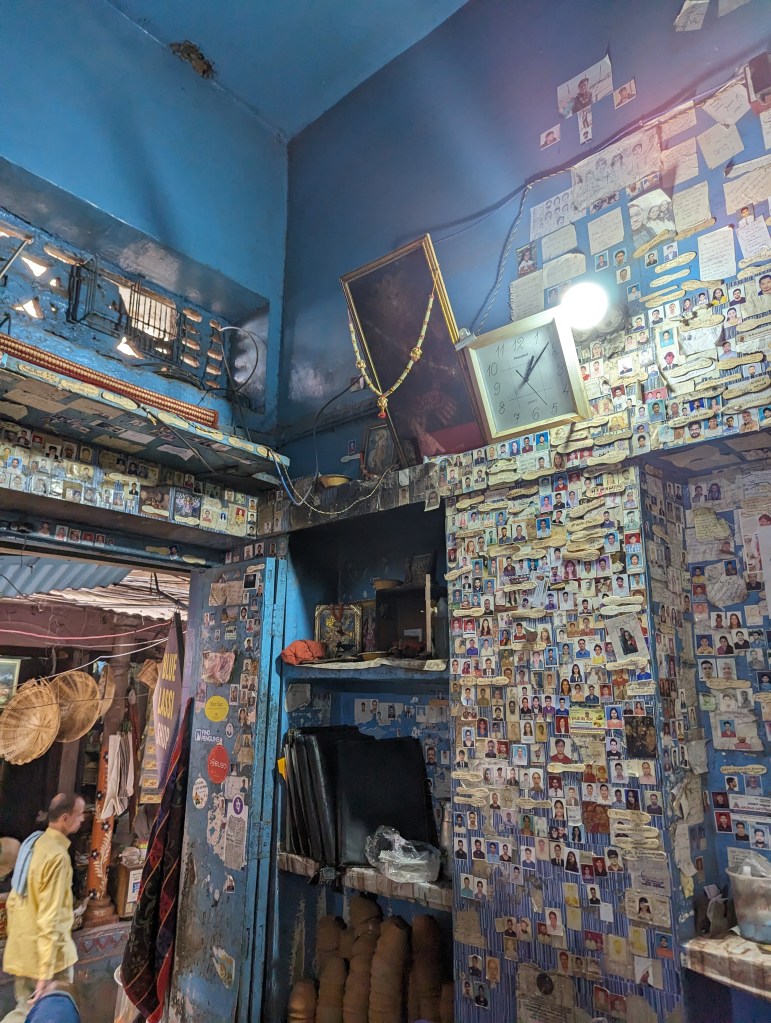

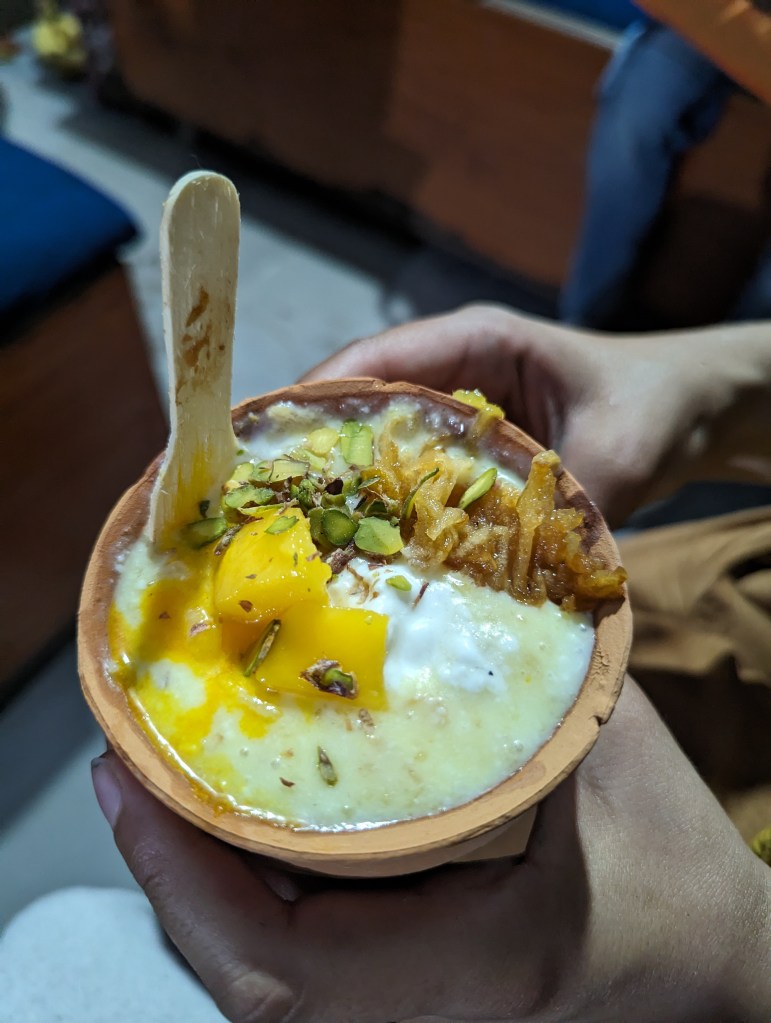
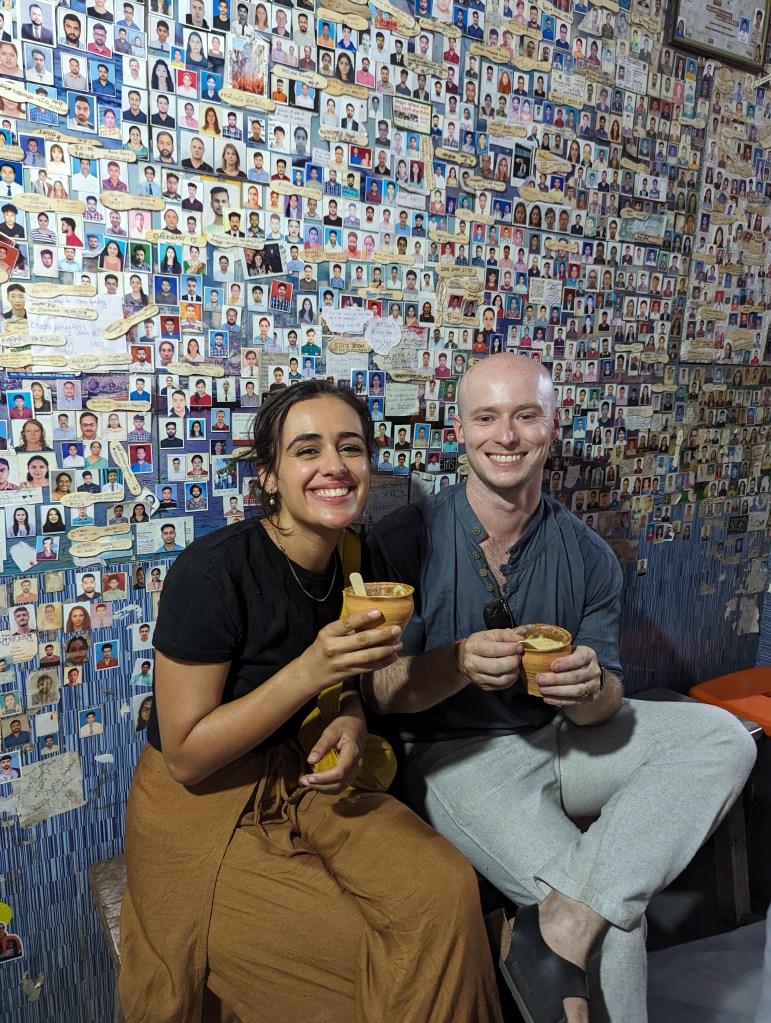
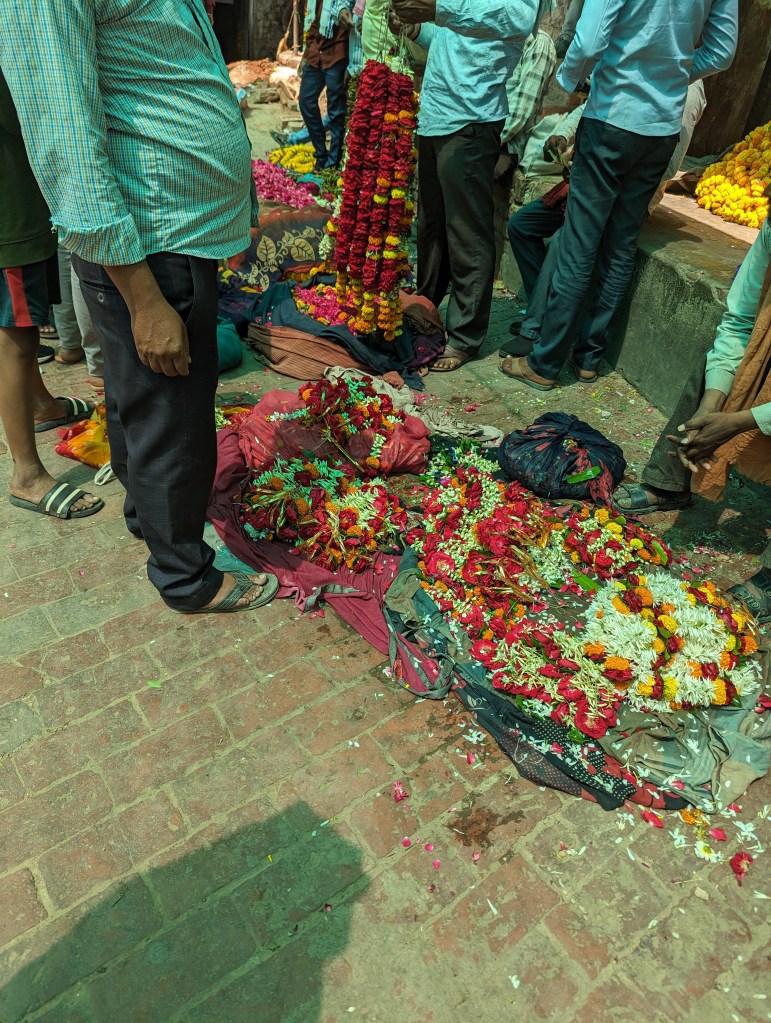
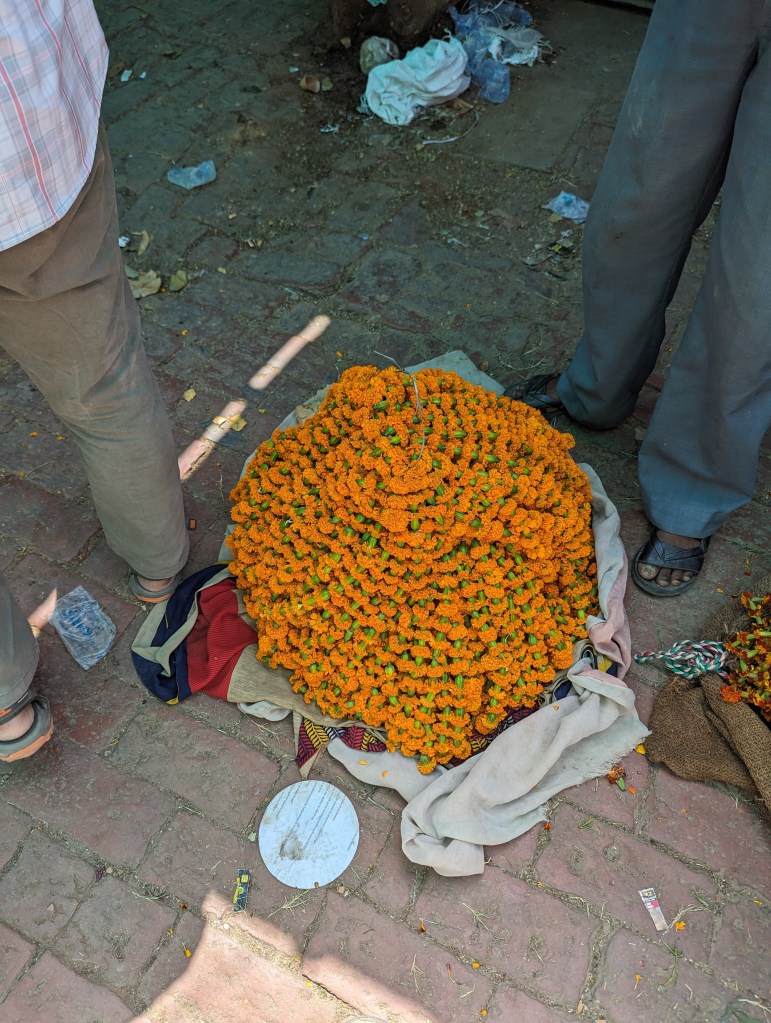
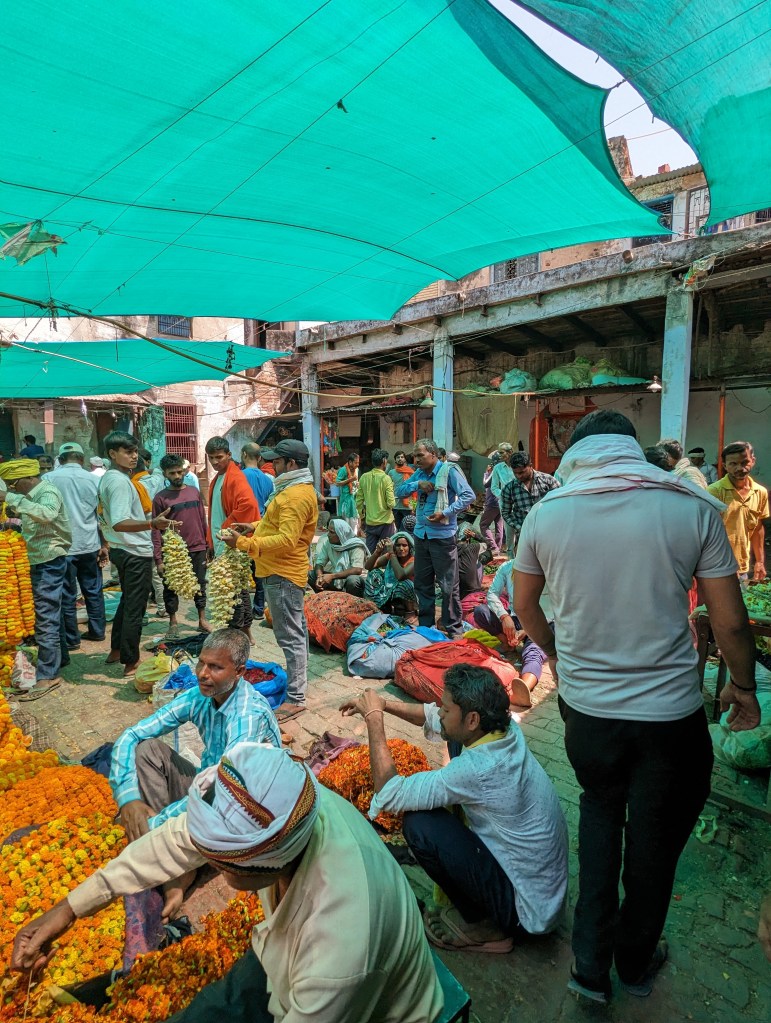
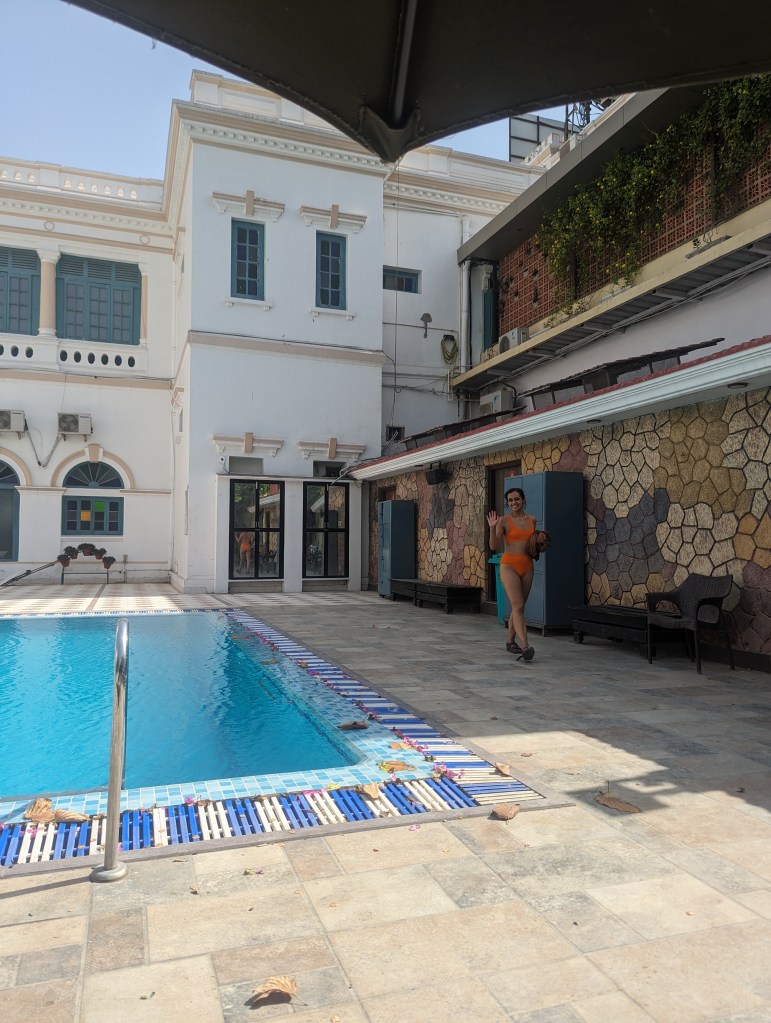
From here, we told the guide that we were planning head out into a outskirts area of the city to use a hotel pool which turned out to be close to where the guide lived, and so we split a rickshaw (I tried to ignore how eye-wateringly cheap it was when travelling with a local compared to the prices we are quoted when we are on our own). Hotel Surya, where the pool was, was not quite as upmarket as other hotel pools we had swum in, but it still offered cool water, a sunlounger in the shade, and fresh lemon sodas.
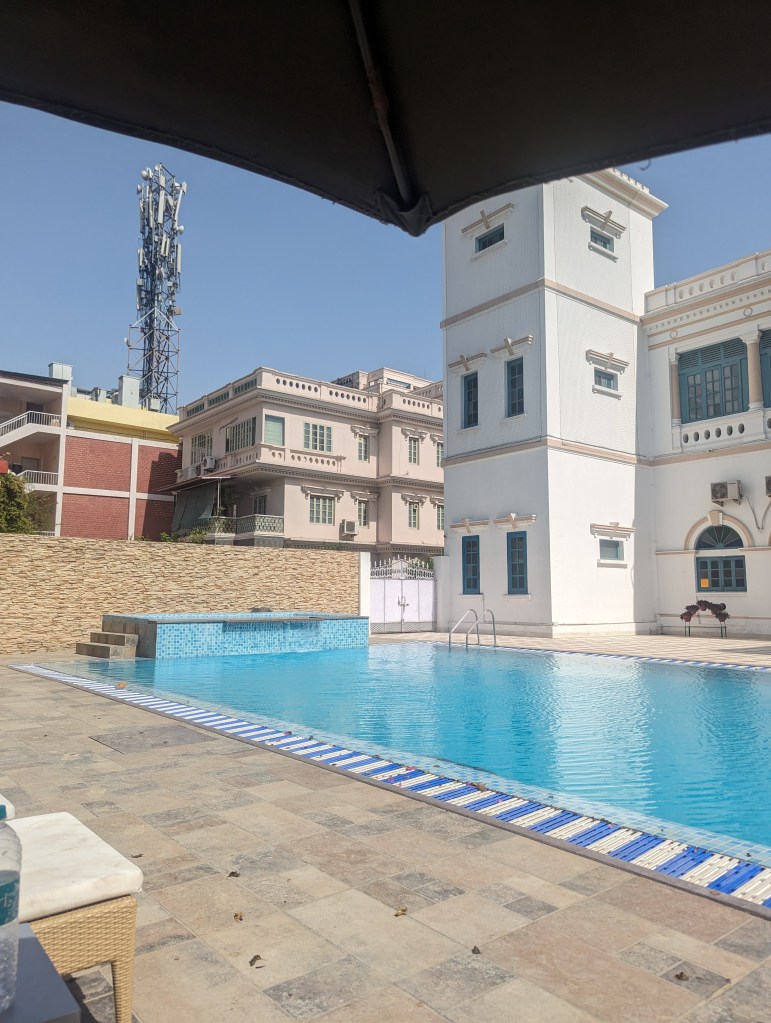
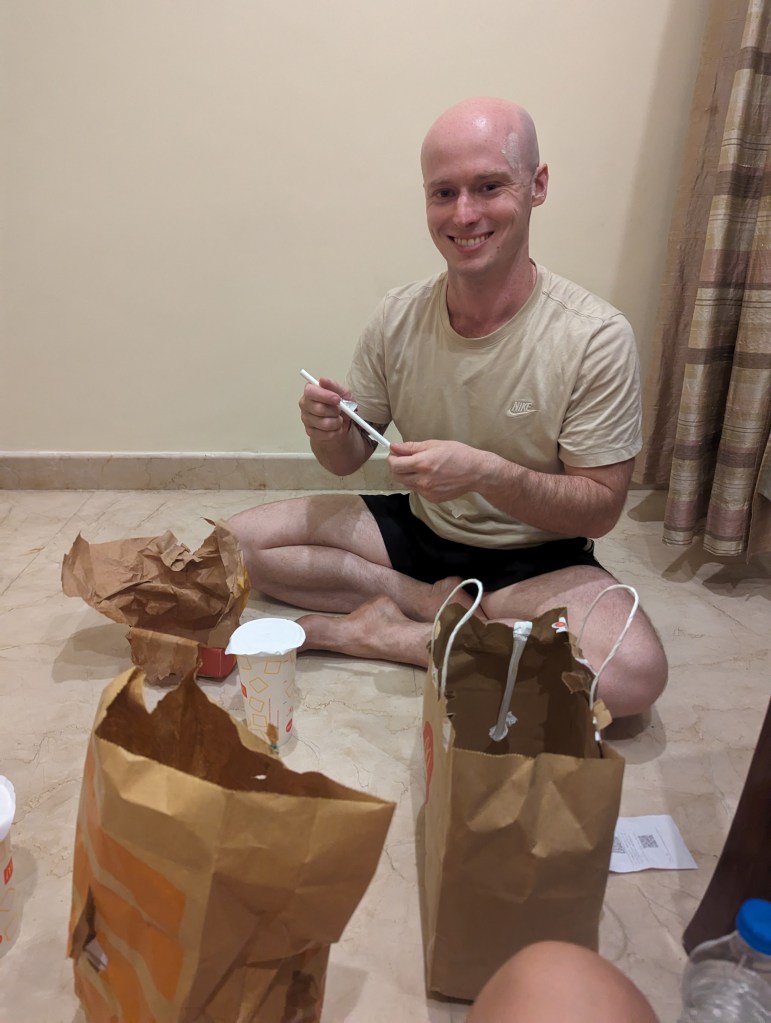
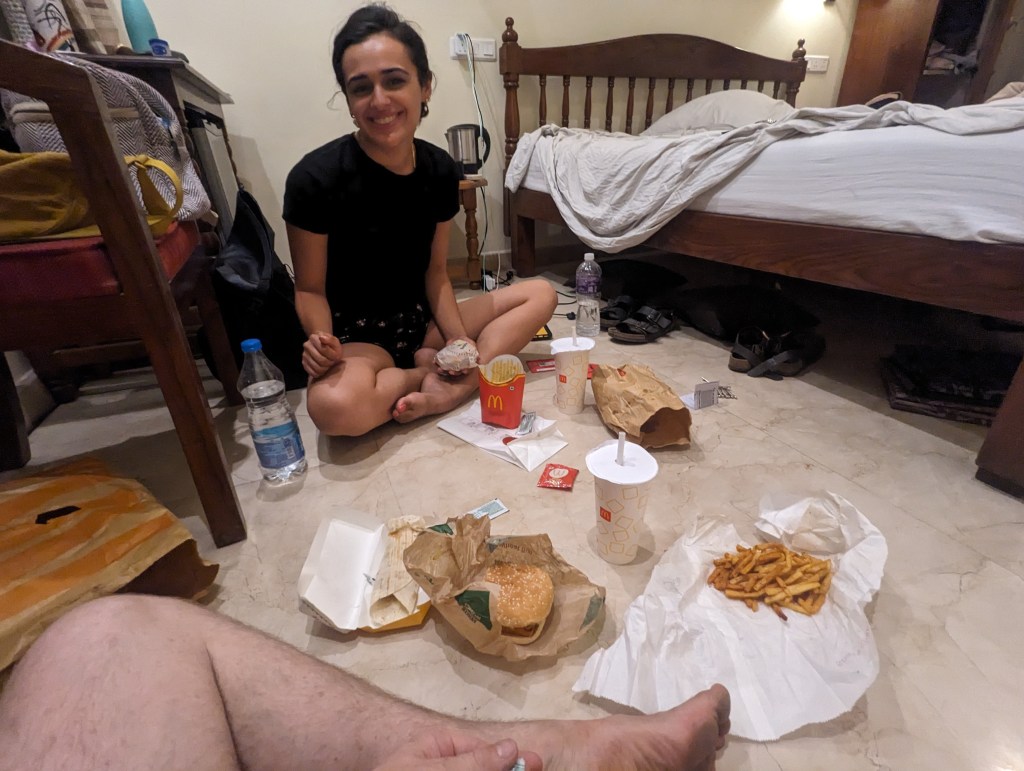
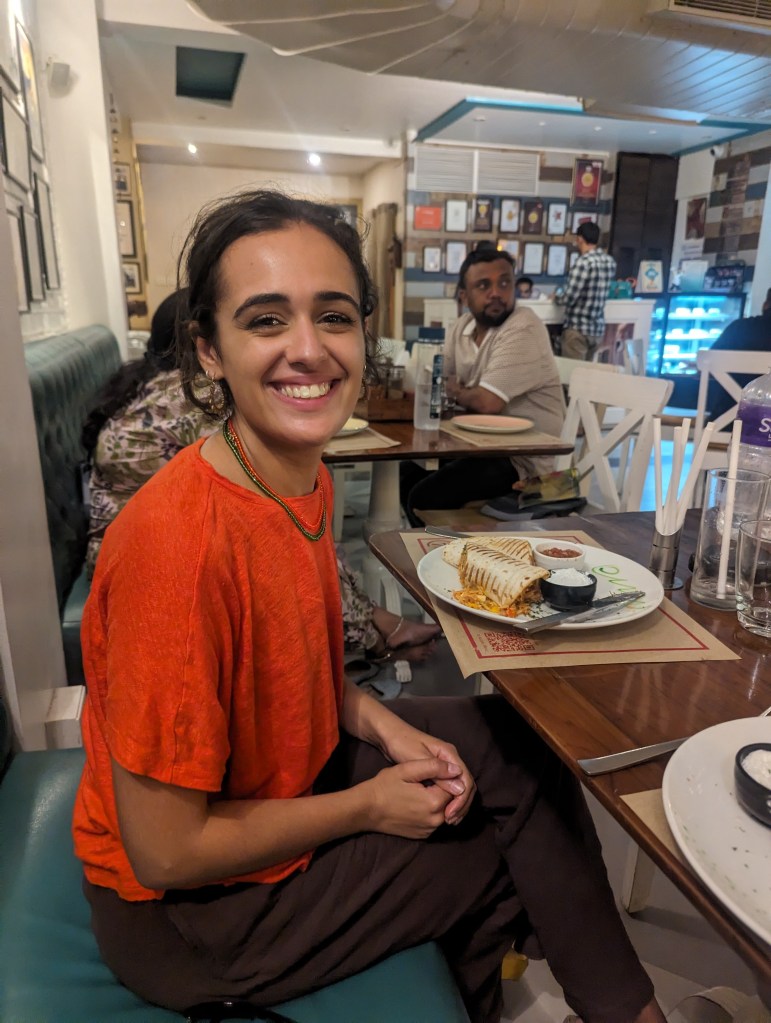
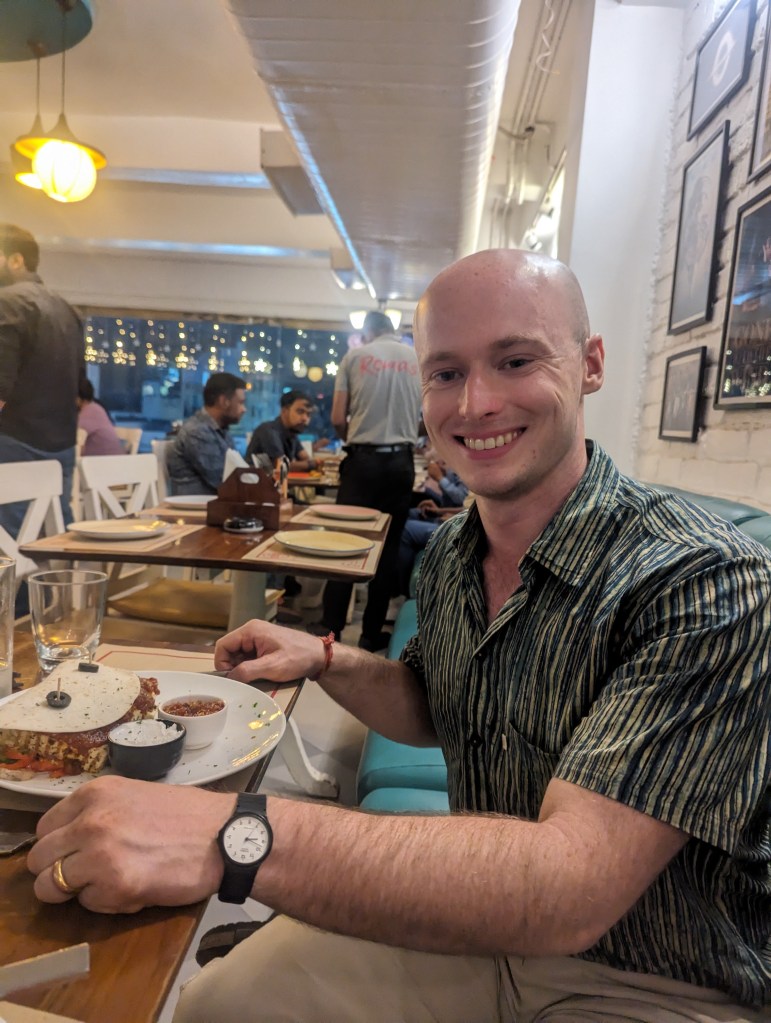
We rickshawed home from the hotel, and went back up to the roof to get in some exercise as the day cooled a little. It had been a long, hot day and we didn’t really fancy another rickshaw into and out of the ghats area, so we ordered in an McDonald’s to the homestay. It was predictably more vegetarian and spicier than UK McDonalds, with the likes of aloo wrap and McPaneer burger, but it was a nice change from the usual North Indian staples. We spent the rest of the evening in the room, and made for bed early given the early starts that seemed to be standard for all inhabitants of Varanasi. (Please ignore the shaving cream on the side of my head, and the dirty little foot in the second picture, I’m mortified but the blog needs visual representation).
Friday –
We planned to be up early on Friday morning so that we could go to a recommended cafe, Brown Bread Bakery, before a yoga class we had booked at 9.30am. However, the air-conditioning had switched off several times in the night and the room had become stifling hot so neither of us had slept particularly well, so it was in a bit of a rush that we headed back out to the ghats. We had just enough time to eat a pastry before getting to the yoga class in a building shared with a preschool, right on the edge of one of the smaller ghats. The class was just Ellie and I, and lead by a slightly wild looking man who we only knew as Siddharth’s brother, Siddharth being the principle teacher of the yoga school. The room was tiny, with room for only 4-5 people including the teacher, but had a balcony and large window overlooking the Ganges. Siddharth’s brother was very much of the Indian style, but had a easiness and tendency to laugh that made the commands and reprimands a little more palatable.

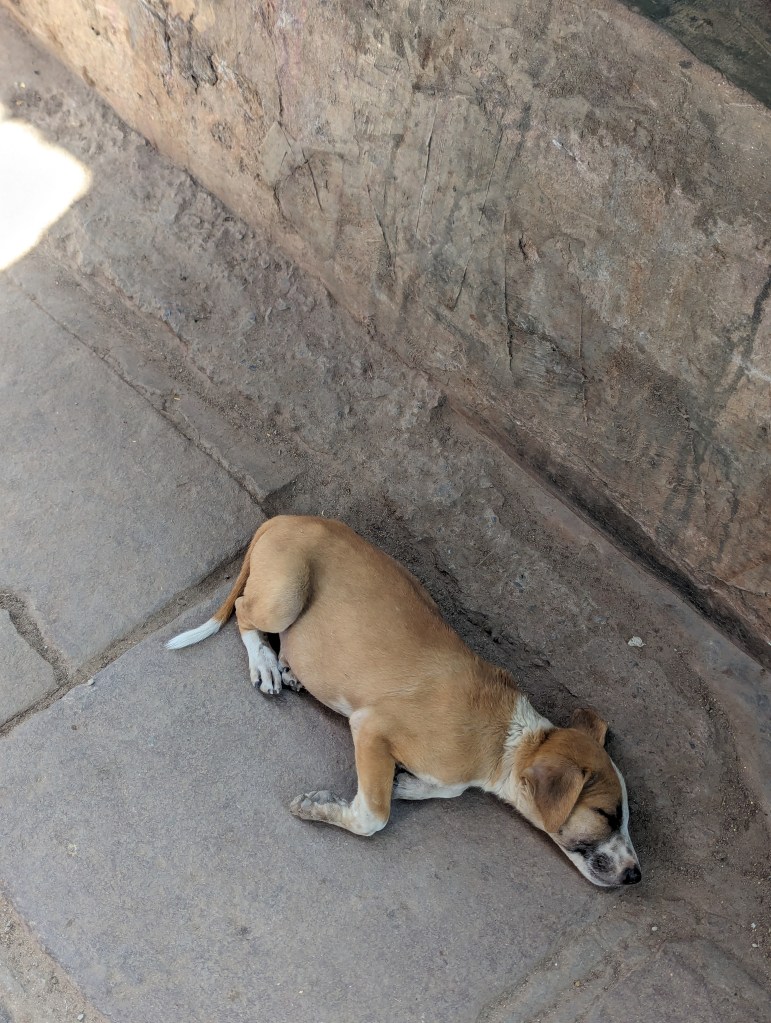
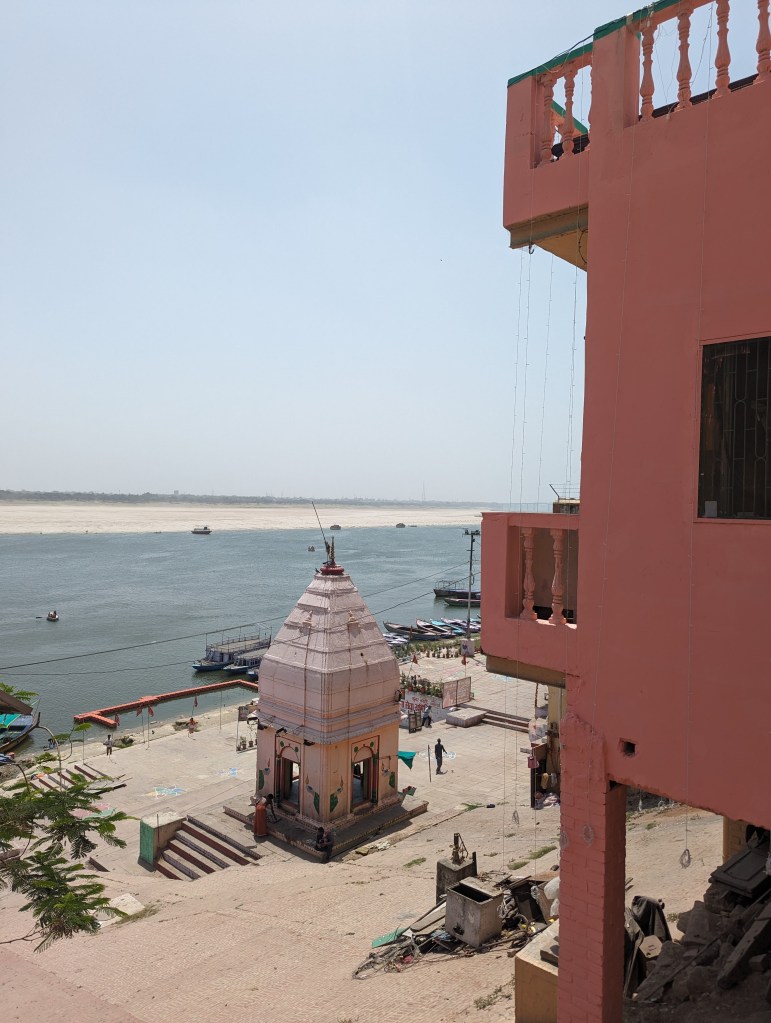
The class was an hour and a half, during which time Siddharth’s brother paced around, slapping the backs of my thighs when my knees were too bent, talking about the Hindu gods Ram and Sita, telling us why not many men do yoga in the world, shouting “VERY GOOD” when he was pleased with a pose that we did, or shouting “WHAT ARE YOU DOING?!” when he wasn’t satisfied with a posture or movement. I warmed to him throughout the class and he seemed to take us as well. By the end he gave us both a hug and, bizarrely, fed us some pistachio sweets with his hands before waving us out of the door.
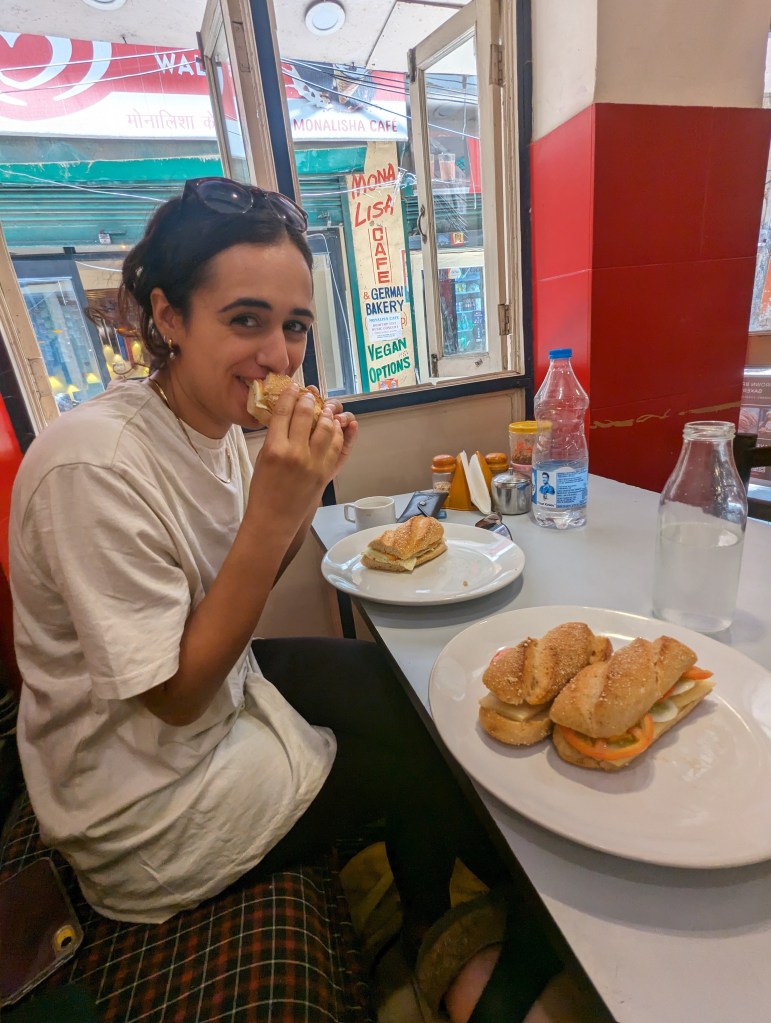
After this somewhat puzzling experience, we went back to Brown Bread Bakery for an early lunch, a coffee, and a debrief. We decided that we had enjoyed the experience, despite Siddharth’s brother’s eccentricity. It seemed that every yoga teacher in India was at least a bit eccentric. Once we had eaten, we walked through the backstreets of the ghats, browsing the jewellery and necklace stalls and buying a few bits and pieces.
From there, we took a rickshaw home and got the air-conditioning working to escape the heat of the day. Once the heat started to subside, we made our way south (by rickshaw, of course) to the Banares (another name for Varanasi) Hindu Univeristy, which we had read was a quiet, green campus that was a bit of a tonic for the busy ghats and backstreets.
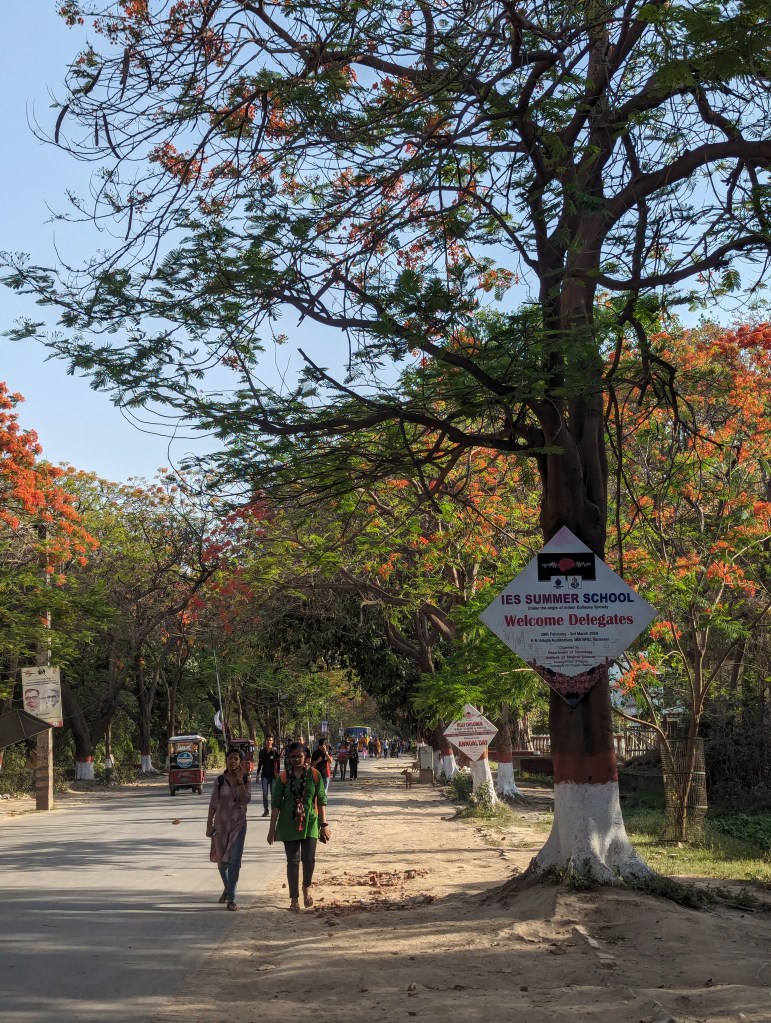
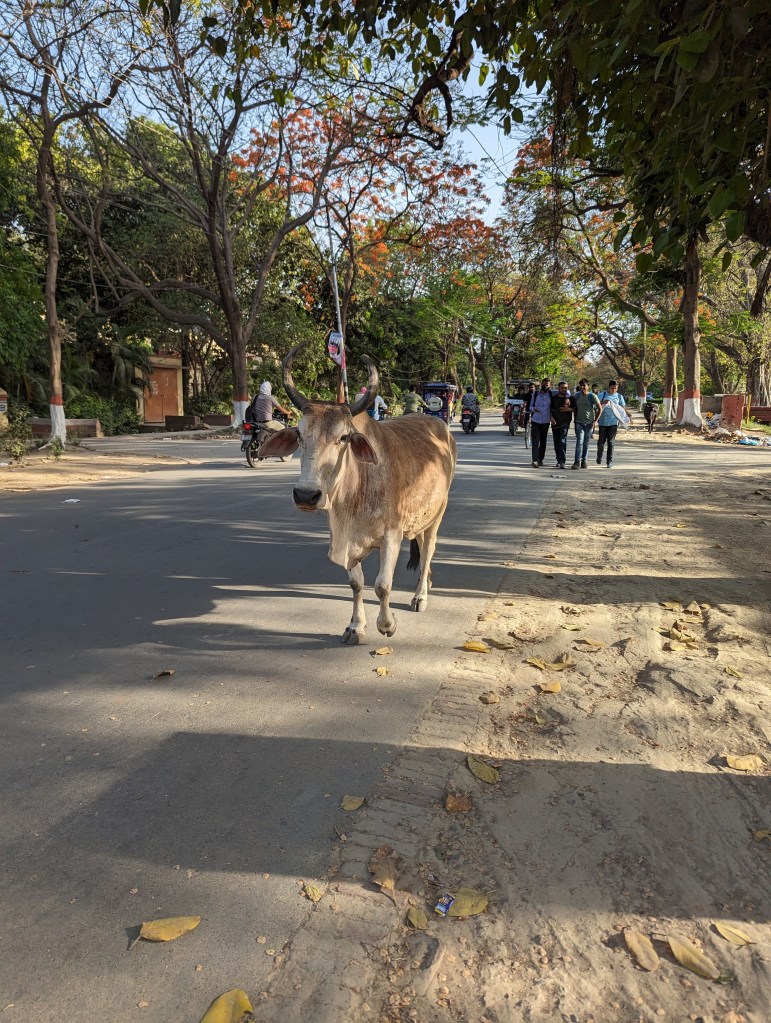
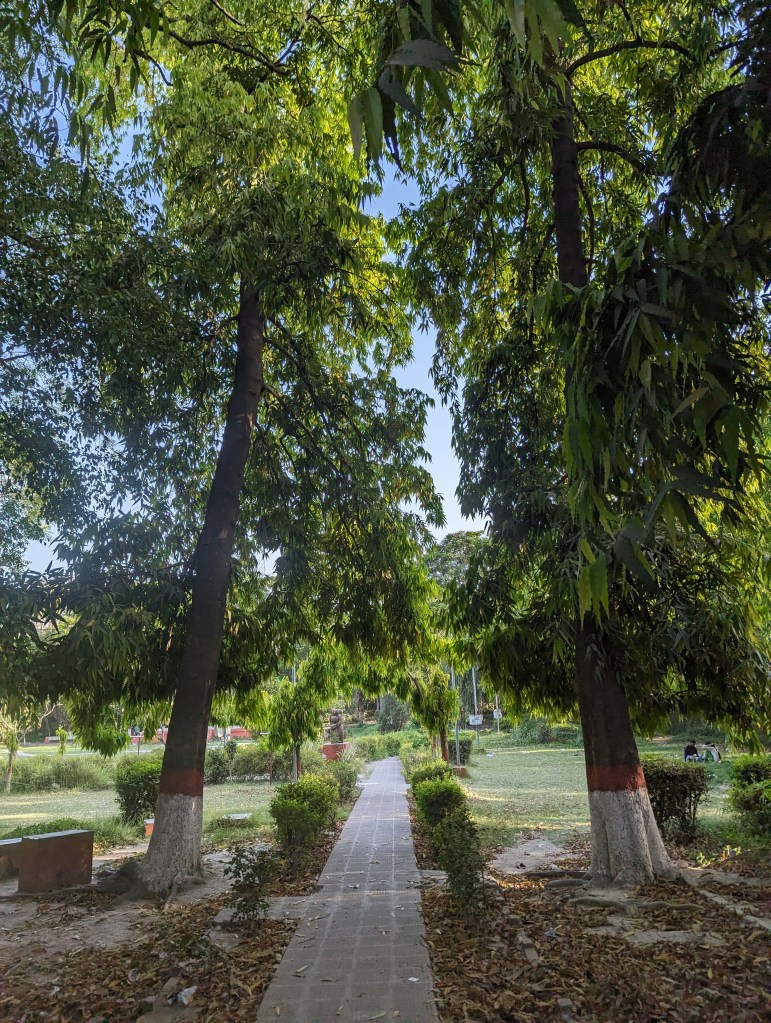
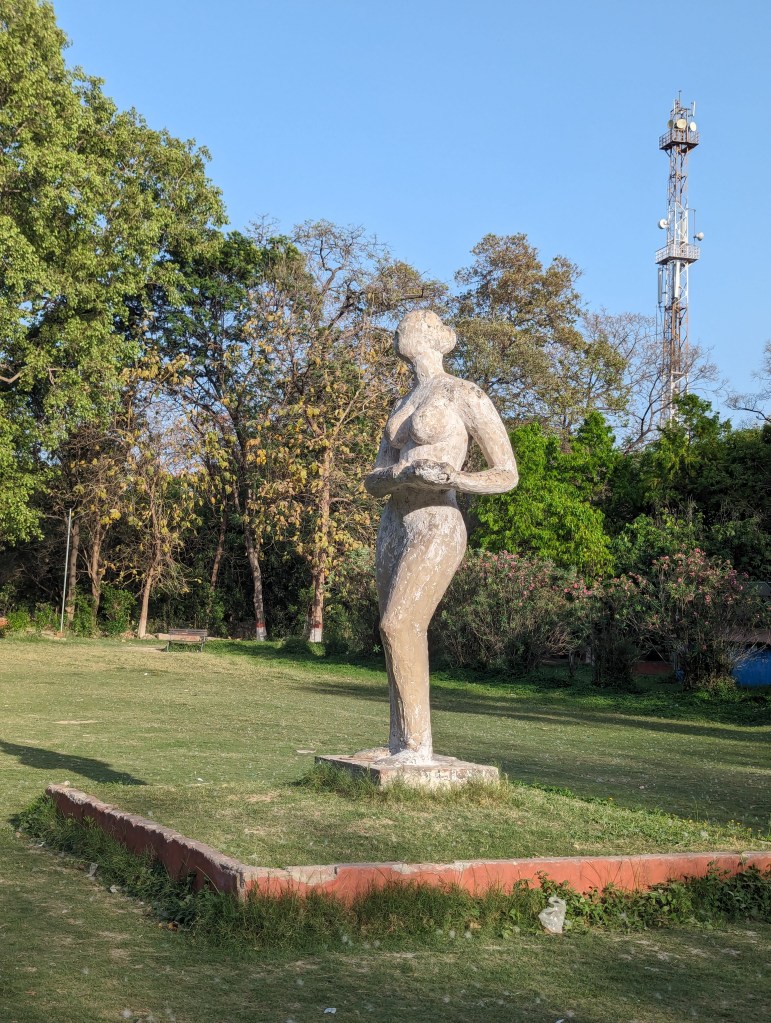
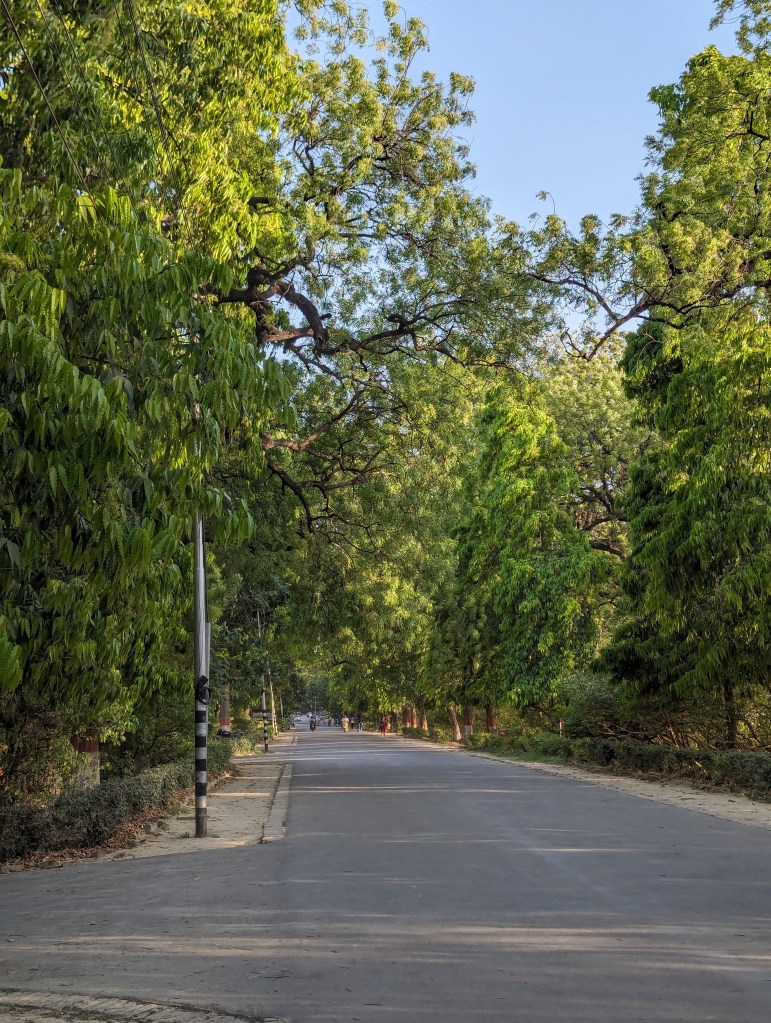
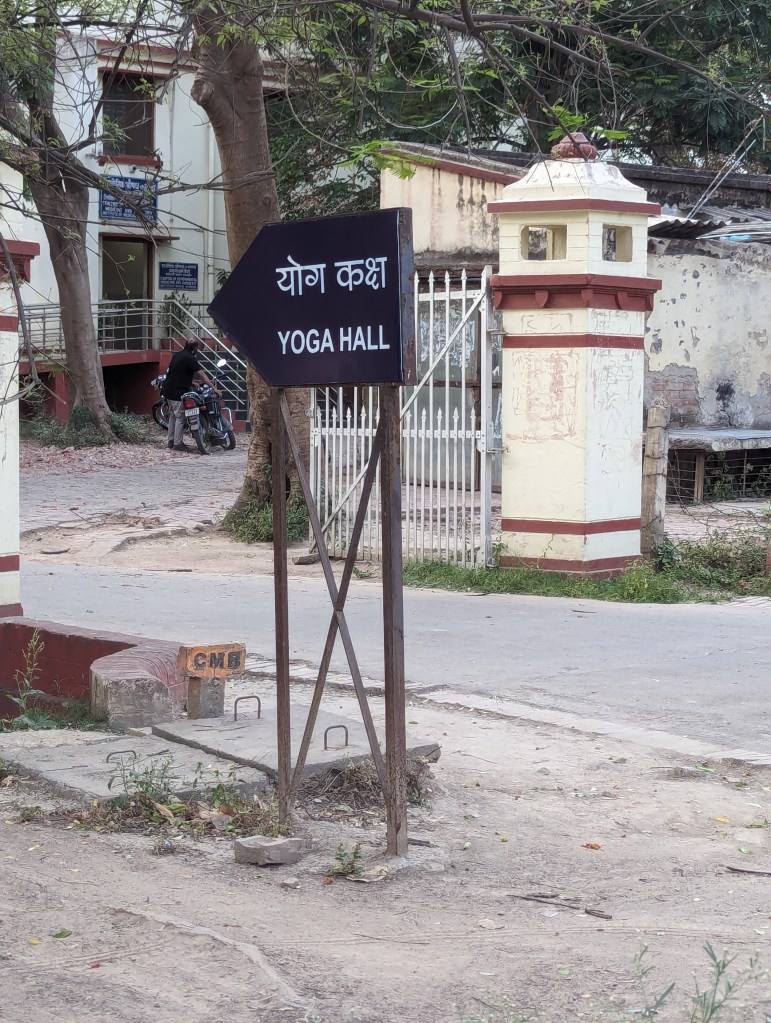
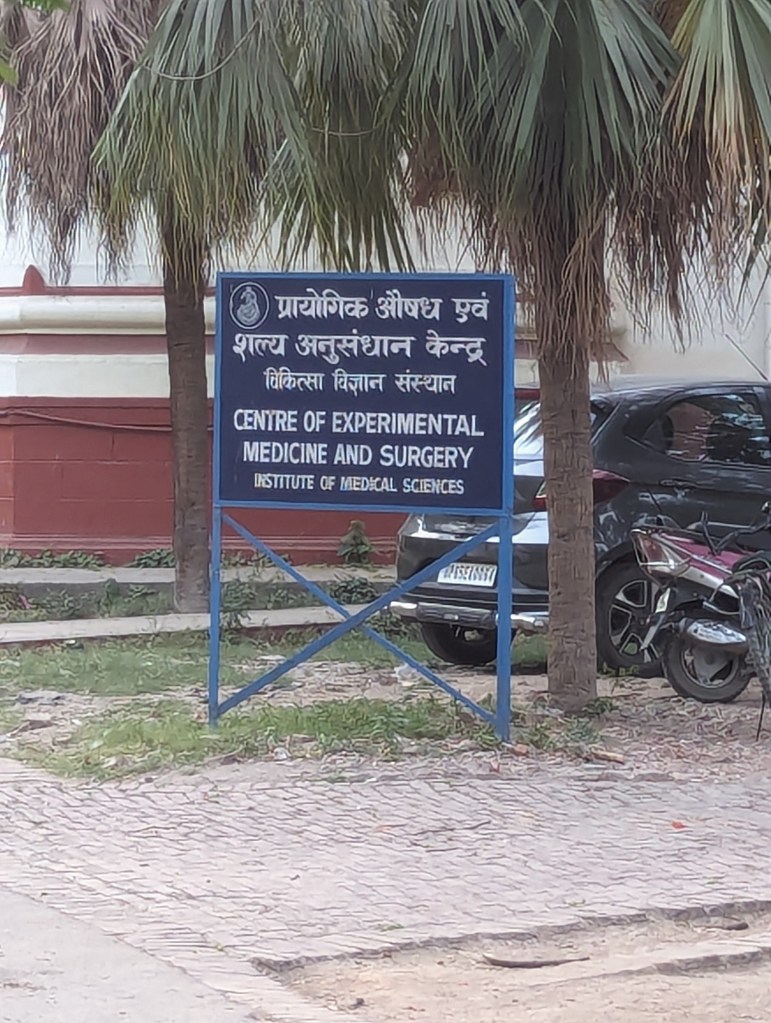
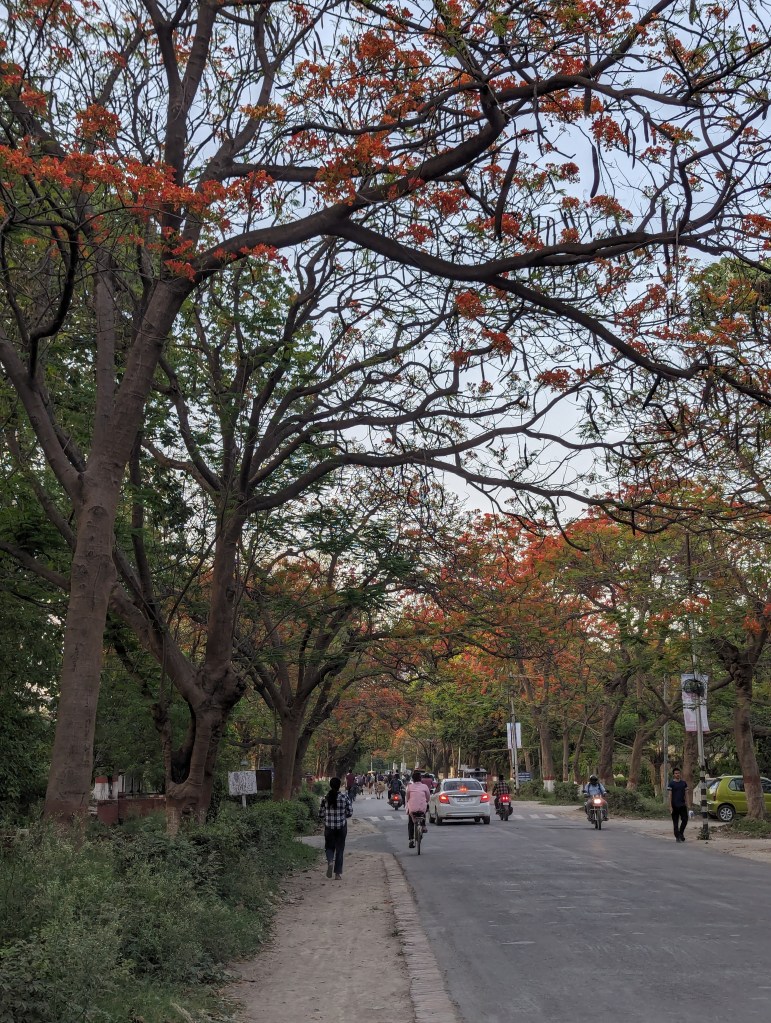
The University campus was exactly as billed. It was a huge network of quiet roads in a semi-circular pattern, housing the numerous departments of the universities interspersed with green spaces and sports pitches. We wandered through these, picking up a coffee or an ice cream at the road side vendors. Once dusk came on, we walked the 30 minutes or so to the southern-most ghat of Varansi, Assi ghat. Assi ghat was a smaller version of the main Dashashwamedh ghat further to the north, and put on an aarti (fire) ceremony to the Ganga at sunset like the one we had walked past on our first night.
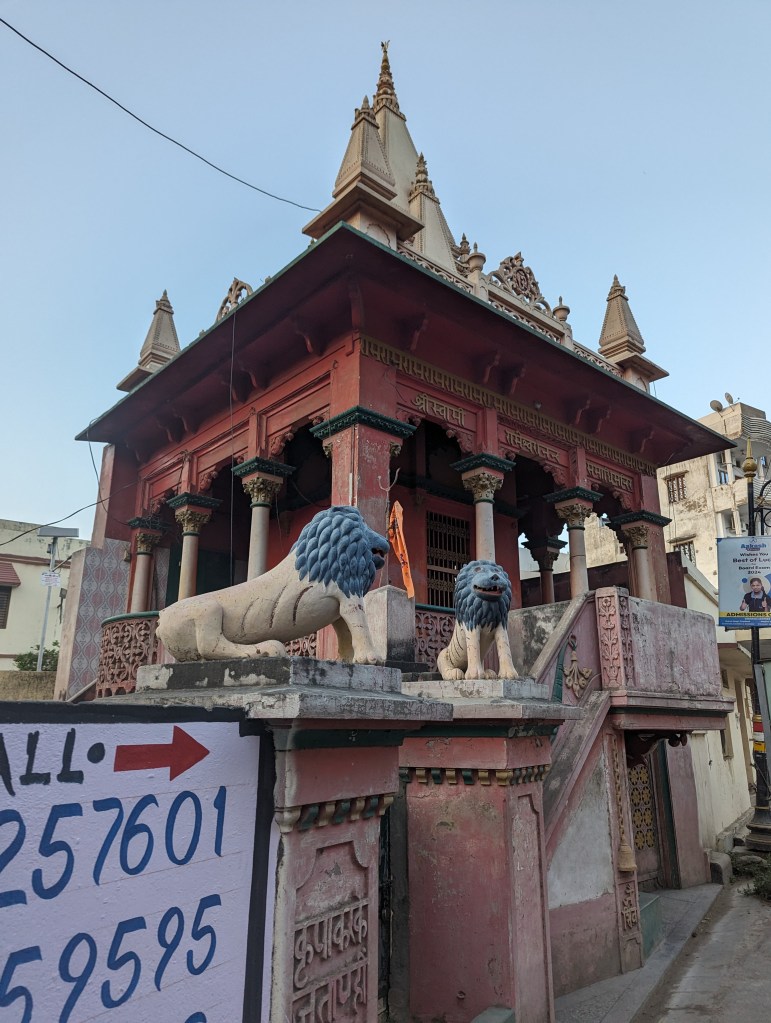

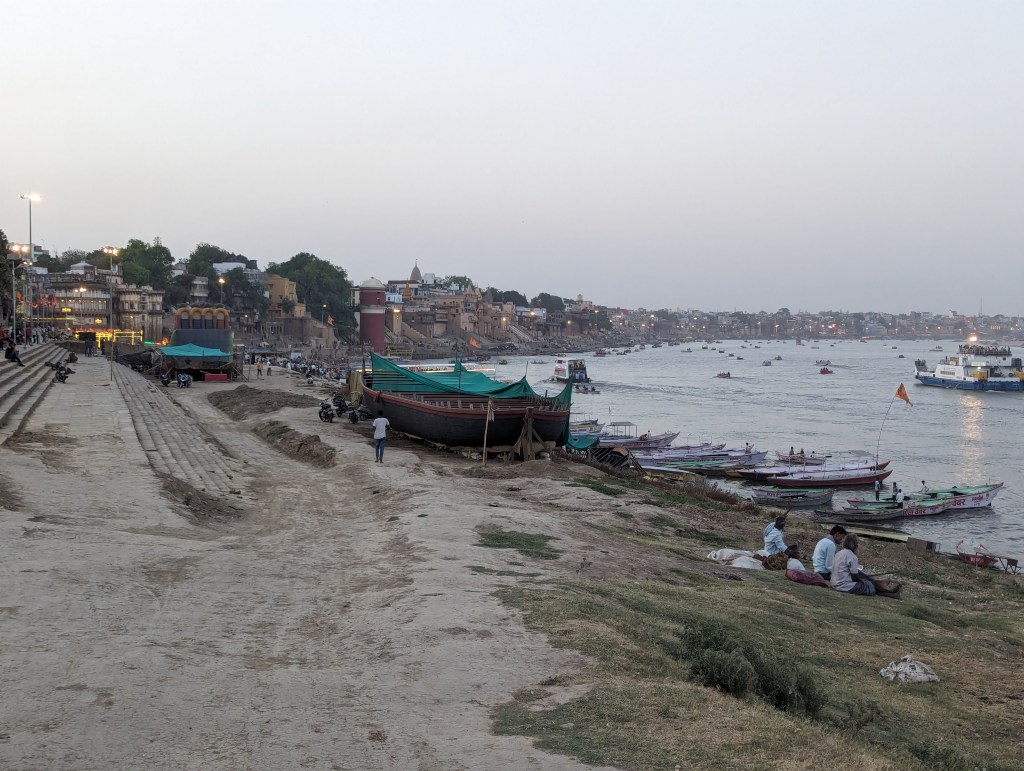

We found a spot on the stone steps to watch the ceremony. It was quite a spetacle, with the young Brahmin priests performing synchronised movements on platforms with huge burning candelabras and smoking incense pots. Amusingly, we watched the organisers walk through the seated crowd looking for any Western tourists, including ourselves, to ask for donations whilst ignoring all of the Indian spectators. After an hour or so the ceremony showed no signs of winding down, so we slipped off to find somewhere to eat.
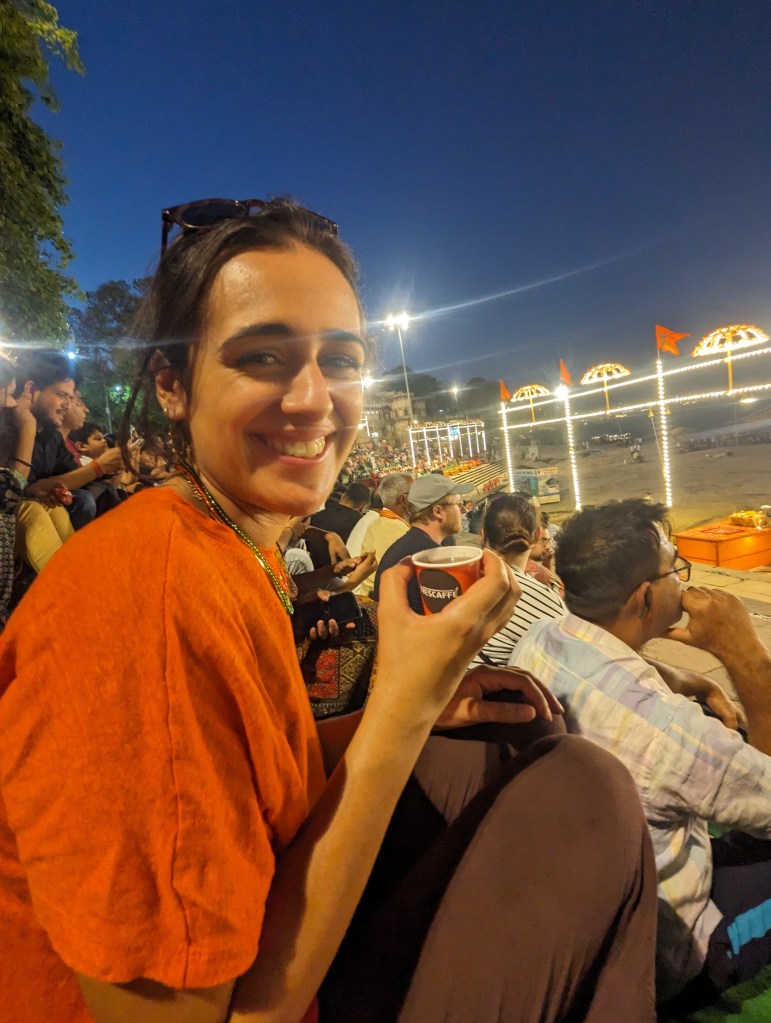
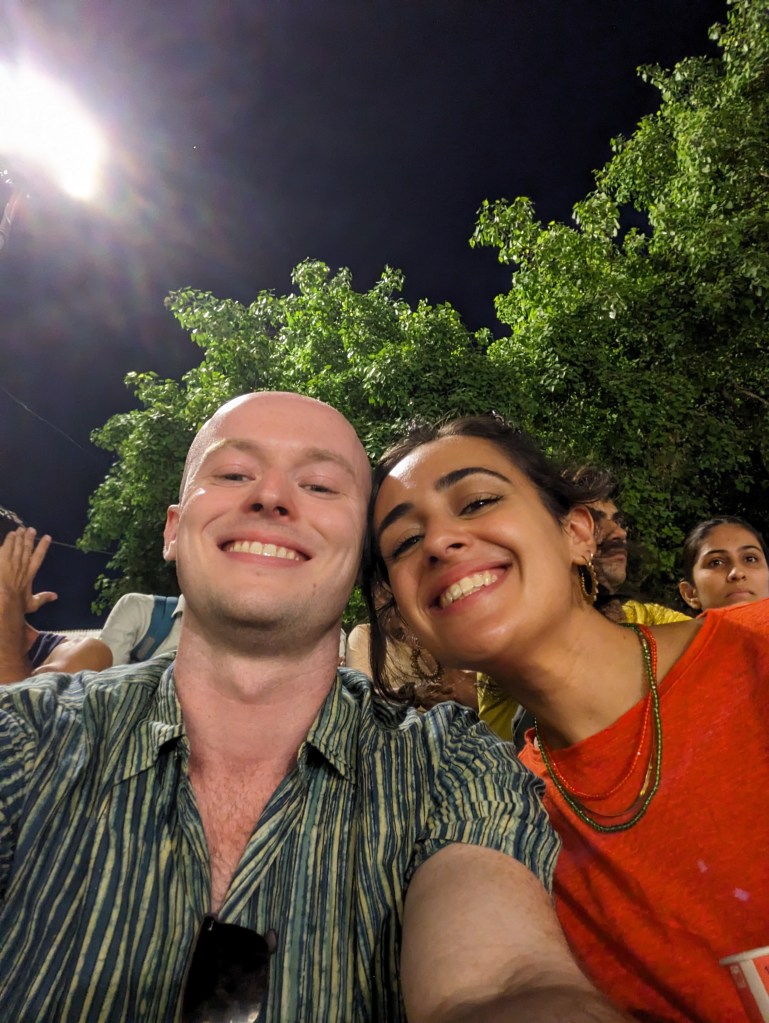
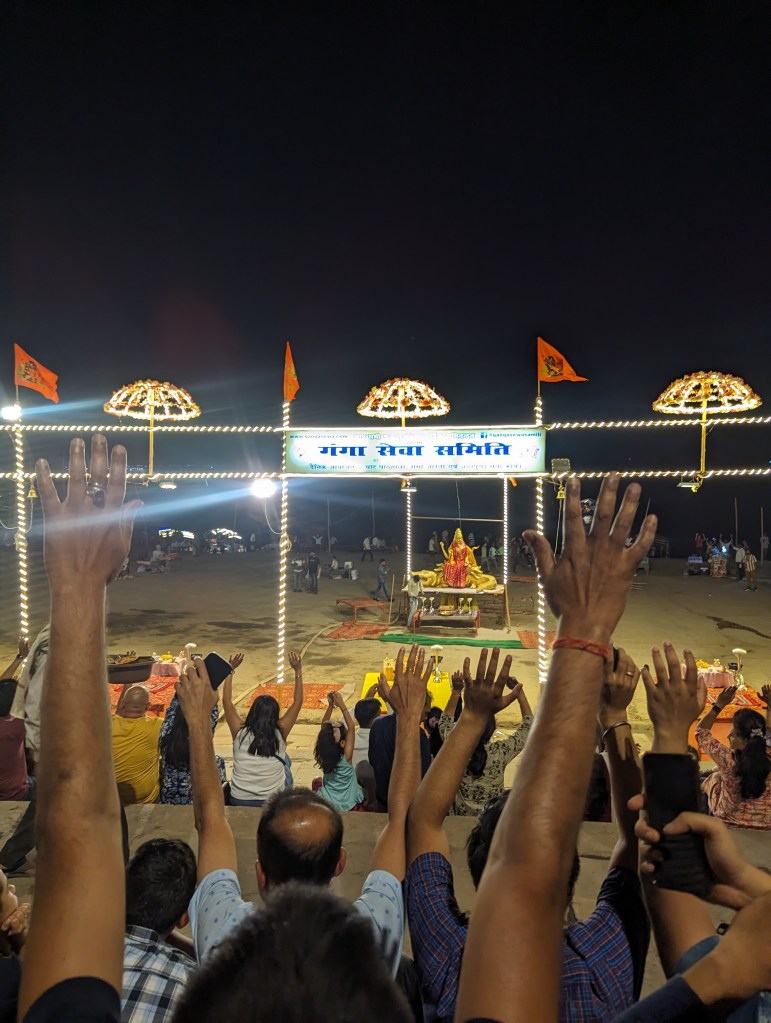
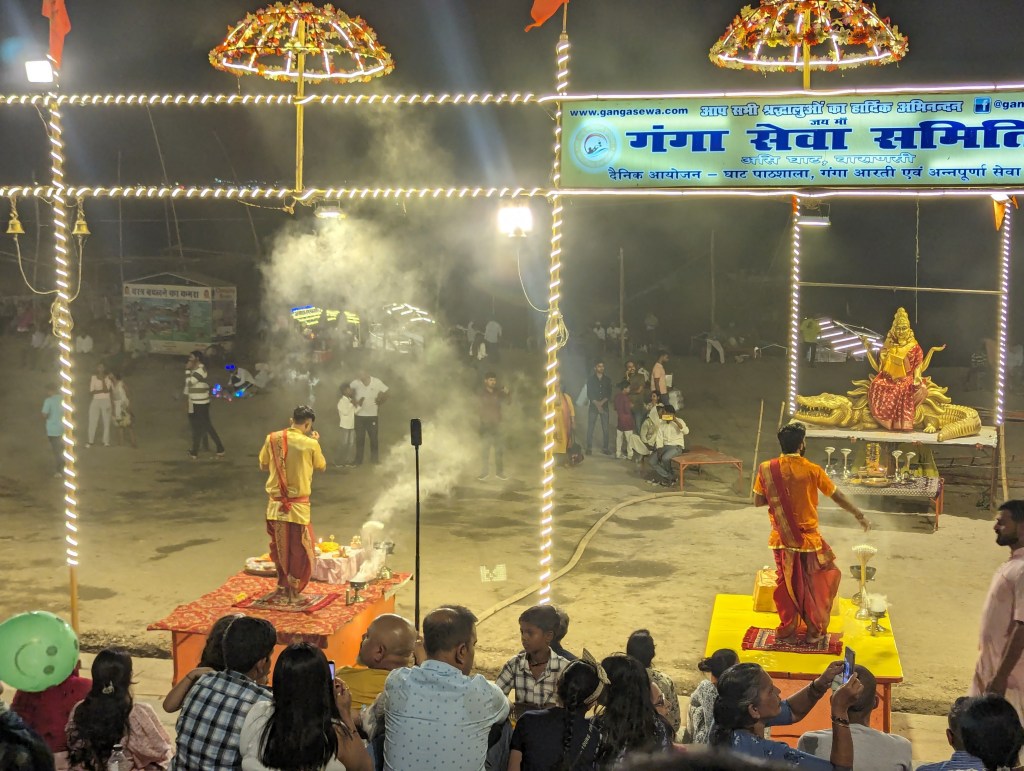
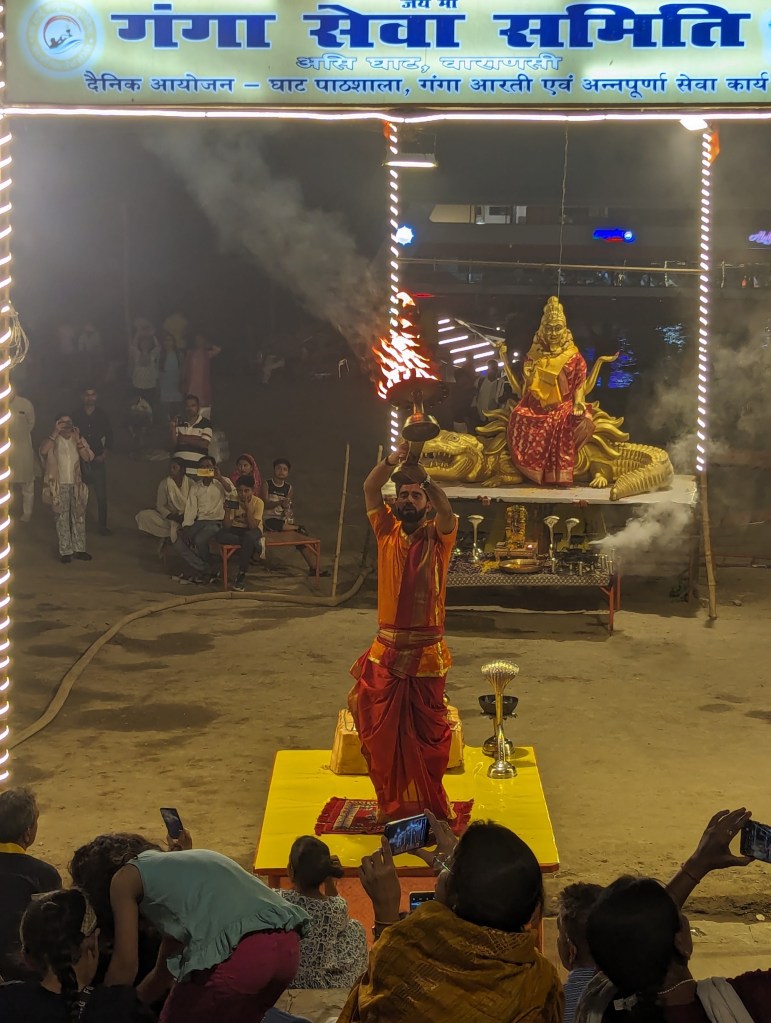
We found a diner on the highstreet near the university which had a remarkably Western menu of Mexican, Italian, and “Continental” food in addition to the usual Indian and Chinese dishes. We both opted for some Mexican food, which was good but so packed full of paneer and other cheese that we practically had to be rolled out of the door and to our rickshaw. It was late when we got home, and we had an earlier start on the morning, so we headed straight to bed.
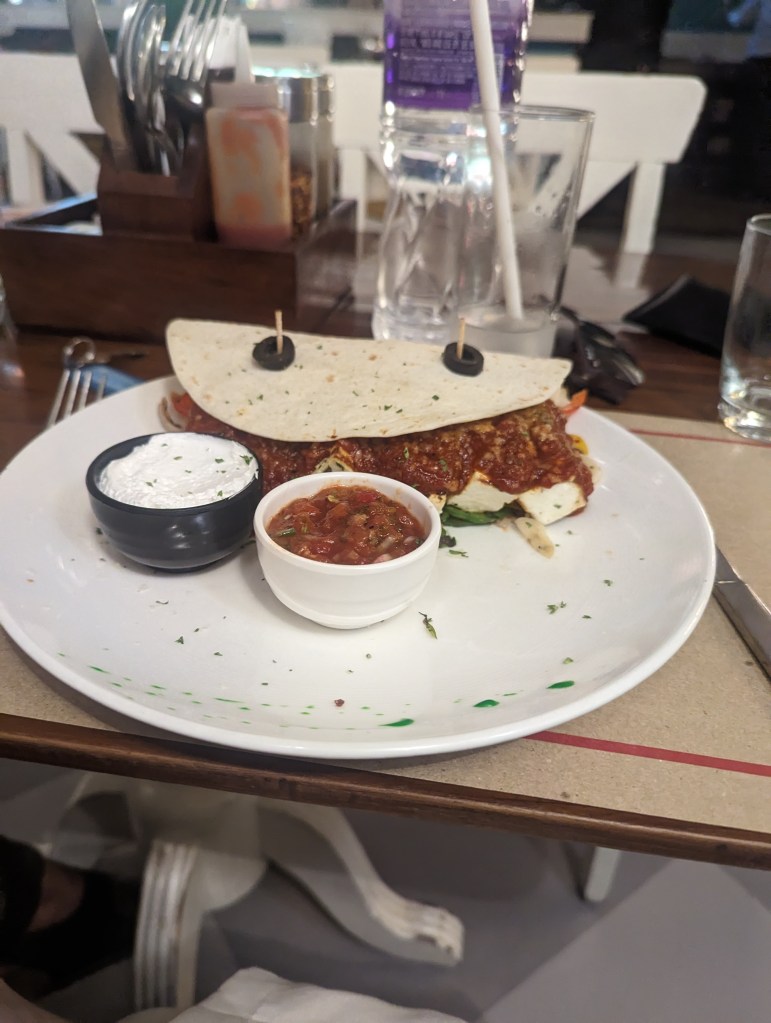
And so, we had arrived and settled into Varanasi. The city was in some ways as we expected – being busy, loud, and full of activity from early morning to late at night. But, equally, it was endlessly facsinating, varied and colourful, and you never knew what to expect around the next corner. We were looking forward to a few more days of exploring before heading to Kolkata, our last major Indian city.
Until next time,
Rob & Ellie xx


 Rob's India & Nepal Blog
Leave a reply to Anonymous Cancel reply