We were finishing off our Rajasthani tour with a short detour into the rural area of Shekhawati to see the famed havelis, then heading back to Jaipur to catch the train to Lucknow. Lucknow is the capital of the North-Central state of Uttar Pradesh, and serves as just a one-night stepping stone for us before heading to the religious city of Varanasi. We will cover all this moving around in this blog, before settling into Varanasi for our first full week in one place since Udaipur. I wont tell you which day Ellie wrote, but I think it will be relatively easy to guess!
Saturday –
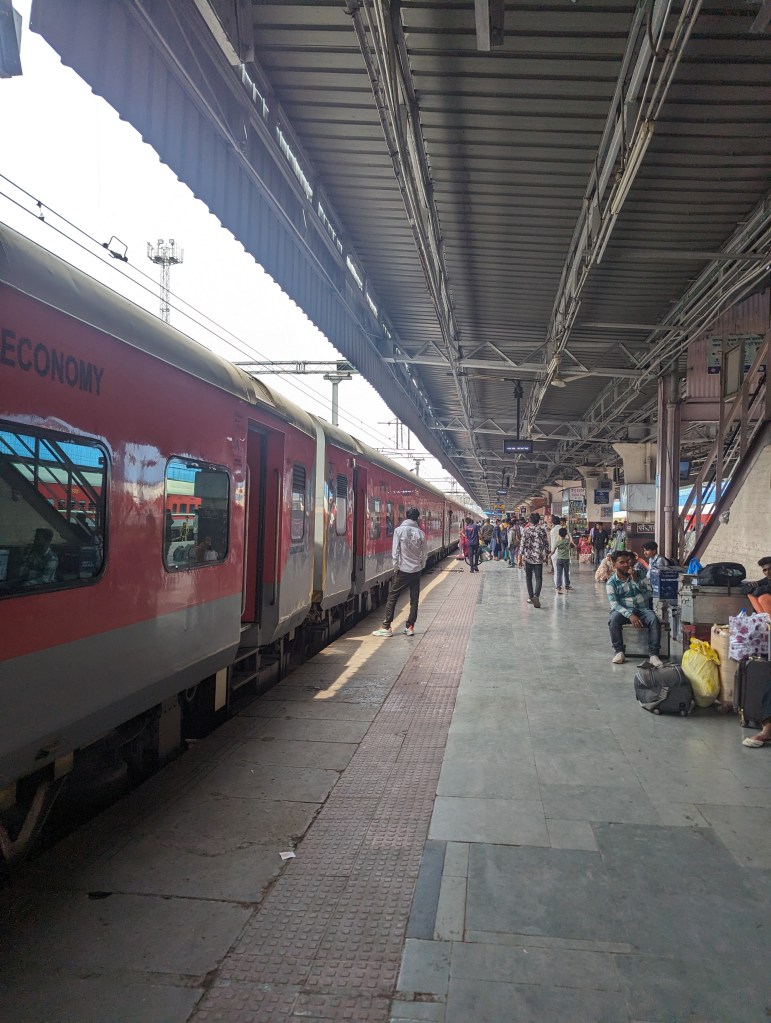
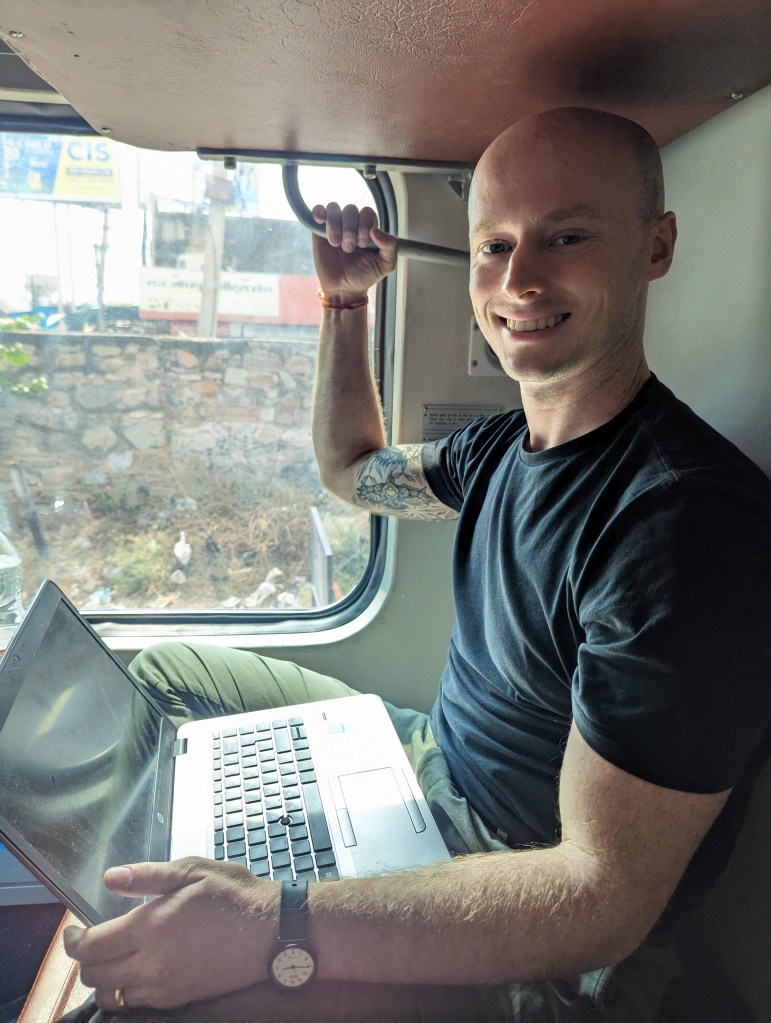
On Saturday we didn’t need to check out of Hotel Pearl Palace until 11, so after many rapid 6am packing sessions we had a blissfully slow morning of rooftop fresh press and getting our bags back together. We rickshawed to Jaipur Junction and had another comfortable and smooth journey on Indian Railways. All of our train journeys have been wonderful places to listen to audiobooks and write blogs given we are usually in palatial sleeper carriages even in the daytime, bar the loos which are best visited as rapidly as humanly possible.


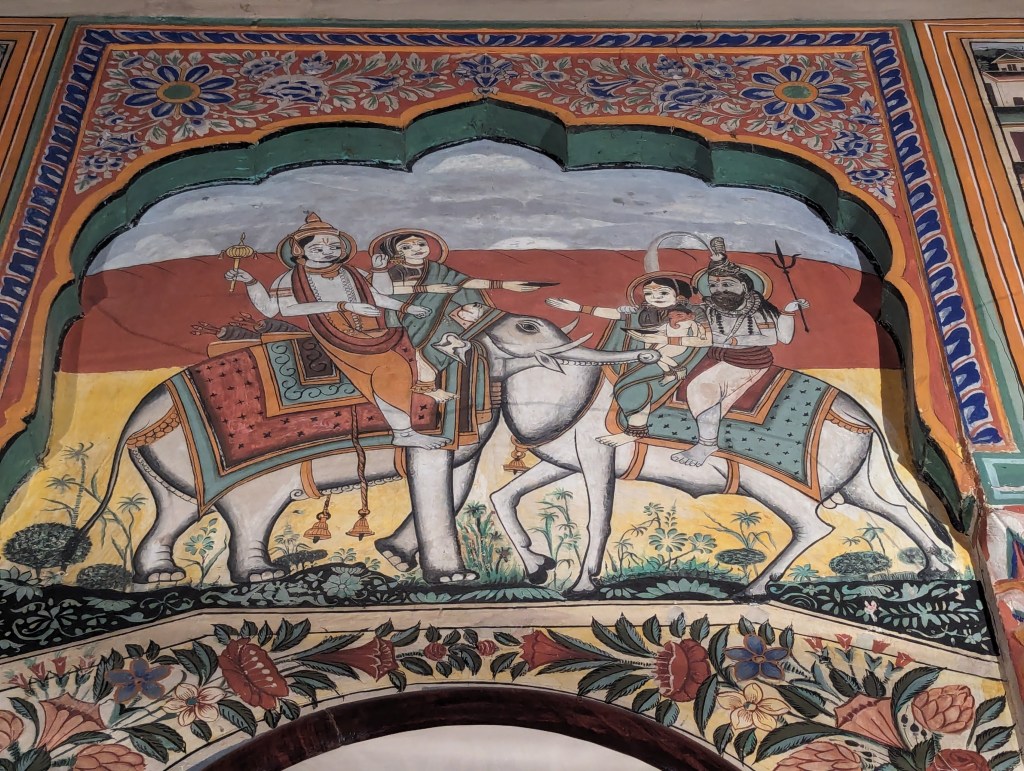
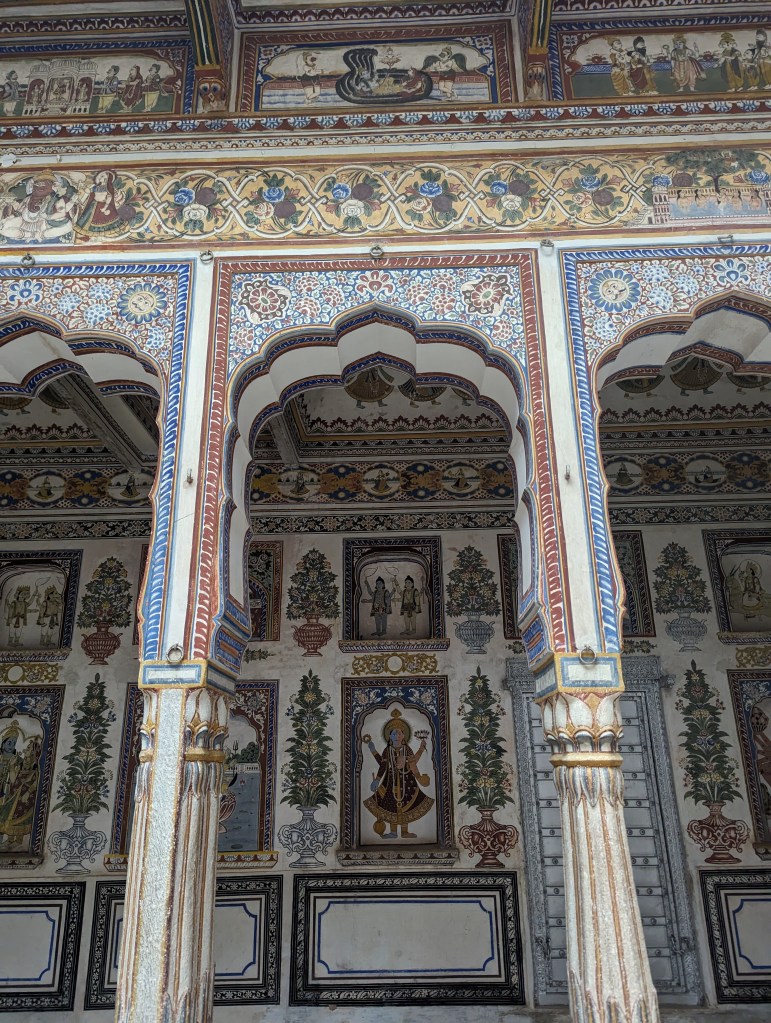
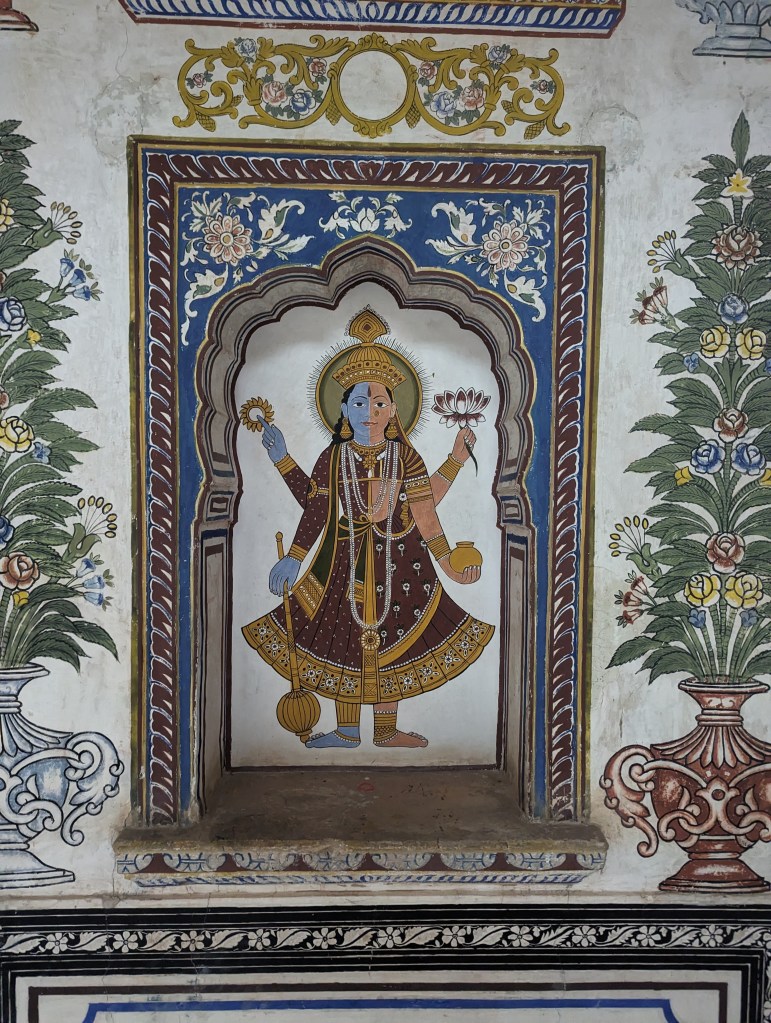
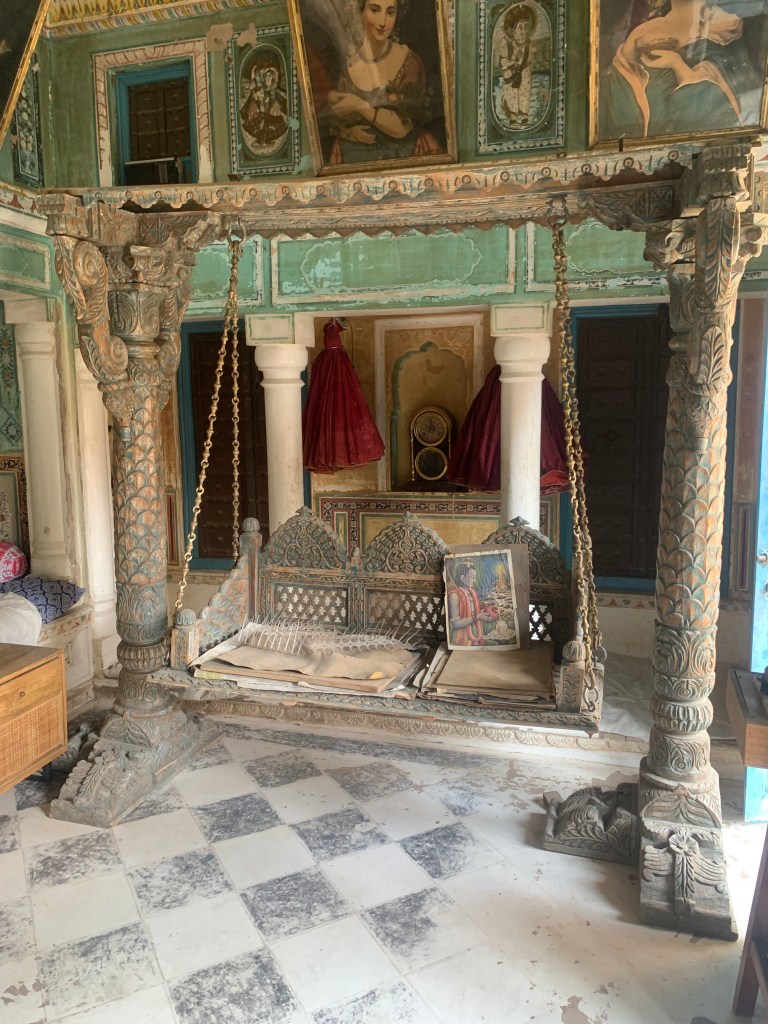
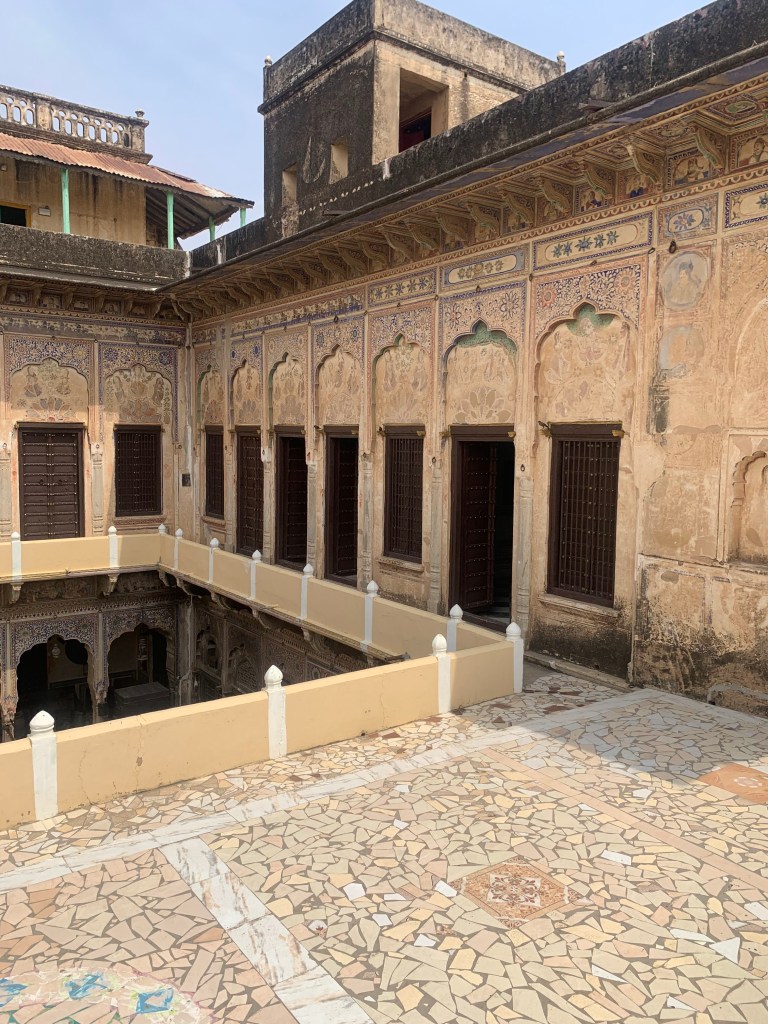
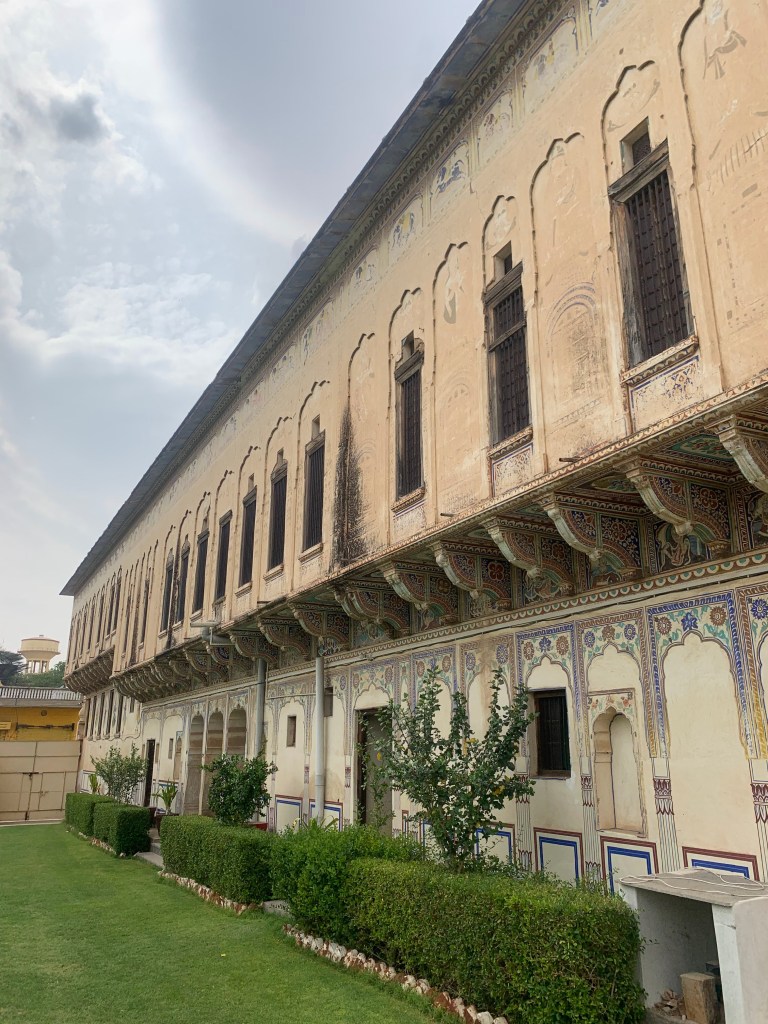
As Rob mentioned in the last blog, Shekhawati is a region in Northern Rajasthan famous for it’s havelis, having once been where wealthy merchant families lived and showed off their wealth. They have since all left for commercial cities, leaving beautiful but deserted stately homes often lived in still by a caretaker employed by the owners who will show you around. Their USP is that the style was to cover the walls, doors, ceilings etc in elaborate frescos, which contain an interesting mix of Hindu deities, traditional rural Rajasthani life, and modern inventions woven in, for example trains with elephant heads, to show the local people what the inventions they had seen in far off Kolkata or Bombay looked like.
We had decided to stay in Nawalgarh, which is a town near to the middle of the region with some reccomended accomodation in our trip bible the Lonely Planet. Rijesh, the onwner of our homestay/eco-guesthouse met us at the station and drove us home. Rijesh was a smartly dressed man who was quiet and a little tense, and his wife was mute throughout the lunch she kindly served us in the courtyard of their home which made us both feel slightly on edge (although the lunch was absolutely delicous – poha, which is flattened rice, with spices, tomatoes, yogurt and fresh lime). He then showed us up to our room which he explained was their best suite as we ere the only guests, and it was very beautiful with walls covered in haveli-style paintings, eco-fittings (very much their thing) and a 70s-looking bright orange rug (very much my thing).
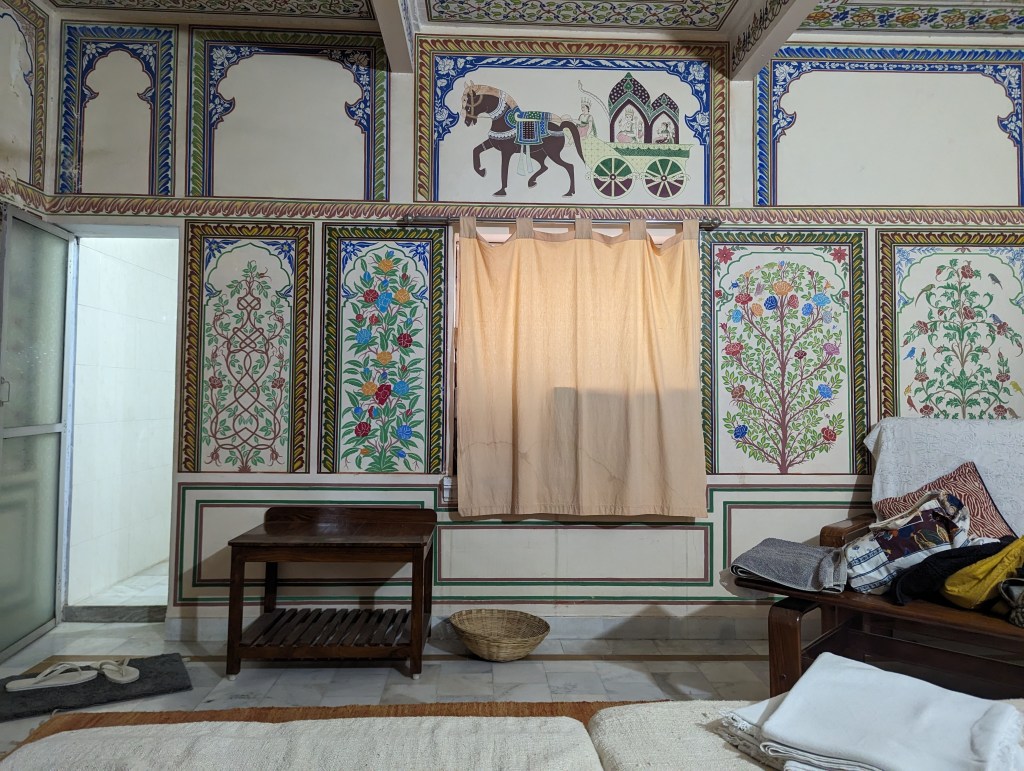
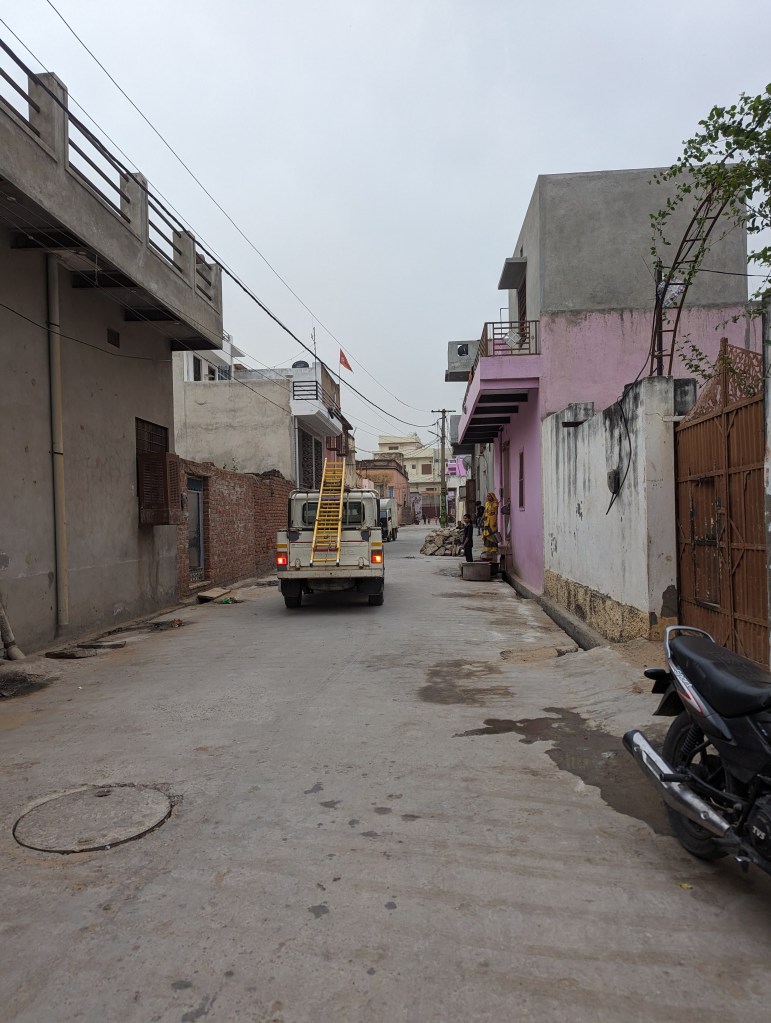
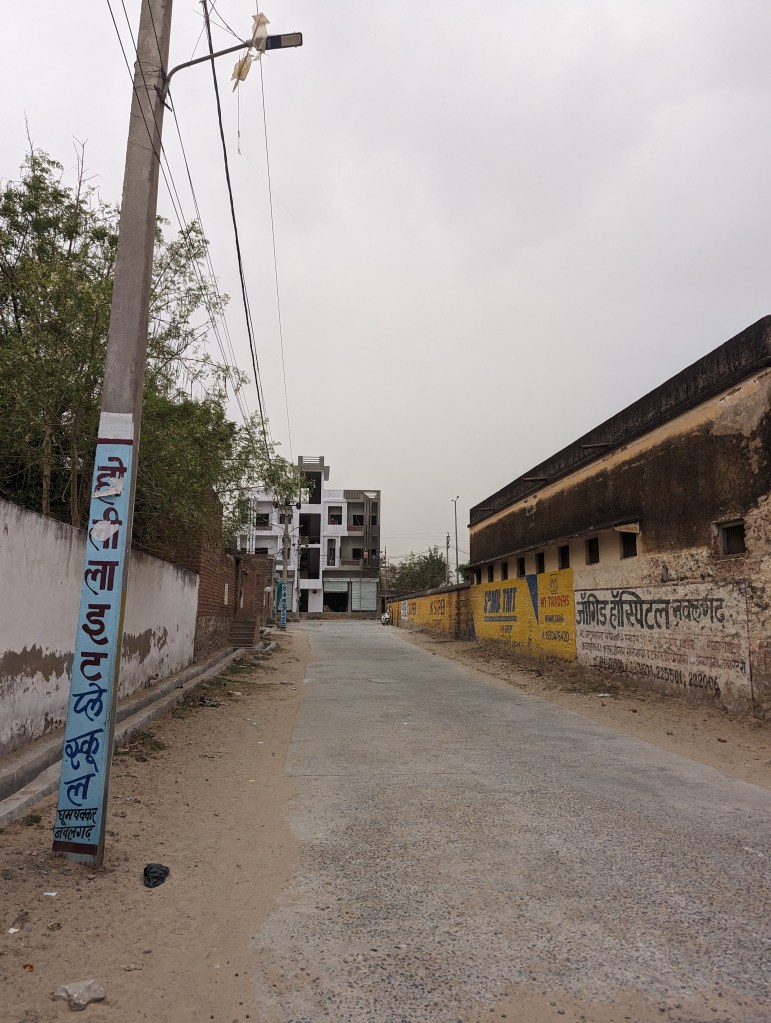
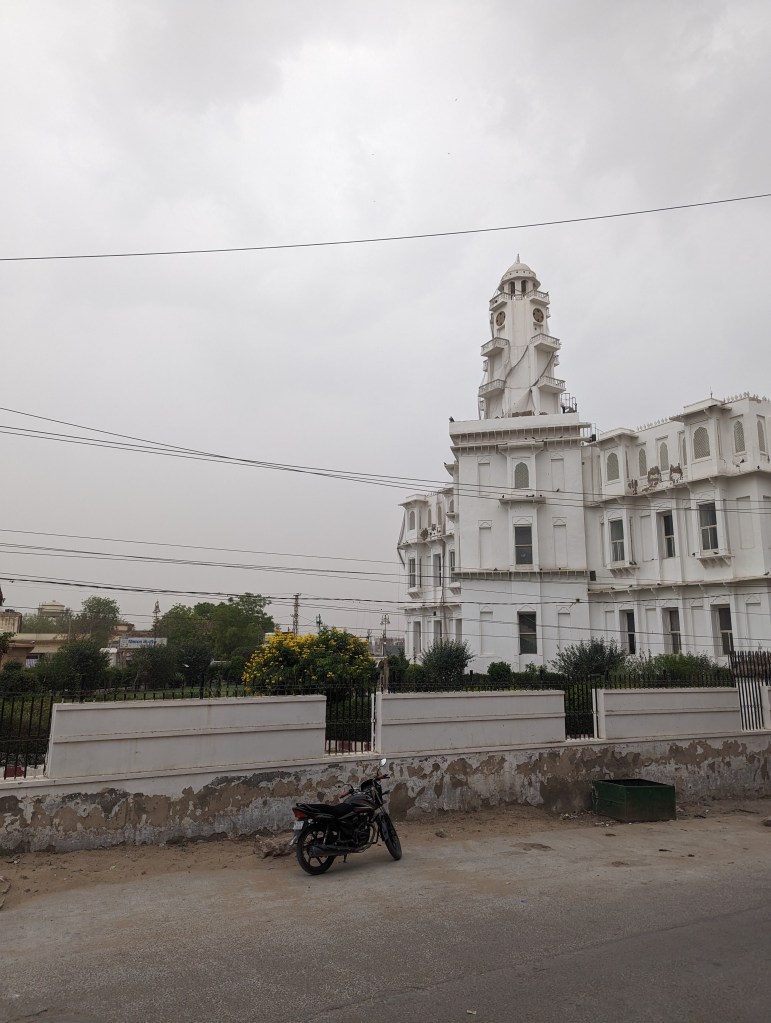
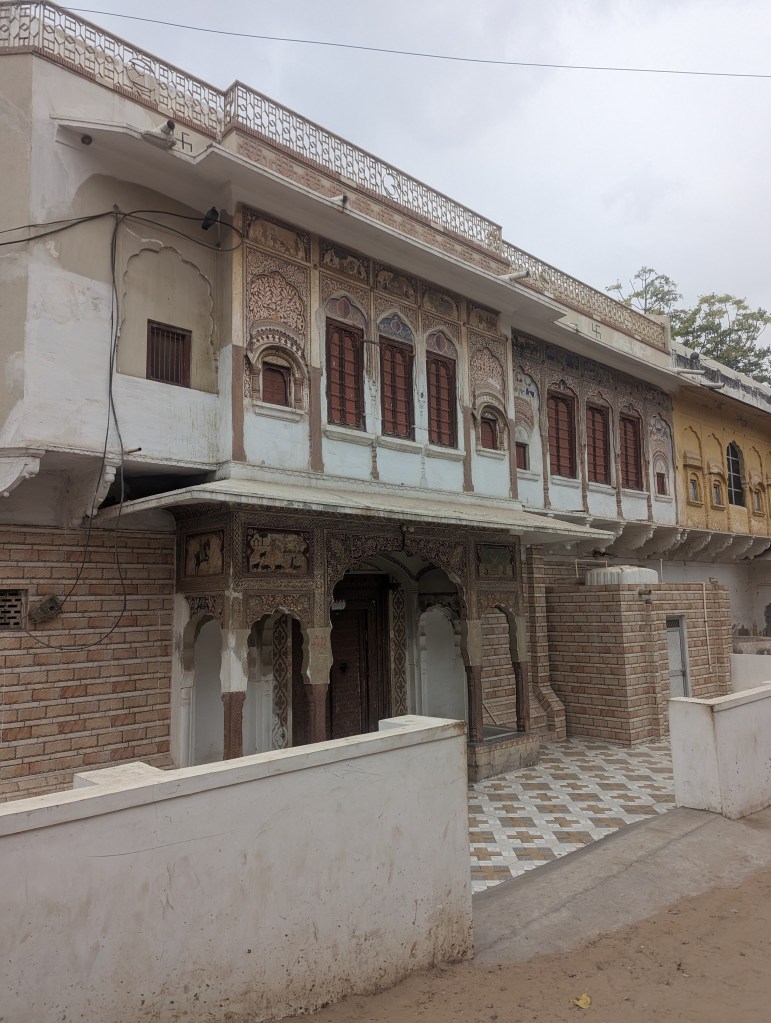

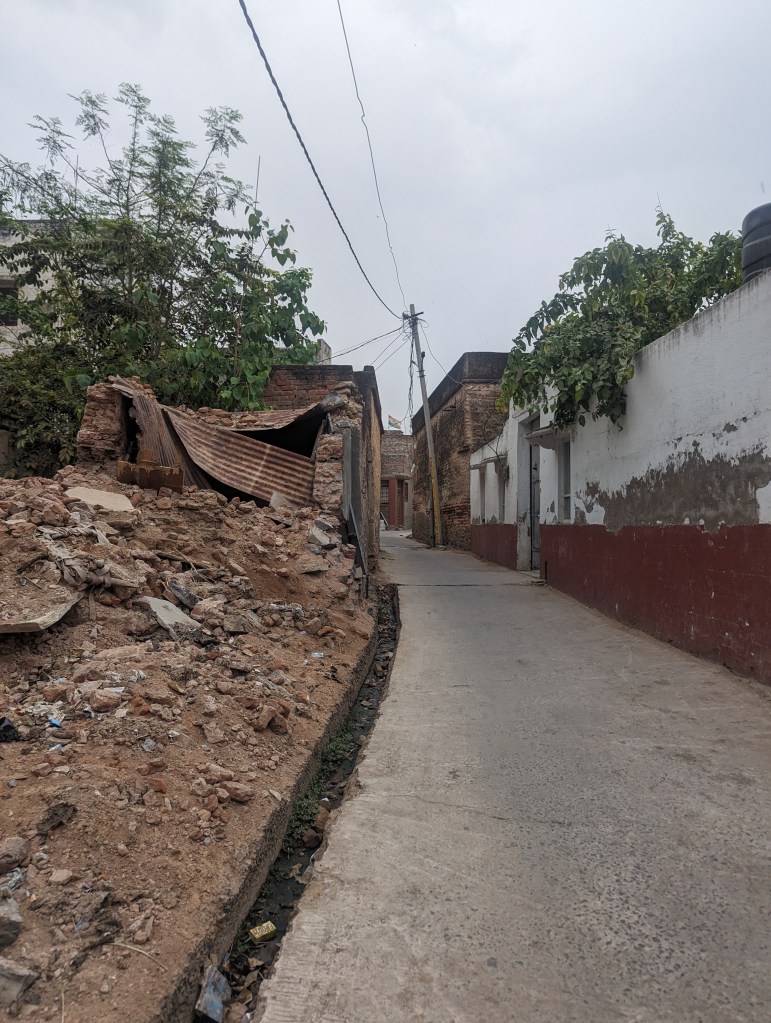
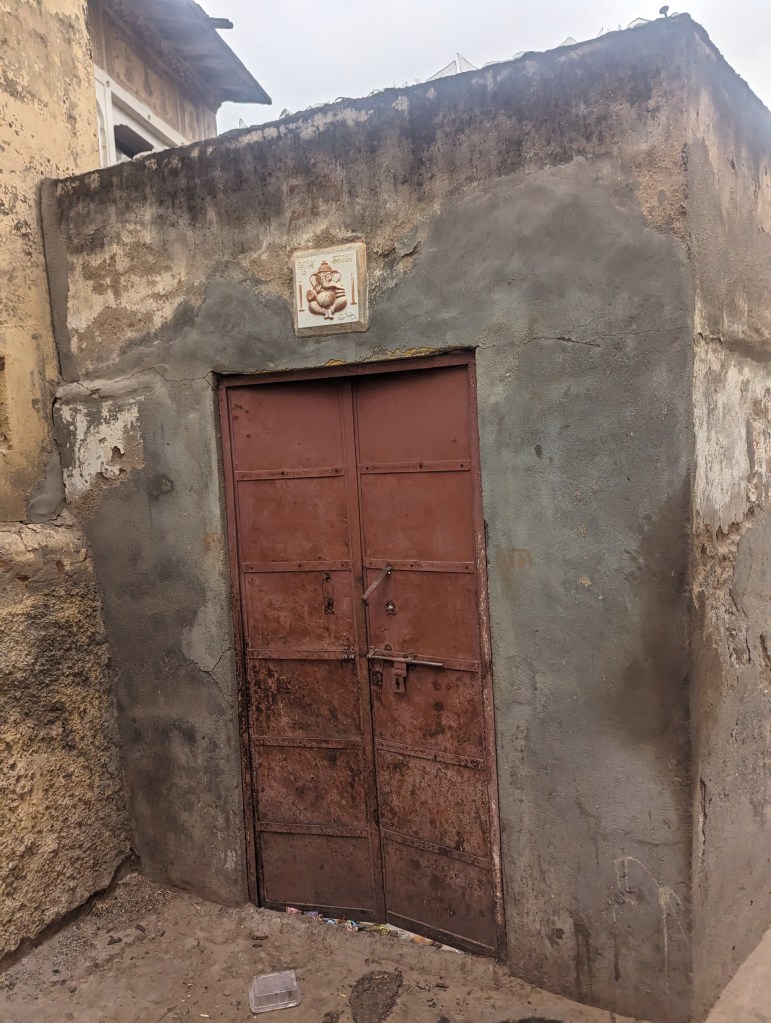
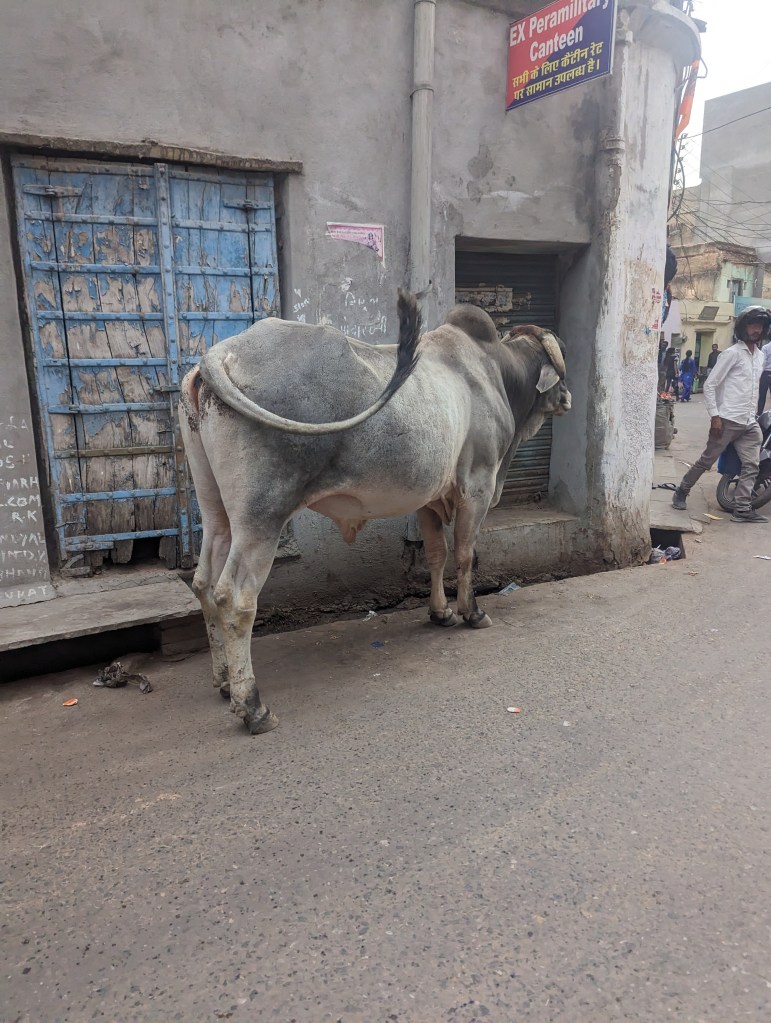
Here we found the most contentious part of Tourist Pension as he for some reason called his homestay – a looooong list of written rules on the table. They were pretty strongly worded, stating that guests who strayed such has any alcohol consumption in their room, holding hands as a couple, wearing clothes which showed any shoulder in the house, or complimeneting the beauty of their children would deeply offend them. It’s a tricky issue because obviously we were staying in their home and would always be as respectful as possible (definitely weren’t planning to drink there!) but it did make us feel much more observed/judged than we have been elsewhere on the trip.
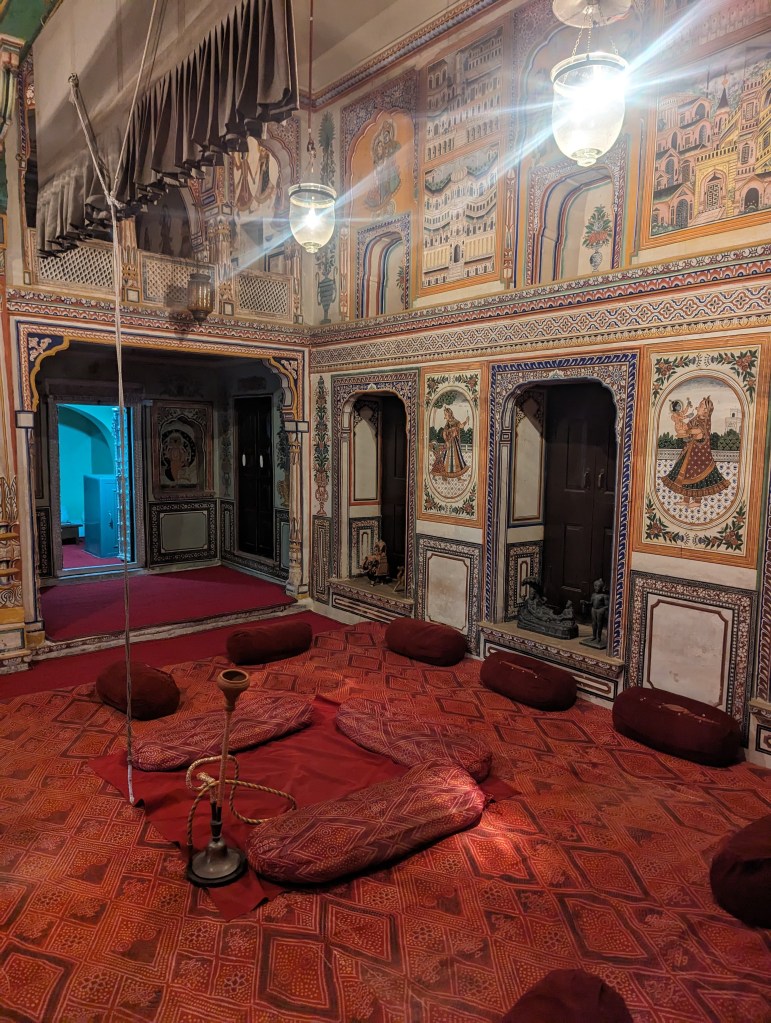
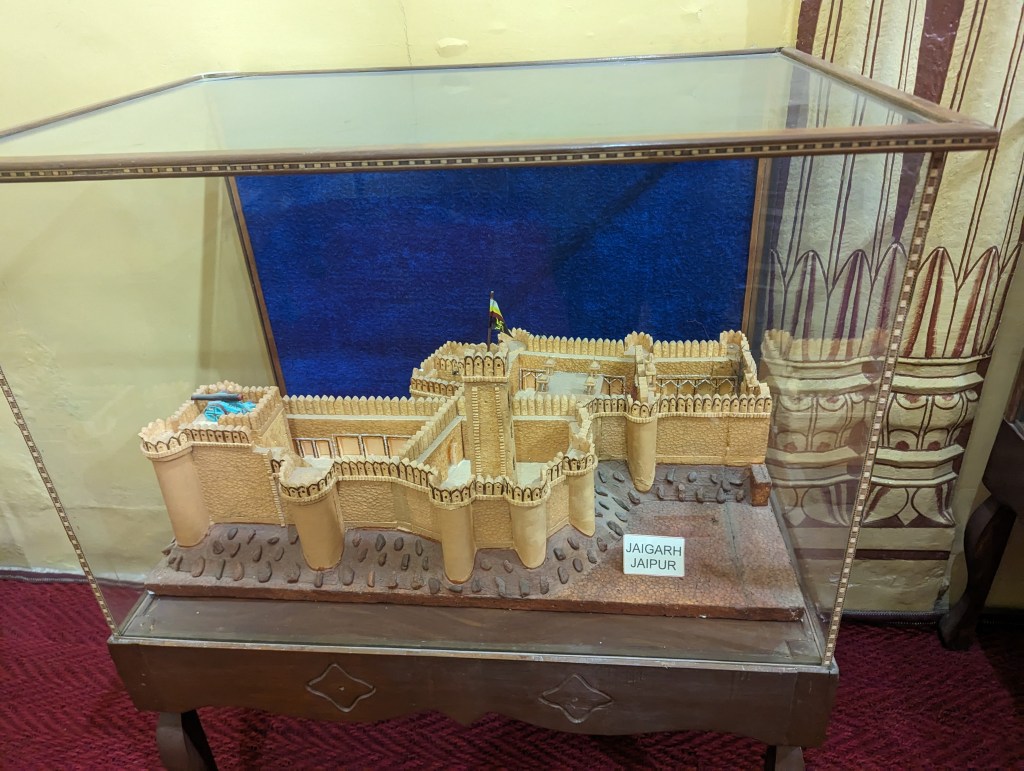
Anyway after absorbing our new rules, I threw on an incredibly modest shawl and we headed out to a haveli which has also been converted into a museum in Nawalgarh. The haveli itself was definitely impressive, absolutely wall-to-wall with some of our favourites like Krishna toe-tapping with his little flute, and it was great to see some of the palace-esque features like the business room with the floor cushions and upper hideaways for the women of the house to secretly be an extra set of ears for their husbands much more up close than in the city palaces. It also contained lots of artefacts like models of the various Rajasthani palaces and miniature paintings.
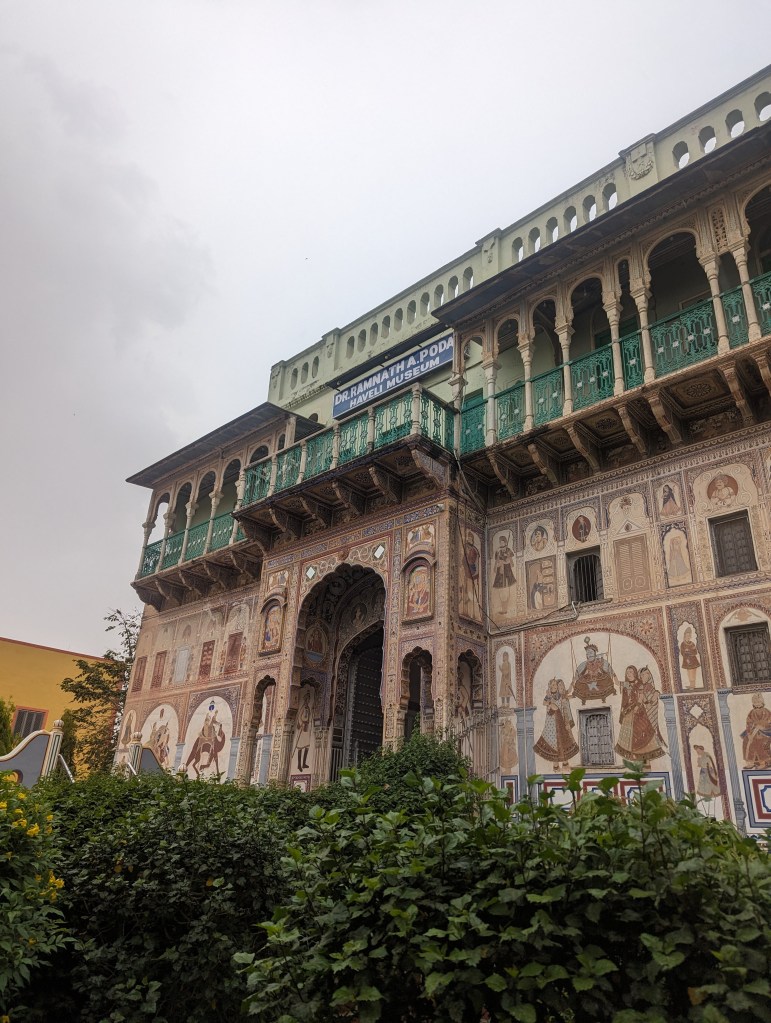
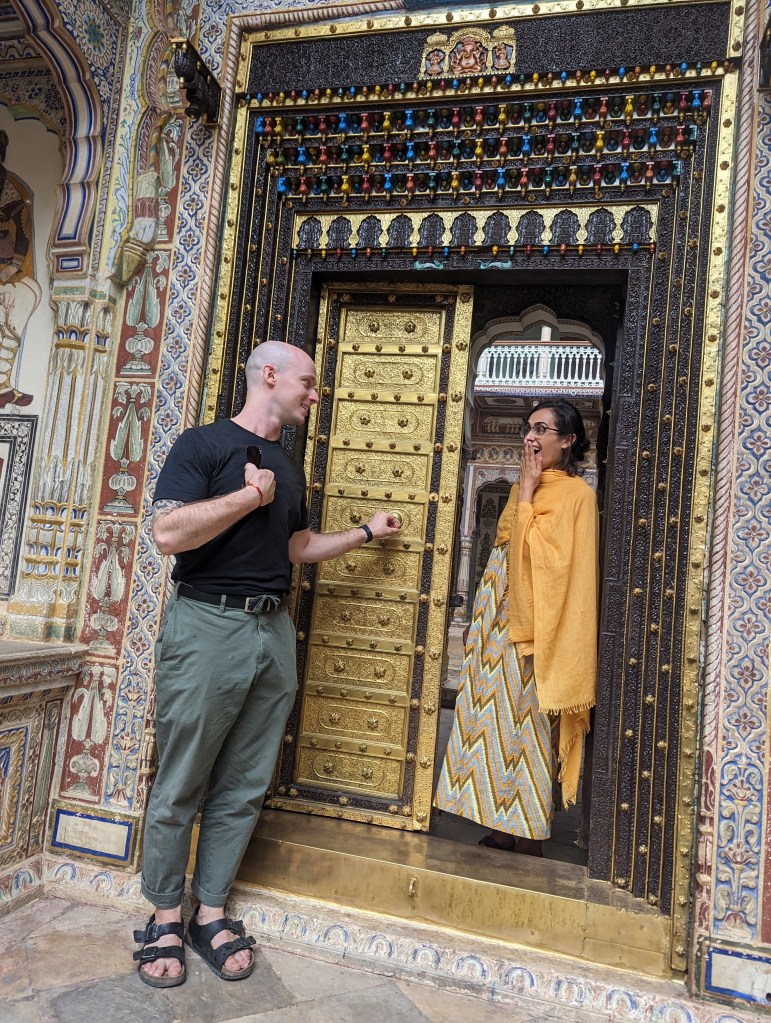
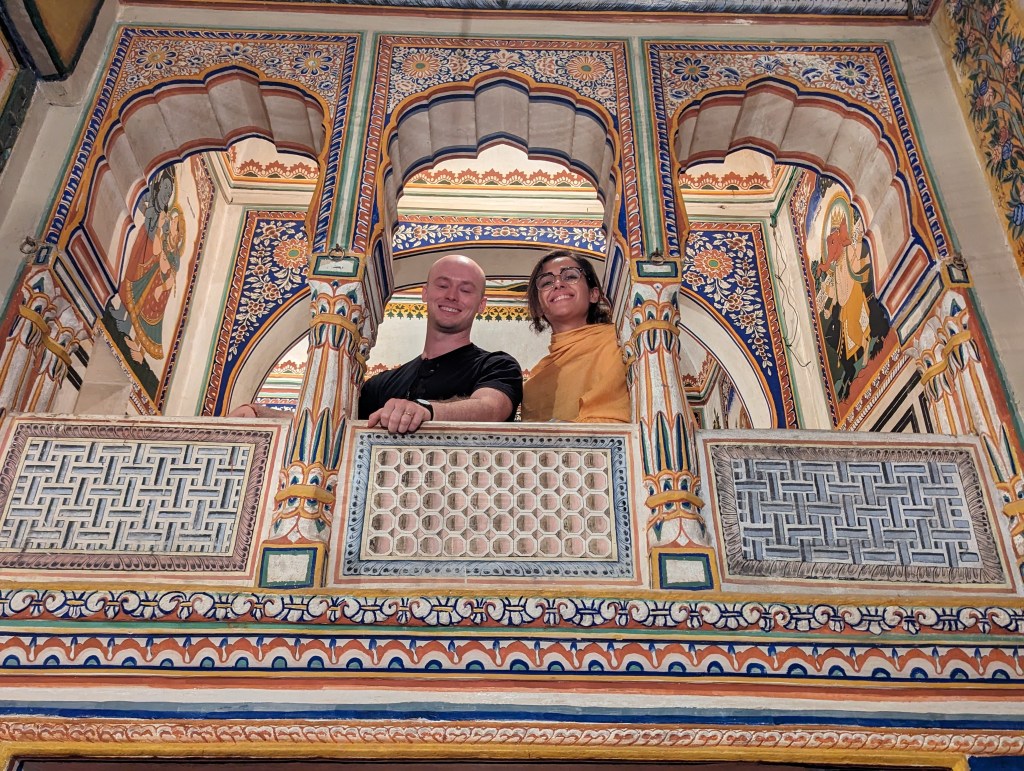
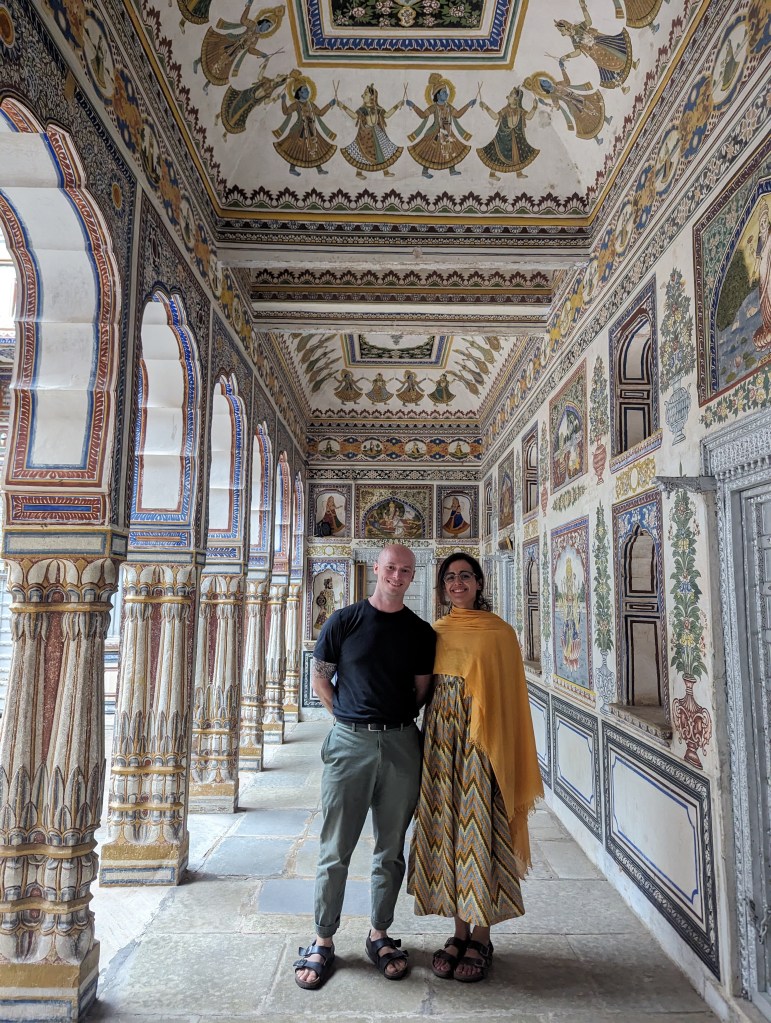
The real drama of the visit though was our hilarious guide. Like pretty much any beautiful attraction in India, there were prices on on the admission board for ‘pre-wedding photoshoot’ which is clearly a big deal here, and the guide had obviously taken inspiration from these and was very keen to shoot us in the same poses. He sat us up in the womens’s hideaways, posed us in storylines like me leaning out of a door shocked to see Rob’s unannounced arrival, and even took a slow-mo video of us coming out of the main door having instructed Rob to ‘put on his goggles’ (sunnies) for the shot. We had great fun obliging him, even if the photos might look like we’ve had a horrible argument by the fact we refuse to touch at all having just been scared right off by Rijesh’s rulebook!

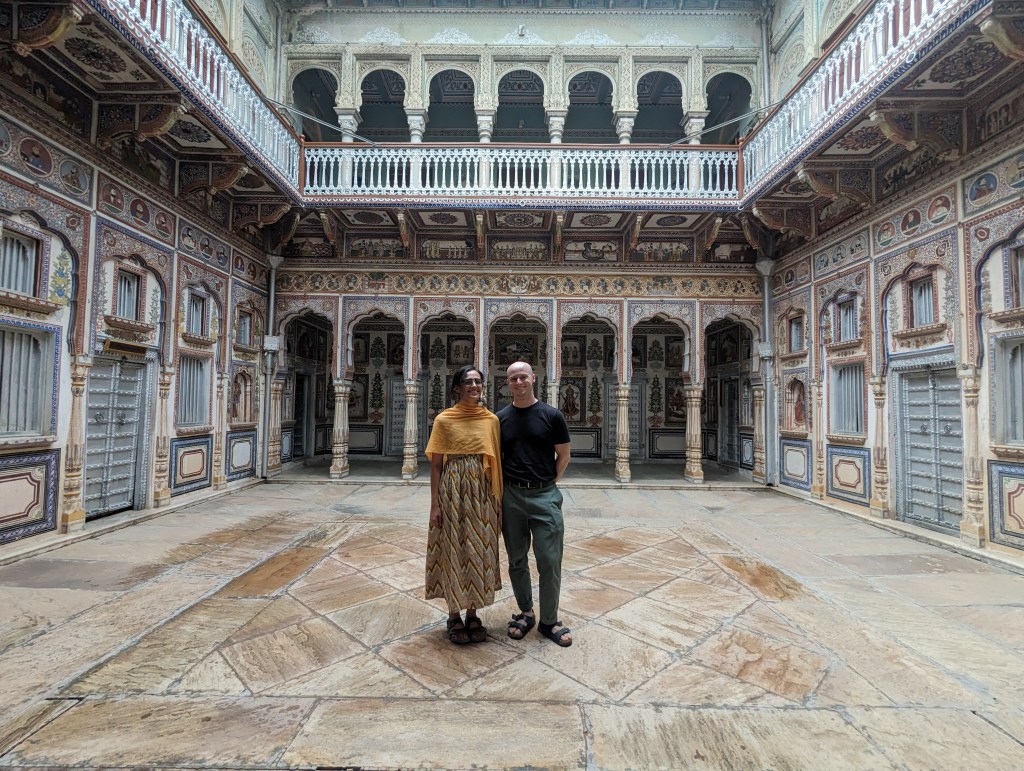


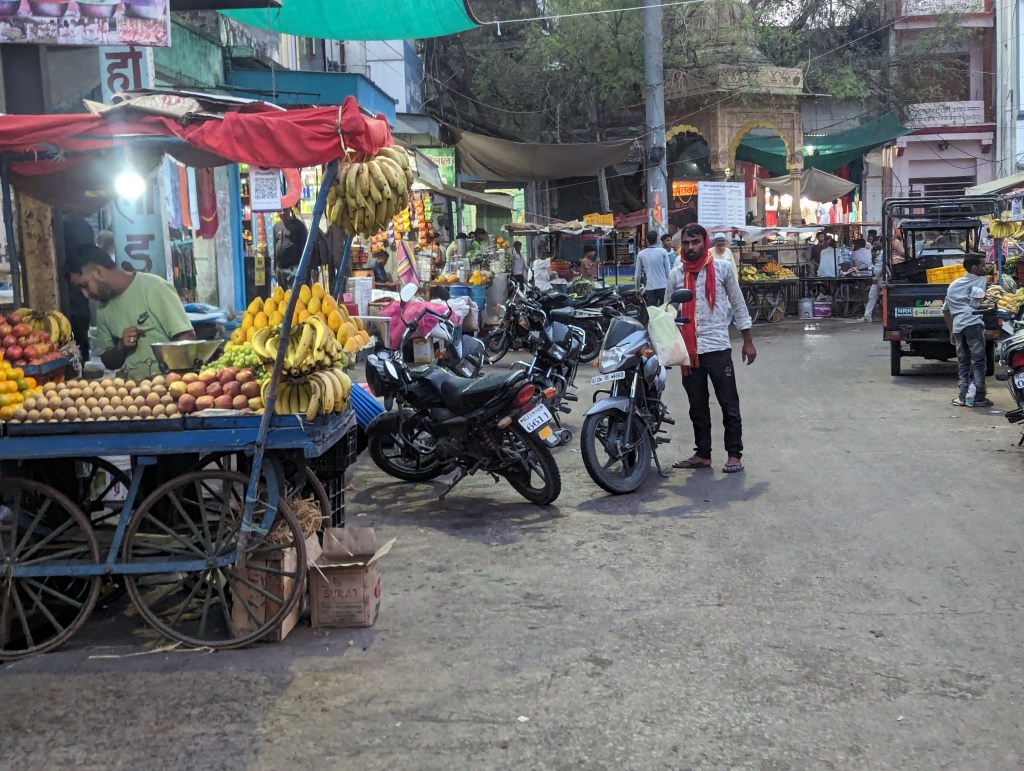
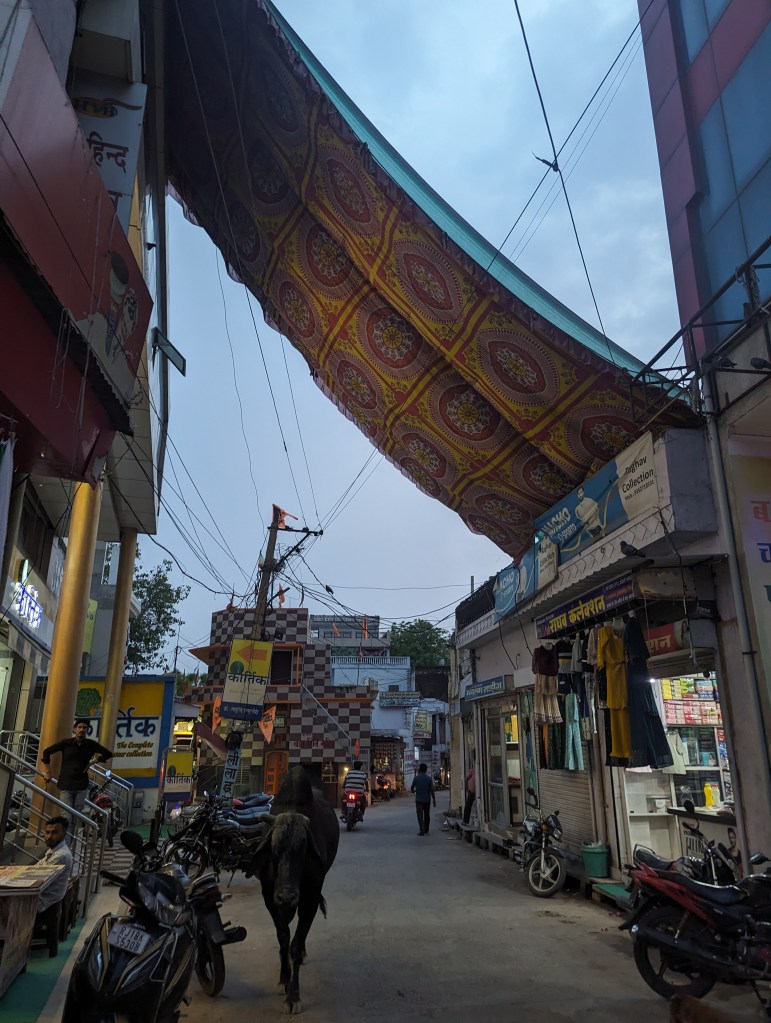
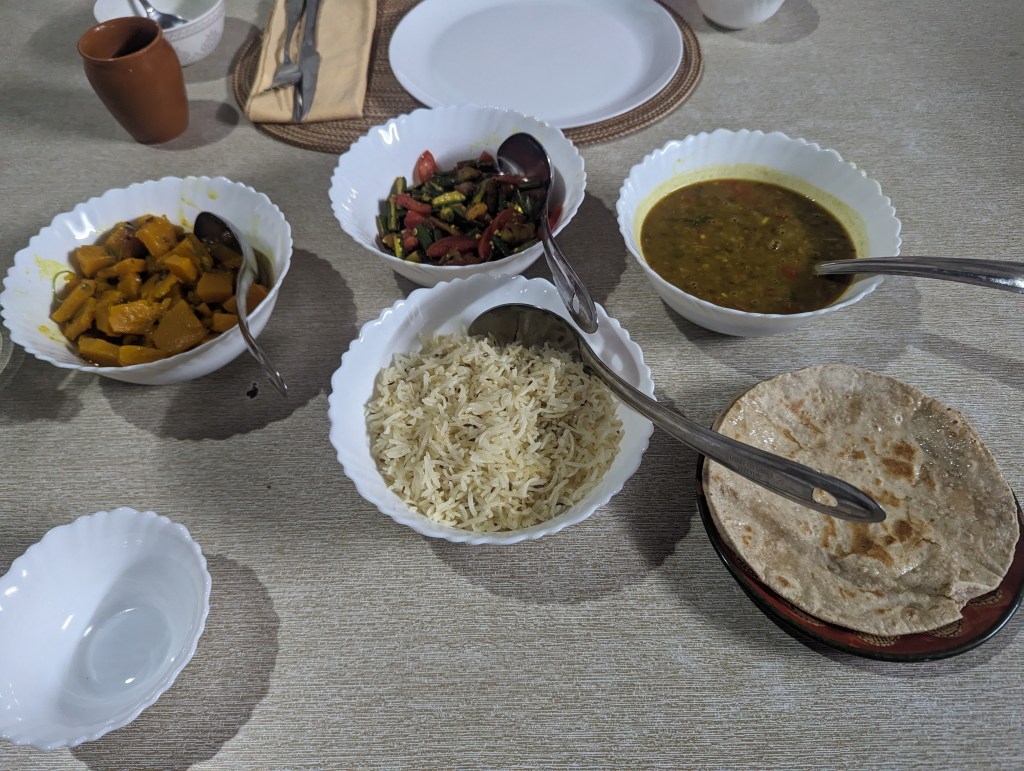
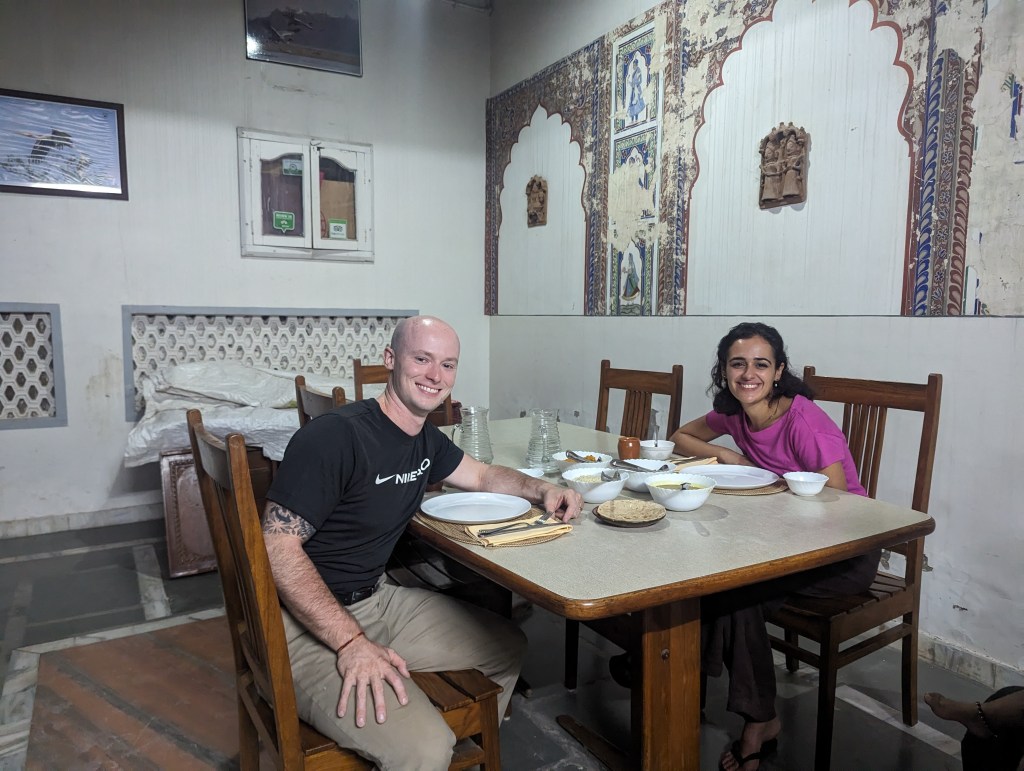
We walked back in time for dinner at the homestay, through the streets of Nawalgarh which were a hub of small town activity and still seem really quite affluent. I may be reading too much in to it but I personally felt Rijesh’s wife was in a significantly better mood once I was in my shawl, although she may have just been stressed earlier. She smiled and chatted in broken English as she served us a delicious 3 course meal. We had pumpkin soup for a starter which tasted so English! Followed by homemade chappatis, dal, curried potatoes and vegetables. Rajish sat at the table with us throughout and again seemed a little morose, but cheered up somewhat by the arrival of his almost 1 year old granddaughter on his lap which the whole family were absolutely obsessed with (it was so hard to remember it as against custom for us to call her cute!).

After the mains his wife led us through to the kitchen to show us how they made halva which was pretty spectacular. The 3 women in the kitchen threw ghee, sugar and flour into a pan, crushed in fresh cardomon, sliced up almonds and served us warm sweet halva which reminded me in both taste and texture of a more exciting version of treacle and I honestly can’t wait try and cook up in the British autumn. We finished up with fresh honey-lemon-ginger tea (probably my new go-to here where Rob’s is a lemon soda) and headed to bed.
Sunday –
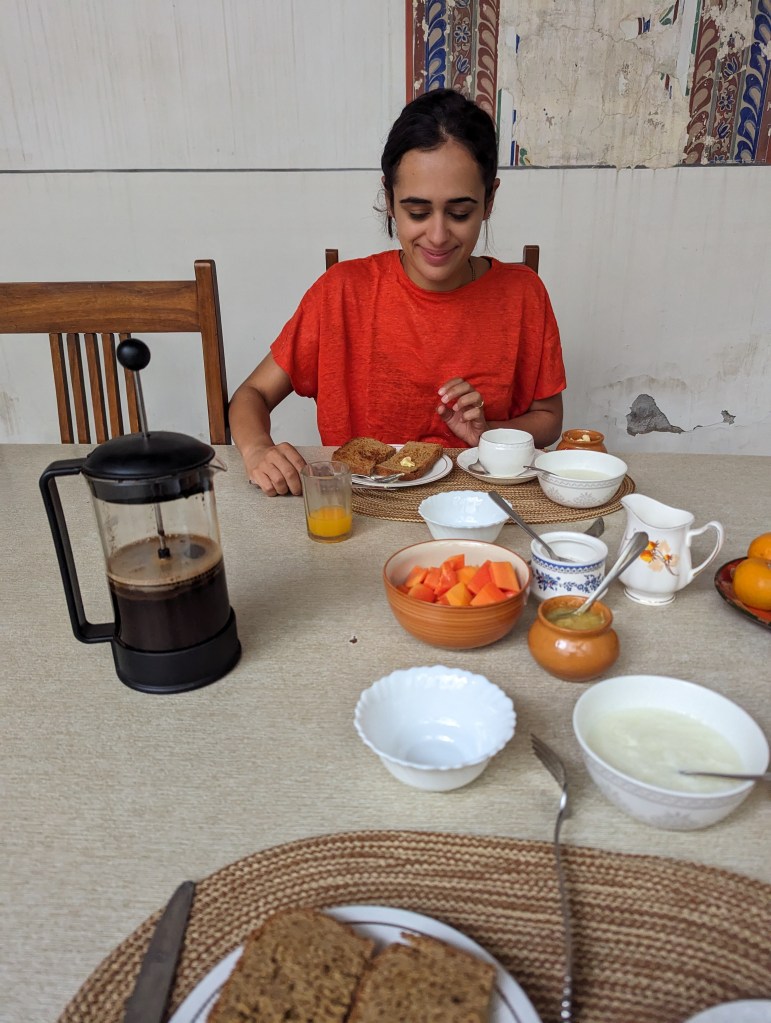
We got the impression (and in actual fact I think it was written in the infamous rule book) that the family got up early, so we agreed on a relatively early breakfast for Sunday morning. We were brought bowls of curd with papaya, homemade bread with homemade marmalade, and a cafetiere full of good, strong coffee. The only slight detractor from the breakfast was Rijesh’s insistence on sitting with us whilst we ate but equally awkwardly not really making conversation. Mercifully, after a few minutes he retired to the nearby sofa and left us to it.
We had asked whether there was anywhere we could borrow a moped in Nawalgarh to allow us to explore the local towns, and Rijesh explained there unfortunately wasn’t. He did, however, suggest that we could borrow his nearly new electric moped that he’d done but 800km on. I was a little nervous about this as he seemed a man that might hold a grudge and my scooting experience is limited, but it seemed to be the only way around without resorting to unreliable buses. Rijesh showed us the ropes of the moped and, after getting ourselves ready, we headed out.
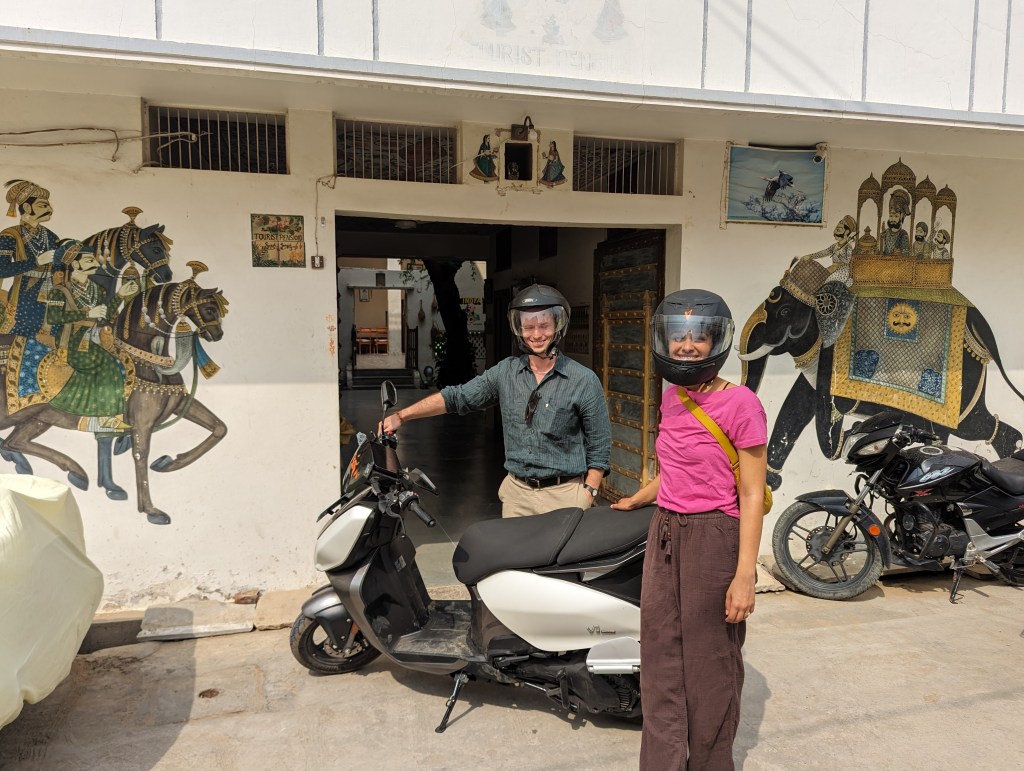
The first port of call was another haveli in Nawalgarh itself, and we made our tortuous way through the tiny streets to find it. The doors to the haveli were locked, and a phone number was scrawled on a piece of paper tucked into one of the hinges. I called this and explained that we were outside the haveli and would like a look around, to which the person on the other end hung up. There was no sign of anyone after a few minutes, so we gave it up and headed to the next town.
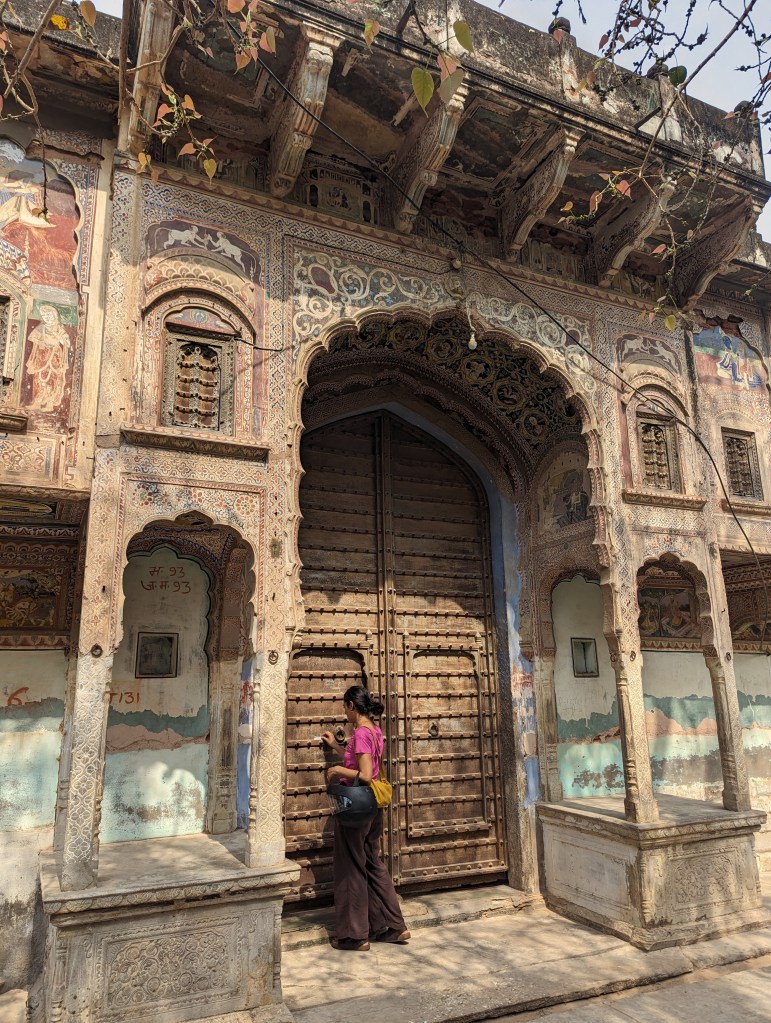
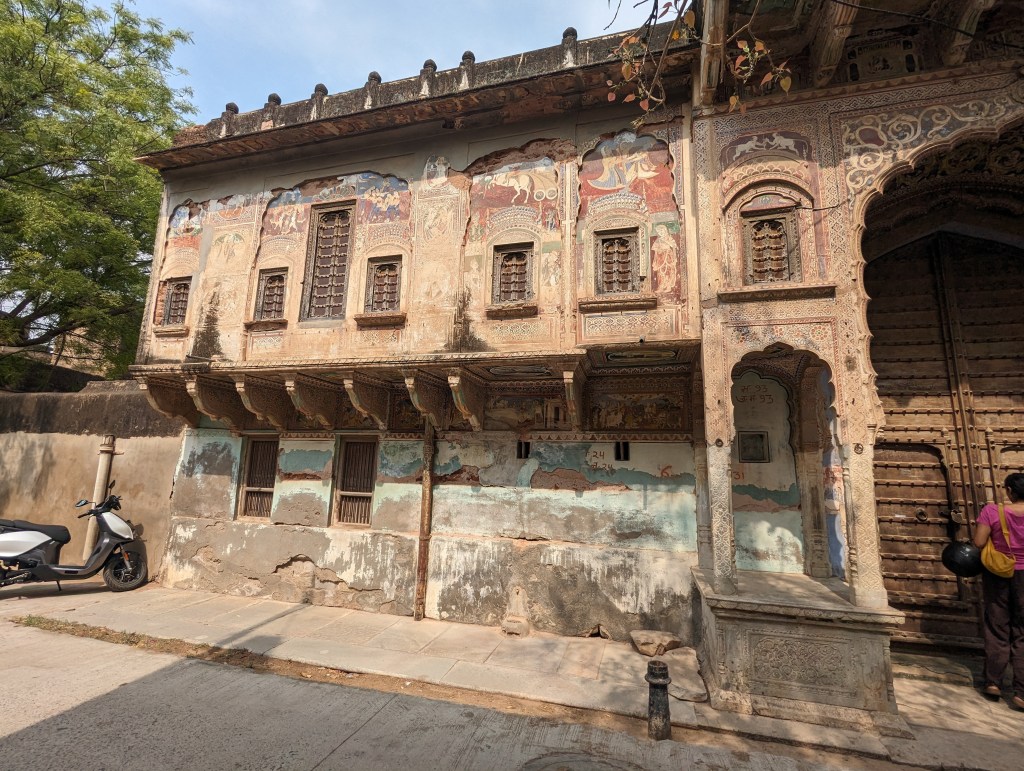
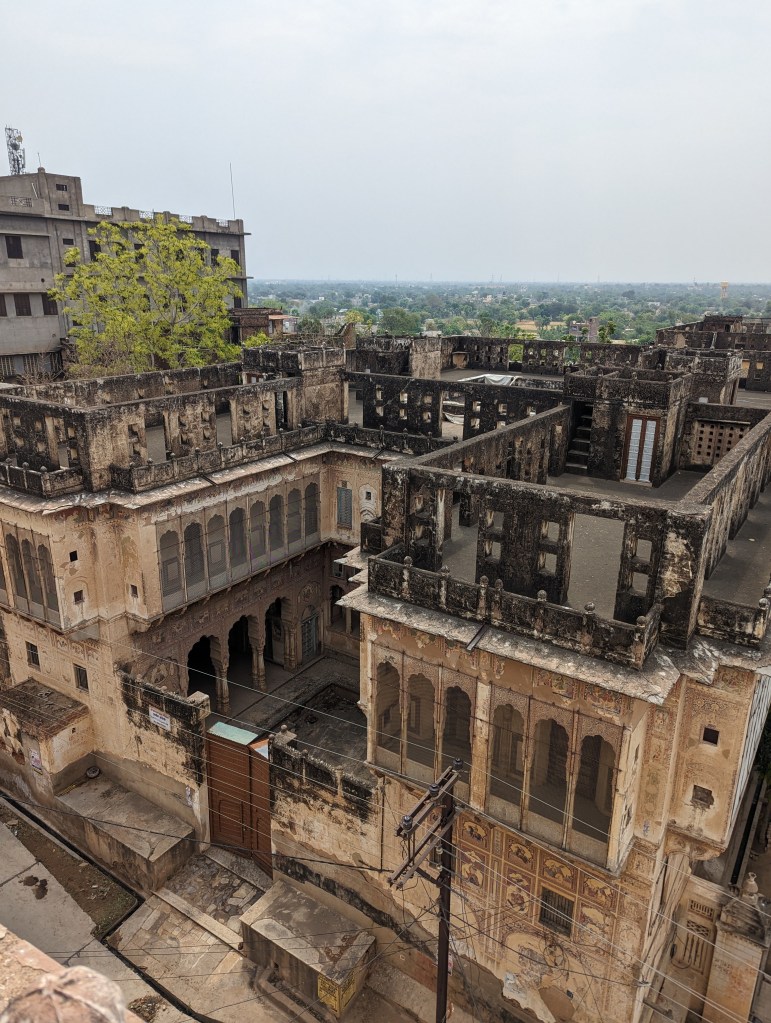
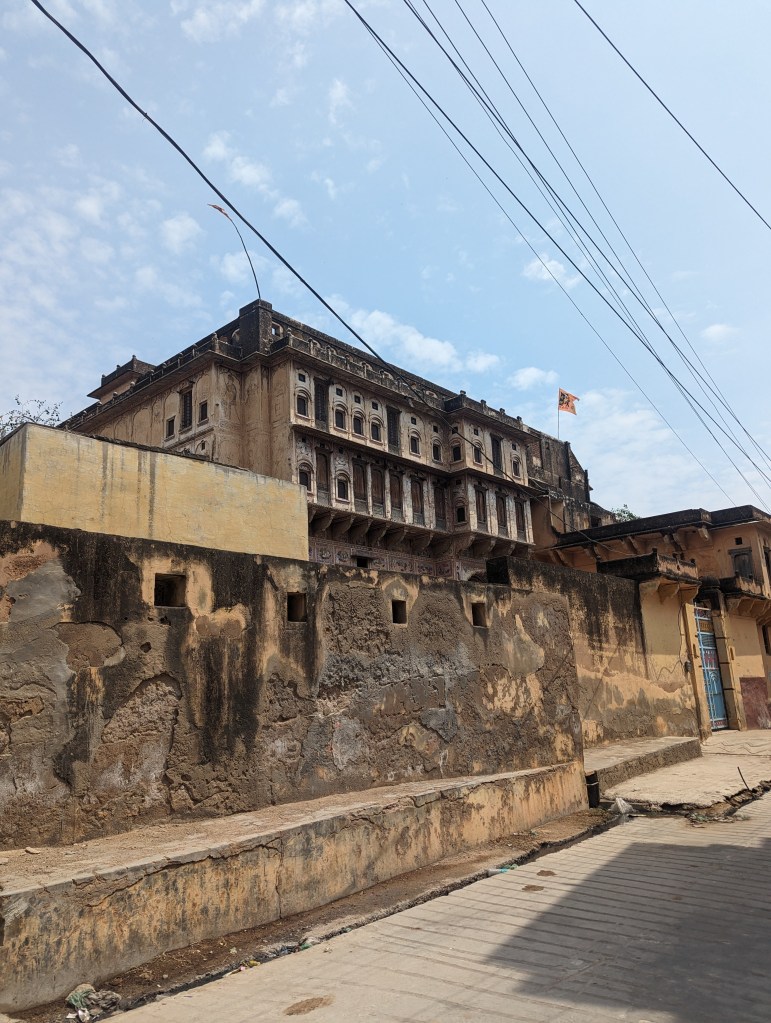
The small town of Dundlod was only a 20 minute or so drive down a dusty road going north, and we arrived unscathed apart from a worrying five minutes when the error message saying “limp home” kept popping up on the moped screen as we lost power. After restarting a couple of times, the problem seemed to go away. As described, the havelis of Shekawati are huge properties but often looked after by only one or two caretakers. This, combined with an almost complete absence of any other tourists on which the towns seemingly depend, gave a ghosttown like quality. We found the first haveli on our list which was similarly lavishly painted and spacious, and similarly occupied by a friendly man who insisted on taking our pictures through windows, playing a board game and in a variety of other staged positions.

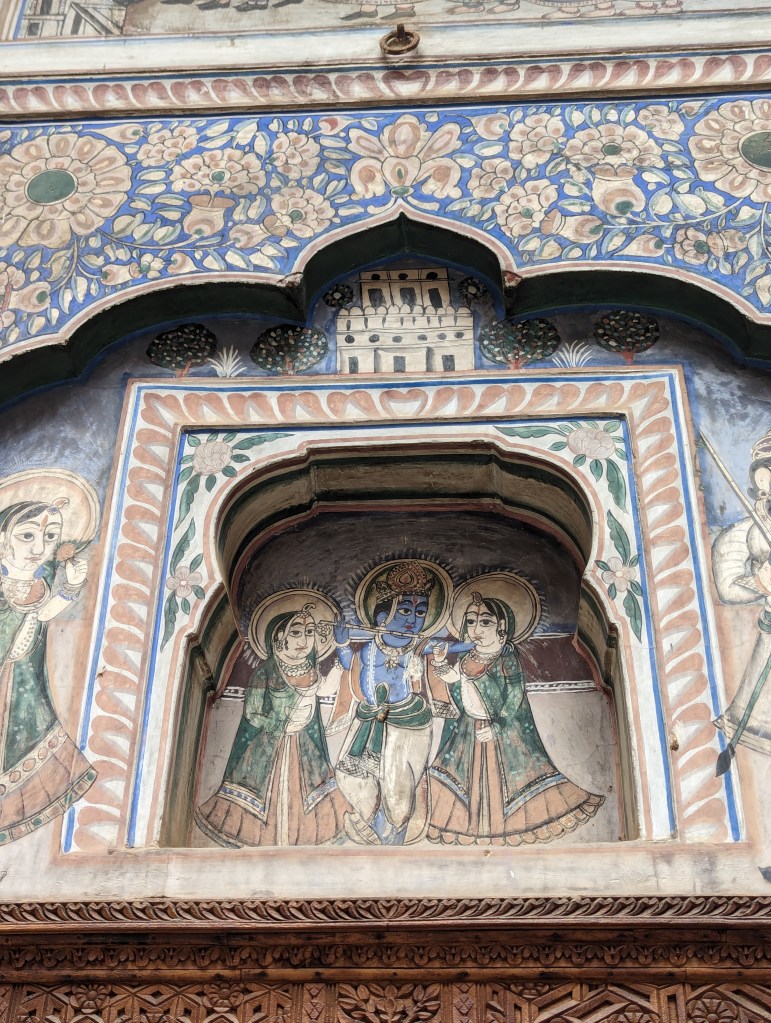


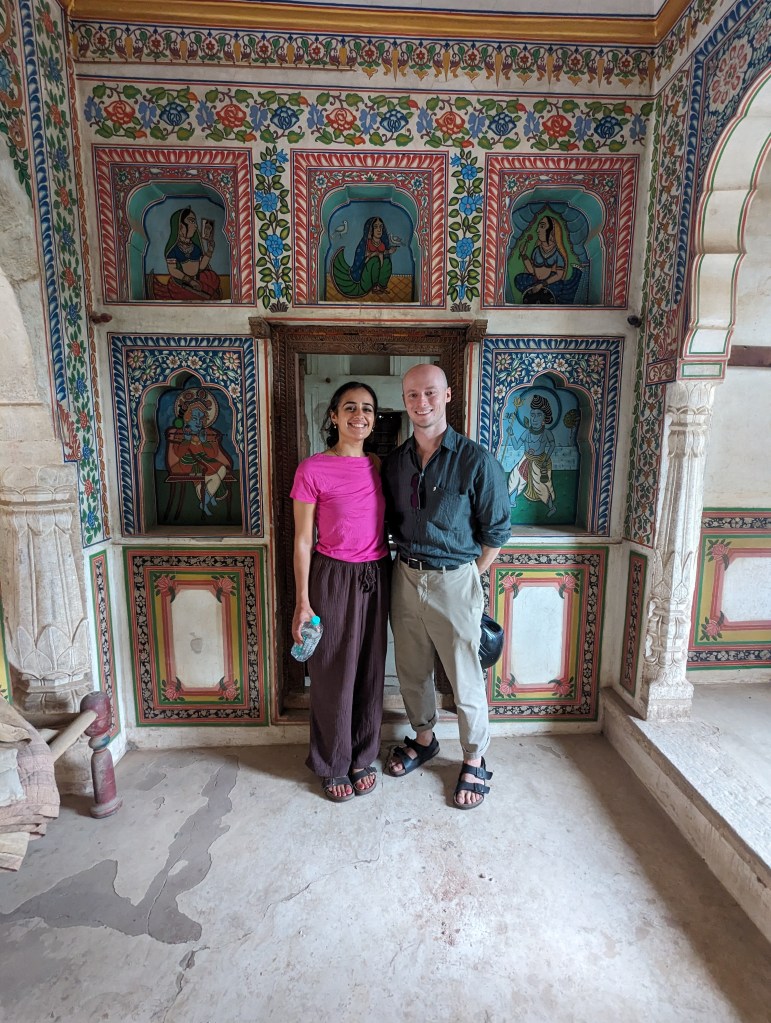
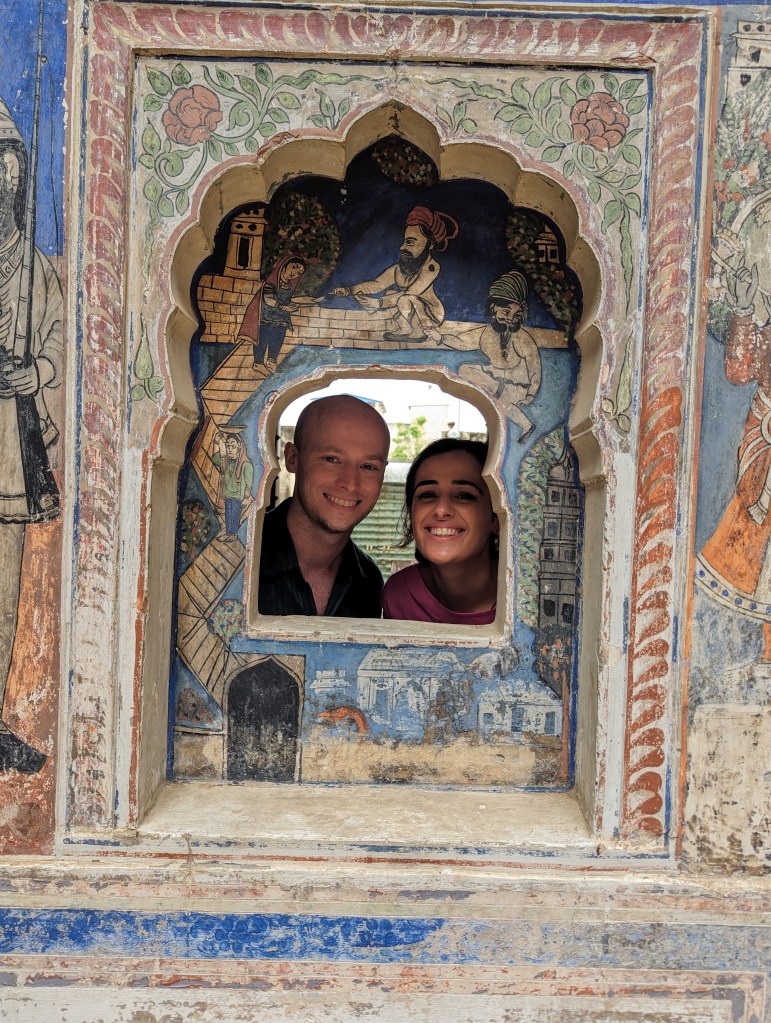
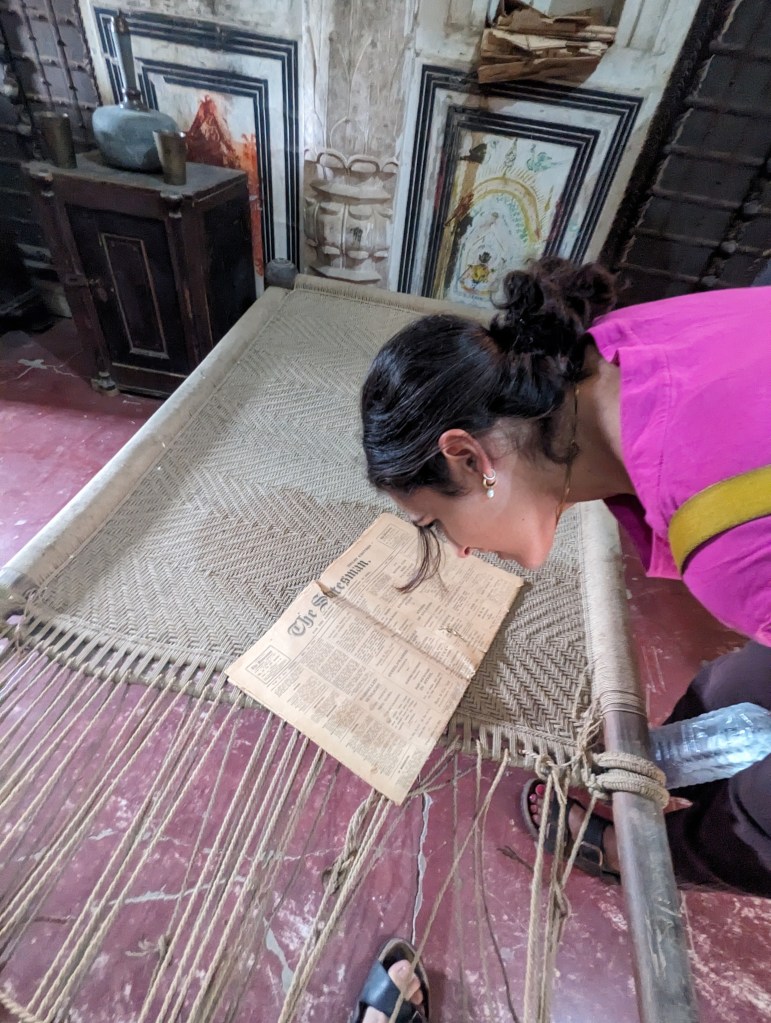
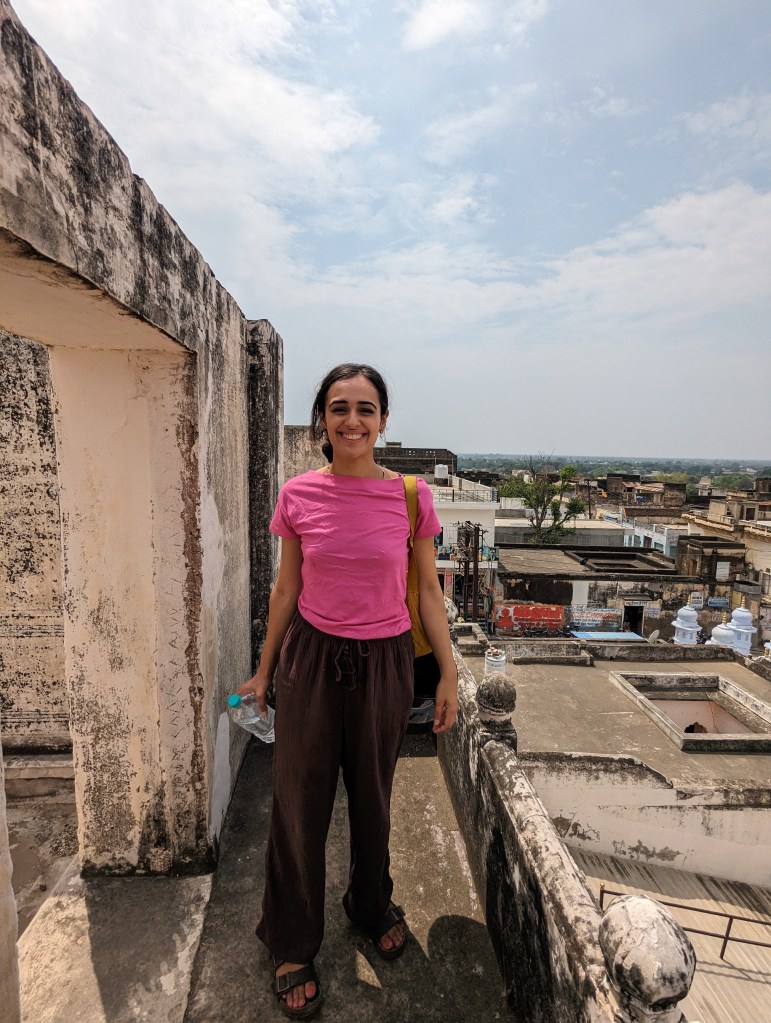
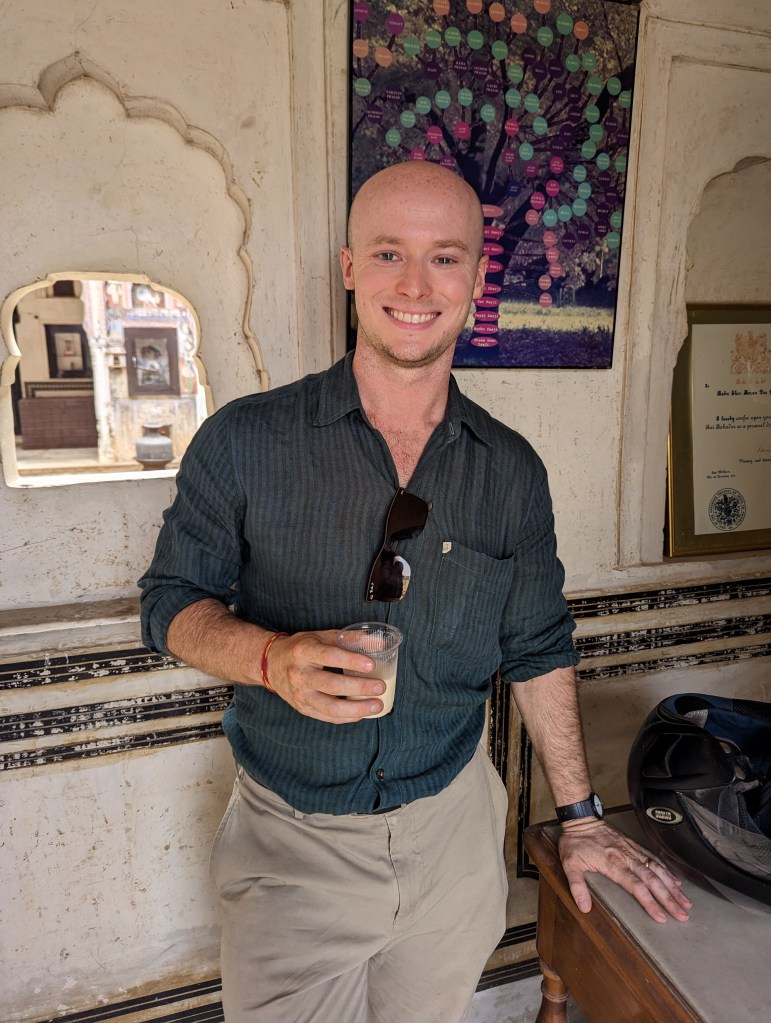
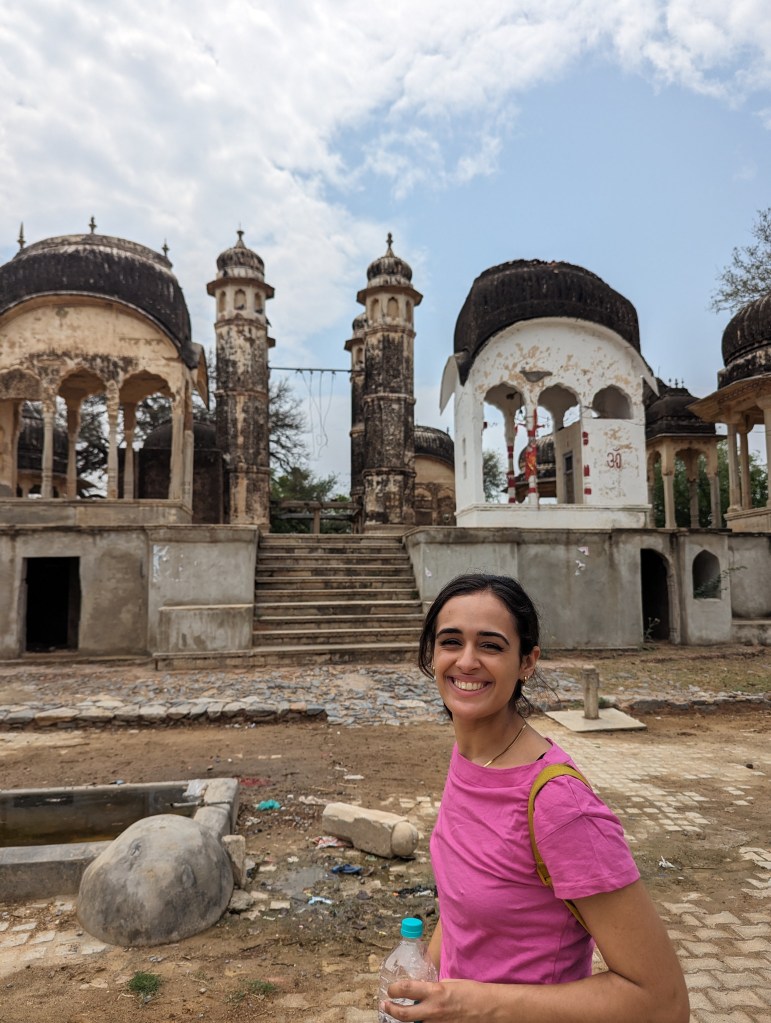
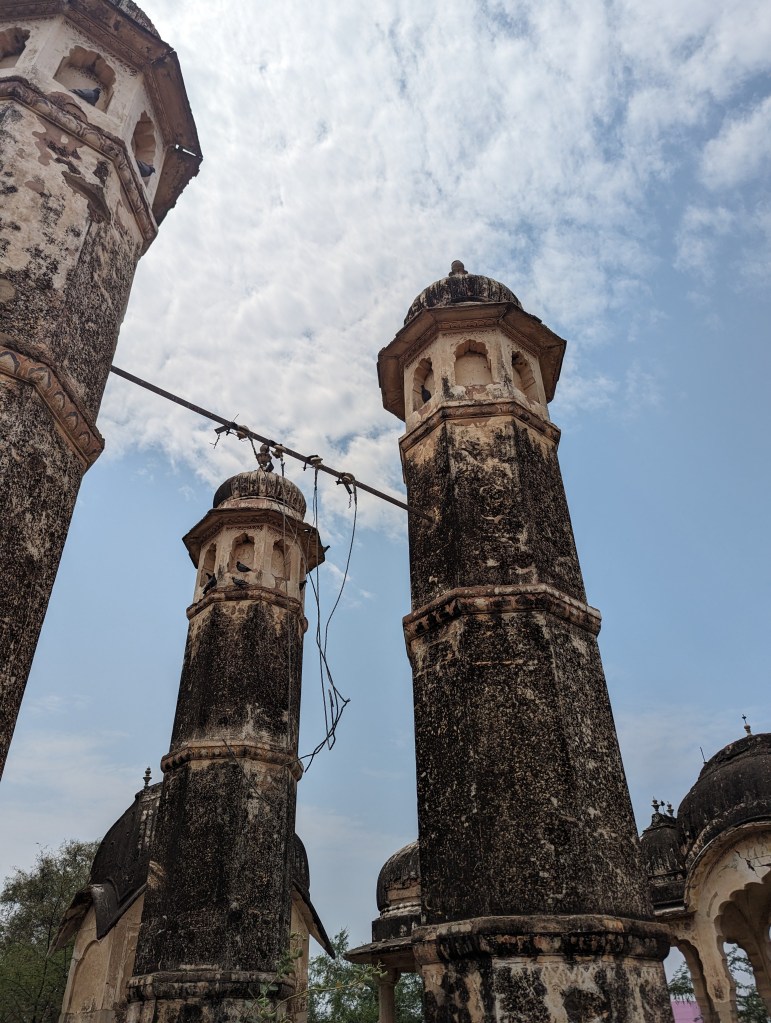
We were again the only people in the haveli, and so had the man’s full attention. He showed us to the roof of the house which commanded long views out over the town and the flat, dusty plains of the area. He showed us old English-language newspapers for the 1930s and an assortment of other paraphenalia before offering us a hand-churned lassi from a metal bucket in a dubiously warm fridge. Ellie managed to convince him she didn’t want any, so I took one for the team and drank a cupful. It was not completely foul, but was lumpier and more sour than the tourist lassis we’ve had elsewhere. We thanked him and moved on to the other site in Dundlod worth seeing – an abandoned cenotaph and stepwell at the edge of the town. Both were impressive pieces of archetecture, and I’m undecided whether the fact they were uncared for and abandoned added to or detracted from their appeal.
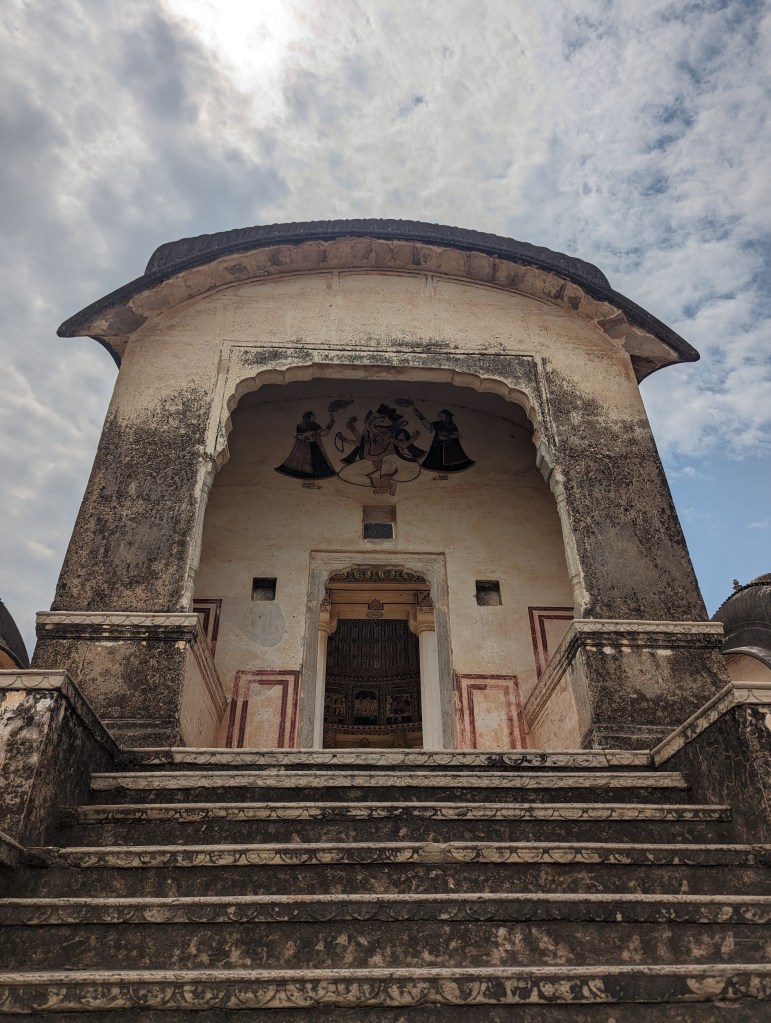
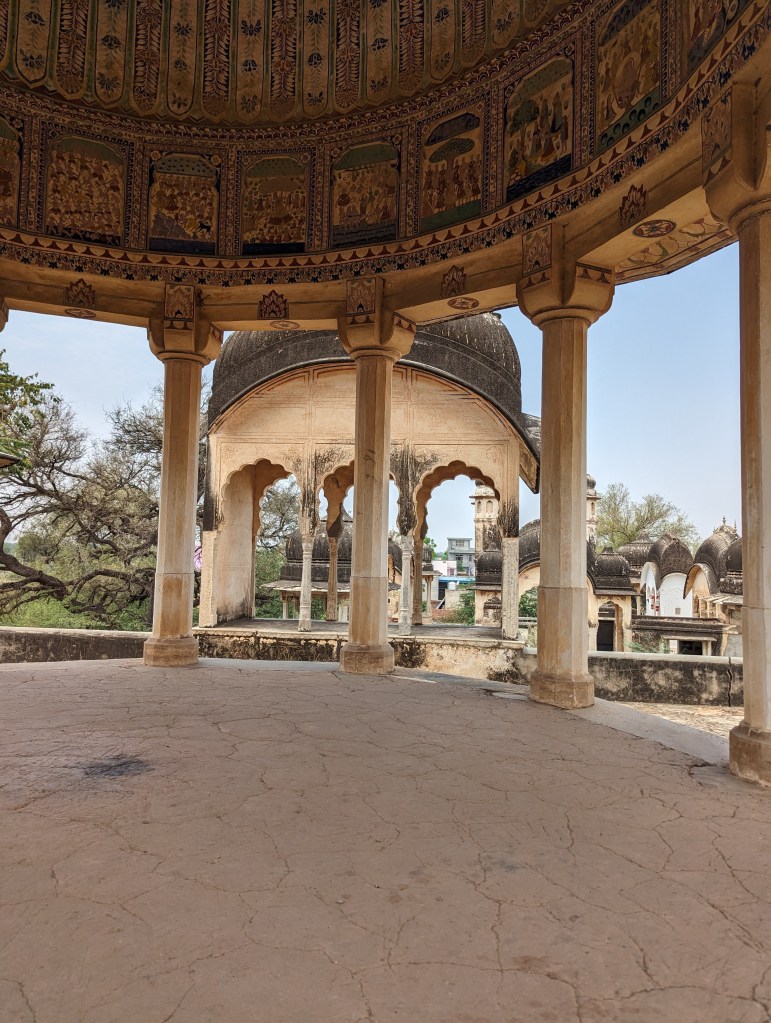
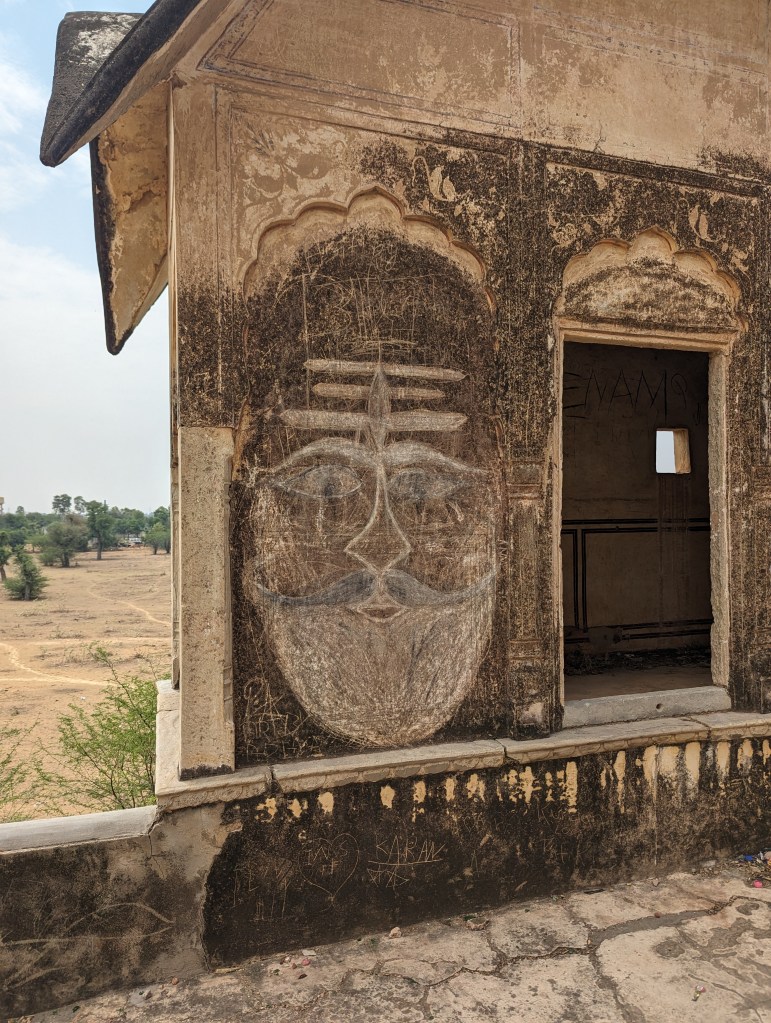
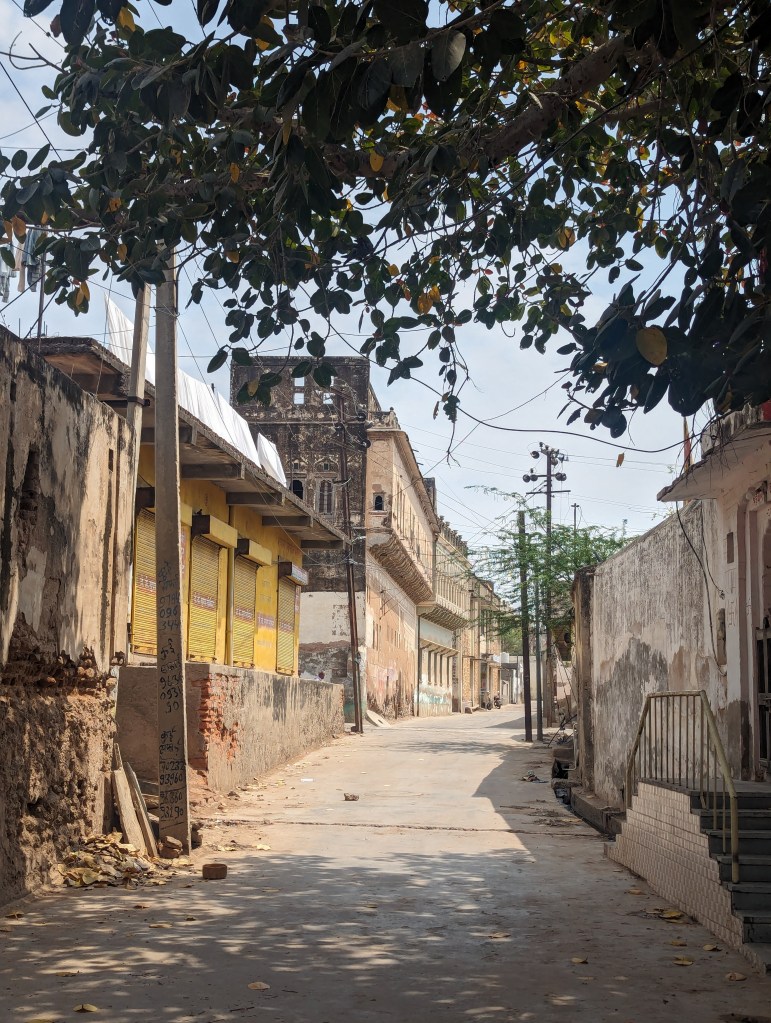
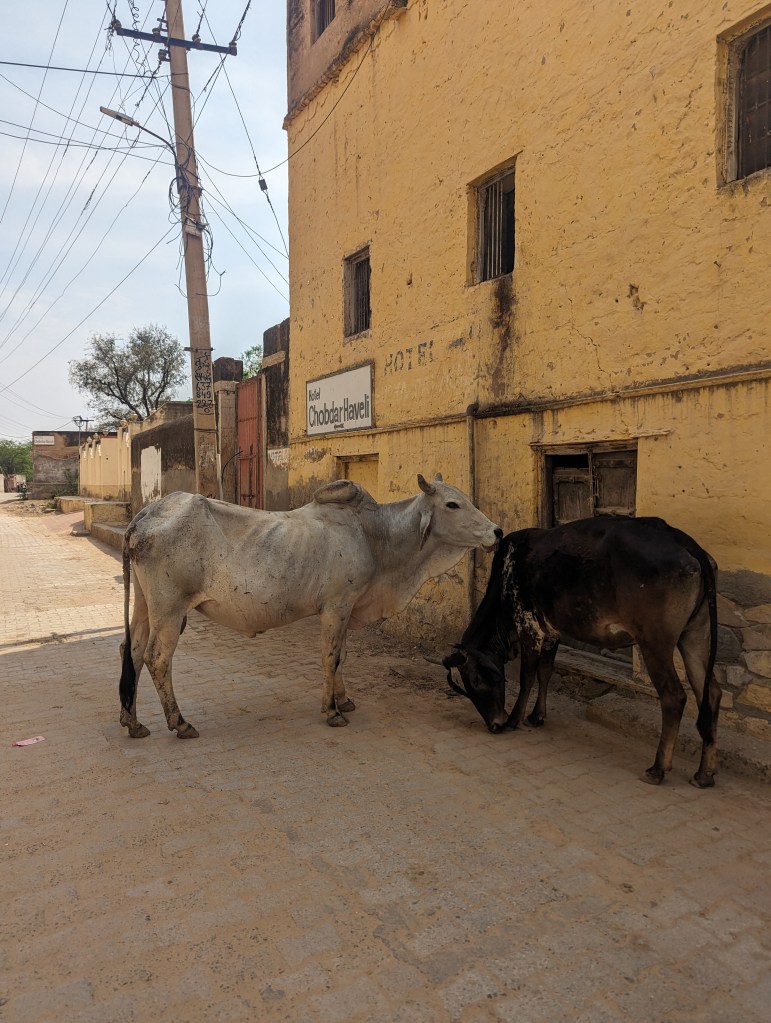
Once we had our fill of Dundlod, we jumped back on the scooter for the longer drive north to Mandawa. Mandawa was a bigger town and was the tourist centre of Shekhawati. The drive there was along a single relatively well paved road lined intermittently by ribbon development villages interspersed with long sections of arid fields. Mandawa was certainly bigger, but had the same semi-abandoned sense in the old town where the majority of the havelis were situated.
We stopped first at a recommended restaurant, Monica’s kitchen, for lunch. The restaurant signage pointed us through the front door of a house, into which we walked to find a number of old women chanting prayers around a shrine in one of the rooms. We backed out, thinking we had come to the wrong place but were stopped by a younger woman showing us to the rooftop restaurant. The restaurant was initially empty, though a slightly sour-faced elderly French couple joined about midway through the meal. The food was surprisingly very good, clearly freshly cooked and was of the standard Indian fare.
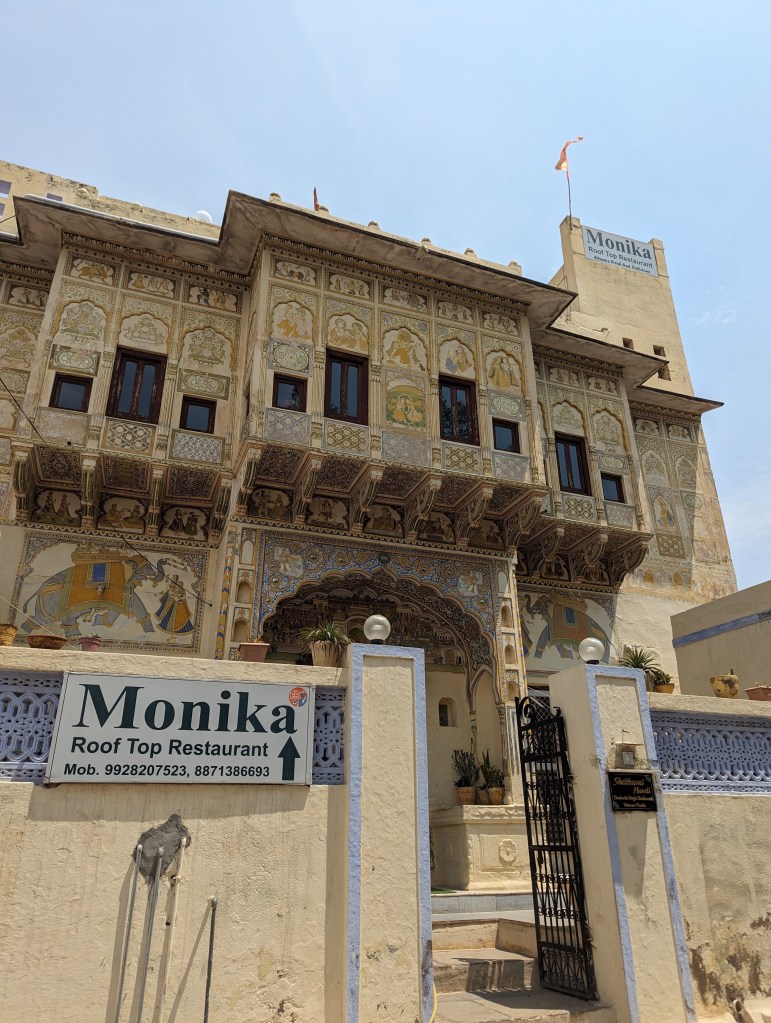
The man who had taken our order had listed off some havelis for us to visit in the area, and so once we had eaten we headed off to some of these. It was a pleasant hour or so exploring the backstreets of the town on our own, finding the huge houses hidden down tiny alleys or standing on their own on a dirt track. We elected to go into the best maintained haveli in the town, who’s owner mercifully and cheerily instructed us to explore on our own (we had our fill of hour long tours with the caretakers costing far more in tips than the entry fee itself).

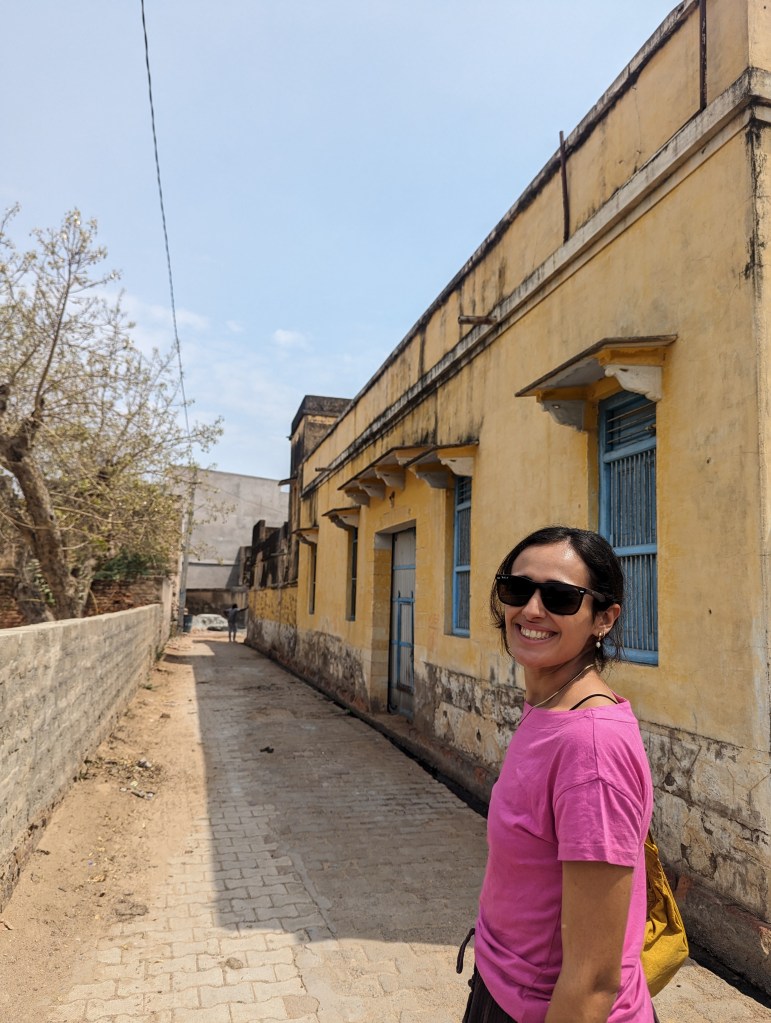
After wandering around the haveli and taking in the view from the top, we decided to take a look around one more before calling it a day. We entered the haveli next door and the young man looking after it reluctantly woke up from the bed he was sleeping on and started taking us on a very half hearted tour. Seeing we weren’t particularly into it either, he gave up practically mid sentence and went back to bed. We had a quick look around but decided there was only so much haveli one can see in a day, and made the dusty drive back to Nawalgarh.

We arrived back without any issue, and met Rijesh who was waiting at the front door. Presumably he hadn’t been waiting there all afternoon, though I wouldn’t have been entirely surprised. We were tired from the excursion, and so headed up to the room for a few hours before coming back downstairs for dinner. The atmosphere in the guesthouse was slightly sombre as Rijesh watched us eat another delicious dinner, which seemed in part due to news of his wife’s father’s ill health and partly due to him having no further bookings until July. Once had eaten our dessert and drank our tea, we made our excuses and headed back up to our room and to bed.
Monday –
We had a 6am bus booked for Monday morning to get us back to Jaipur, but Rijesh had told us the night before that there was a local train that would leave at the more reasonable time of 8.40am from Nawalgarh and would still get us in with plenty of time before our Lucknow train departed. We had the usual breakfast (though we were still pretty full from dinner the night before) and Rijesh gave us a lift into the station. We had about 30 minutes to wait, and attracted some interested looks from the local people, including a young man that worked at the post office and came over to try his English out on us.
Rijesh had told us that the train would not be busy, but this was by Indian standards. We crammed ourselves into the standing compartment and down into one of the aisles, where two very friendly brothers in their early twenties insisted Ellie took the seat they were sharing next to their mother and father. We passed the next 40 minutes to their stop chatting, them asking us questions about where we had been and what we thought of India. They told us that we had to wash twice a day in the Ganges in Varanasi, and when they found out we were doctors we were tasked with curing their mother’s intractable gastritis. As they left the train they got us both to say ‘jai shri Ram’ (Hail Lord Ram), much to their and most of the carriage’s absolute delight.
The rest of the journey, which was only a 3 hours, was uneventful except from a short interlude where some men started playing music and singing extraordinarily loudly next to us, then demanded money from everyone. I probably would have given them some, but one of them kept putting his hand on my head, so I decided that I wasn’t inclined to pay. We arrived at Jaipur station and took the short rickshaw ride back to the rooftop restaurant of Pearl Palace, where we had been staying in Jaipur a few days before. The rickshaw was driven by a trainee driver and his coach/friend who sat next to him in the front seat and guided him narrowly through oncoming traffic and down tiny lanes to the hotel. We spent a cool couple of hours under the misted shade of the restaurant awning, then climbed back into the rickshaw to find our sleeper train, departing at 1pm. The station was heaving with people carrying luggage on their heads, entire extended families sprawled out sleeping on the floor, and hundreds of other people trying to find their way through the throng.
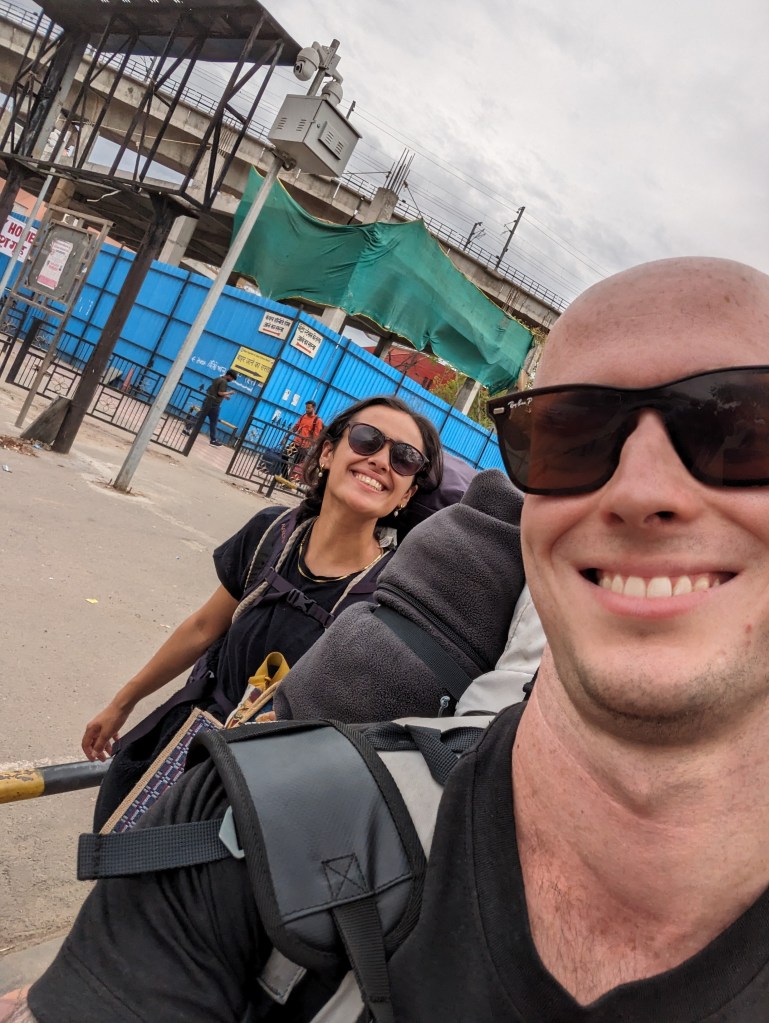
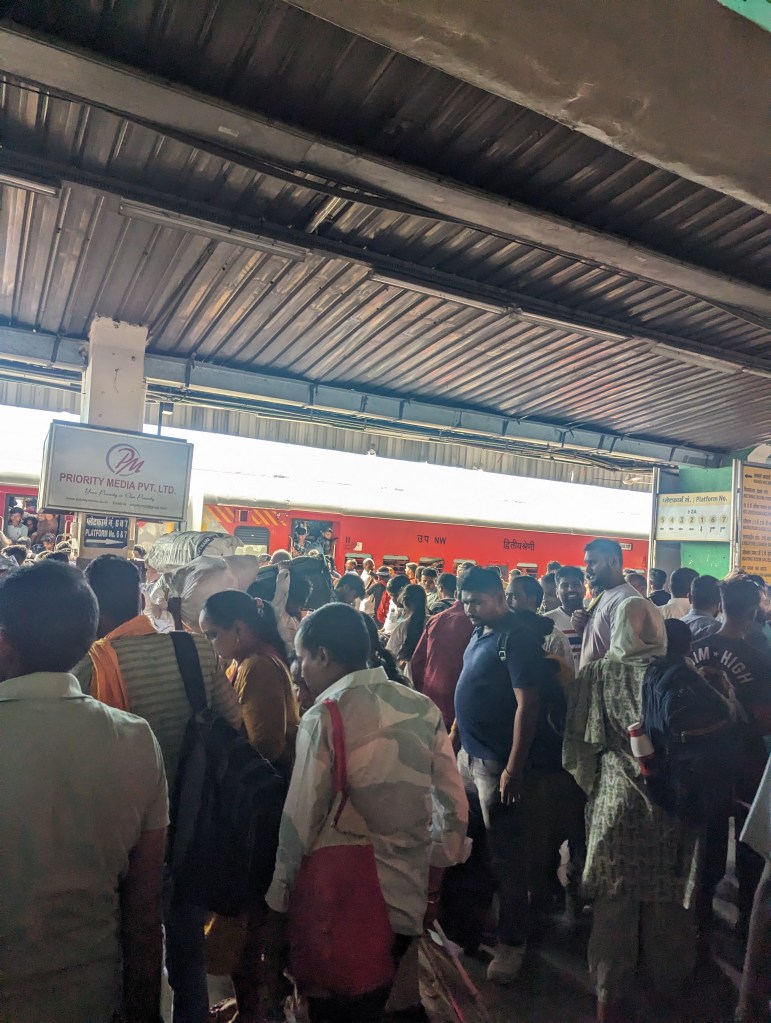
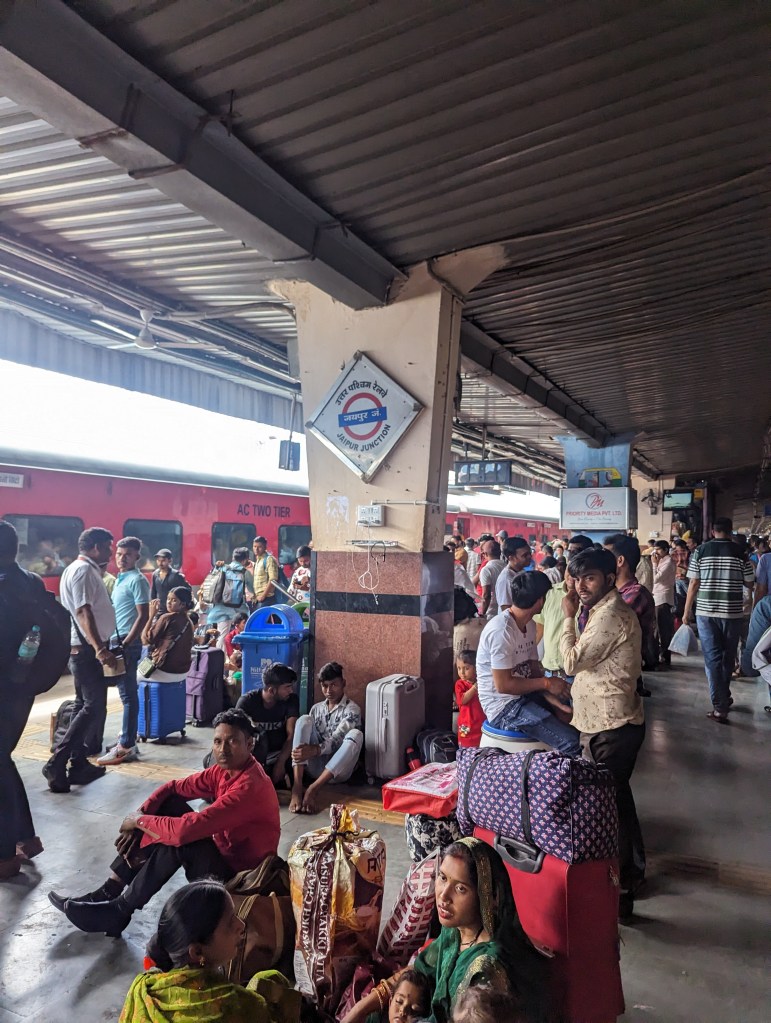
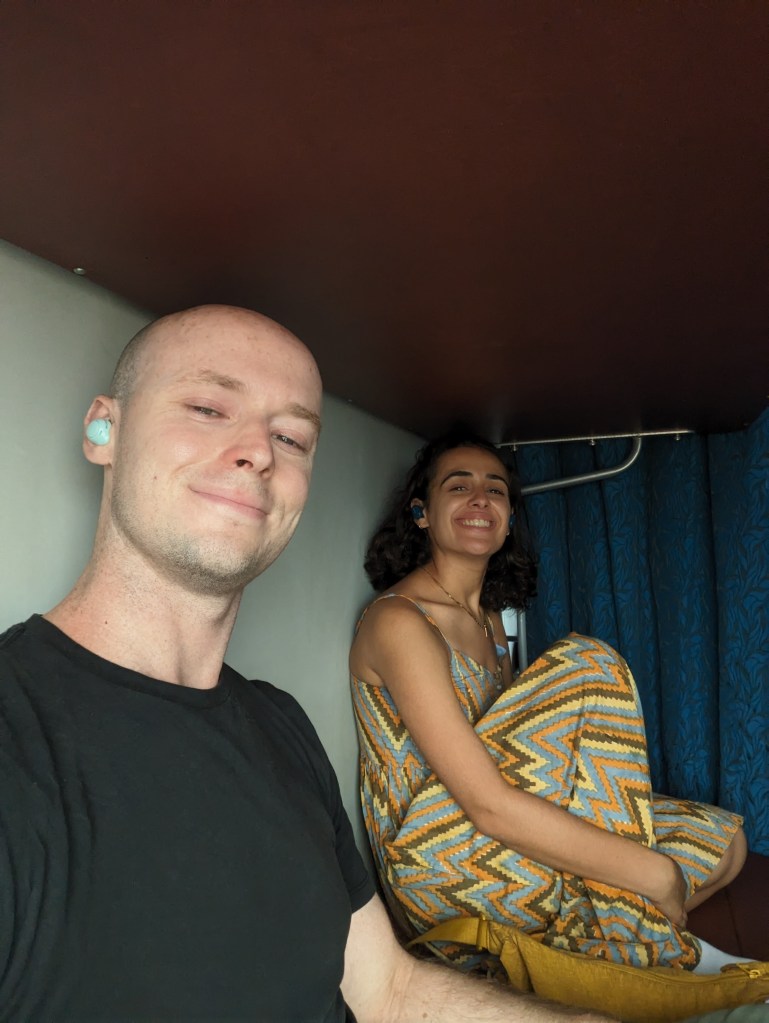
Indian trains are usually at least twenty carriages long, and this one was no exception. Our train app told us that our carriage would be at the far end, but as the train rolled to a stop it was nowhere to be seen. We realised the train must have turned around at some point, and our carriage must be at the front of the train which was at least a 10 minute walk away. We pushed our way, nearly running, through the solid wall of bodies to try and get at least close to the carriage, and jumped on to somewhere in the middle of the train as the whistle blew and the train pulled away. Thankfully, we were able to make slow progress through the packed sleeper carriages before finally arriving at our cabin carriage at the far end. Had a general compartment (which are so packed going from one side to the other is impossible) been between us and our seats, we would have had to wait with the bags until the next station which was over an hour away. We found our cabin (the usual two up, two down) with just one young Indian man on the other top bunk with his headphones on, where he stayed almost motionless for the next 15 hours.
After a few minutes, another young man on crutches and who we assumed to be his father came in and settled on the last lower bunk. He told us later that he was in the Uttar Pradesh police force and had torn is ACL and cruciate knee ligaments playing volleyball. The pair made quite amusing watching as his father fussed over him constantly, making sure he was comfortable, husking coconuts for him to drink, walking him to the toilet, and generally tending to his every whim. Before long, they too settled down and the 15 hour journey was underway.
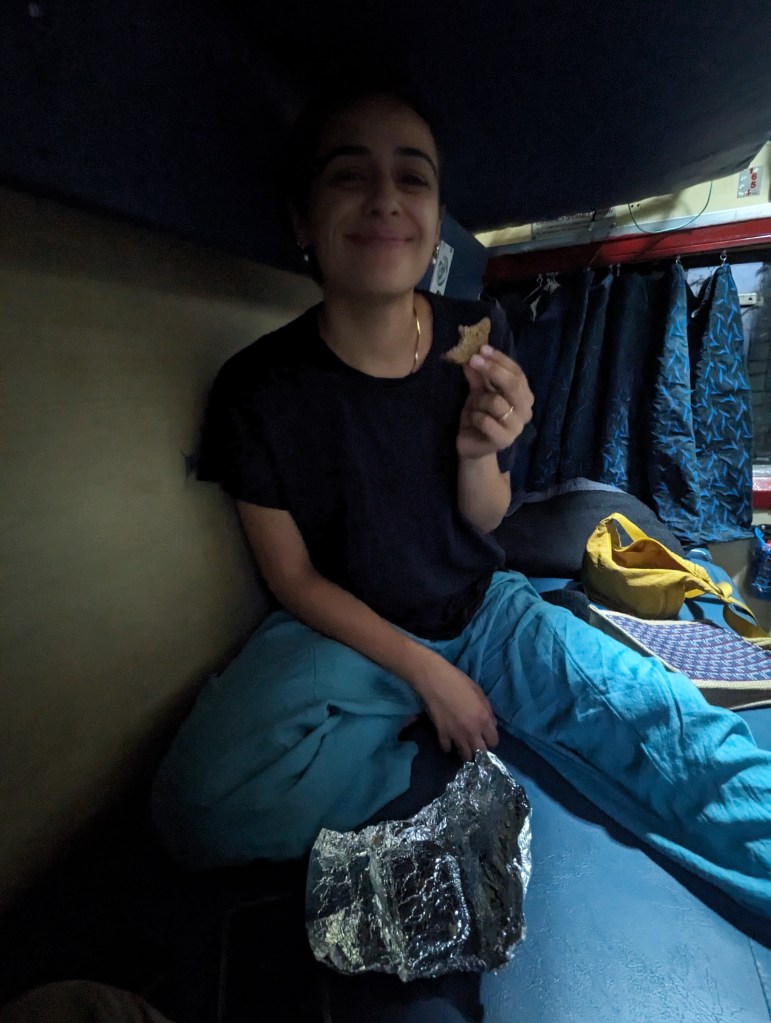
I don’t have much to say about the sleeper train. The beds were reasonably comfortable, our cabin-mates about as quiet as conceivably possible except for the father’s cooing, and the train was spot on time throughout. The only slight disaster was that we had ordered a Domino’s pizza delivery to be brought to the train at Delhi, something that seemed to be common on Indian trains. However, as we approached Delhi I received at least 10 phone calls which, when I picked up, was an increasingly agitated person speaking Hindi with the only comprehensible words being “Dominos!”. I had a bad feeling that there was something the matter with the order, but we were powerless to do anything about it. Sure enough, no food arrived for us at Delhi, but at least we weren’t charged. Rijesh had packed us off with 4 slices of dry bread for the train (which we thought was quite amusing at the time), and I had bought a few chocolate bars whilst in Jaipur, so we settled down to our dinner of bread and Dairy Milk then dozed the evening away as the train trundled through the expanse of Uttar Pradesh.
Tuesday –
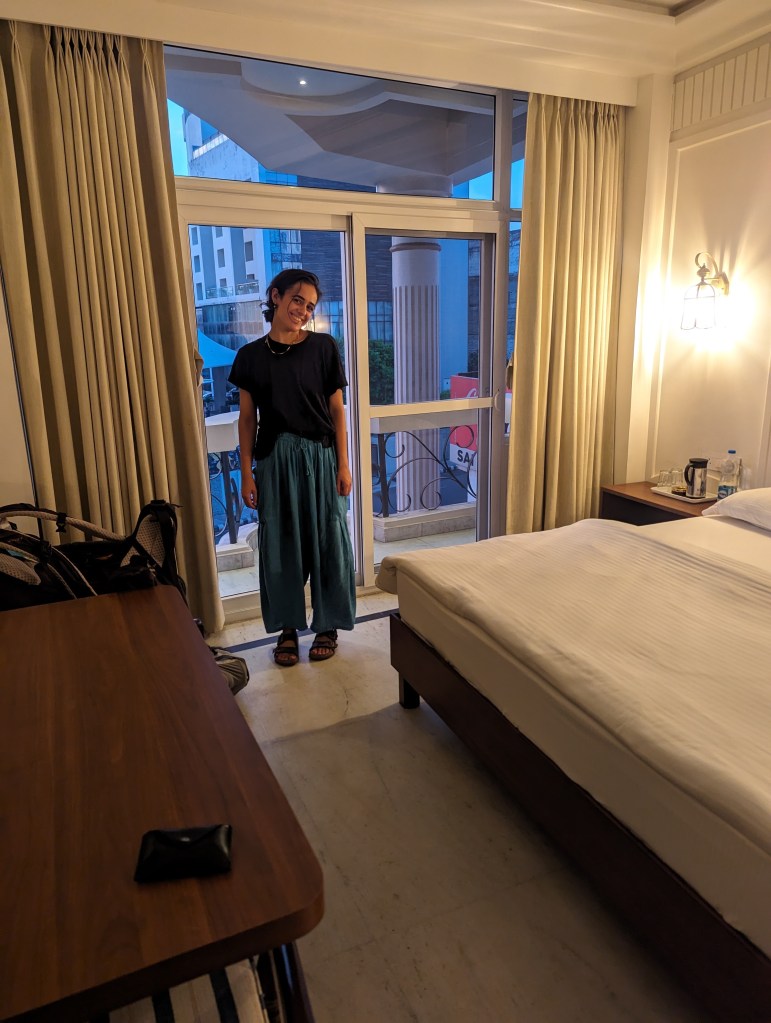
My alarm buzzed under my pillow at 5am, and I could see from Google Maps that we were pulling into Lucknow station. I woke up Ellie, who was fast asleep under a face mask and earplugs, and we made our drowsy way off the train and onto the platform. We had wondered the day before whether we would find the station deserted and it hard to find a rickshaw driver, but we had underestimated India. The station was as packed as if it were noon, and we were instantly mobbed by rickshaw drivers. We had been in India long enough that I was genuinely indignant at the prices first quoted by the drivers to take us the 5 minutes to our hotel, which seems largely to have the desired effect of cutting the price down quite dramatically (though we are still paying a hefty tourist tax). We arrived at our hotel, Hotel Ganga Maiya, at a little before 6am, and were greeted by the night manager, Vishnu, at the desk. Vishnu was exceptionally bright for 6am, and assured us that we could get into our room early without incurring the additional charge of 1000/- (£10) usually charged. We were shown to our room, which was sparklingly clean and modern, and rested without sleeping for a couple hours. This was only punctuated by Vishnu calling sheepishly to say that his manager told him we did in fact have to pay the 1000/- for early check-in, and I spent a good minute or so reassuring him that this was absolutely fine.
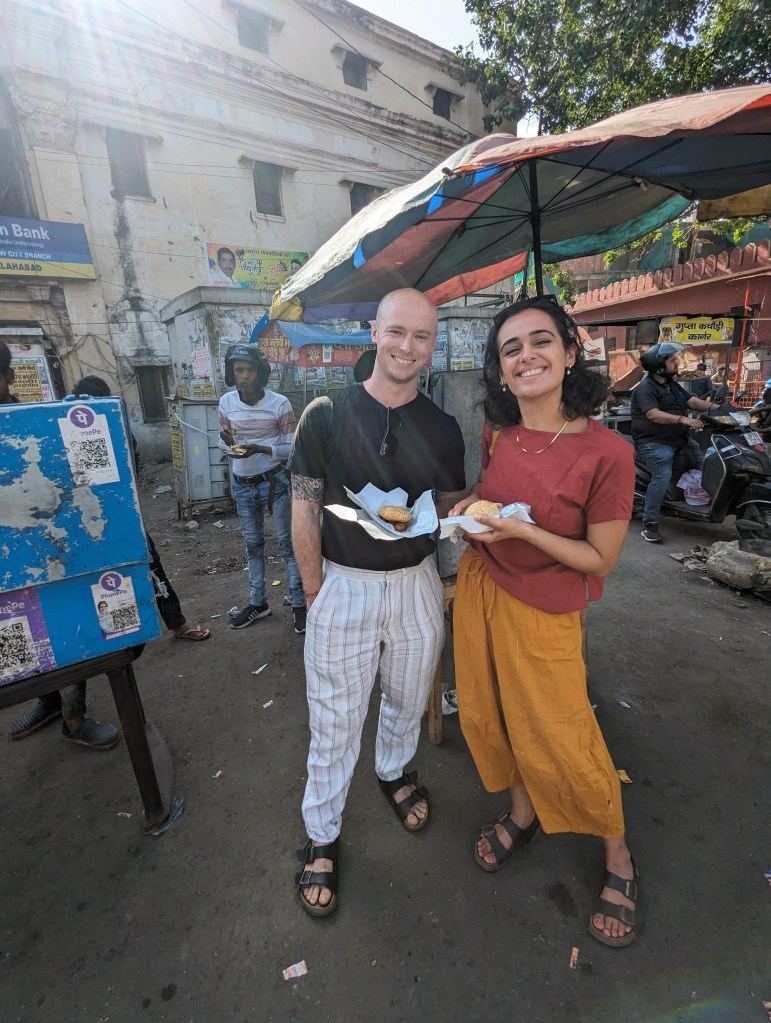
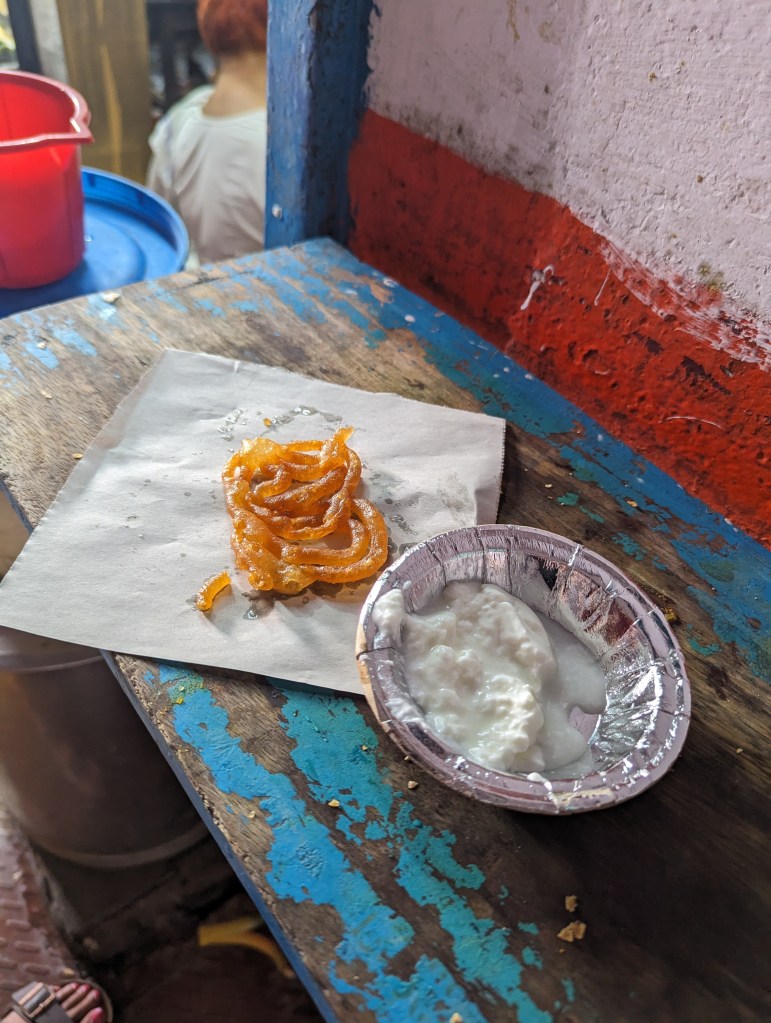
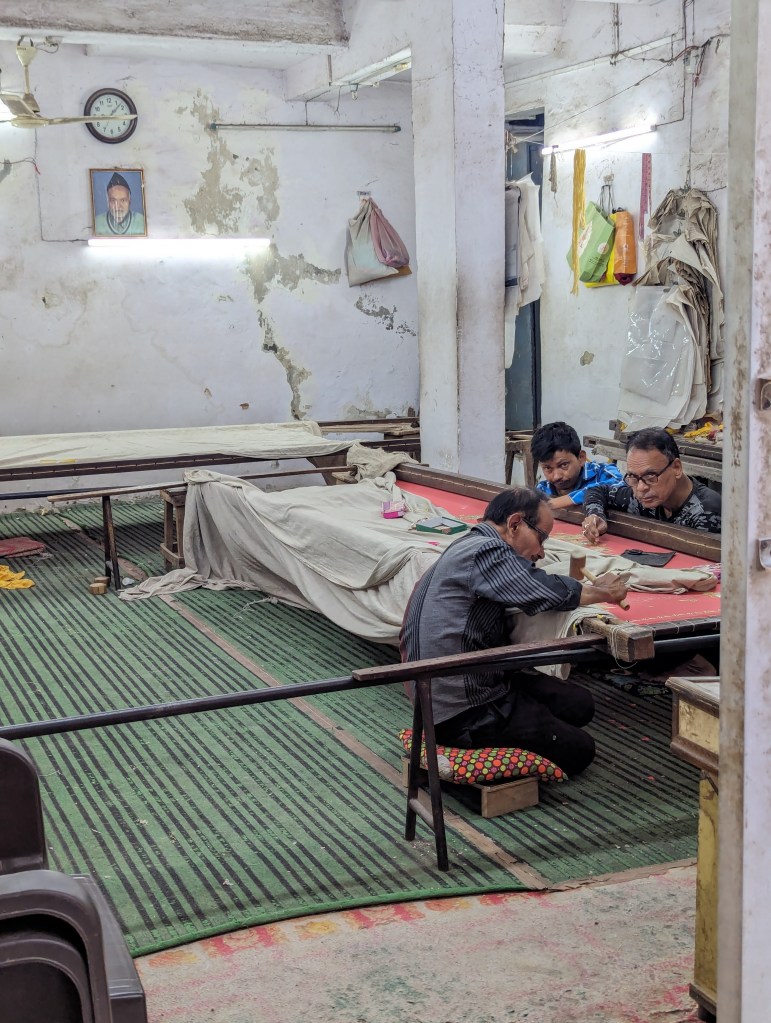
To get us back out and prevent us falling asleep, we had booked a well recommended walking tour of the historical chowk (markets) of Lucknow. We rickshawed to our destination for 8.30am, but had failed in getting any breakfast beforehand. We were met by our guide (whose name I can’t remember), who seemed to be a nice man given he kept buying biscuits for the street children, but had an unfortunate habit of swallowing his words in addition to a very thick accent. At the beginning of the tour he did, however, take us to a few places for a street food breakfast which were superb. We had fried bread and curried potatoes wrapped in newspaper, a yoghurt and nut dessert in edible silver wrapping, and jalebi (gram flour with sugar syrup) with curd. This was probably the highlight of the tour, largely because we couldn’t understand most of what he was saying about the markets, and because he seemed to be increasingly running out of steam as the tour progressed. Still, it was a gentle tour through the winding alleys of the market district where we were apprehended by two young girls who inexplicably wanted a picture on our phone, and saw a number of reasonably interesting old houses and market stalls. The tour ended with a bit of a whimper when he led us into a perfume shop where we spent an uncomfortable 15 minutes smelling perfumes we were never going to buy, and then paid for our tour guide’s rickshaw back to his motorbike.

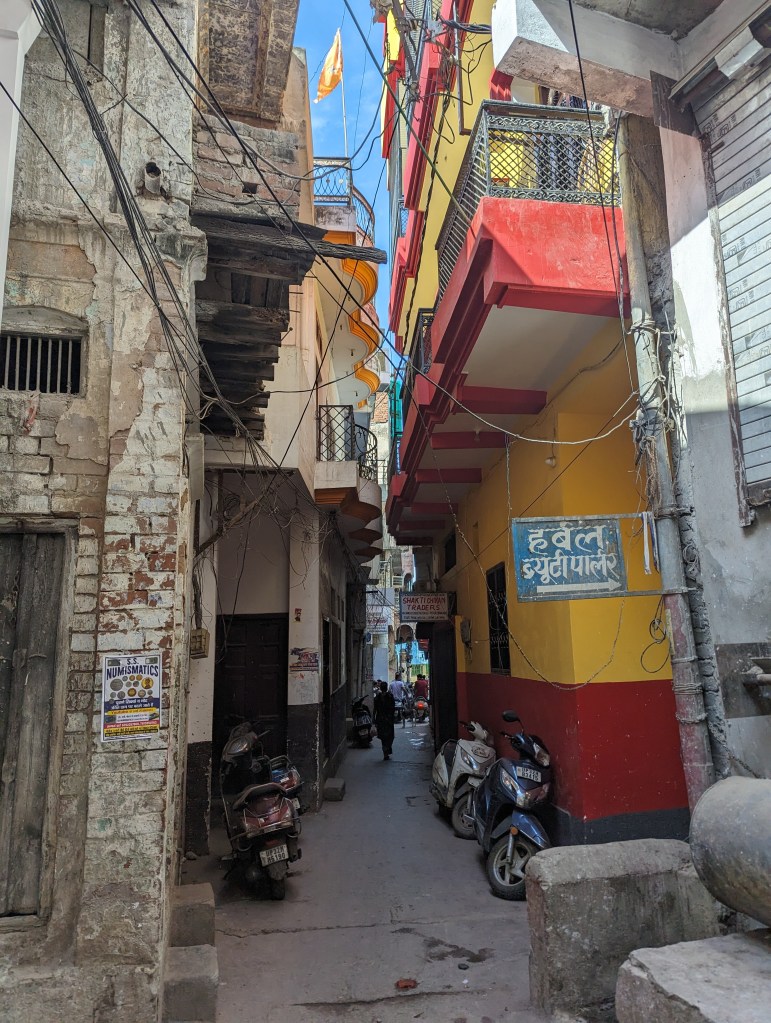
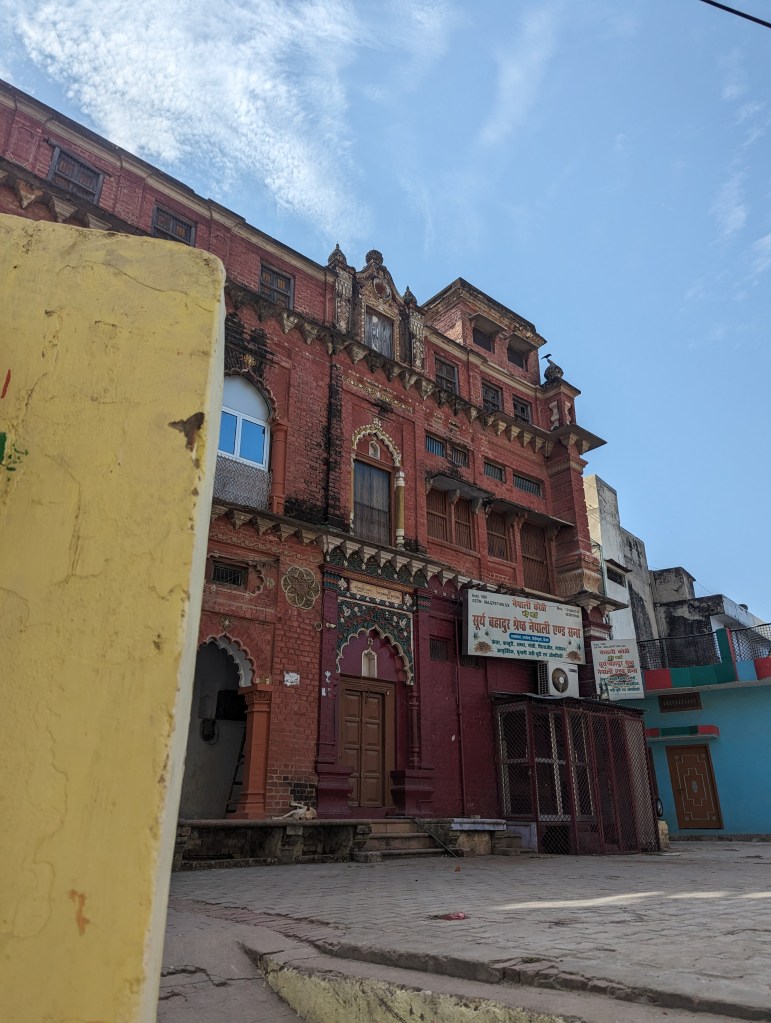
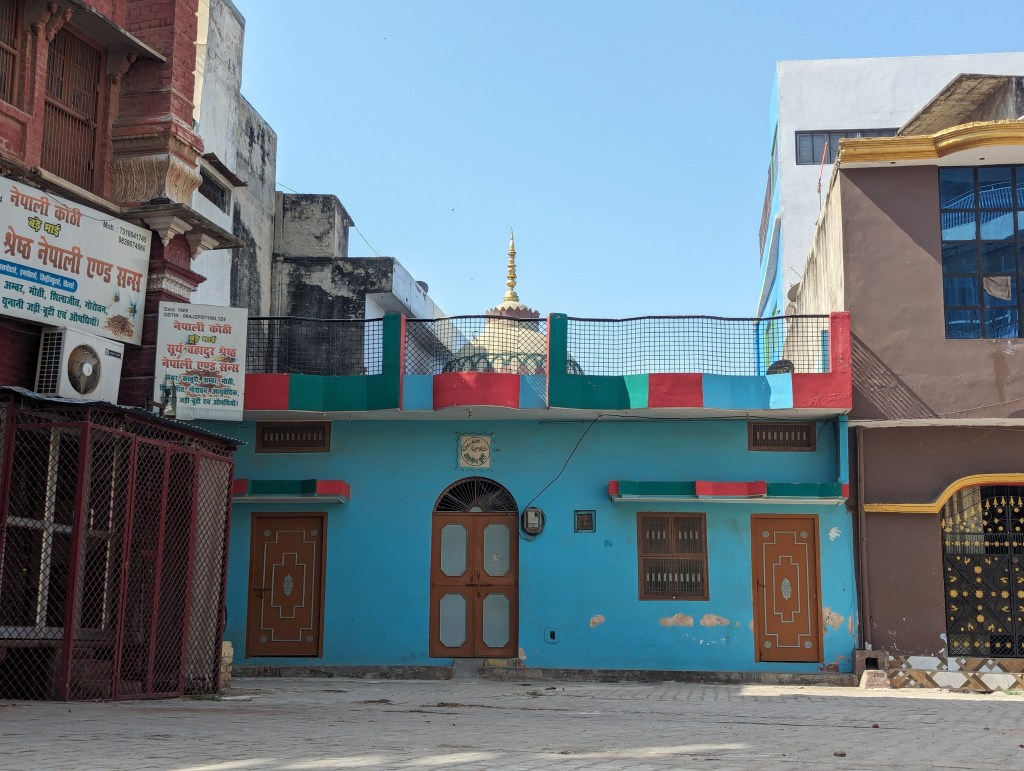
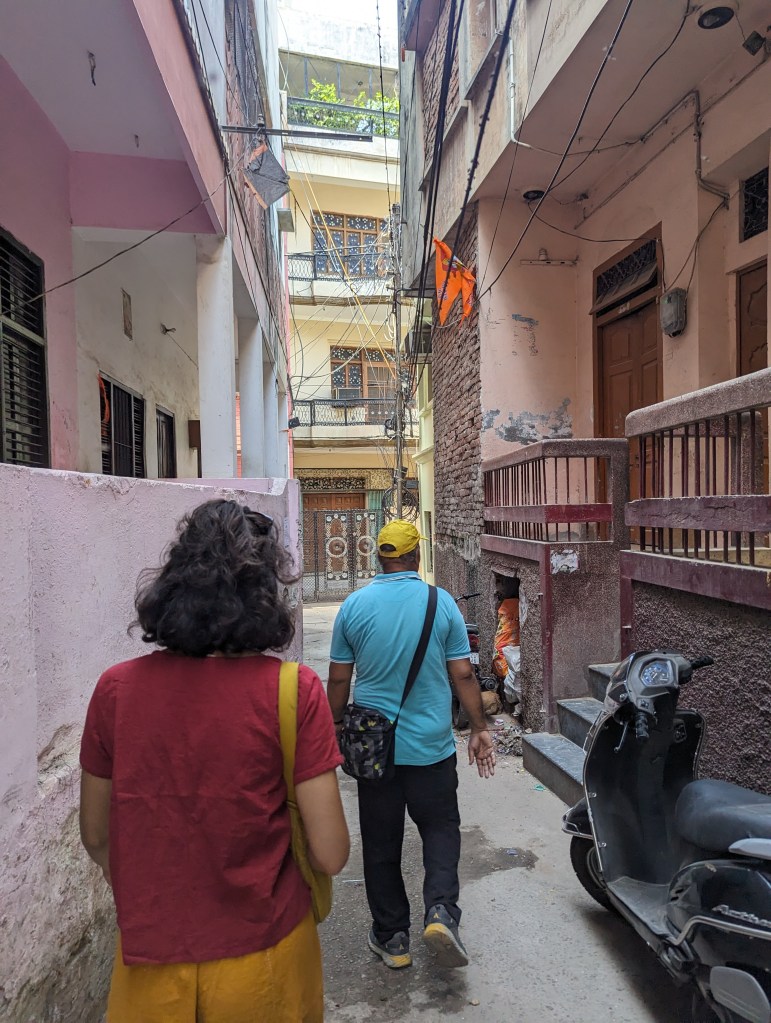
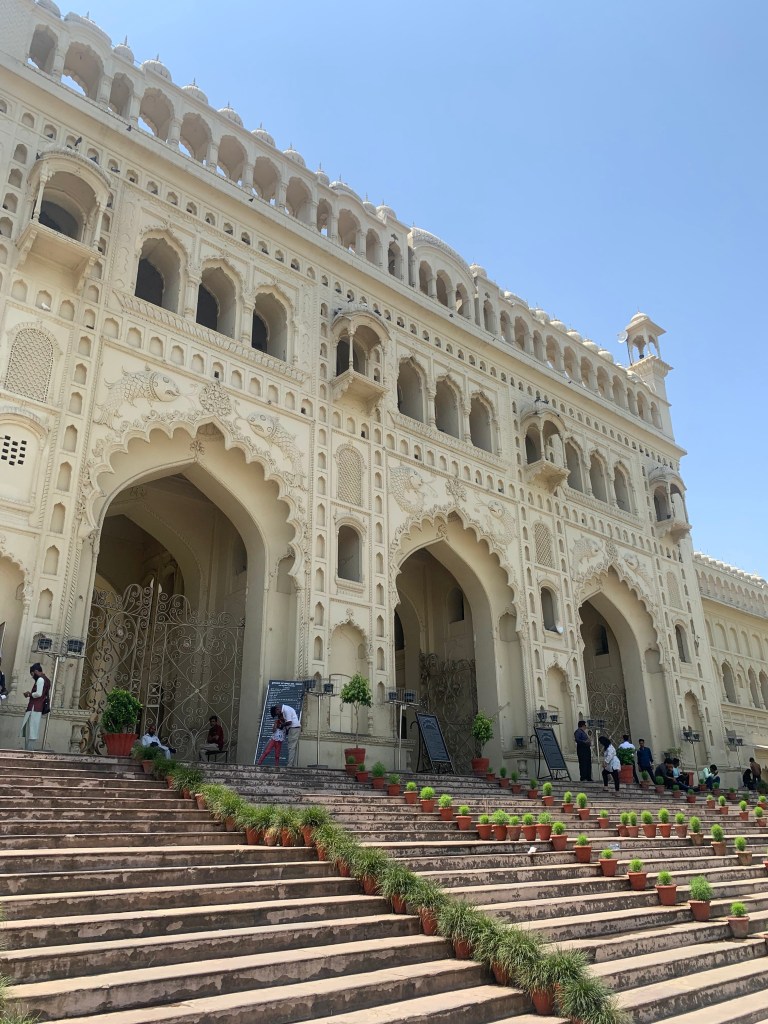
It was mid morning and we were in need of some caffeine, which from a google search seemed to be largely non-existent in Lucknow. Instead, we took a rickshaw to a Starbucks in the suburbs and spent a cool hour or so planning the rest of the day. We decided that, given we didn’t get much sleep the night before, we would limit ourselves to one big attraction, then get some lunch and get some rest before going out for the evening. We chose the Bara Imambara, a large mosque/palace/cenotaph complex in the centre of Lucknow. Lucknow seems to have a considerable Muslim population from Mughal and other Muslim dynastic conquest, and so the cities mosques were one of the main attractions. The complex itself was stunning, with a huge, pristinely manicured plaza surrounded by the mosque on one side, the vaulted gallery on the other, and the water palace on the third side.

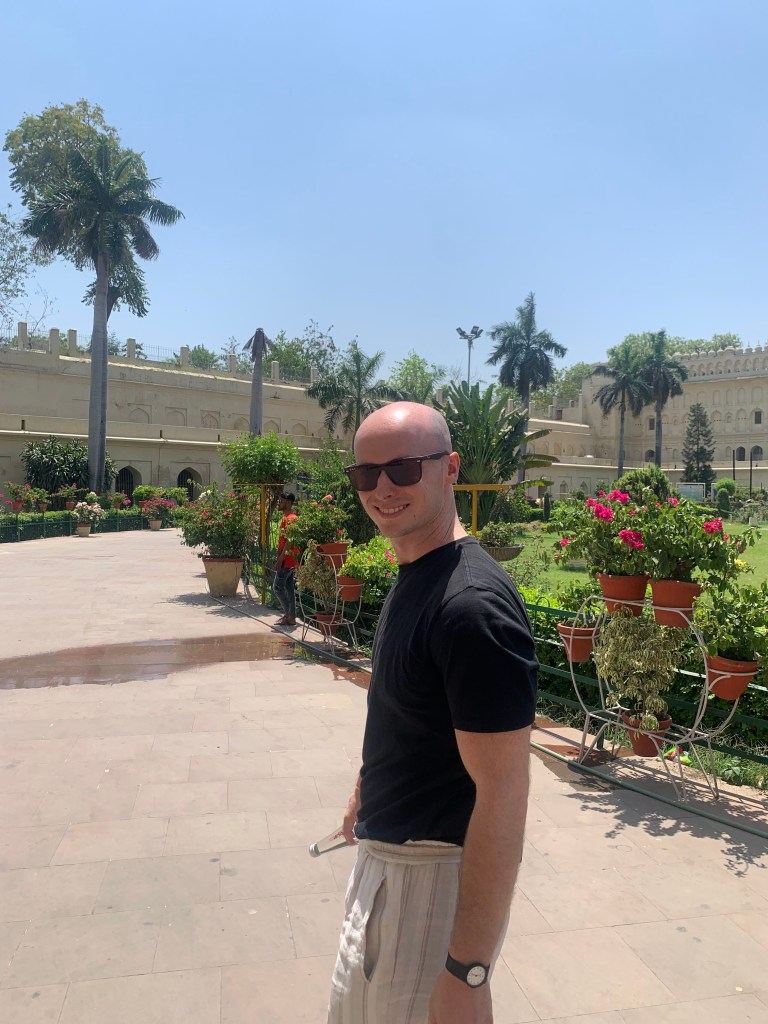
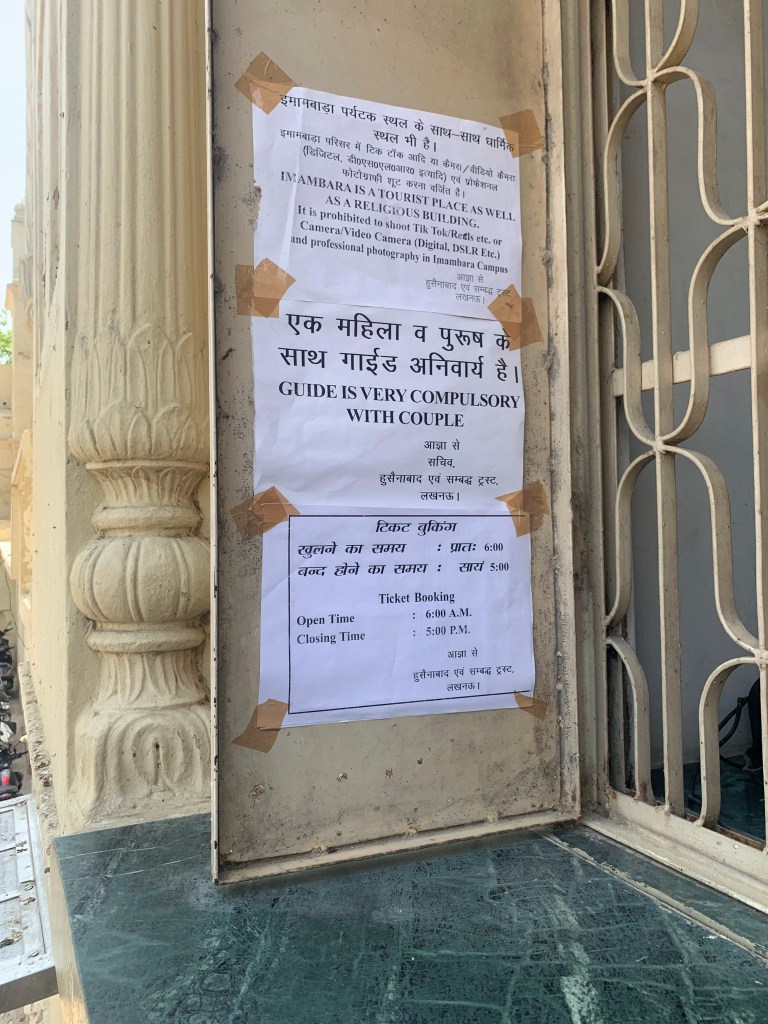
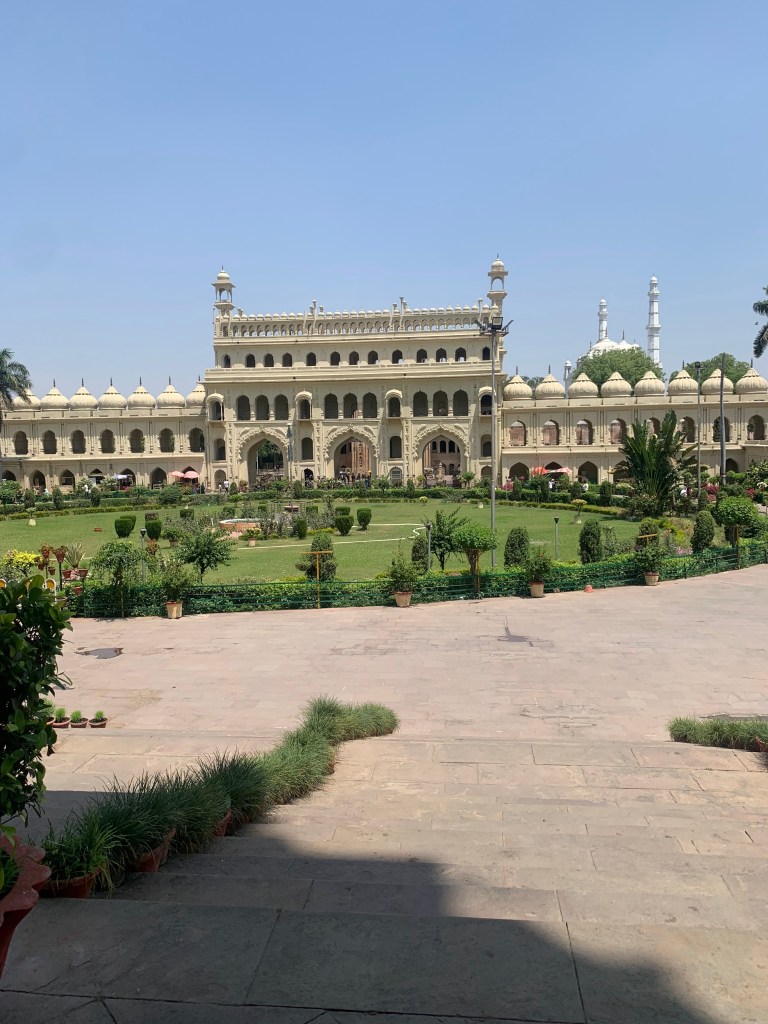
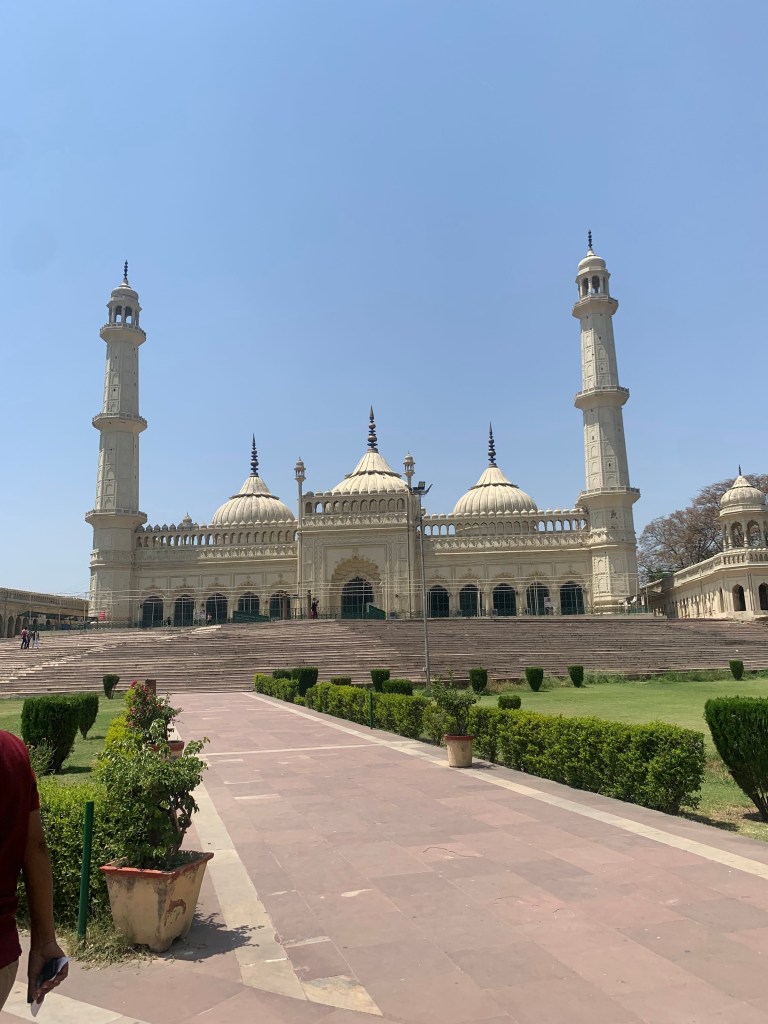
From our reading, Lucknow doesn’t see a great number of Western tourists. This was already clear as largely no English as spoken by anyone we had met except the hotel manager, whilst in most other places you could communicate with pretty much everyone. We were the only white people in the complex (I especially stick out like a sore thumb, whilst most people assume Ellie is at least partly Indian), and as such we were singled out immediately by a slimy looking man at the front gate. He took our ticket and walked us through the compound, explaining that we needed to pay another 550/- for a tour guide. We knew that tour guides were mandatory for the palace’s labyrinth if you were a couple (to prevent any hanky-panky apparently, but it was evidently a con), but we didn’t need one for the rest of the palace. Frankly, we have had a bit of a run of tour guides not worth the money, and I was too tired to be taking getting ripped off with a sense of humour. The man argued with us saying that paying less was taking money away from the tour guides who were very poor. We stuck to our guns, and said we just wanted the mandatory guide for the labyrinth, which he had the audacity to quote as 450/- whilst standing next to the pricing sign which quoted 100/-. At this point I took our ticket back off of him and told him we would do without.
We were pleased to be away from the man, who really radiated animosity, without giving him any money. We took a stroll around the slightly bizarre water palace, which was a cylindrical seven story open air building of winding tunnels and pitch black staircases around a central stepwell, now dry and filled with rubbish. Given the evident lack of tourists, we were a bit of a spectacle, and were asked for photos on several occasions. Sometimes this was relatively politely, and with a couple of questions about where we were from and how we liked India. In these cases, it wasn’t such an imposition. Ocassionally, though, it felt more like being in a zoo. On one occasion, as we sat in the grounds of the palace, a man shoved his daughter between us unexpectedly and took several photos, then several more photos of us on our own and walked away before we could protest. This kind of thing was very rare, but didn’t improve our mood.
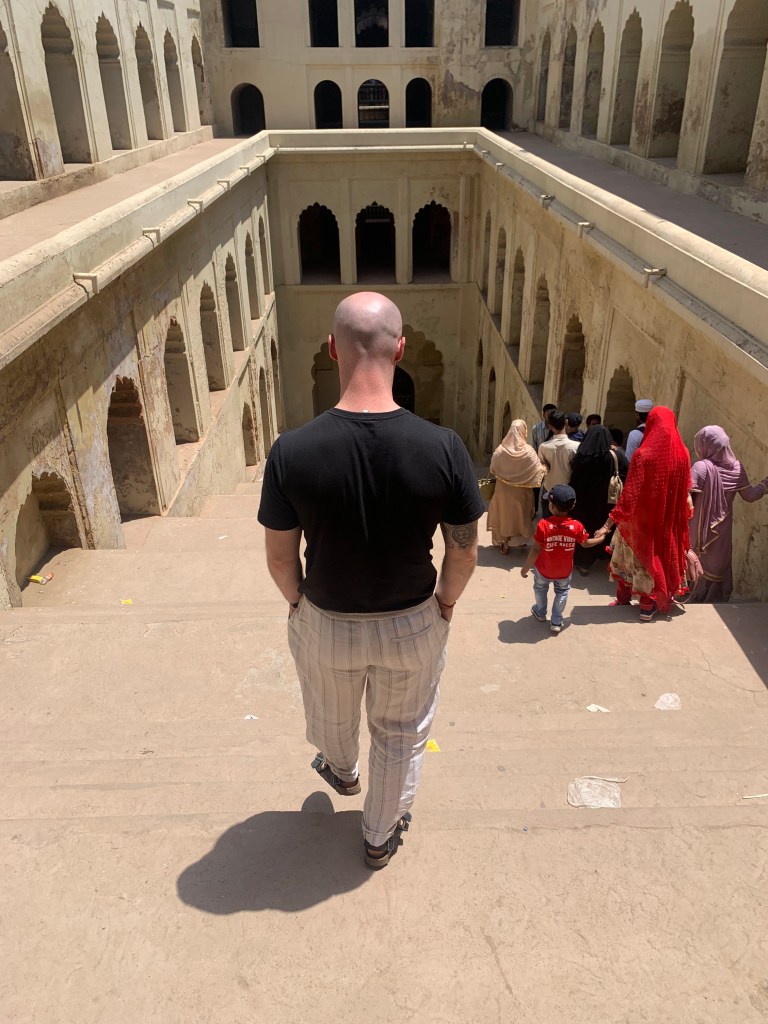
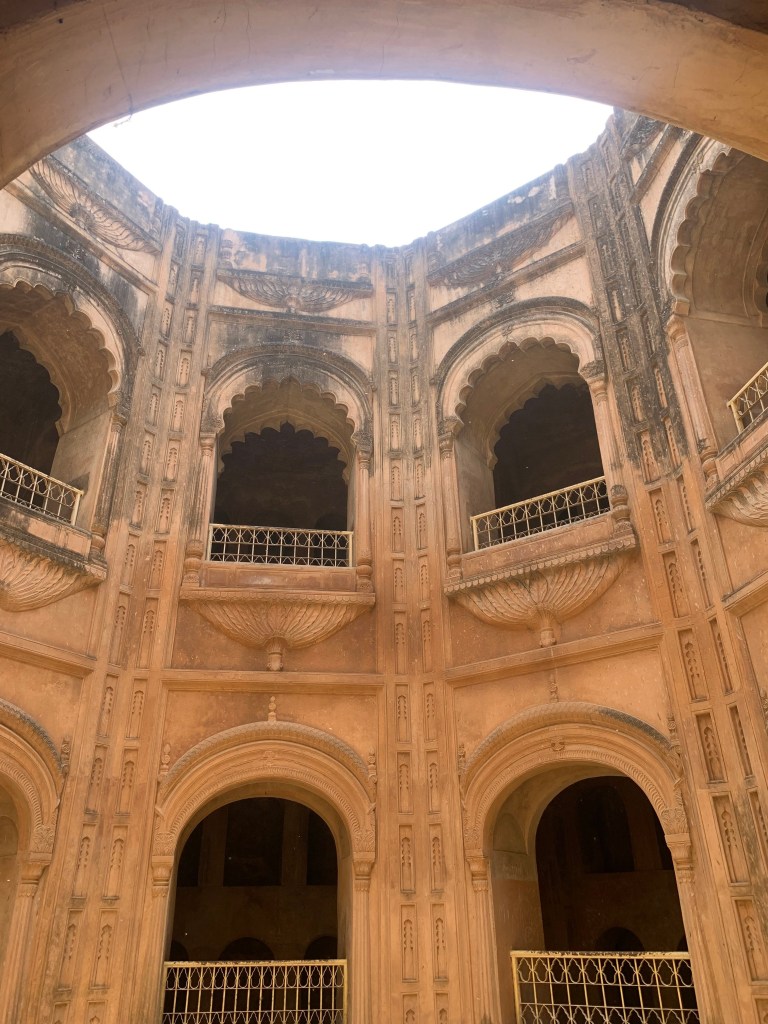

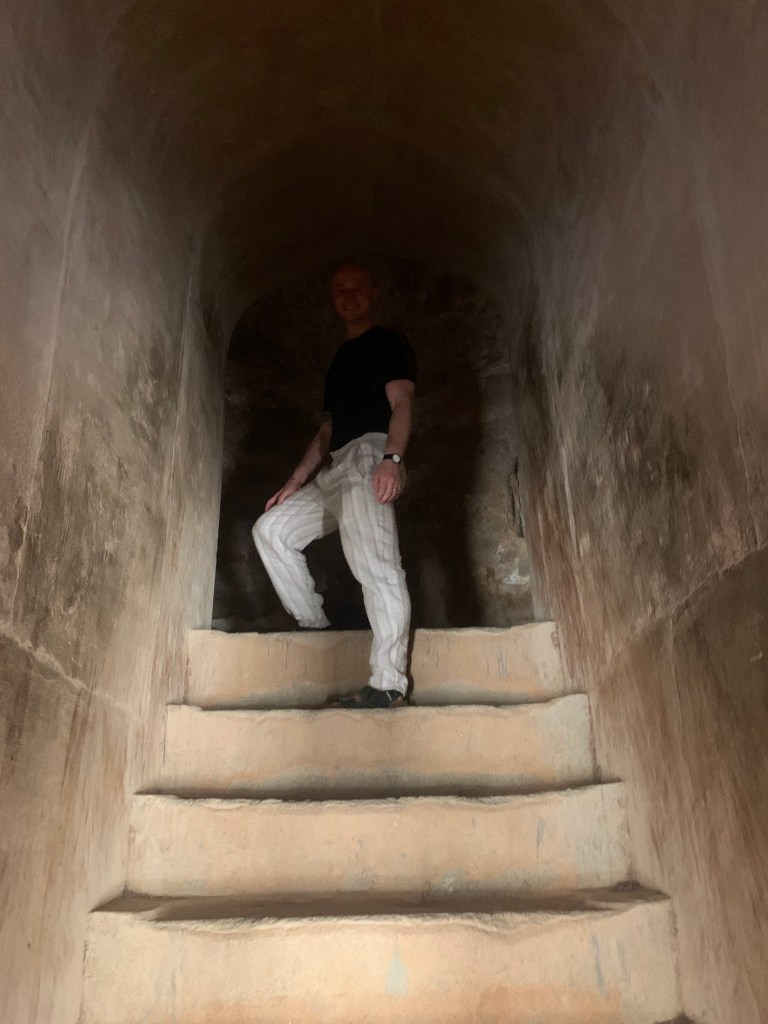
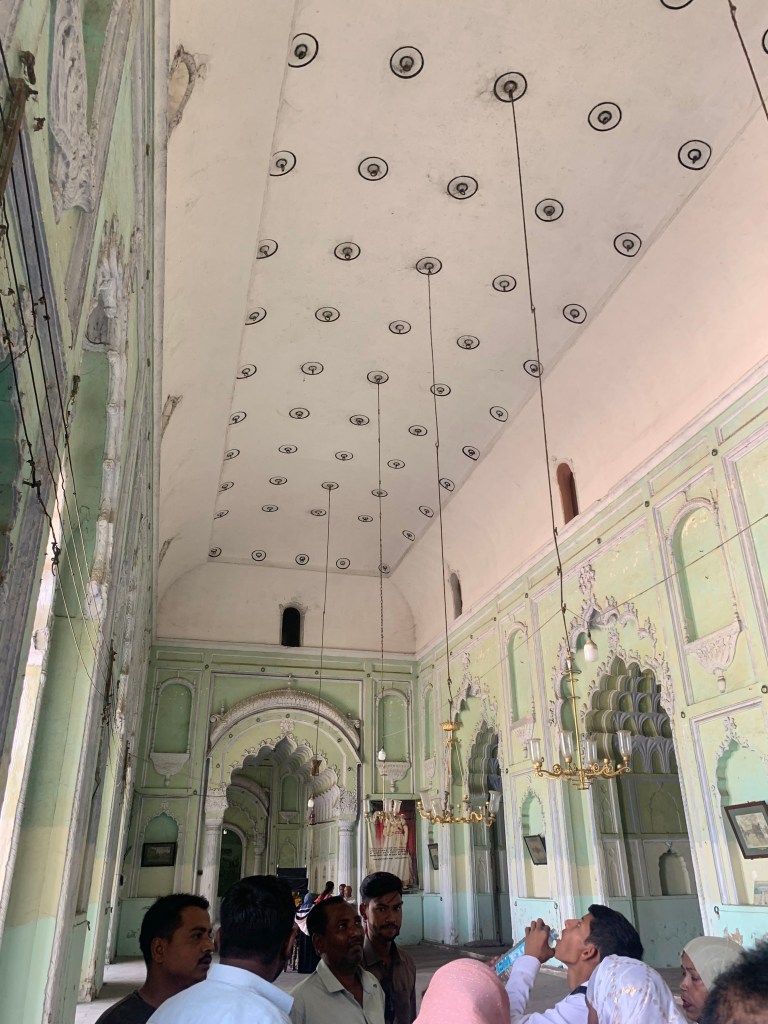
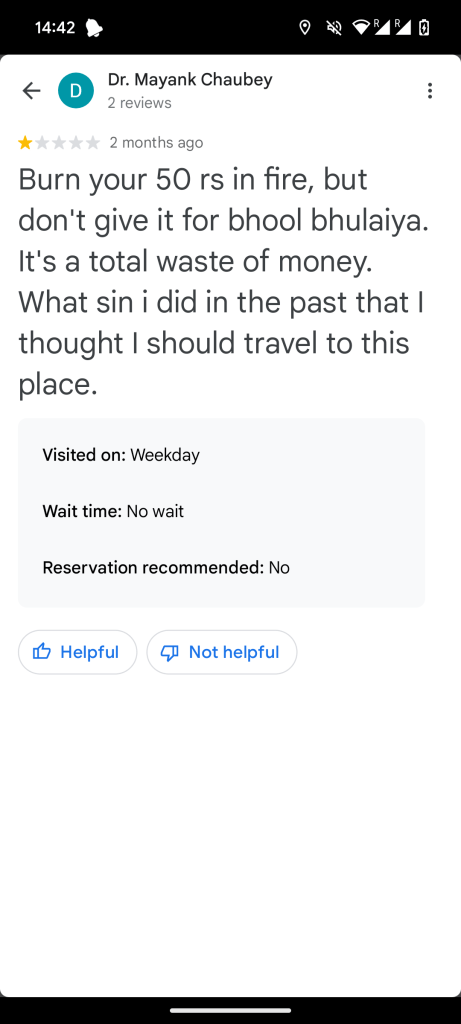
We tried our luck again at the labyrinth given the nasty man had disappeared, and given it was recommended as by far the best attraction of the complex. A slightly less nasty man insisted on 300/-, but we pointed to the sign and eventually he conceded and accepted 100/-. We were tacked onto the back of a Hindi speaking group with a Hindi speaking guide, and finally began enjoying ourselves as we made our way through the tunnels which overlooked the vaulted gallery and had endless wrong turns and dead ends. However, after about 5 minutes, the tour guide suddenly stopped and marched Ellie and I back to the entrance. The slightly-less-nasty man told us that we couldn’t do the tour because they had no English guides. We protested that we really didn’t mind that we had no idea what the guide was saying (in fact, in many ways it was better) but he refused to let us back on the tour. I asked for our money back, and he gave it to us, which honestly just made us more confused as we couldn’t understand their motive for expelling us. We decided to give it up as a bad job and left the compound. On a google search later that day, we found that a number of people had been scammed or messed around in a similar way, which made us feel better. I’ve included a screenshot of one such review below, just because it kept Ellie and I laughing all week.
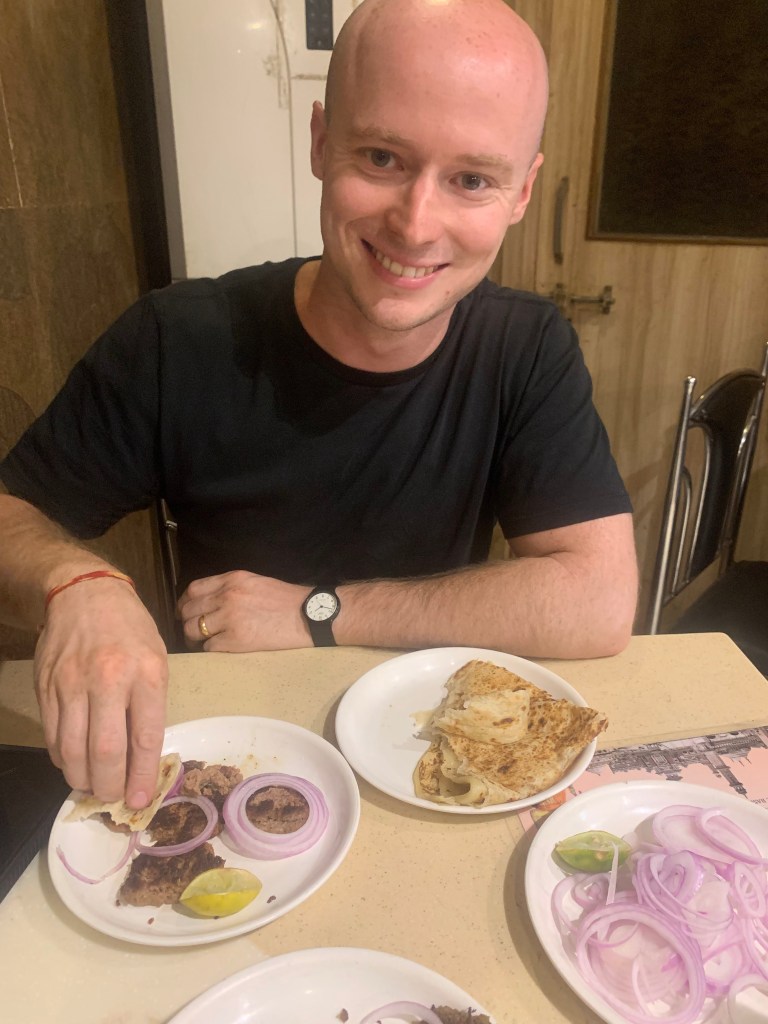
Lucknow is known to have the best food in Uttar Pradesh, so we hoped that lunch would buoy our spirits after a bit of a disappointing morning. Getting rickshaws was significantly more difficult given the new language barrier, but we eventually reached Tunday Kebabi, the most famous kebab house of Lucknow. The story goes that an elderly Shah had lost his teeth and asked for a kebab that he didn’t have to chew from one of his chefs, and so the “melt in the mouth” Tunday kebabi was born. The restaurant was of the no-nonsense cafeteria style favoured by locals, and the kebab was 4 small meat patties served with some sliced onion and bread. Though it didn’t look like much, it was absolutely delicious and not like anything I’d eaten before. What’s more, Ellie’s vegetarian version was very much not an afterthought and (nearly) as good.
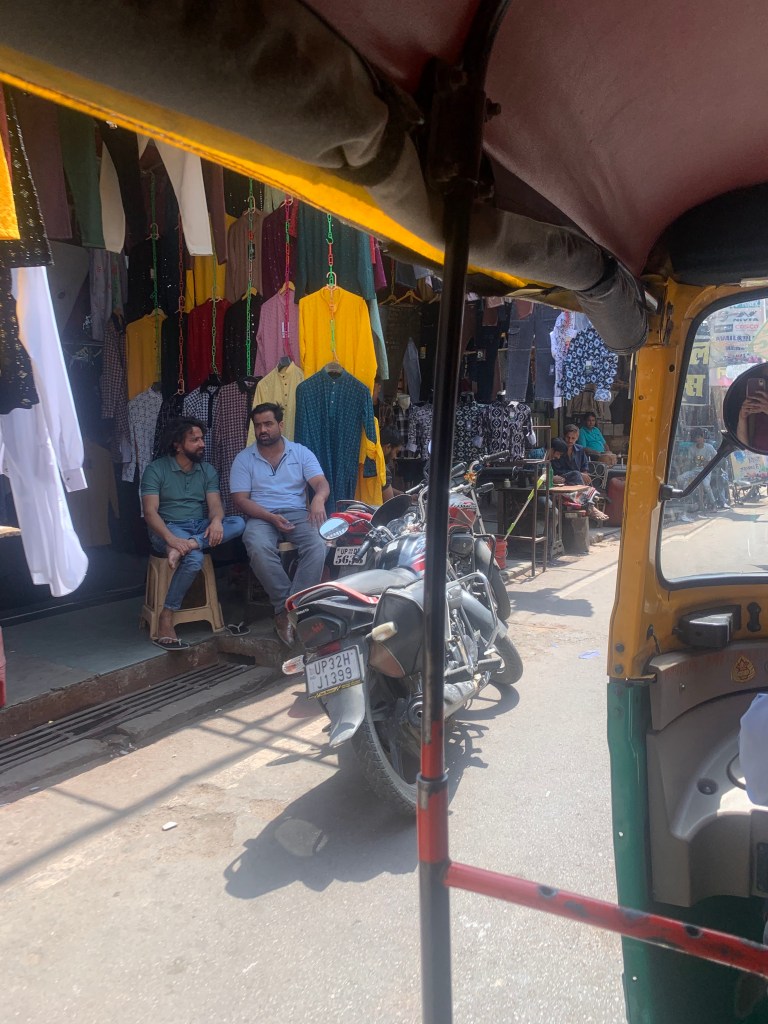
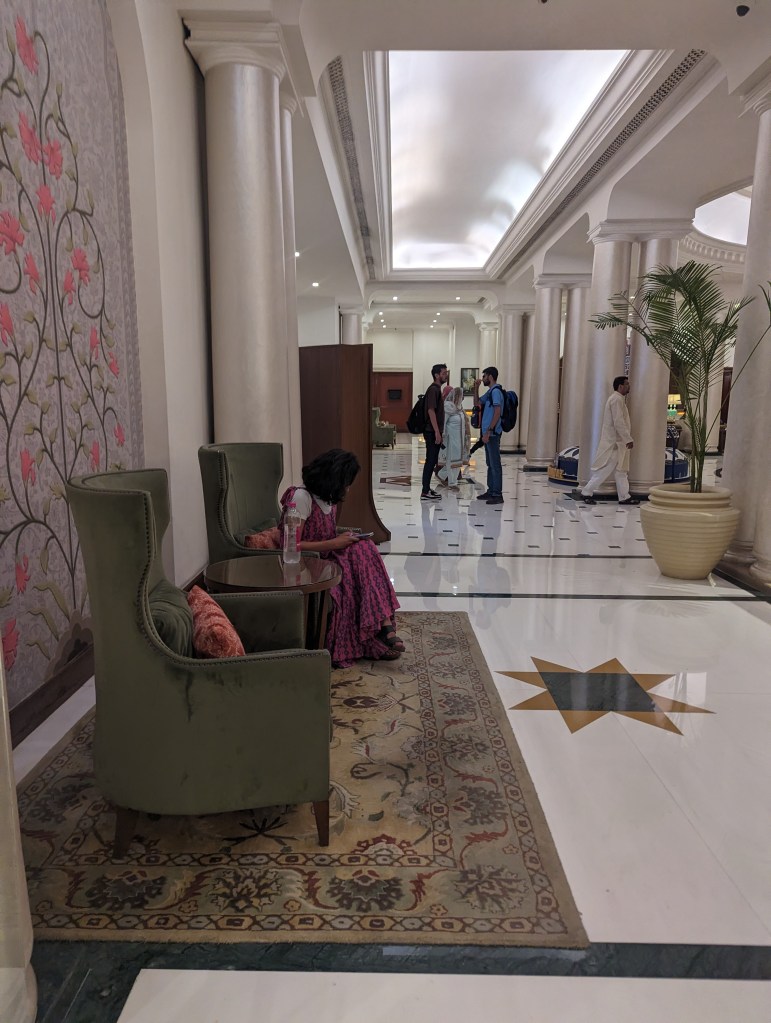
Full and with rapidly improving moods, we rickshawed back to the hotel for a rest. We both quickly fell asleep for several hours, and woke in the evening feeling disorientated and groggy. Shaking this off, I tutored and then we headed back out to a hotel restaurant across the river we had booked. The restaurant was very upmarket, and the most expensive we have come across since arriving in India, but we were both looking forward to a bit of luxury after a lot of travelling, heat and rickshaws.
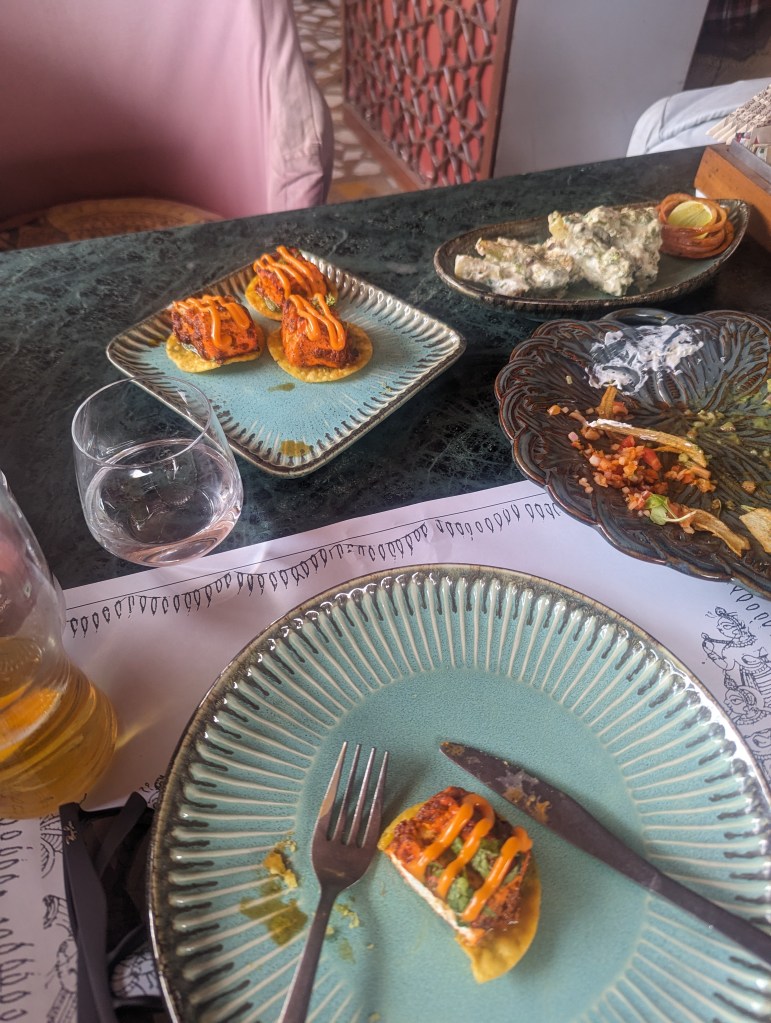
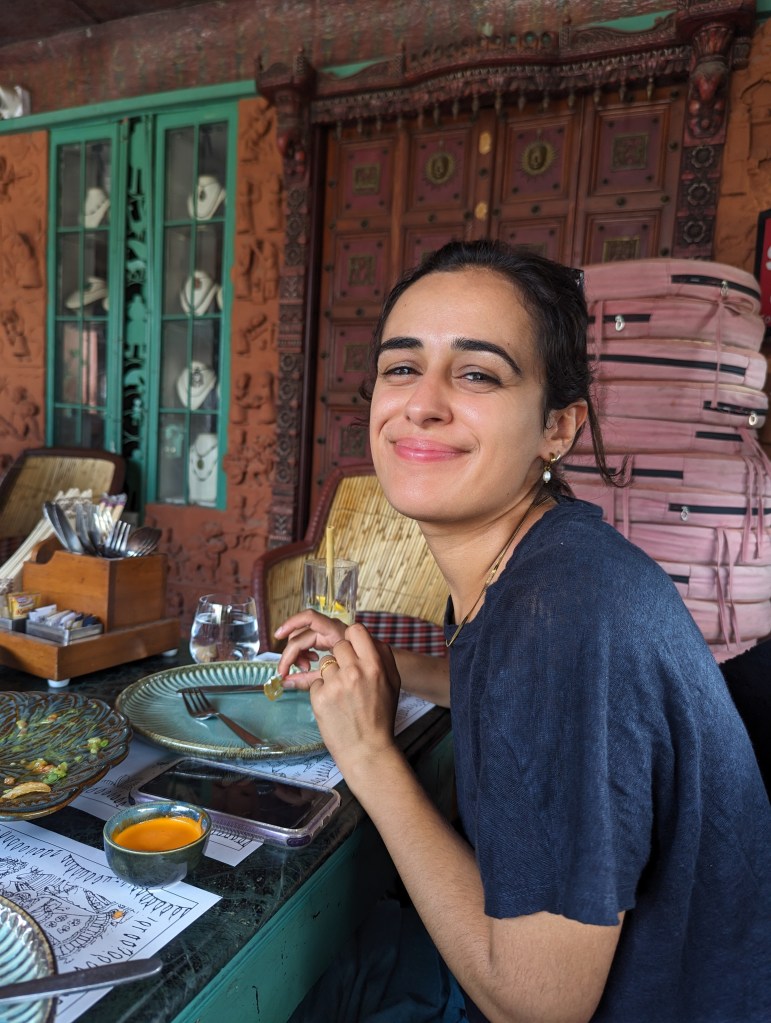
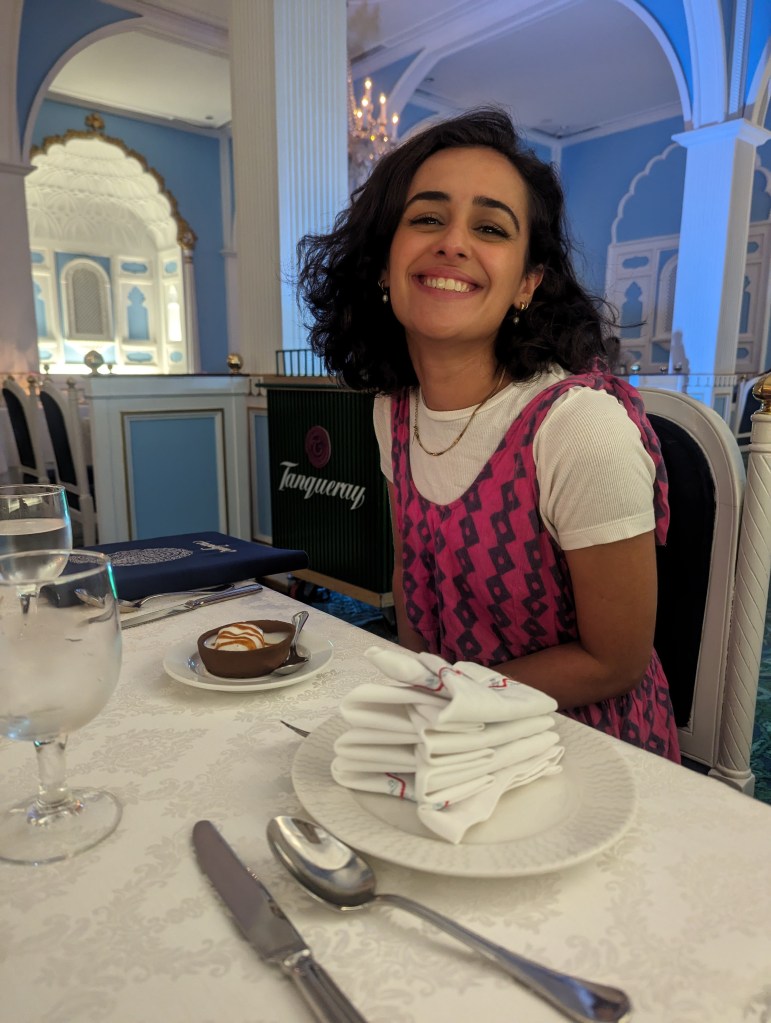
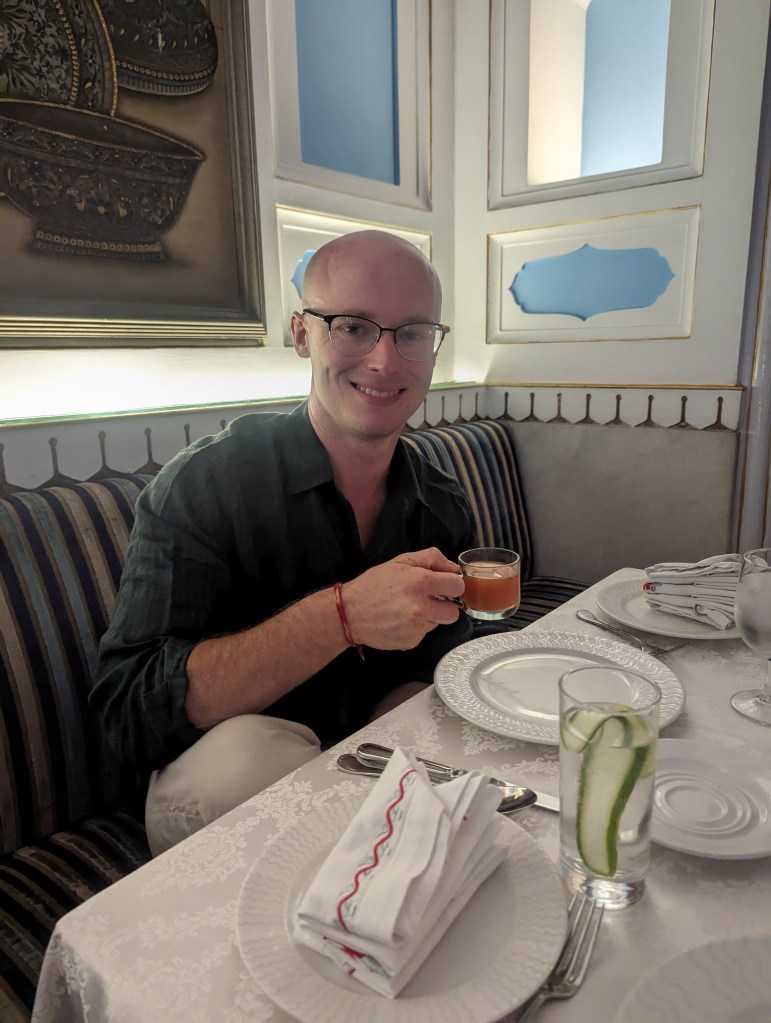
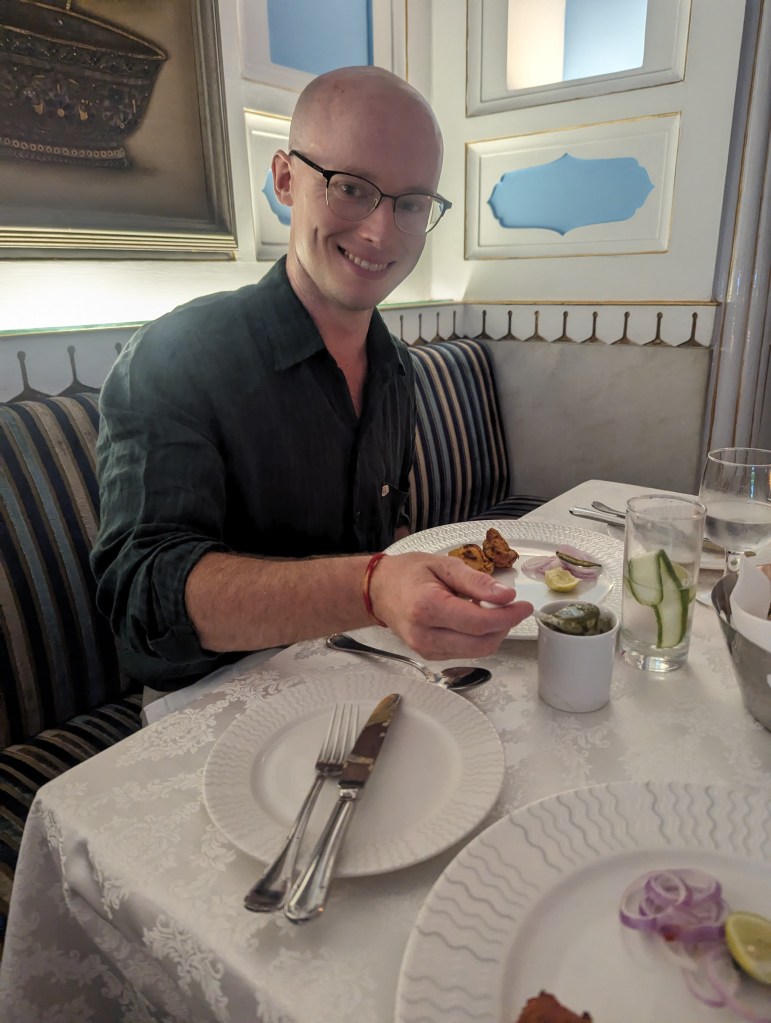
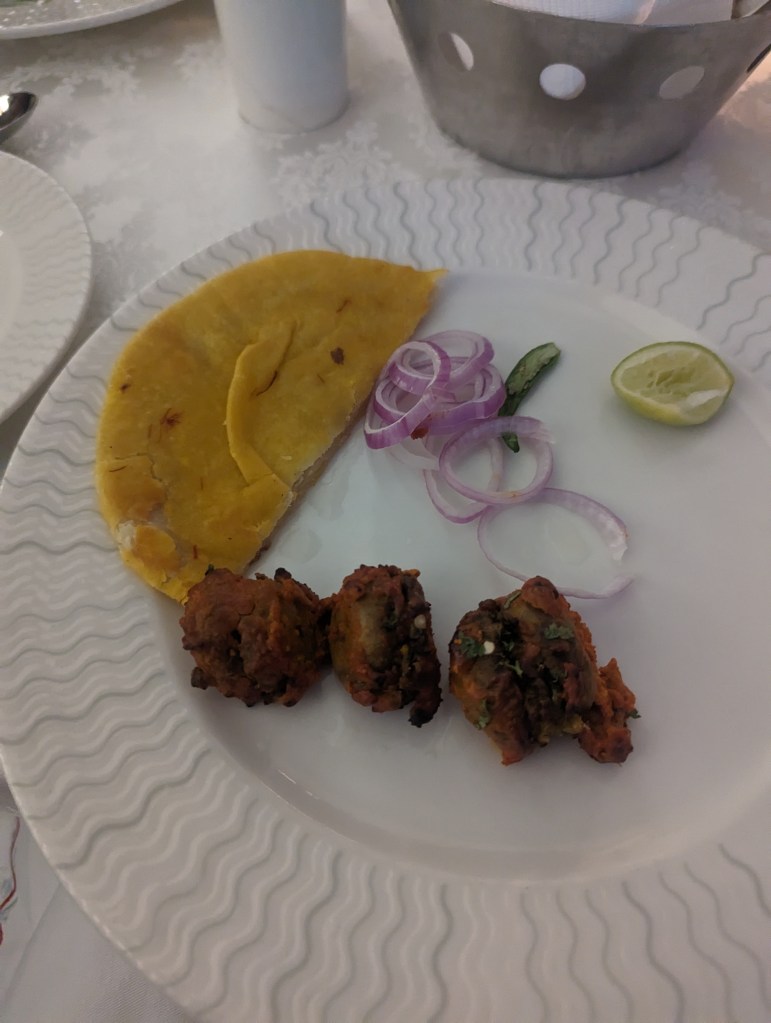
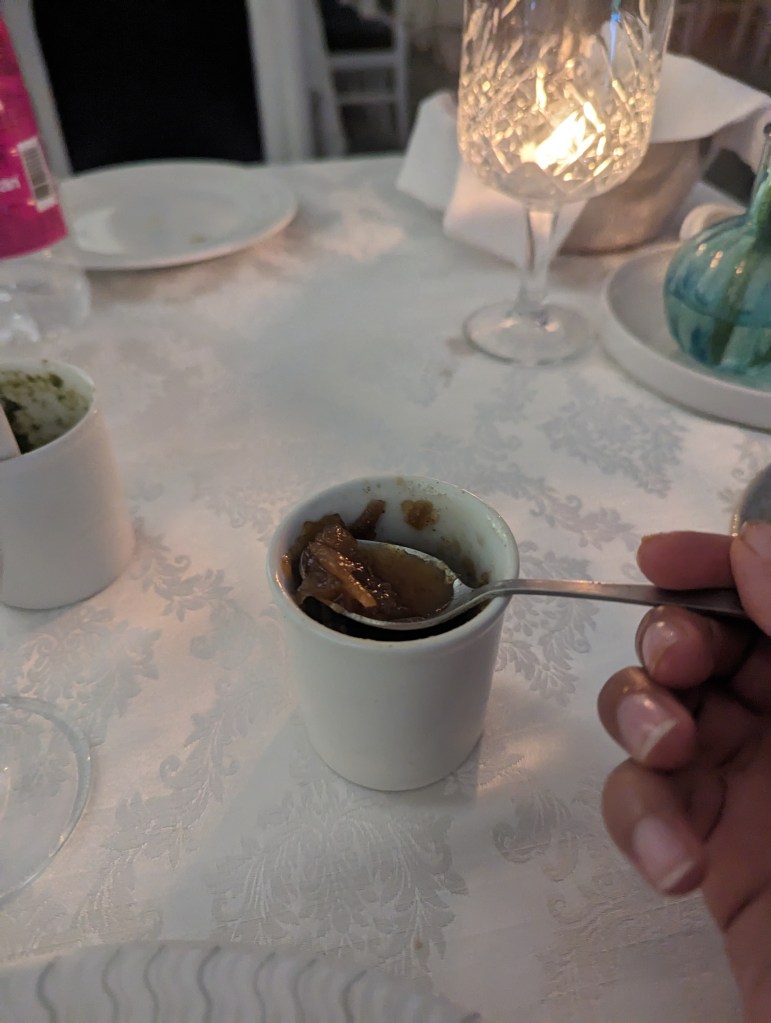
We were led through into the chandelier-ed back room and given a number of complimentary amuse-bouche and sundries including a saffron chutney so good that Ellie took a photo of just that so that we can remember it better. We both opted for kebabs again given Lucknow is the epicentre of Mughlai kebab culture, and probably the most uniquely delicious breads we’ve had in India, including a bright yellow saffron-flavored layered paratha. After a lovely couple of hours, some well-earned G&Ts, an overwhelmingly strong clove-leaf chewed breath freshener and the fanciest toilets we’ve seen in a long time we made our way back to the hotel and to bed in preparation for yet another train journey in the morning.
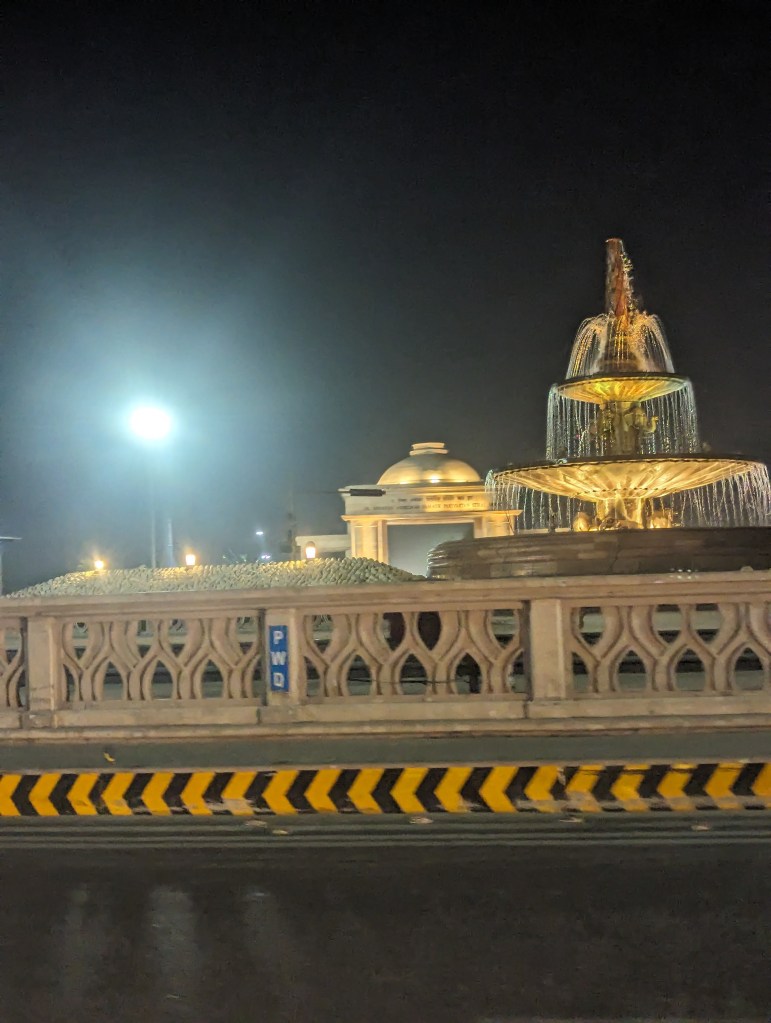
And so, we’ve entered Uttar Pradesh and will be making our way to Varanasi, the holiest city in India. We will be there for a full week, and I would imagine it will need two blogs to cover it all.
Until then,
Rob & Ellie xx


 Rob's India & Nepal Blog
Leave a reply to Anonymous Cancel reply