By Monday, it was time for us to leave Patan and head towards Bhaktapur, another district within the Kathmandu valley to the east of the city centre. We had three nights booked in Shiva Guest House, and in this blog we will cover our arrival in Bhaktapur as well as the two full days we had there.
Monday –
We woke Monday morning and made our slow way downstairs to our usual seat for breakfast. Ellie had finally found a semi-passable option for breakfast (muesli with cold milk), and I loyally stuck once again to the bland but inoffensive fried lentil bread. Once we had eaten, and bought a backup sel roti from the guys outside the hotel, we packed up and checked out.
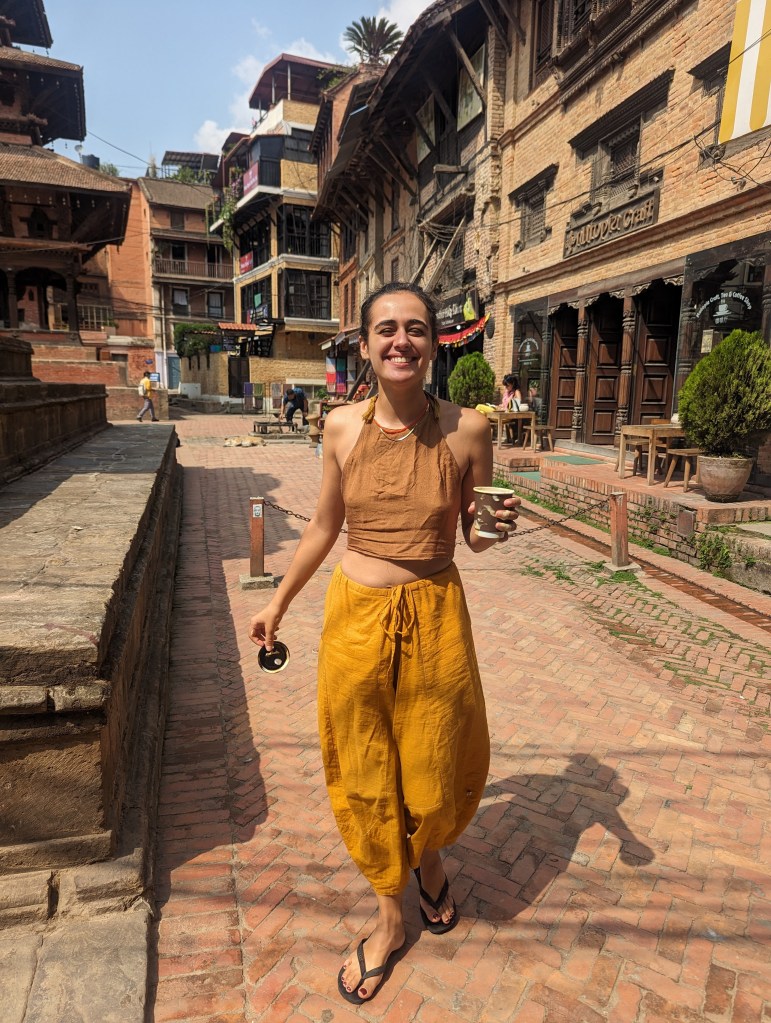
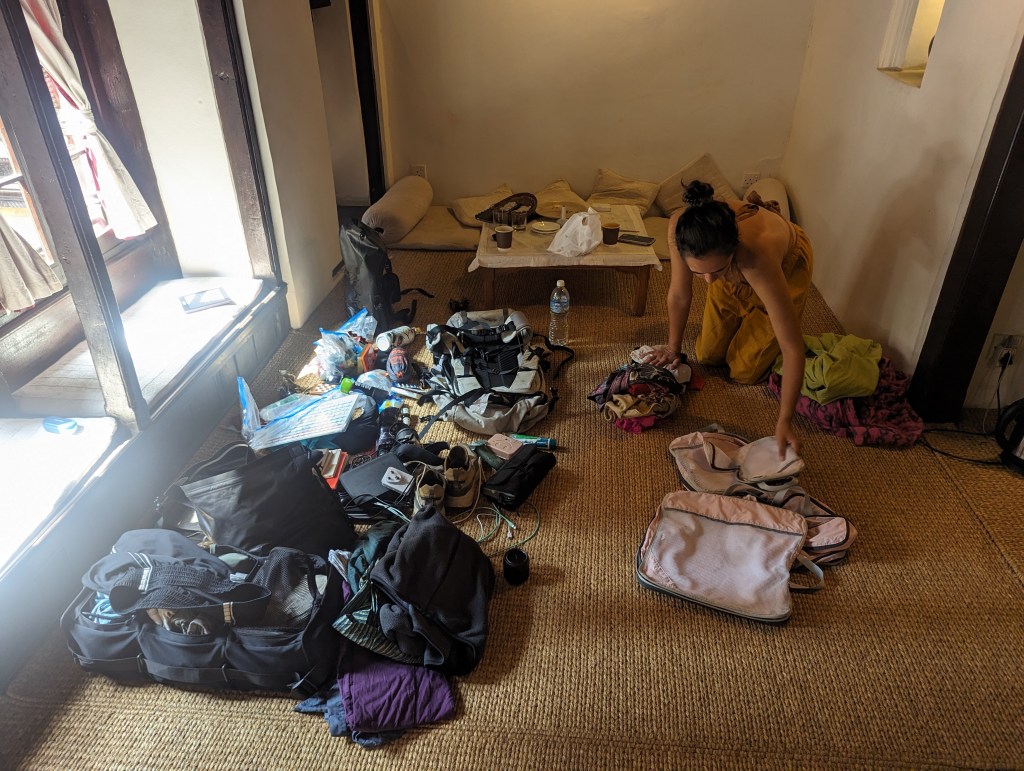
Kathmandu has a good Uber type service, and it was quick and cheap to find a cab to take us to Bhaktapur, which was about a thirty minute drive away. Whilst in the taxi, I received several panicked whatsapp messages from the Newa Chen staff to alert me I still had the room key in my pocket. Apparently they didn’t have a replacement (though it was only for a little padlock that would have come off with a pair of bolt cutters very easily), and kept saying things like “we are very worried”. Fortunately, the taxi app also had a courier service so when we reached Bhaktapur I was able to courier the keys back to Newa Chen for the equivalent of a couple of pounds. This was not the first, and has not been the last, time I have left the hotel with the key in my pocket (fourth time and counting).
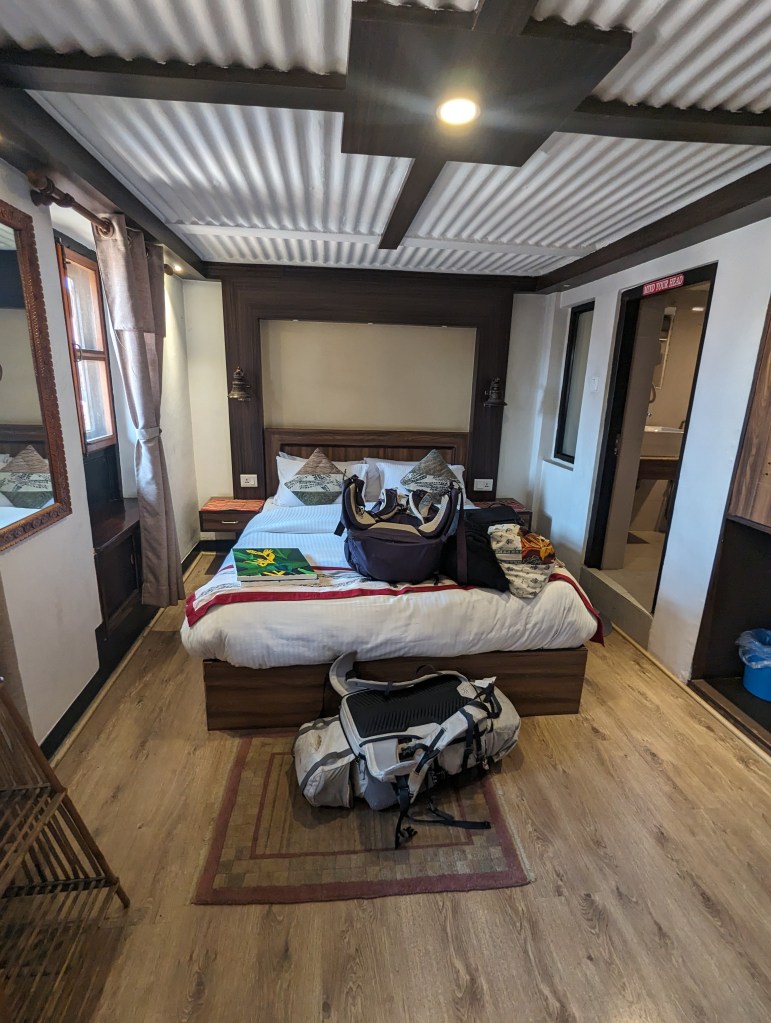
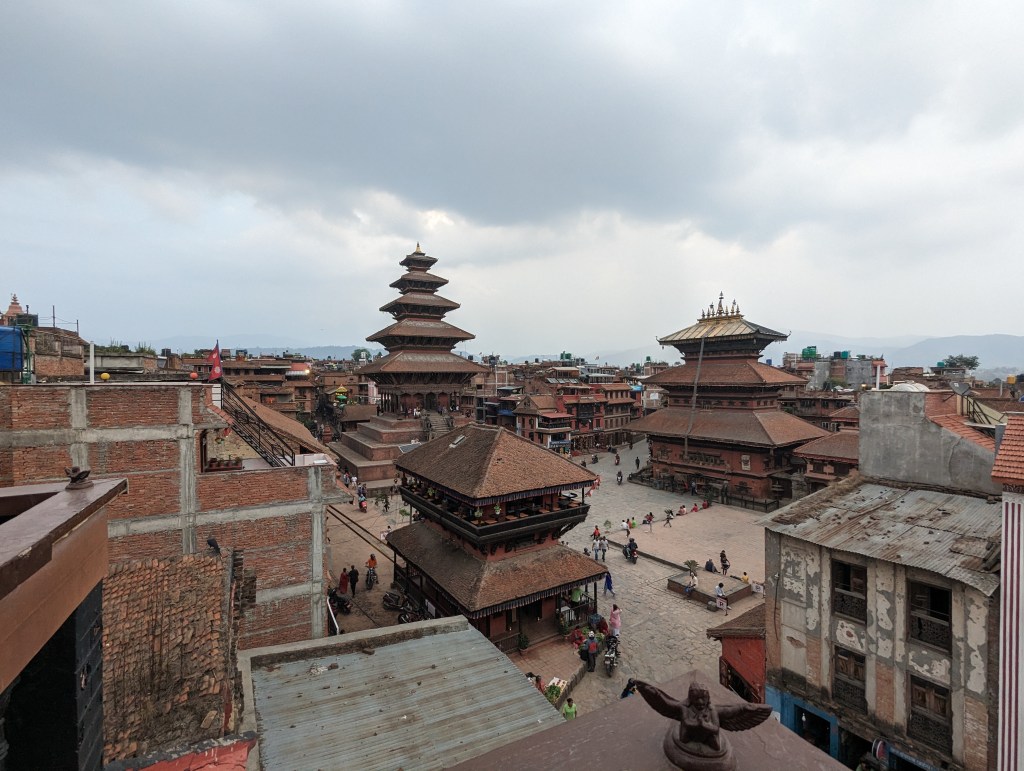
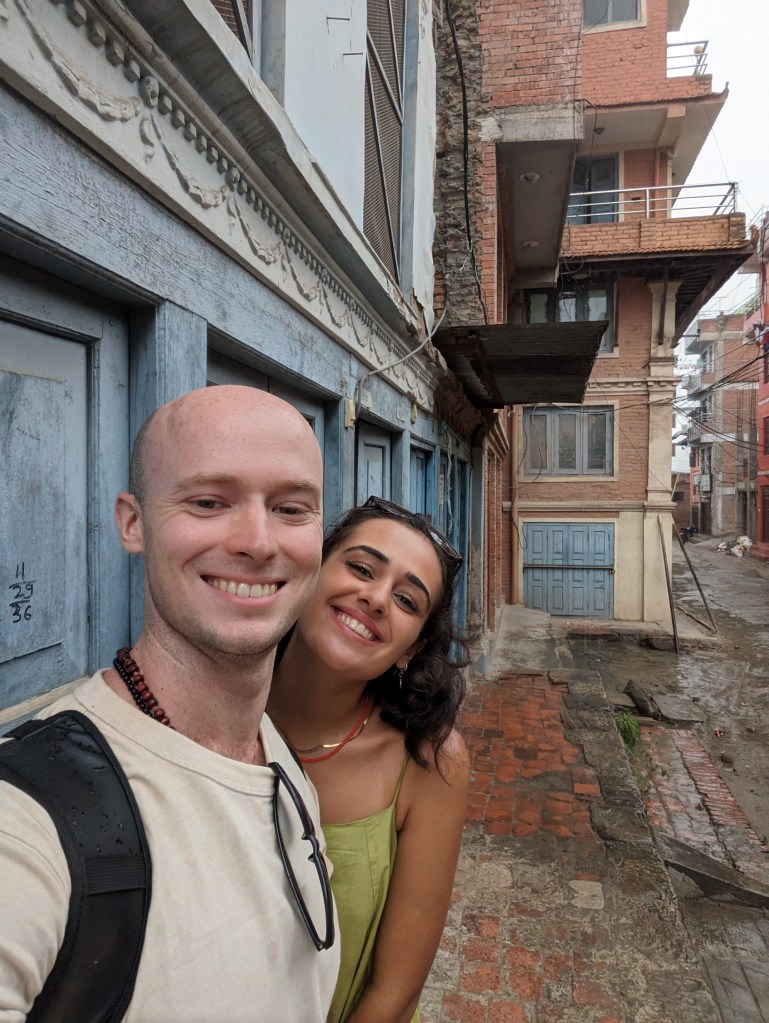
Our hotel in Bhaktapur was in the historic Bhaktapur Durbar (royal) Square which, if anything, was more impressive than the Patan Durbar Square. We paid for our week pass to get into and out of the square, and found our hotel at one of the square’s corners. Shiva Guest House was run by a friendly group of Nepali men, and we were shown to our simple but pleasant room on the second floor. Once we had dropped our bags it was time for lunch, and we headed back out into Bhaktapur to find something straight forward.
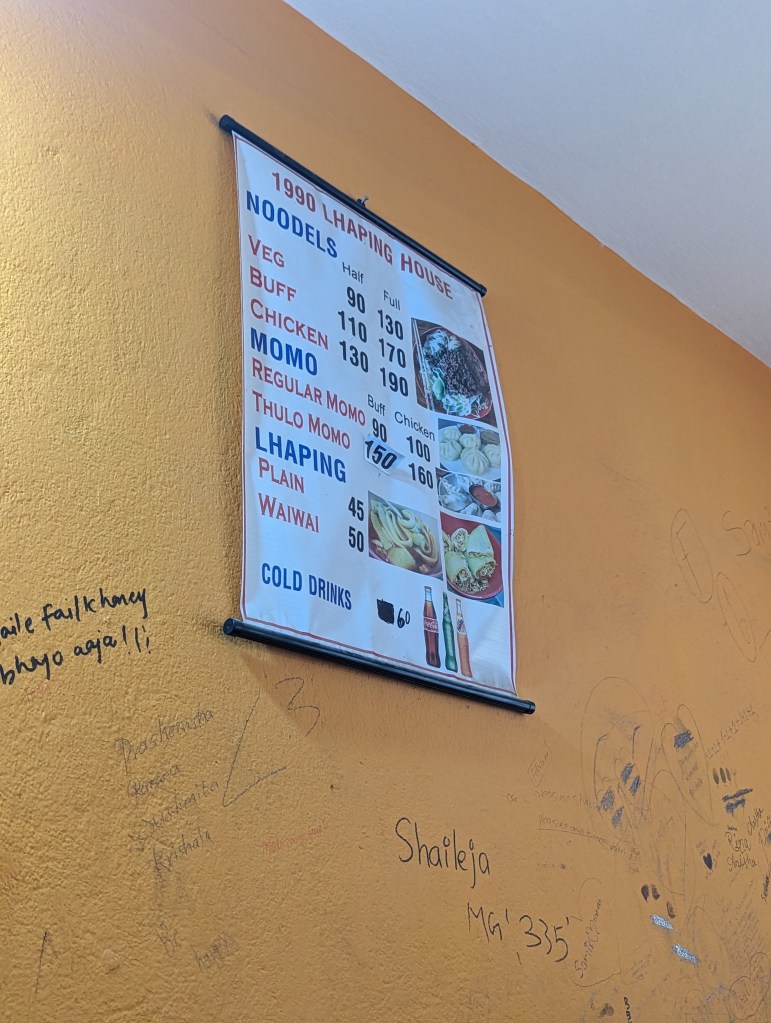
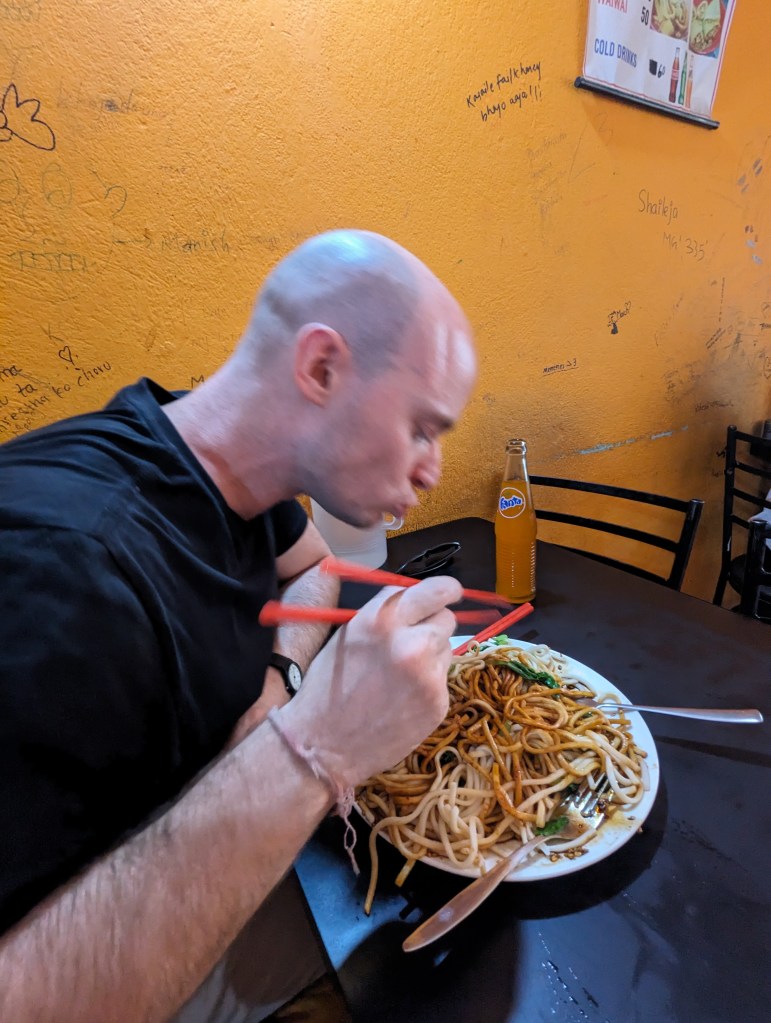
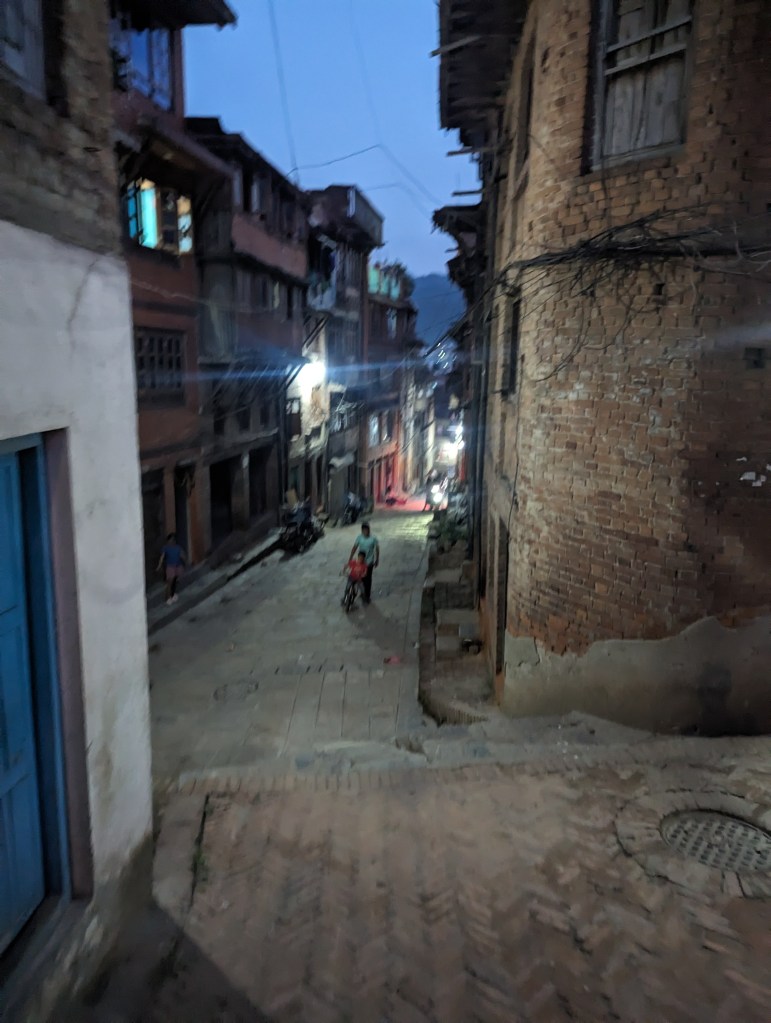
Food in Nepal has been largely more expensive than in India, especially in the tourist restaurants. As such, we resolved to find a local restaurant where the meals tended to be about a quarter of the price. We walked through the picturesque backstreets of Bhaktapur to a local noodle and momo bar, and ordered the veg noodles to share. The waiter came back to ask if we wanted it spicy, to which I said “normal spice” but he heard “no spice” and was gone before I could correct him. The noodles came out plain with just soy sauce and something like bok choi, but still made for quite a tasty lunch.
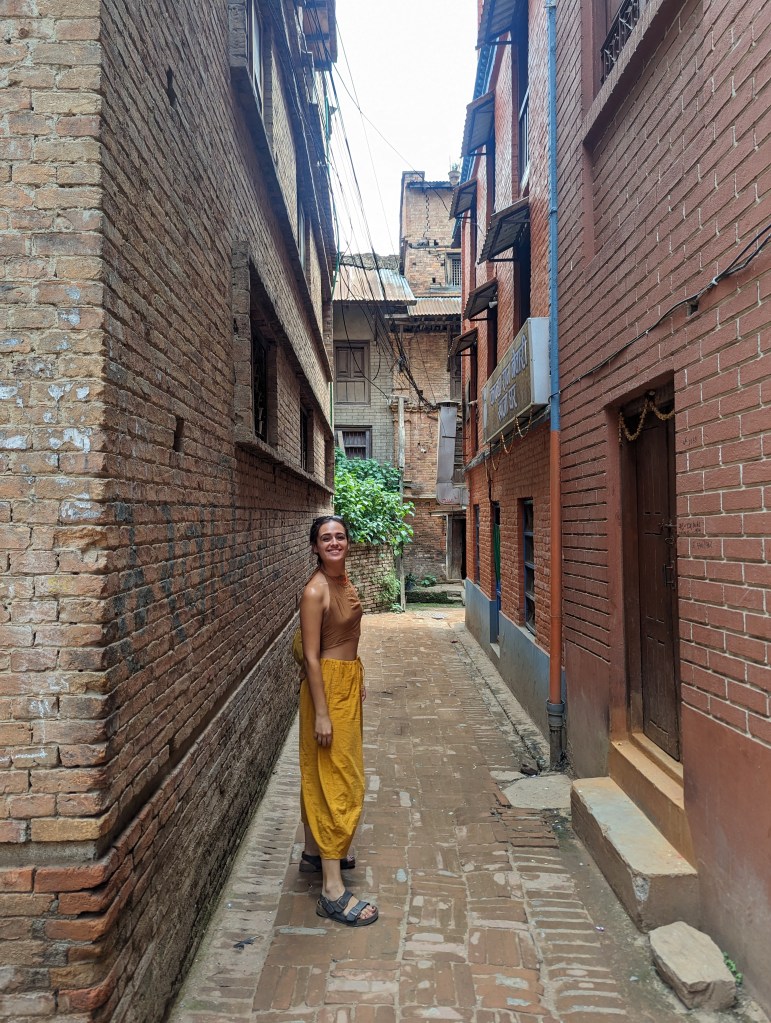

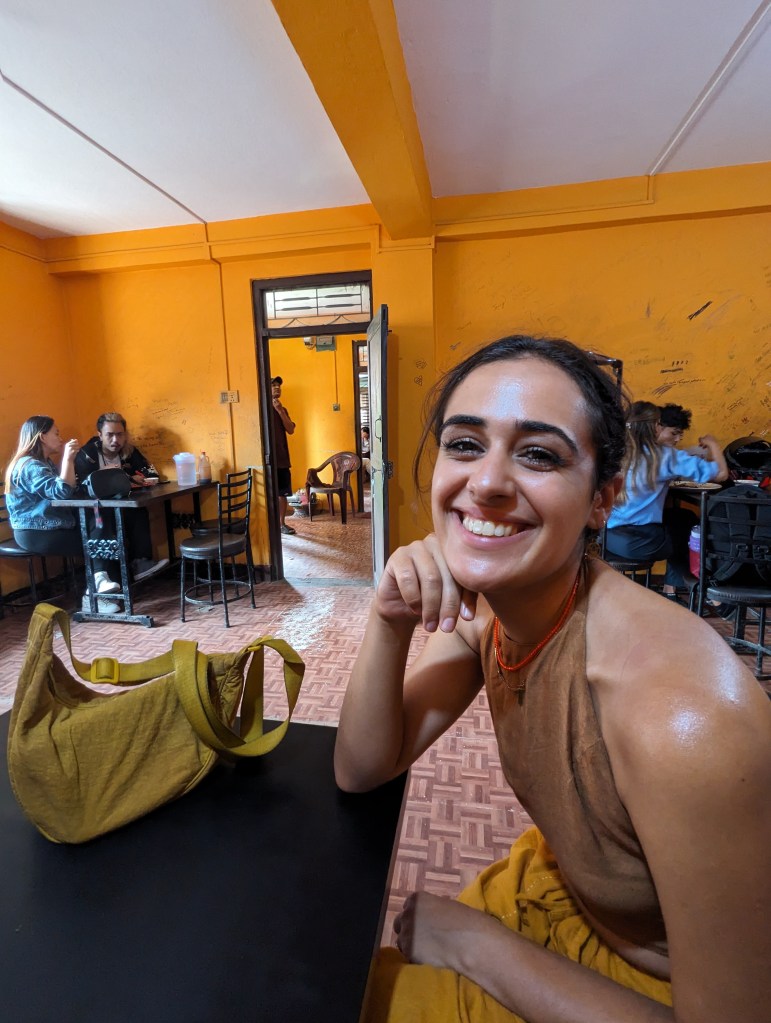
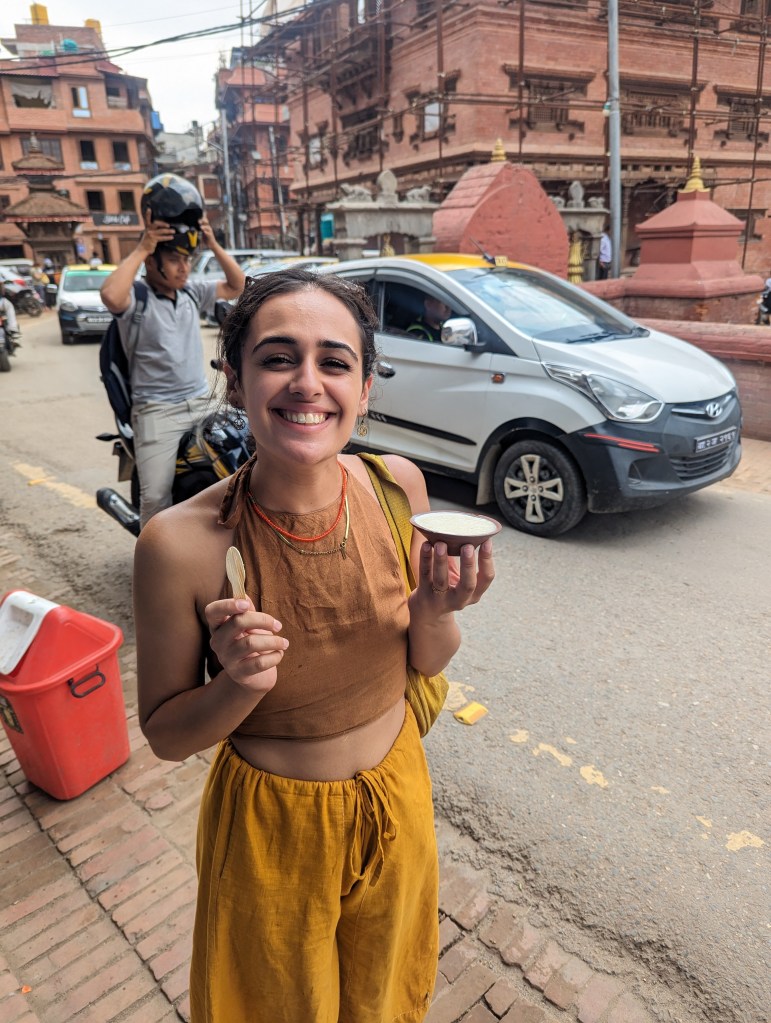
We walked back to the hotel via a coffee shop, where we decided on something of a plan for our two and a half days in the area. Our guidebook had a walk that took us around the three main squares, or Toles, of Bhaktapur, so we thought that was probably a good start for the afternoon to get acquainted with the area. After a brief rest in the hotel, we were ready to get out and see the sights (which, we guessed correctly, was probably going to be lots more temples). To fortify us, we found a place doing “king curd”, or juju dhau. Juju dhau is a little clay pot of sweet, creamy curd that Bhaktapur is (quite rightly) famous for.
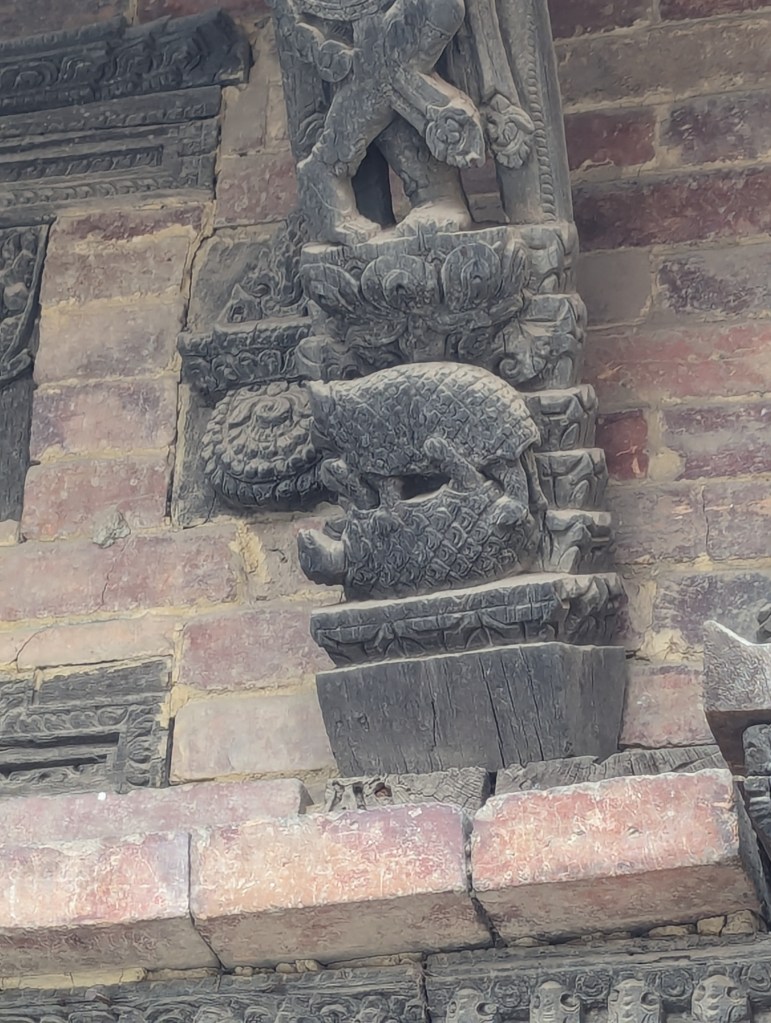
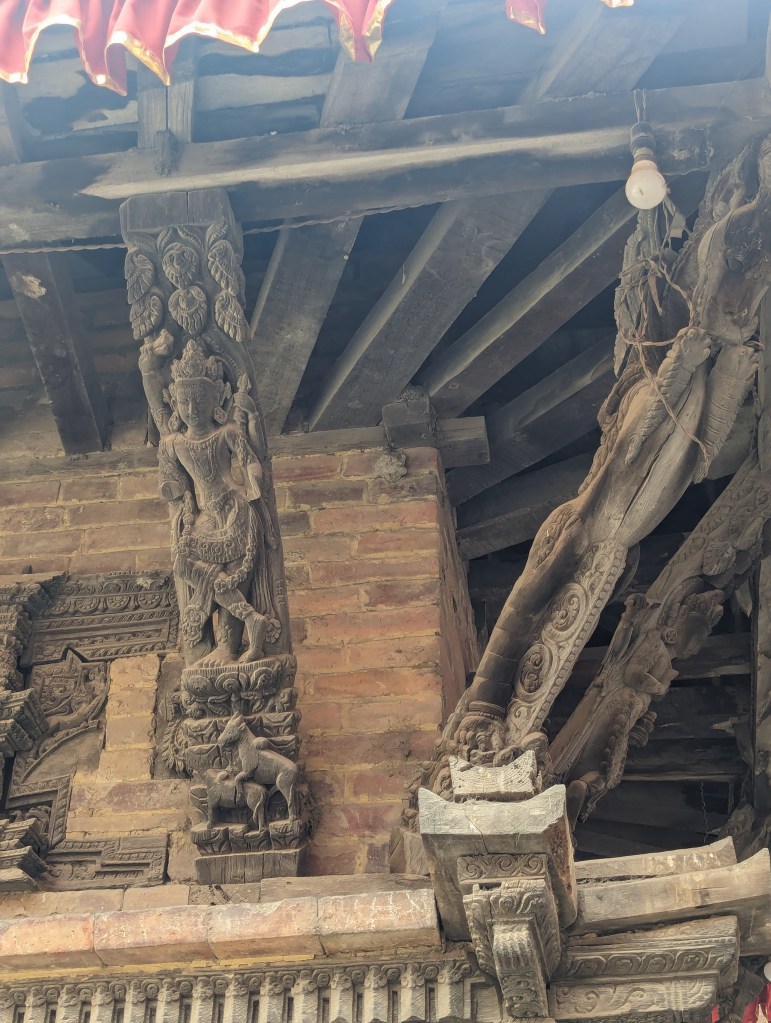
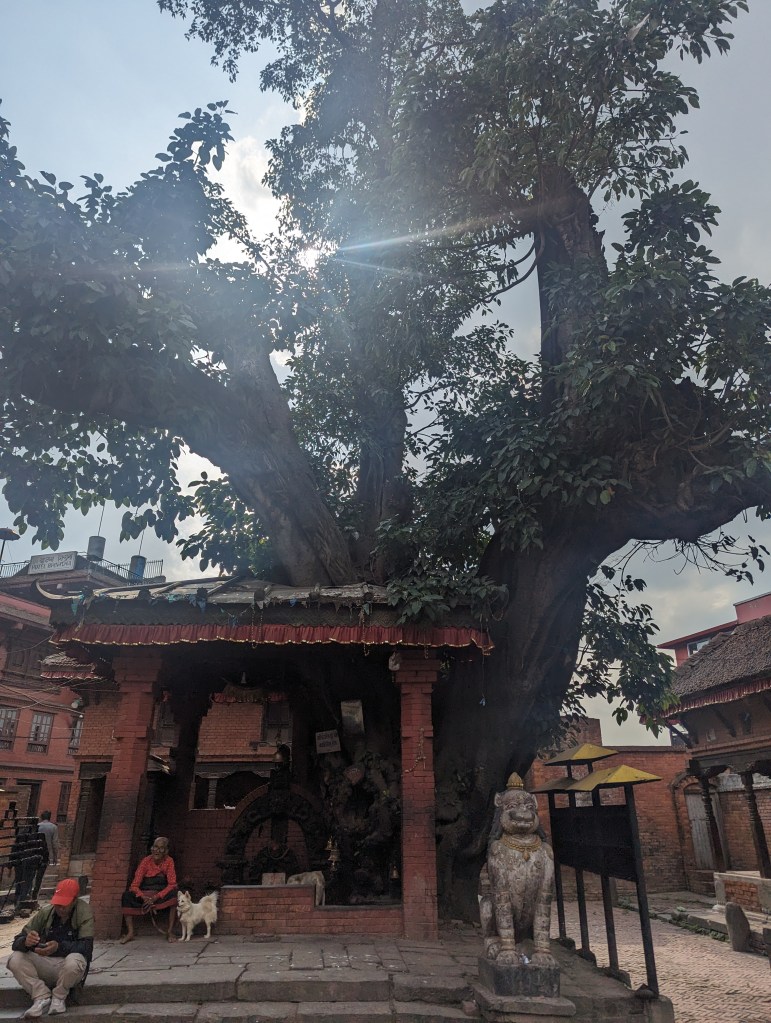
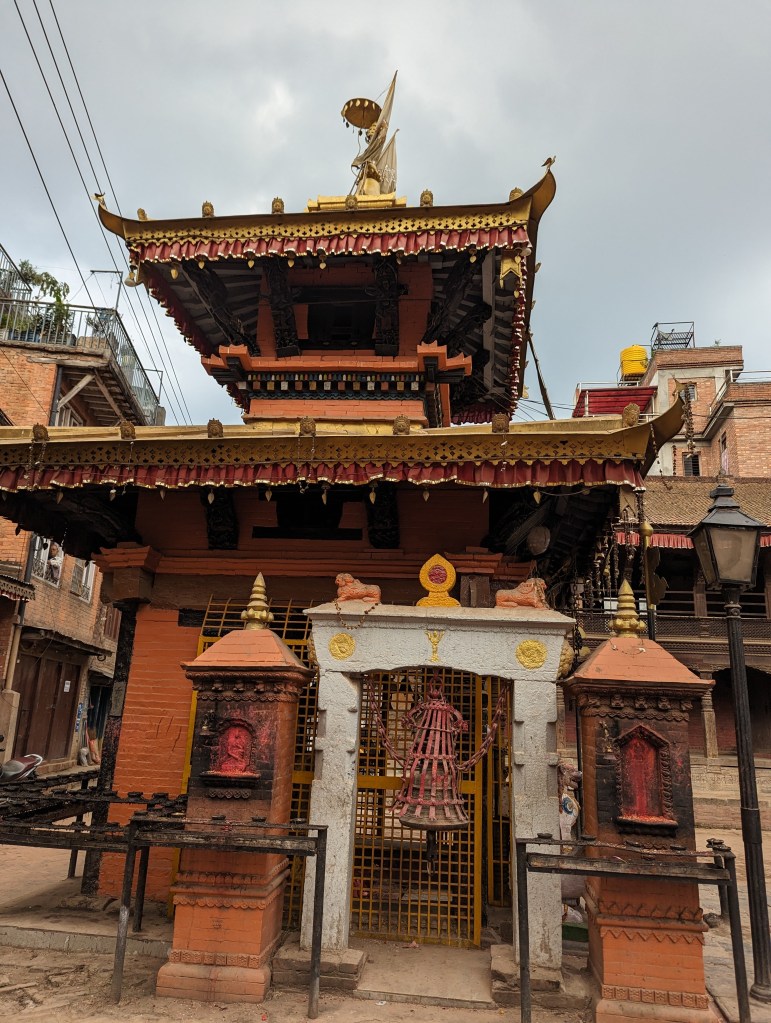
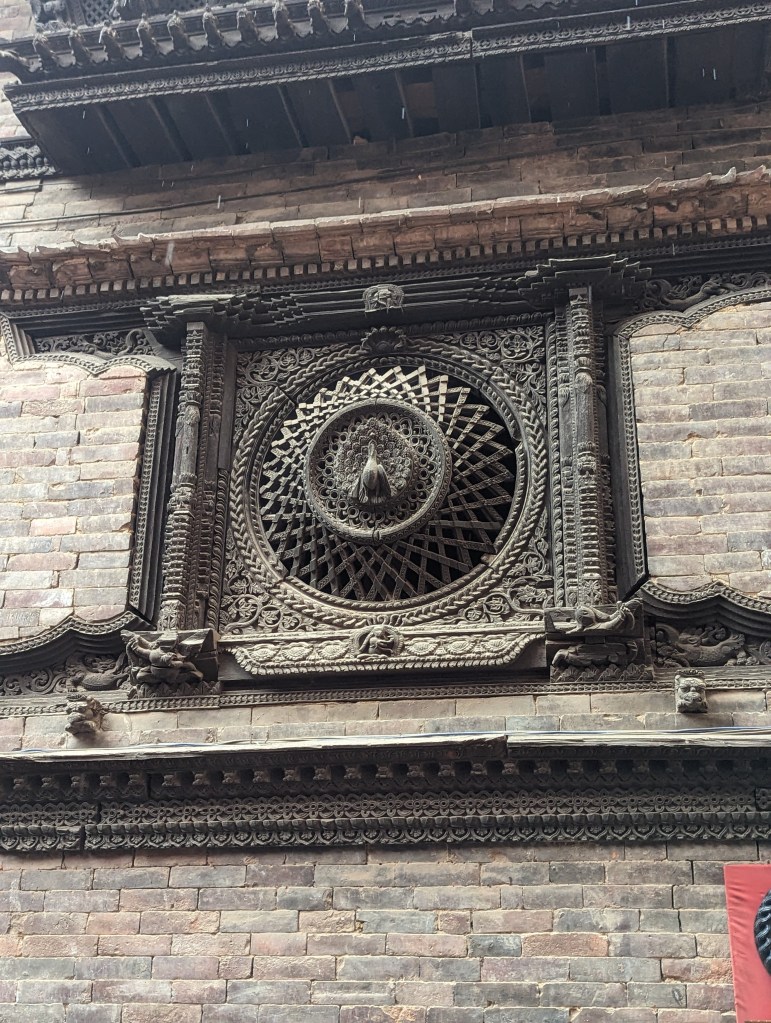
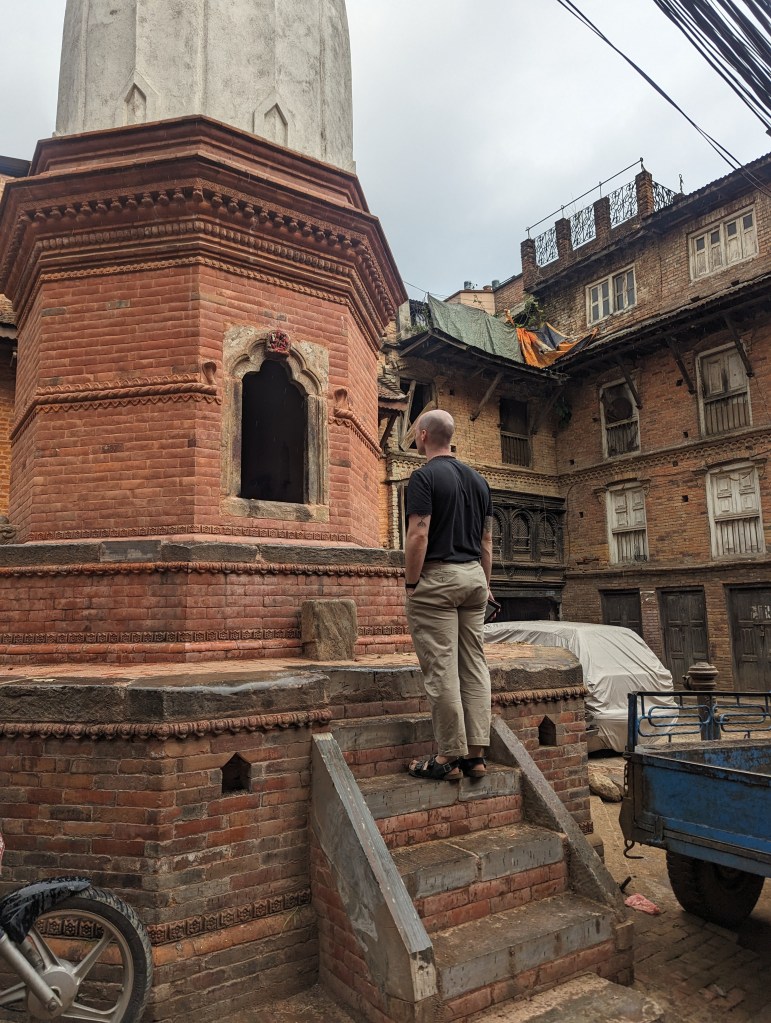
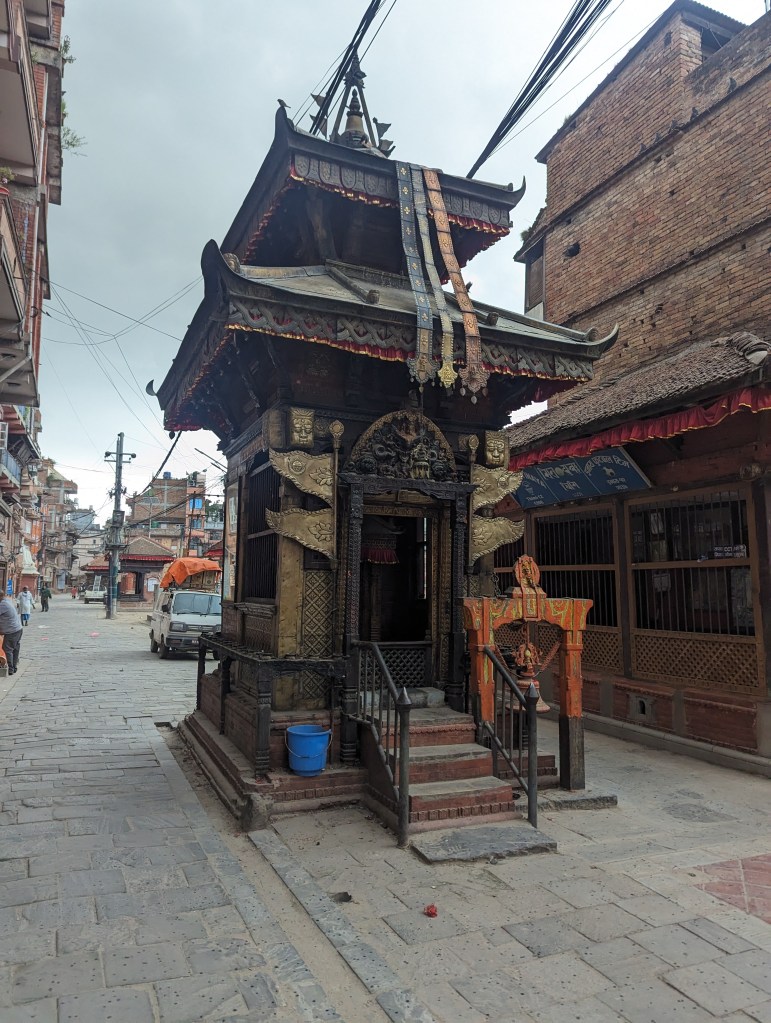
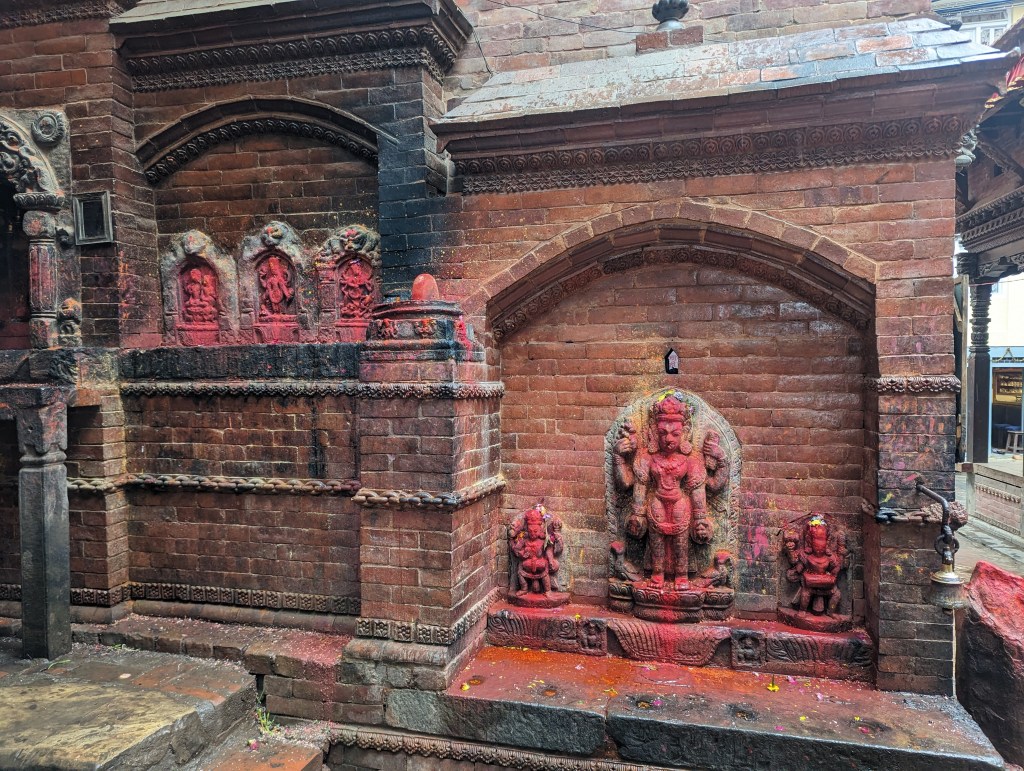
The walk started just outside Durbar Square, practically on our front door. The first thing to find was an old Shiva Parvati temple that had roof struts depicting lewd scenes apparently involving all manner of animals. It took a bit of searching, but we found it in the end, with the help of some of Nepali men who knew exactly what we were looking for. From there, we made our way down to a Kali temple which was made around the trunk of an old, gnarled tree, and had an eclectic group of locals hanging around it. Kali is a manifestation of the Goddess in Hinduism, and is usually depicted as vengeful, dripping blood from her tongue, and with a garland of skulls or severed heads. Kali temples, therefore, tend to have a bit of an atmosphere about them. This one was no exception, still having the blood of Saturday’s animal sacrifice splattered over the altar which was buzzing with flies.
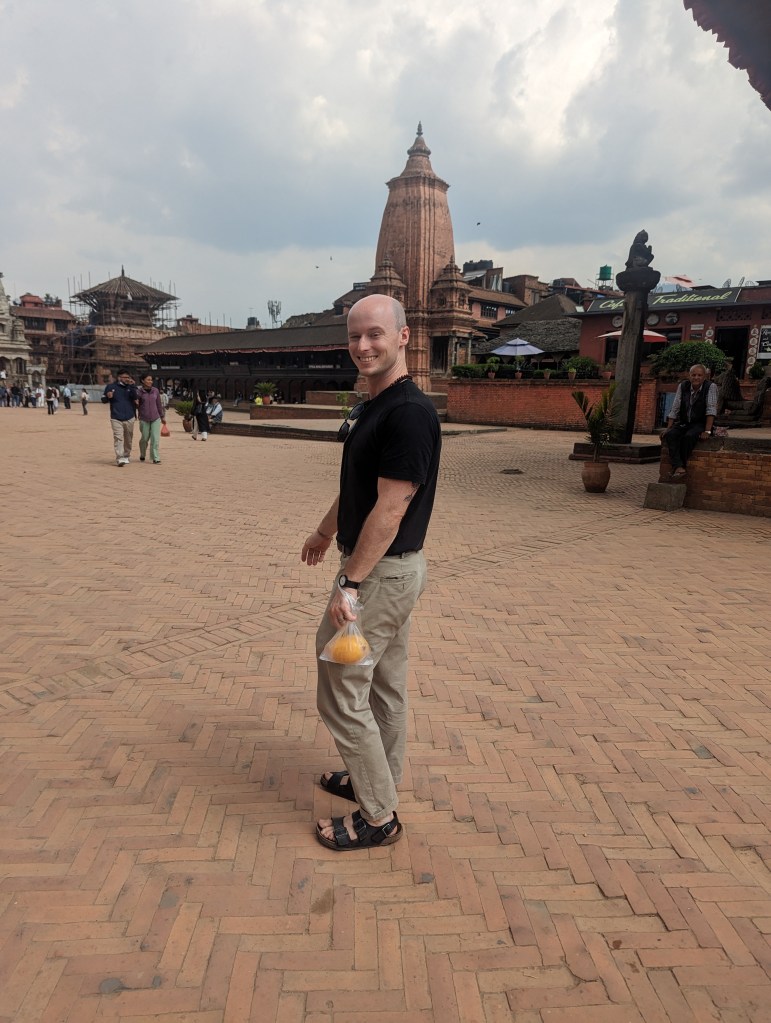
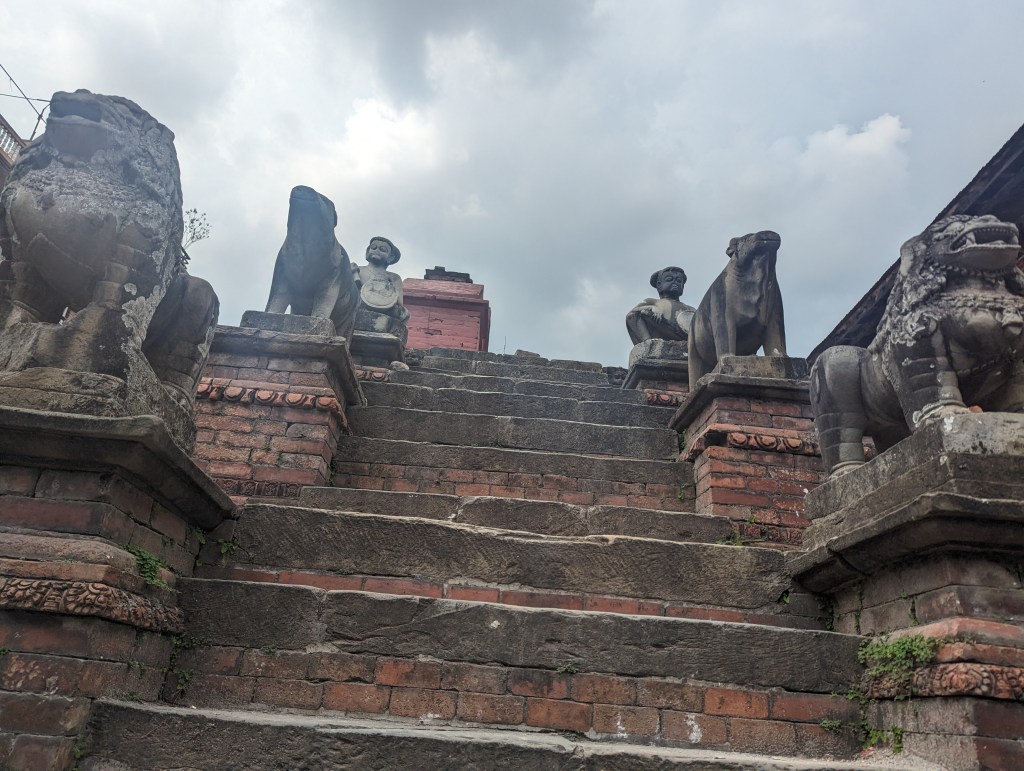

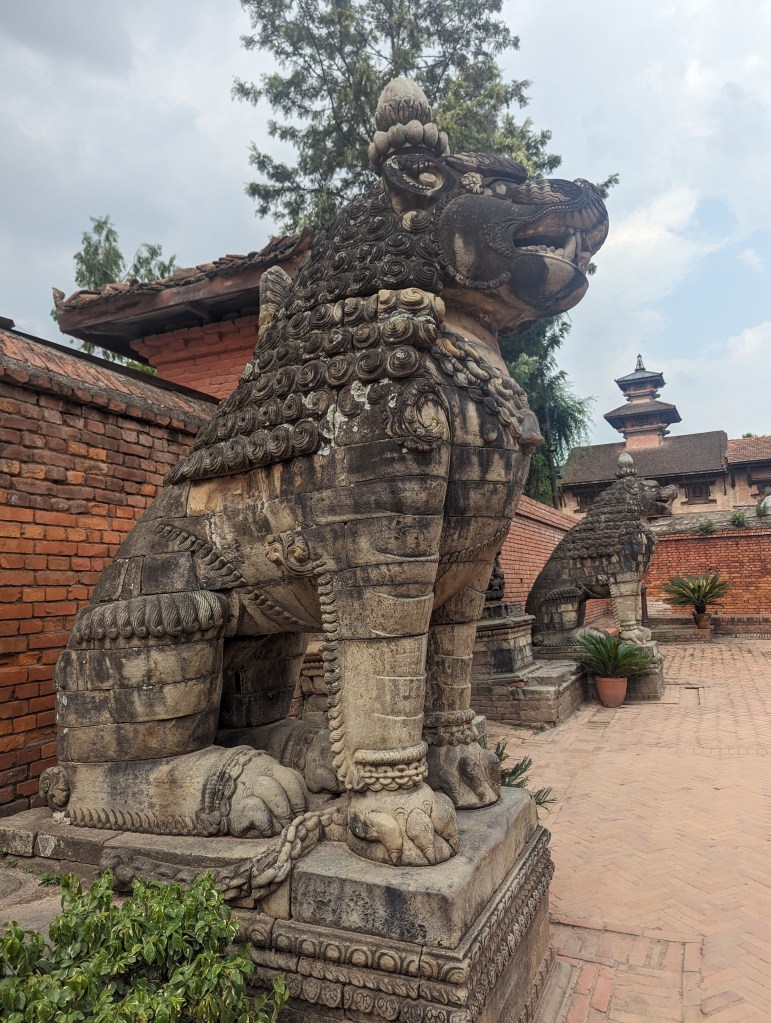
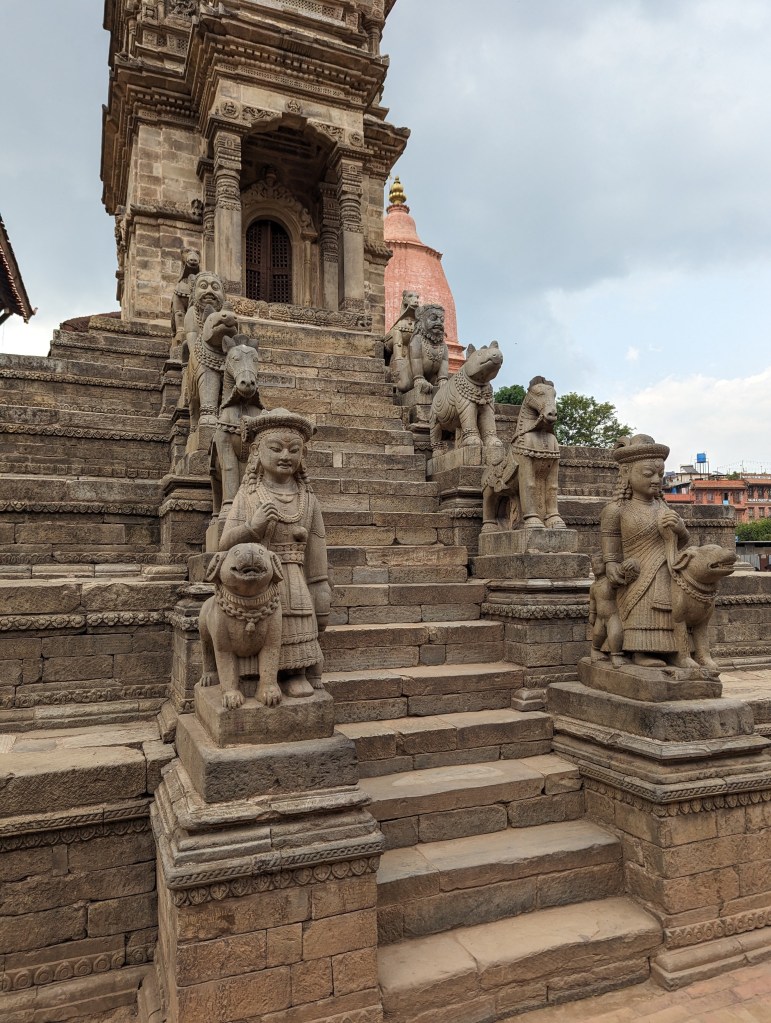
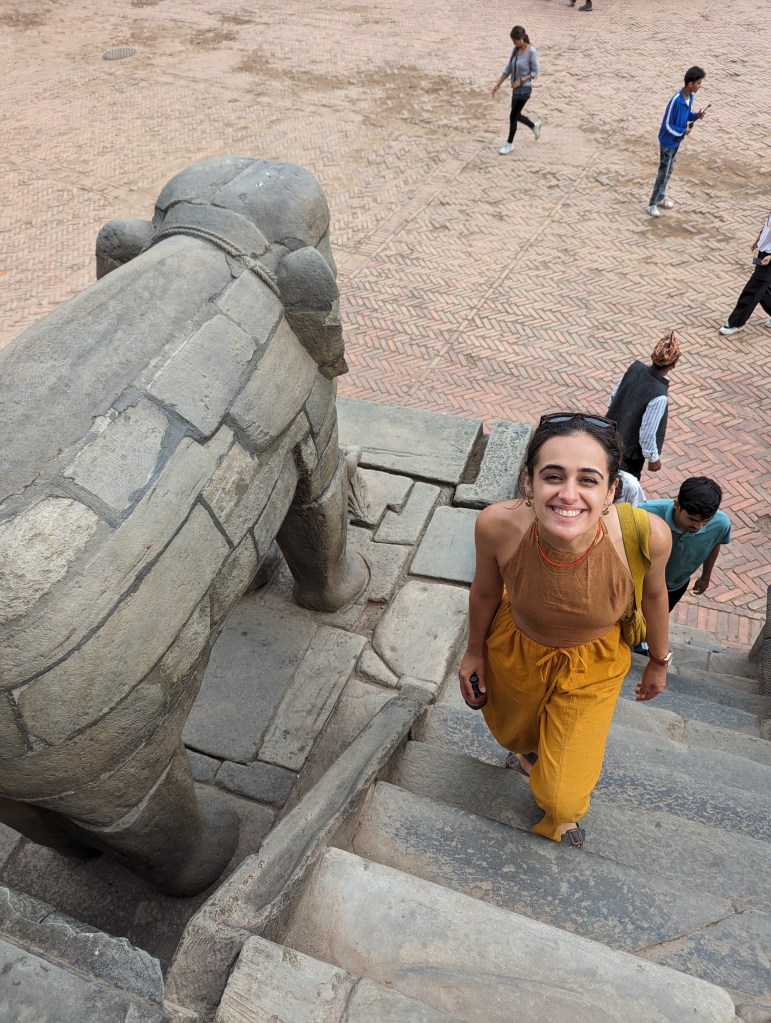
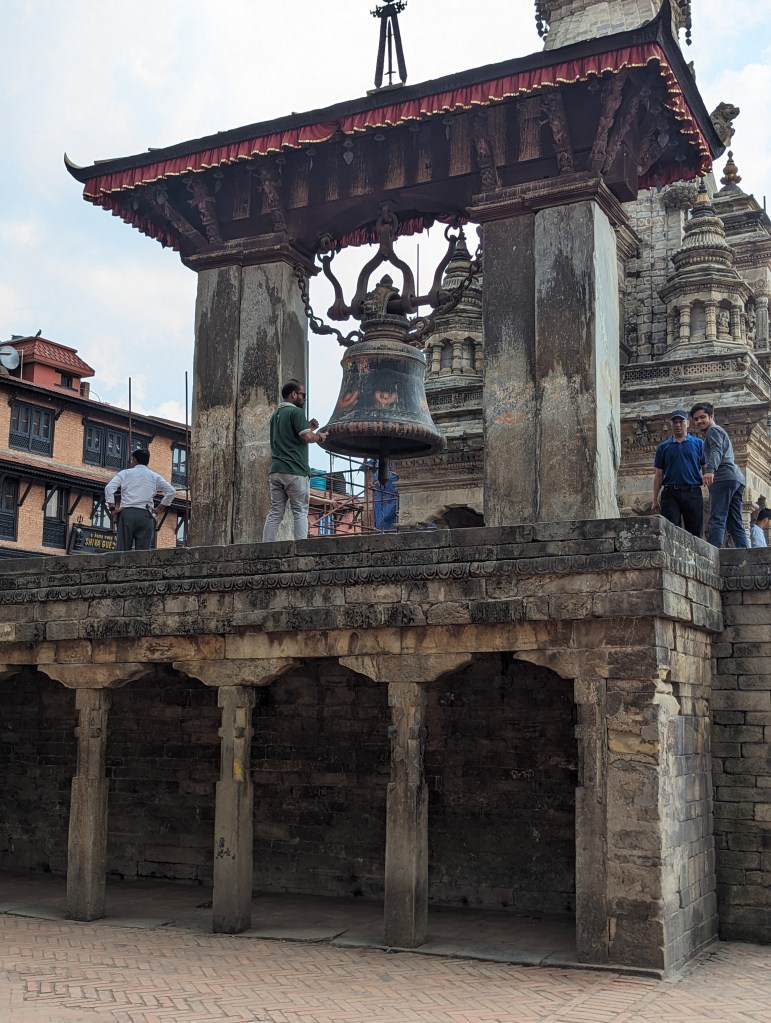
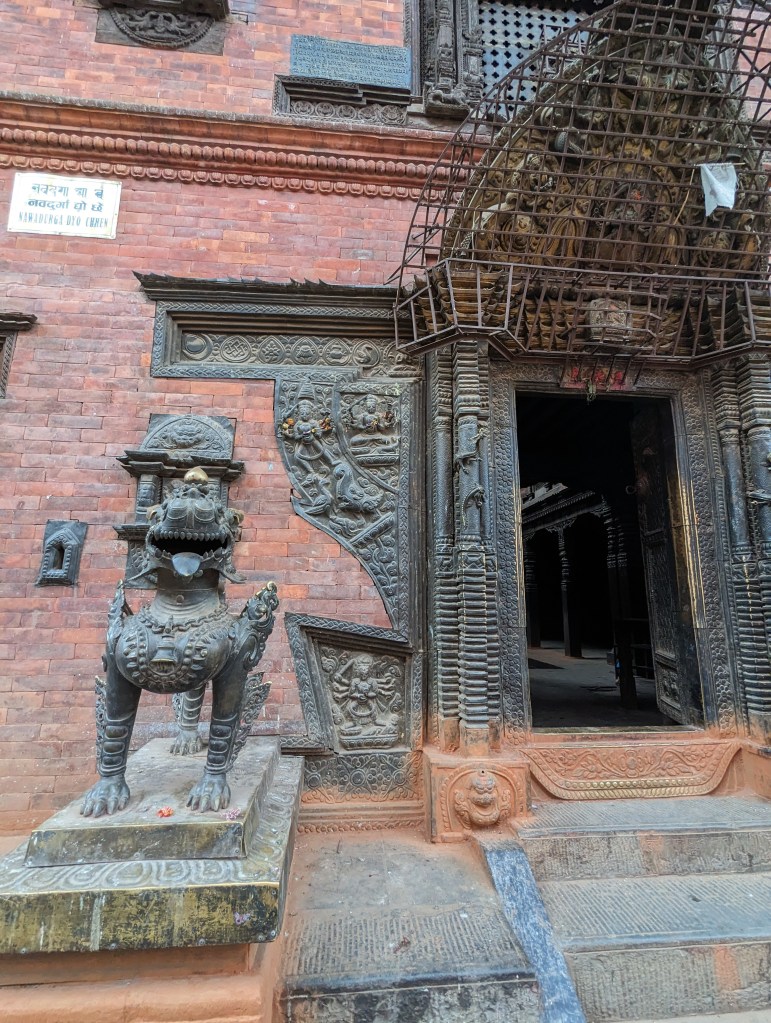
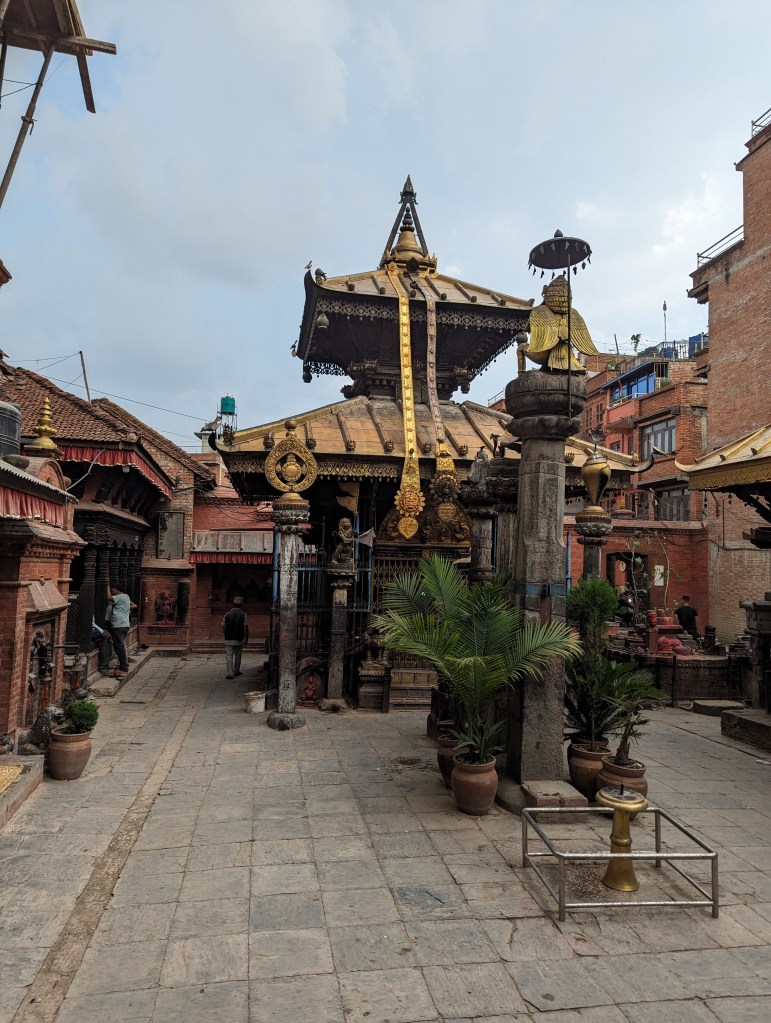
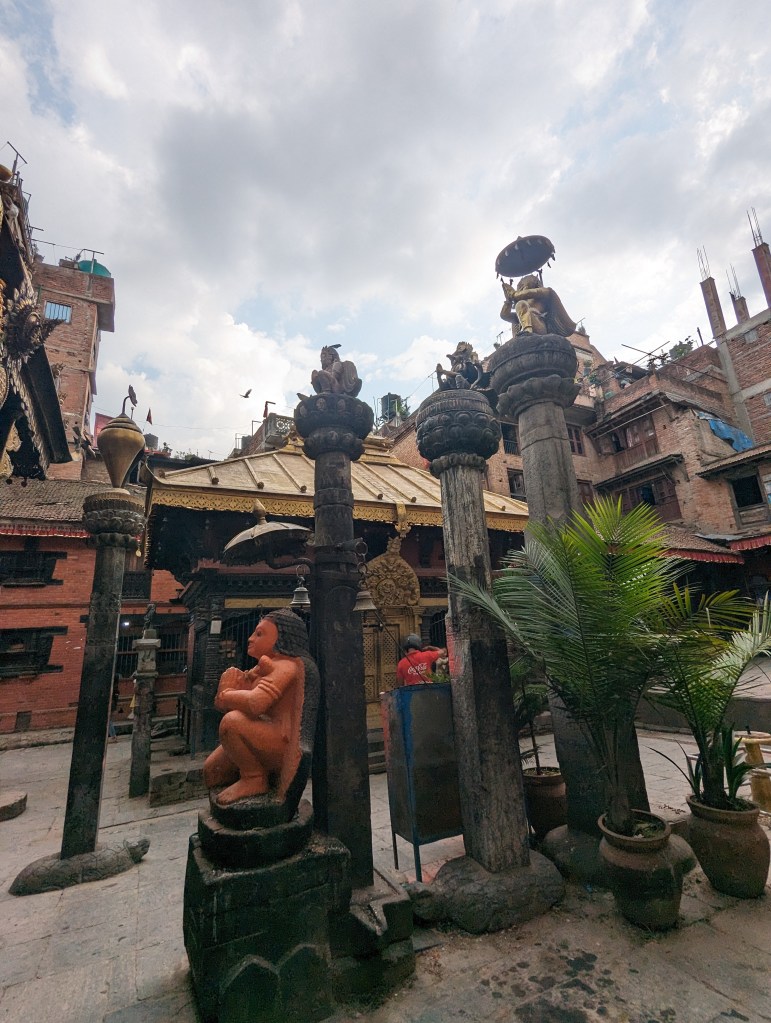
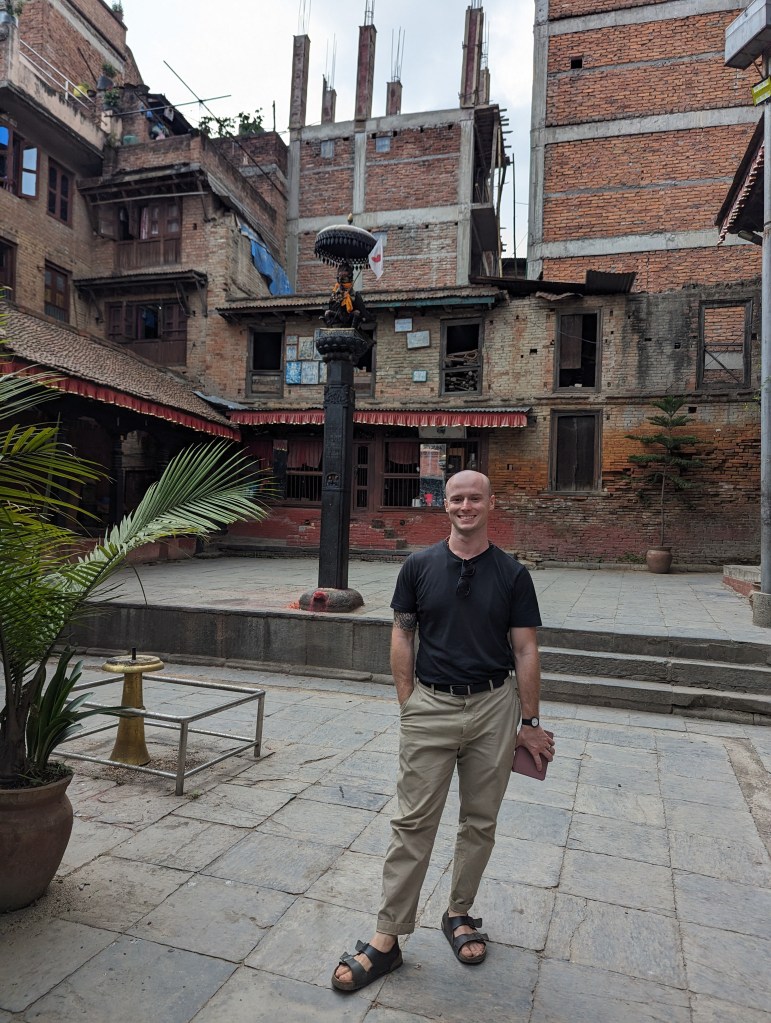
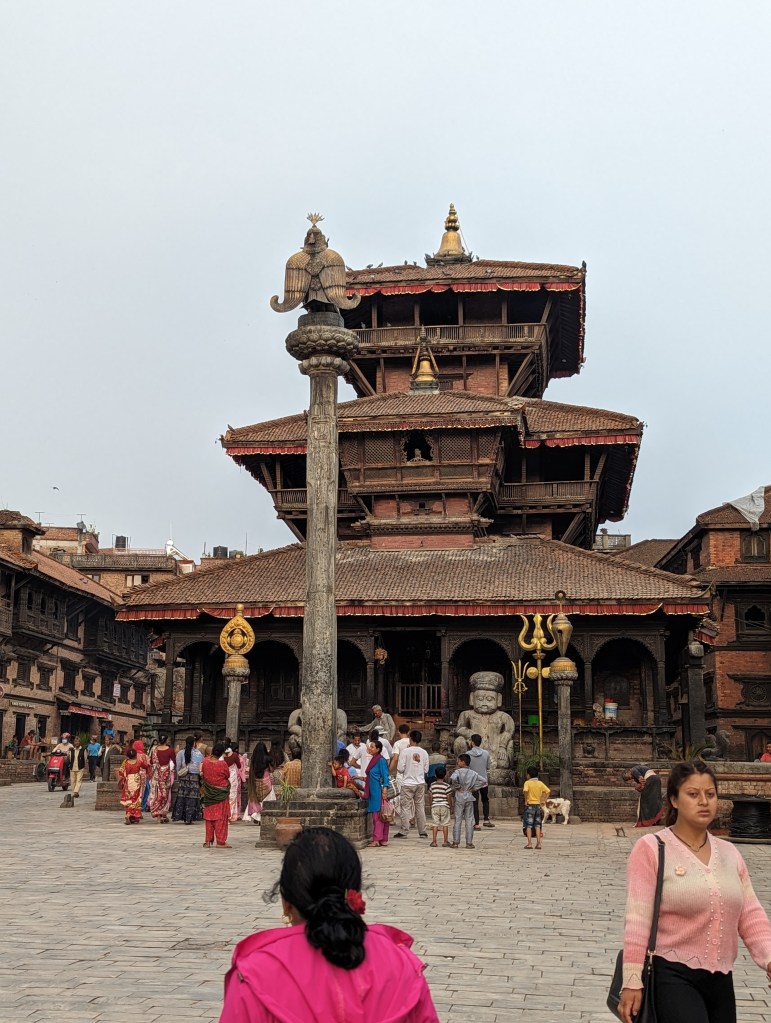
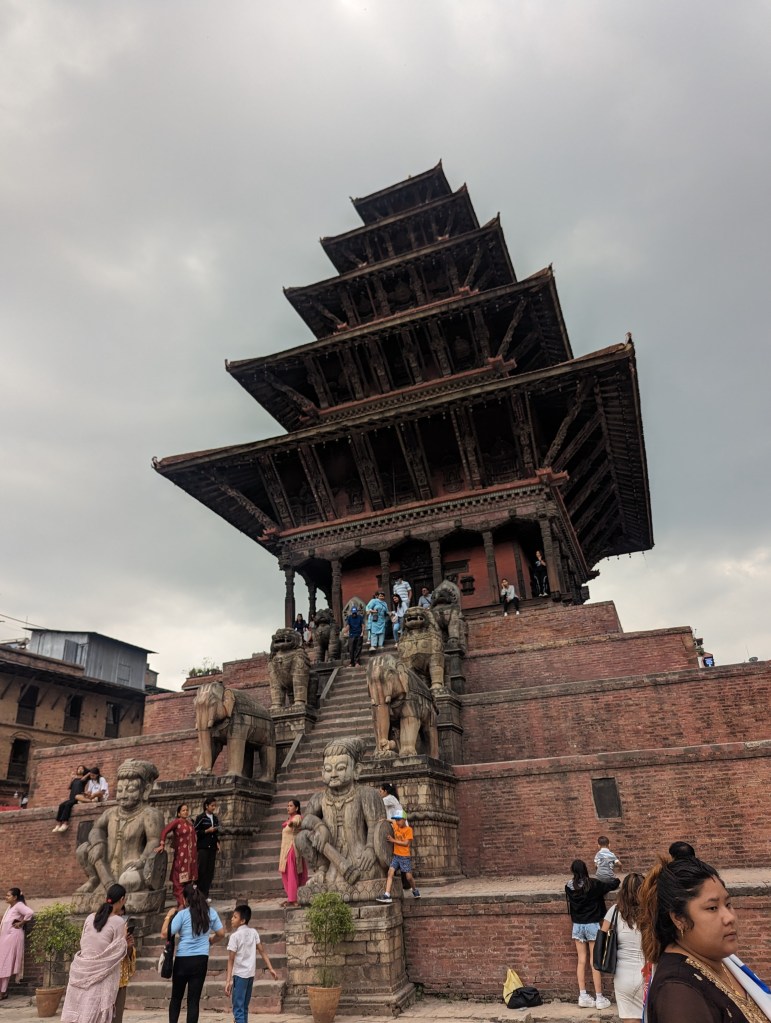
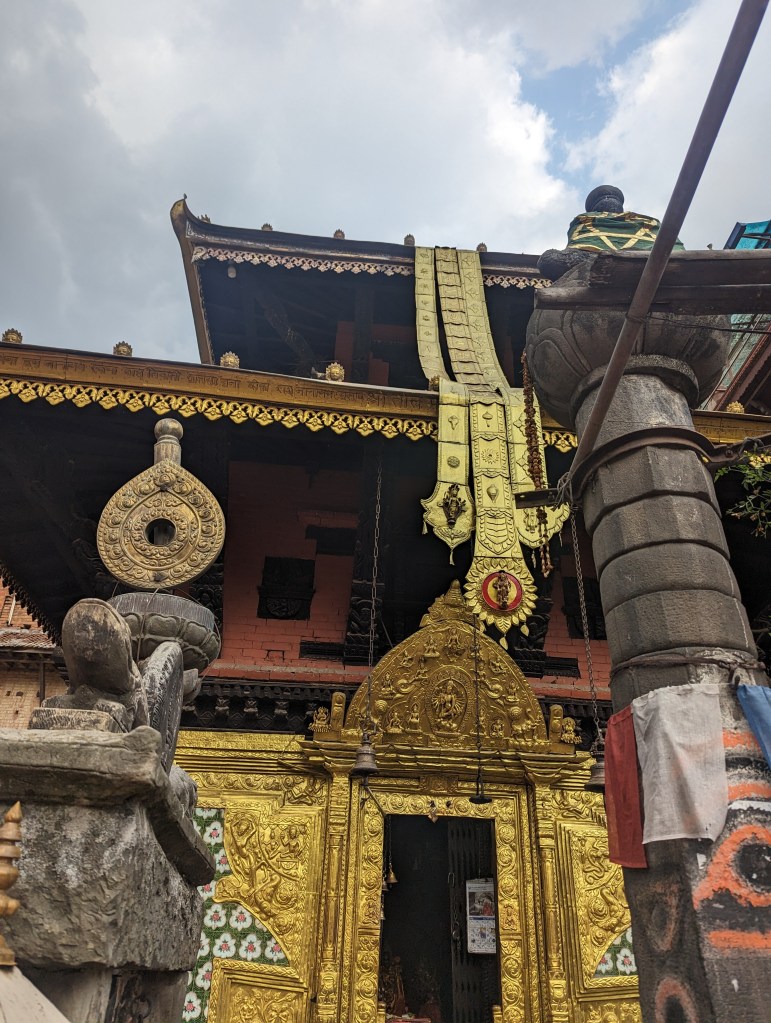
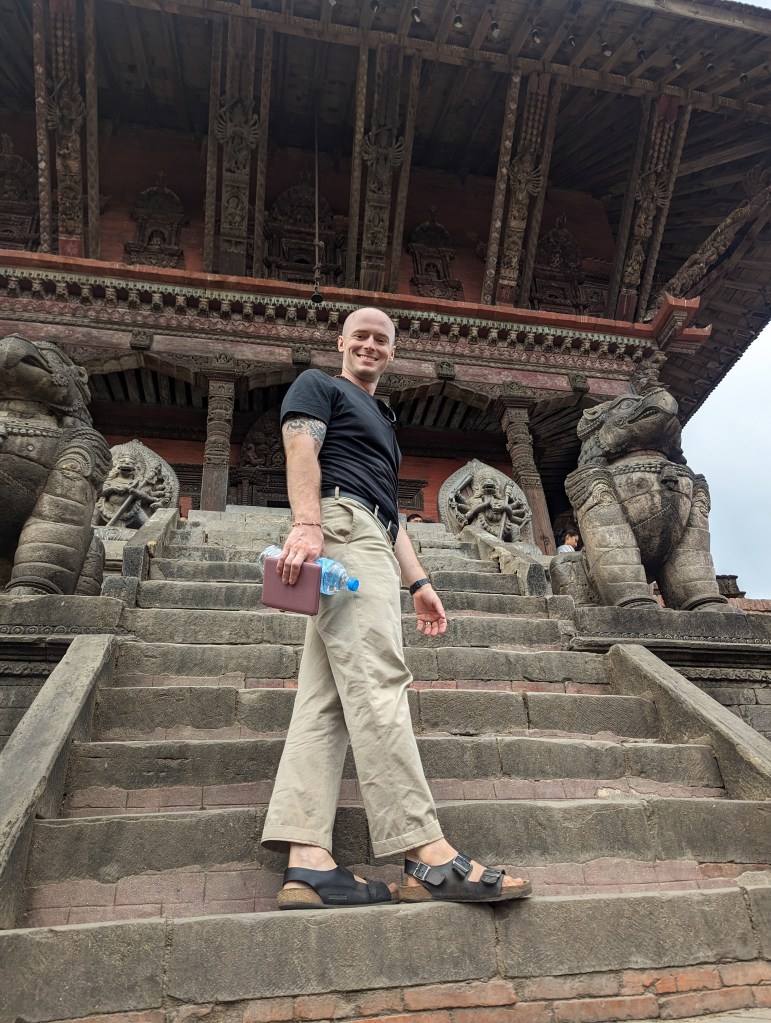
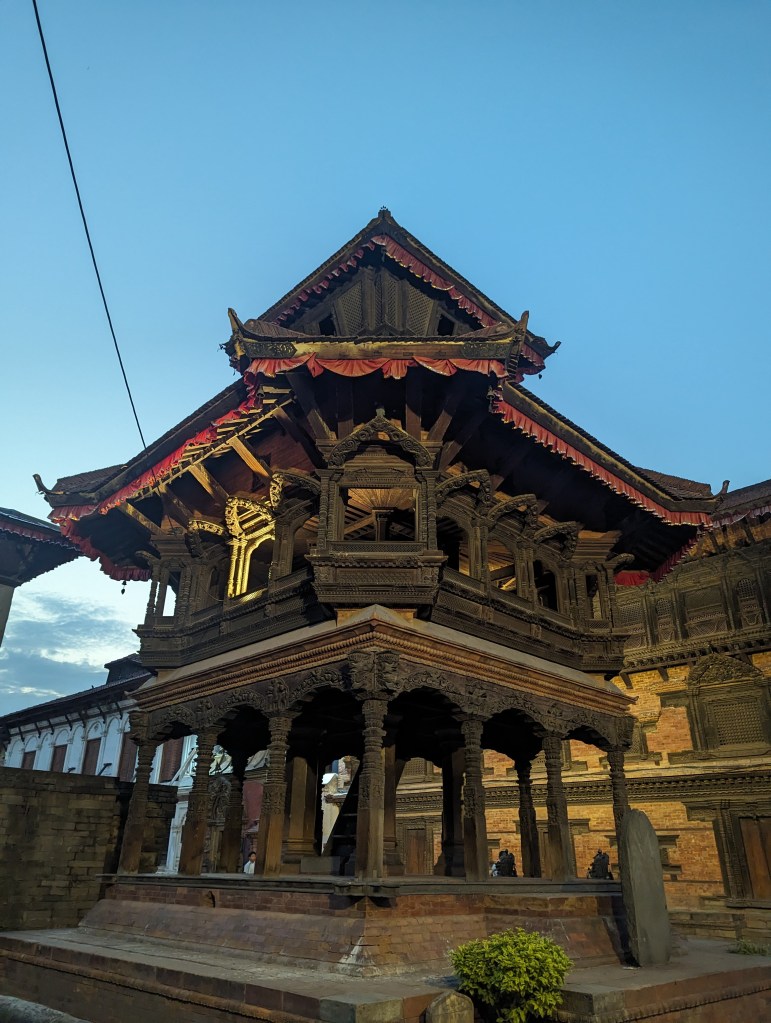
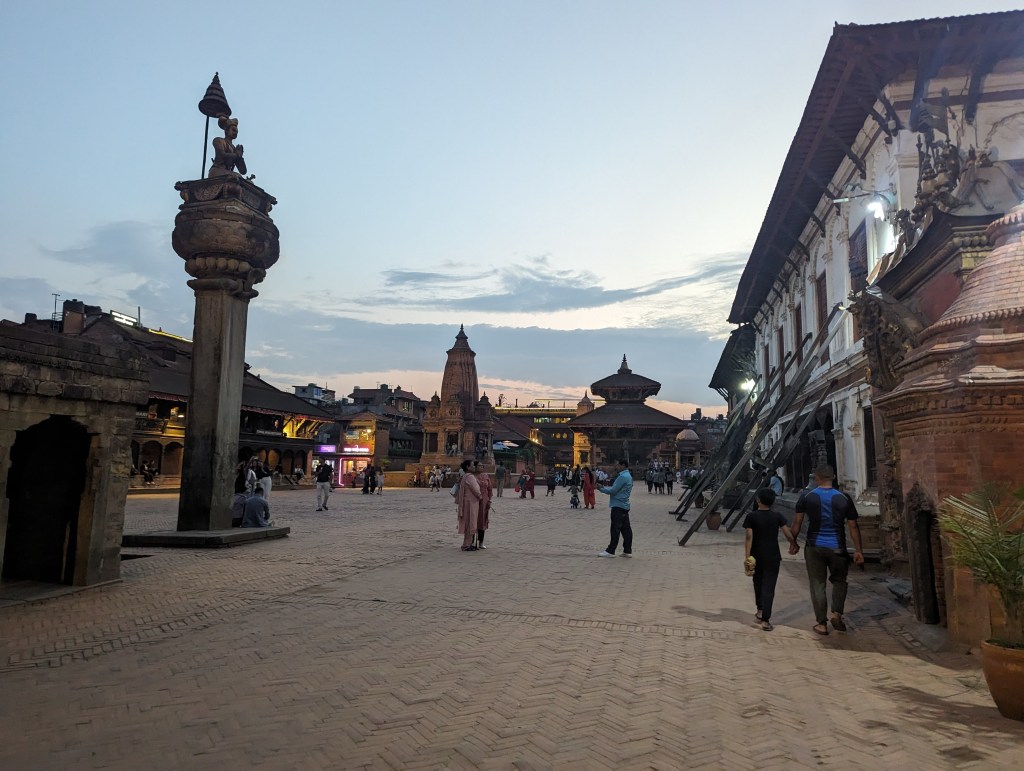
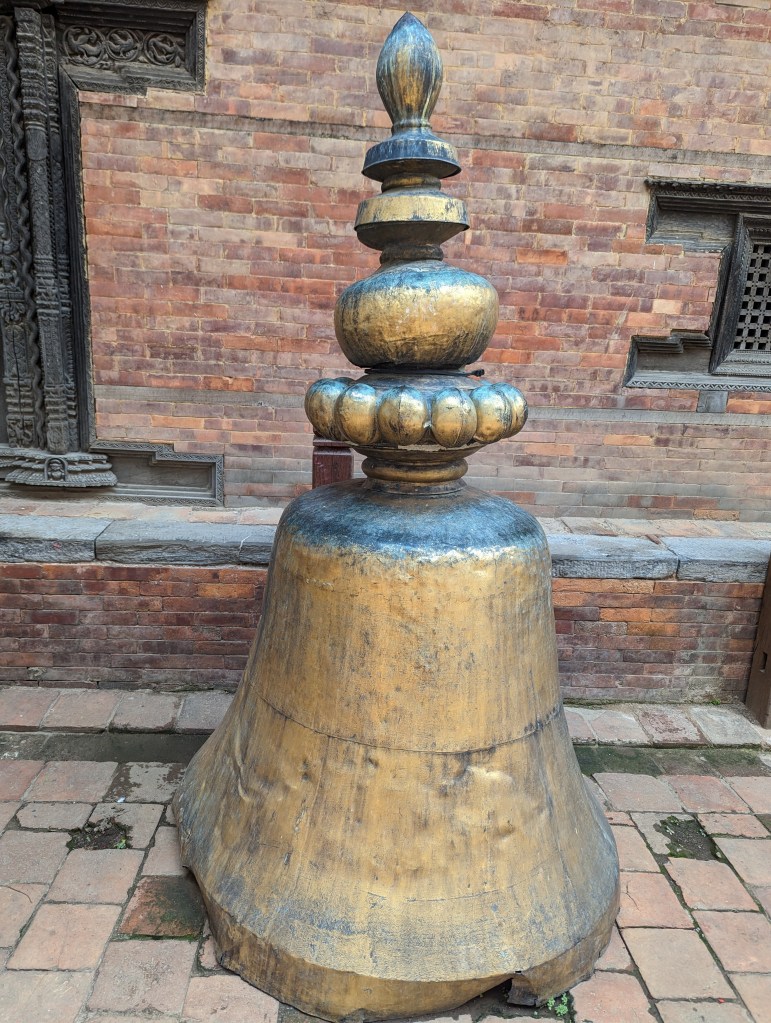
From the Kali temple we entered the Durbar Square proper, and took a turn around to see the impressive temples and statues scattered throughout the large, busy plaza. Much like Patan Durbar square, it had been largely built during the reign of the Malla Kings, and had sustained much damage during the 2015 earthquake. But, also like Patan Durbar square, it had largely been rebuilt. The square had temples to all the major Hindu deities, as well as impressively large lion statues guarding the temple gates, and a giant bell which was apparently rung by any townsfolk that had grievances to air with the king.
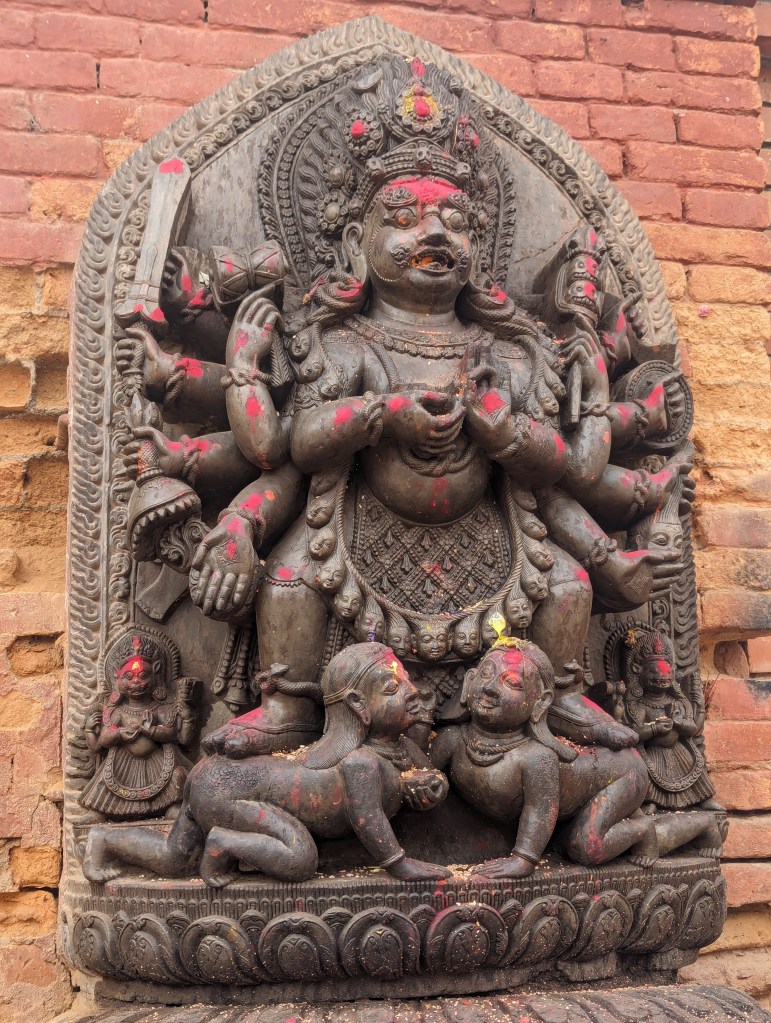

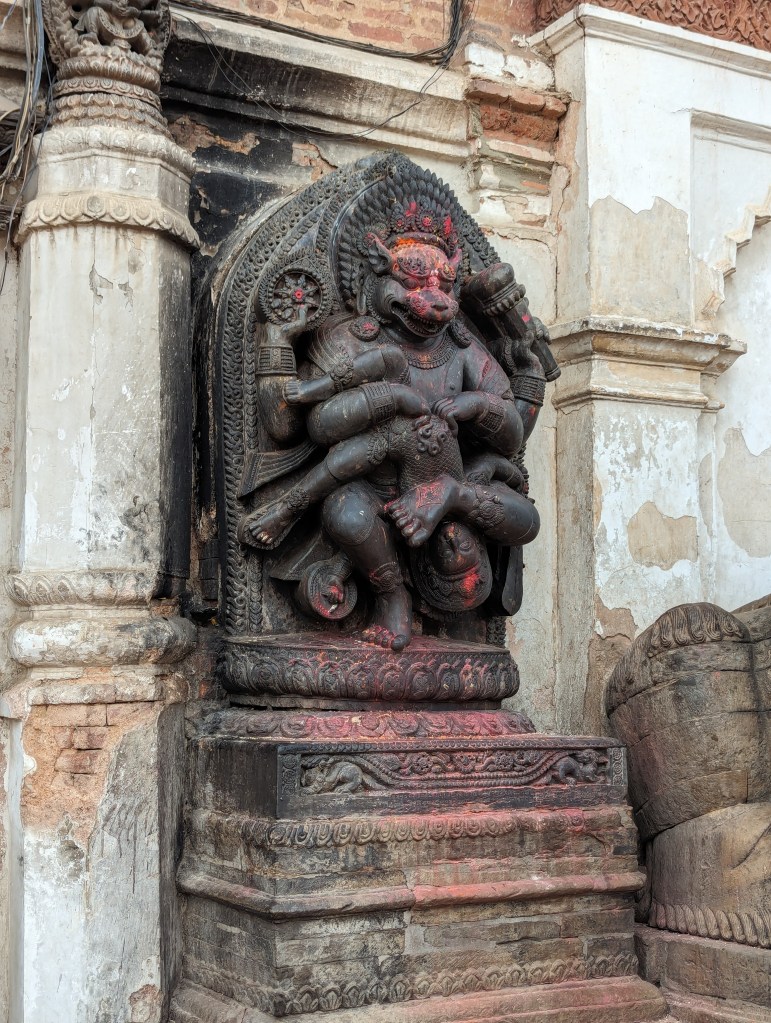
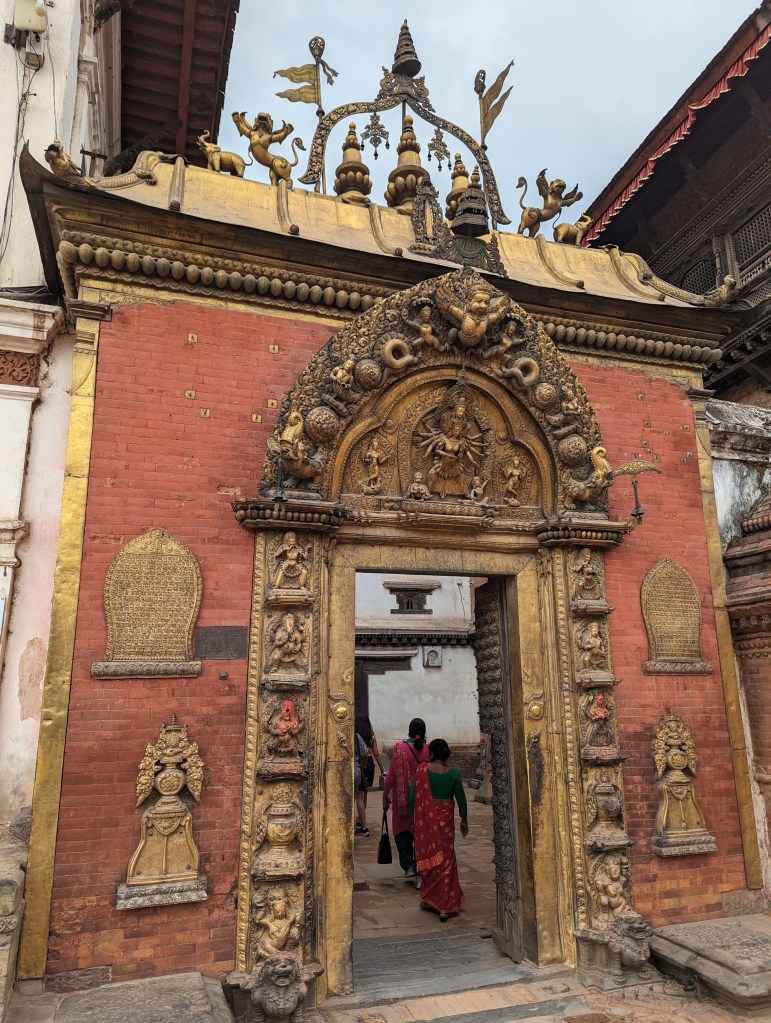
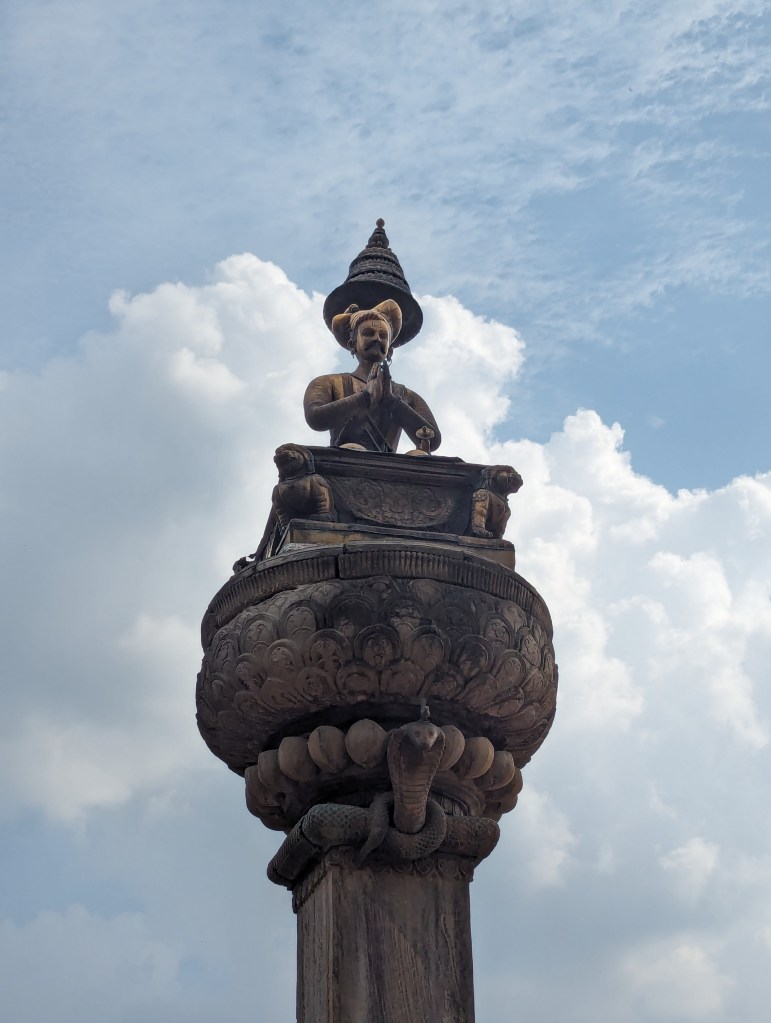
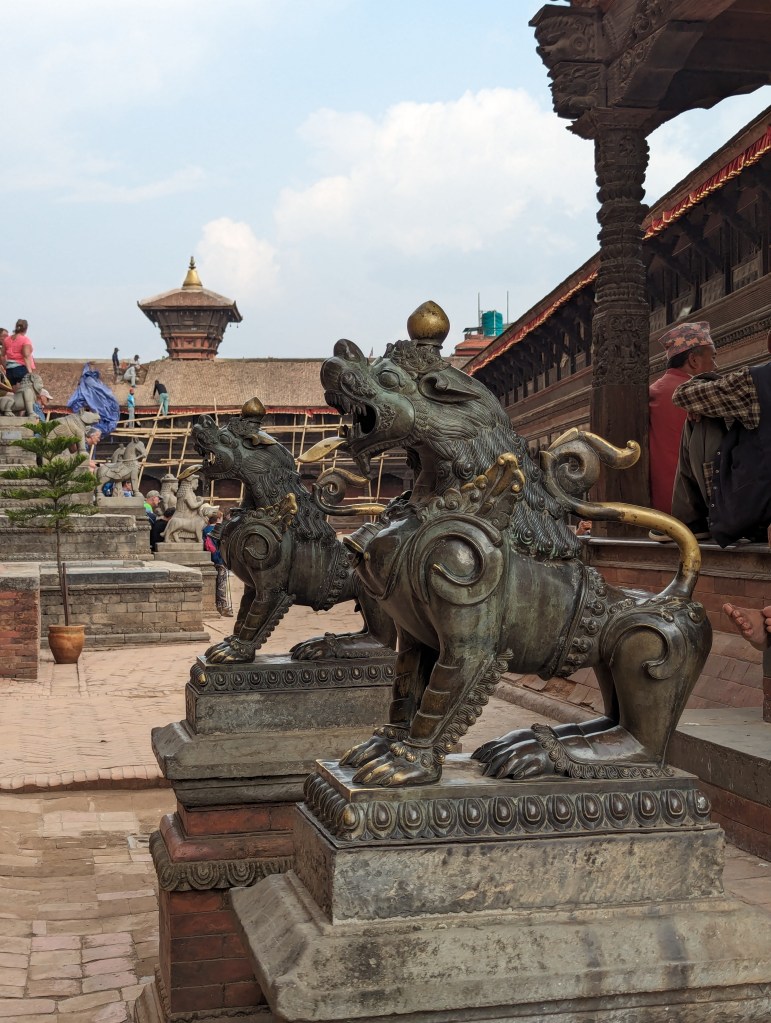
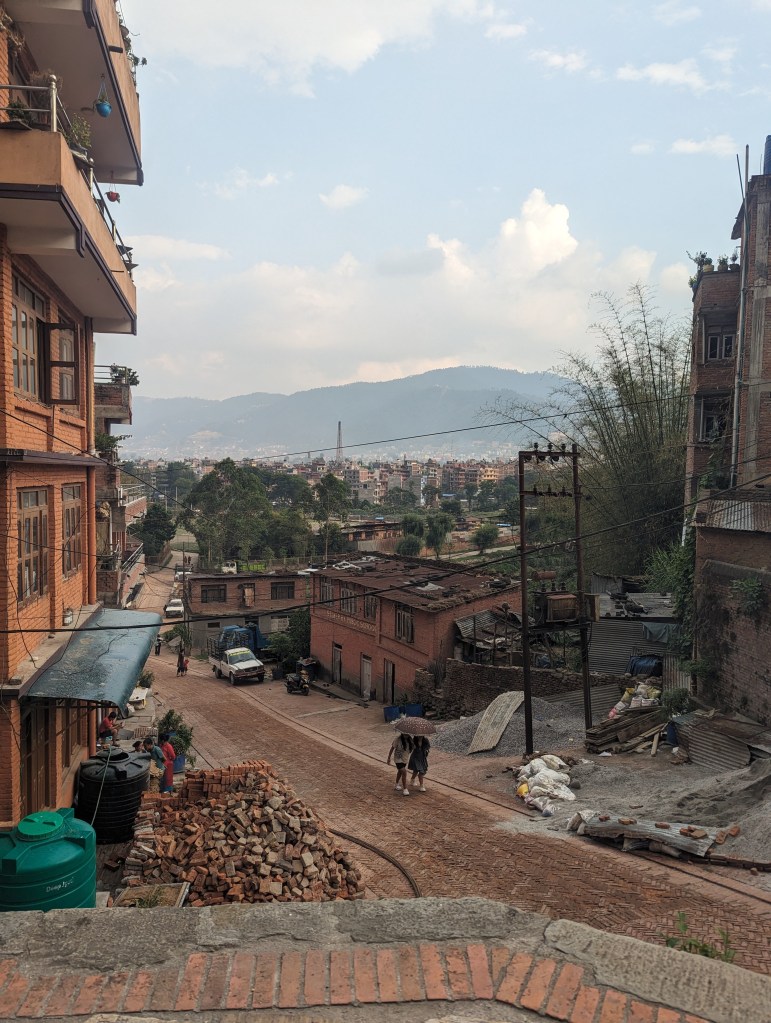
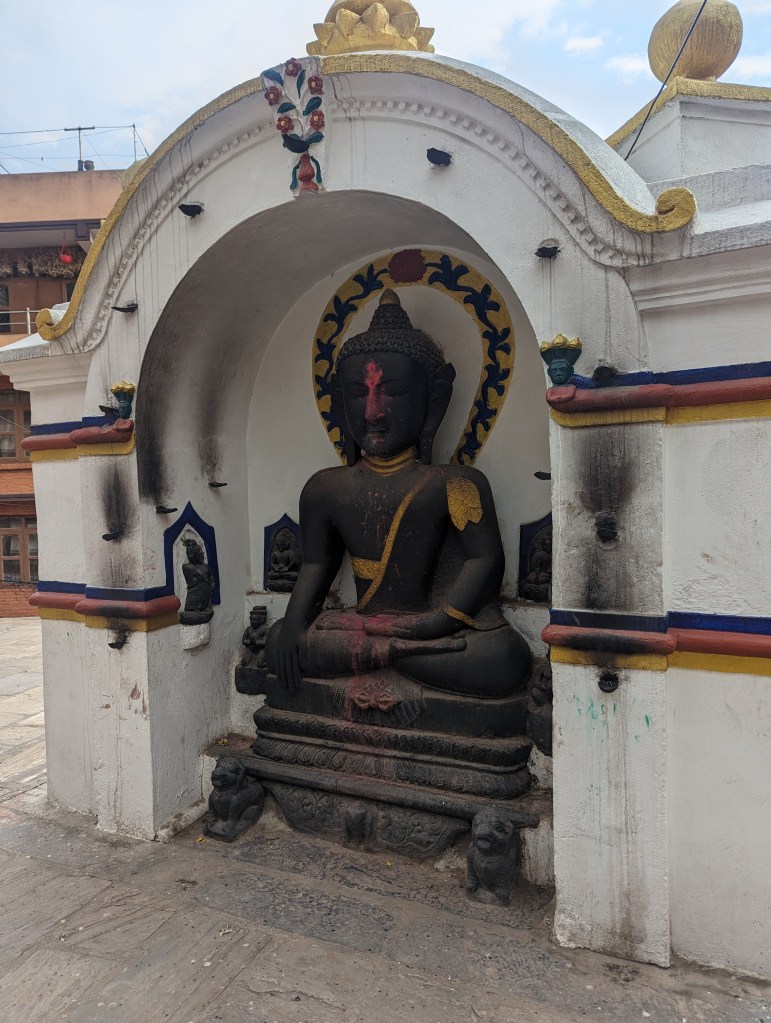
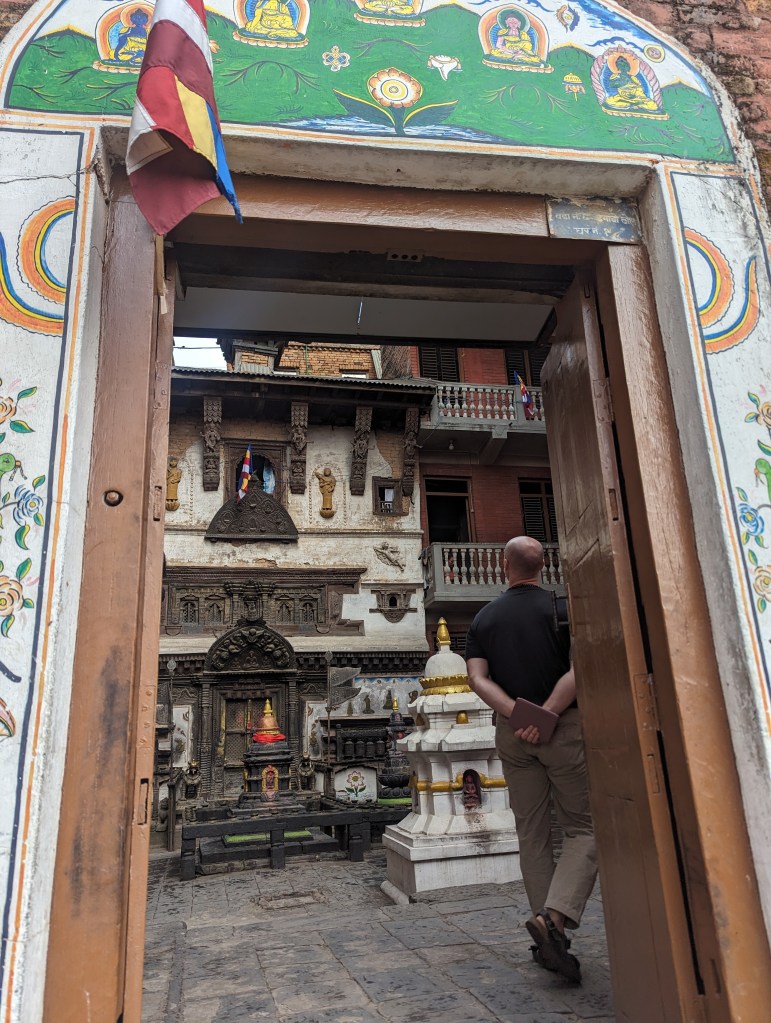
From the square, the walk took us for the best part of an hour through the backstreets of Bhaktapur. Much like areas of Patan and other places we’d see in Nepal, there was an interesting and sometimes confusing fusion of Hindu and Buddhist religion (like the elephant headed Ganesh being repeatedly referred to as a Buddhist god). After some time we turned a corner and came up a flight of stairs to another Kali temple, which had the same eerie air as the last. The temple was deserted apart from a couple of young women and their small children who seemed to look after the place, and had a strange collection of statues and idols strewn over the complex. To add to this, a goat was sitting in the corner with a heavy iron chain and ball around its neck. We weren’t certain of its purpose, but both agreed that being a goat in a Kali temple was probably a pretty bad spot to be in.
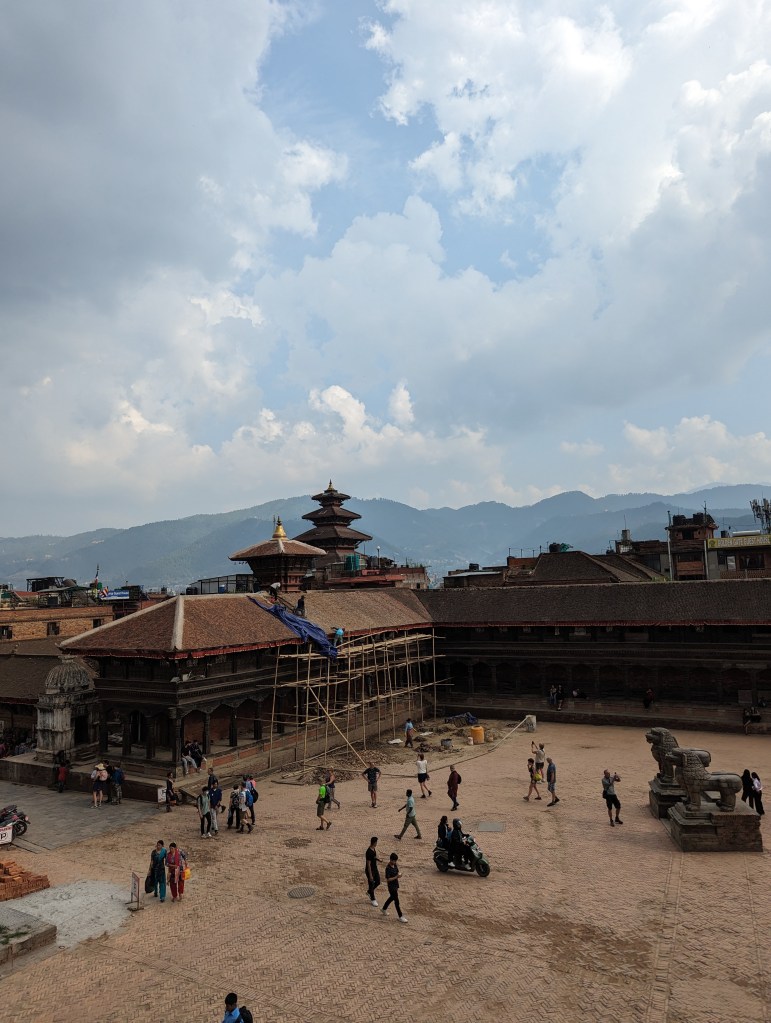
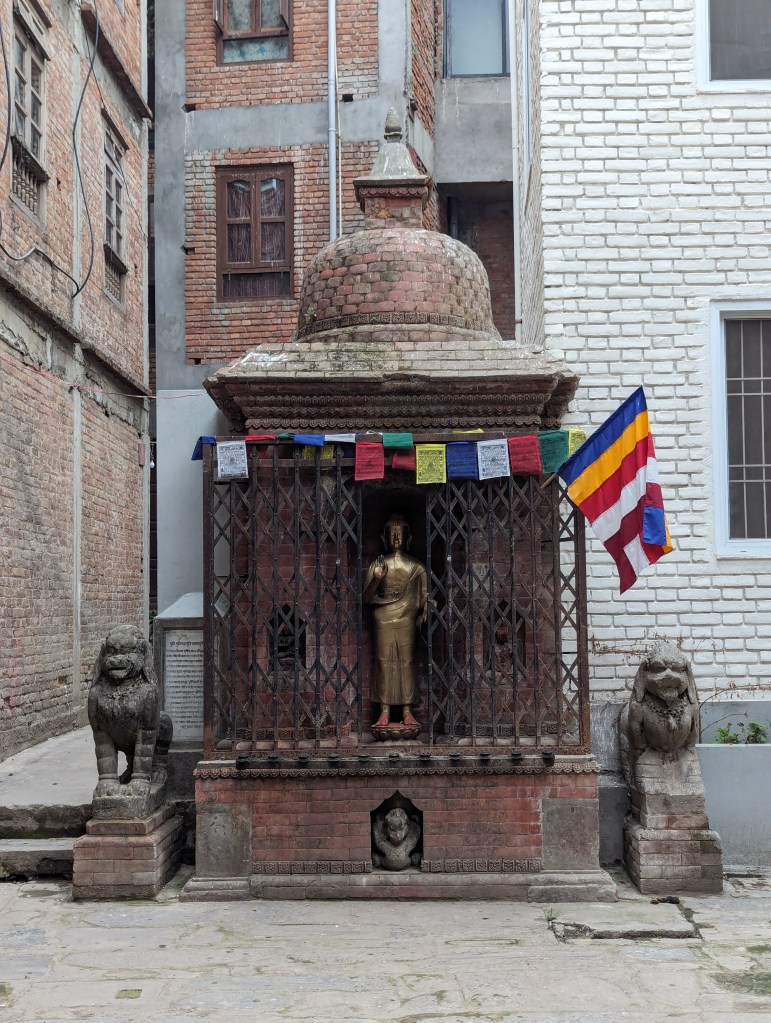

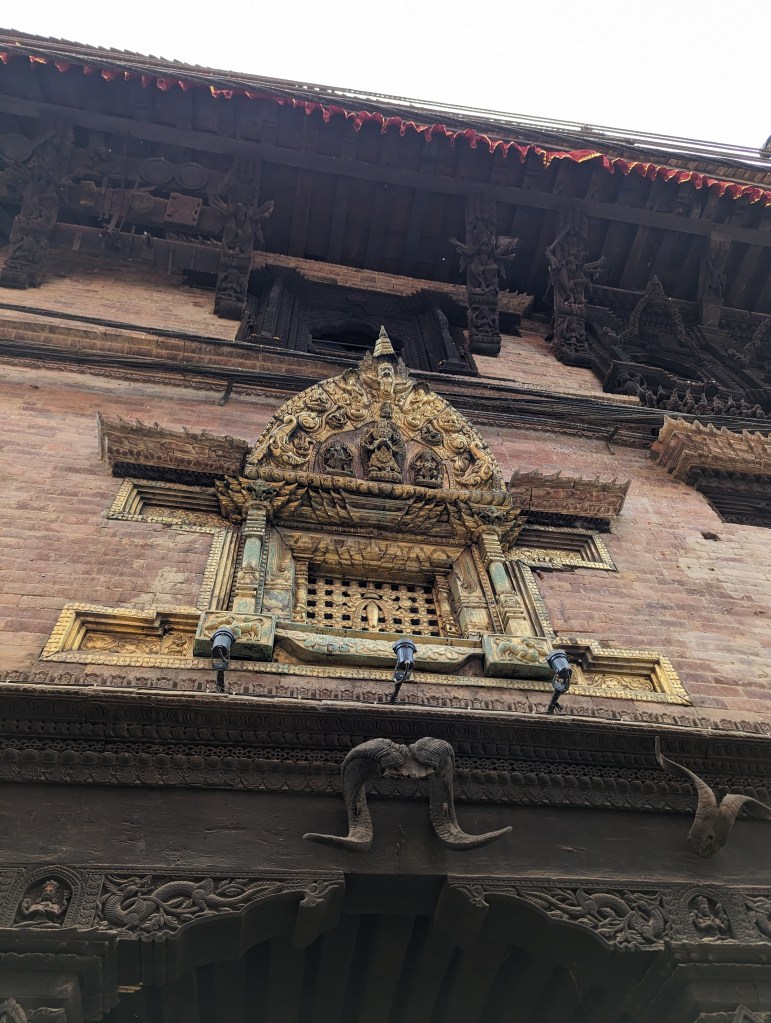
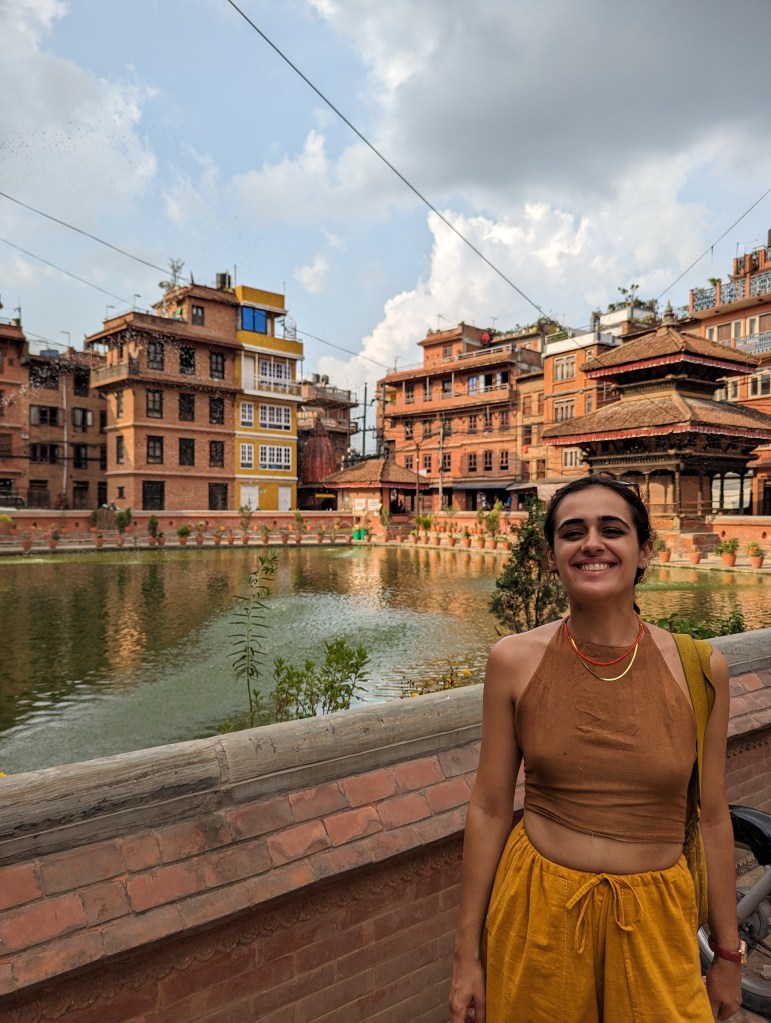
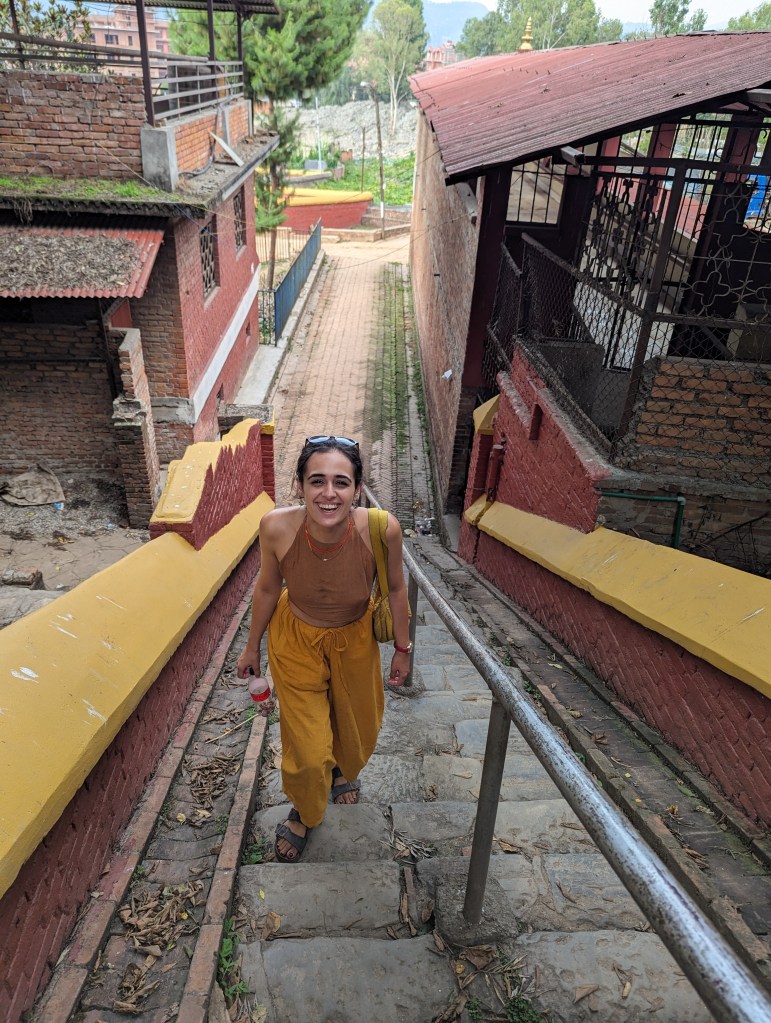
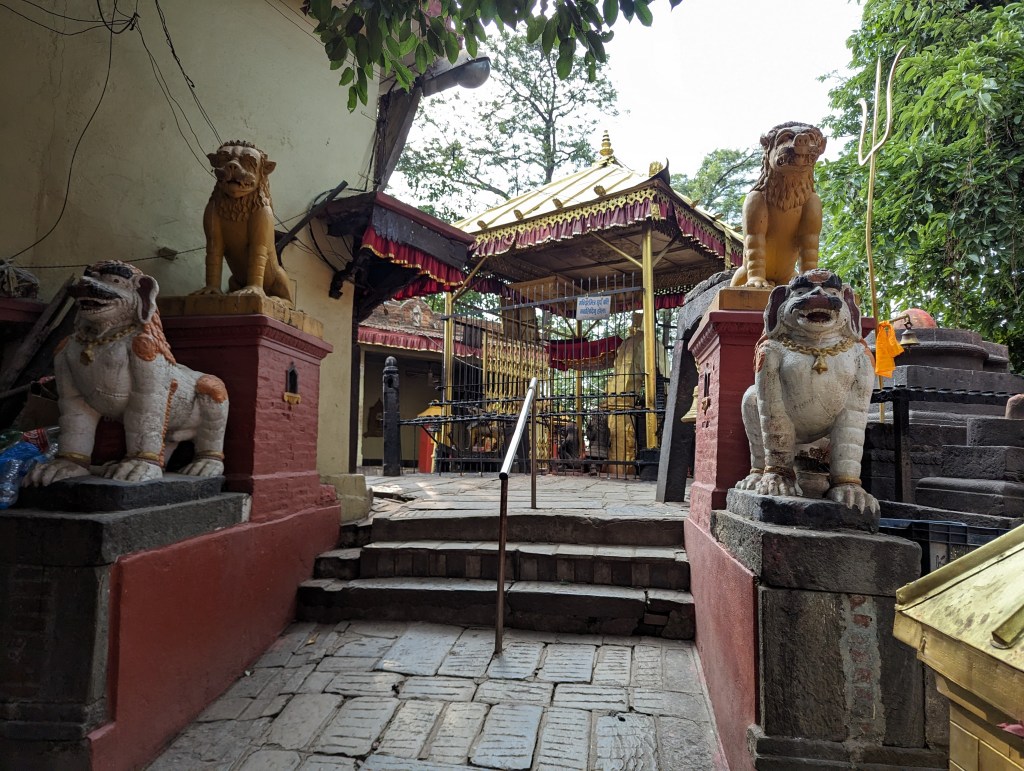

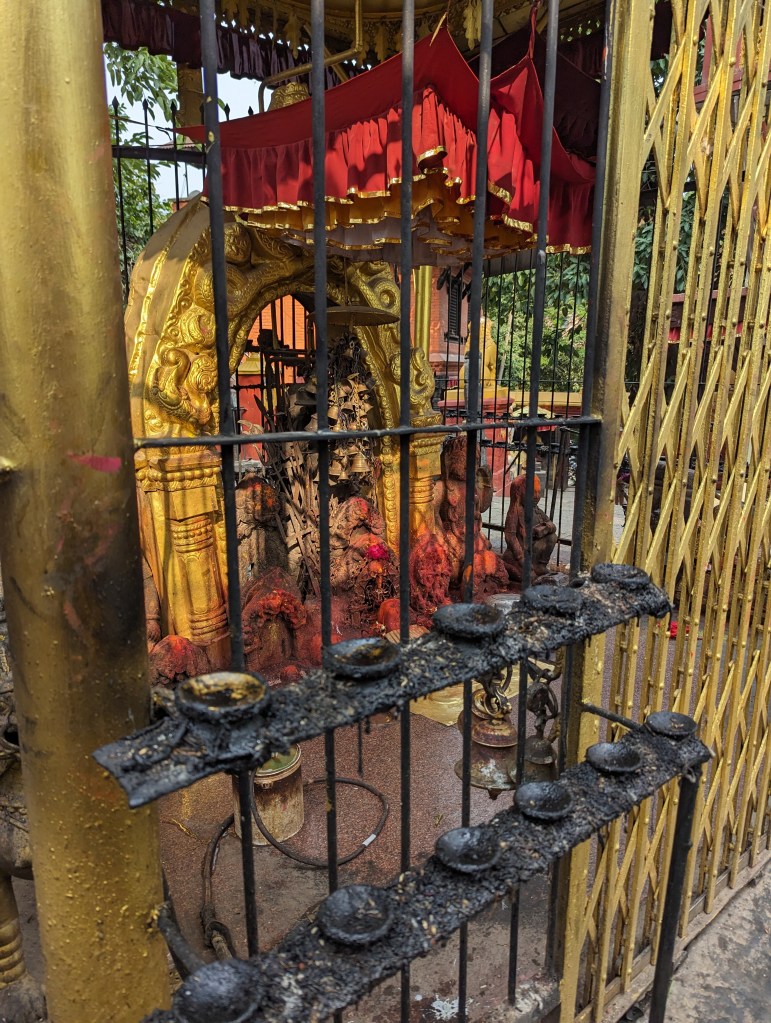
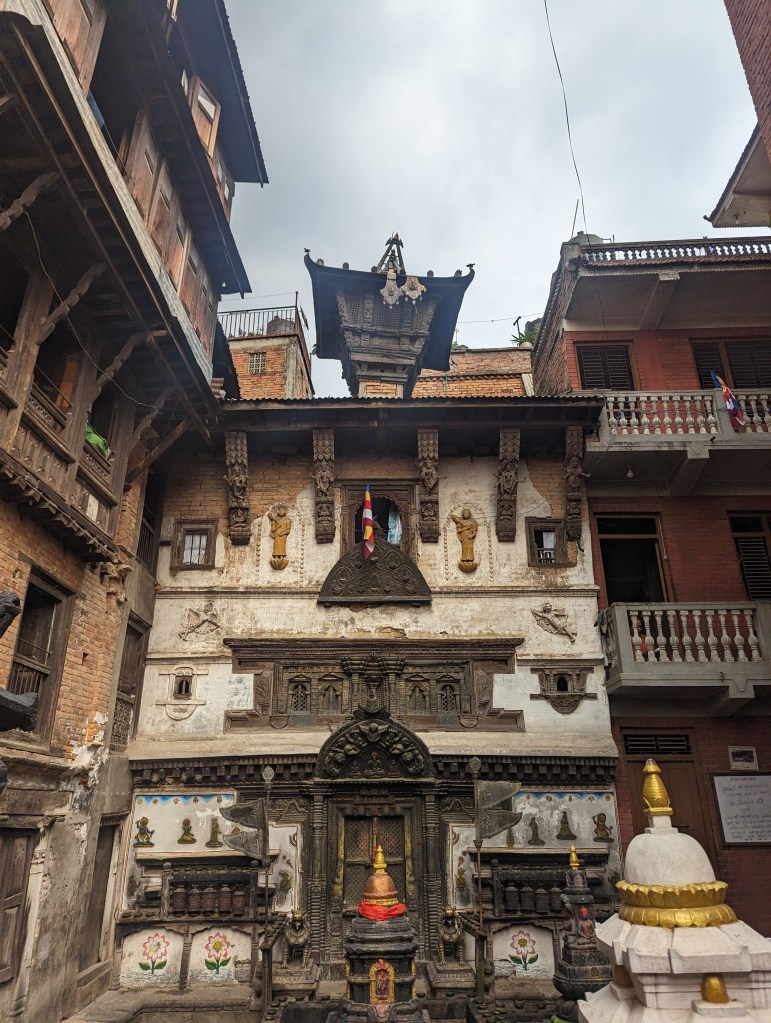
The walk eventually took us back round to Tachupal Tole, which was a smaller square in Bhaktapur and boasted two impressive temples. In front of one, a group of Krishna Consciousness devotees were doing a Hare Krishna chant and dance, which we watched for a while before wandering on further to complete our loop of Bhaktapur at the last of the three squares, Taumadhi Tole. Taumadhi Tole backed onto Durbar Square, and had two of Bhaktapur’s finest temples – one dedicated to the goddess Parvati and the other to Shiva. Here we stopped at a rooftop bar for a beer as the sun set over the beautiful square, then walked a little way down the road to a Thai restaurant.



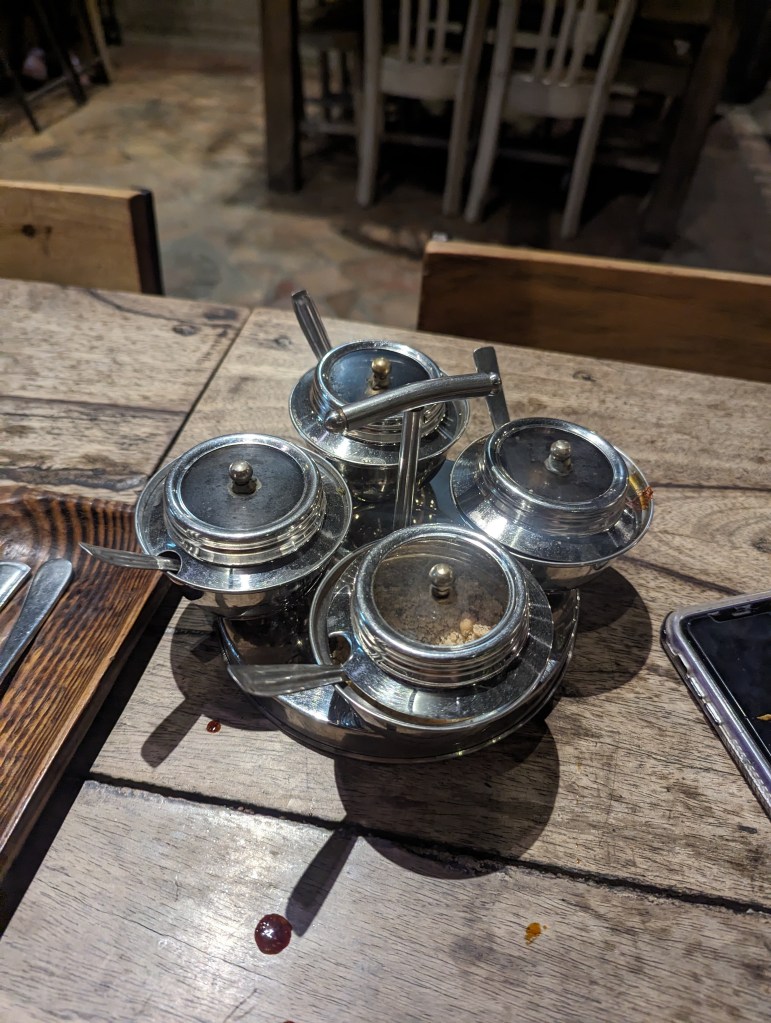
The thai restaurant was really good, but the site of a bit of a calamity from me. I was only partially listening as the waitress explained what sauces were what in the little pots, and proceeded to liberally douse my whole meal in what I thought to be soy sauce. The sauce was in fact chilli oil so vicious it was practically black. I took one bite and realised my food had been rendered inedible. I tried to eat a little more, had some chest pain, then took myself to the toilet to give myself a talking to. Swallowing my pride, I had to explain to the waitress by means of gestures what I had done until she understood and brought me another meal. Once my mouth had stopped burning enough for me to eat this, we made our way back through the town and to bed.
Tuesday –
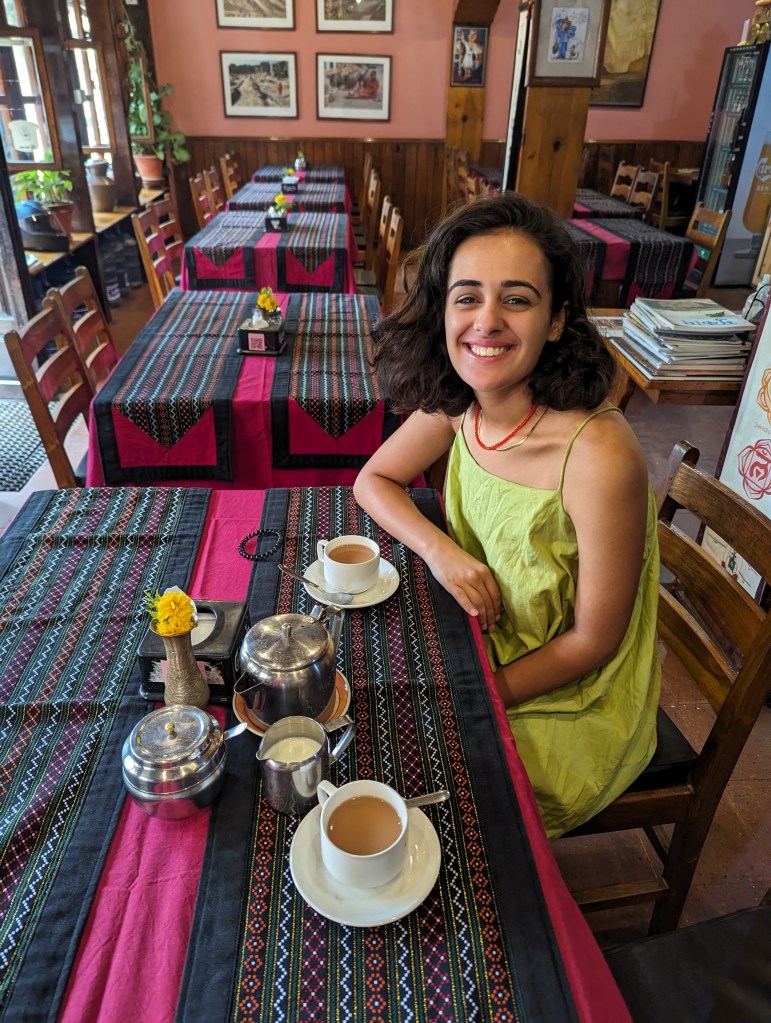
We woke reasonably early on Tuesday morning, as has been our habit since it was helpful to dodge the heat of the day in north India. Once ready, we went downstairs for our complimentary breakfast. After Newa Chen we weren’t holding out hope, but the fried potatoes with eggs and toast was delicious – and what’s more there was a pot of black tea with milk. If you haven’t been without black tea for several months, I would recommend it purely for the delight of drinking it again. Much energised, and with a coffee from the local coffee shop to boot, we made our way out into the town for the day.
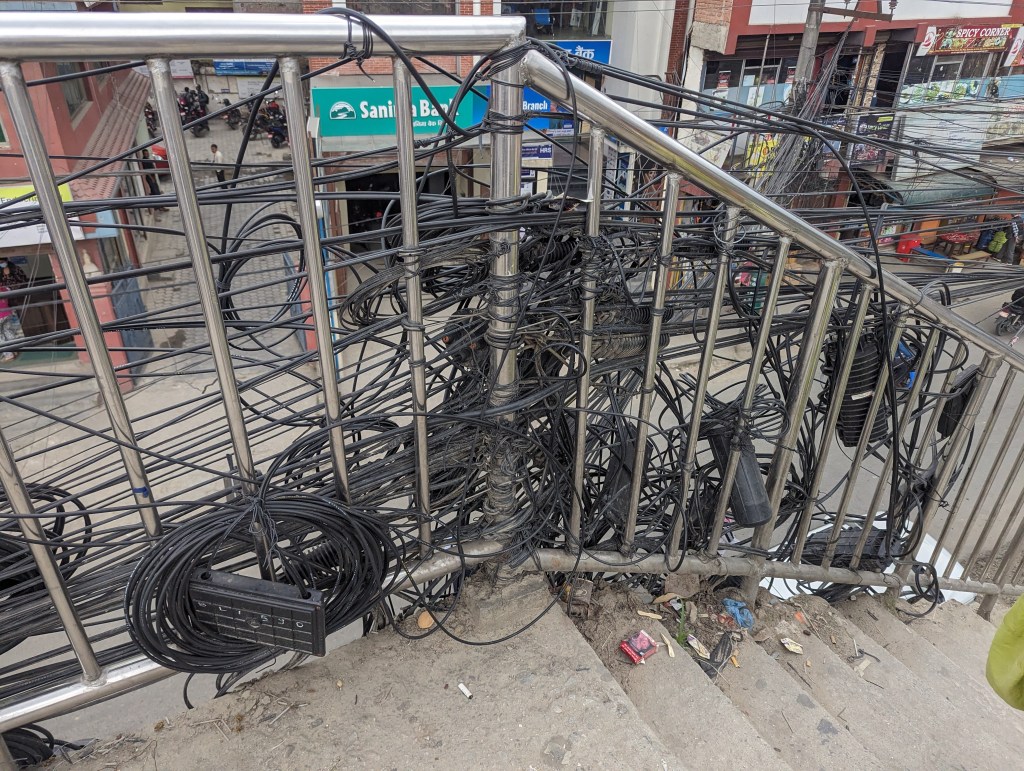
The plan was to catch the bus down the main road to the next district, Thimi, which was apparently very picturesque and had an excellent pottery scene. The bus was easy enough to find, and cost us a few pence to get the 15 minutes or so down the road. By the time we’d disembarked the wind had picked up in the way it does before a storm, and the skies were darkening by the second. We crossed the footbridge over the road (which was covered in electrical cabling, so we were glad to be off it before the rain started) and tried to make it to the pottery shop we’d been recommended before the heavens opened.
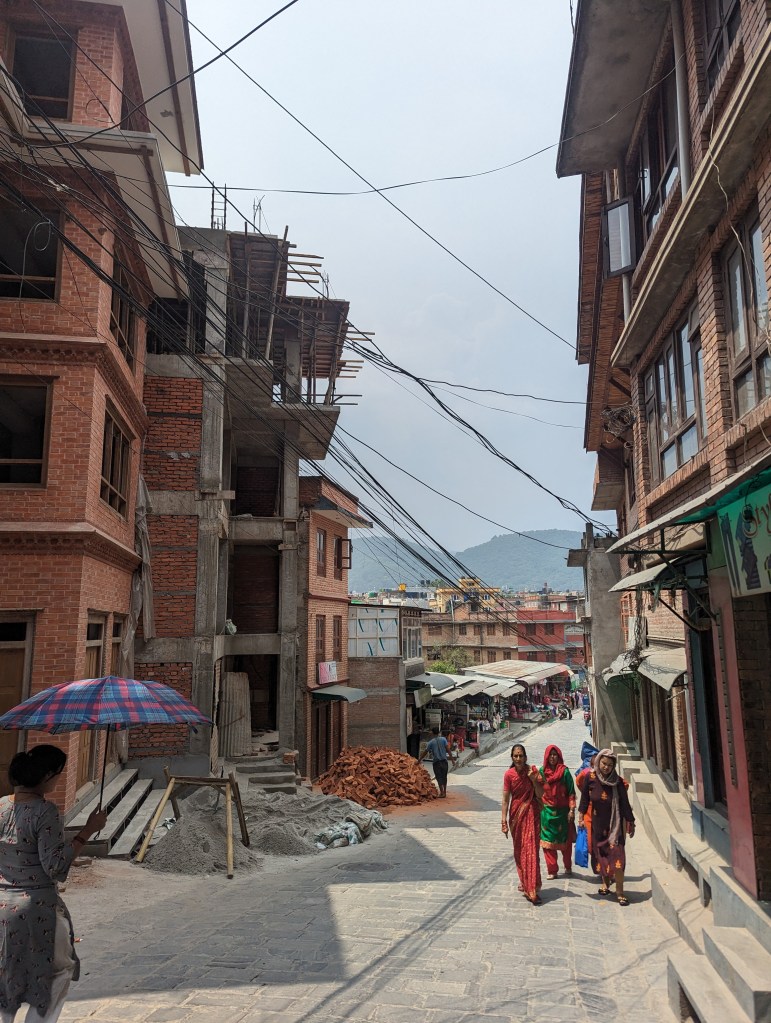
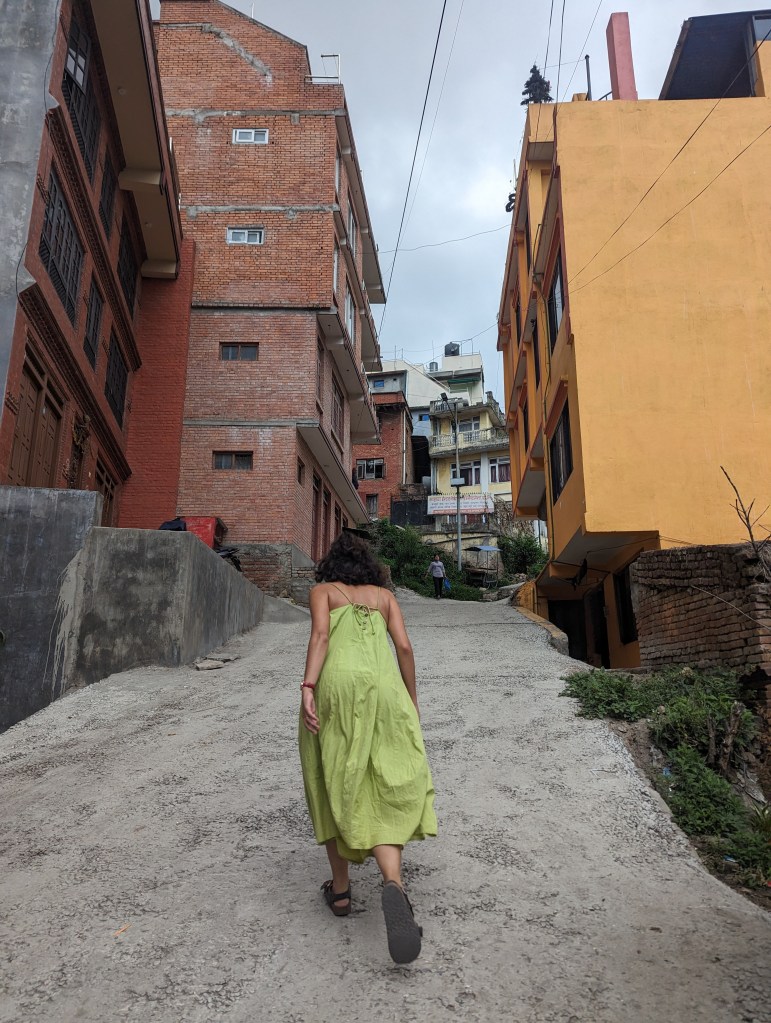
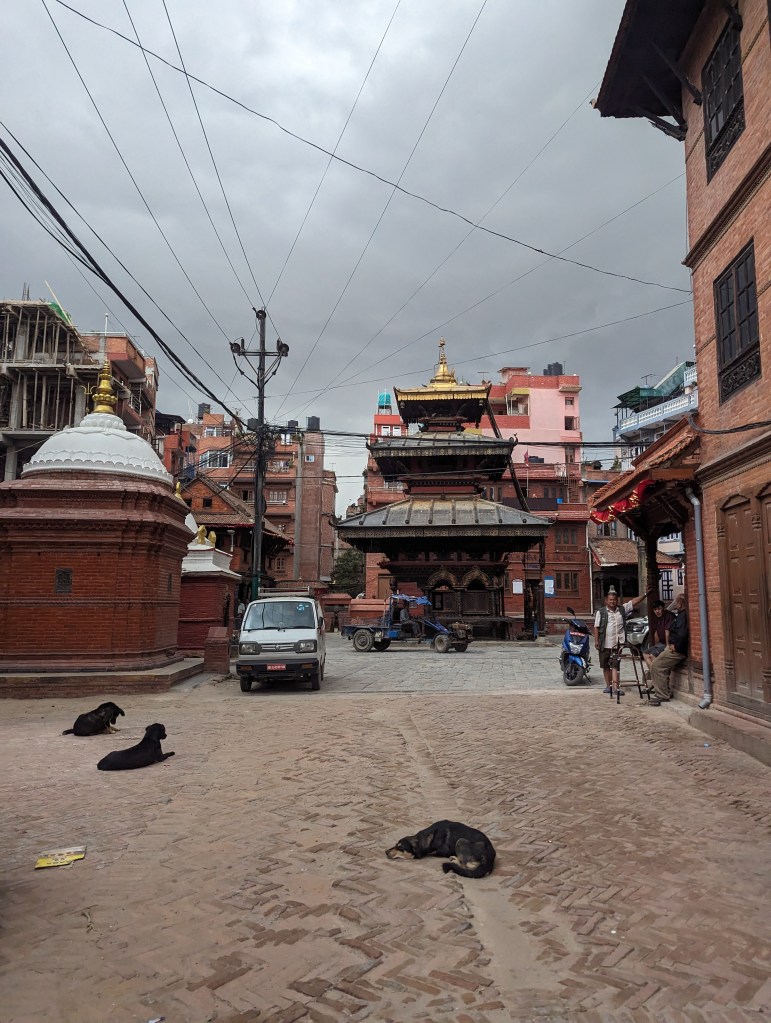
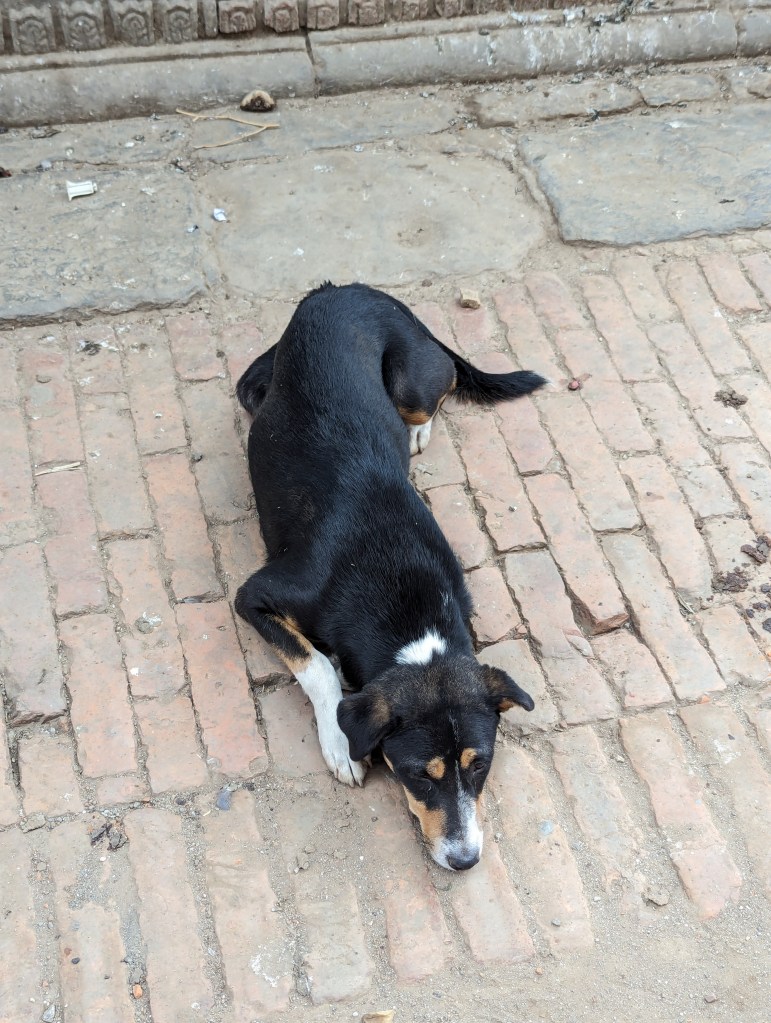
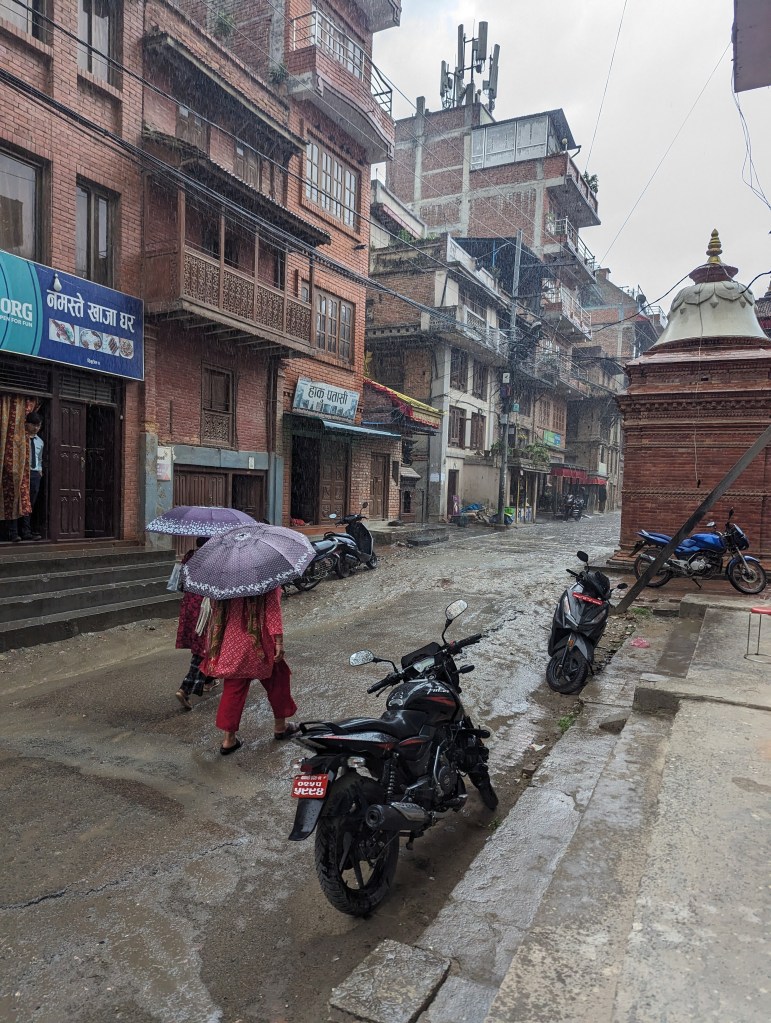
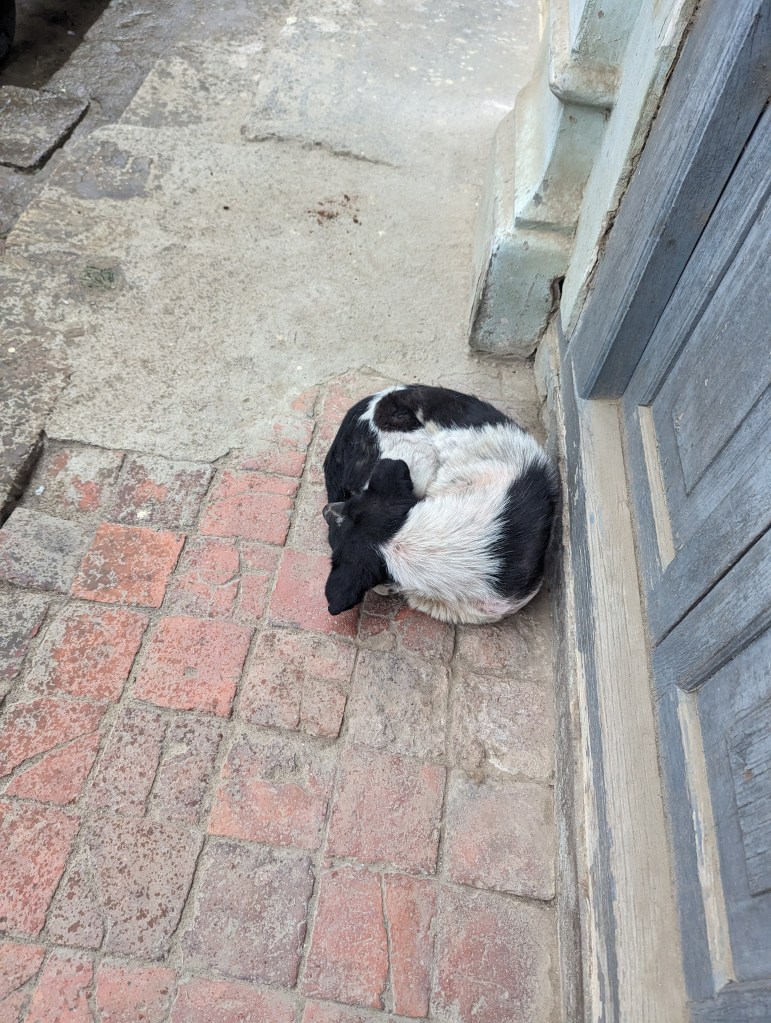
We didn’t make it – and rain started to fall in earnest whilst we were still ten minutes or so away. We hid under a small awning with a little black and white dog who enjoyed our company and watched the rain turn the street into a river. After twenty minutes or so, the rain started to abate and we made our still quite sodden way to the pottery shop. Thimi turned out to be no more picturesque than either Patan or Bhaktapur, but still made for a pleasant walk around, despite us getting a bit of a drenching.
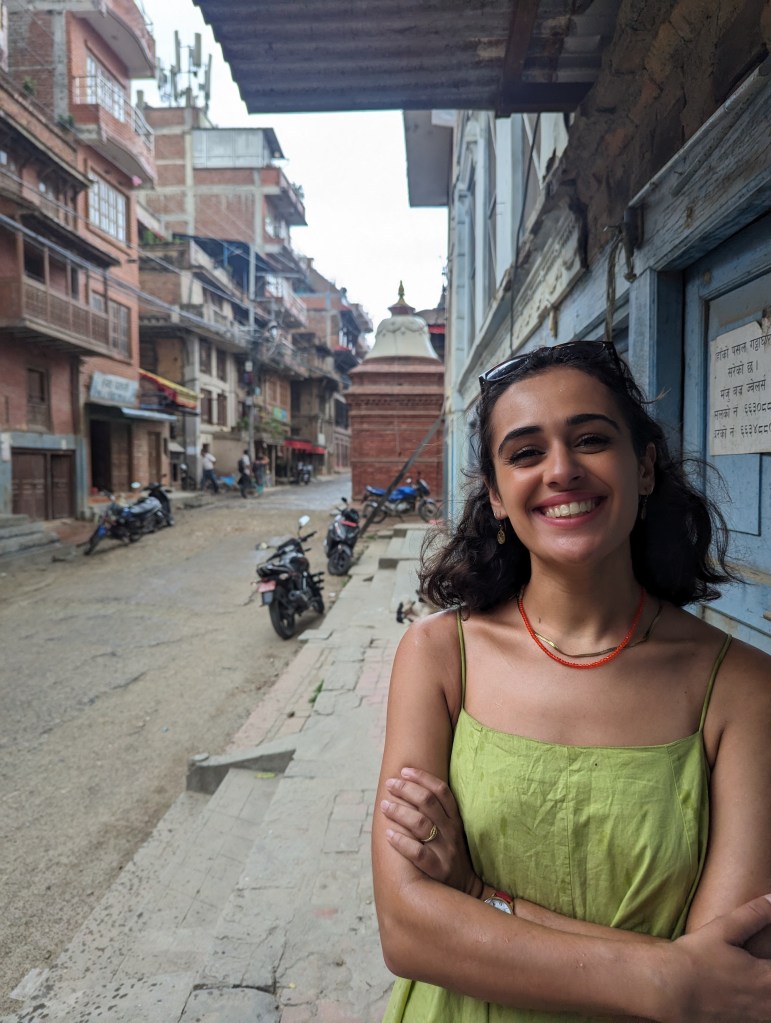
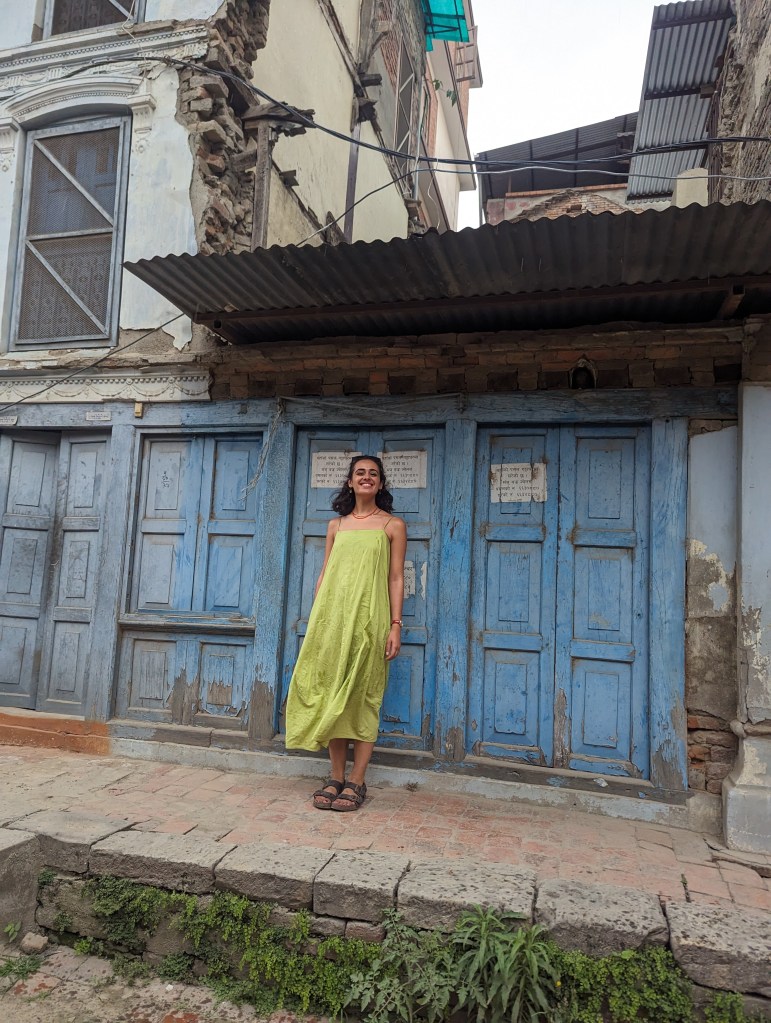

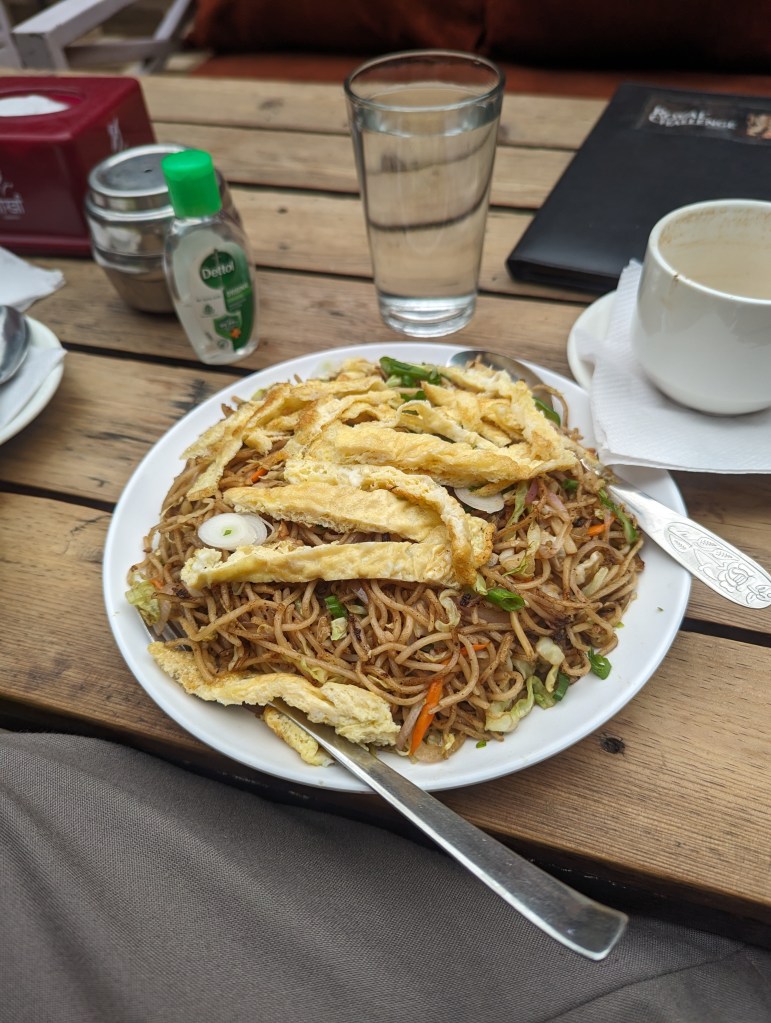
The pottery shop was lovely (and mercifully dry), and I somehow convinced Ellie that we would have space to carry a yellow teapot home with us in our hand luggage. Armed with the teapot, we headed back out onto the streets and to a local place for lunch. The cafe was the Nepali equivalent to the locals’ cafeterias we had sometimes been to in India, and we were served our momos and chow mein by a team of very young, industrious waiters captained by someone who could have been their father or their manager (or, probably, both).
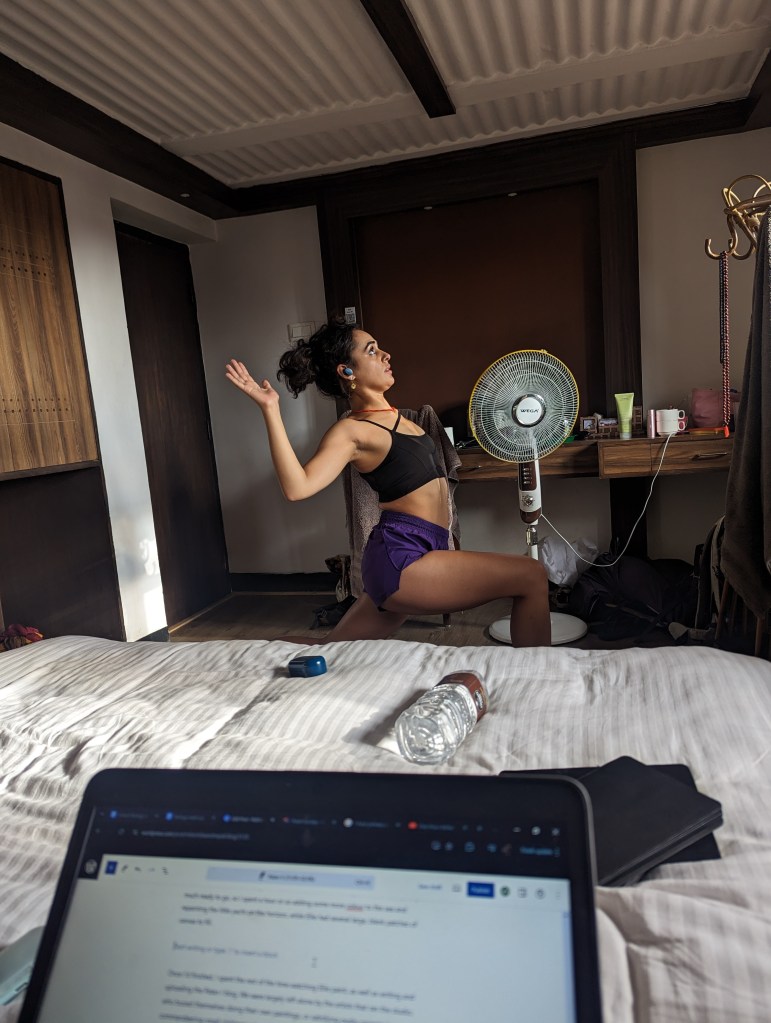
We were at the wrong end of Thimi by this point for the bus, and so took a quick taxi journey back to Bhaktapur. Before getting back to the hotel, however, we stopped for a juju dhau which made an excellent, light dessert. It was mid afternoon by this point, and we spent the next few hours in the hotel – doing some yoga, reading, and generally relaxing. Before we knew it, it was getting into the evening and time for us to find something for dinner.

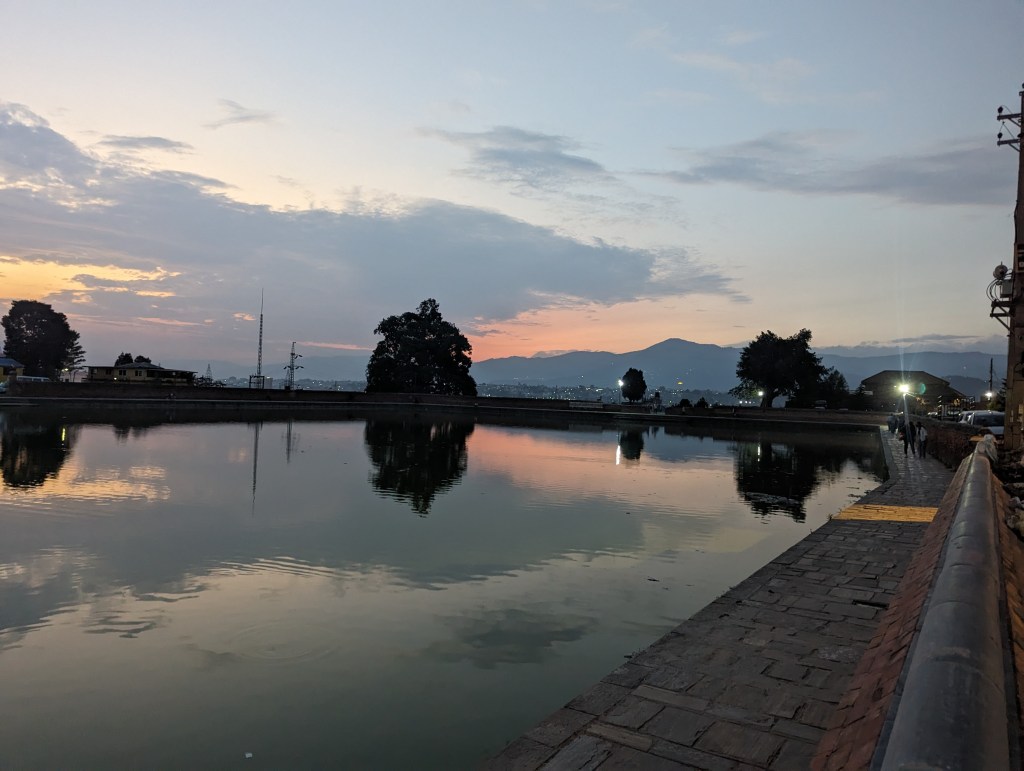
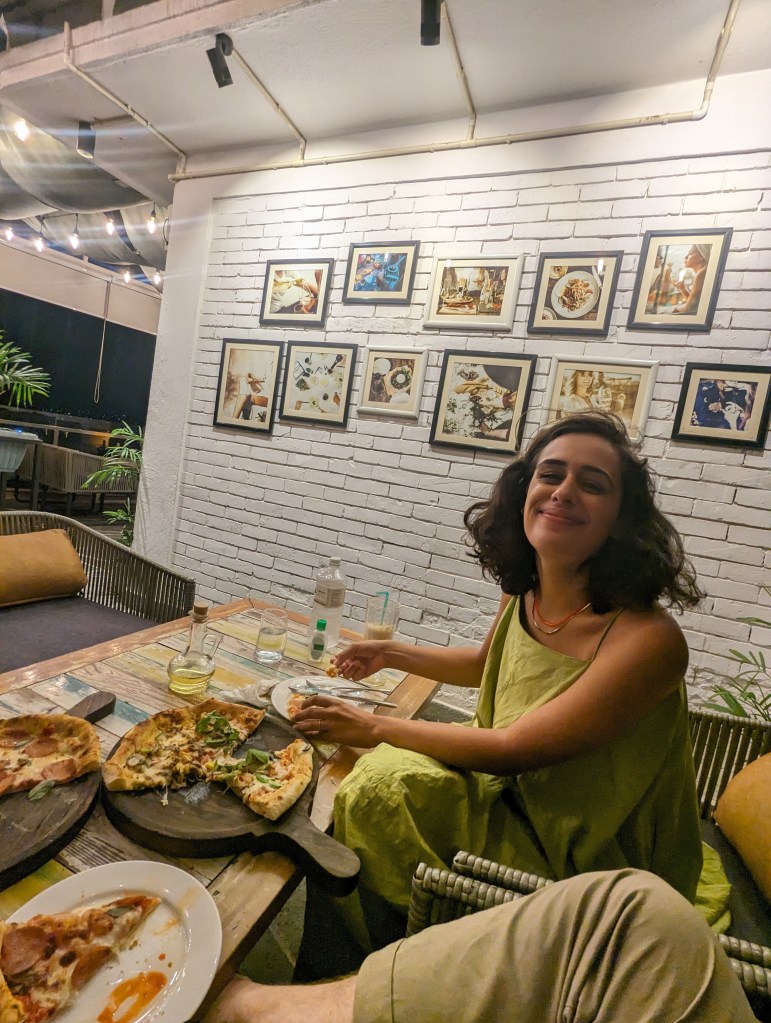
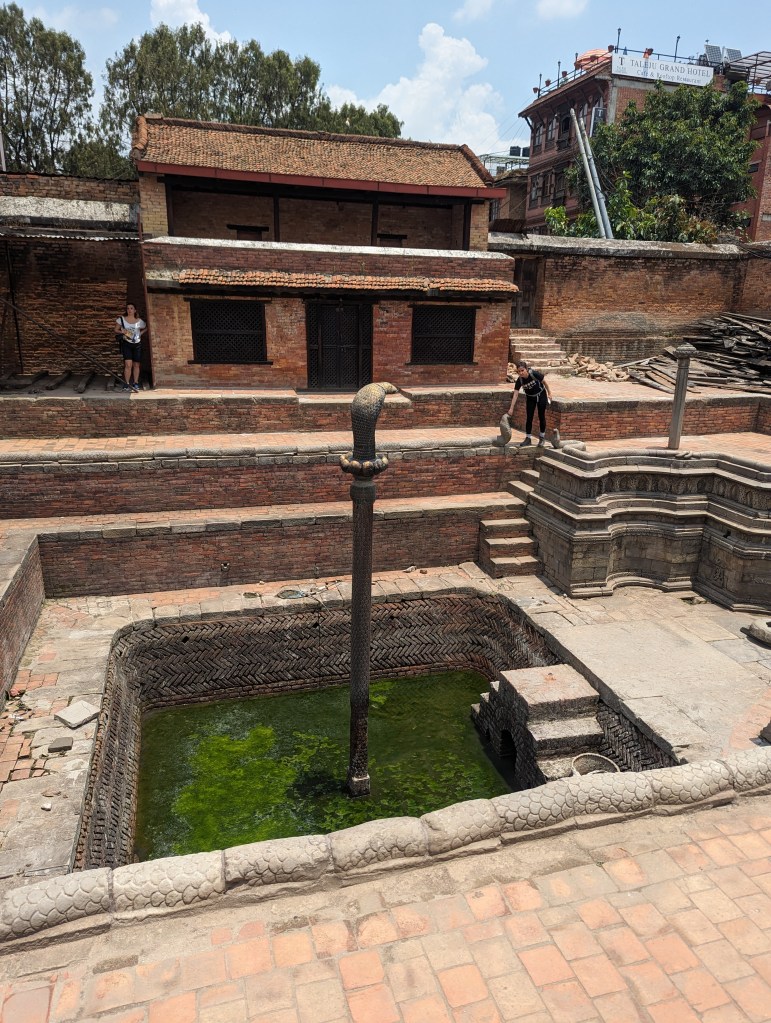
We headed out of the Durbar Square and to a local “tank” or pokhari, which is a big artificial pond used as a place to swim, wash, or socialise (the latter being the most popular these days and given the green-ness of the water). There was a little pizzeria on the corner of the pokhari which we’d spied for dinner, and which did a passable if not inspiring pizza. We ate, then wandered back around the other side of the pokhari to get back to the hotel and to bed.
Wednesday –
Wednesday morning started with our breakfast at Shiva Guest House, having been informed after breakfast on Monday that this would be included in the price of our room as an ‘off season bonus’. As is emerging into a theme, Rob went for a repeat of the reliable fried eggs and potatoes whereas I mistakenly tried for something less fried and came out with a bowl of warm milk with a tiny sprinkling of oats. Rob did gift me a slice of toast with the delicious marmalade though had which made this mostly better.
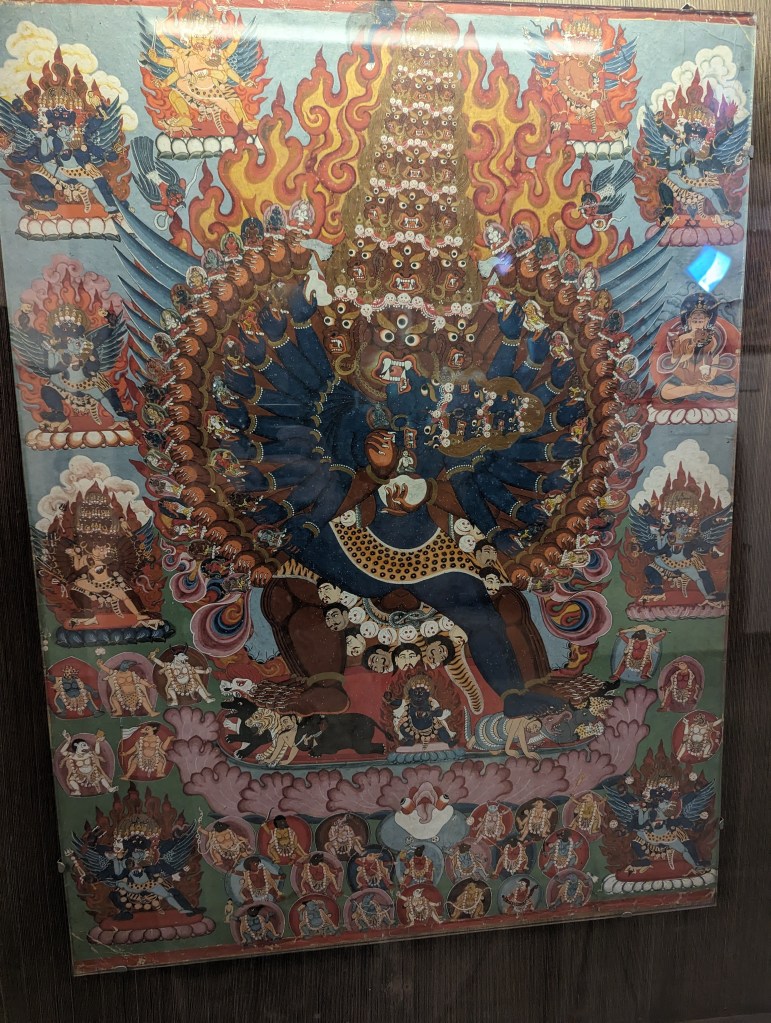
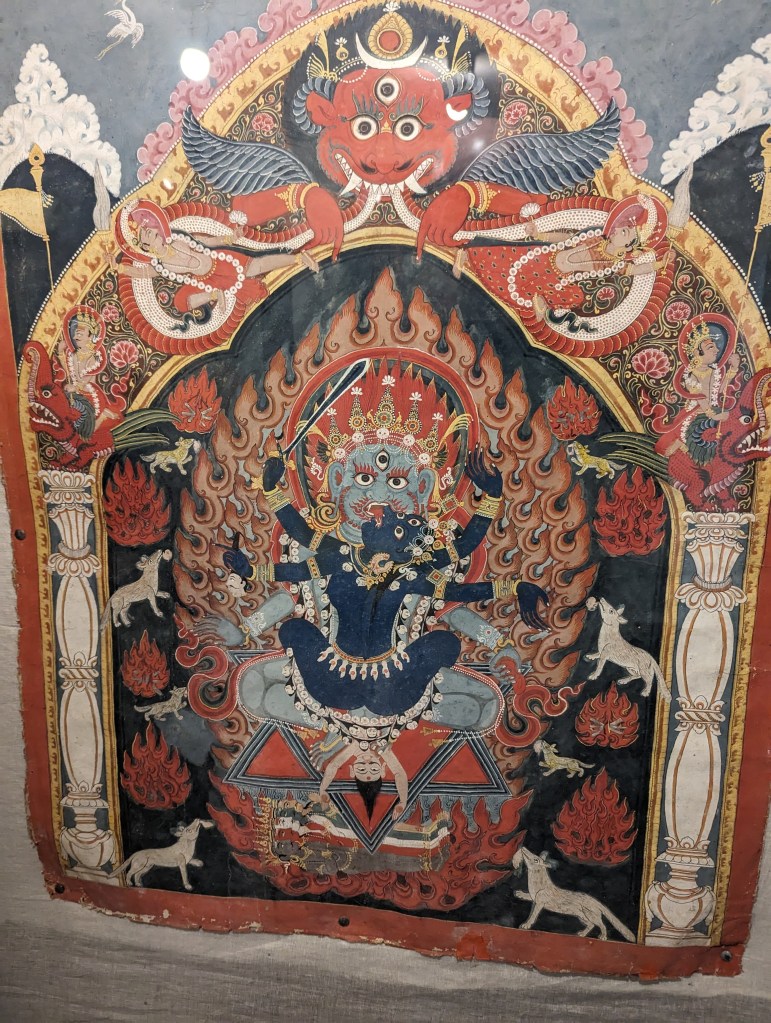
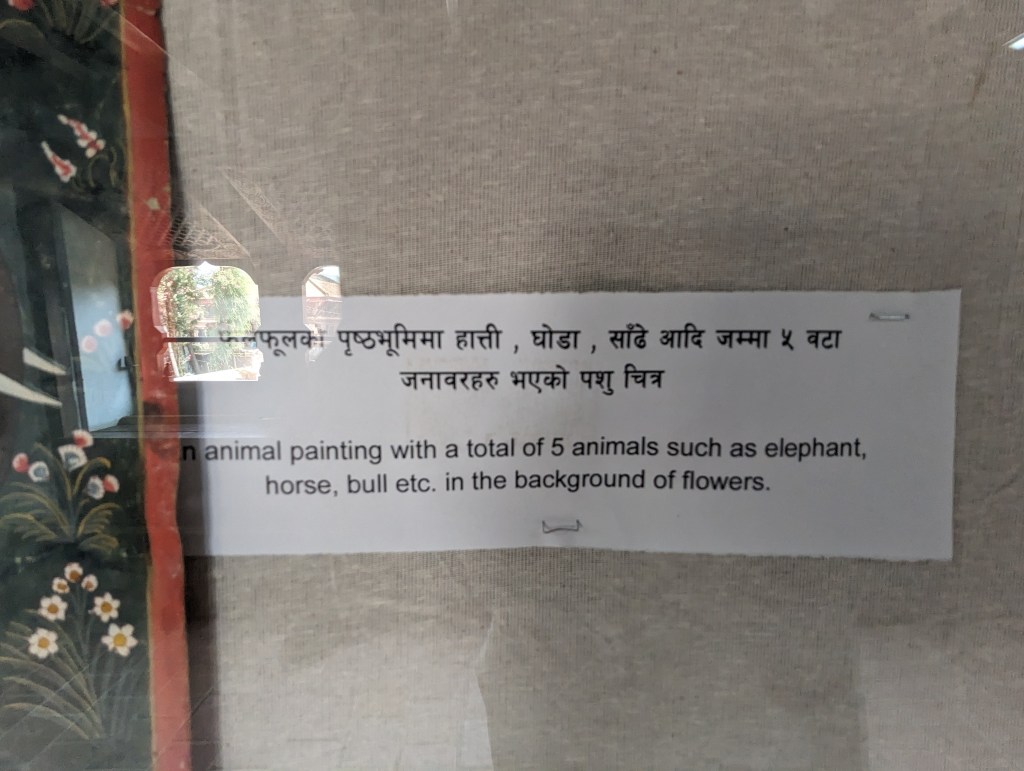
We popped back in to our Bhaktapur coffee-stop for some decent espresso coffees and then practically next door the the Art Museum. This was largely a classic case of not-at-all curated items with copy-pasted information that often bore little relevance to the item it was next to. It did however contain a wealth of Tantric paintings which we studiously hunted down as we’ve become accustomed to a childish and hugely inappropriate giggle at the religious smut. One thing we can be sure of from the details is that ALL of these paintings were done by men, some of whom it seems had little real life experience of the matters depicted.

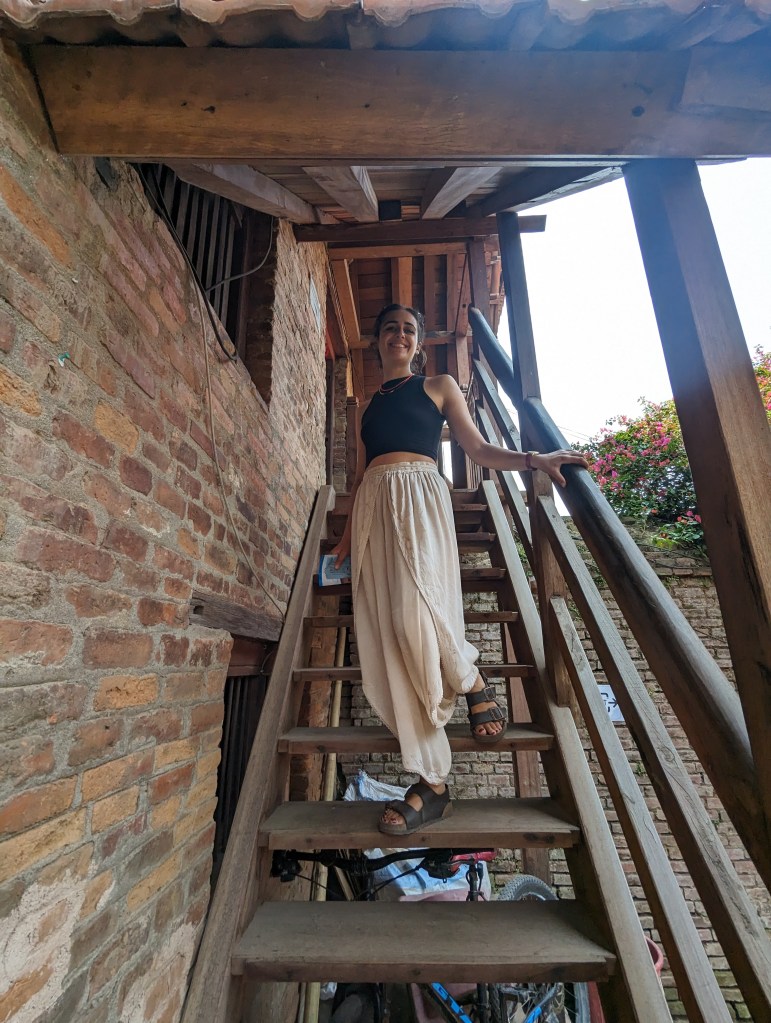
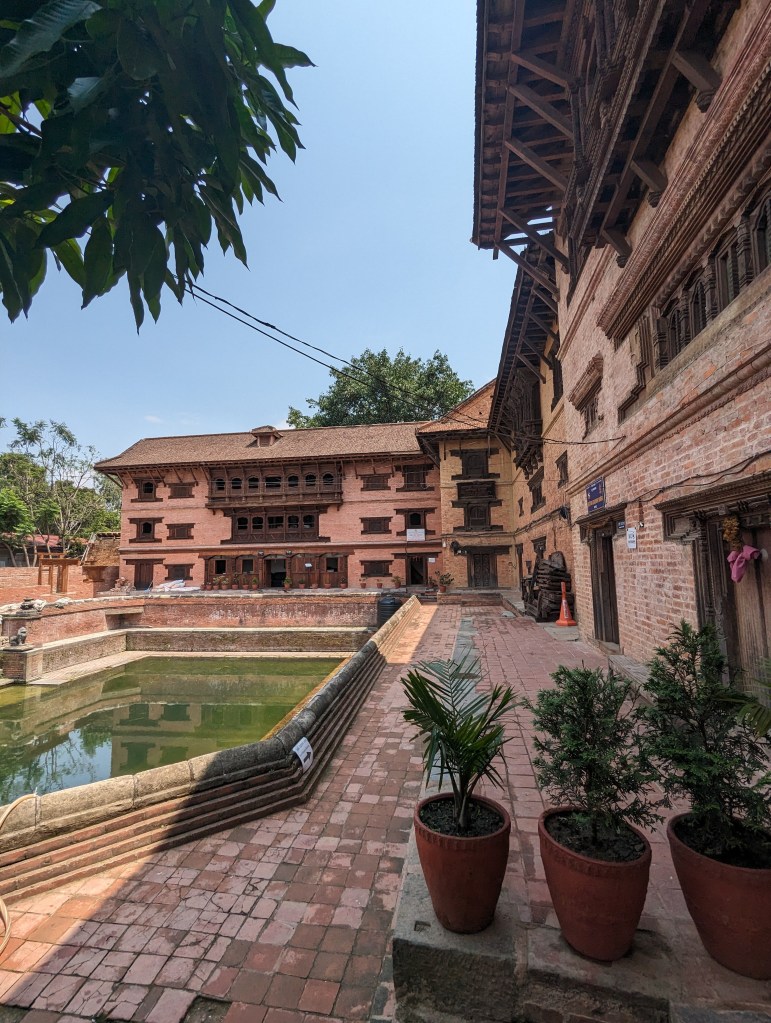
From here we took a quick walk around the Taleju temple complex, which contained several courtyards with various sculptures and a very holy temple that non-Hindus are not allowed to enter. The two unnecessarily heavily armed guards at the door were very friendly and invited us to poke our heads through, which looked largely like any other large Hindu temple but nevertheless impressive.
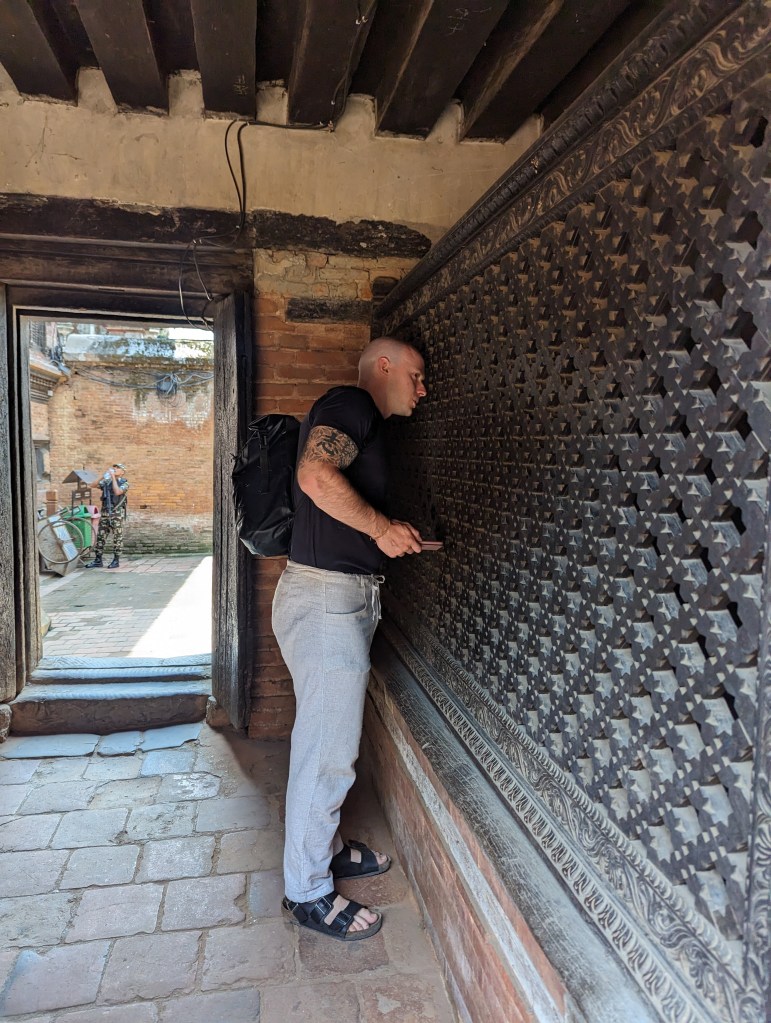
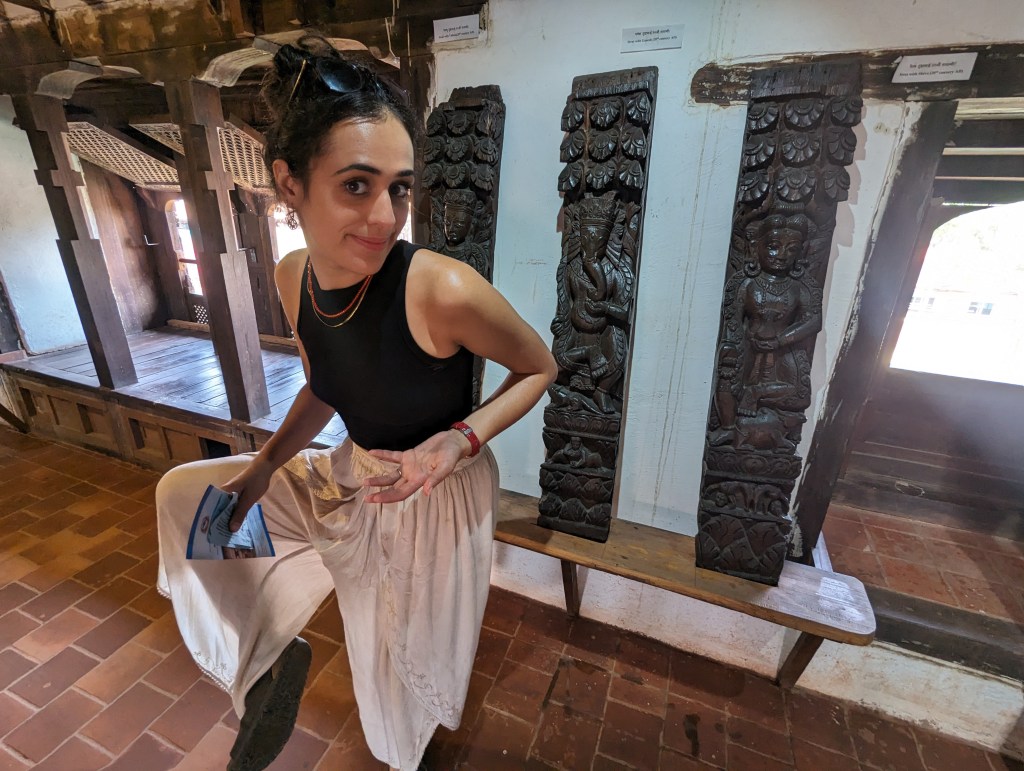
Included in your ticket price for the Art Museum is the Woodcarving Museum, so we decided we might as well check that out too. To be honest by this point we’d seen a few too many carved beams with nonsense captions to be that engrossed, but we enjoyed being the only people wandering around. Lots of them were at least a little creepy, topped off by a painted wooden mask we spied in another window across the courtyard which looked like it was straight out of a horror film.
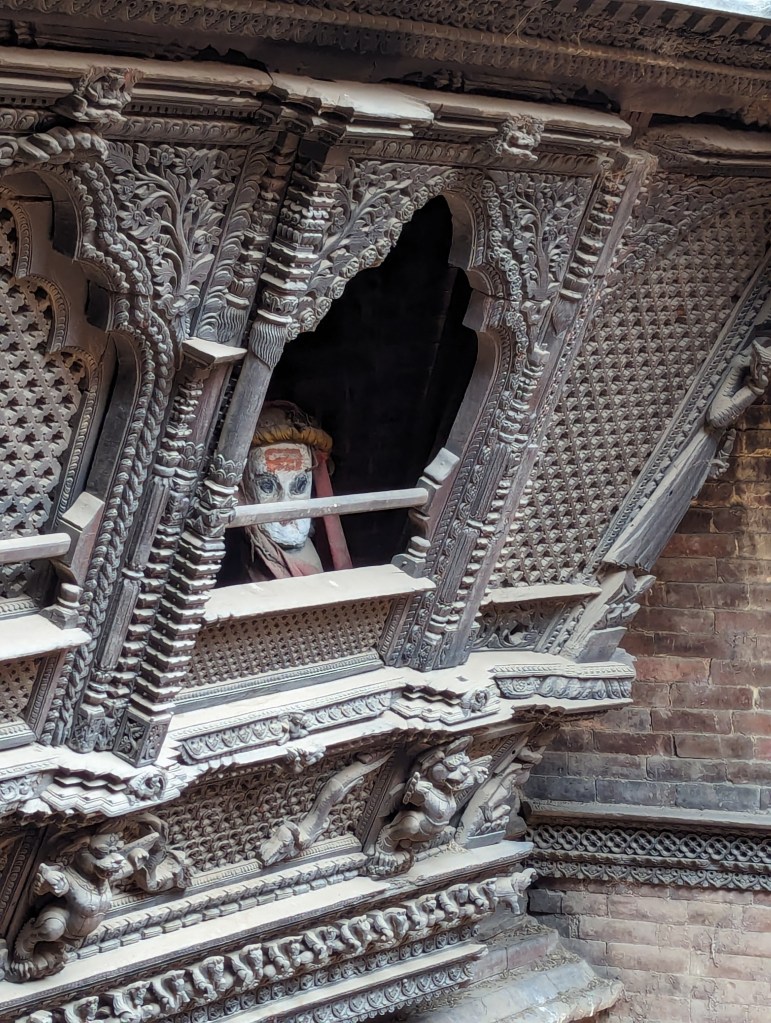

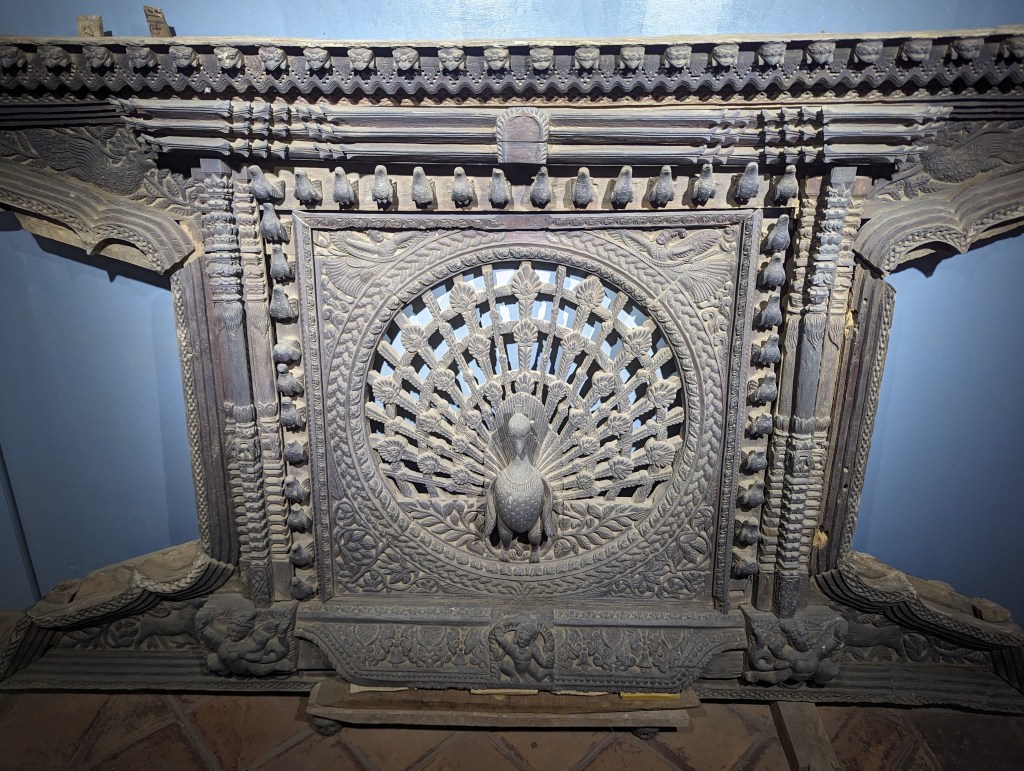
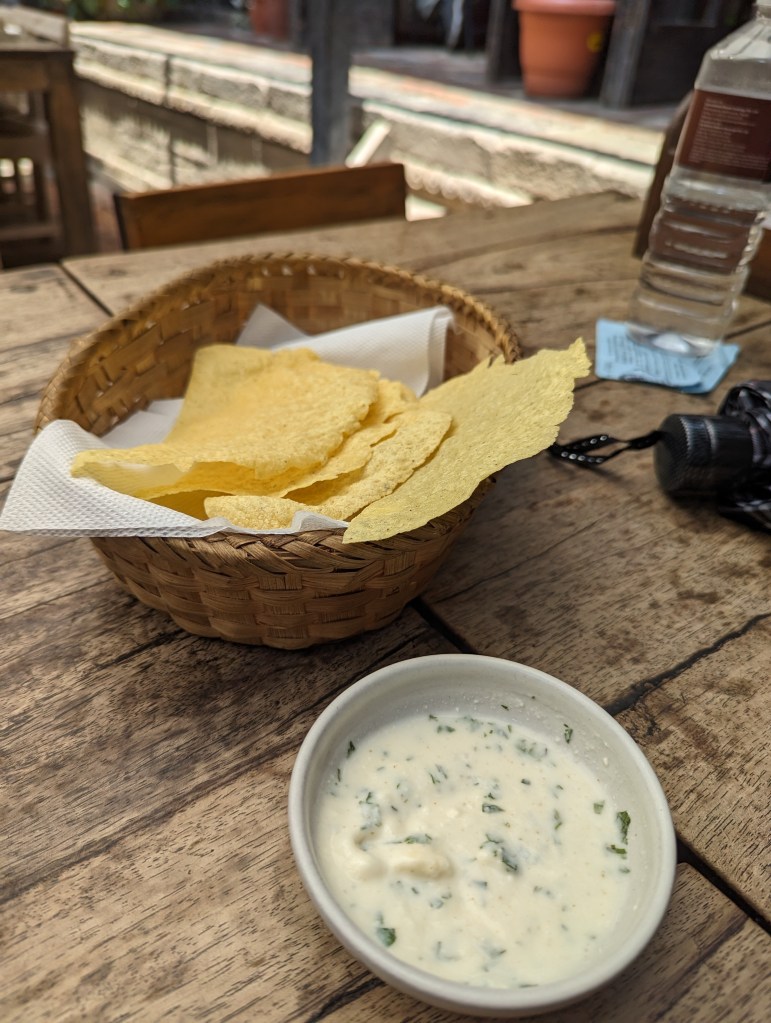
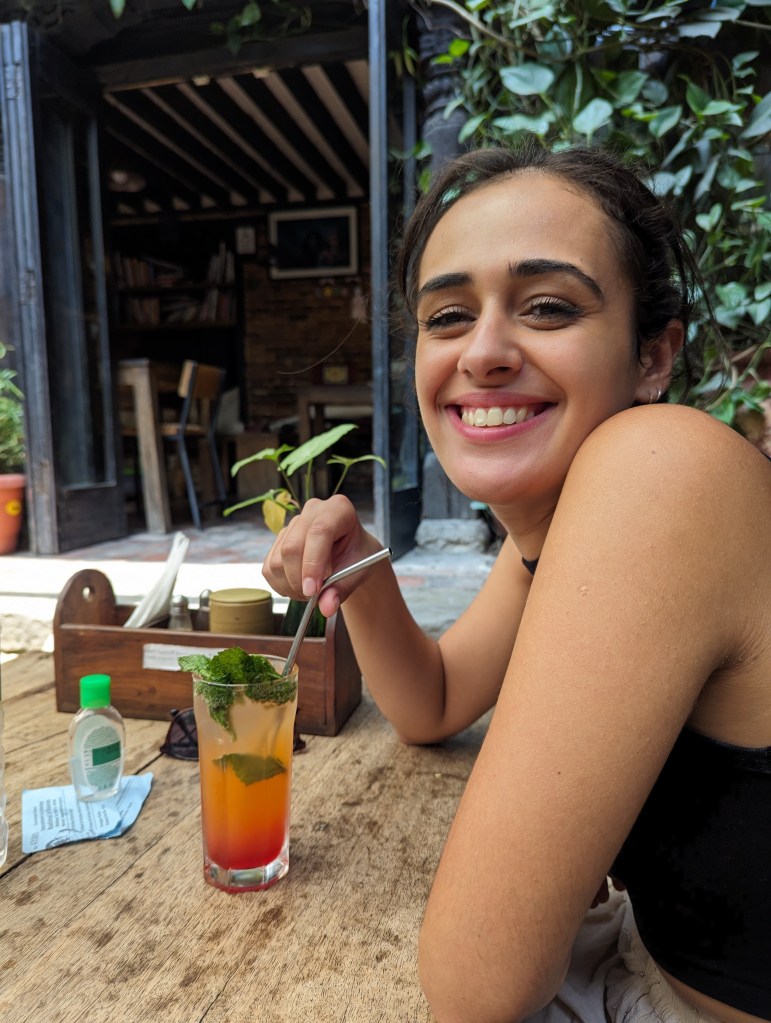
We took a brief break from the sightseeing to replenish ourselves, braving the Thai where Rob had butchered his noodles with spice just the night before for a cold drink and papads with delicious tzatziki-esque chutney. After some discussion we headed for a whip around the ‘pottery square’ which was full to the brim of potters making everything under the sun.
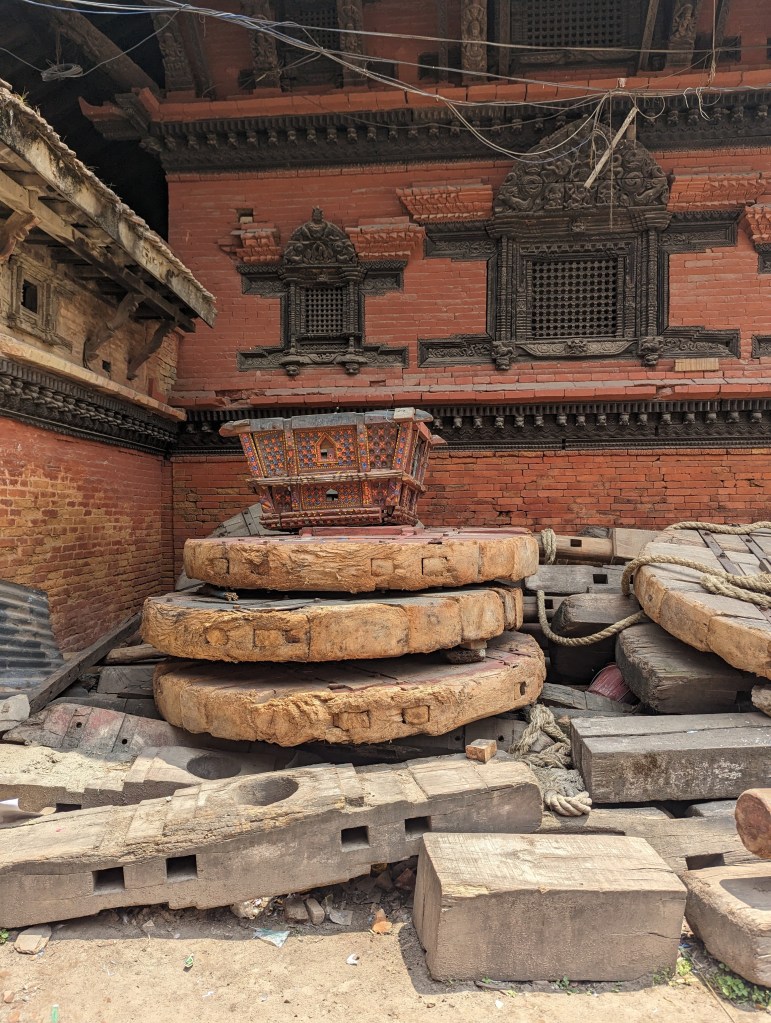
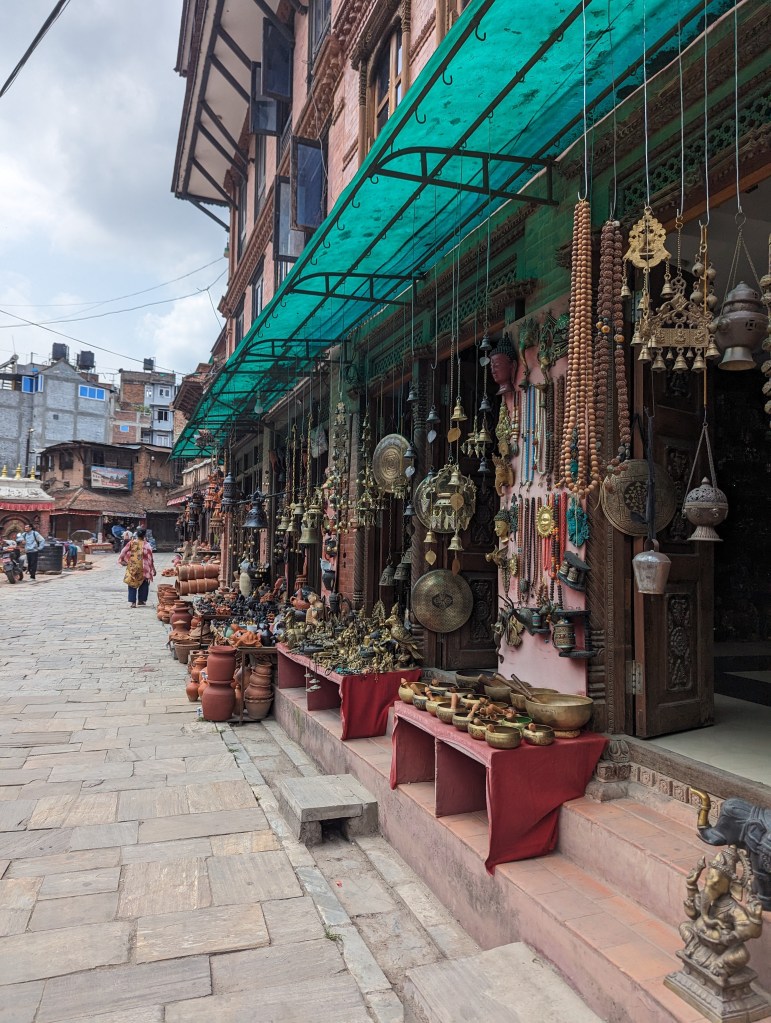


We had been planning to try a more authentic version of the eggy lentil pancakes that our hotel in Patan had attempted for breakfasts, and had read many positive reviews of a particular hole-in-the-wall place selling them. In fact, lunch had been delayed to now for precisely this reason – as earlier when hunting for this nameless restaurant we’d been told she opened at 1pm. We headed back to where this mysterious woman gave us those instructions, right by the map description for the restaurant that apparently had no sign, but we weren’t in luck. We saw some closed windows which we imagine are usually the shop but it seems she wasn’t opening up today.
A bit sad but determined not to part with tourist amounts of cash for a disappointing sandwich at one of the Western style cafes, we hunted down another local place for some noodles. The man was very nice and once again the kitchen was staffed with 12 or 13 year old boys, but we received another tasty and simple egg chow mein with sweet authentic masala chai for around £2 total between us.
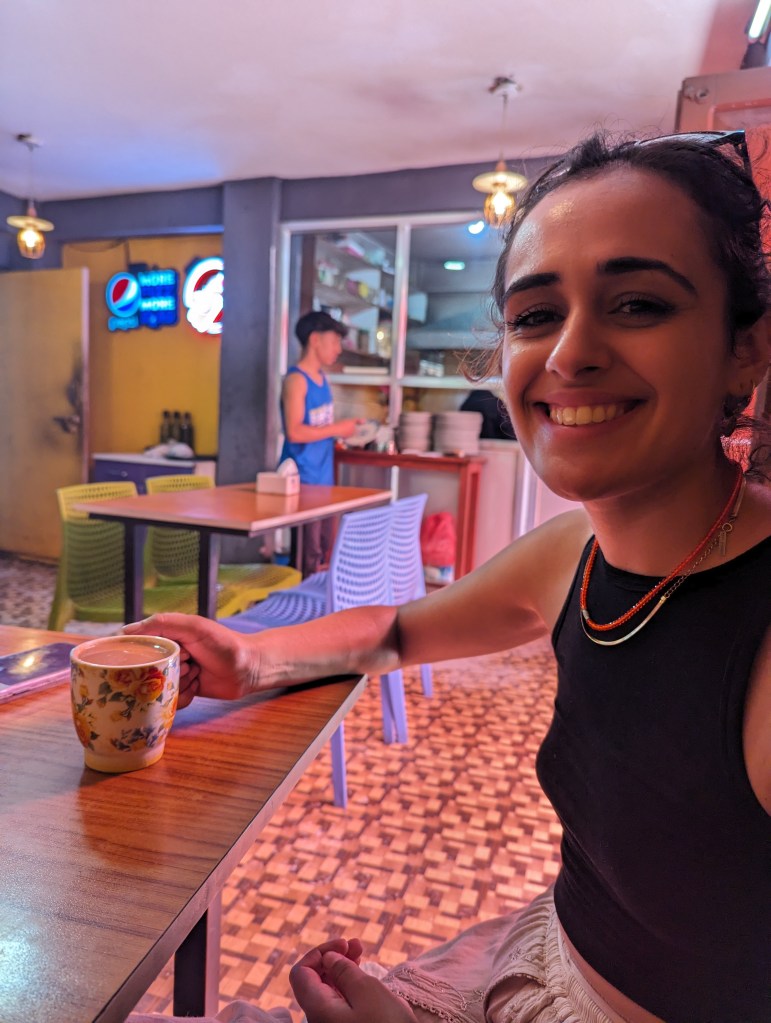
Refuelled and done with museums for the day, we went back to our hotel room for some yoga and reading for the afternoon. As twilight fell we planned to loop around the 2 largest ‘tanks’ – similar to the one near the pizzeria – to see local life happening around them in the early evening. One of them was largely walled off and not very interesting, but another had a small temple right in the middle which you could walk up to on a small path. There were plenty of locals of all ages sitting by the water, walking dogs or having quite professional looking photo shoots against the sunset-reflecting water.
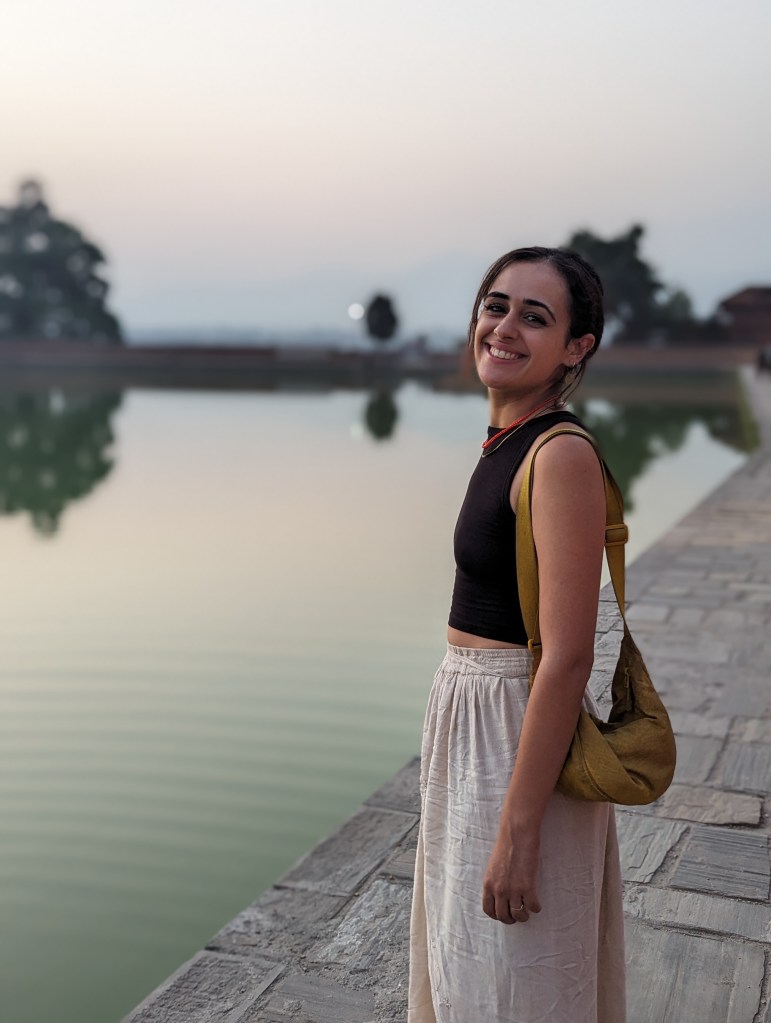

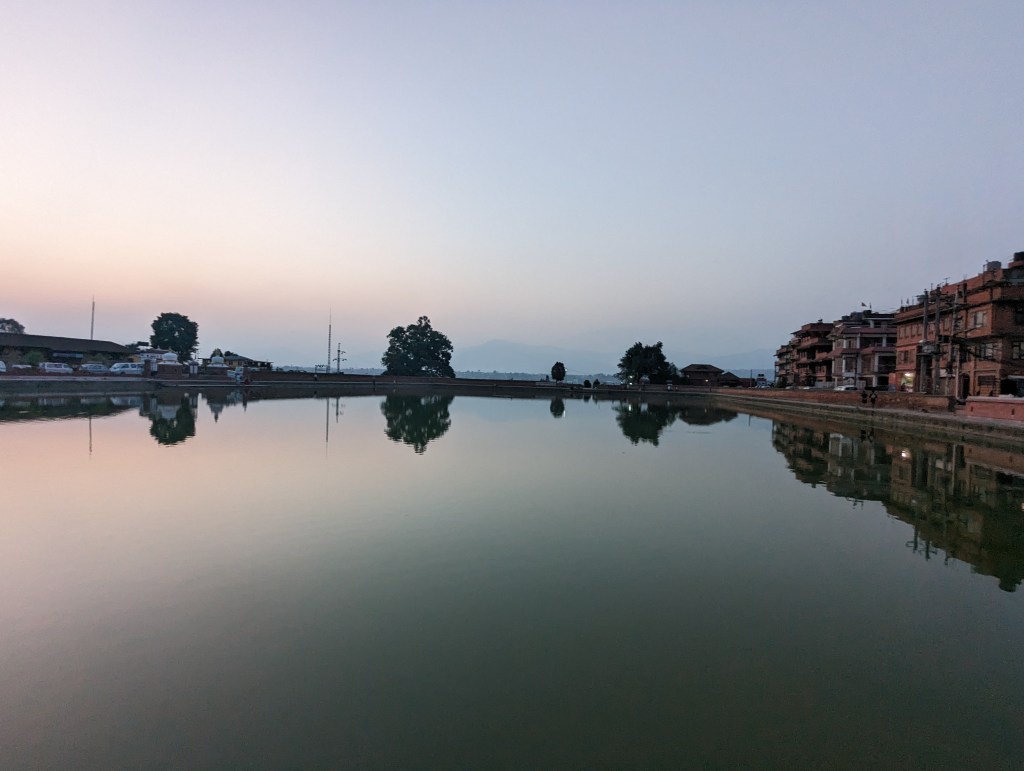
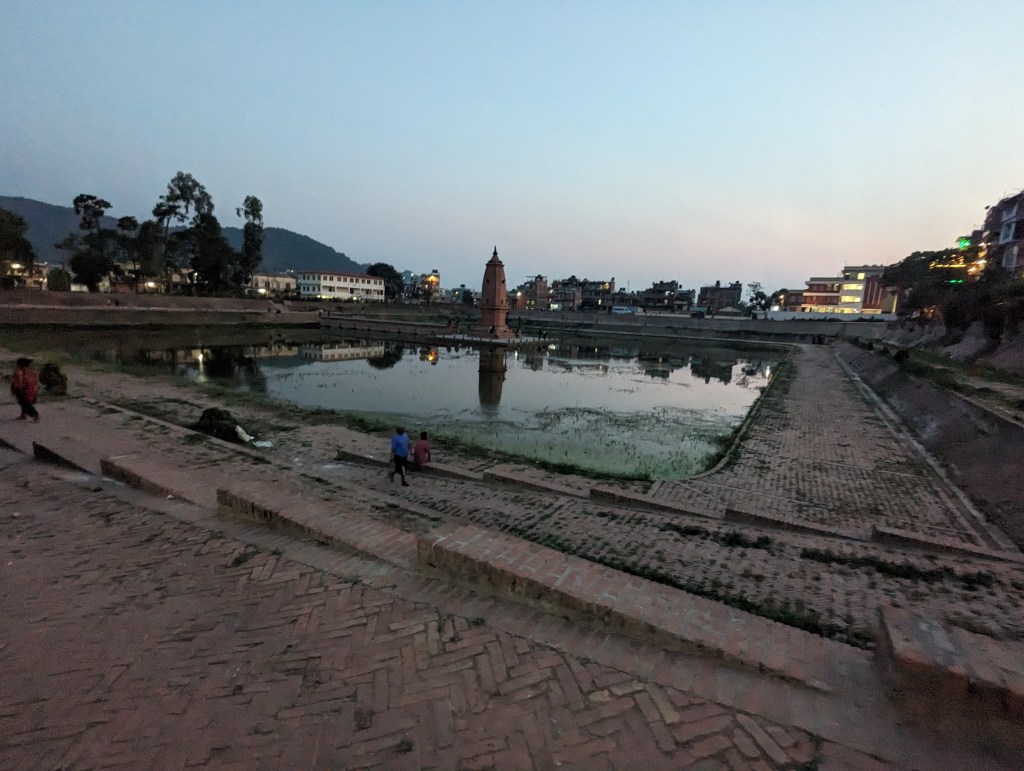
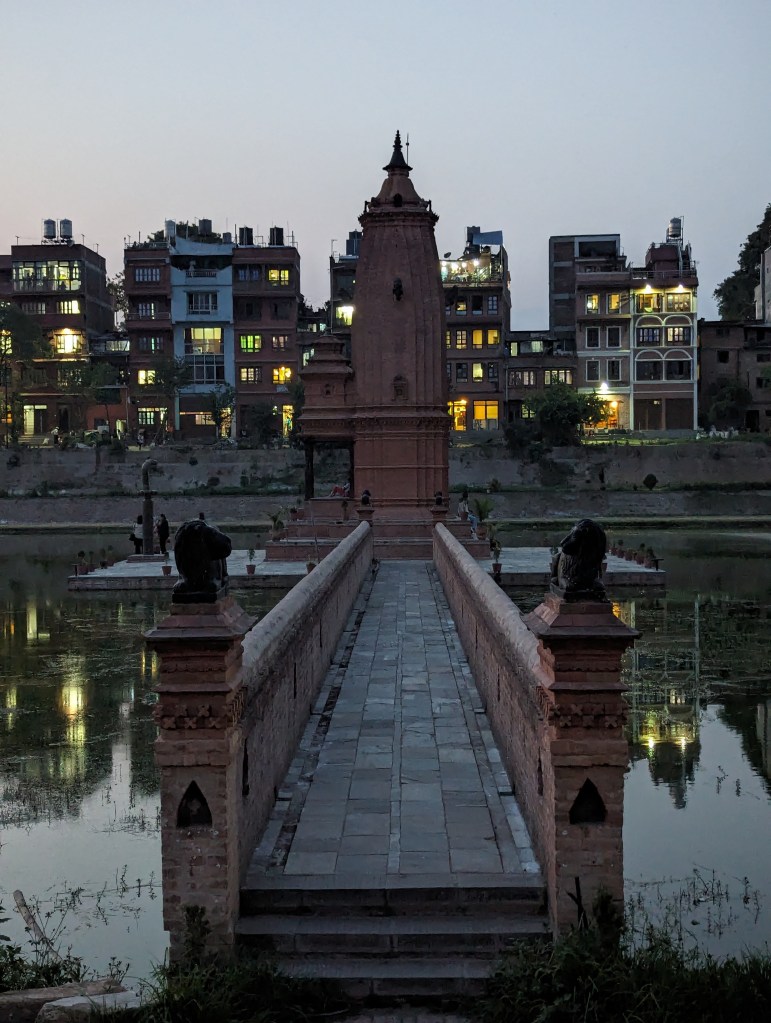
Unable to find any decent looking restaurants nearby, we then walked down the biggest road in Bhaktapur to reach a Korean place I’d seen well reviewed. For some reason, despite it being a Wednesday, the streets and squares were incredibly busy – whole families sitting out with ice creams, and lots of young people out drinking. We’re still not sure if there was a holiday or something, or whether this is just the vibe in Bhaktapur, but it was definitely nice to see groups of young women or mixed gendered groups of young people out together in the evening – not a sight you’d see in India.
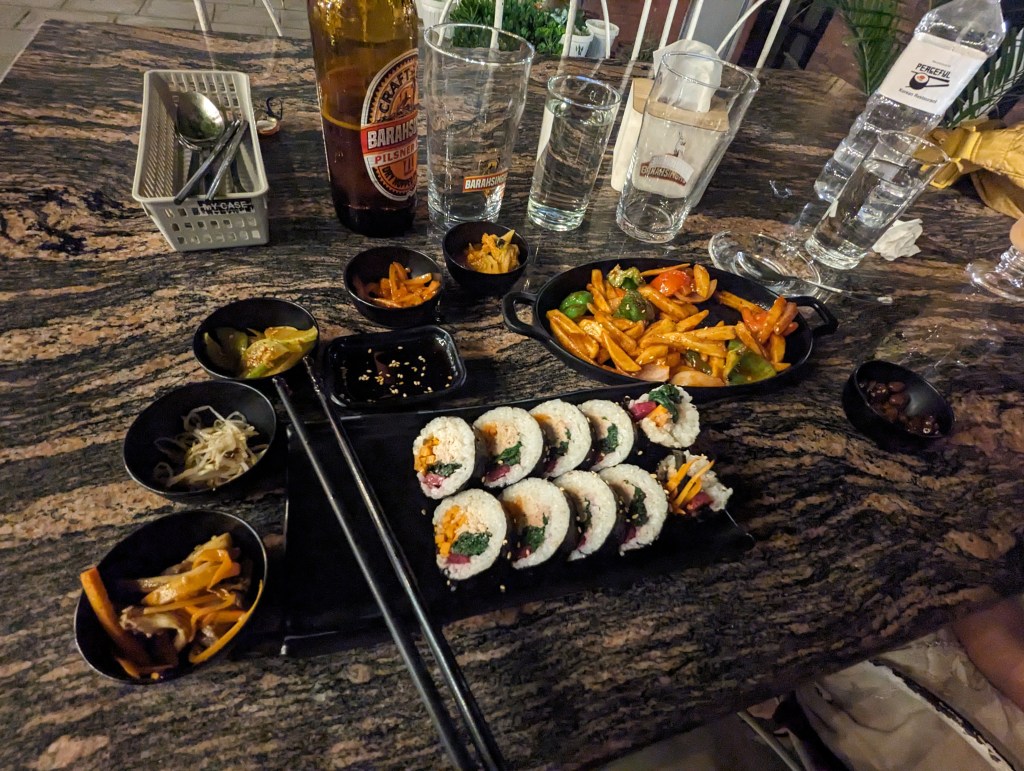
The Korean restaurant, ‘Peaceful Korean’ was in a completely tucked away courtyard through a building on the street. It was definitely the nicest ambiance we’ve been in for ages, with lots of trees and lights hanging from them. We happily ate tuna sushi with a whole array of extras, Korean omelettes and sweet chilli chips which we’ve both been ordering non-stop since.
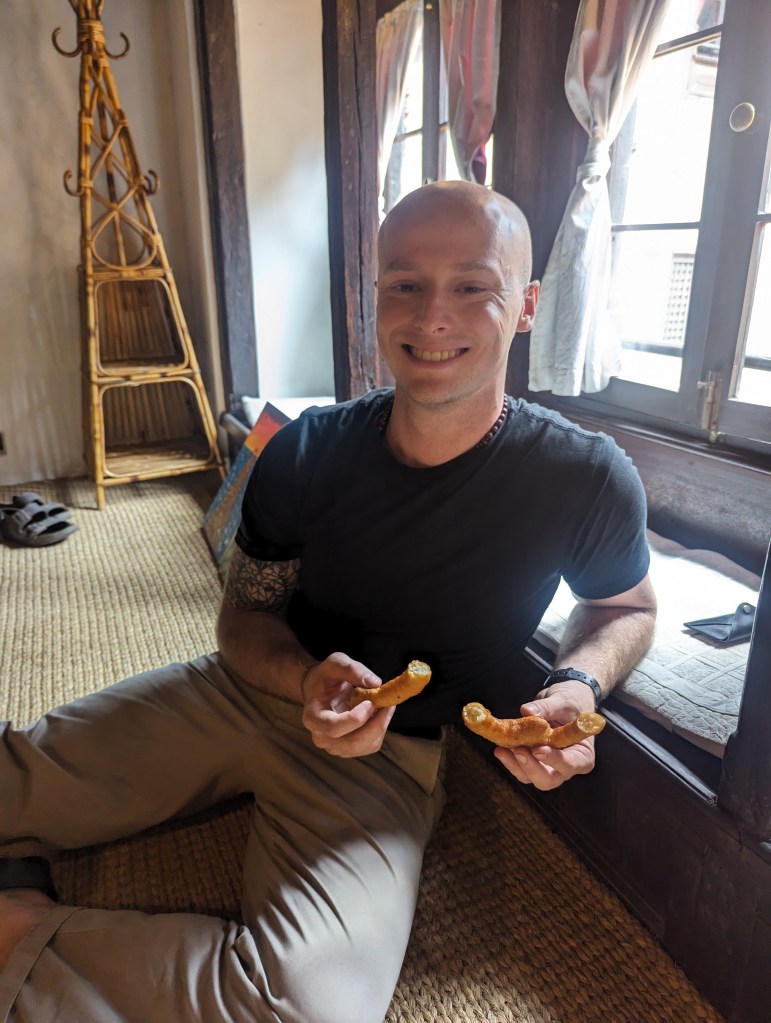
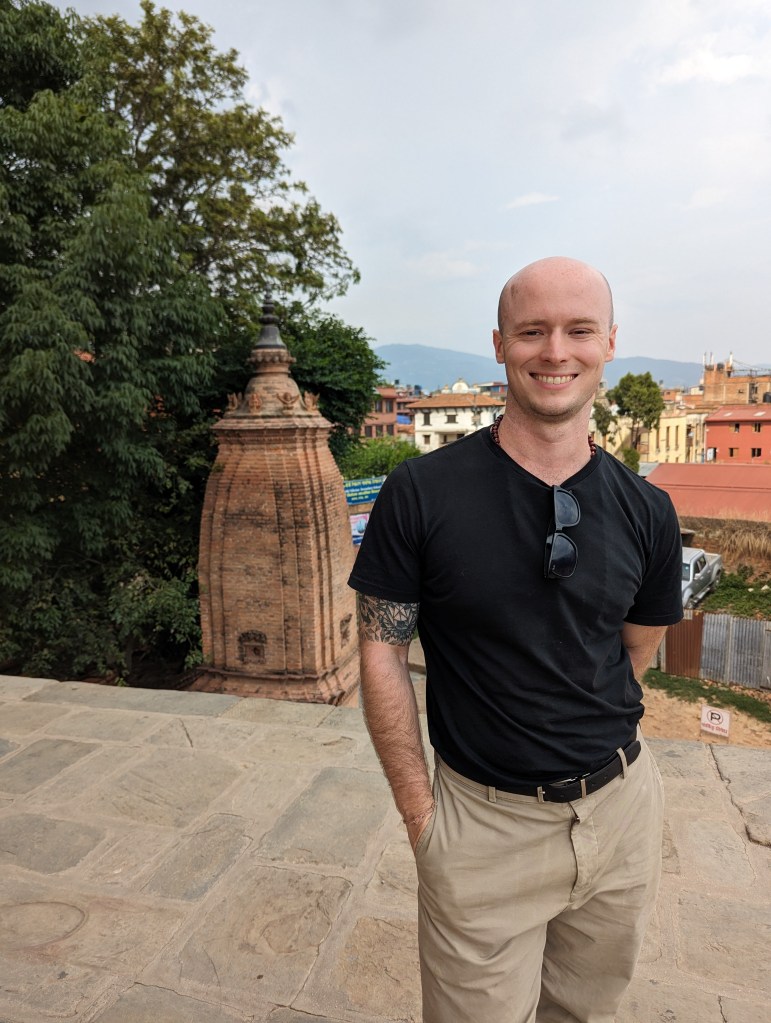
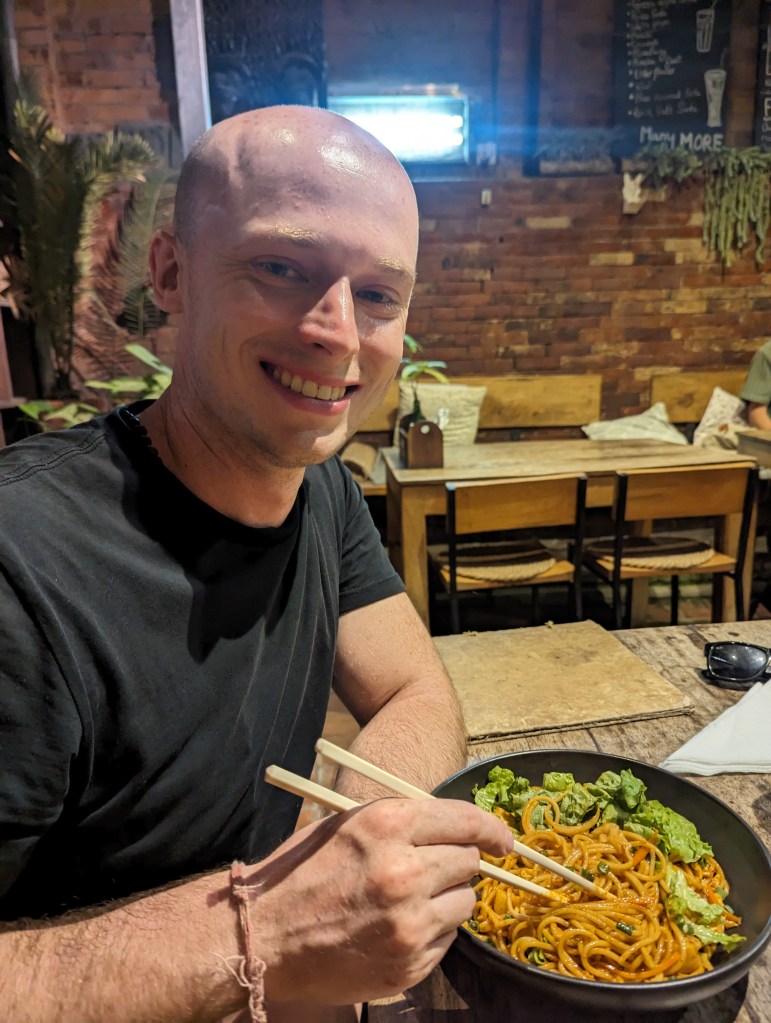
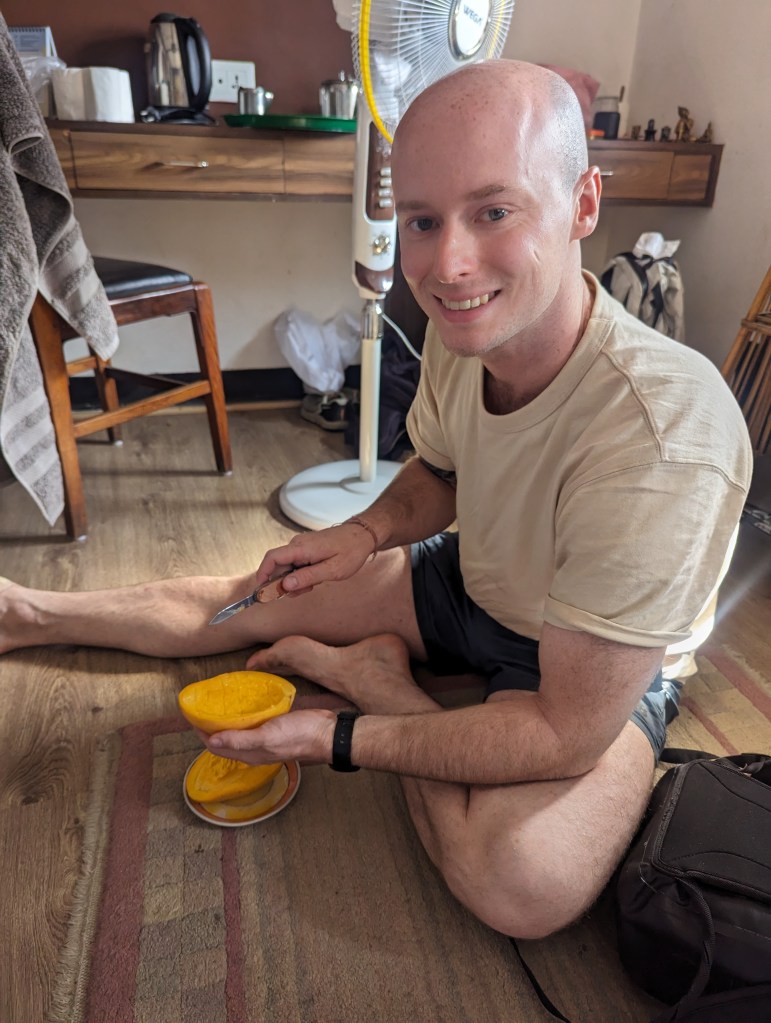
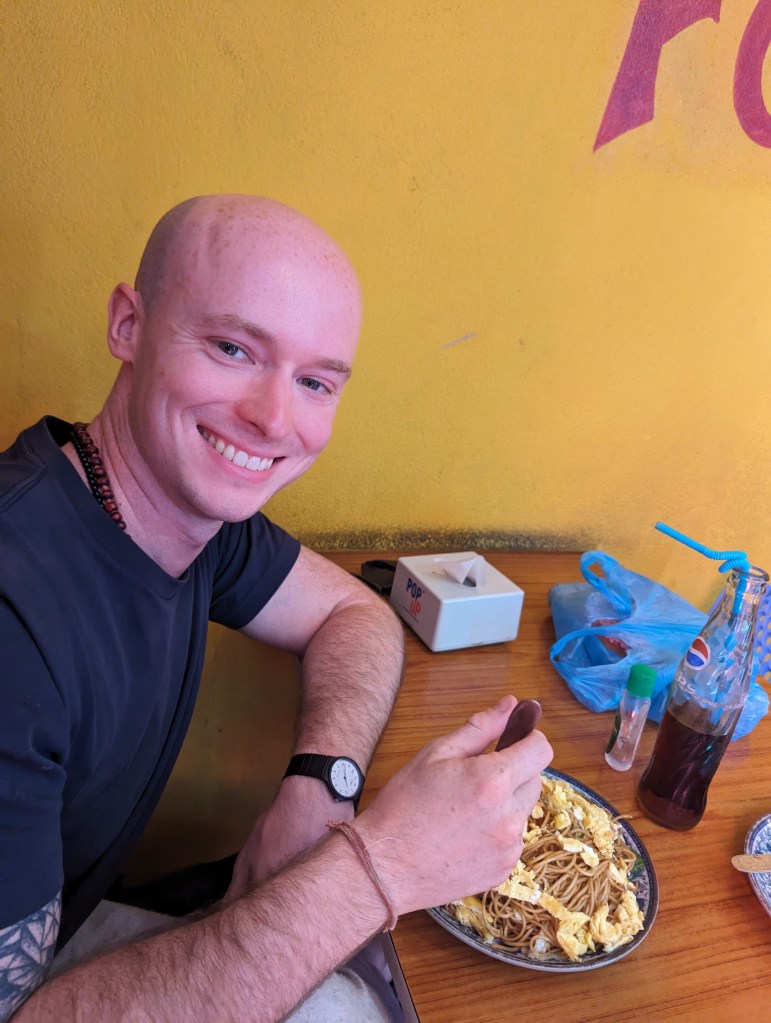
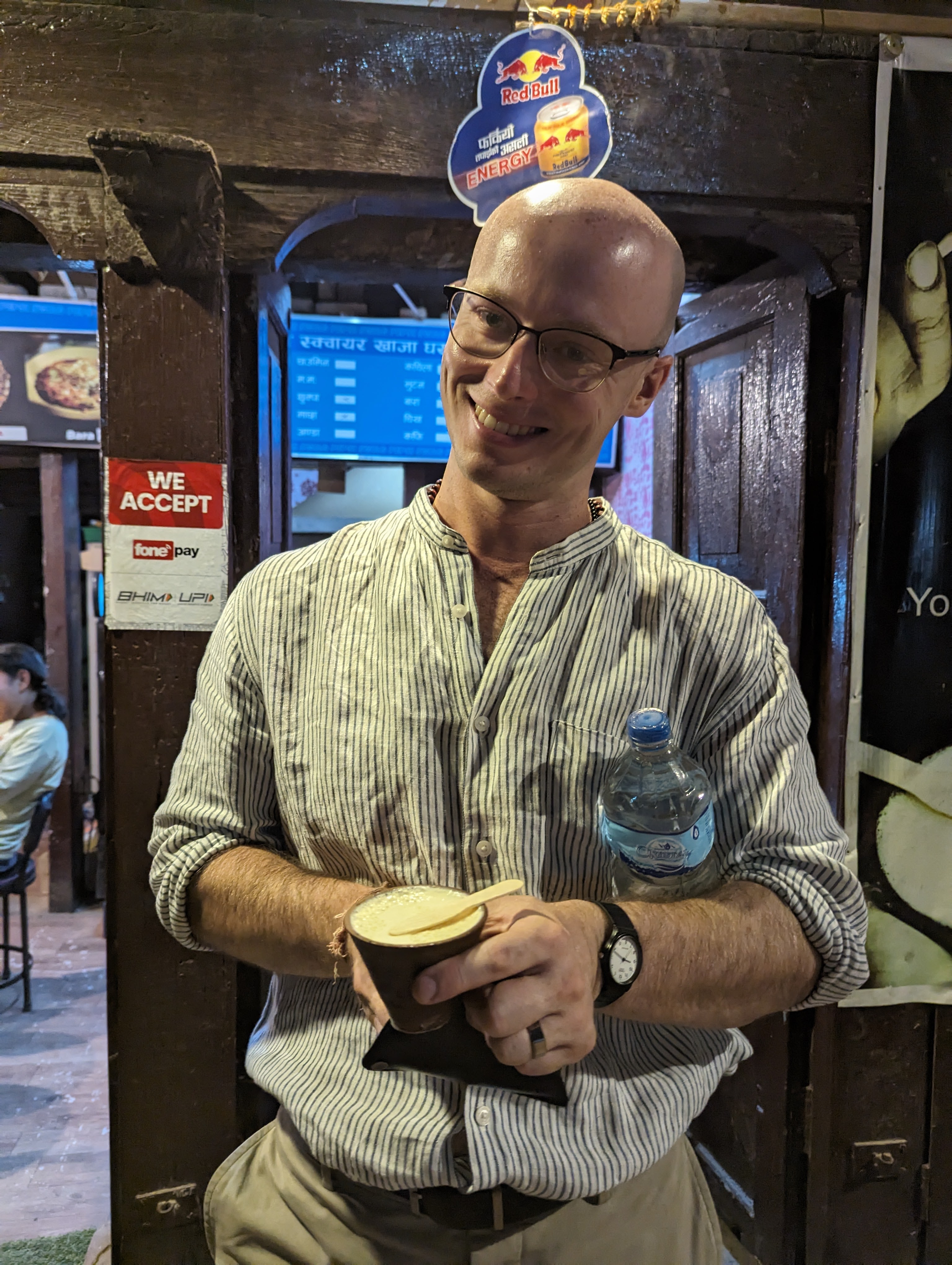
We walked home and found the door of our guesthouse locked as we’d missed the closing time of their restaurant, but happily took the time to grab another Juju Dhau (I think Rob’s 3rd of the day – Ed. note, not sure why I look so deranged in the below photo, but for all concerned I am still sane) and call the manager to let us in. We found 2 of the younger staff members in the restaurant having some drinks and looking sheepish as they let us in and up to our room, for the last night in Bhaktapur before heading up to the hills.
With that, we ended our week and a bit in the built up areas of the Kathmandu valley. From Bhaktapur we were heading to Budanhilkantha on the edge of the National Park for a spot of glamping, then spending the last few days back down in central Kathmandu itself. That’ll be covered in the last two blogs of the trip!!
Until then,
Ellie & Rob xxx
 Rob's India & Nepal Blog
Leave a comment