Tuesday –
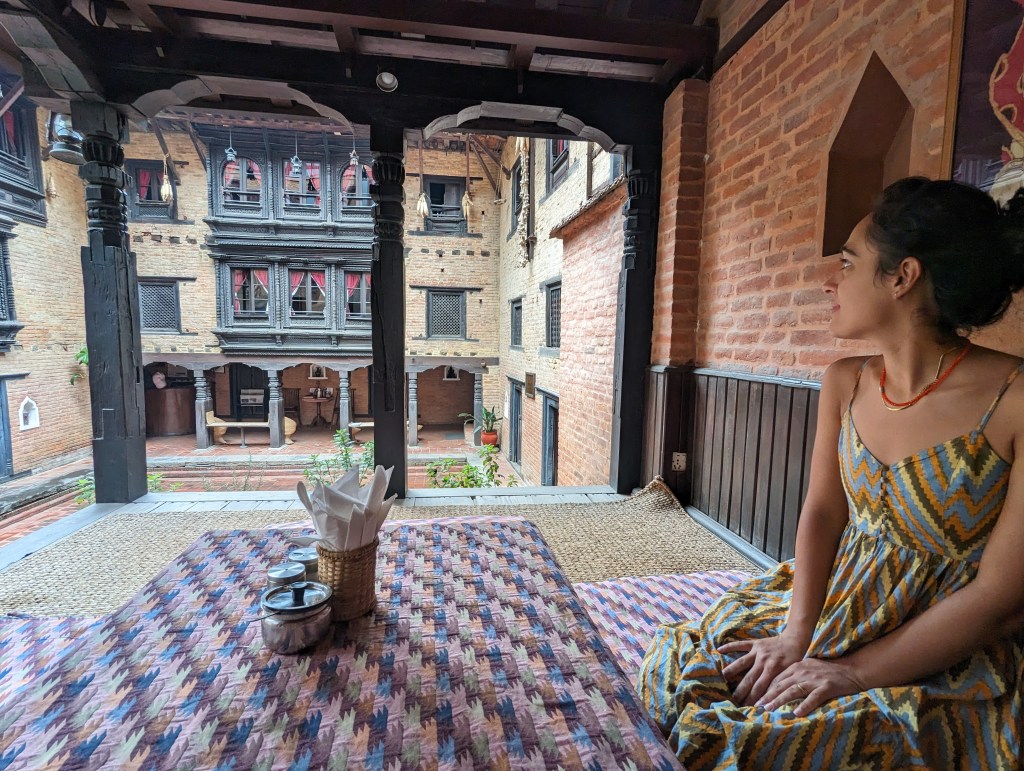
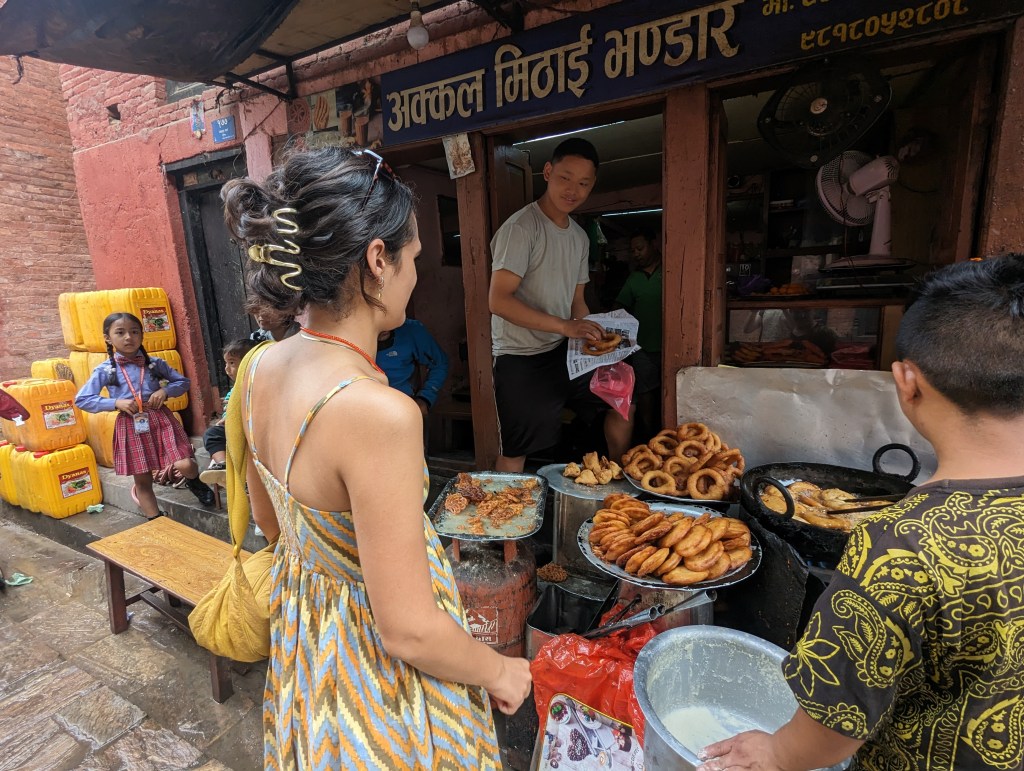
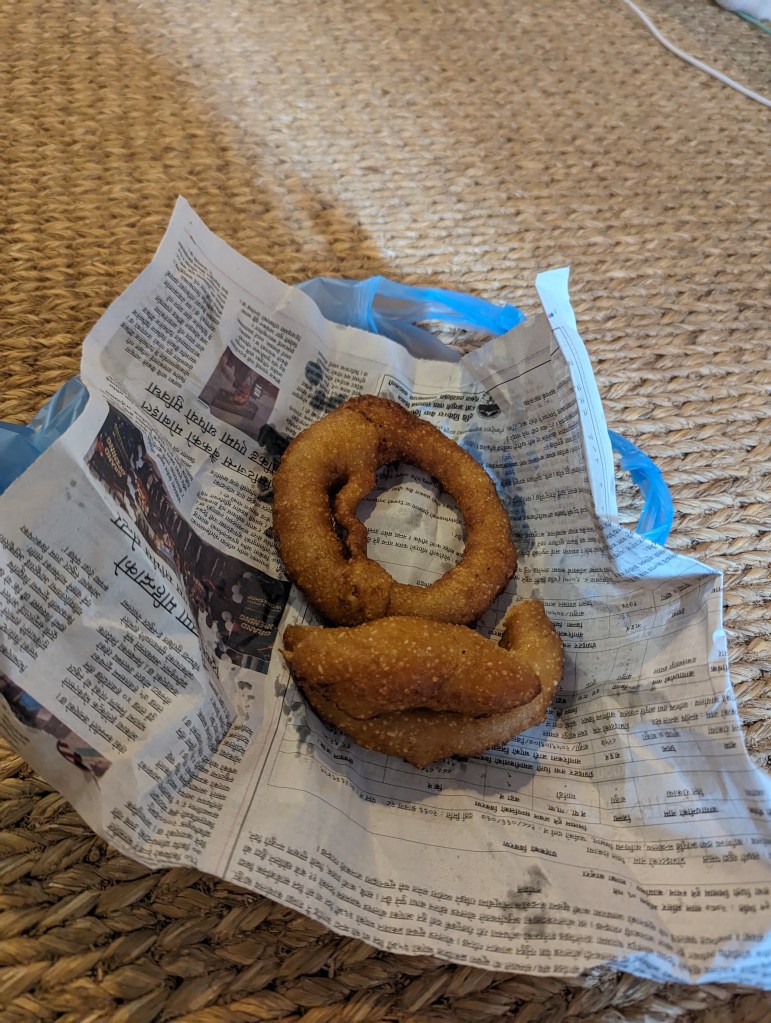
We had chosen our breakfast the night before at Newa Chen, and when we came downstairs were shown to a little low table with cushions to sit on in the hotel’s garden. We were the only guests for the first two nights, and the hotel had a slight air (as so many places have had) of not being busy enough to get into the swing of things, though it was still very pleasant. The rain started to fall softly as we sat drinking our chai and eating lentil bread, but soon cleared up enough for us to head out to a local coffee shop as the first stop of the day. On the way, we passed a stall just outside our hotel selling sel roti, a slightly sweet dough ring made of deep fried rice flour, and which transpire to be very, very moorish.
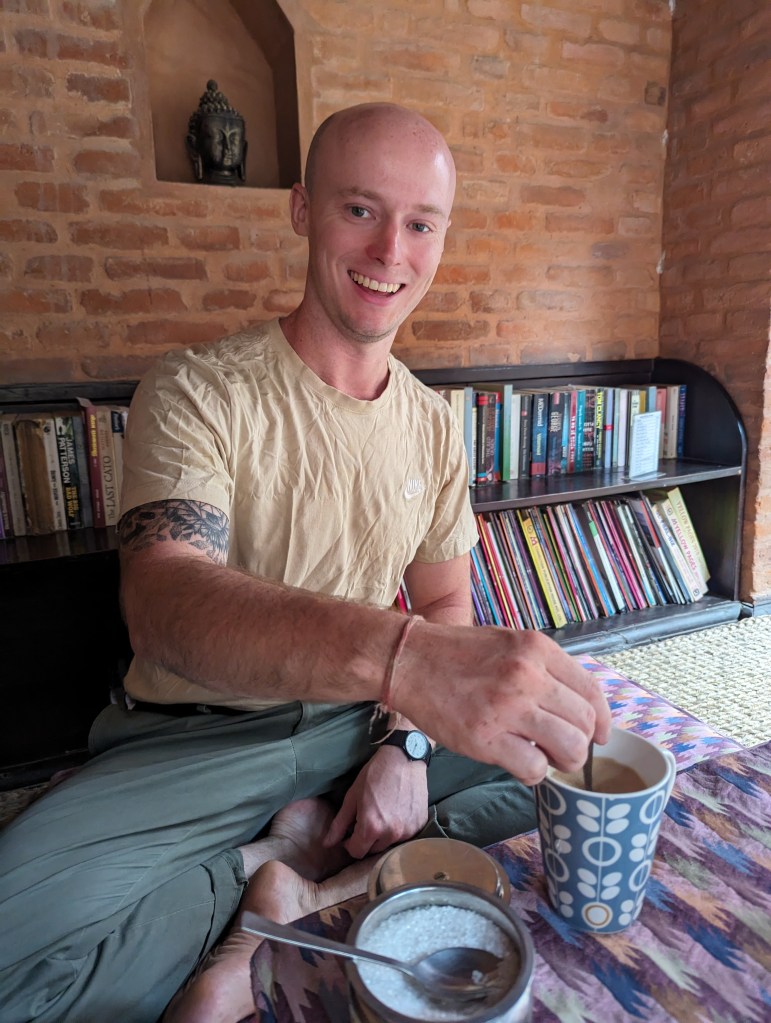

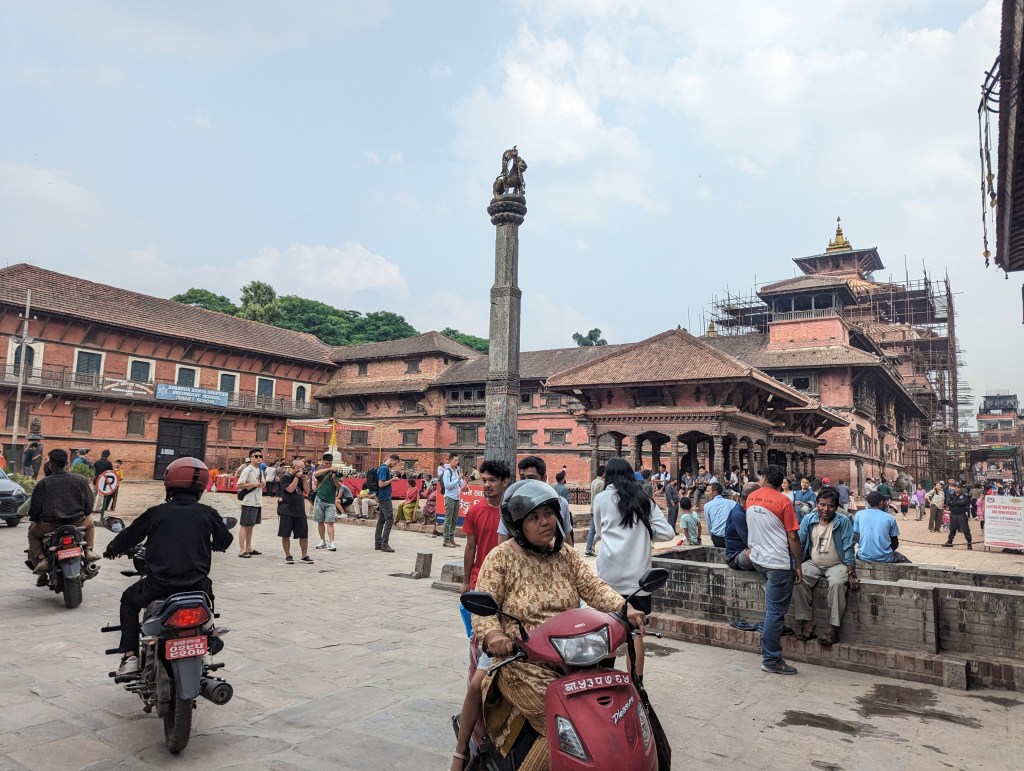
The coffee shop was (unexpectedly) full of Nepali mountain bikers, and we squeezed in amongst them for a very good, strong coffee. We had some blog writing and other small bits and pieces to be getting on with, so this took up most of the rest of the morning. Once finished, it was nearly time for lunch and so we sauntered out once more into Patan to find somewhere to eat. Patan, as I mentioned in the last blog, is a small, historical area in the middle of the bigger Lalitpur district that was previously its own state under the Malla square. As such, it is full of temples and royal (or “durbar”) architecture at almost every corner. The highest concentration of these buildings were in the Patan Durbar Square, where we were heading tomorrow.
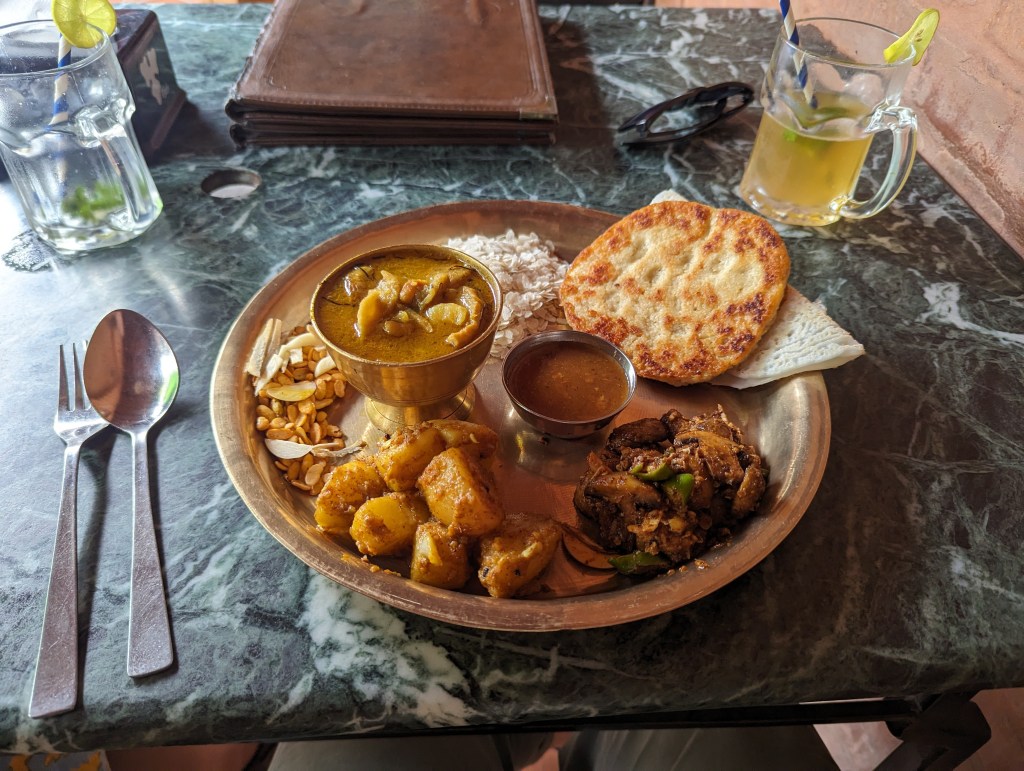
We found a cafe serving local food a few minutes walk from our hotel, and sat down to eat. Newari (the local ethnic group) food resembled some of the North Indian food we have had in some senses, and the food is served in a thali, or plate of small curries, in much the same way. Surprisingly though, the food is hotter than anything we have had before. In India, we could almost without exception ask for “normal” or “local” spice level without much problem, but normal Newari spice was no joke. After eating and drinking several bottles of water, we headed out on a route the guidebook recommended to take in the sights to the south of the Durbar Square.
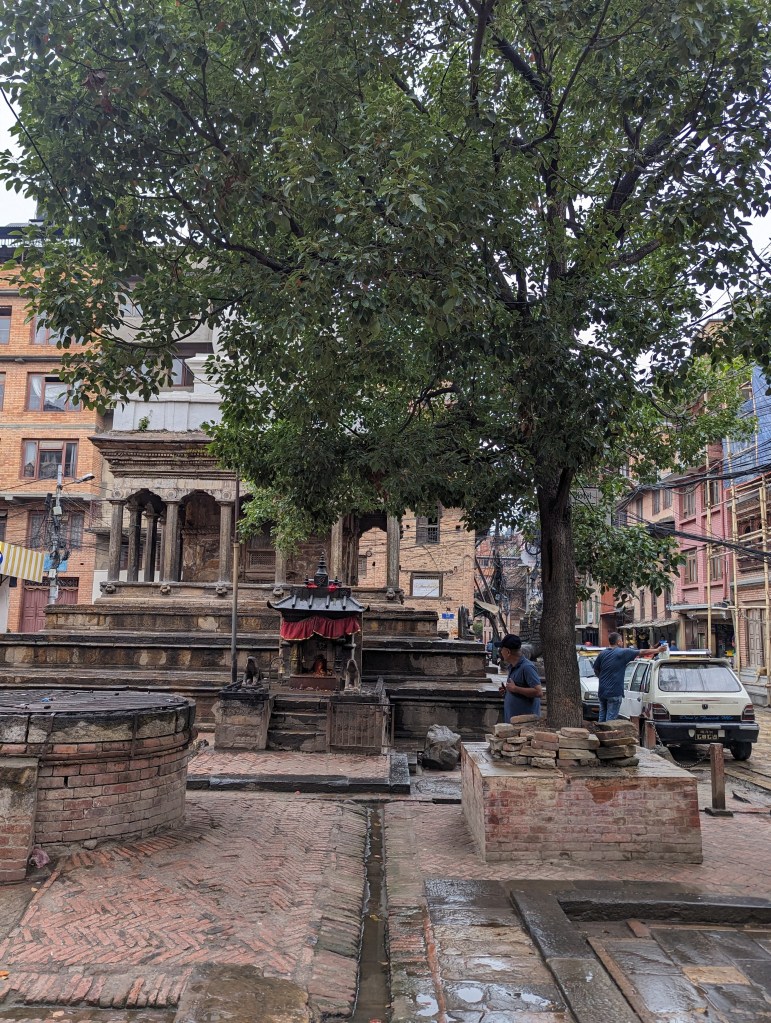
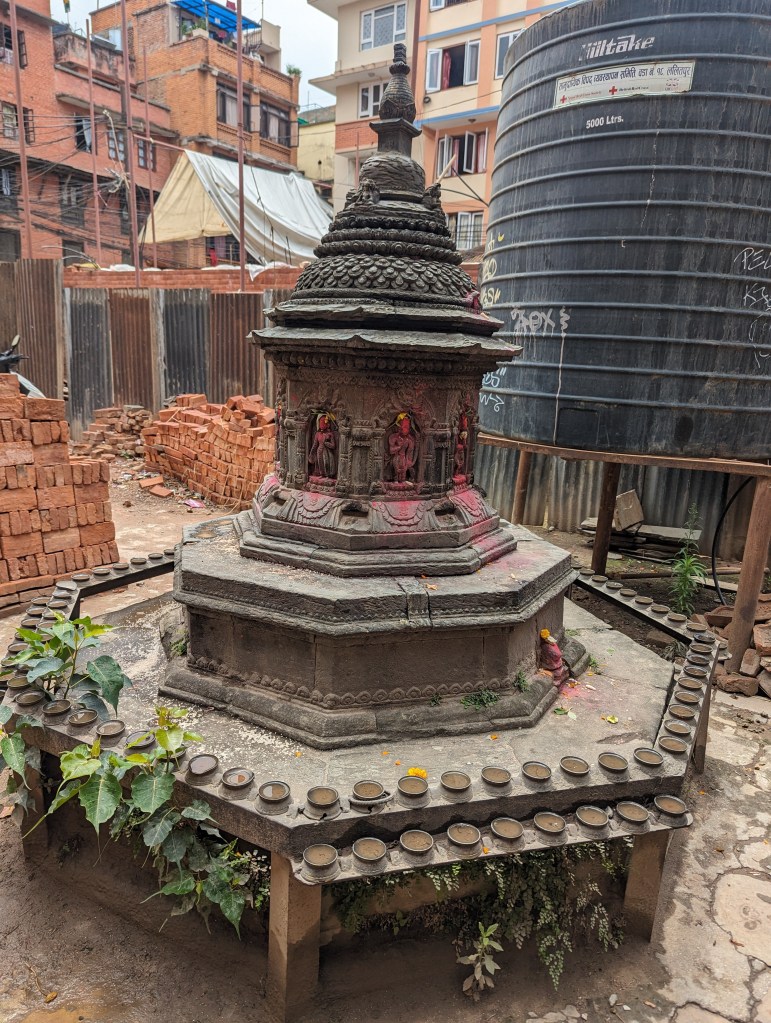
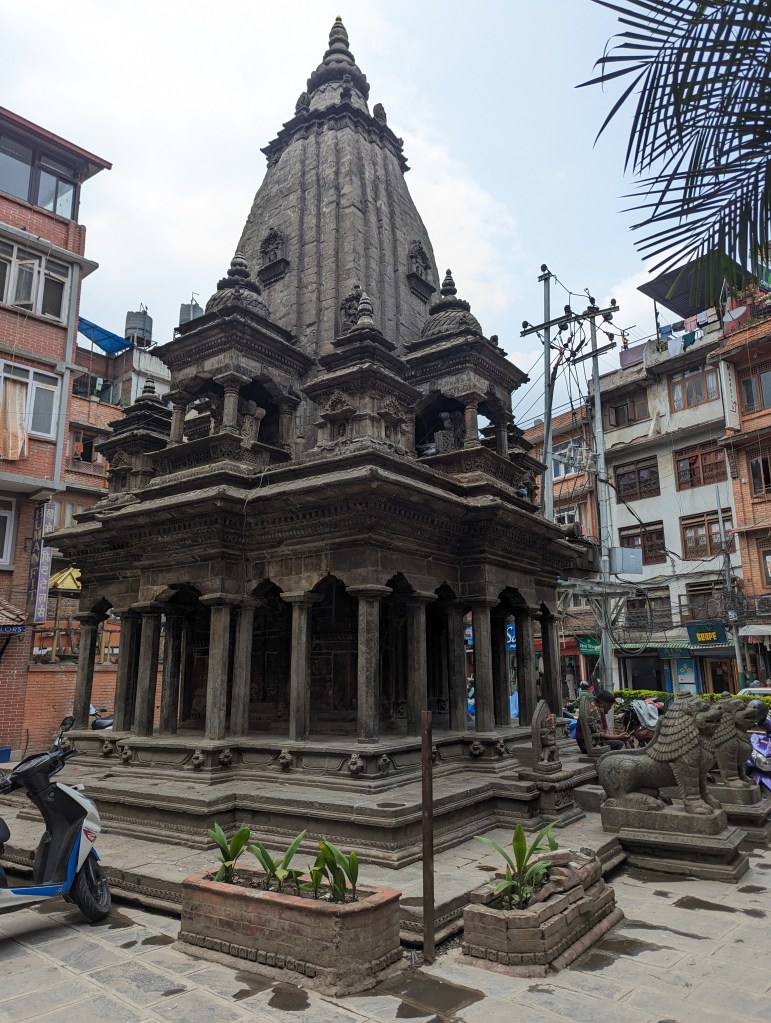
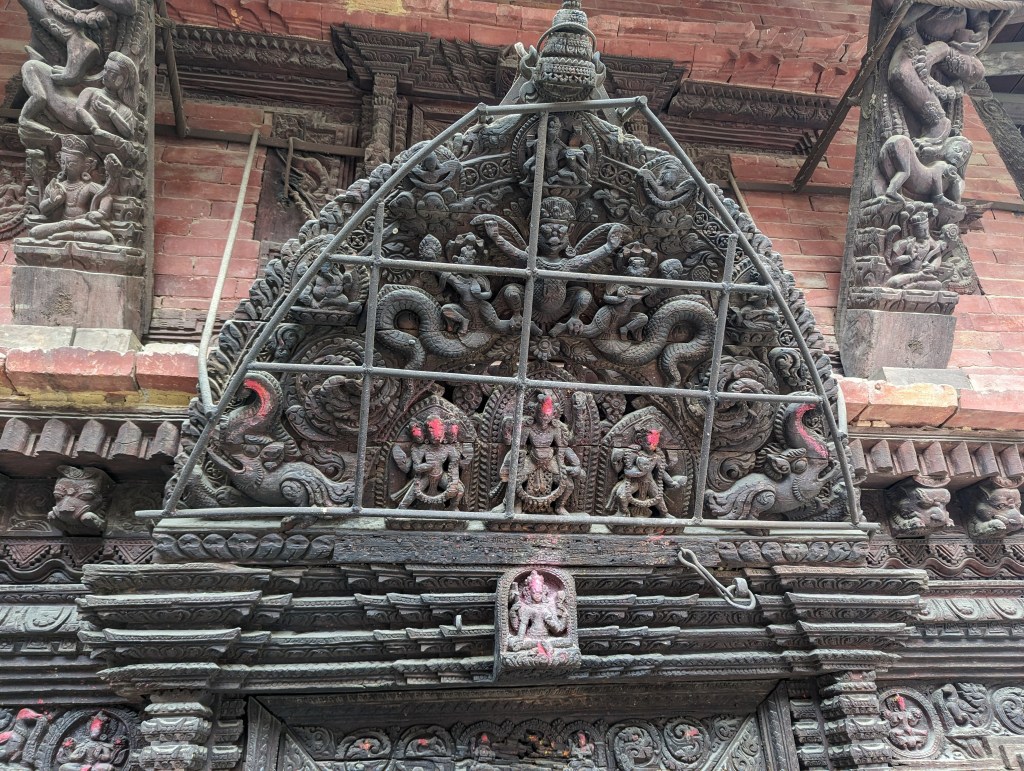
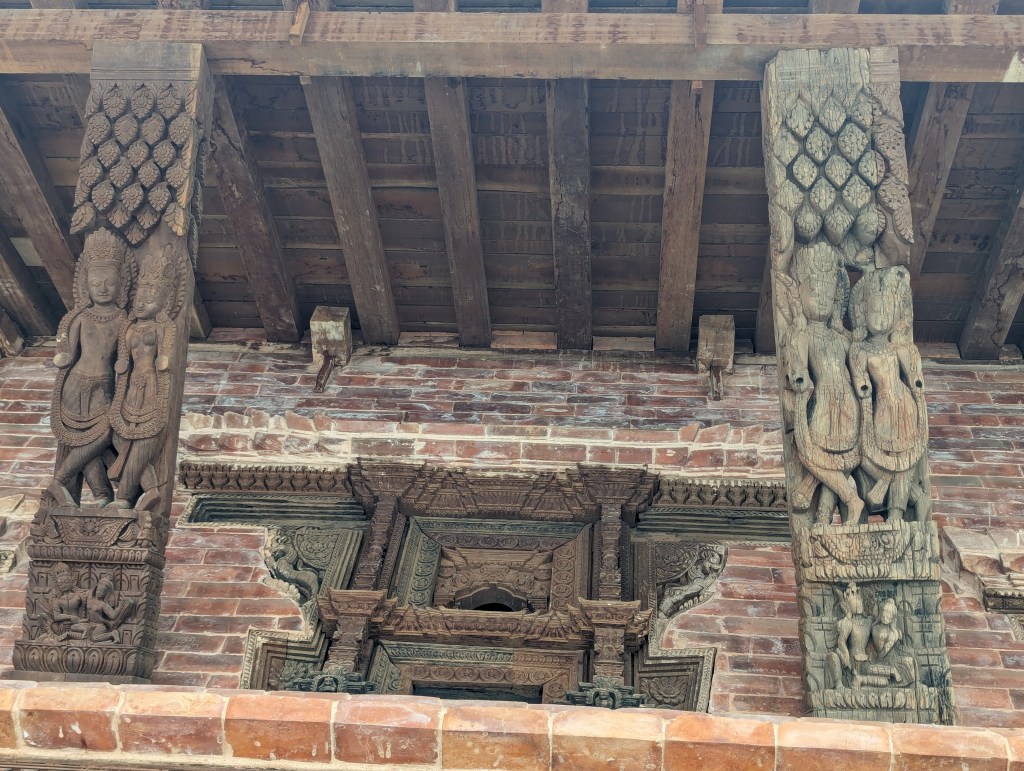
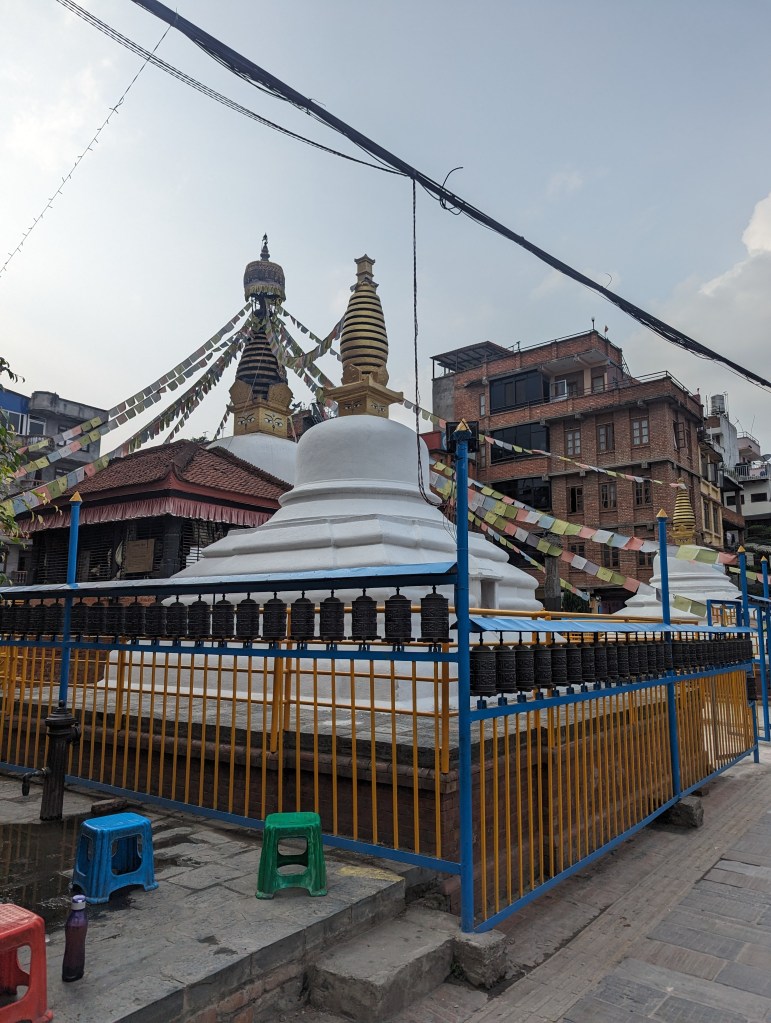
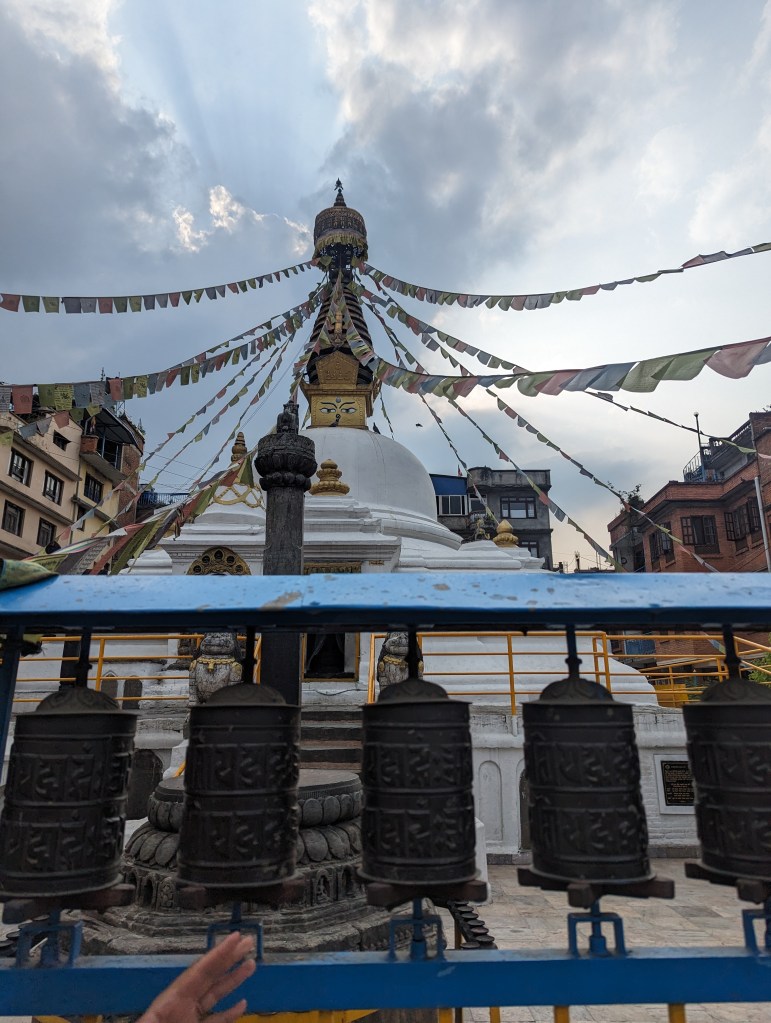
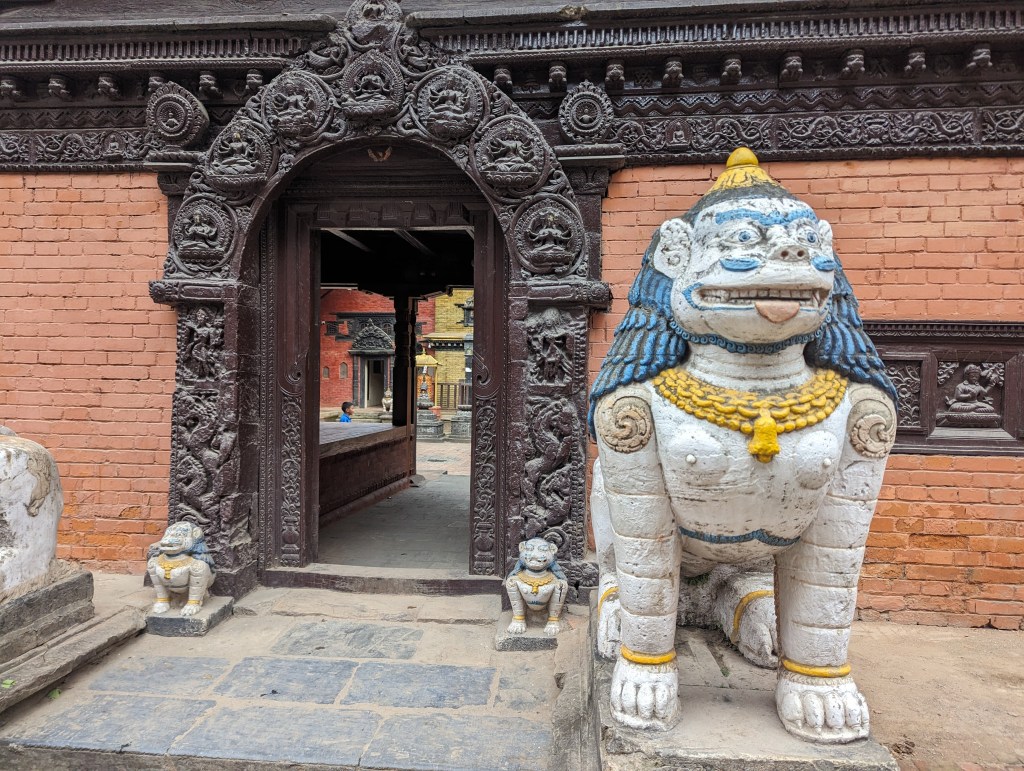
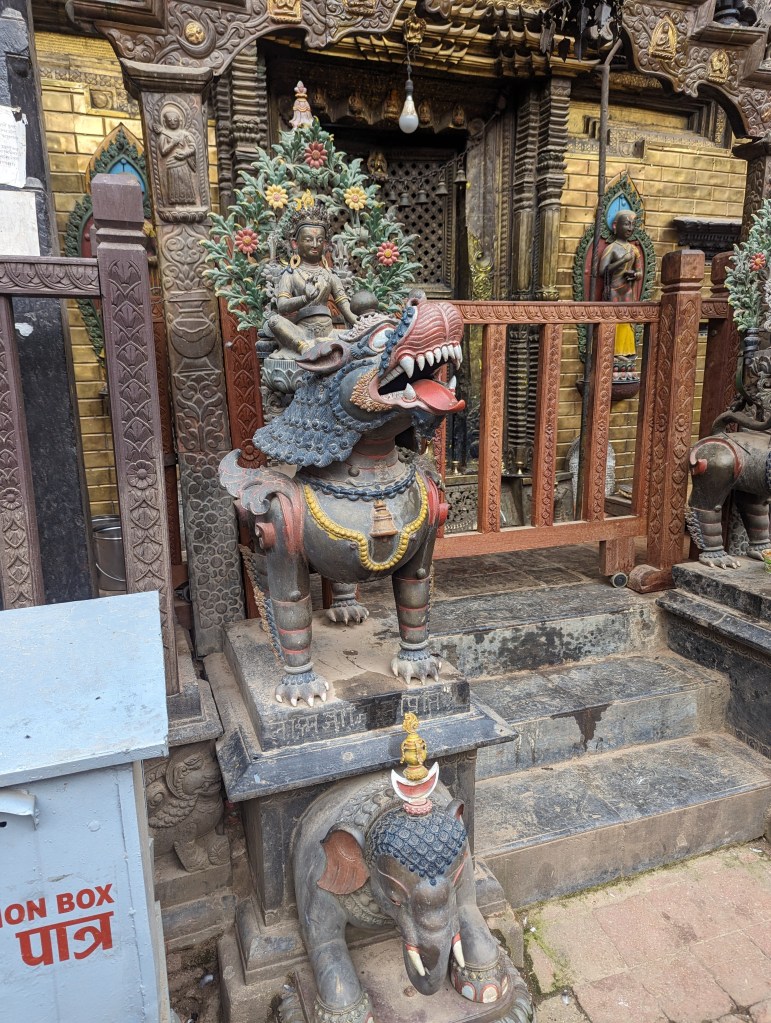
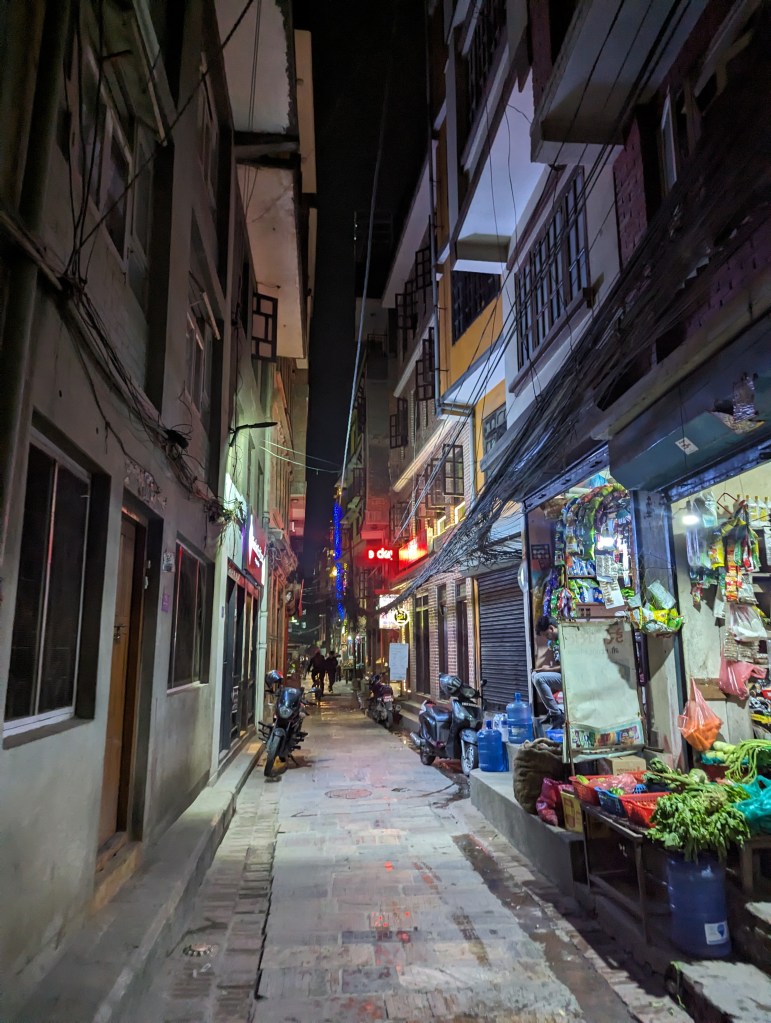
We started on the coppersmiths’ street, where a temple fronted entirely by old, tarnished copper was tucked in between active artisanal workshops where little brass idols and other metalwork was being made. From here, we passed down one of the long streets and past several beautifully ornate and characteristic Newari temples. There was an interesting fusion, like we’d seen in the temple in Darjeeling, between Hindu and Buddhism, with many of the temples having themes of both. Largely, however, the tiered temples had a more Hindu theme, and the white stupas (supposed to resemble the purity of the mind of the Buddha) were largely Buddhist. As we looked, we noticed that amongst the intricate woodwork covering the tiered temples were outrageously raunchy scenes which seemed also to be unique to Newari architecture (if you look closely enough, and its after 10pm, you can see some in the photos!)
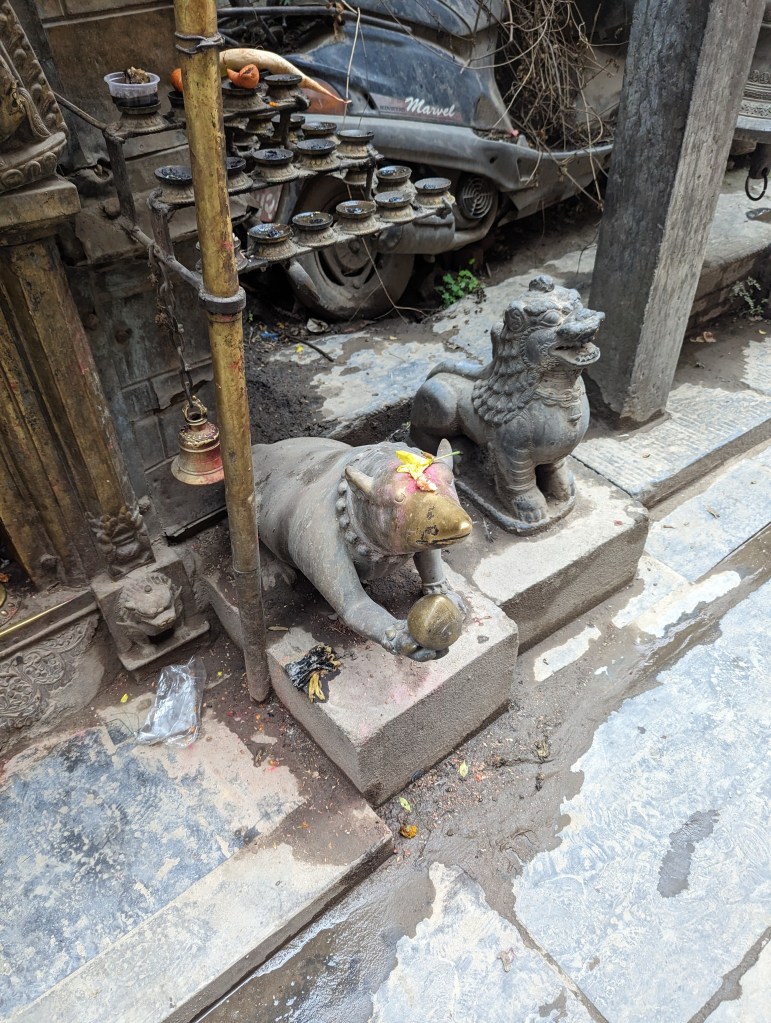
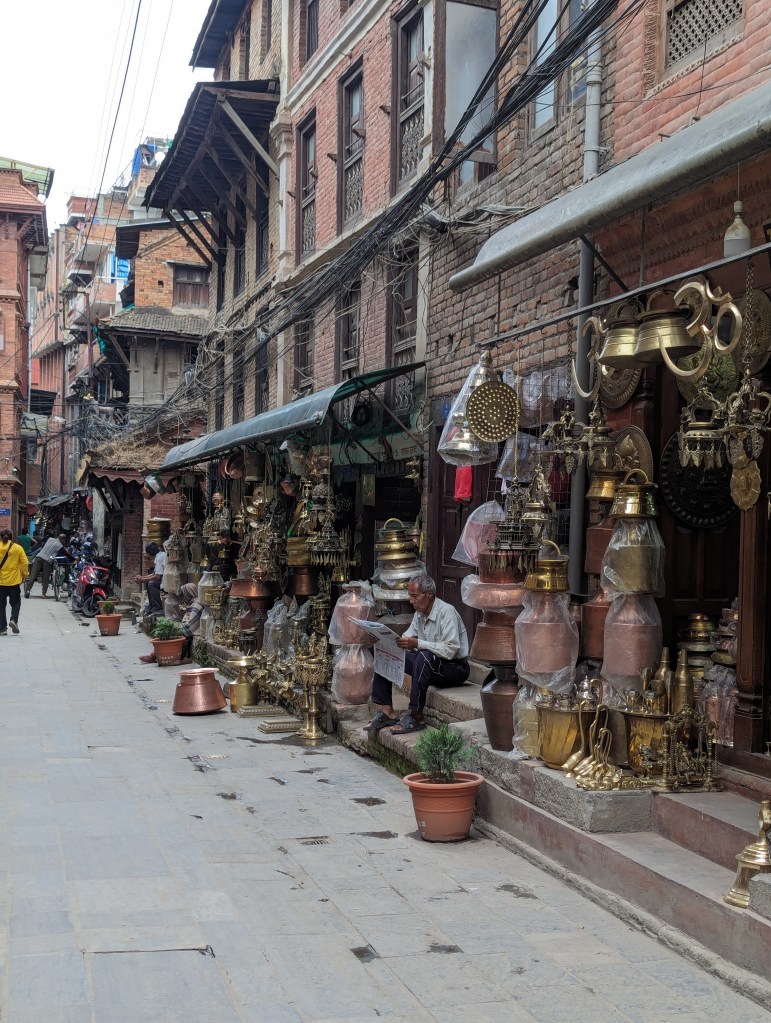
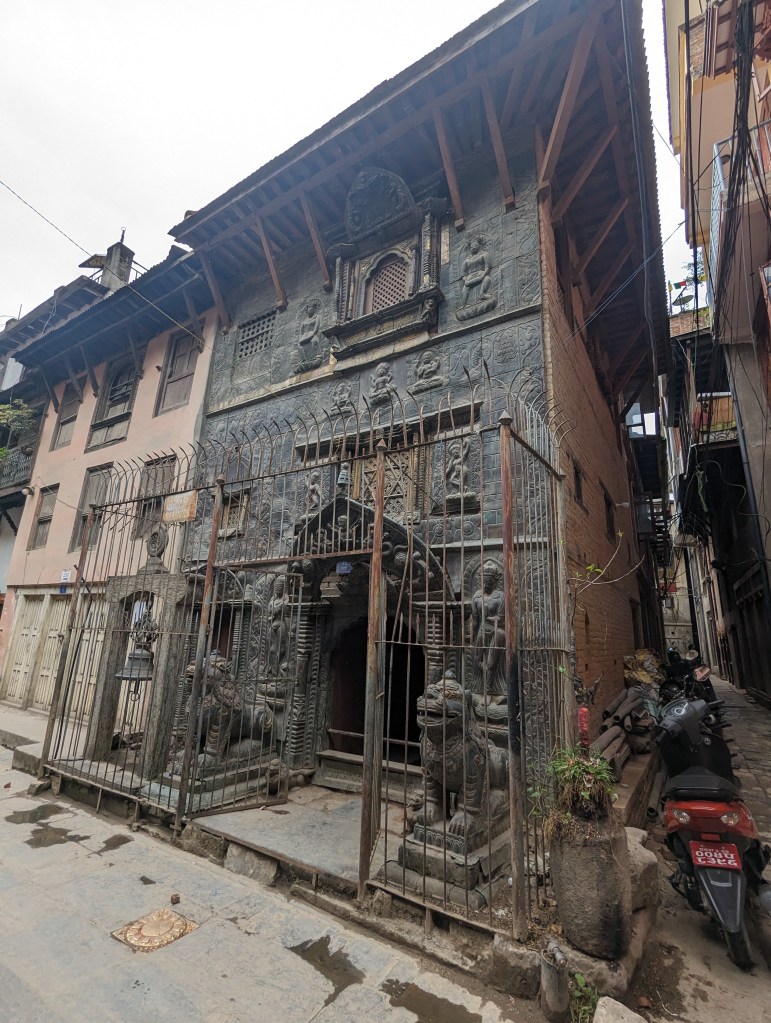
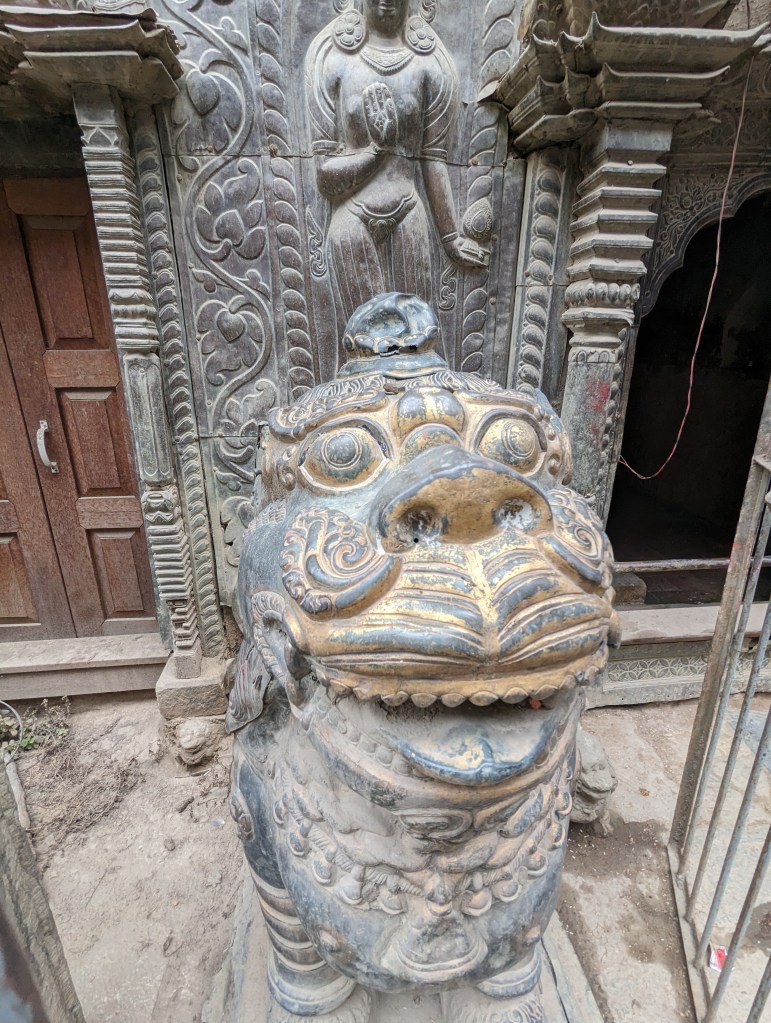
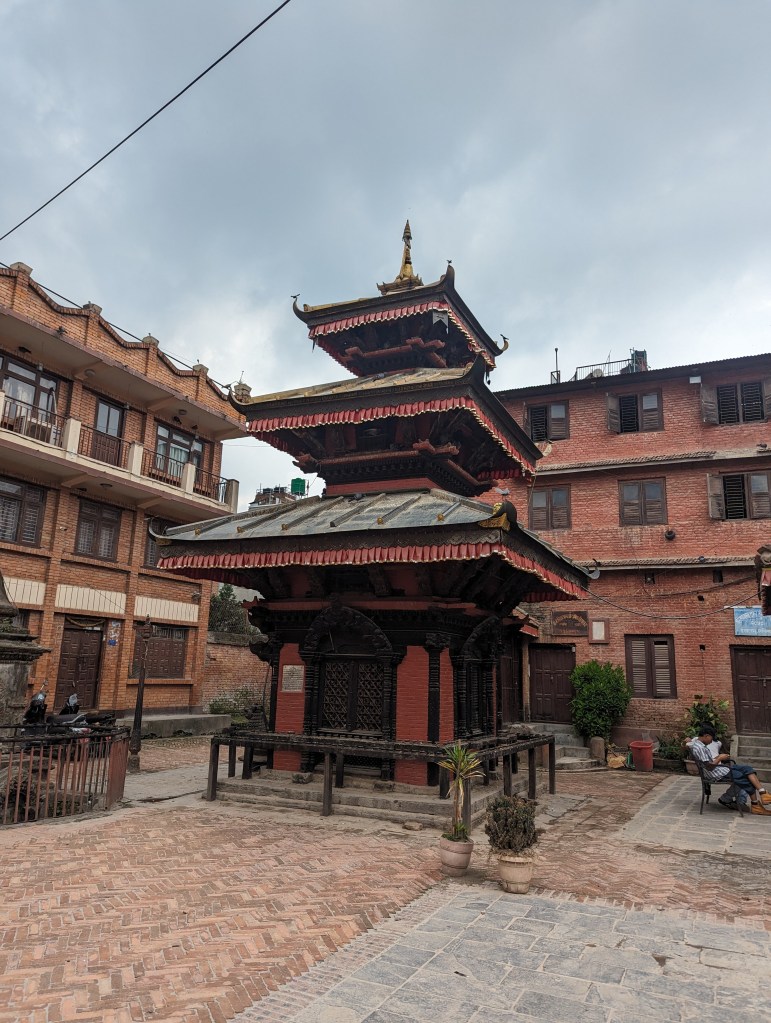
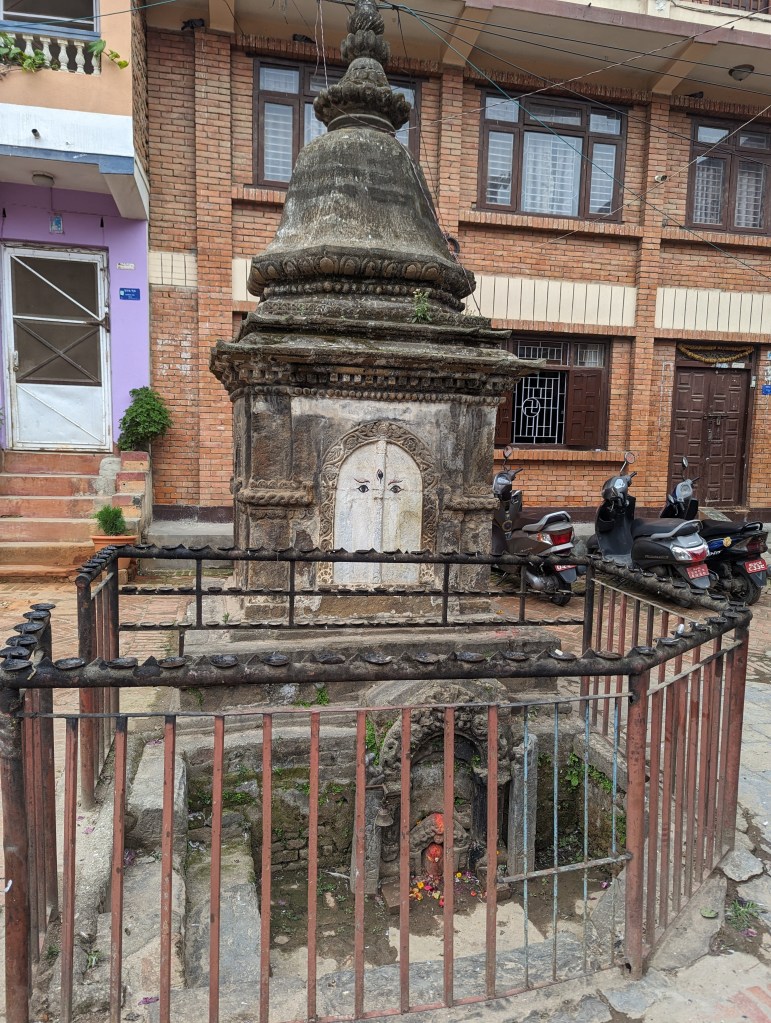

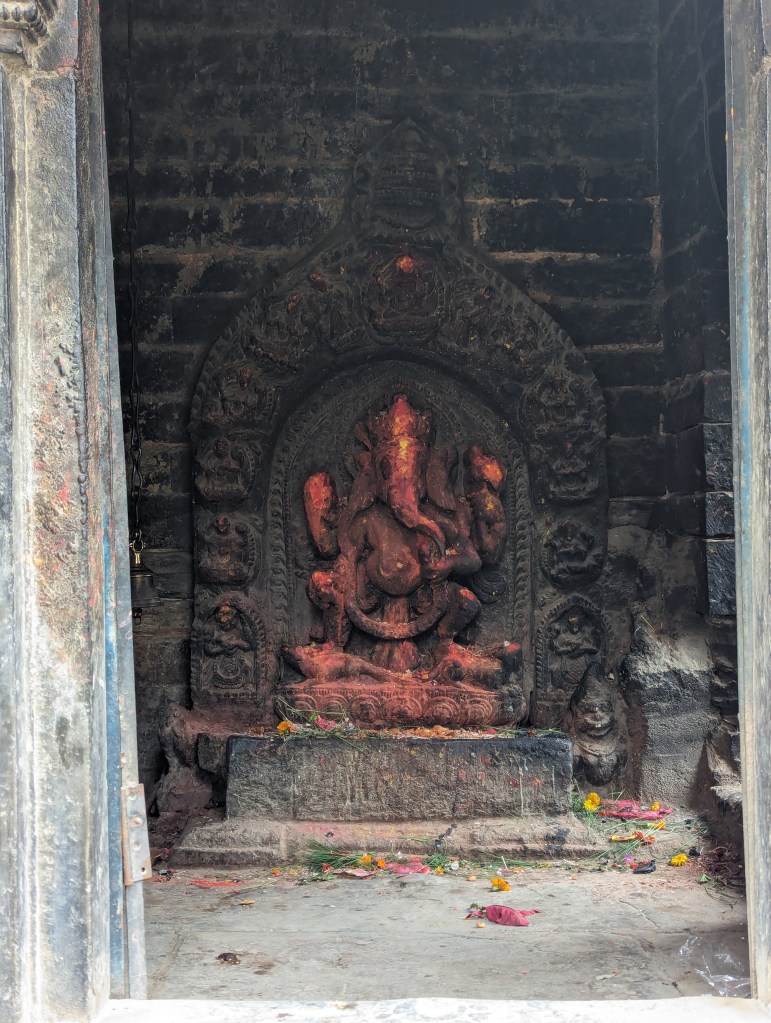
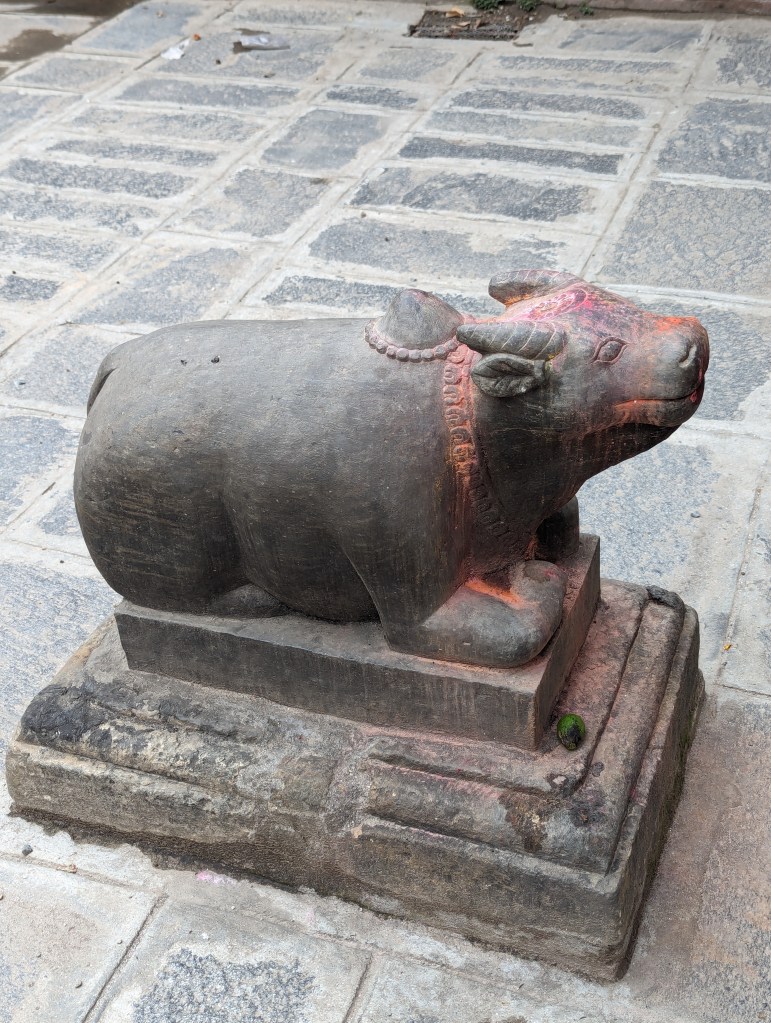


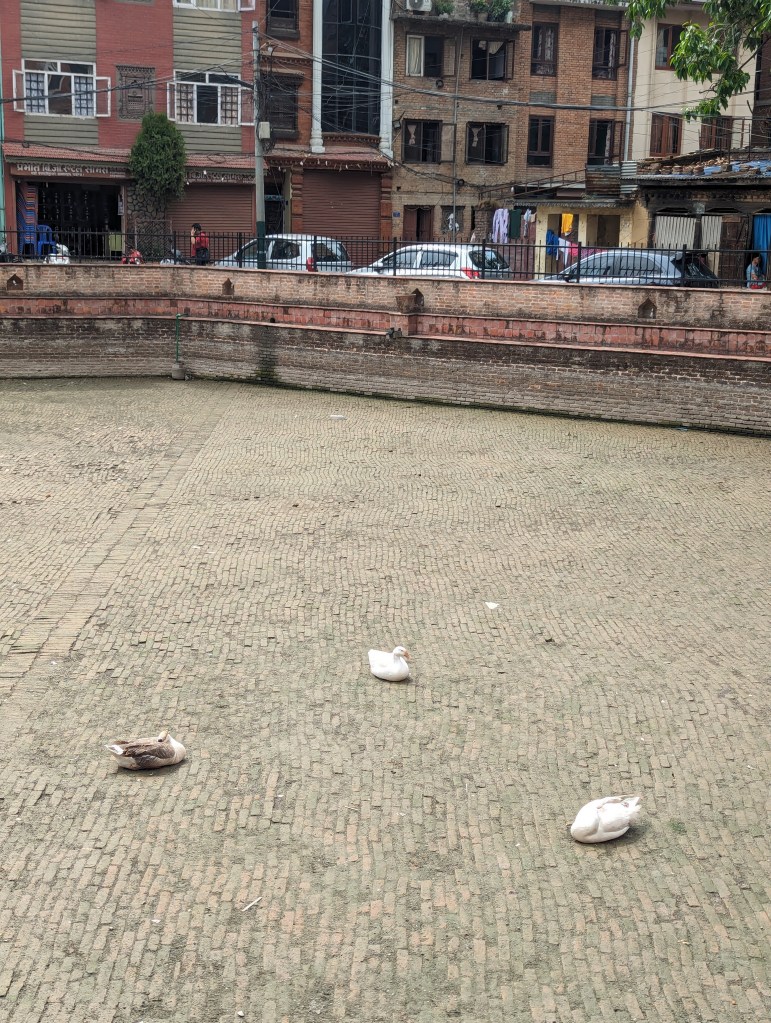
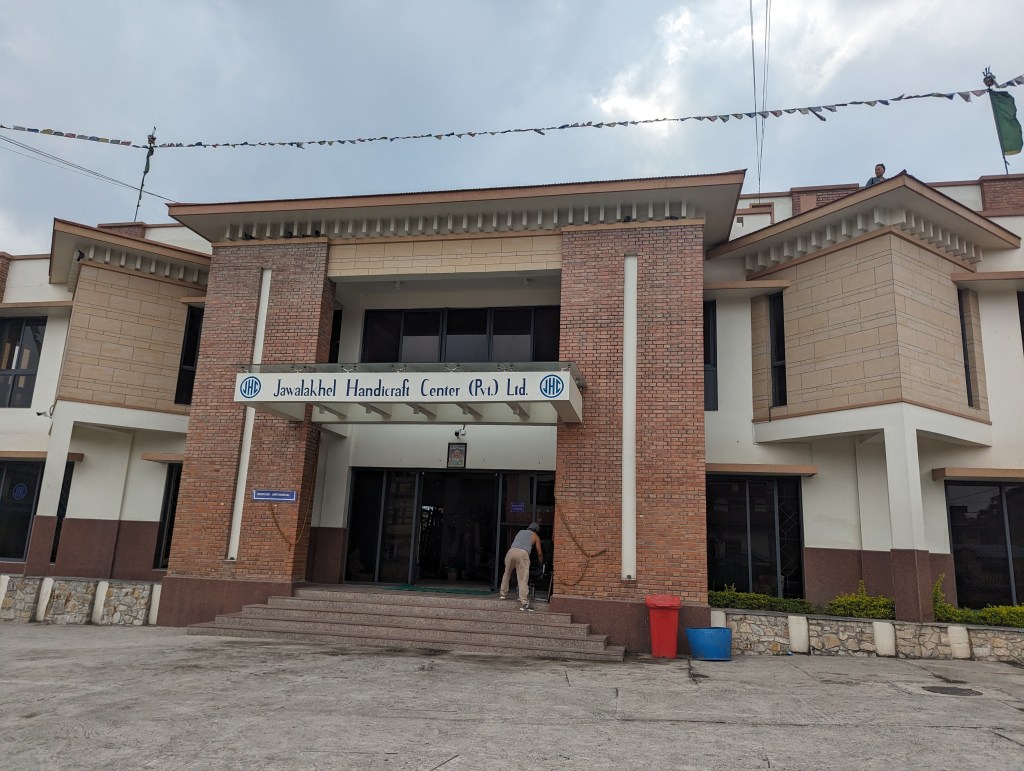
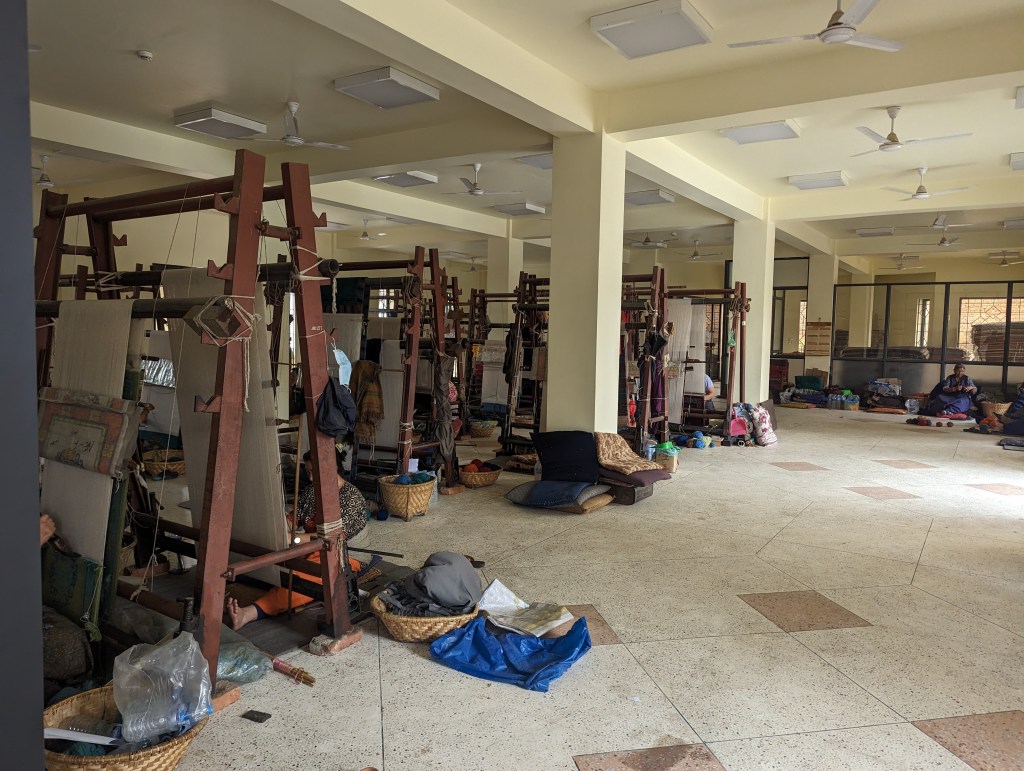
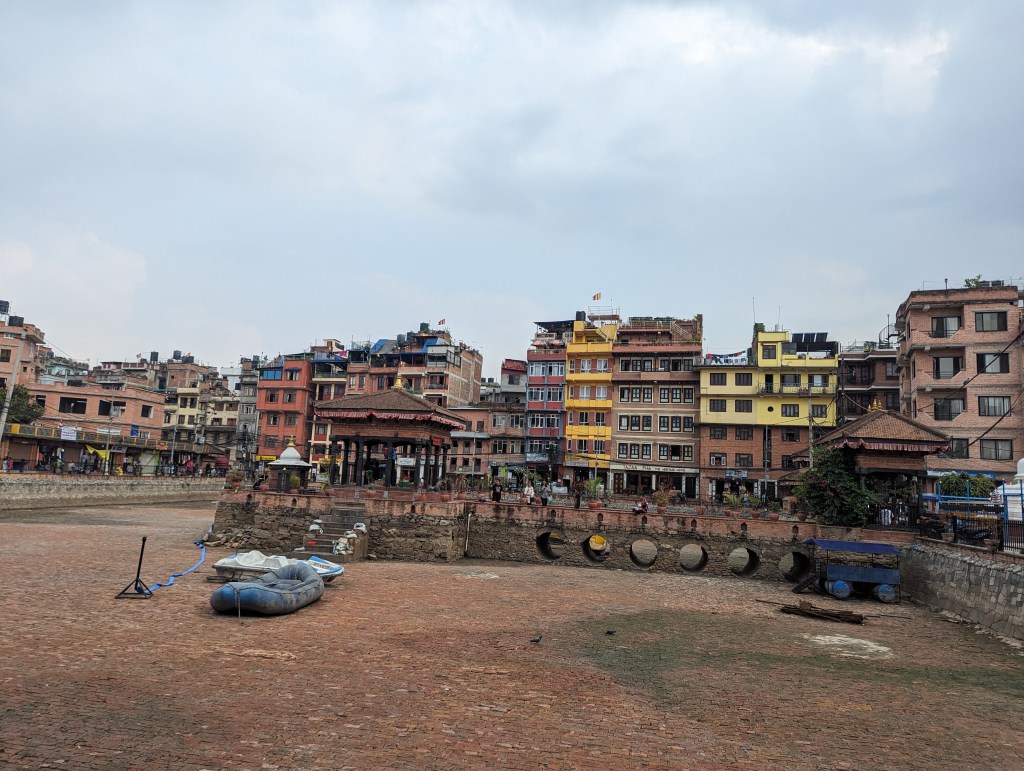
Our walk took us past one of the man-made ponds in the city which, despite the recent rains, was empty of water. A few confused looking geese still sat at the bottom looking distinctly uncomfortable and waiting for the coming monsoon. We detoured from the route at this point, and took a walk through the more residential and commercial areas of Lalitpur to reach the Jawalakhel Handicraft centre, where Tibetan rugs and other handicrafts were made by the Tibetan diaspora in Kathmandu. In the main hall, at least twenty old Tibetan women were sat on the floor in front of giant looms (though they’re probably not actually technically looms) making thick Tibetan carpets. As much as we would have liked to get one, it was unlikely we’d fit a rug in our hold luggage, so we settled for buying an ornament for our first Christmas tree, and walked back towards Patan.

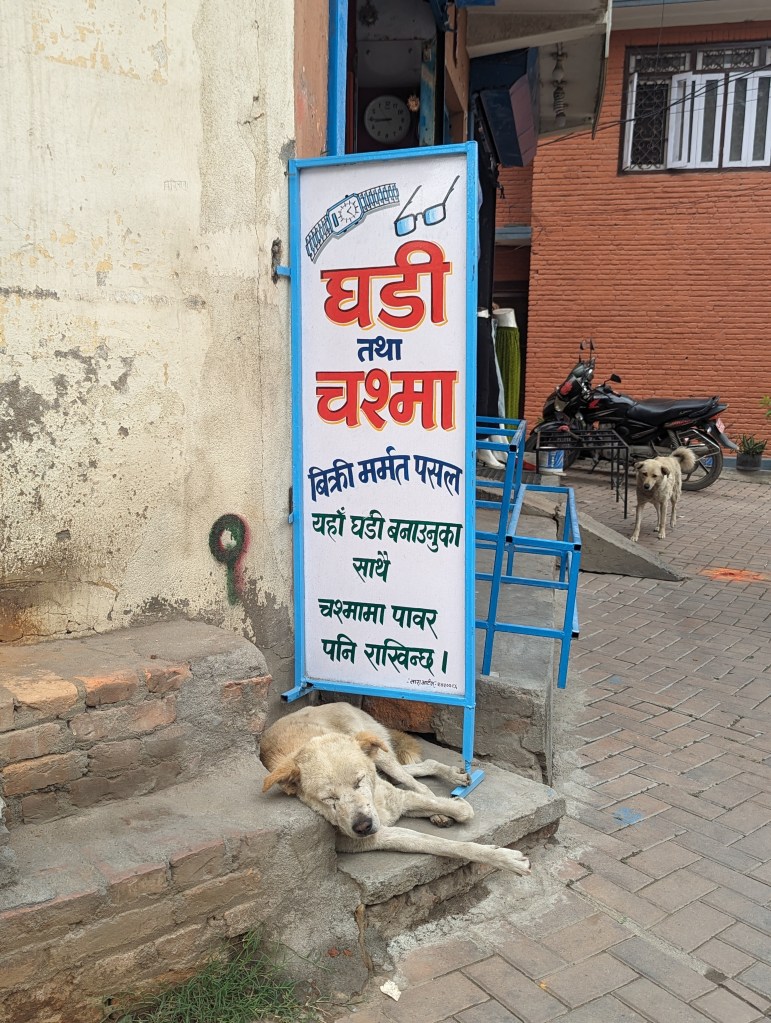
On the way, we stopped off at a more modern handicrafts shop and a salon where Ellie could get her eyebrows threaded. Normally this took all of 10 minutes, so I sat downstairs in the cafe with a coffee to wait. Unfortunately for me (Ellie, who has been recruited to write this segment) this was the first time I’d strayed from my travelling habit of checking the reviews for anywhere I go and honestly it was an error I won’t be repeating. I managed to rouse the beautician from her sleep on the sofa and she sleepily took me over to a chair which was about rocking over backwards if you leaned back on it, the position required for eyebrow threading. There was much giggling between her and her salon friend as they seemingly half asleep still knocked over several salon items on the way. The less said about the threading experience the better but I somehow emerged half an hour later with something resembling eyebrows and only a few small cuts.
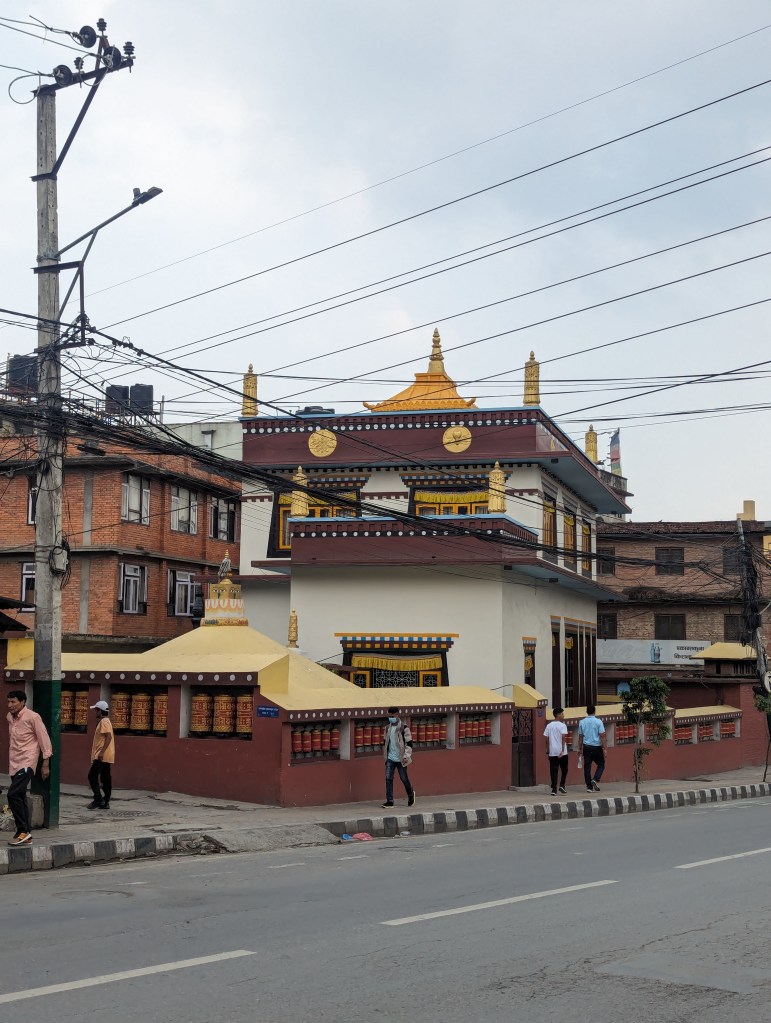
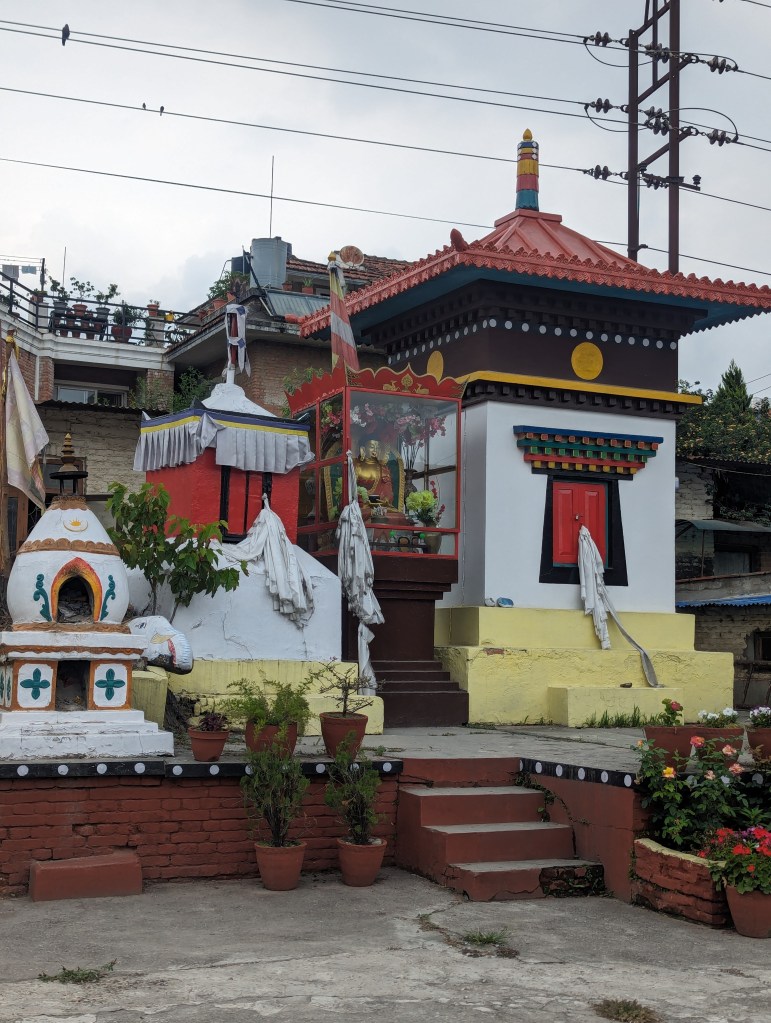
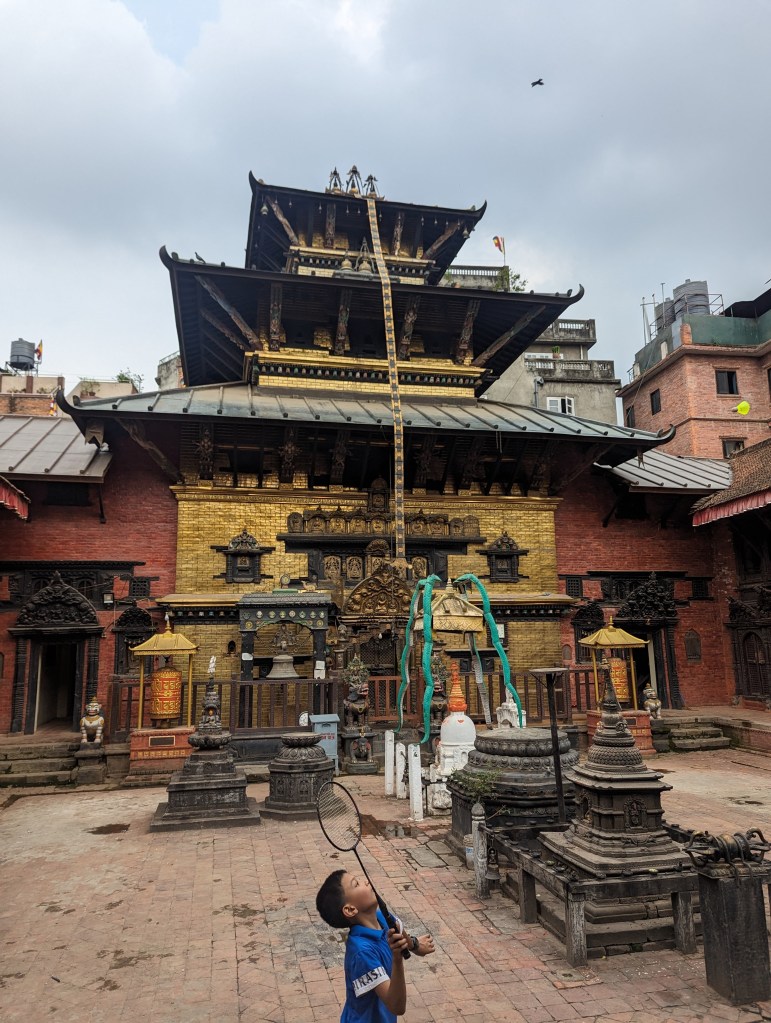
Once back in Patan we, and half of Ellie’s eyebrows, rejoined the walking route, which took us past one or two more temples. One of these was a Buddhist temple and courtyard with Buddhist statues and monuments. We stepped inside, and were greeted instantly by a number of small children who insisted we come to see the Patan Kumari. We did a quick tour of the statues and made our exit, not wanting too much more hassle. After looking it up, Kumaris are a relatively common practice in the Kathmandu valley, where a young girl of about five is selected to be the embodiment of the divine feminine energy, Durga or Shakti, and seems to have to sit all day and receive audiences of people hoping for blessings or their fortunes told by how she acts in their presence. This carried on day in day out until she started her period, then a new Kumari was found. This wasn’t something we really wanted to see, so we made off back towards the hotel.
It was getting towards the evening by the time we were back, and I had some tutoring to do. Once I’d done this, and we’d done some exercise, we hadn’t the energy to get back out (especially because all the good places to eat were at least a twenty minute walk away). We ordered some delicious shawarma wraps on Kathmandu’s Deliveroo, imaginatively called Foodmandu, and spent the rest of the evening enjoying the luxury of having a living room rather than just a bedroom.
Wednesday –
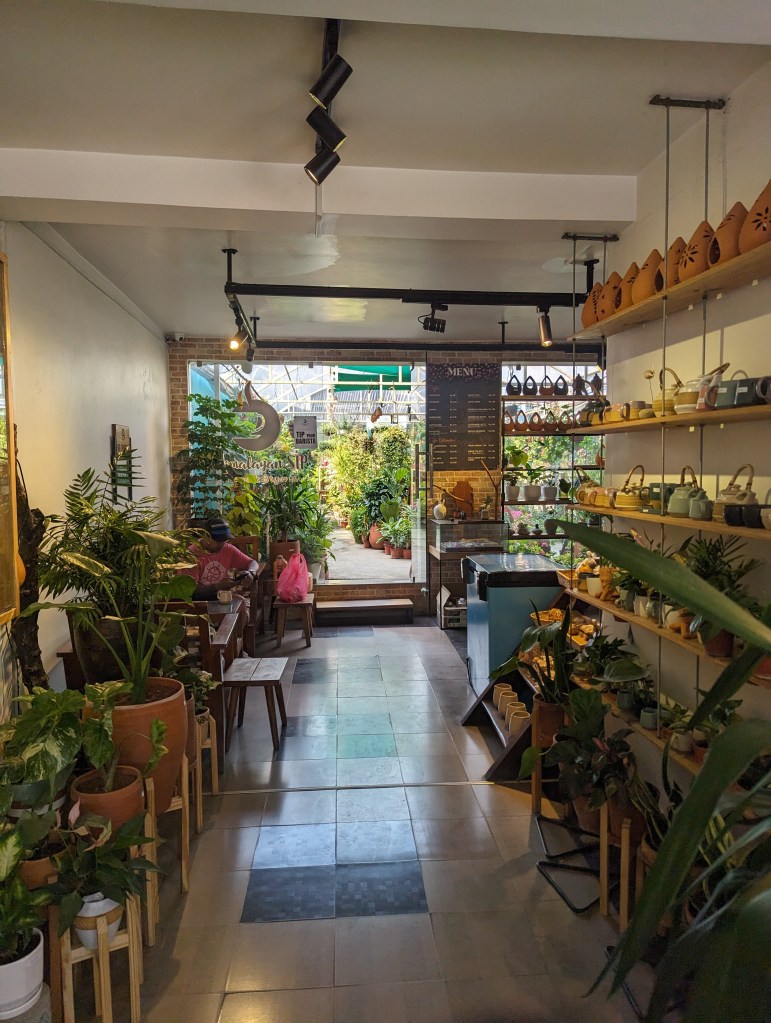
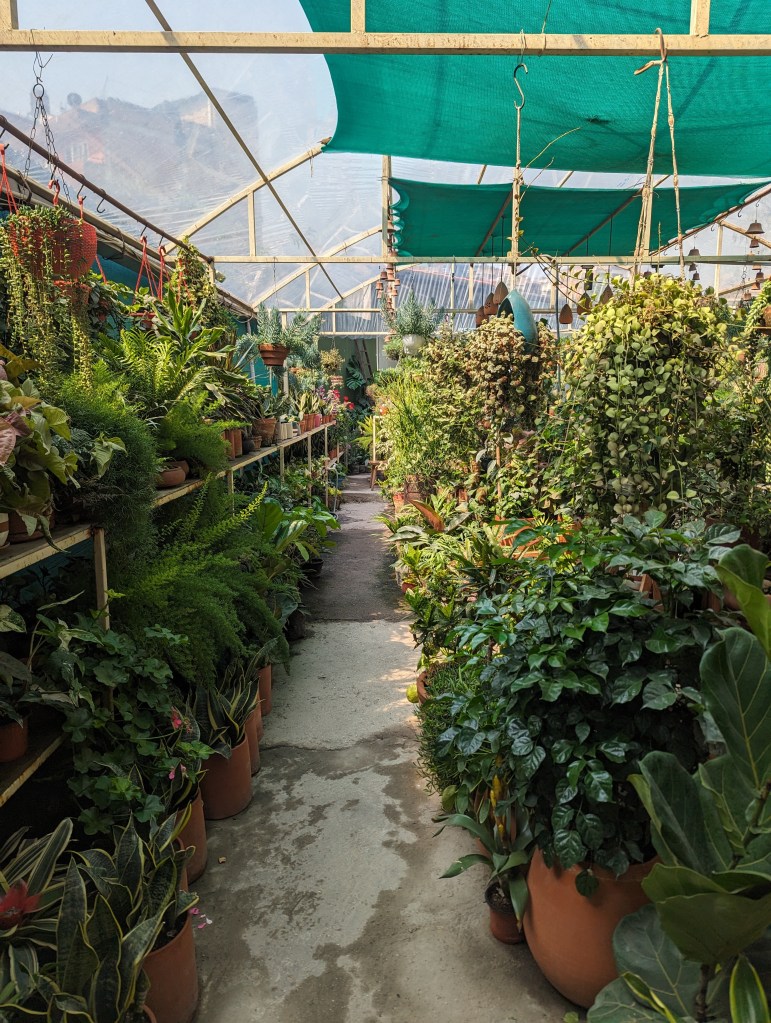
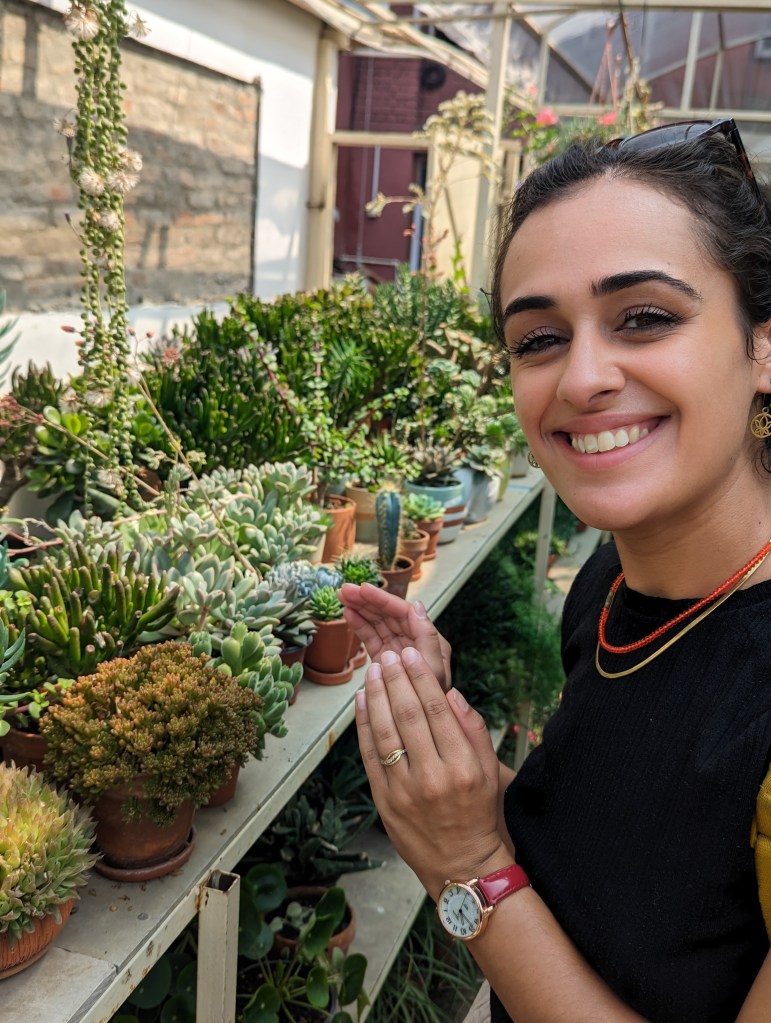
Wednesday started with another uneventful breakfast at Newa Chen. We had both made the interesting decision to order black tea, and had to ask for more tea bags as they needed the whole 3 minutes of extra brew time in order to not resemble dishwasher water. The eggy-fried-lentil-pancake local breakfast though was passable, and we headed straight out to try another local coffee place afterwards. The imaginatively named Patan SIP was a cafe/garden centre which made for a very pleasant drink quite literally in a greenhouse full of beautiful flowers and plants. Here we read up on the various temples and shrines in the main Durbar Square, which we planned to explore that morning.
After paying our entry fee to the square and donning the required embarrassingly obvious tourist permits around our necks, we set off looking around the many little temples in the centre. Most could only be viewed from the outside – including templates dedicated to Shiva, Vishnu and Krisha with their respective mounts (animals who loyally carry each God) waiting outside. We were notably allowed to enter a temple in which an idol of the ‘muscleman’ God depicted as sitting on an enemy which was somewhat entertaining, unfortunately we weren’t allowed to take any snaps of him. Some of the temples in the area were still in the process of being rebuilt after the 2015 earthquake, which practically flattened the entire square.
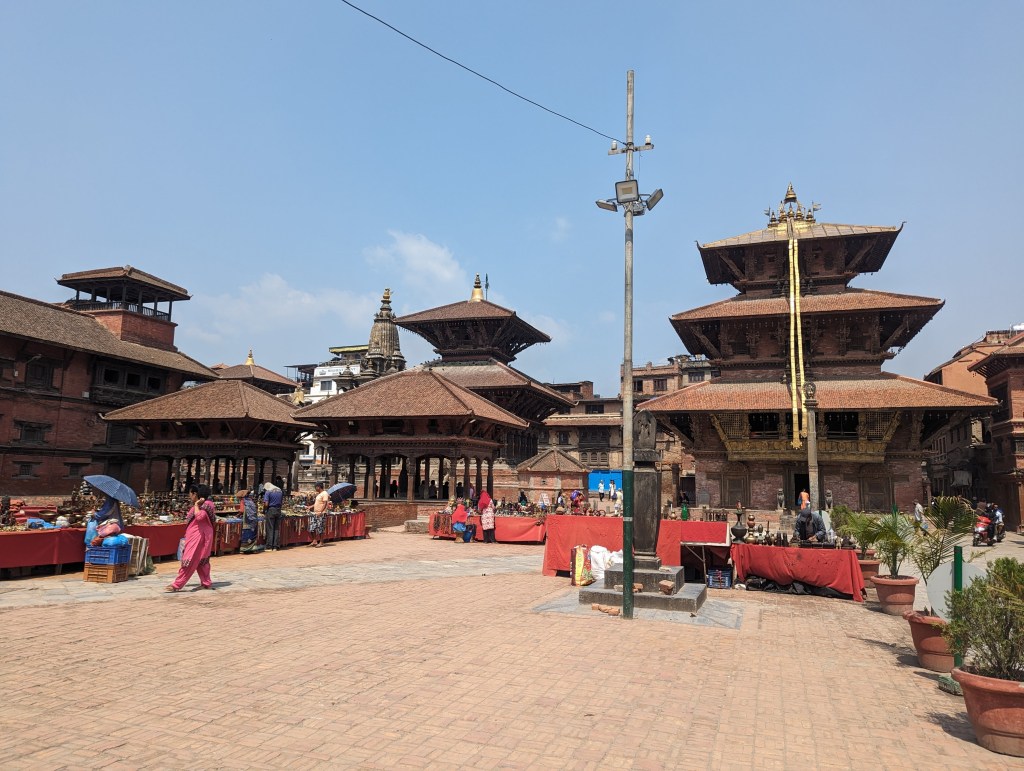

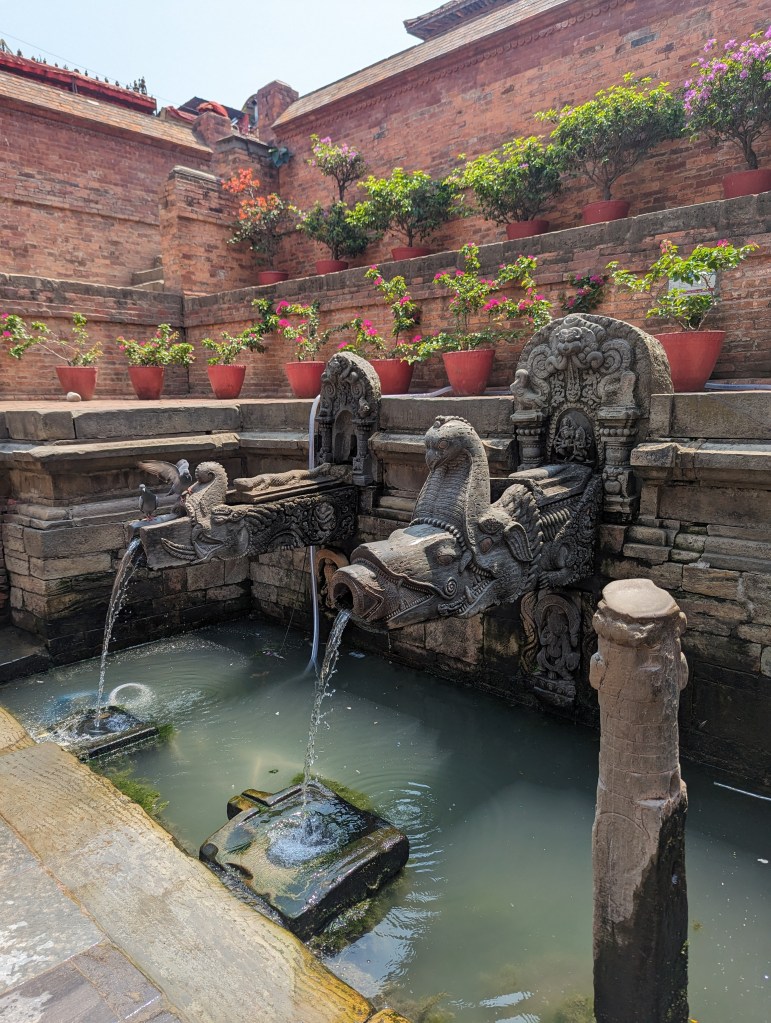


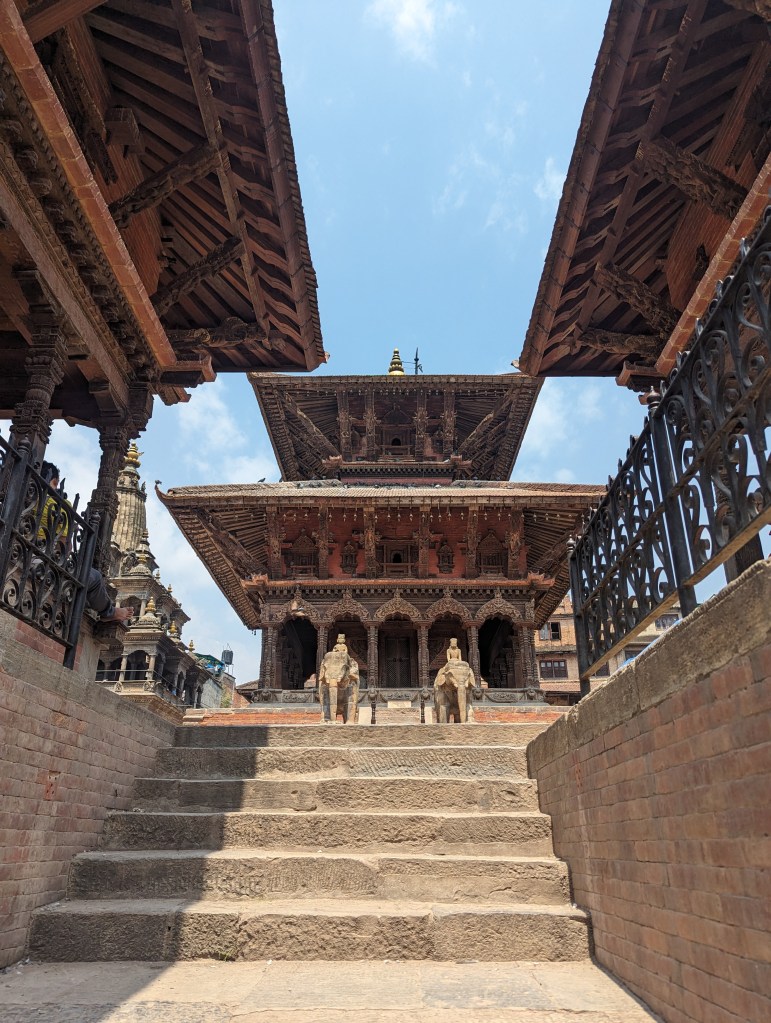
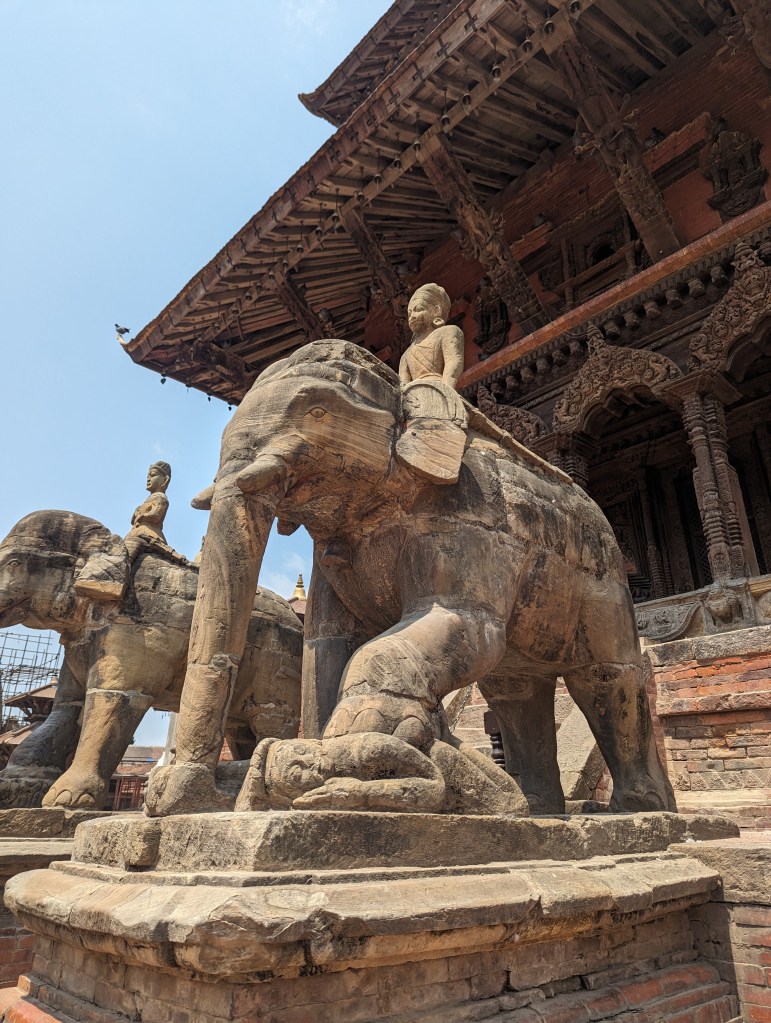
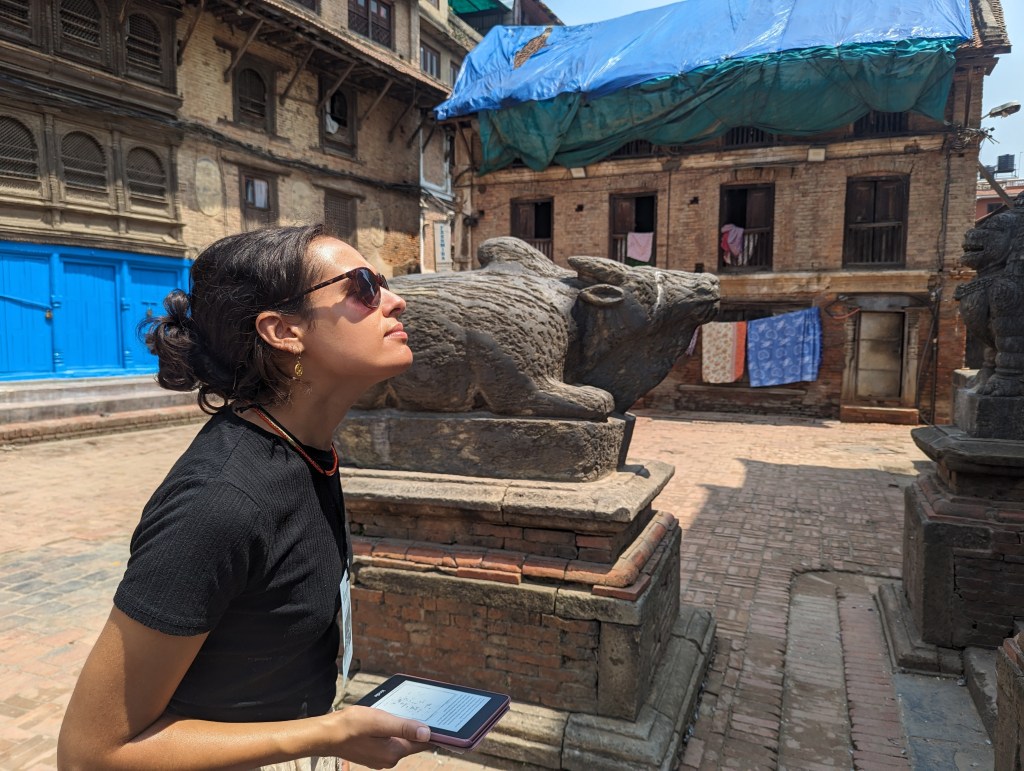
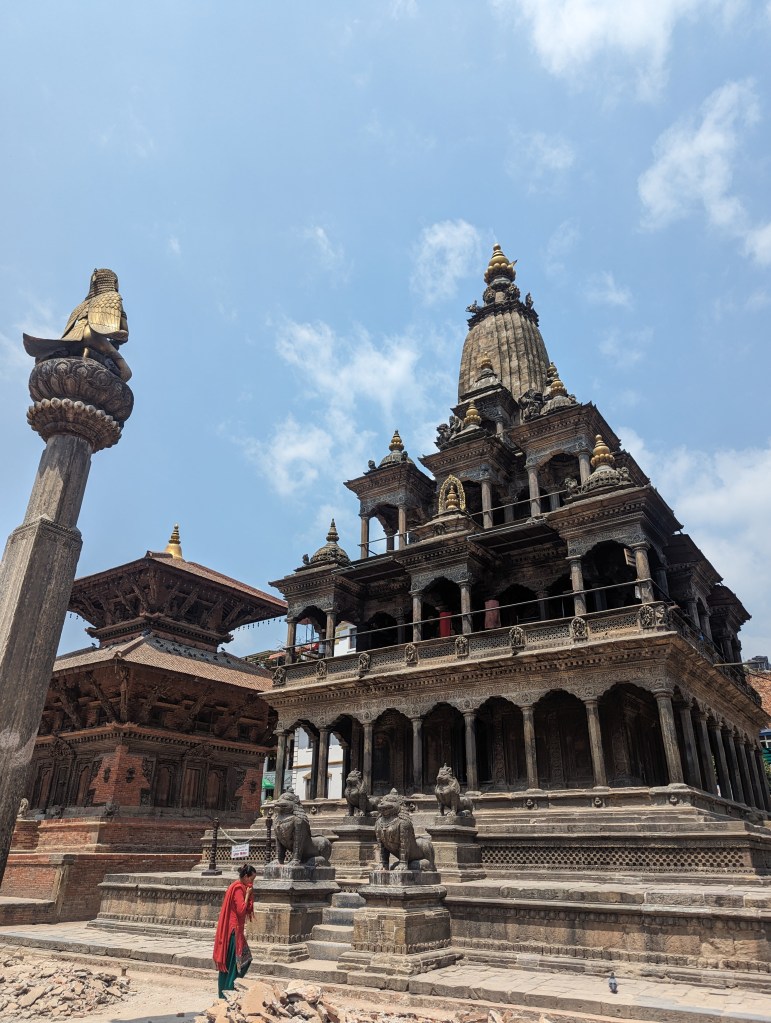

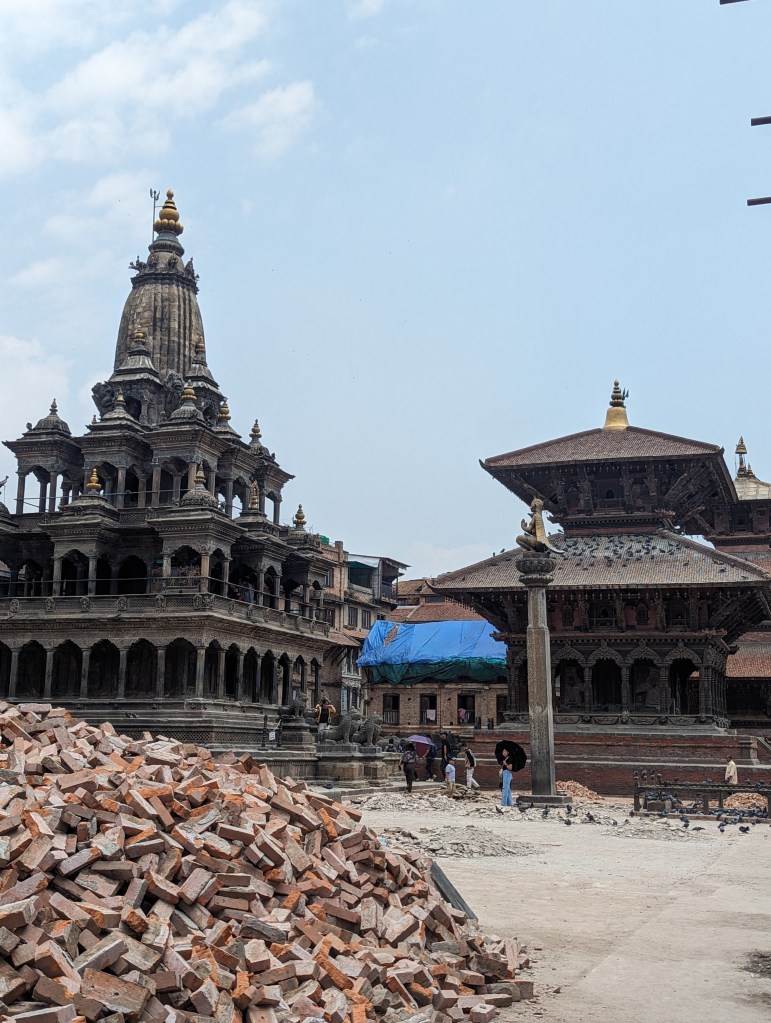
Several statues, courtyards, piles of bricks, and a bubble tea so sweet it made Rob nauseous later we made our way into the Patan museum which was probably the best museum we’ve been to all trip. To be honest the bar has been low with many museums lacking any curation or explanation at all, with random sign-less objects strewn throughout, but this one would have been at home in London. It mainly contained icons of Hindu and Buddhist deities, but they were arranged into displays discussing how each could be identified – for example a section on identifying by posture, another on by object held, or on hand position (mudra). It also had a thoughtful section on Tantric worship practices and iconography, and how these are often misinterpreted.
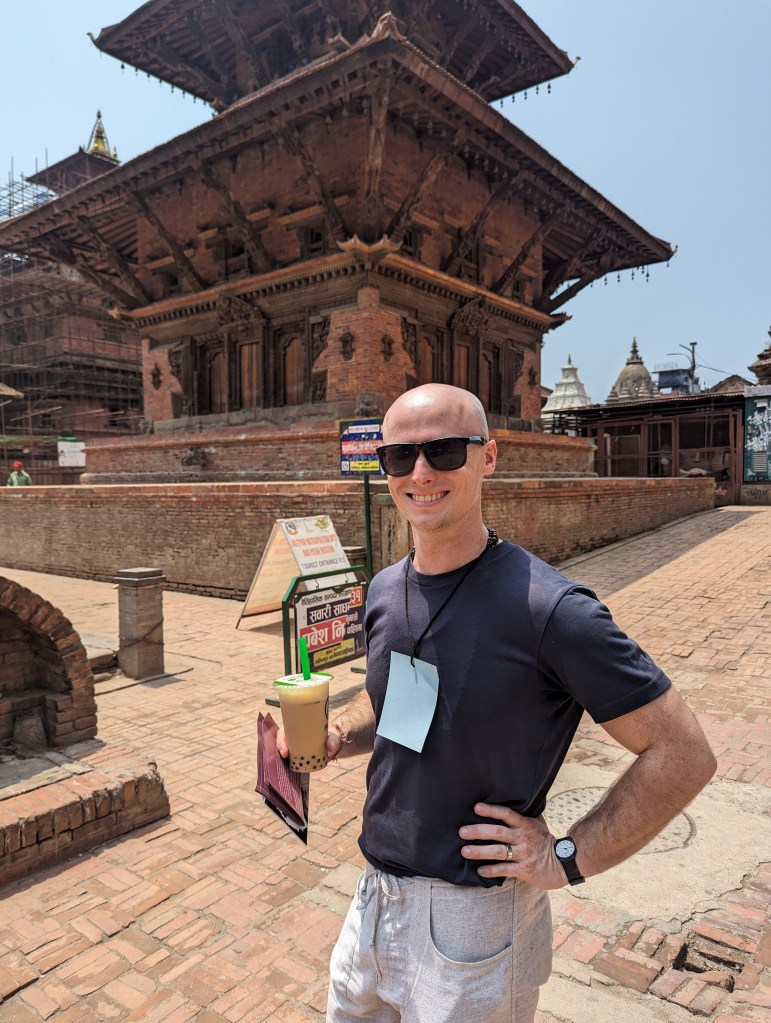
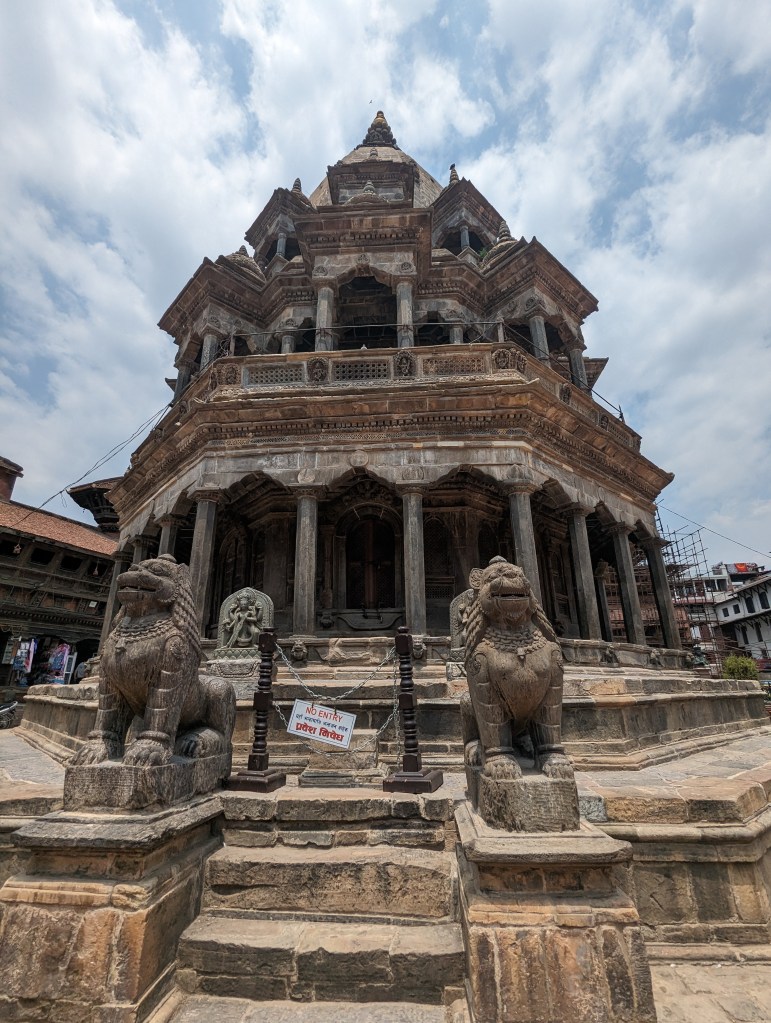
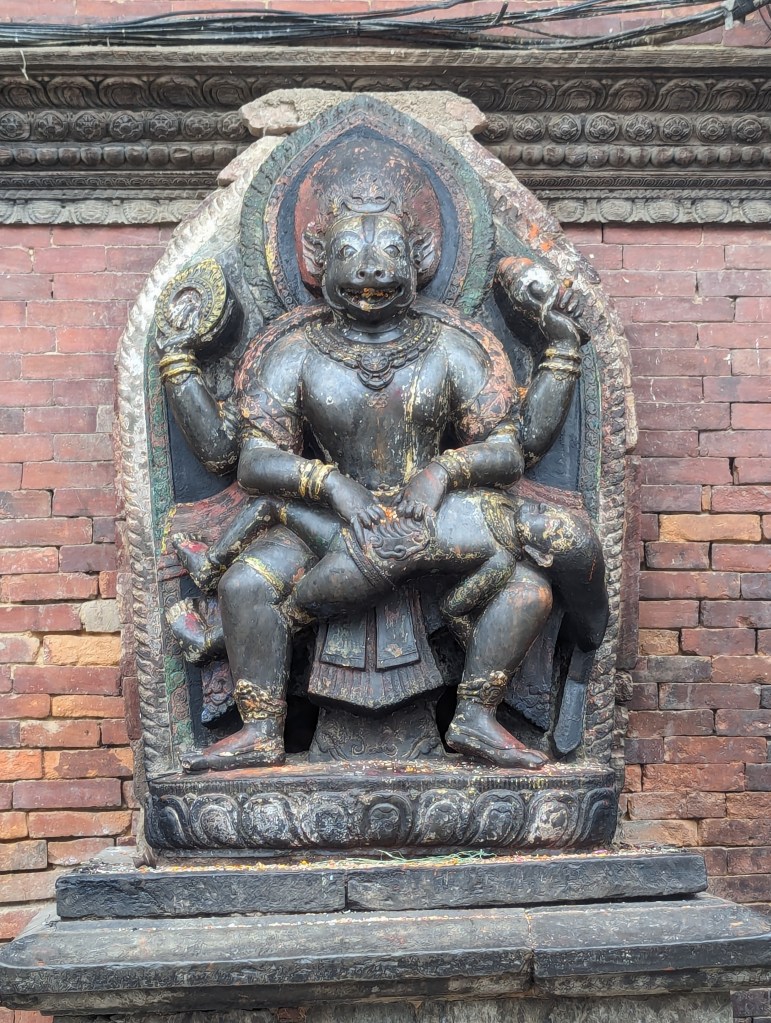
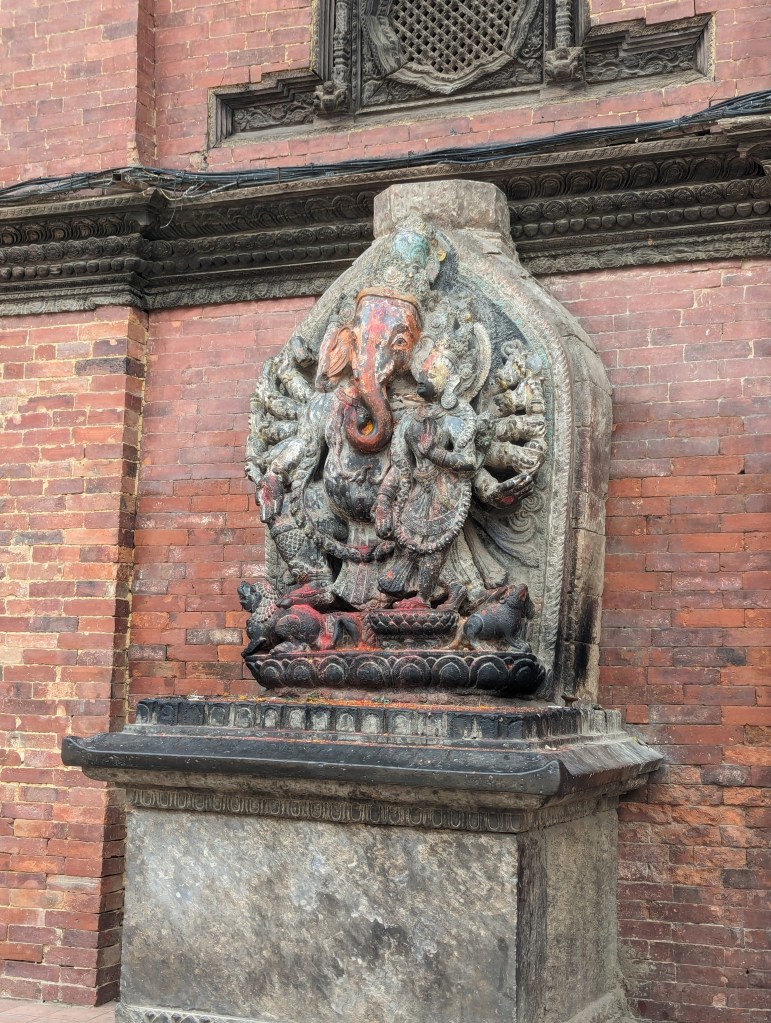
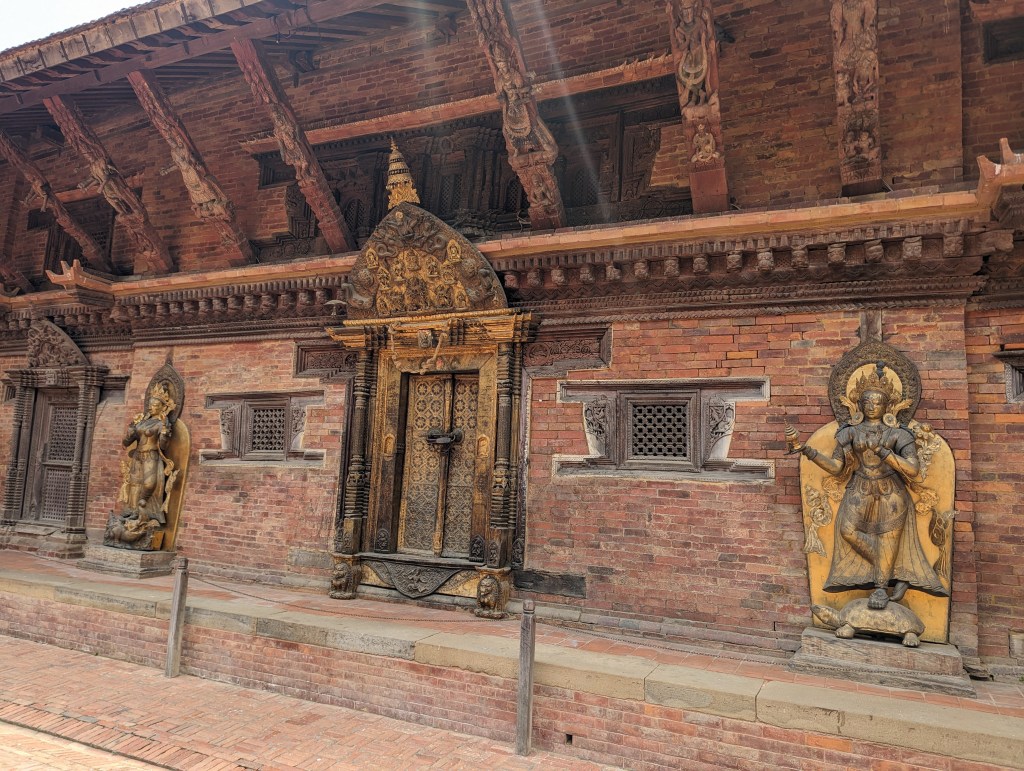
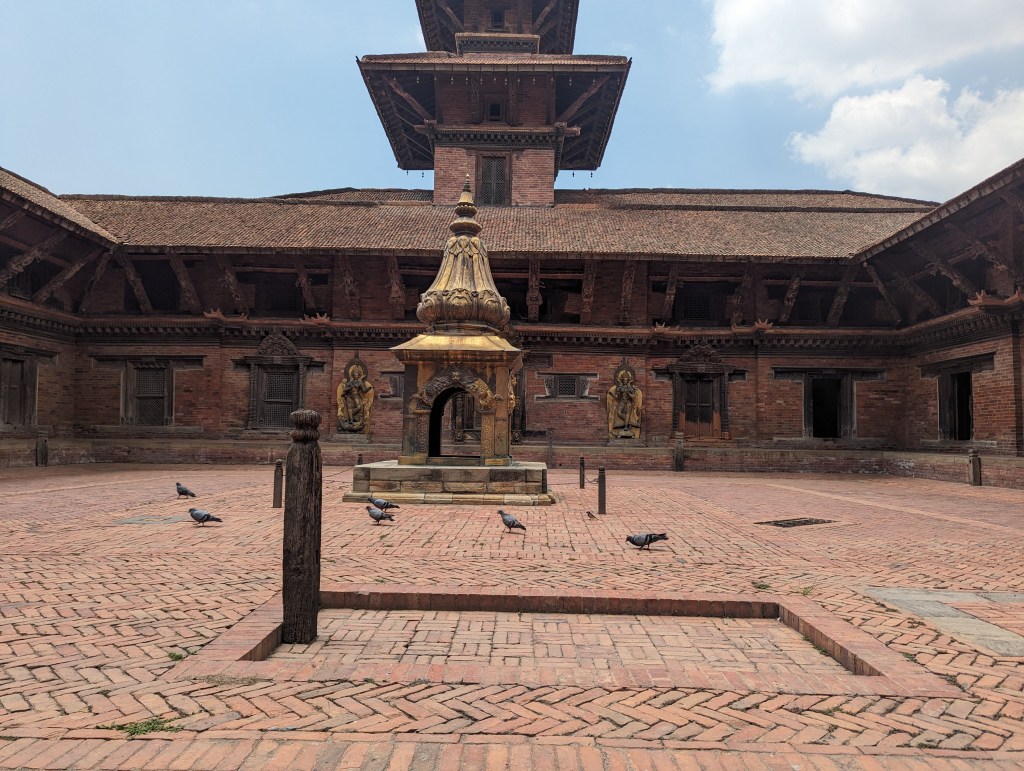
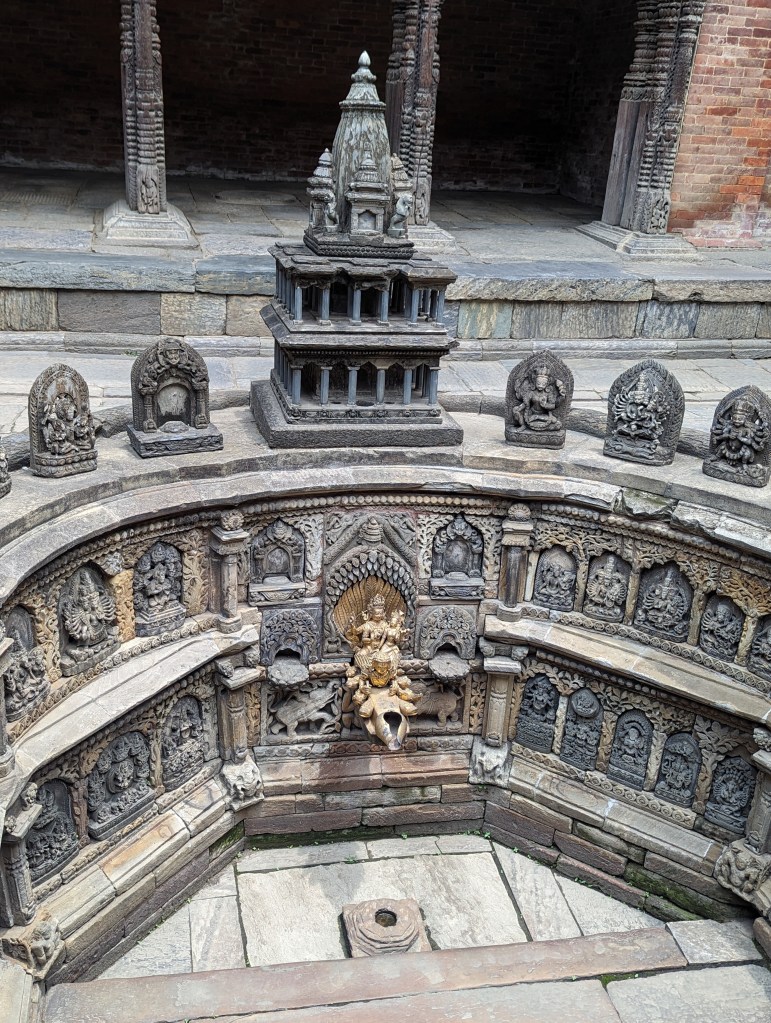
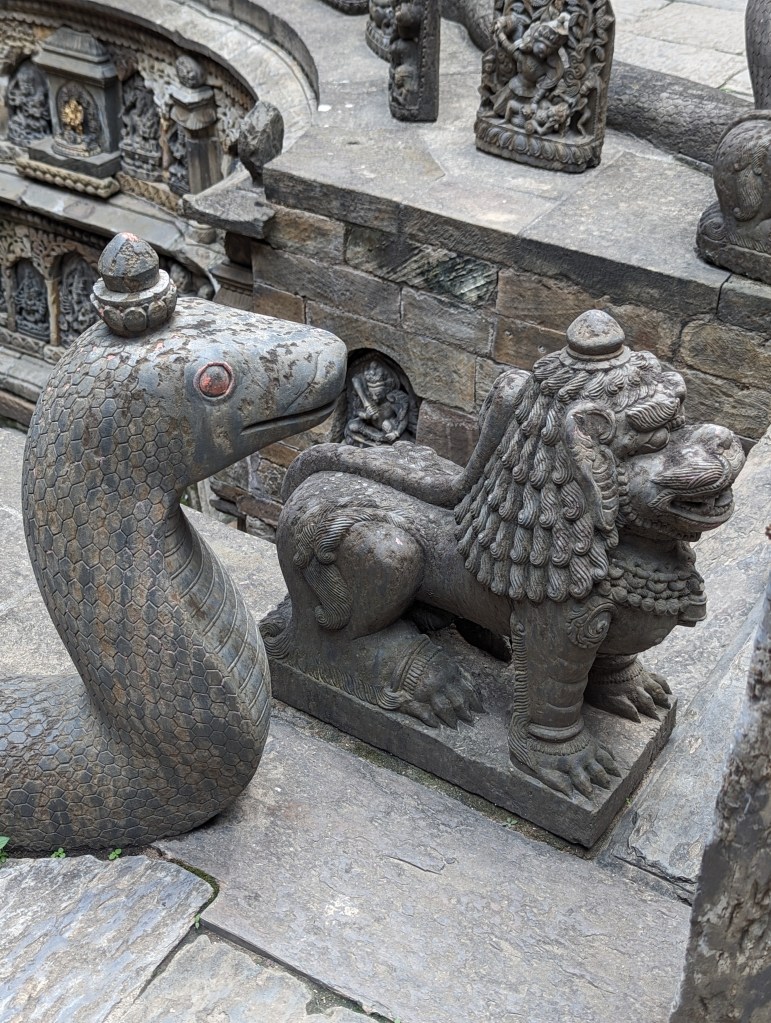

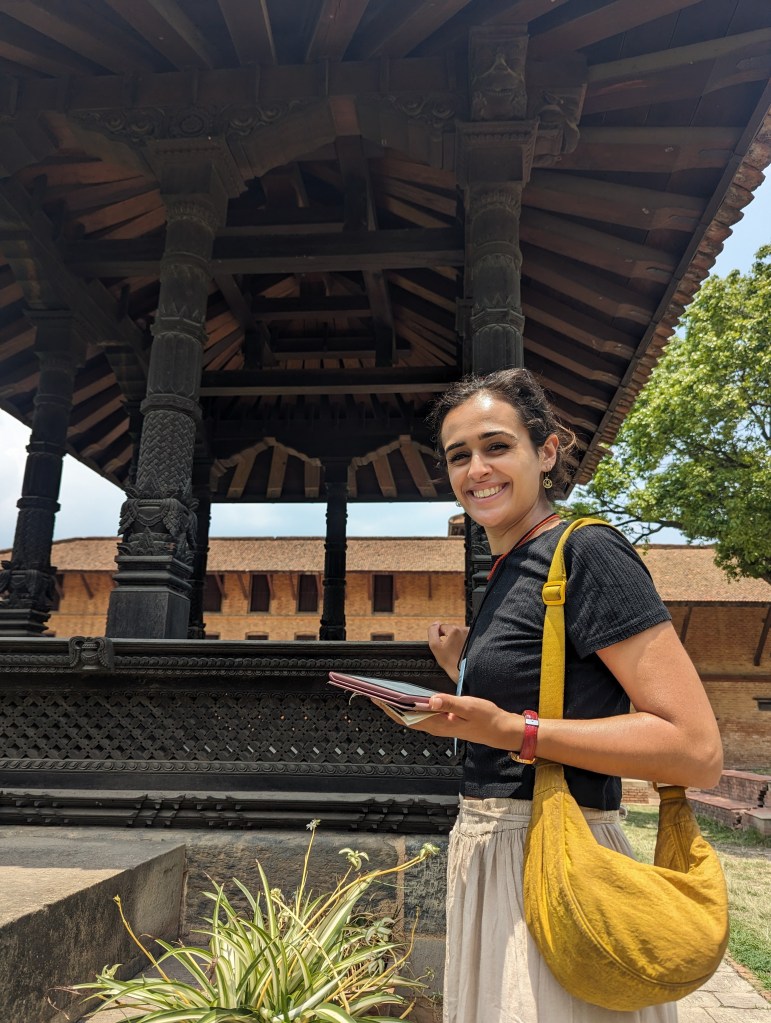
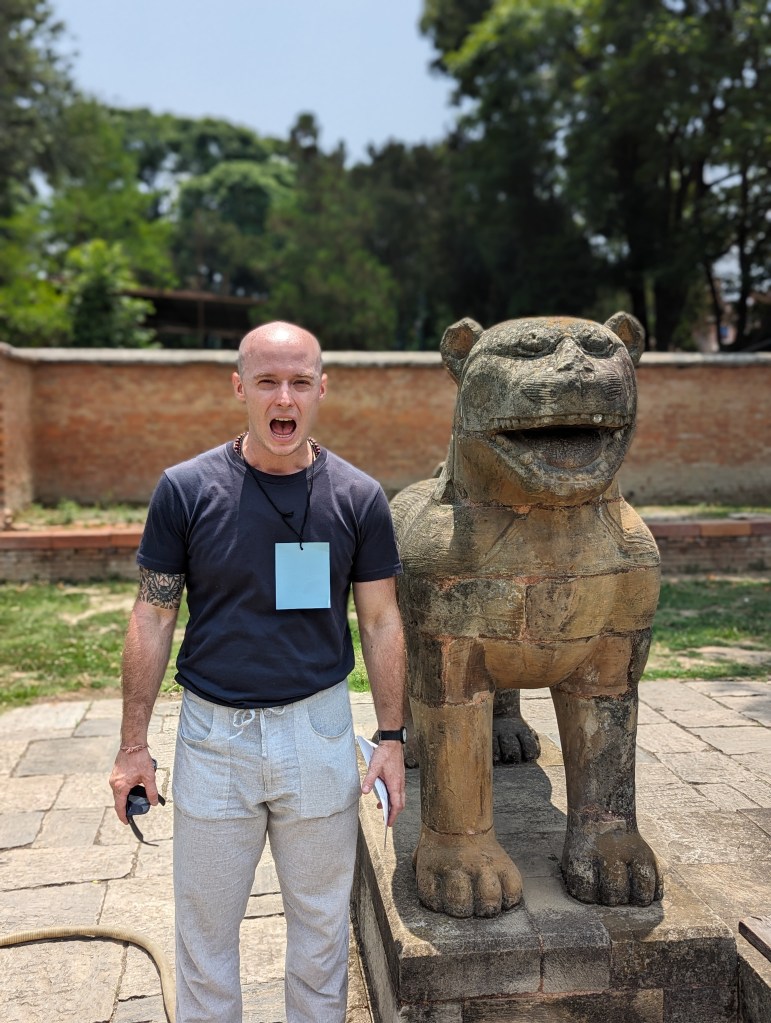
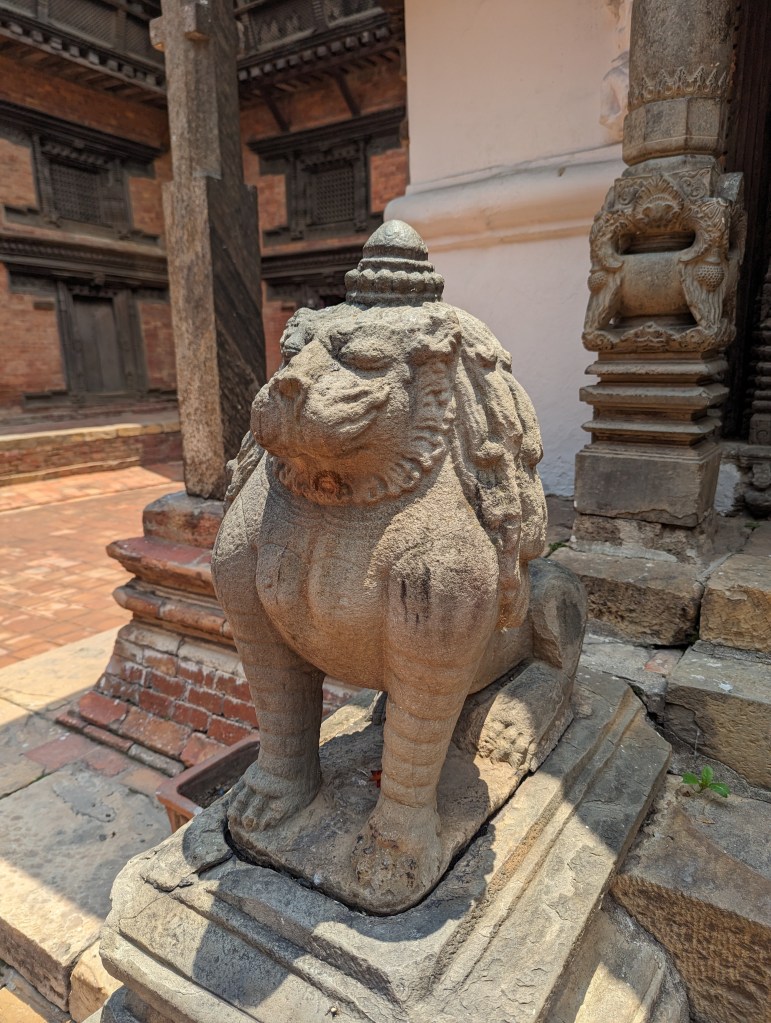
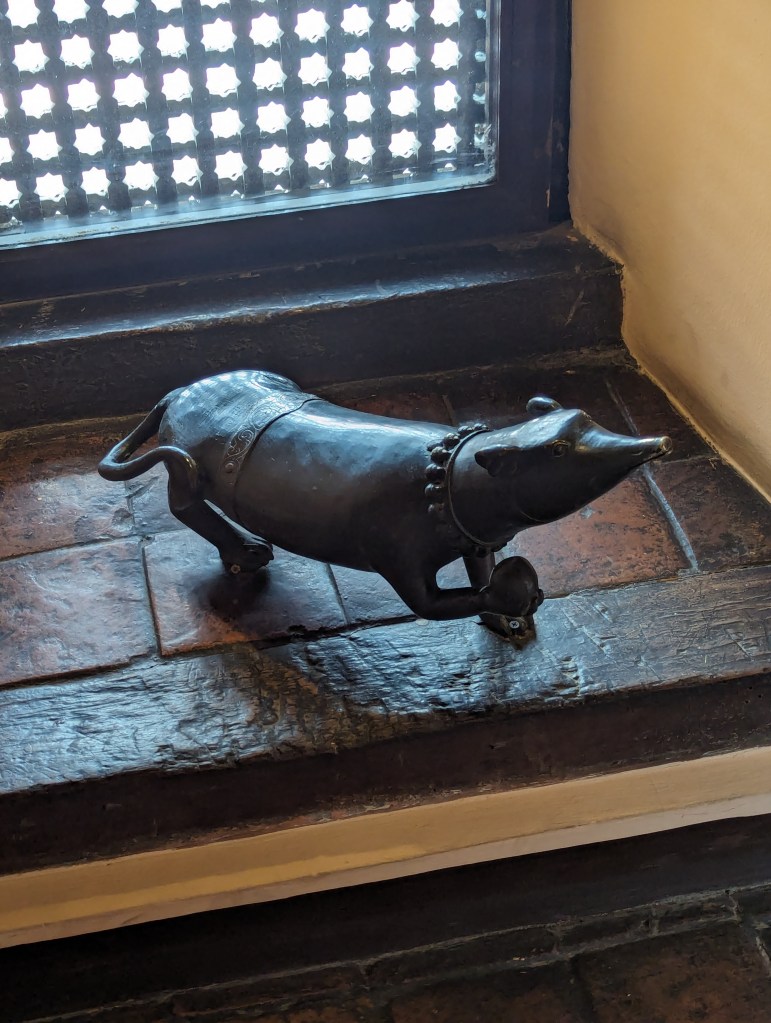
We grabbed some lunch in the deserted but pleasant museum cafe – a Kathi roll (of the delicious ‘hot kathi rolls;’ street vendor in Kolkata) which was about 10x more spicy than the street side Indian ones we’d sampled. We’ve maybe been slow to learn that the Newaris seriously love their spice.
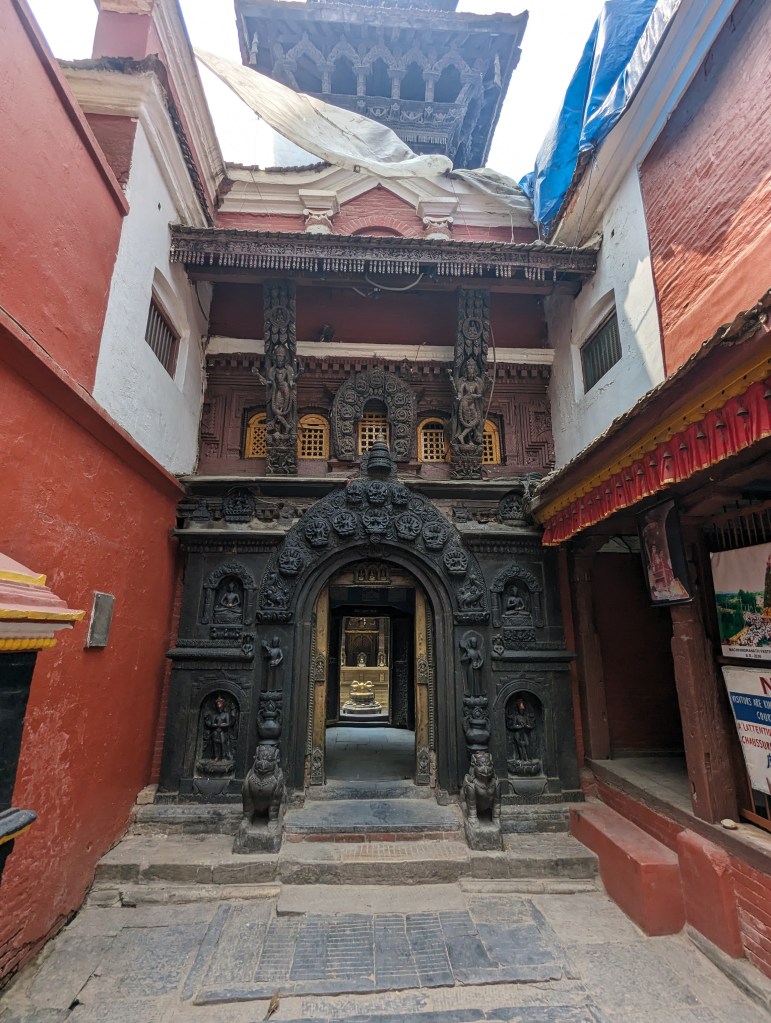
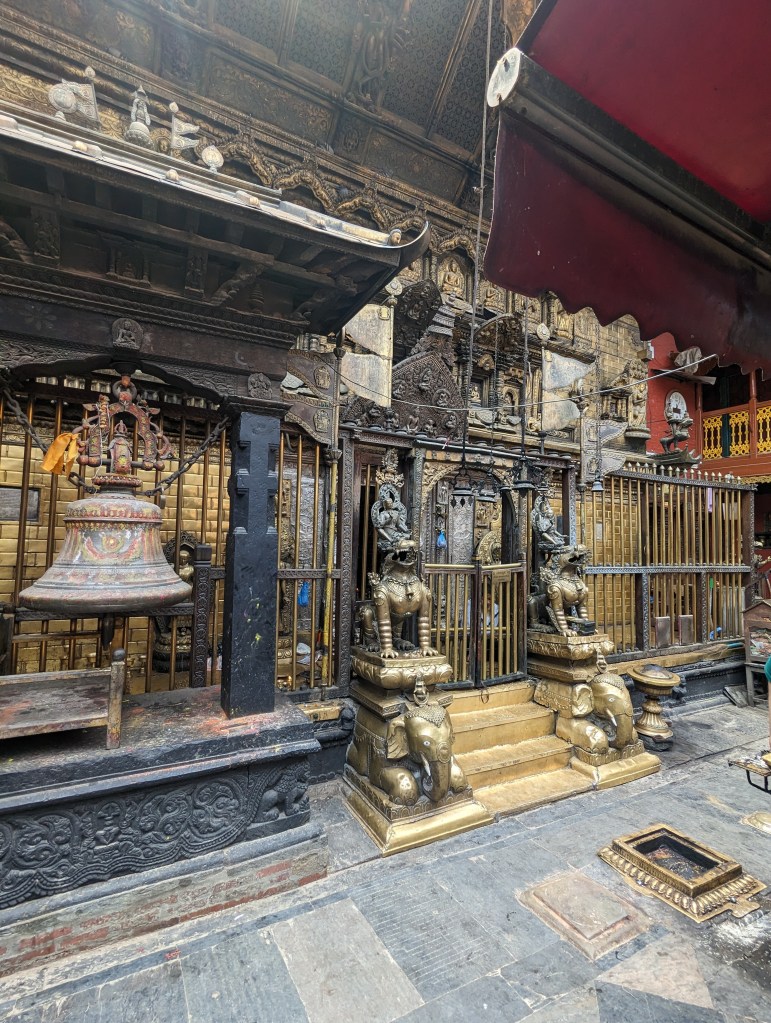
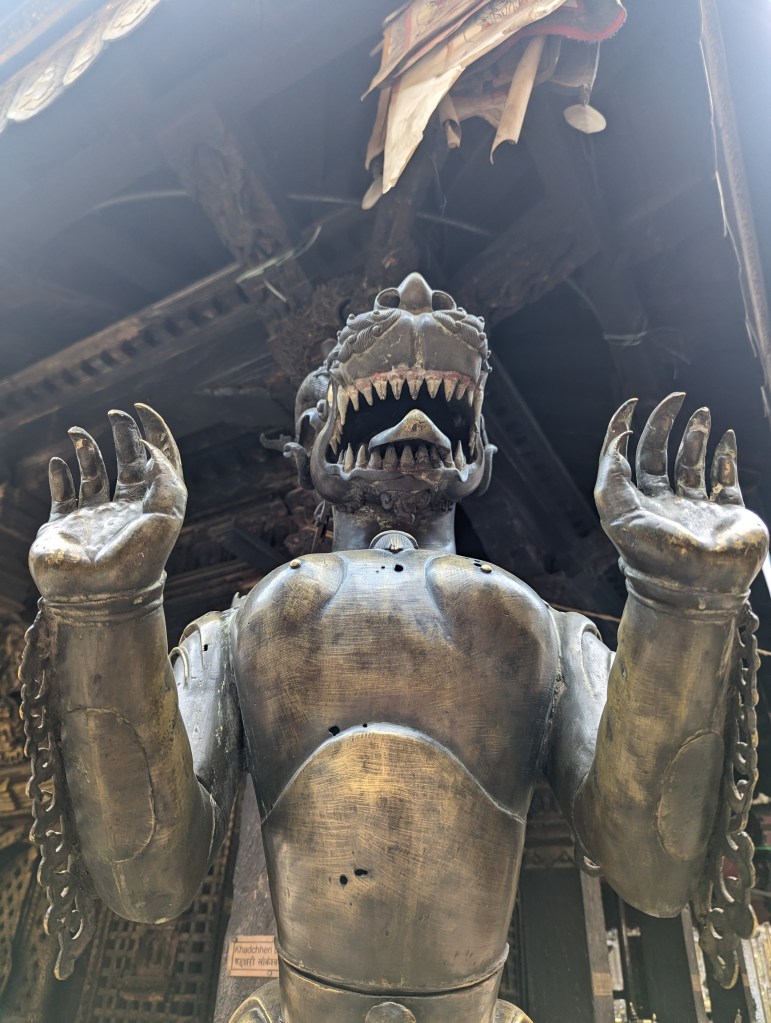
Several bottles of mineral water later we set off round the corner to see a famous Buddhist monastery called the Golden Temple. It was pretty ornate, but didn’t feel like the most peaceful/sacred place in the world. We were approached several times as we wandered around the various shrines to Buddhist deities by people with offers such as “total healing free for 1 minute”. It didn’t take us long to circuit the temple and we then headed off home for some tutoring for Rob and kindle-reading for me.

We’d booked a yoga class for the early evening about half an hour’s walk outside the centre. As is so often the case, it turned out to be just Rob and I there, but the class had beautiful expensive-feeling yoga mats and the instructor was young and kind. He took us through a relatively challenging class which we both enjoyed and was very keen we come back for more, which we may well. It turns out yoga is considerably more fun when you’re a bit less bad at it.
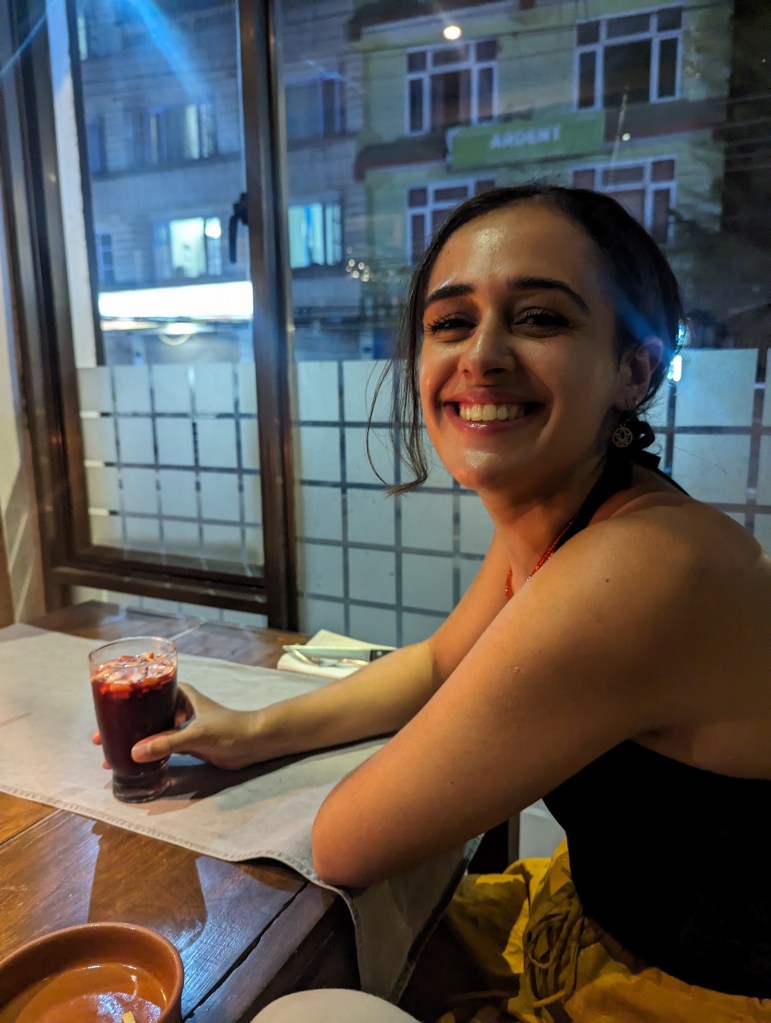
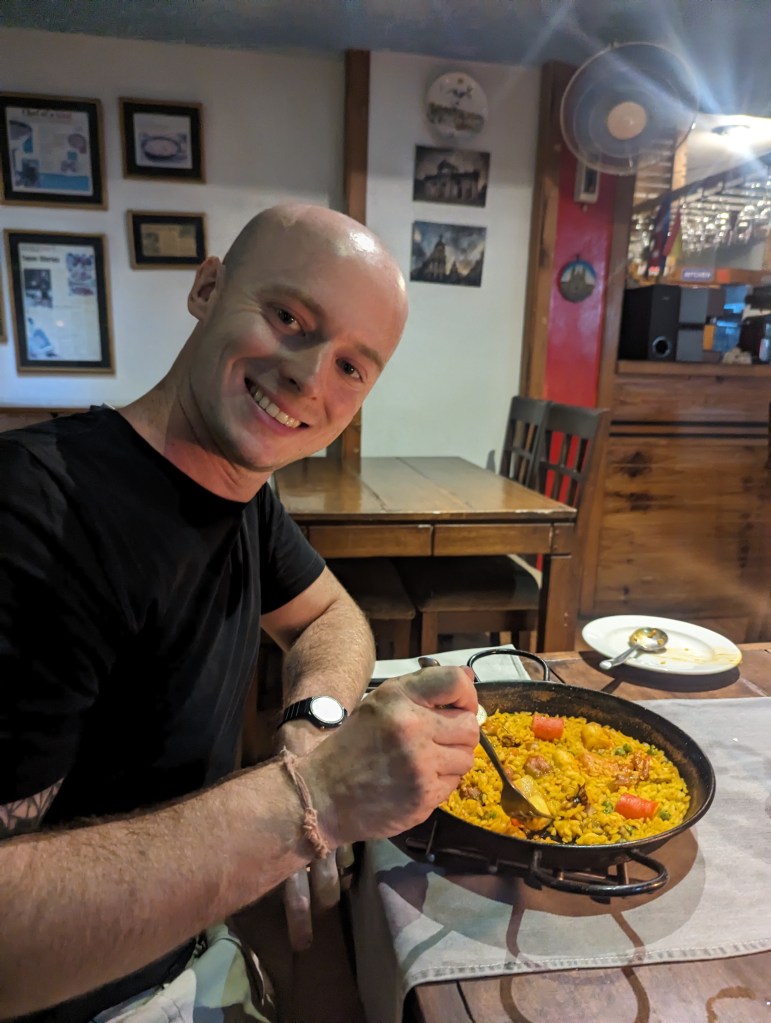
On the way home we had planned to get some dinner at a Spanish restaurant I’d seen recommended online. This again was completely deserted other than us which was a little off-putting, and we were also very concerned about the possibly small portion sizes from some of the photos, but these fears were misguided. We tucked into a delicious Spanish omelette, sangria and huge portions of paella each, eaten straight out of the pans they were made in. The owner gifted us dessert (possibly going off as clearly nobody else was coming tonight) and we left full, exercised and happy.
Thursday –
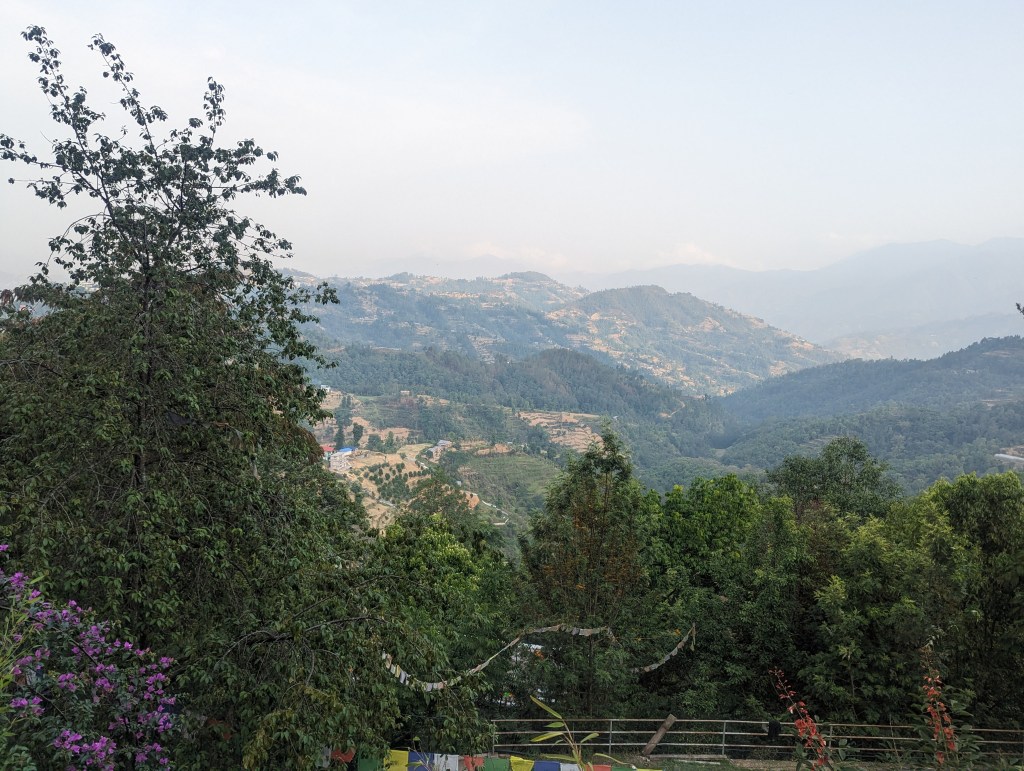
(NB – forgive me for the photo dump, this day was VERY scenic!)
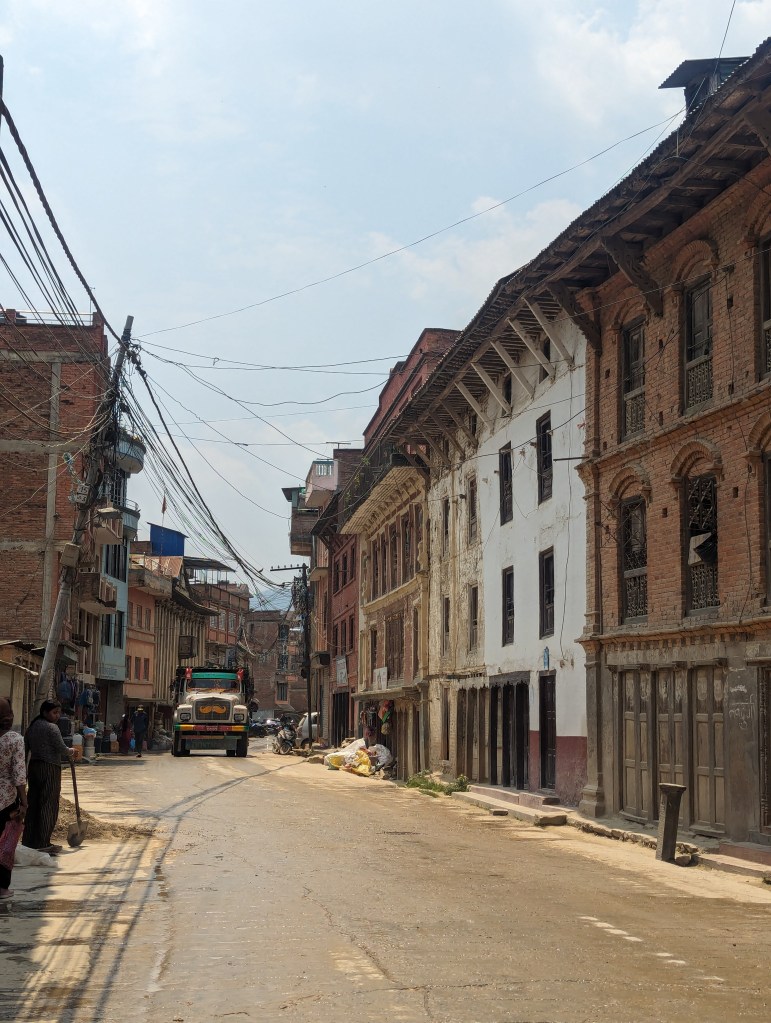
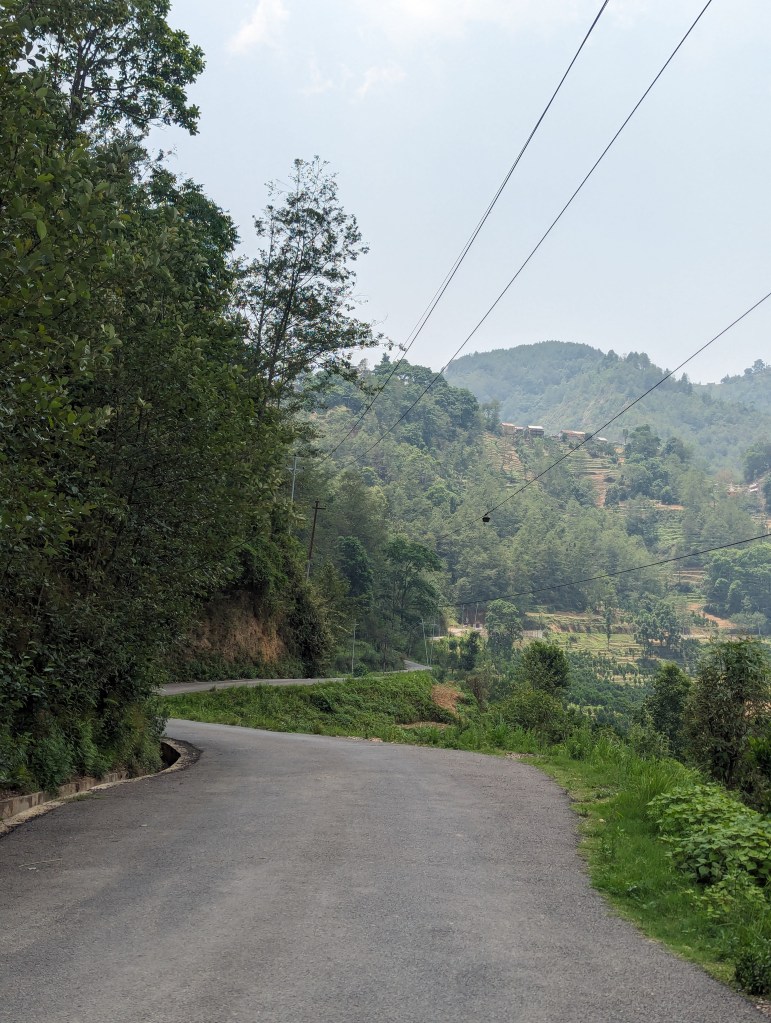
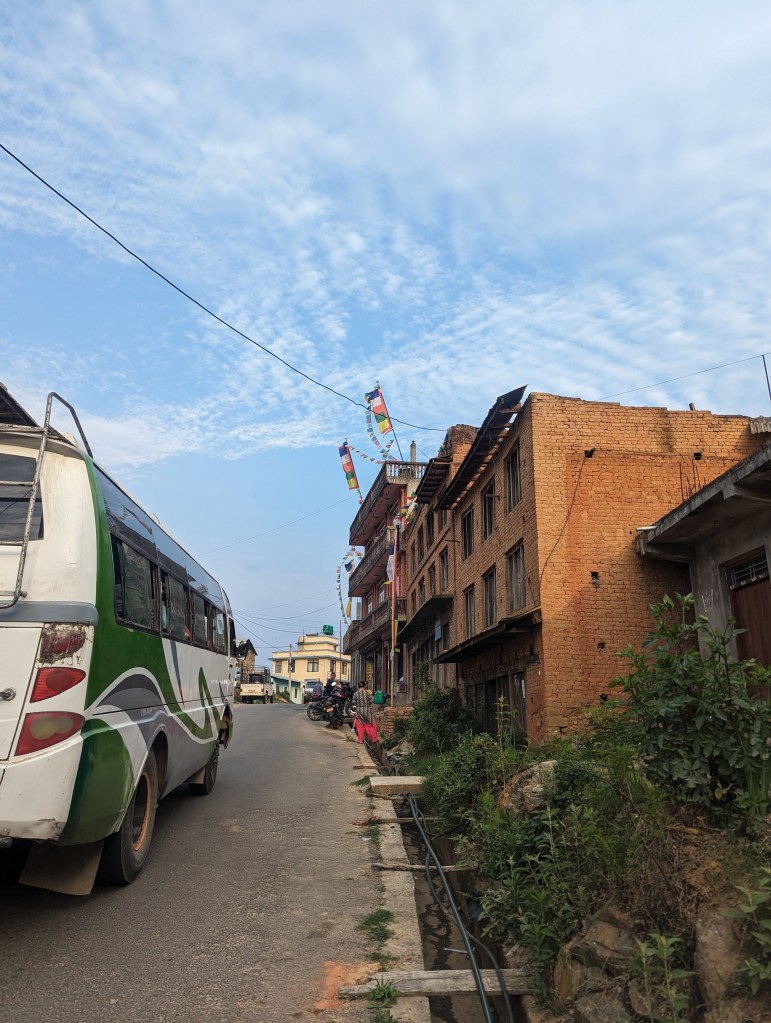
Given we had nearly a week in Patan, and there is only so many temples one can see on the bounce, we decided to use two of our days to venture out into the foothills around the Kathmandu valley for a hike. We had our usual breakfast at Newa Chen (plus a sel roti!), then booked a taxi to take us the hour or so to a small village down a dirt track to the east of the city. As usual in Nepal, the roads got increasingly poor as we got further away from the city centre, but truth be told they weren’t much good to begin with.
We bounced our way to Khopasi, and set out through the village on foot. Interestingly, even in the more rural Nepalese areas there was very little of the staring that was very common even in relatively touristy Indian cities, let alone in some of the more rural places we’d been to. On the outskirts of the village was a steel cable suspension footbridge over a deep gorge that rocked when you walked across it. Ellie in particular steeled herself (no pun intended) and we made our way across to the opposite bank. From here it was a relatively short and very scenic walk across another, much lower footbridge, and up the side of one of the smaller foothills to the neighbouring village of Balthali.

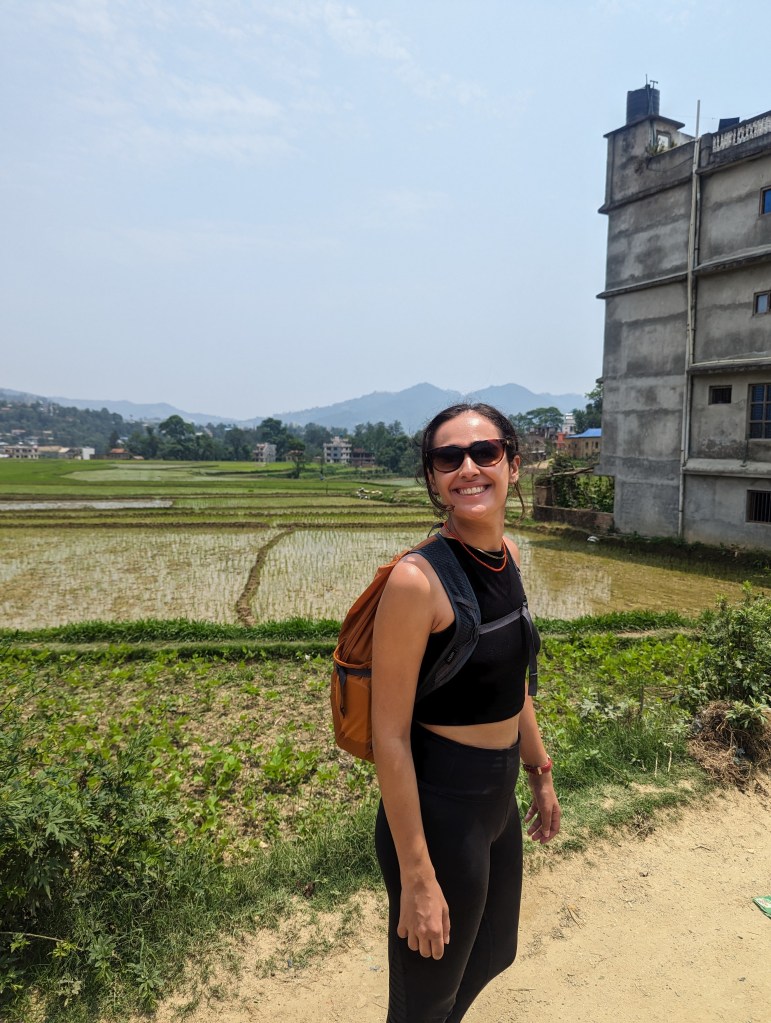
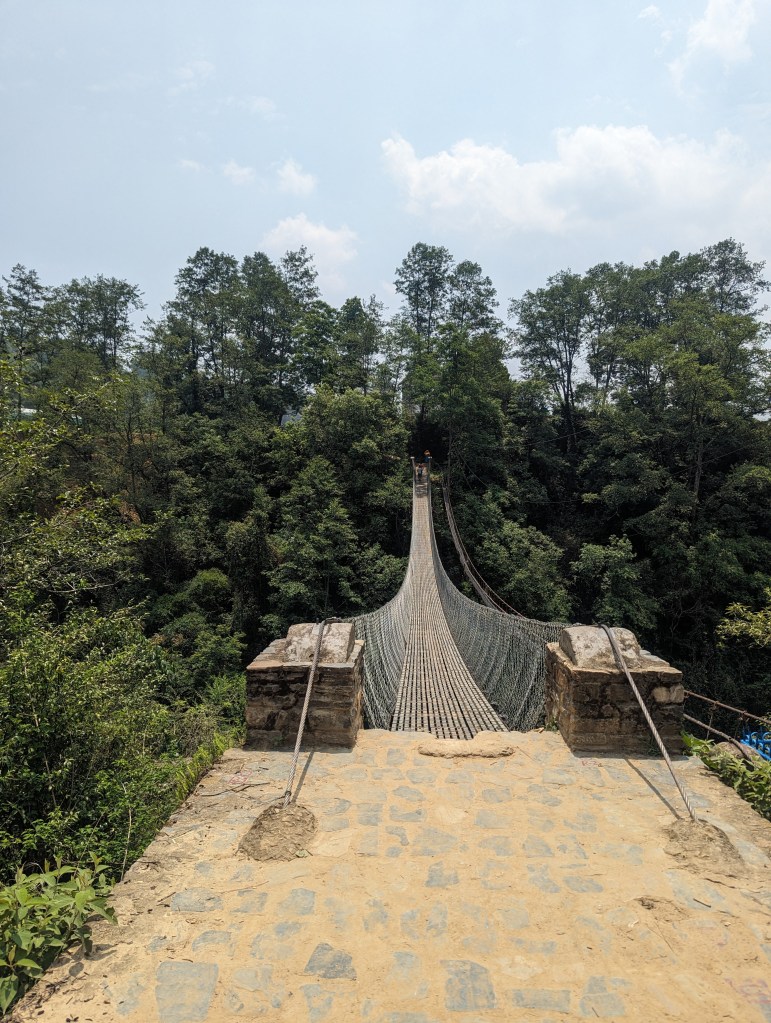
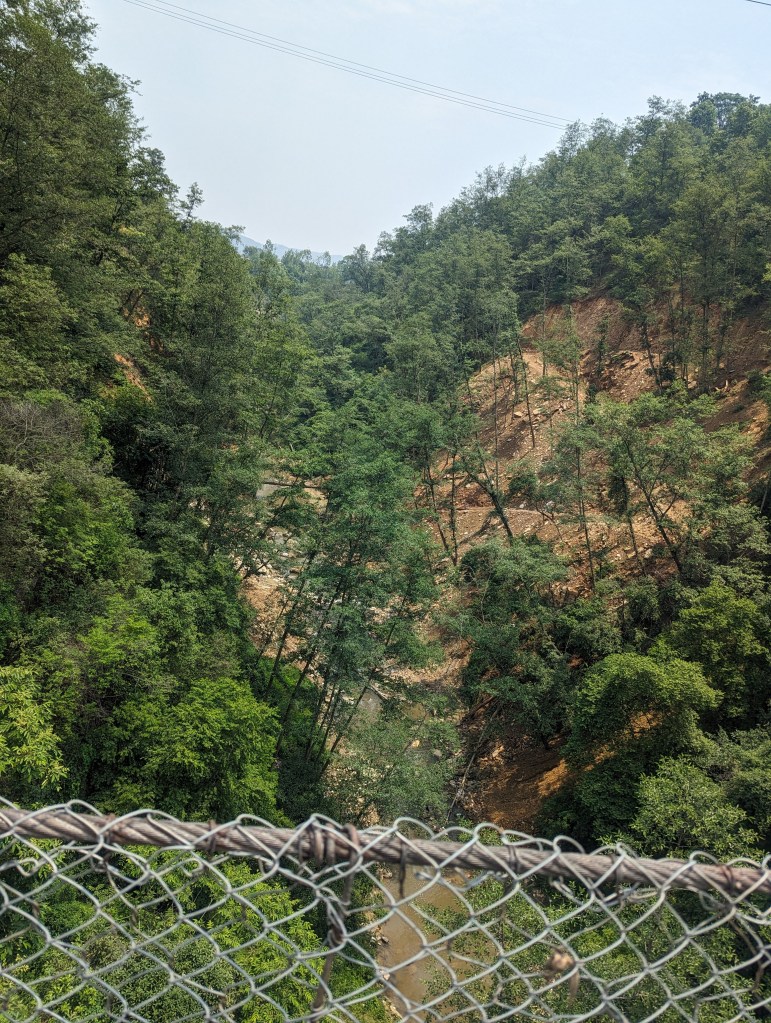
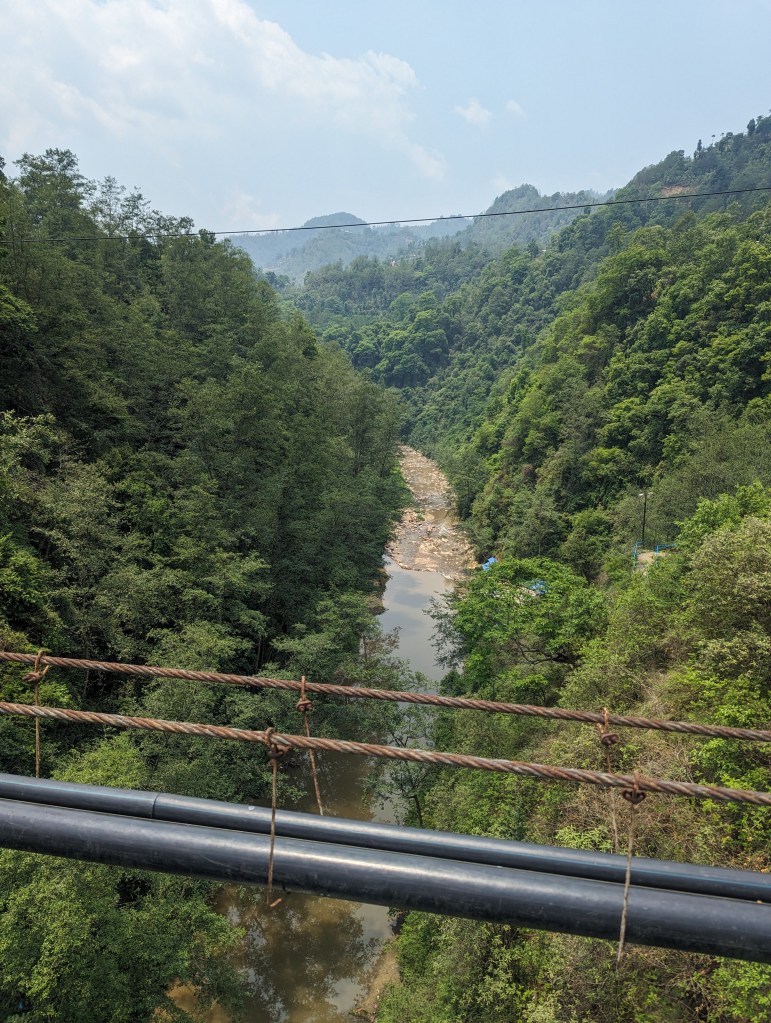

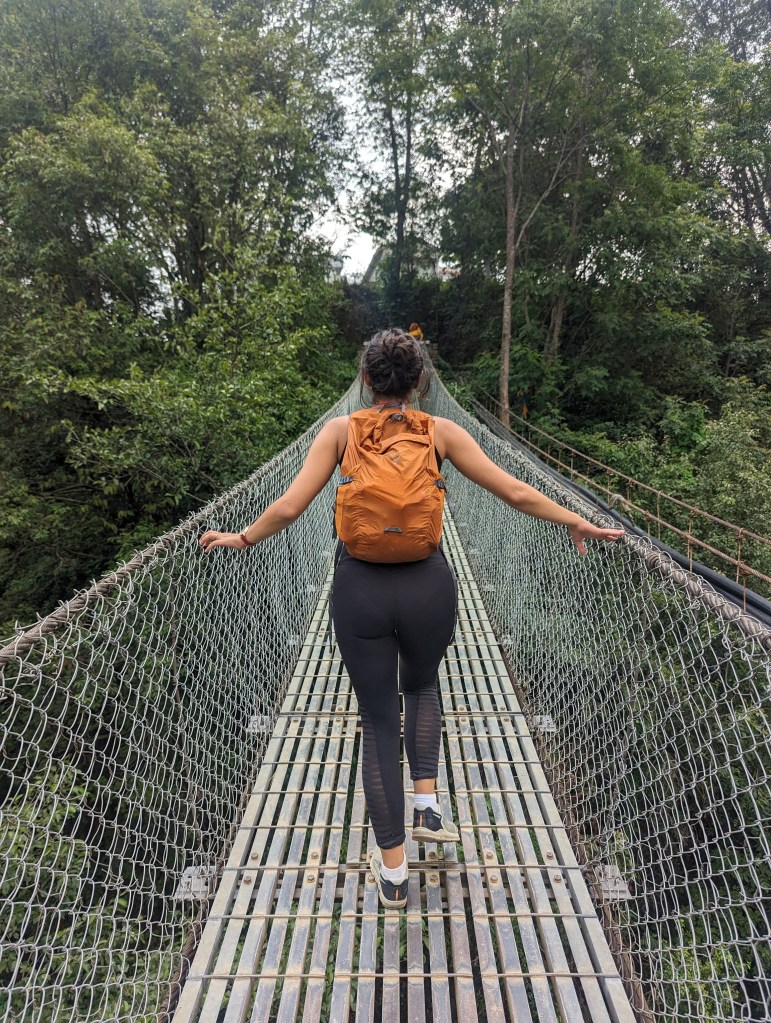
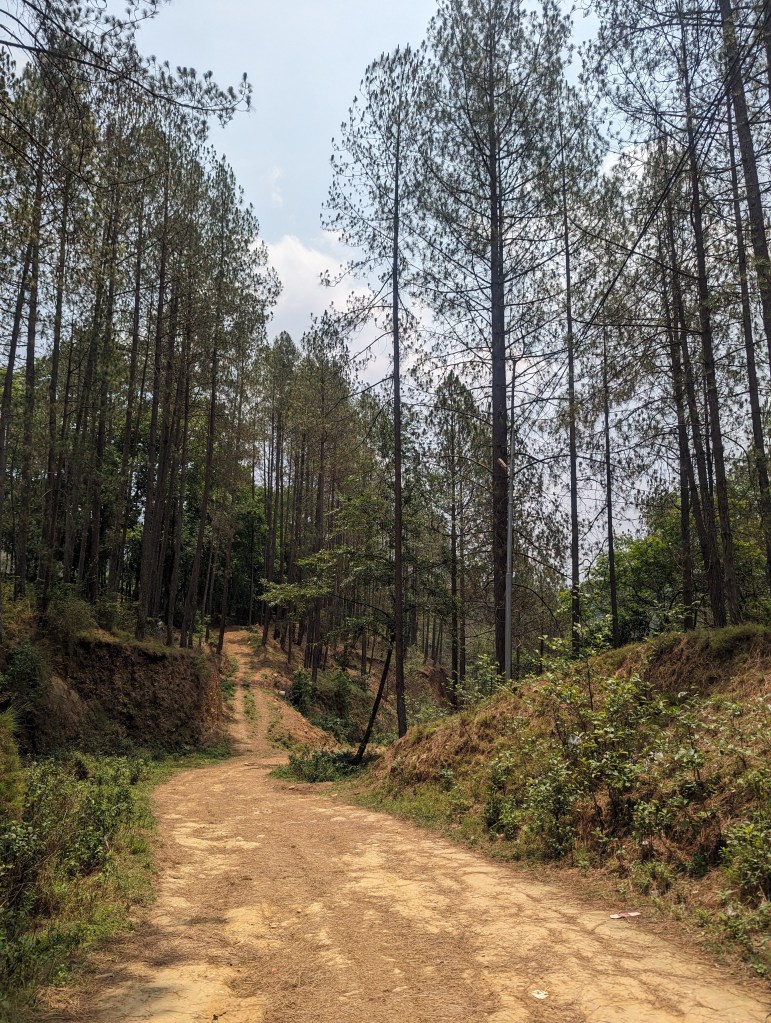
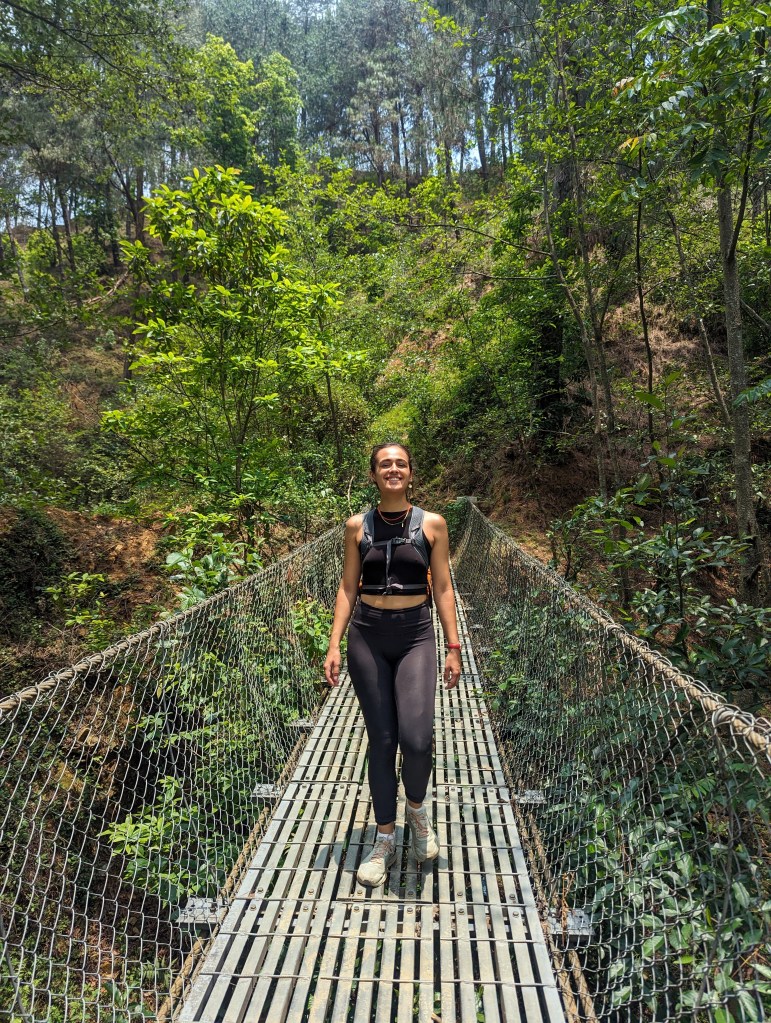
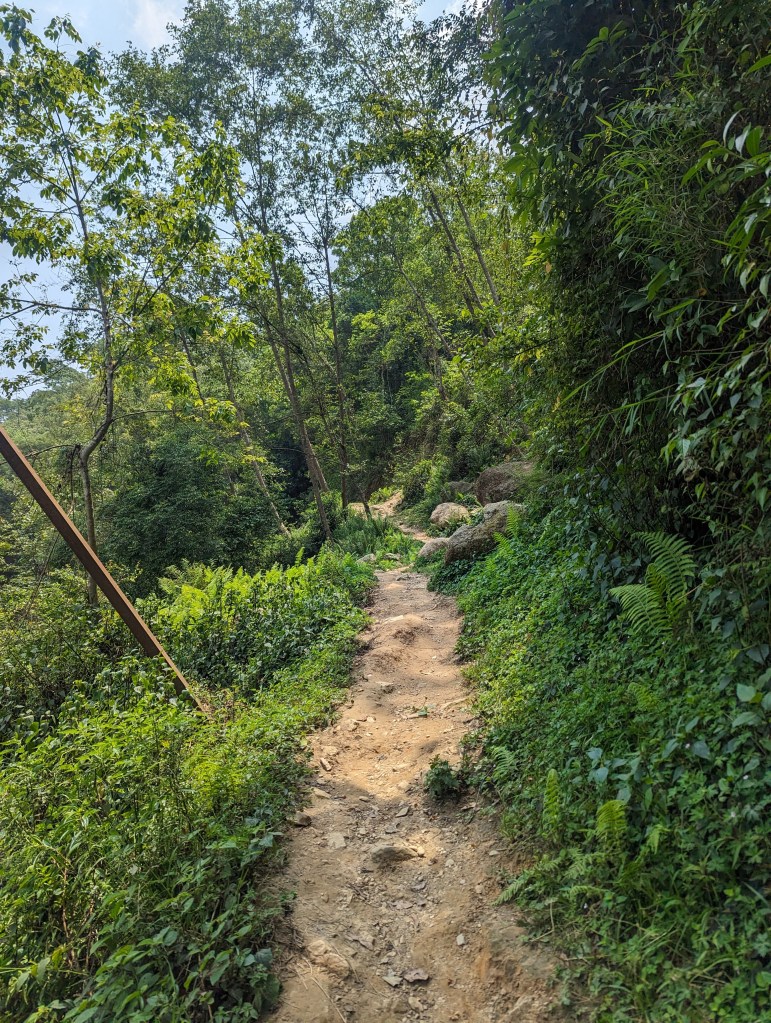
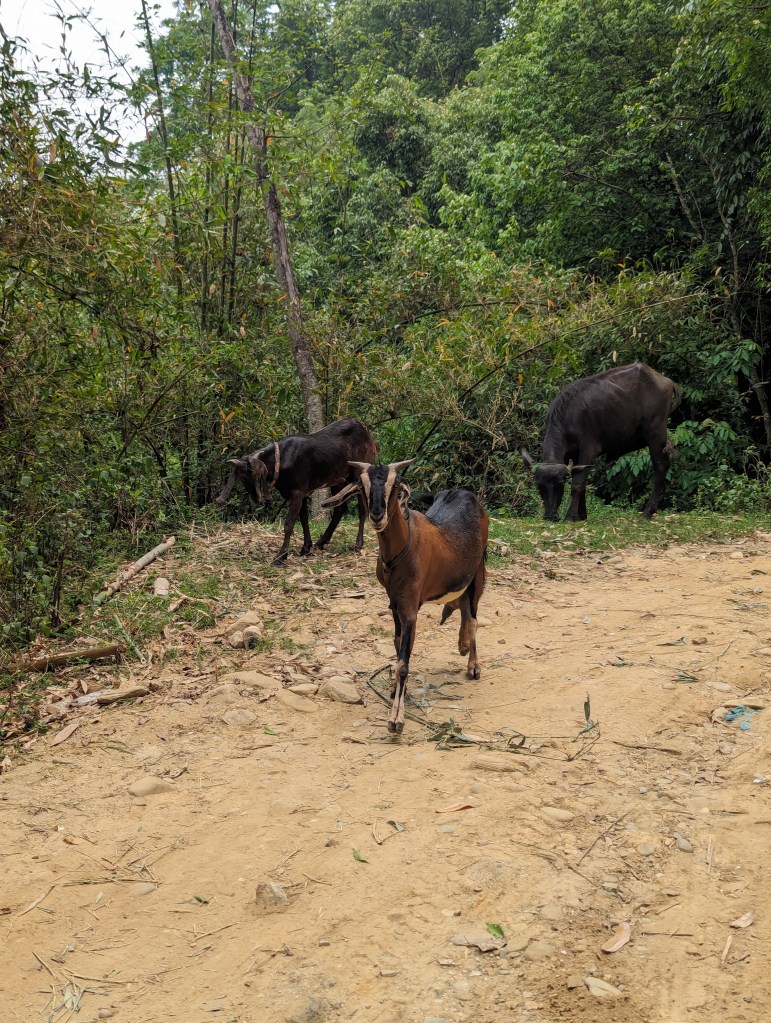
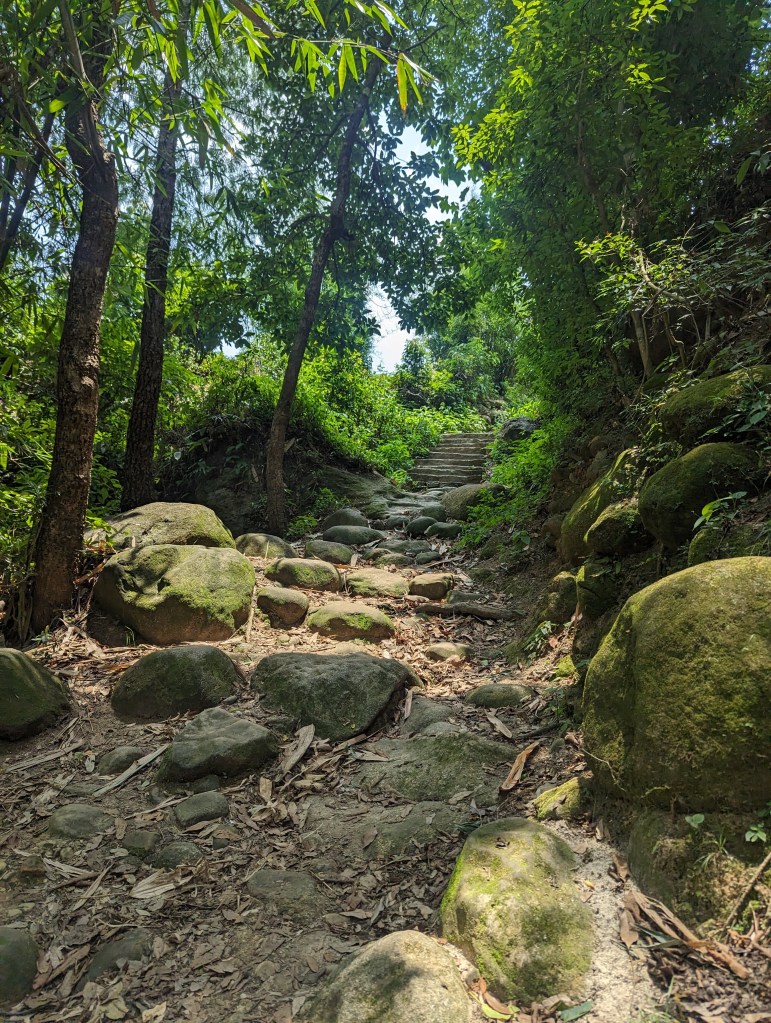
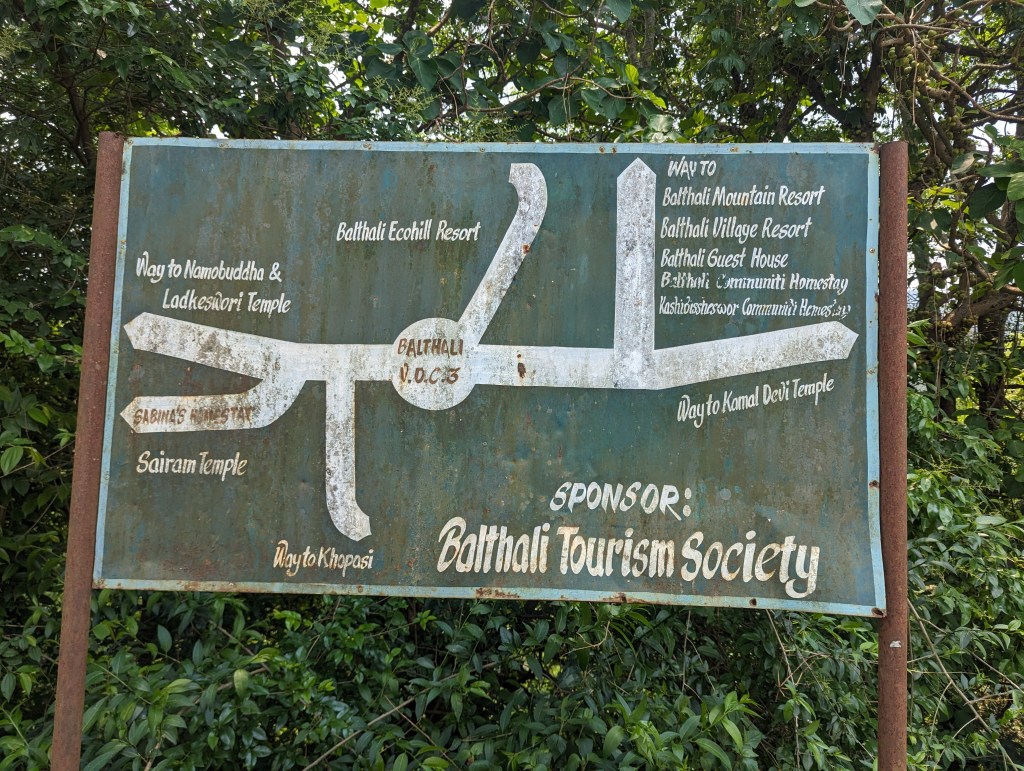
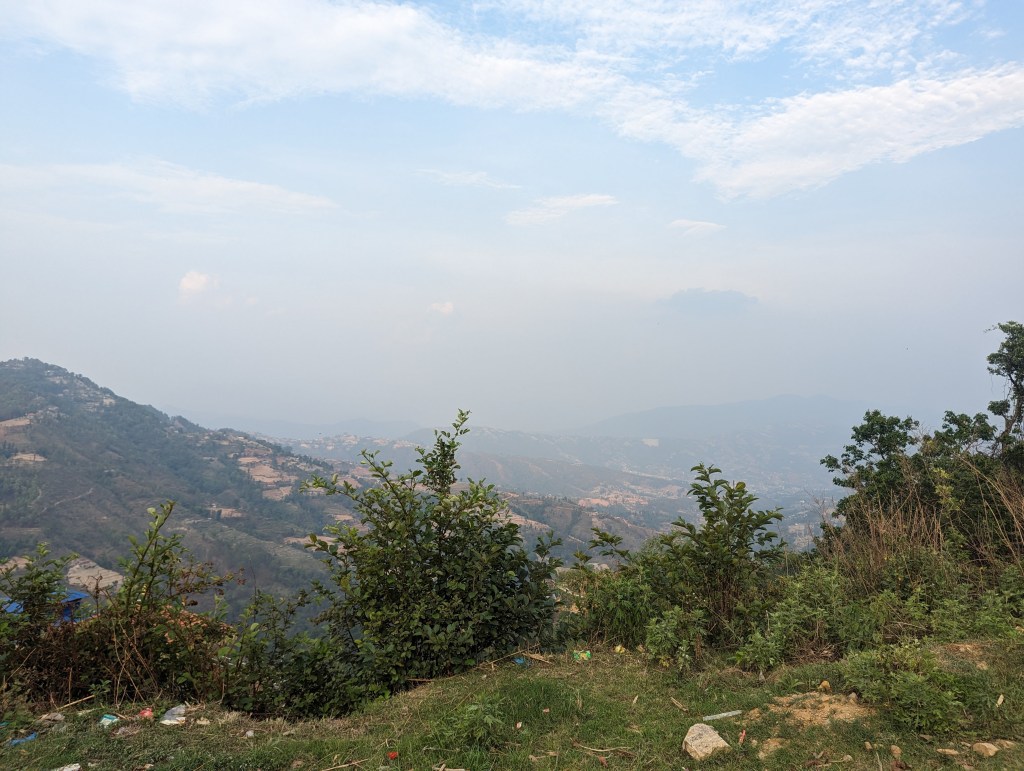
We were following a GPS route on my phone, but actually the entire route was reasonably well signed and the paths were never ambiguous. By the time we reached Balthali it was already approaching lunchtime, so we took a detour through the village and to another village to the south (our general direction of the day was north-east). There were really no restaurants or cafes in Balthali, and the only place we could find to eat was a little restobar perched above a beautiful terraced valley in which villagers slowly worked the small patches of land. It was a 40 minute, largely uphill walk to get to the restobar and we were ready to eat by the time we were there.
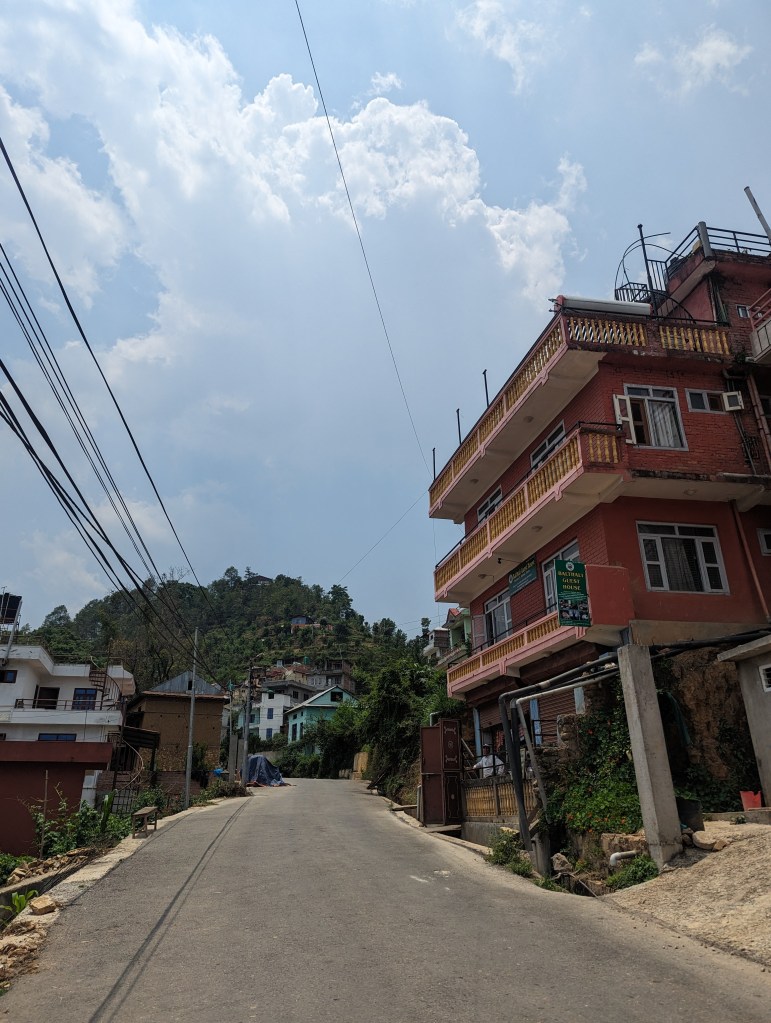
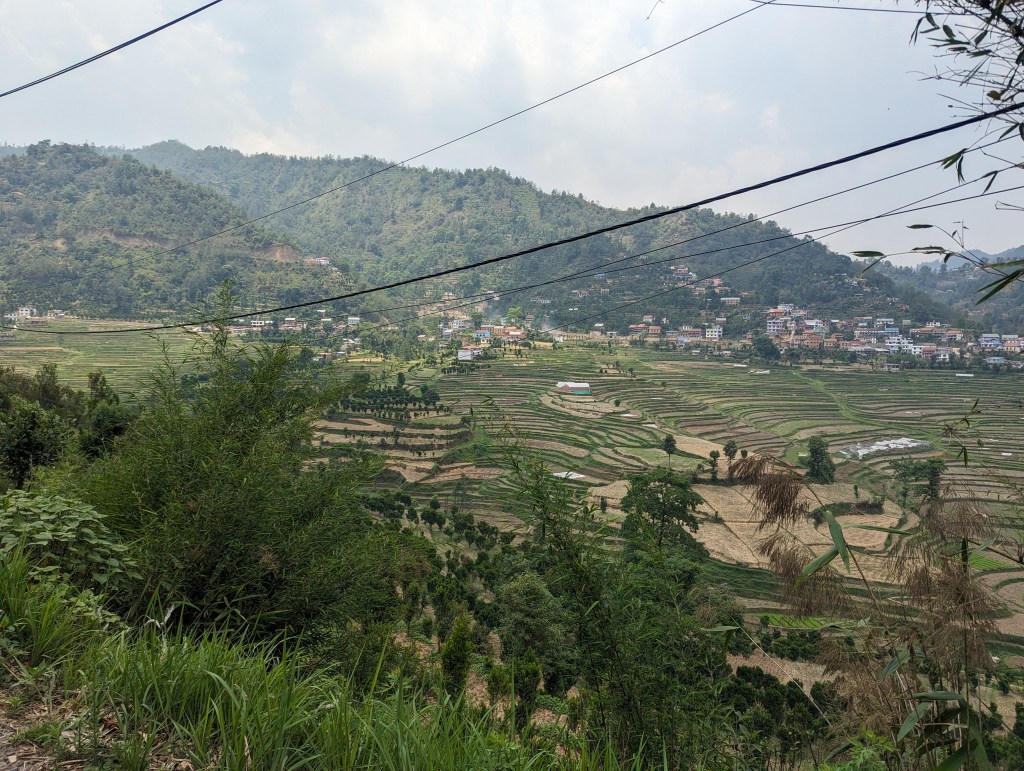

The restobar was relatively busy with Nepali men for somewhere so out of the way, and had a lovely outside area with a stunning view. We ordered our Nepali thalis, and waited for our food to come. After 45 minutes, we were still waiting for the food to come. After an hour, we were still waiting for the food to come, and watching enviously as the guard dog was fed rice from his bowl. About this time, the chef who was also the owner came down to check our order (an ominous sign), but only a few minutes later came down again with the food.
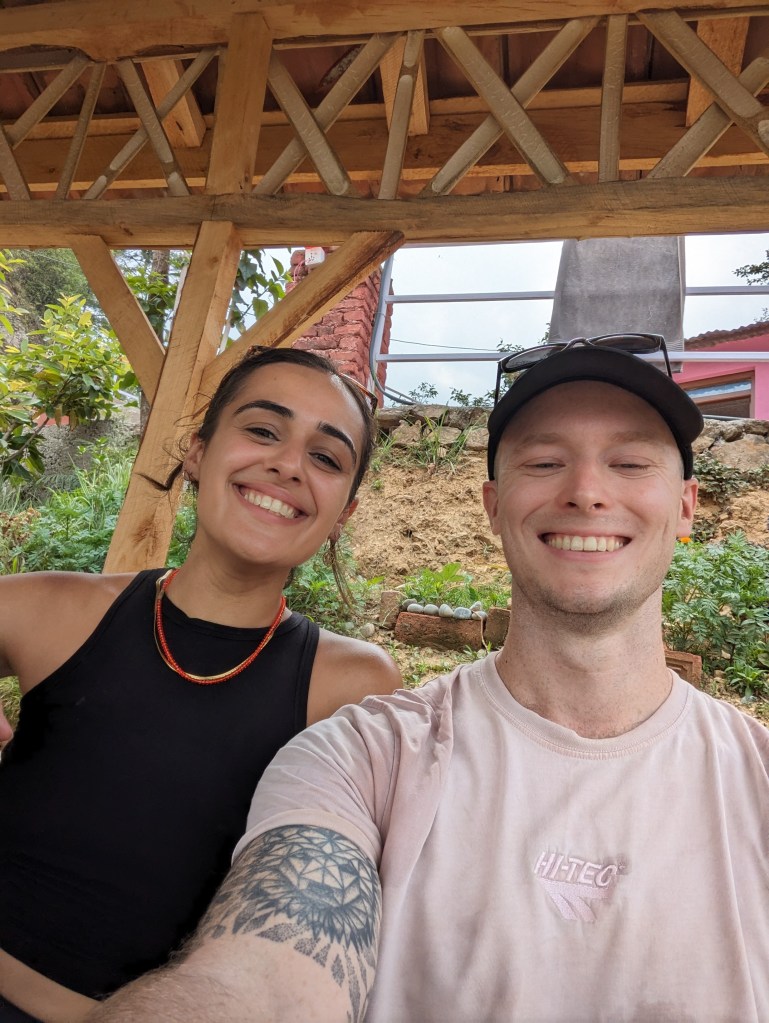
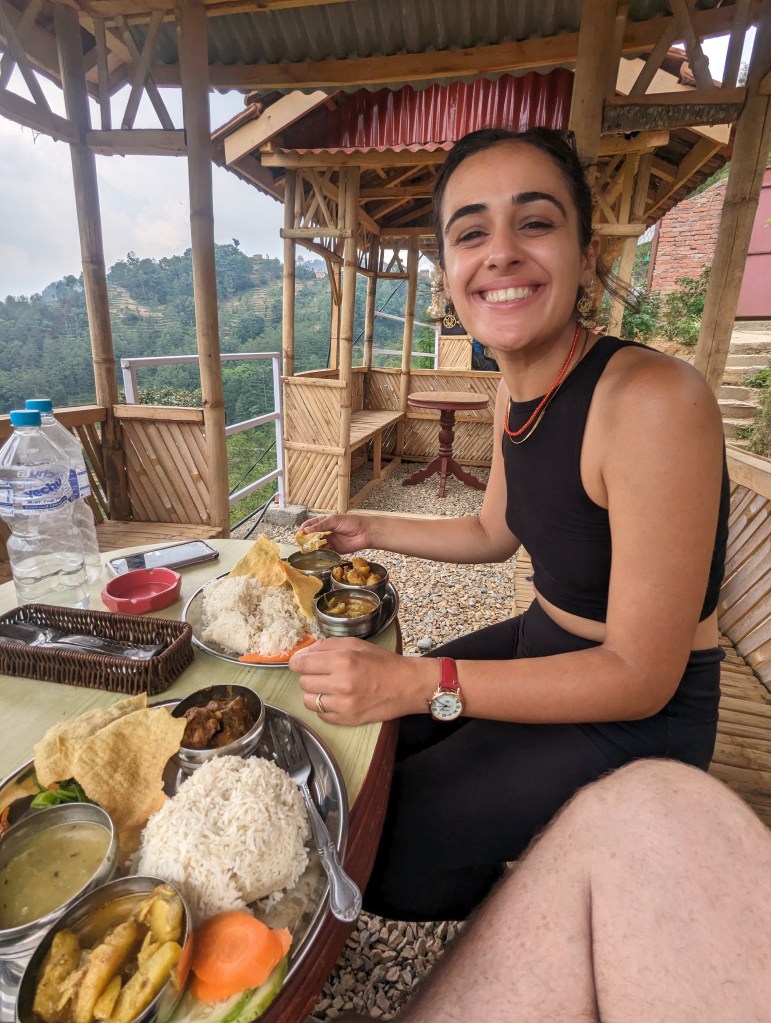
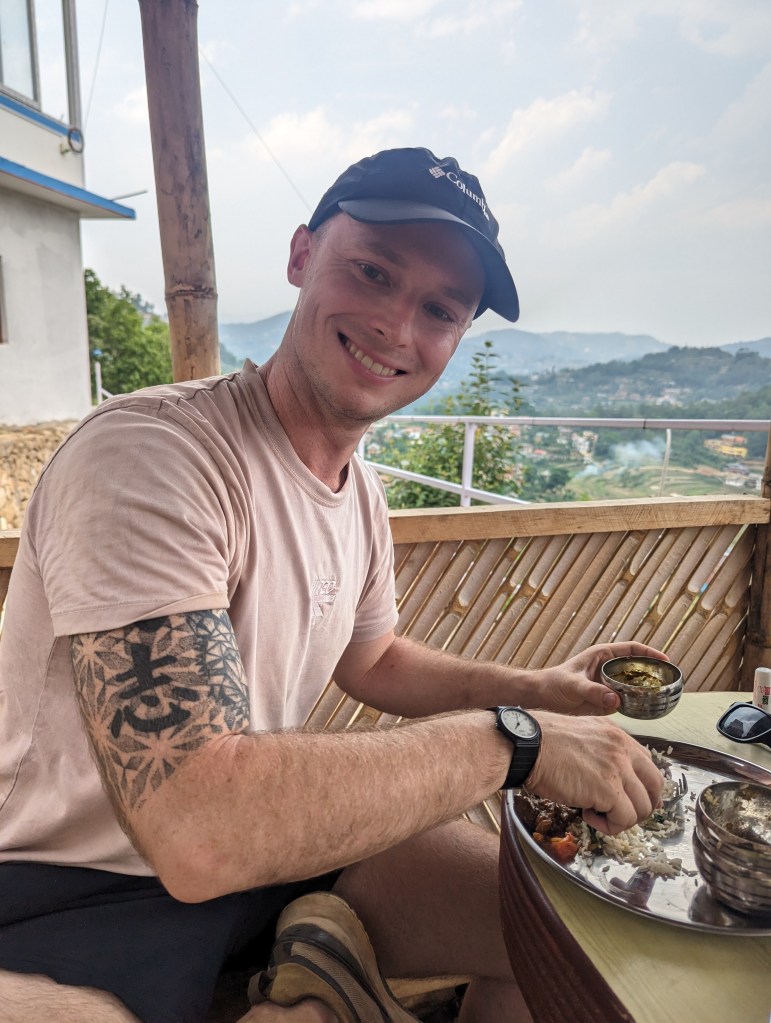
The Nepali thali was delicious and worth waiting for, given our only other option would have been a bag of crisps and some biscuits from the local shop. Once fed, we found (with the help of some Nepali village elders that thought my confusion was hilarious) a different path down from the hill back into Balthali, and back onto the route north-east. We passed out of Balthali and across a field in which the whole village seemed to be working – hoeing, picking potatoes, carrying bags, planting – and through a small forest.
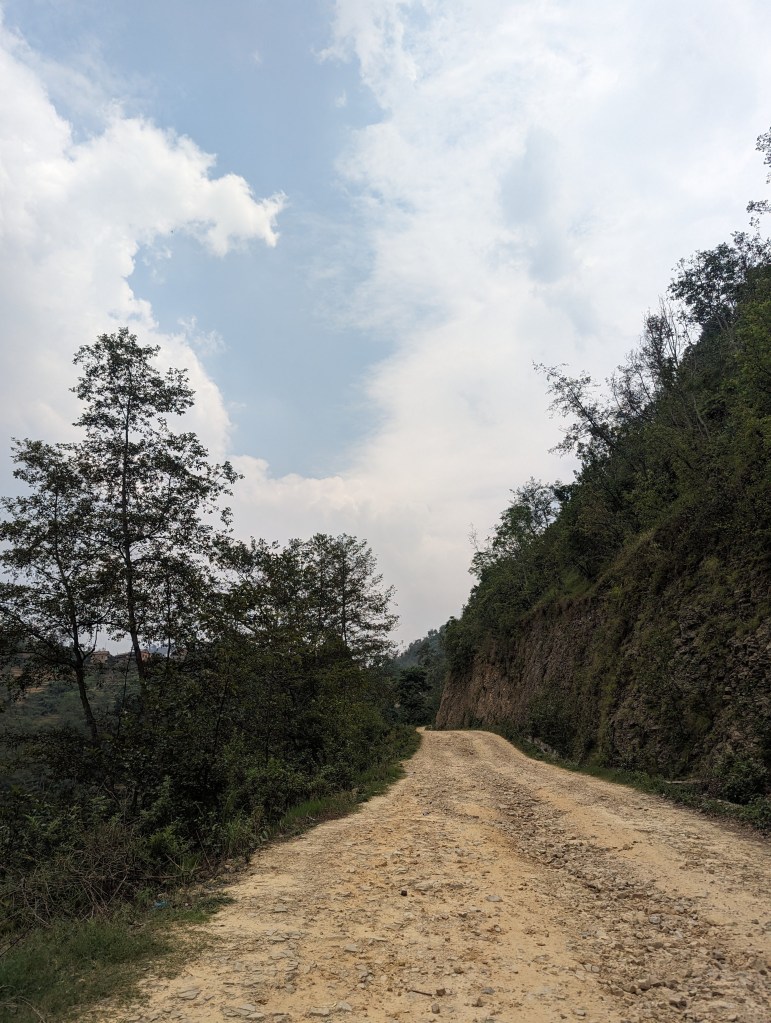
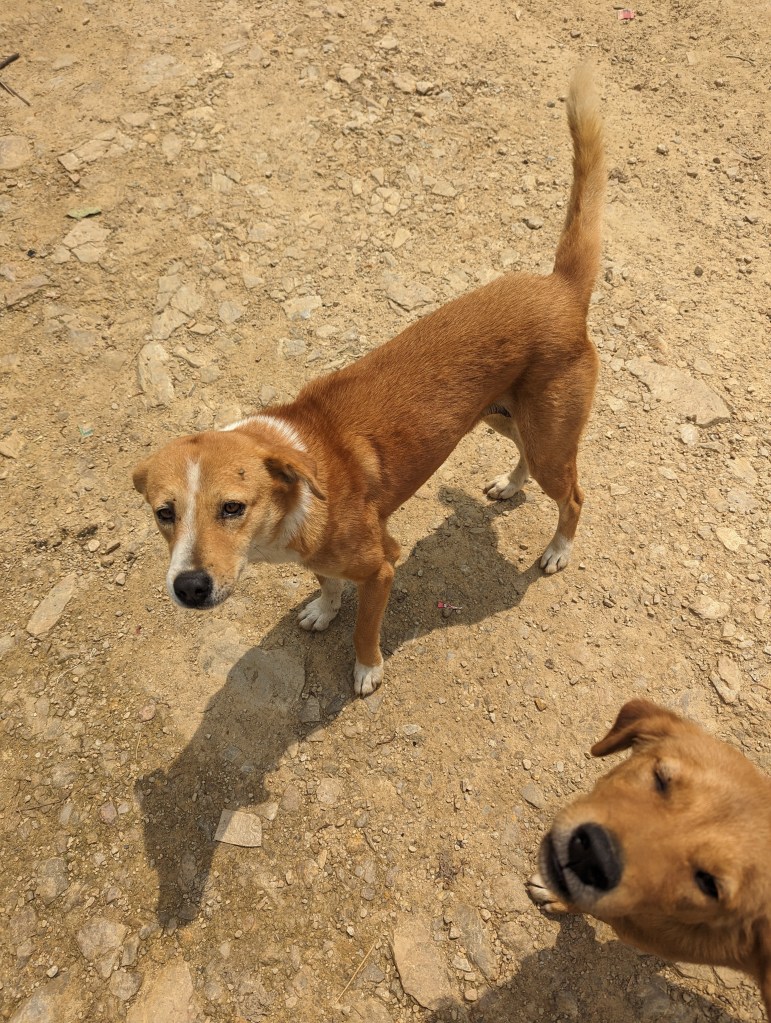
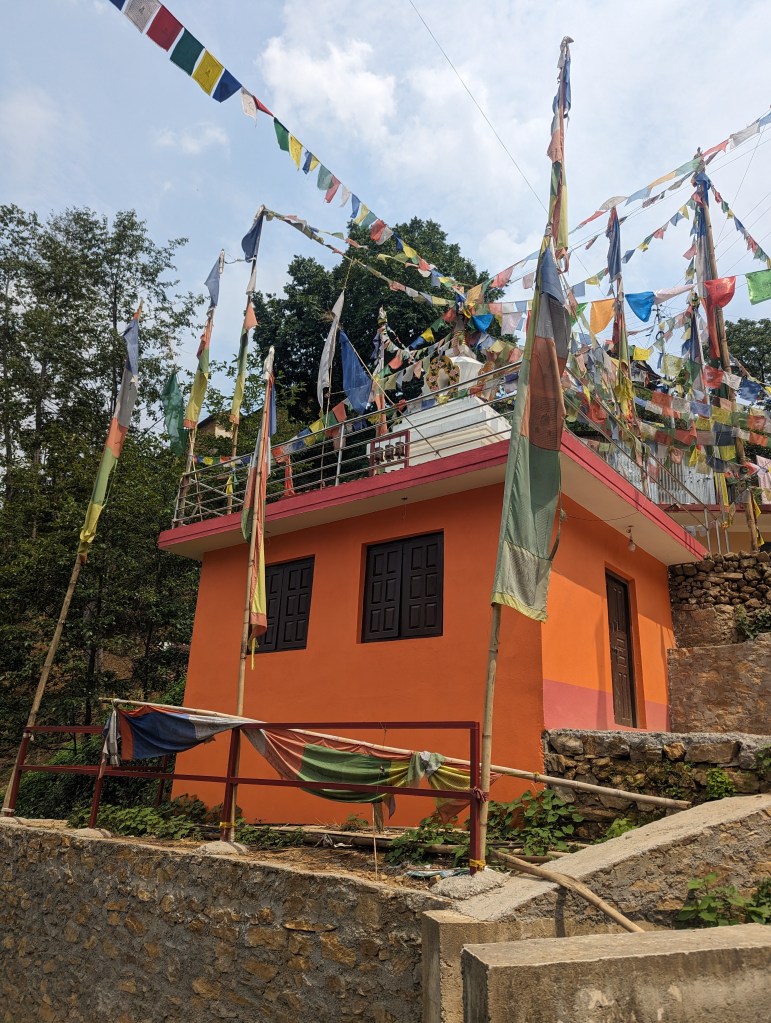
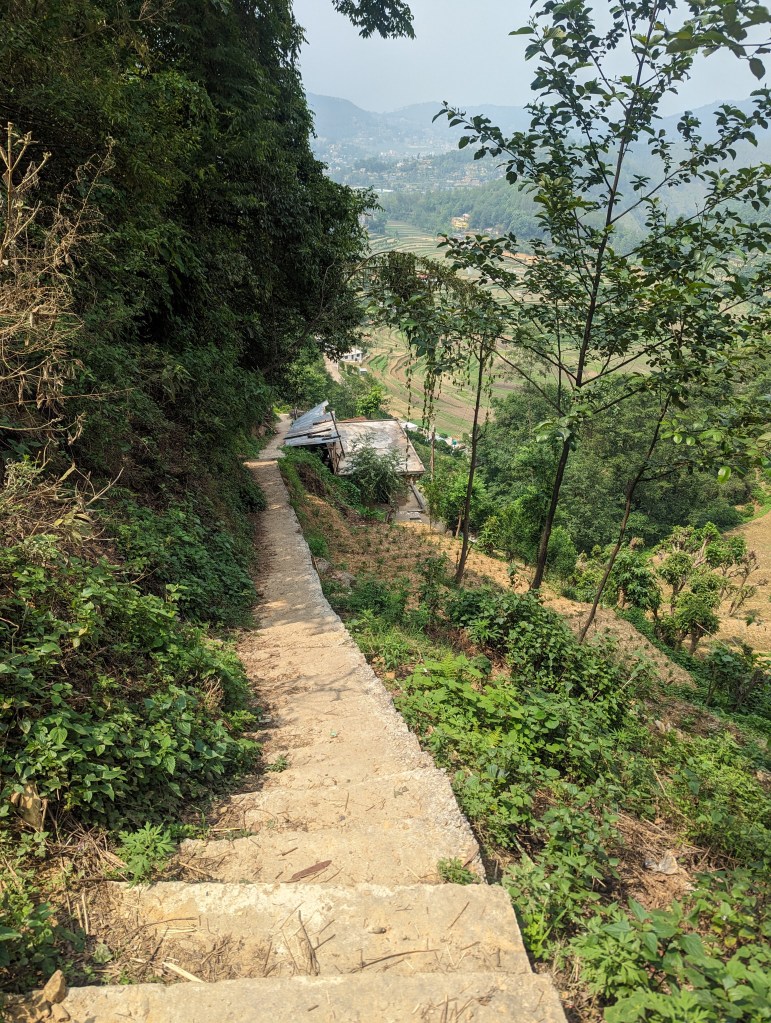
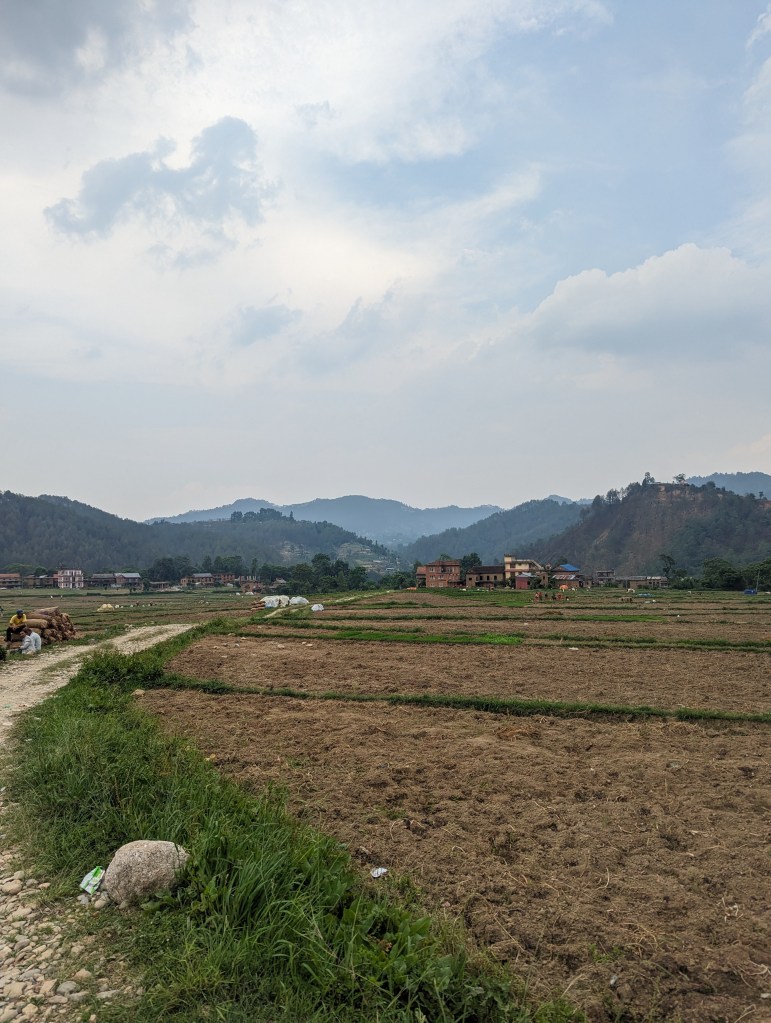
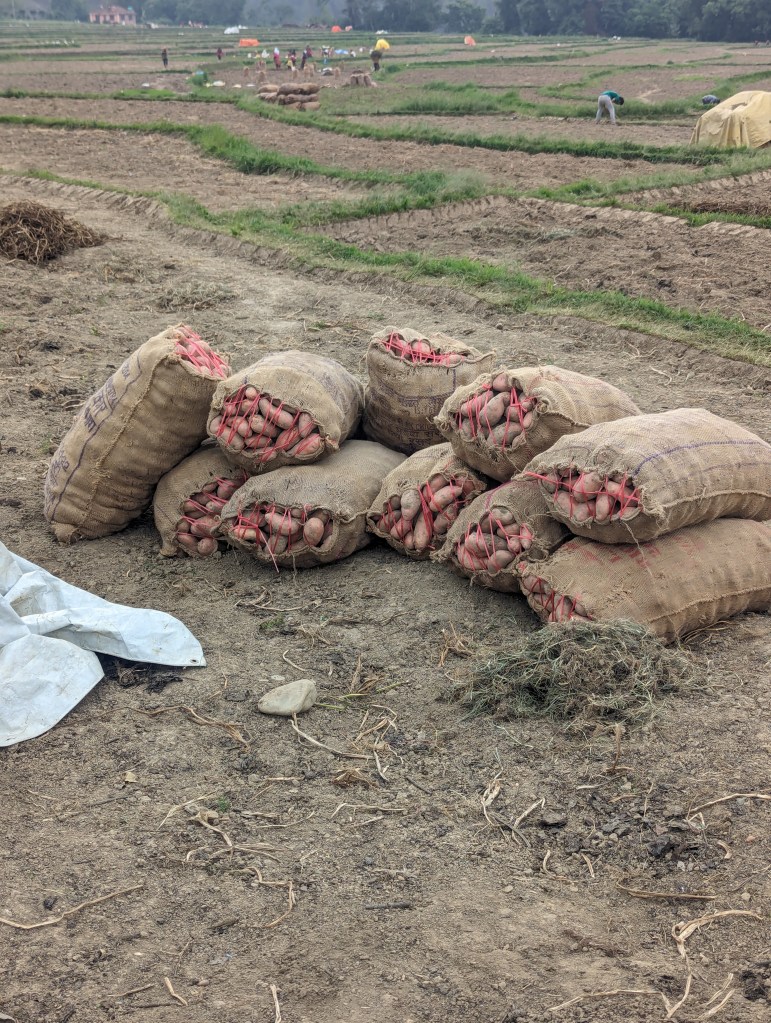
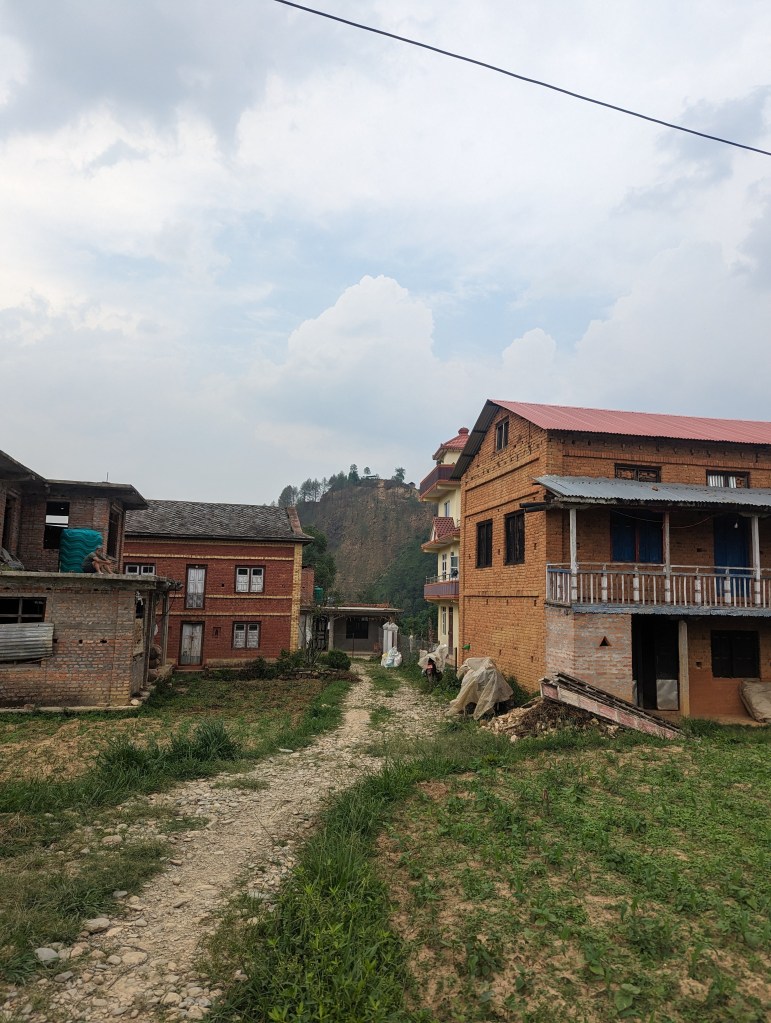
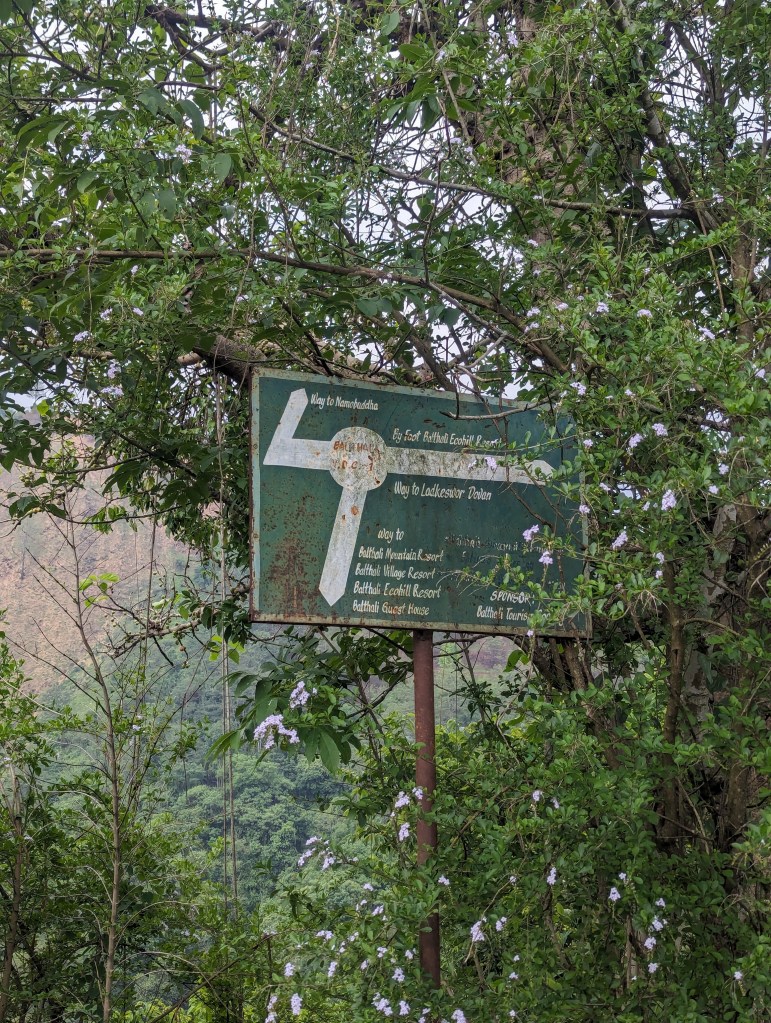
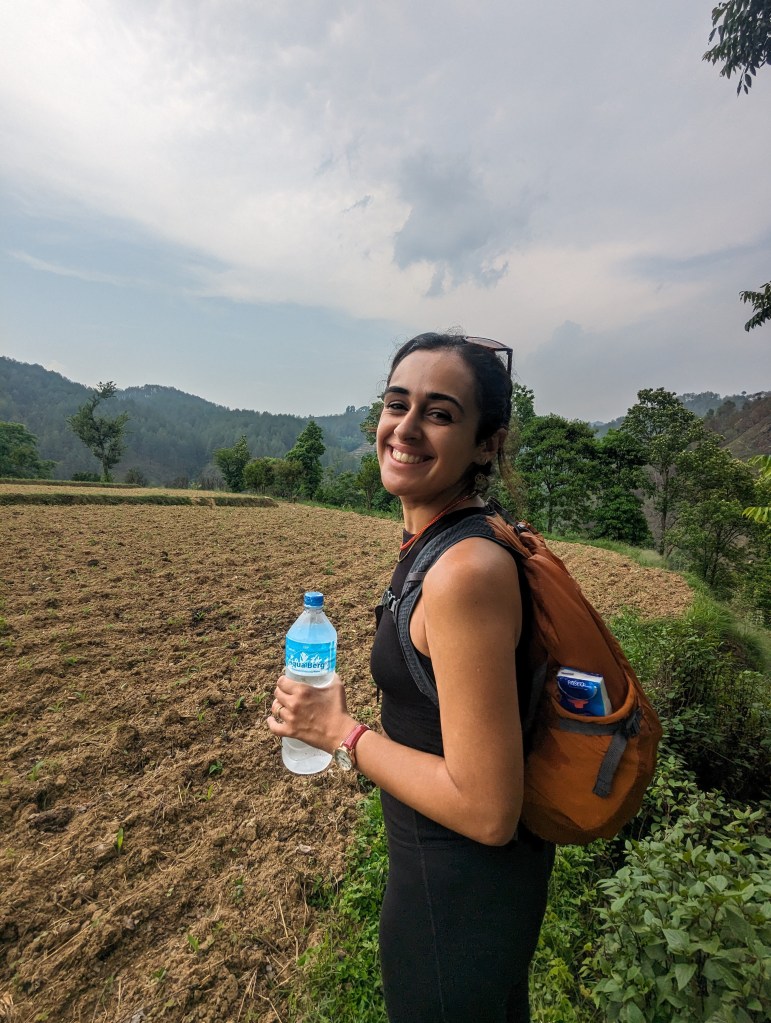
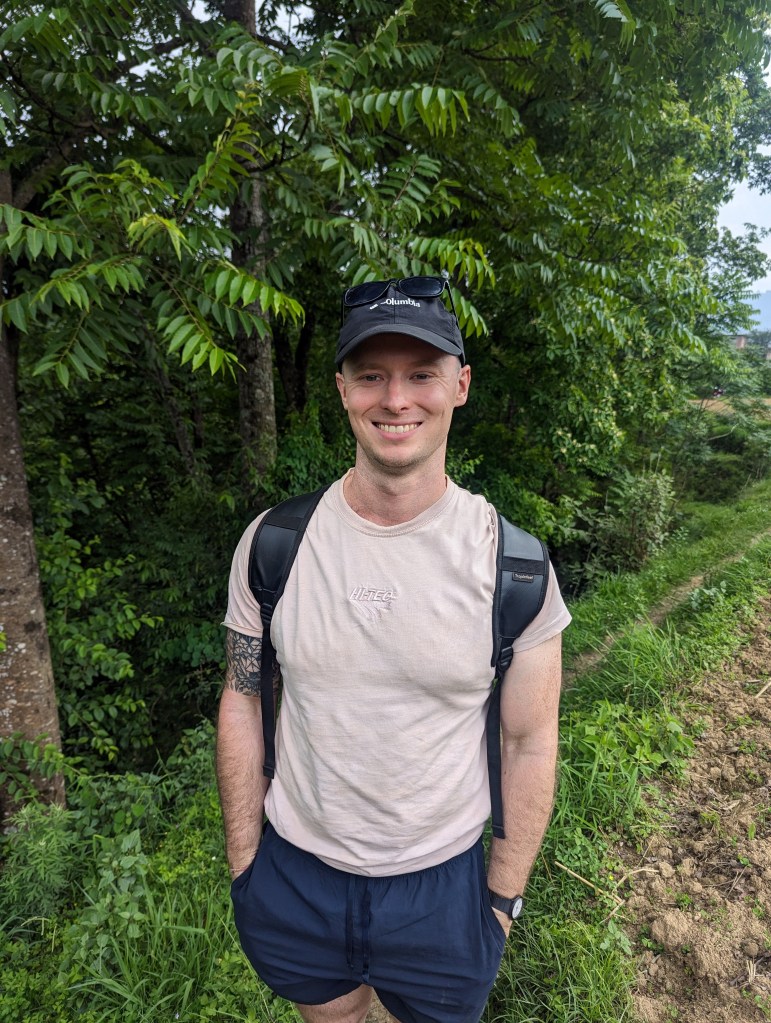
The path then took us down through the woods and to another cable footbridge over a river, then climbed steeply back up a access track to the hilltops. Here, we passed through a number of rural villages which, in some places, looked remarkably French. The locals largely left us alone, to the extent that Ellie was roundly ignored by a group of Nepali women when she approached what looked to be an outdoor shop to buy water, but which turned out in all likelihood to just be their open air kitchen.
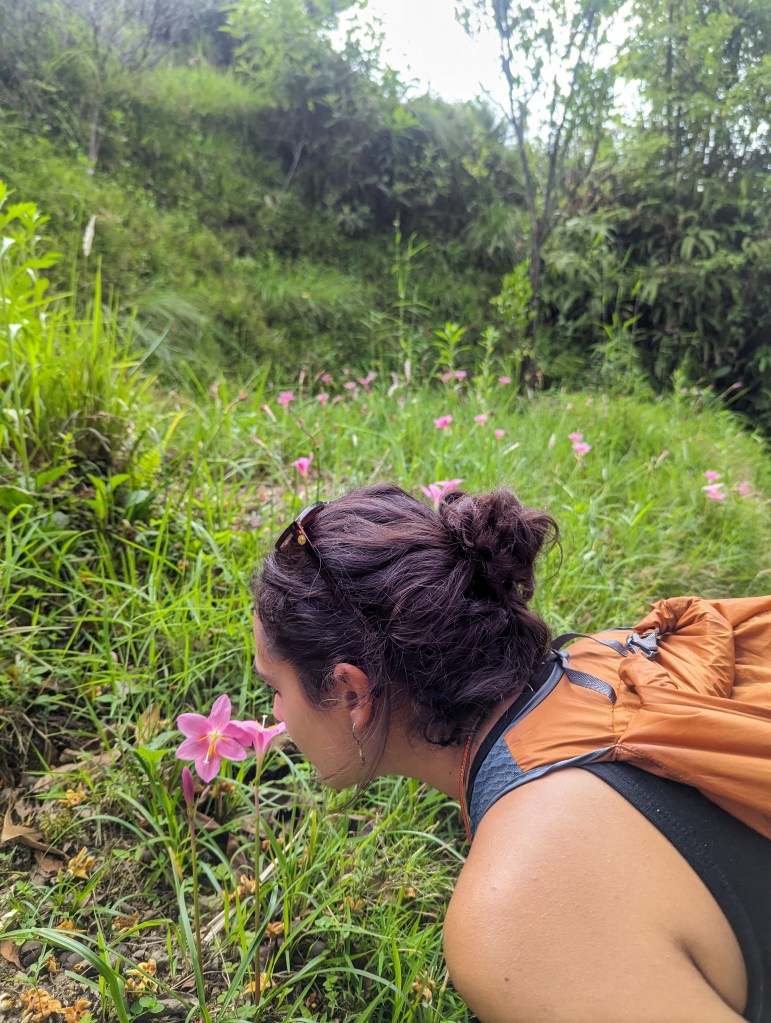

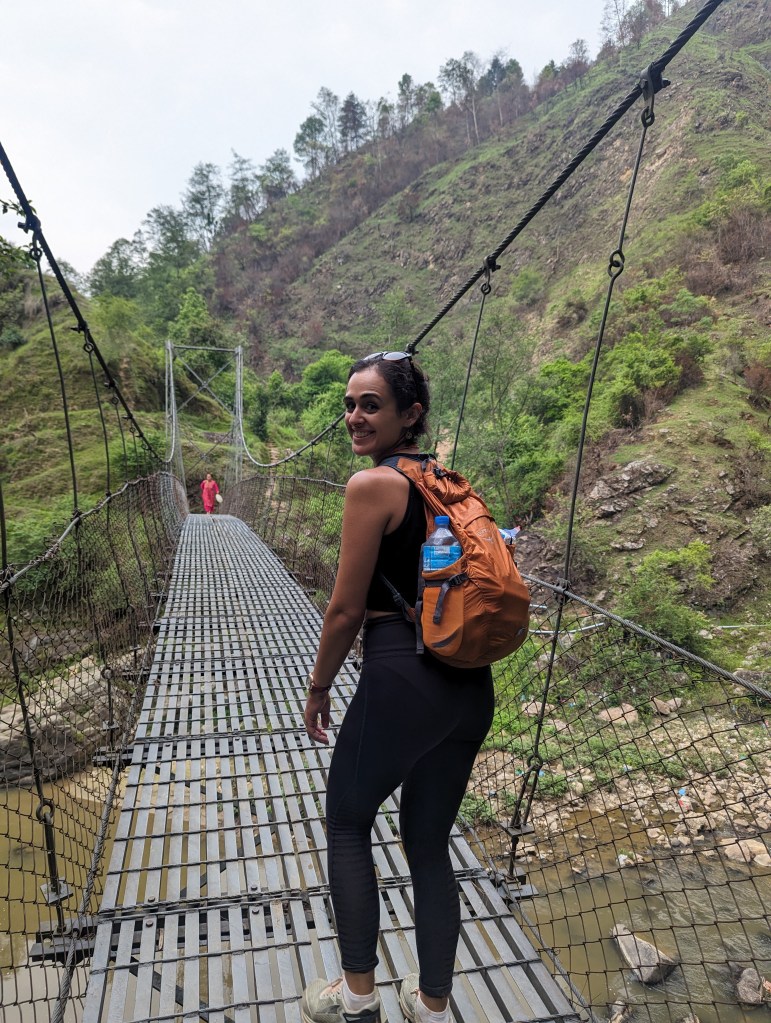
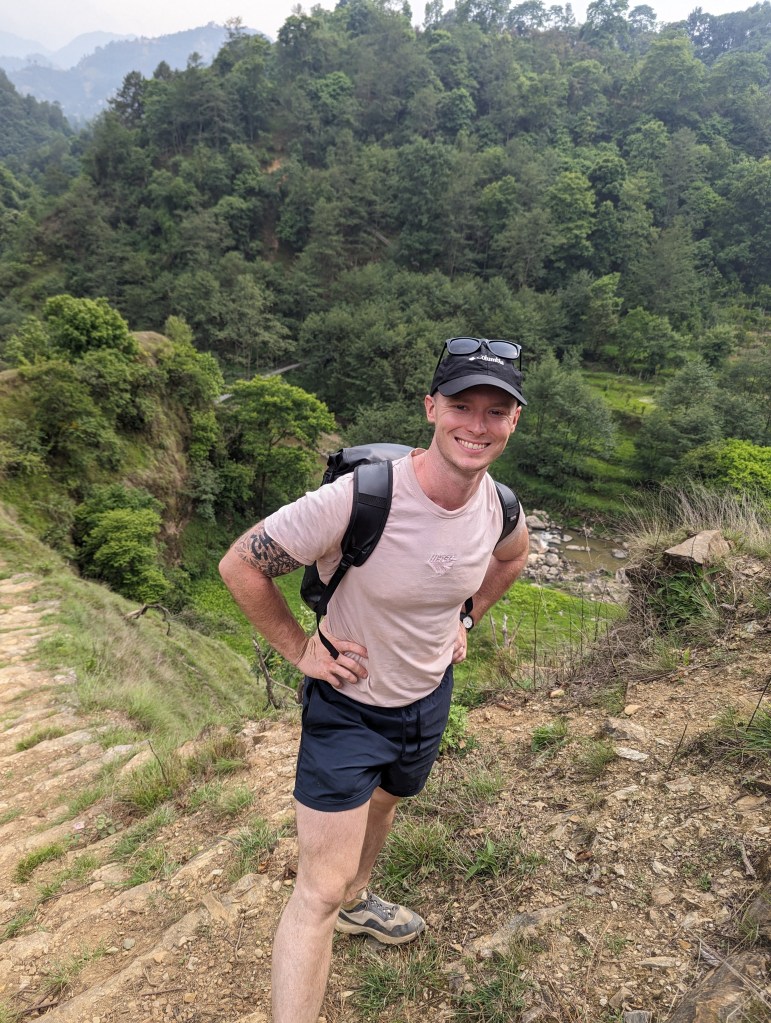
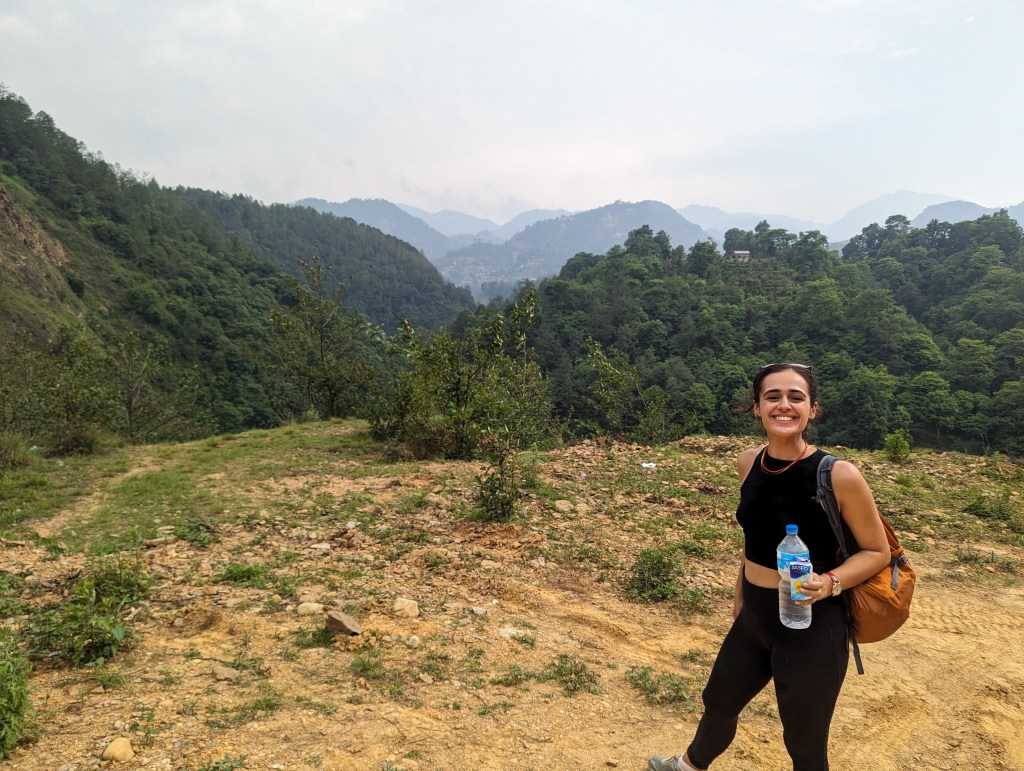

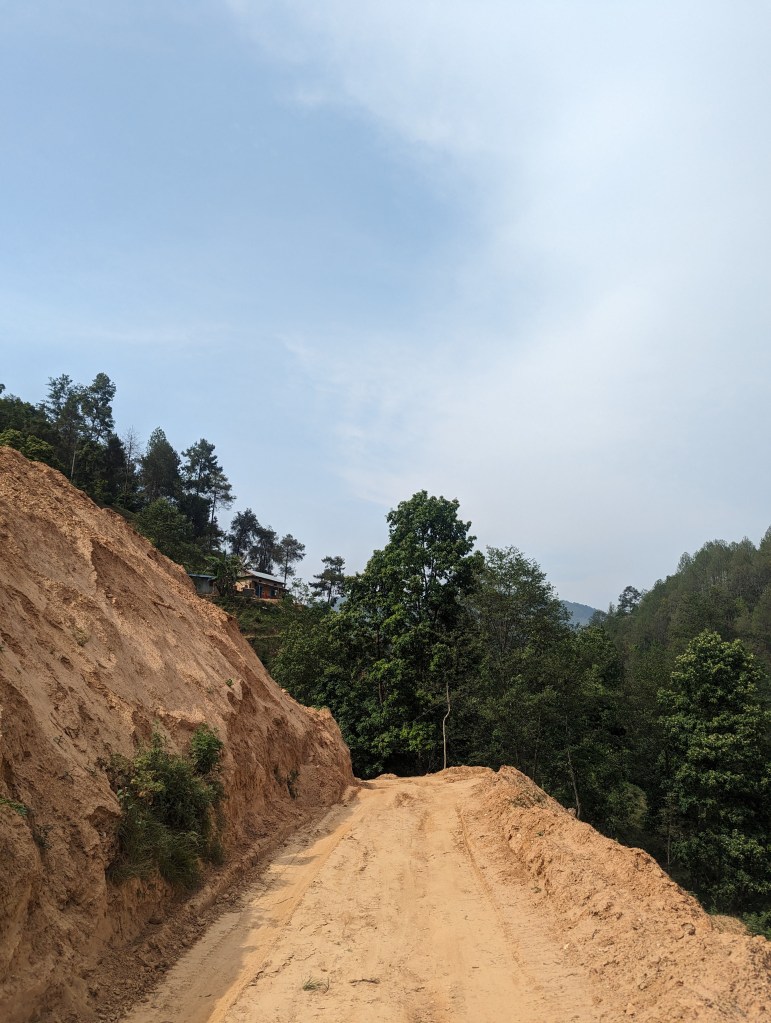

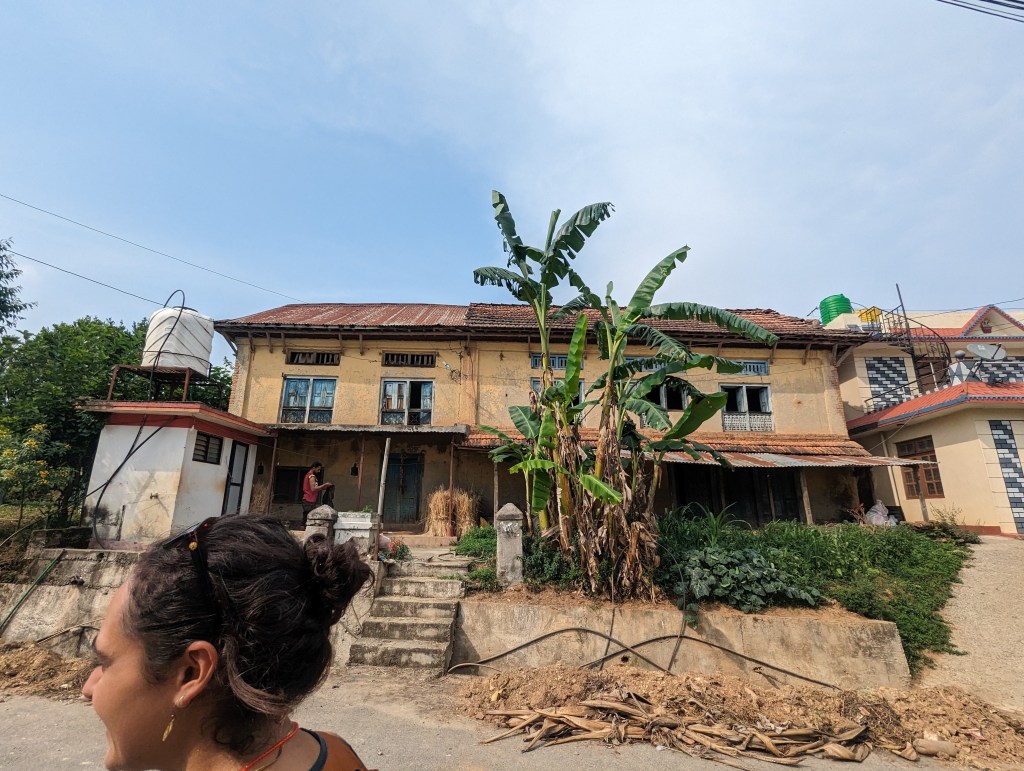
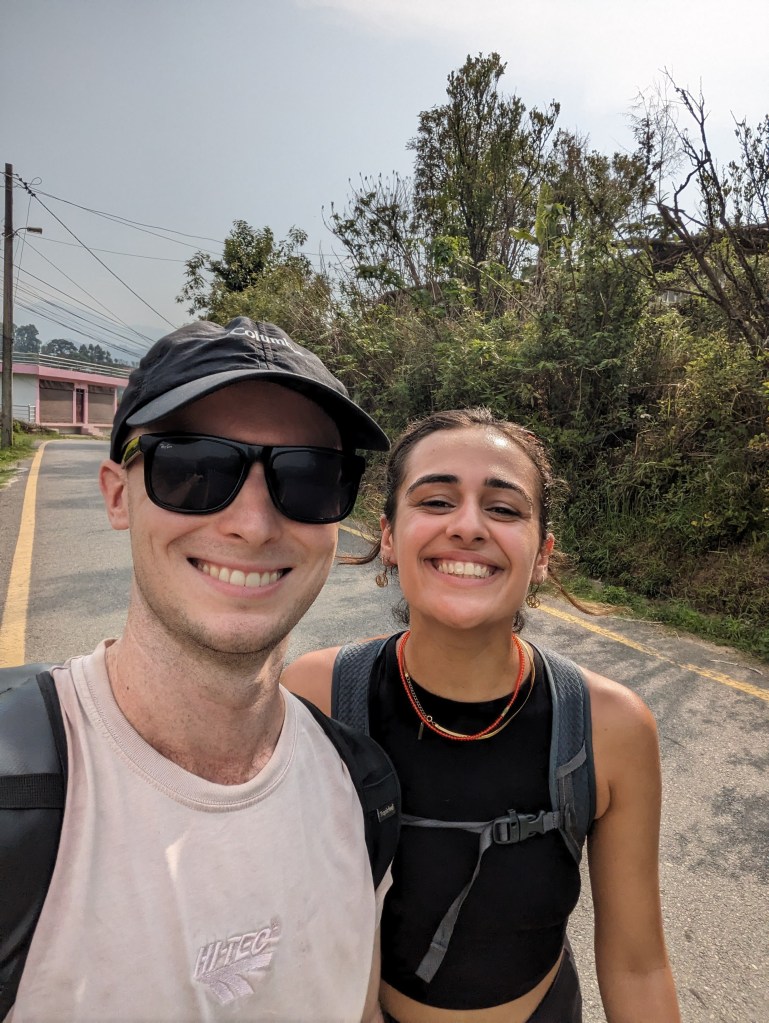
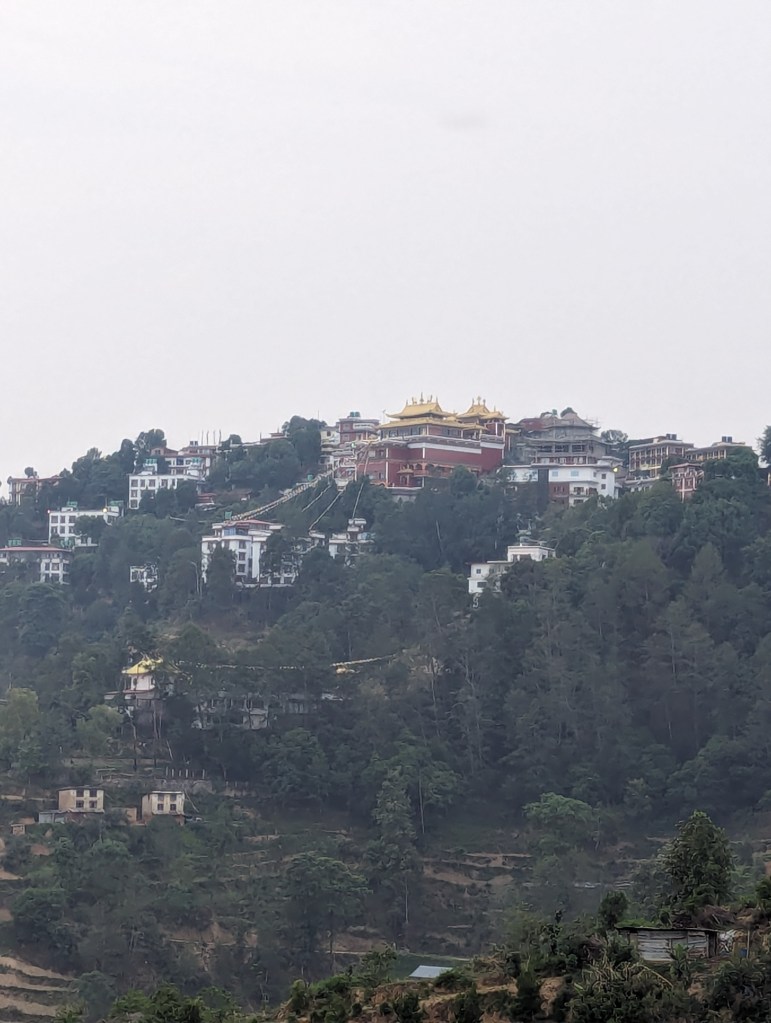
We passed through several settlements, exciting a large number of guard dogs on our way, and finally found the footpath that climbed steeply upwards. We followed this footpath upwards for twenty minutes until we emerged, sweating and breathless, back on the road at the Namobuddha stupa. Namobuddha was a Buddhist monastery perched on one of the tallest hills in the area, and was fabled to be the site where a previous (previous incarnation of Gautama) Buddha had sacrificed himself to feed a hungry tigress and her cubs. We wandered around the stupa, which was much like those we’d seen in Patan, then climbed up another footpath which ascended again steeply to the monastery itself.
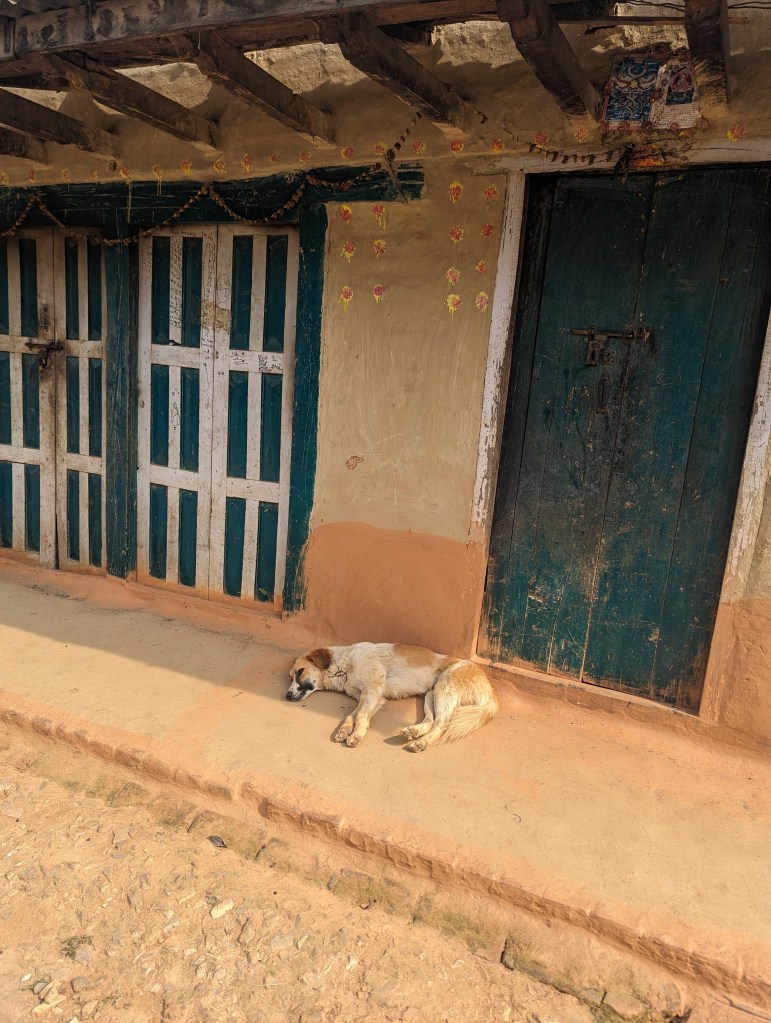
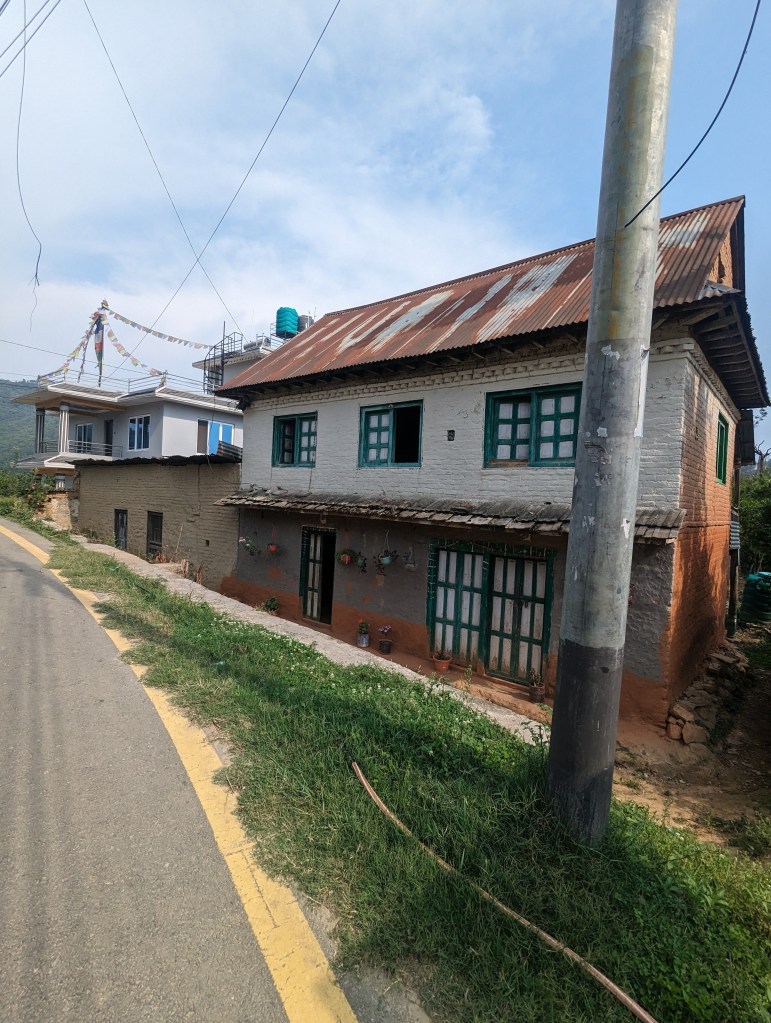
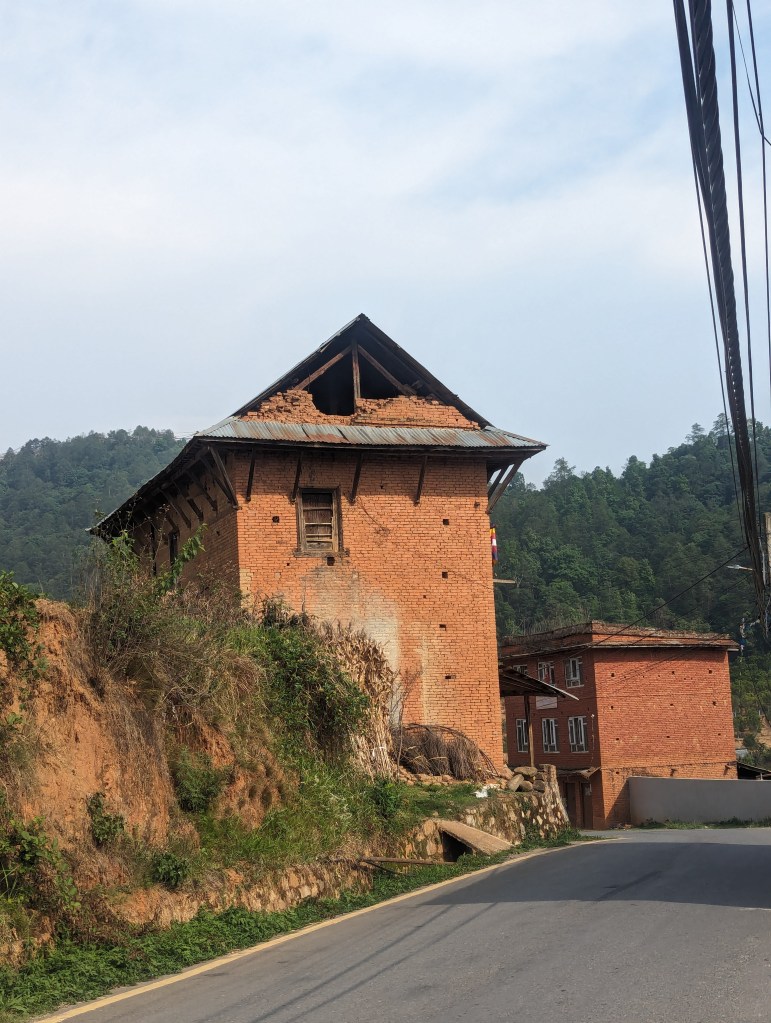

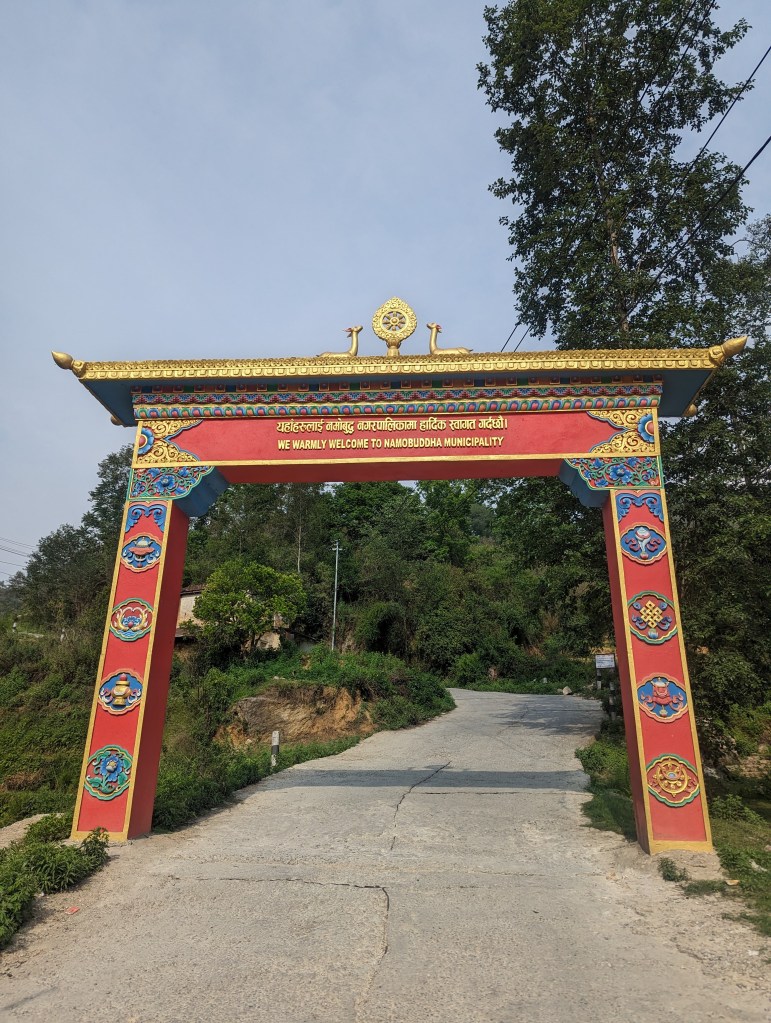

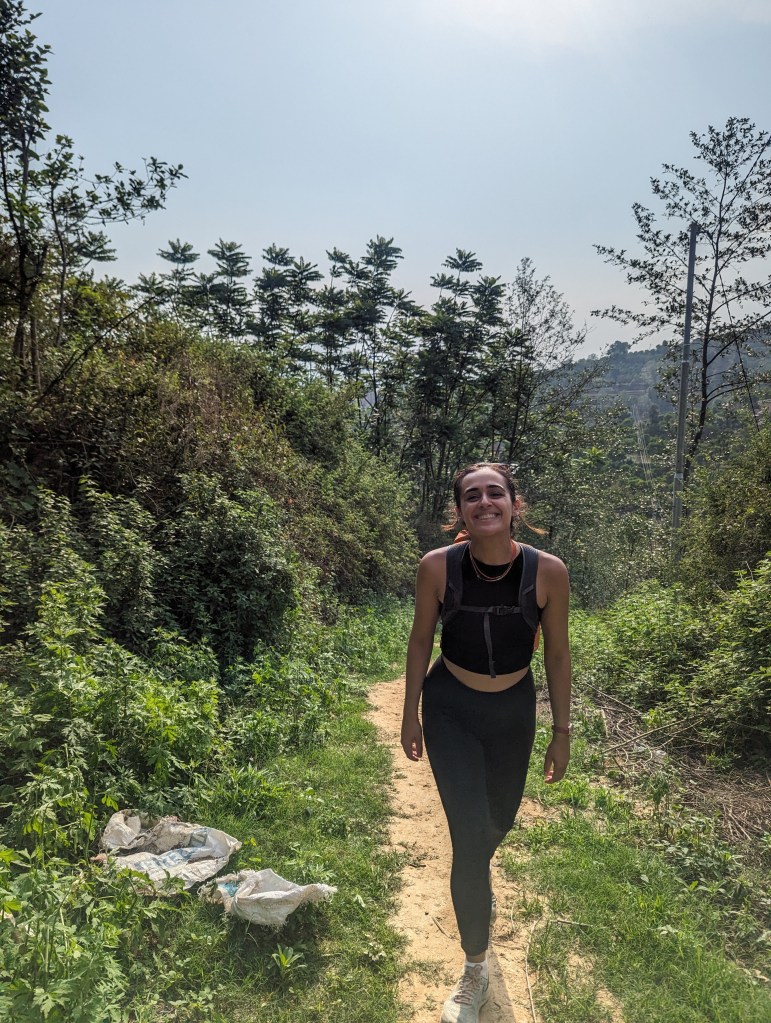
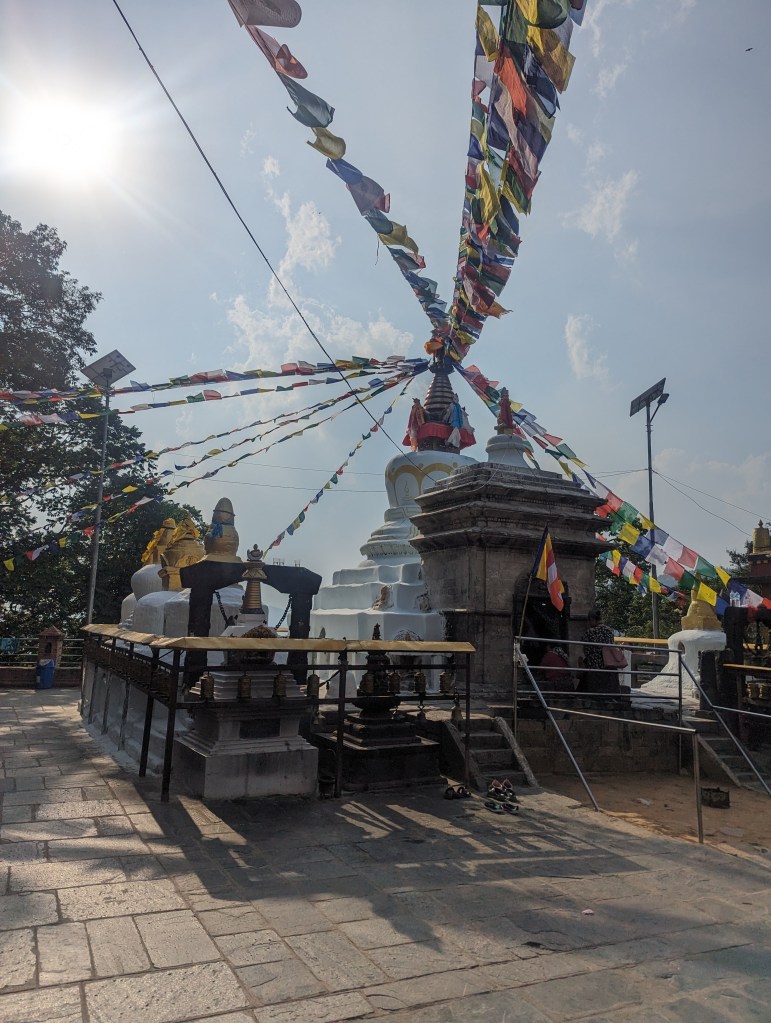

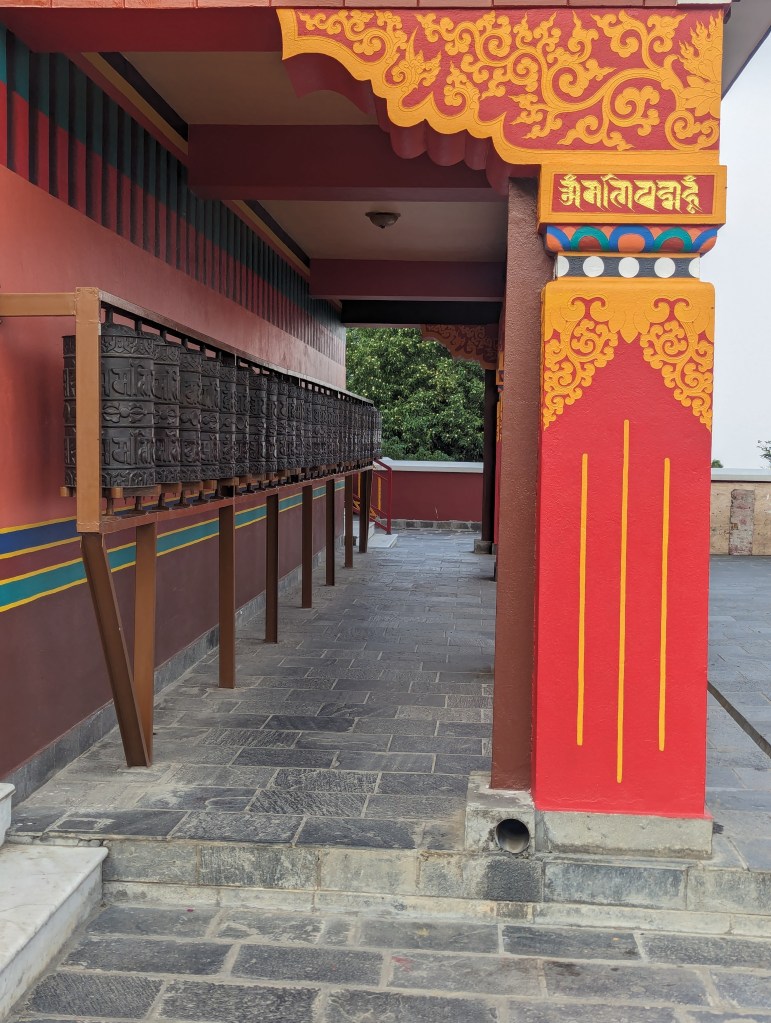
The monastery was quite a spectacle – all red walls and gold roofs – and was home to 250 monks. Some of these, like at the monestaries in Pokhara, where only boys. Some of these boys were playing chase with their robes over their heads as we walked around, clearly in an interval between their lessons. The complex was massive, with several meditation halls, a guest house, accommodation for the junior and senior monks, and the residence of the Rinpoche who was the chief lama of the monastery. We wandered around a few of the prayer halls and statues in peaceful quiet (we seemed to be the only tourists there), before making our way to the homestay we had booked a short walk away.

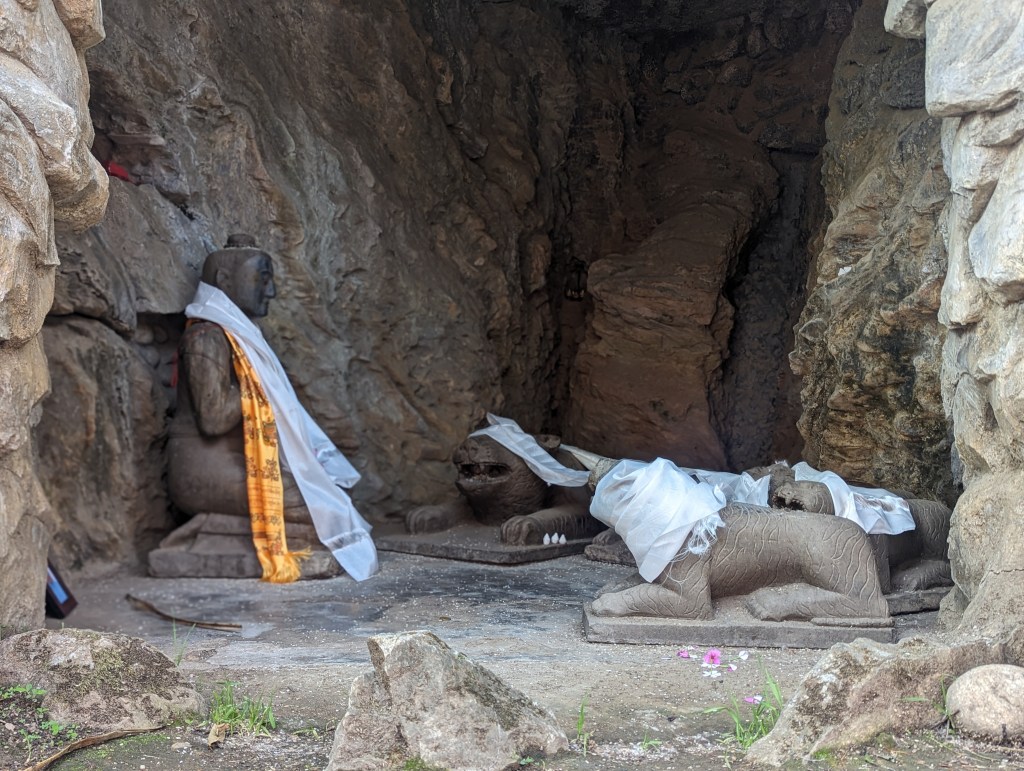
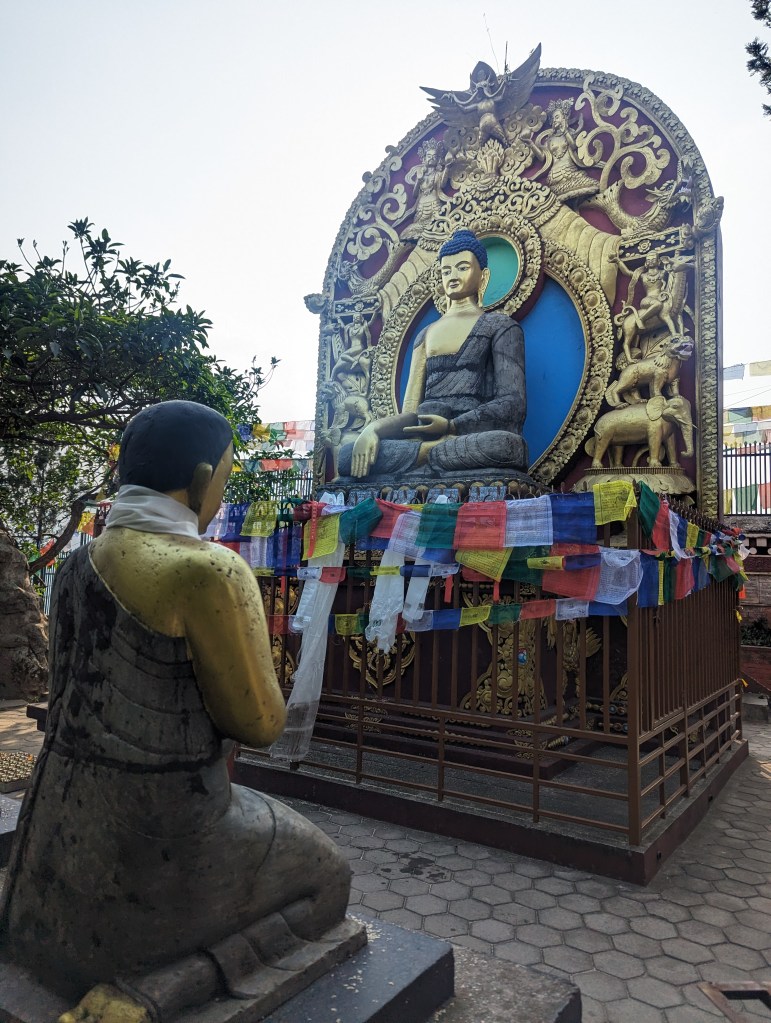

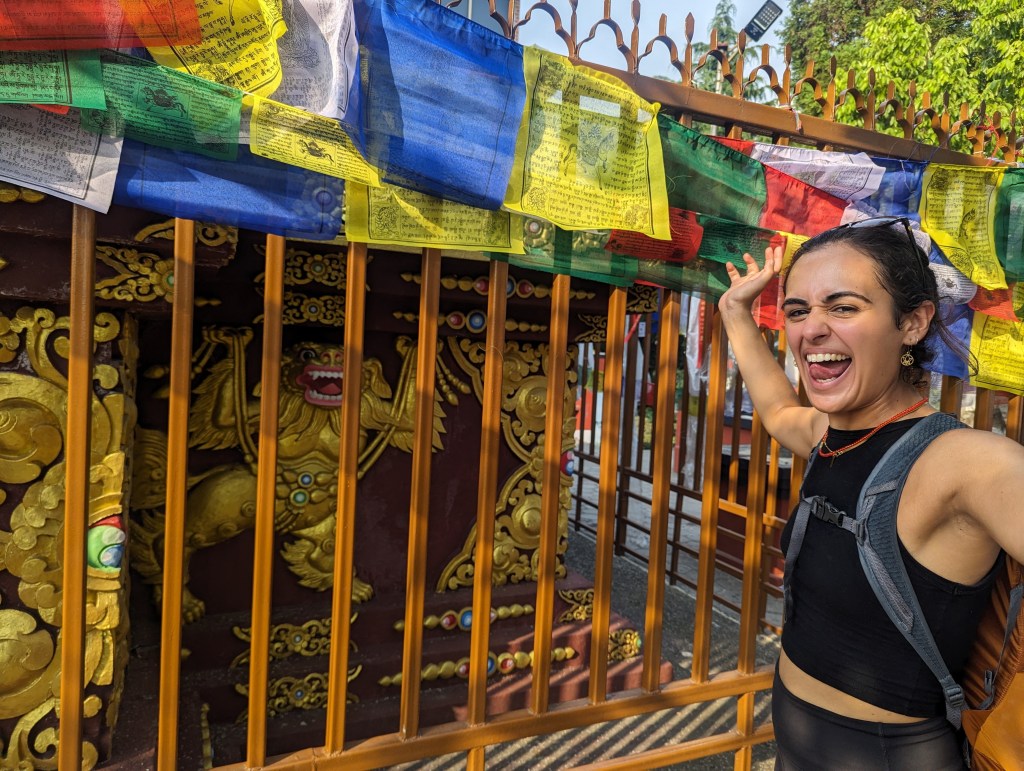

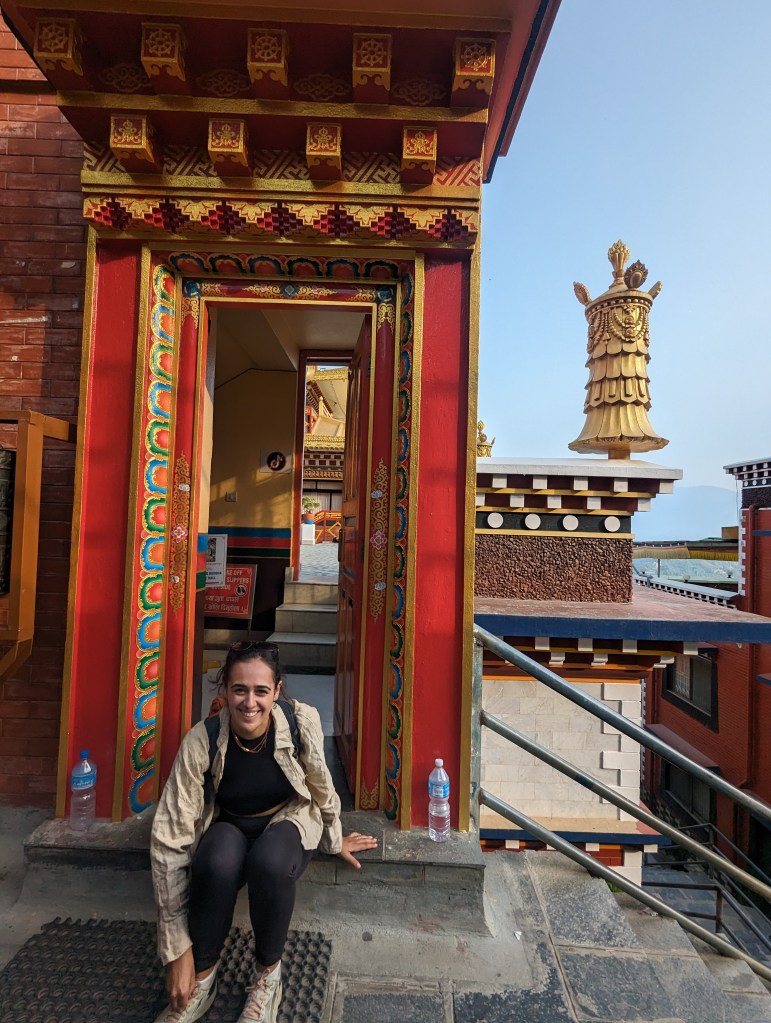
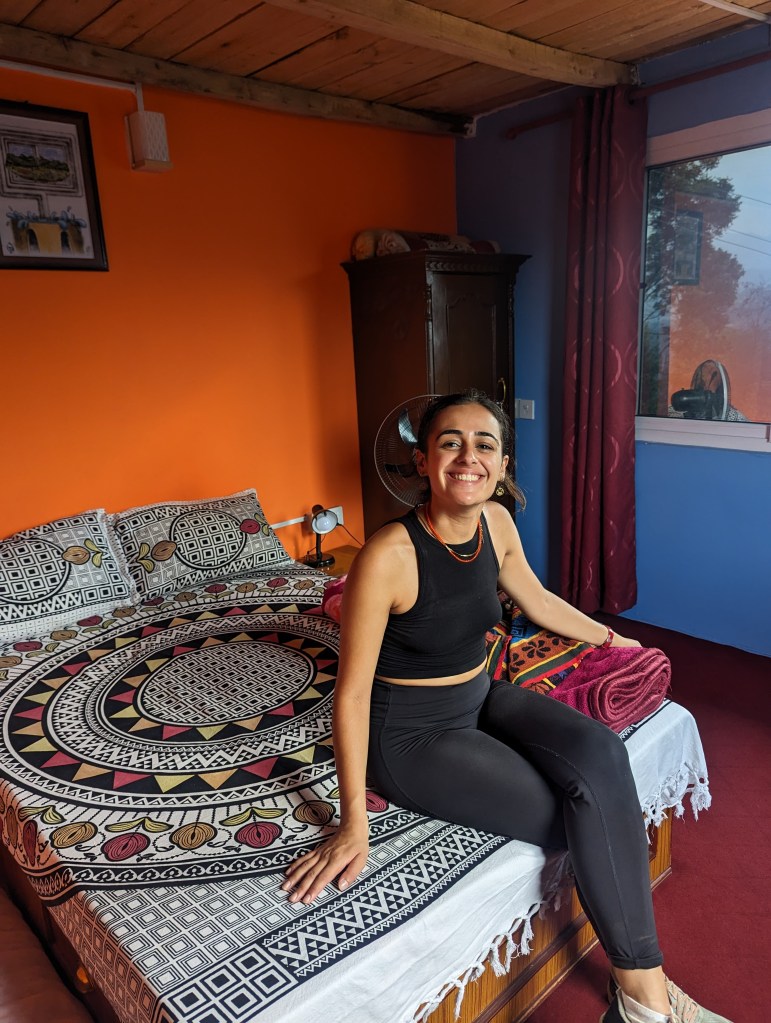
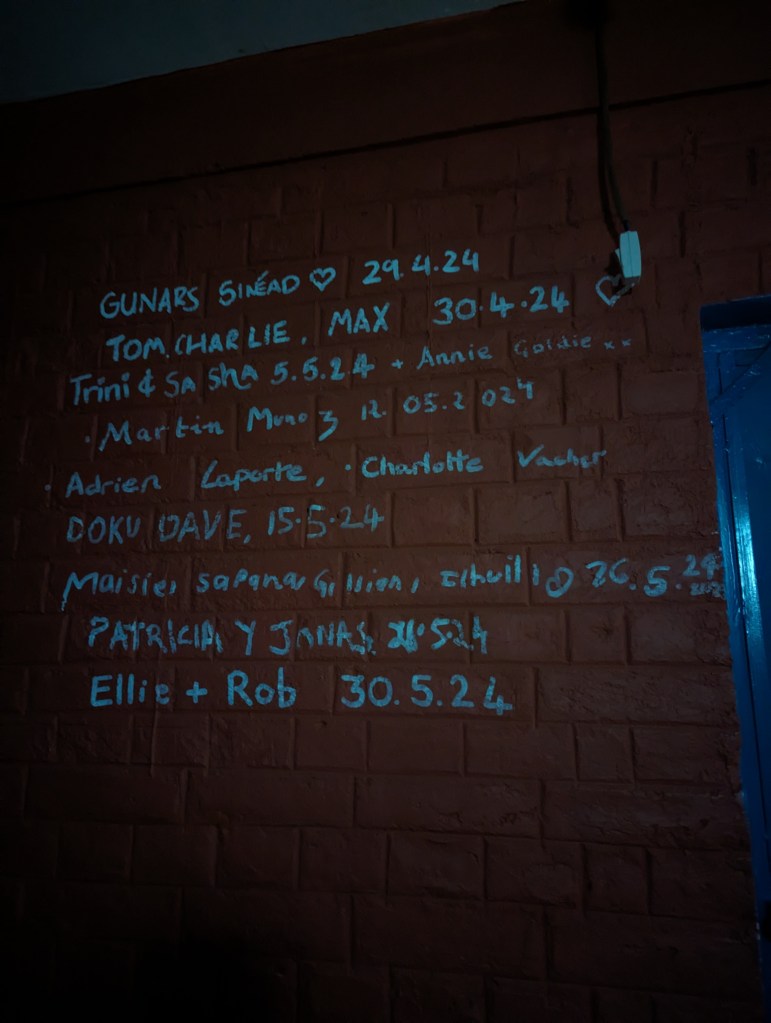
Namaste homestay was in the small settlement of Namobuddha, and overshadowed by the monastery on the hillside. We were greeted by Prem, a Nepali man of about 40, and his young family and shown to our simple but cosy room. We also met Ian, a Scot who ran the homestay with Prem, as well as a NGO in the rural villages around Kathmandu installing water pipelines for fresh water. Prem and Ian struck a perfect balance of friendliness while still allowing us space and time to relax after our long walk.

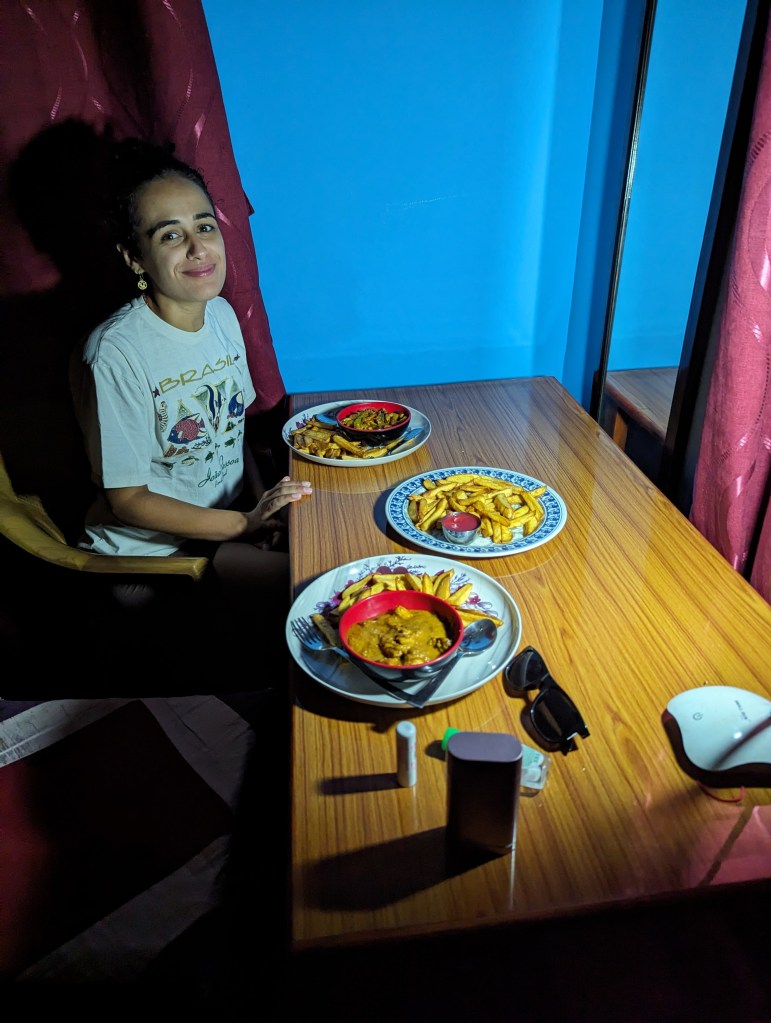
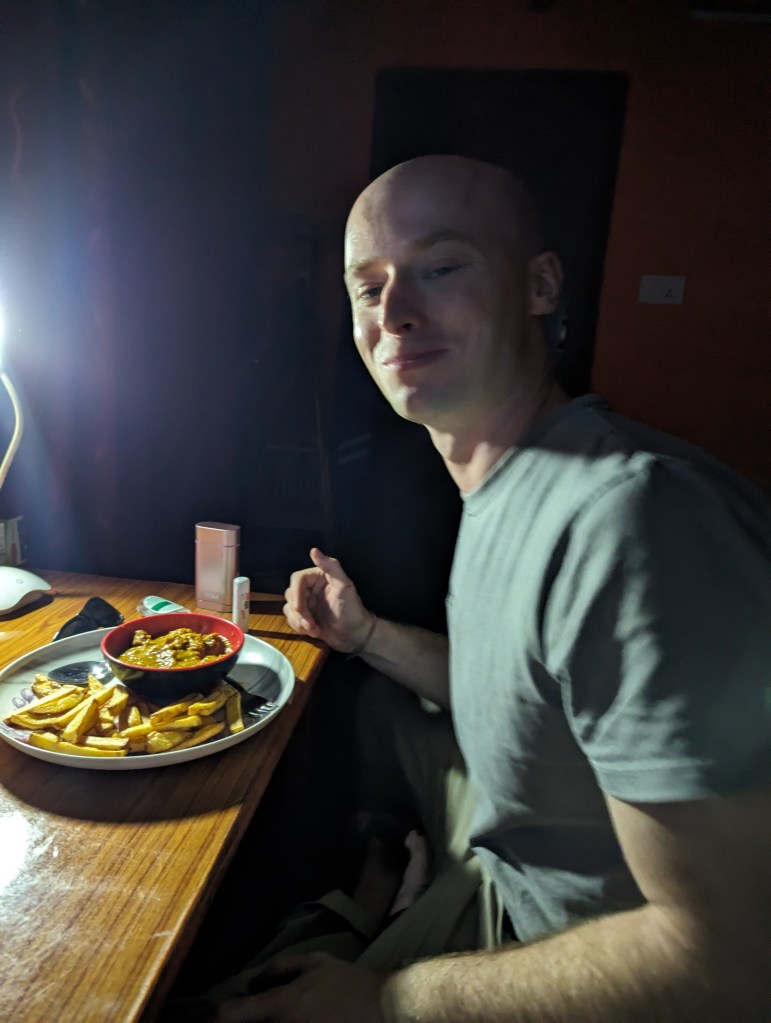
We ordered our dinner of Nepali curry and chips from Prem, who was an ex-chef and who made the food from scratch to order. As we waiting, reading in the bedroom, the winds outside picked up and rattled the tin roof above us. Before long a storm had rolled in, brining terrific thunder and lightning and torrential rain and winds.
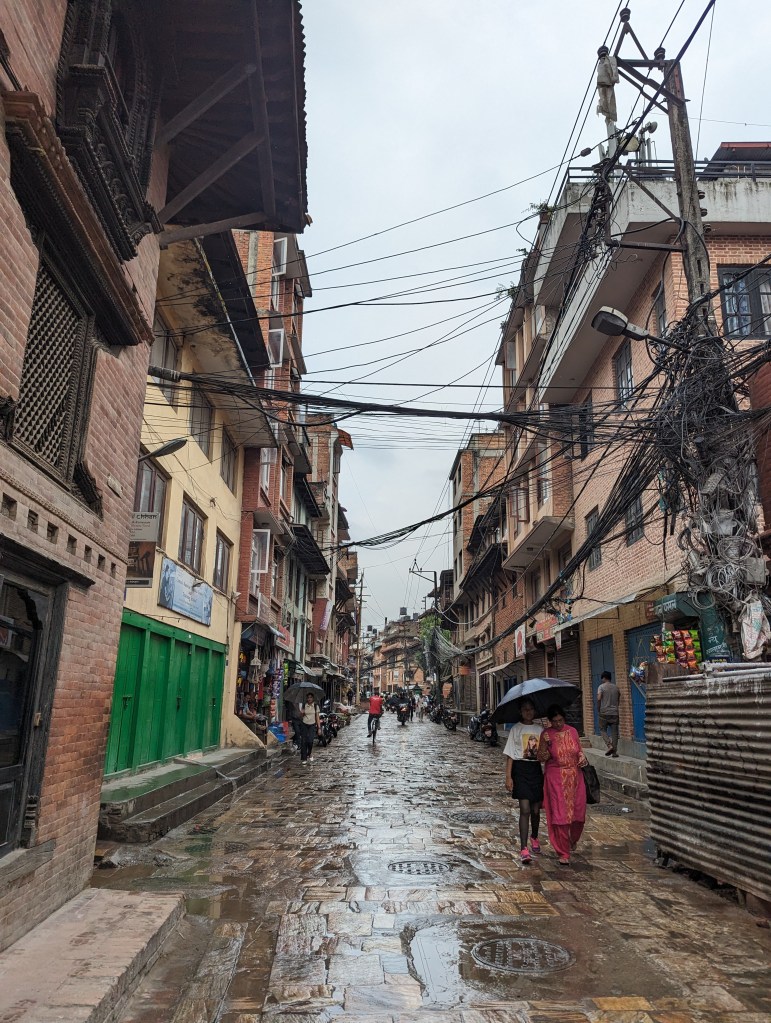
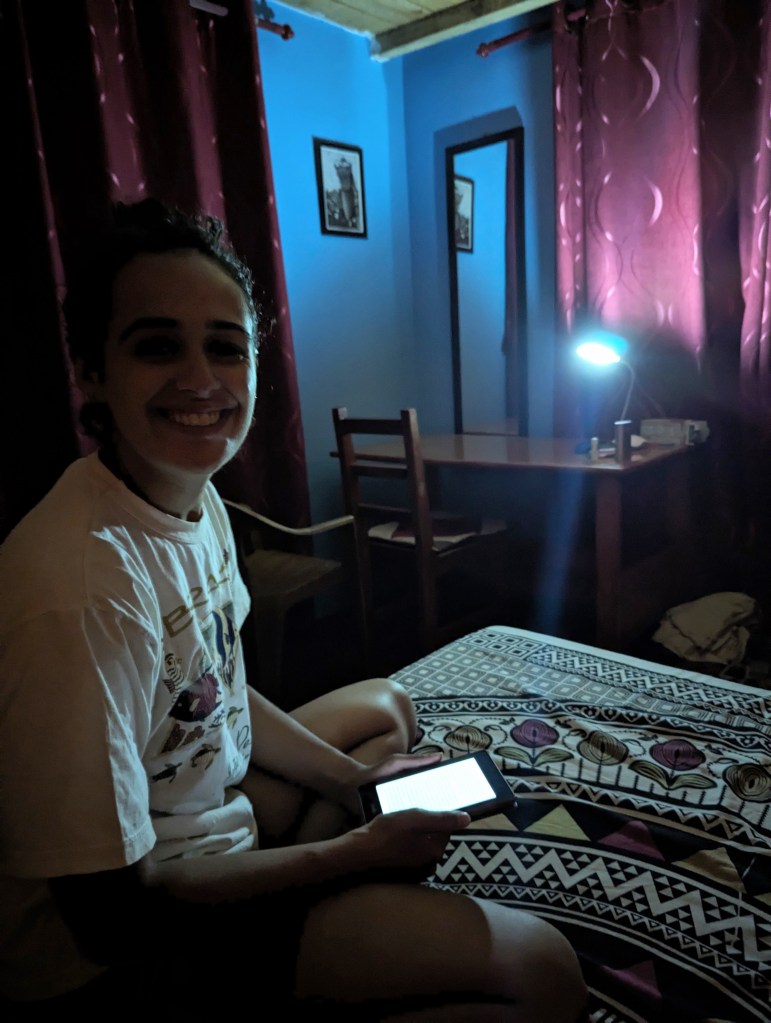
Predictably, this immediately knocked out the power (the electricity cables in Nepal are in a state of disarray and often telegraph poles have uncountable numbers of wires wrapped around them and buzz ominously), so Prem came up with a battery lamp for the room. Before long, he returned with our dinner and a big bottle of Nepali Ice beer, which we split between us. It was a pretty delightful meal, sitting with the light of the lamp and near constant lightning, listening to the thunder and rattling roof above us, and enjoying Prem’s curry and massive portion of chips. Once we’d eaten, there was nothing else to do than to read on the bed until it was time to get some sleep in preparation for the next leg of the hike in the morning.
So that we divide Patan equally, three days in the first blog post and three days in the second blog post, we will end this blog here. In the next blog, we will cover the second day of the hike and our last two days back in Patan.
Until then,
Ellie & Rob xxx


 Rob's India & Nepal Blog
Leave a comment