We still had two full days in Pokhara left before we headed back to the Kathmandu valley, and we were in full swing of making the most of the time we had. In this blog, we will cover those two full days as well as the travel day between Pokhara and our next stop in Patan.
Saturday –
AM/PM cafe had firmly taken on the privileged role of our breakfast stop by Saturday, and we were there early because we were to be picked up for white water rafting at 9am from our hotel. We ate the usual variation of eggs on toast, and walked back to the hotel where the rafting organisers were waiting for us. The Seti river, which we had seen pass through the tiny gorge the previous day, was much broader to the west of the city. The minibus stopped to pick up our river guides, as well as a party of two young Chinese couples, and a couple of young Nepalese girls, then bounced out of the city to the west along impossibly bumpy tracks to get to our “put in point”.
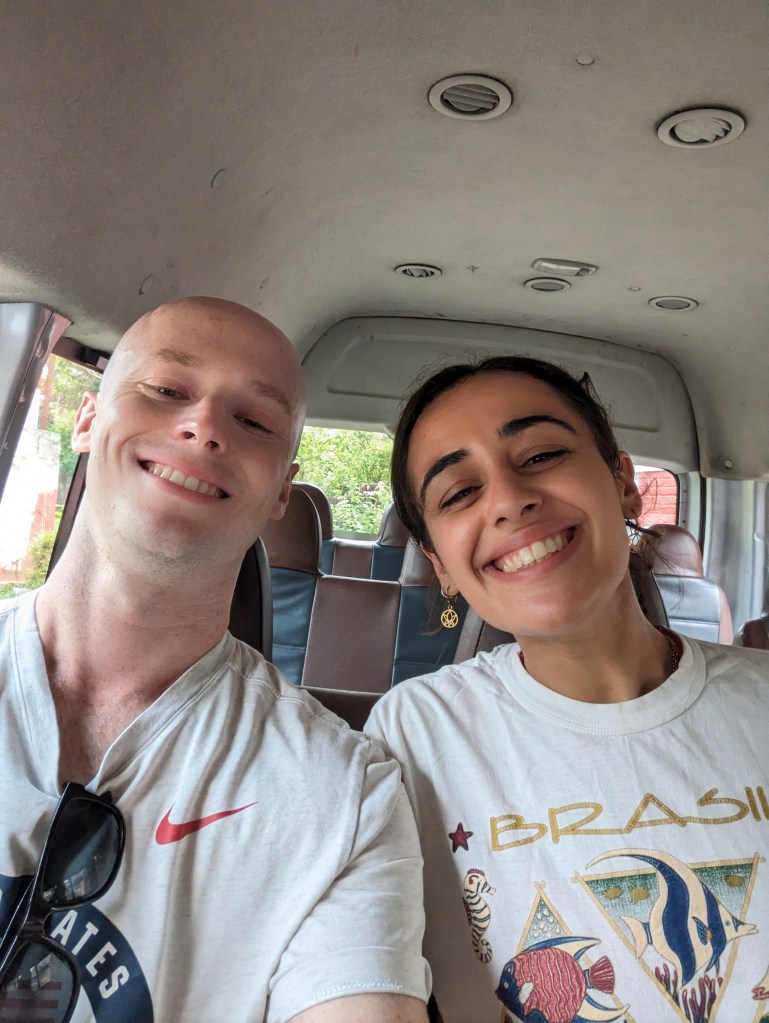
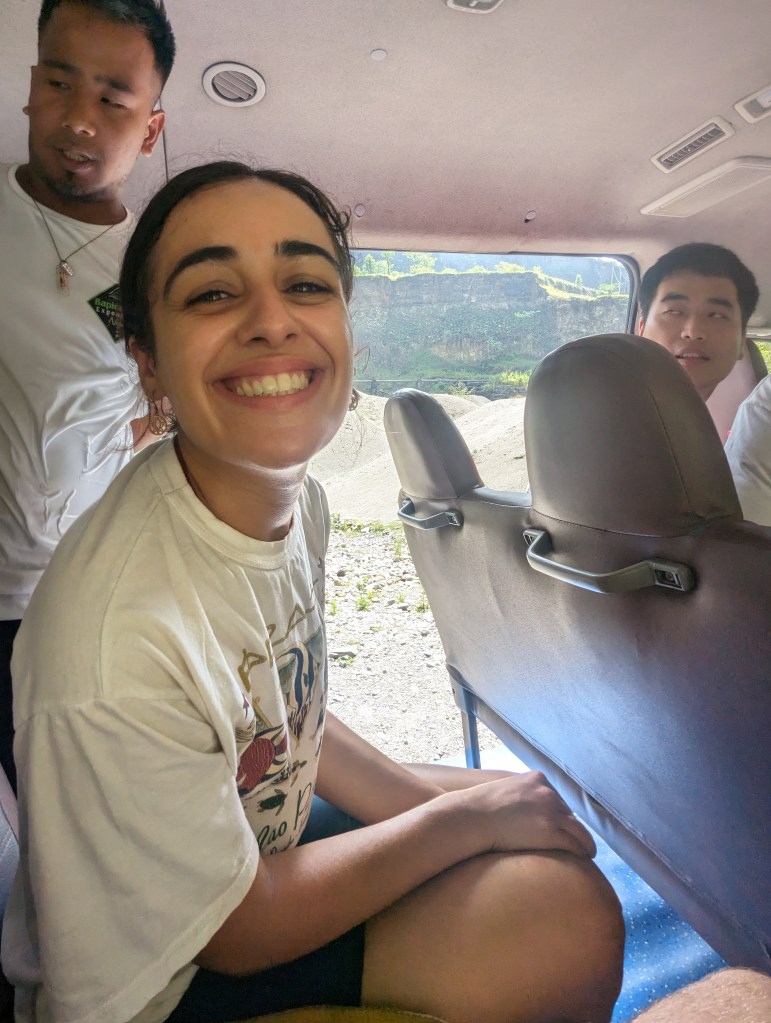
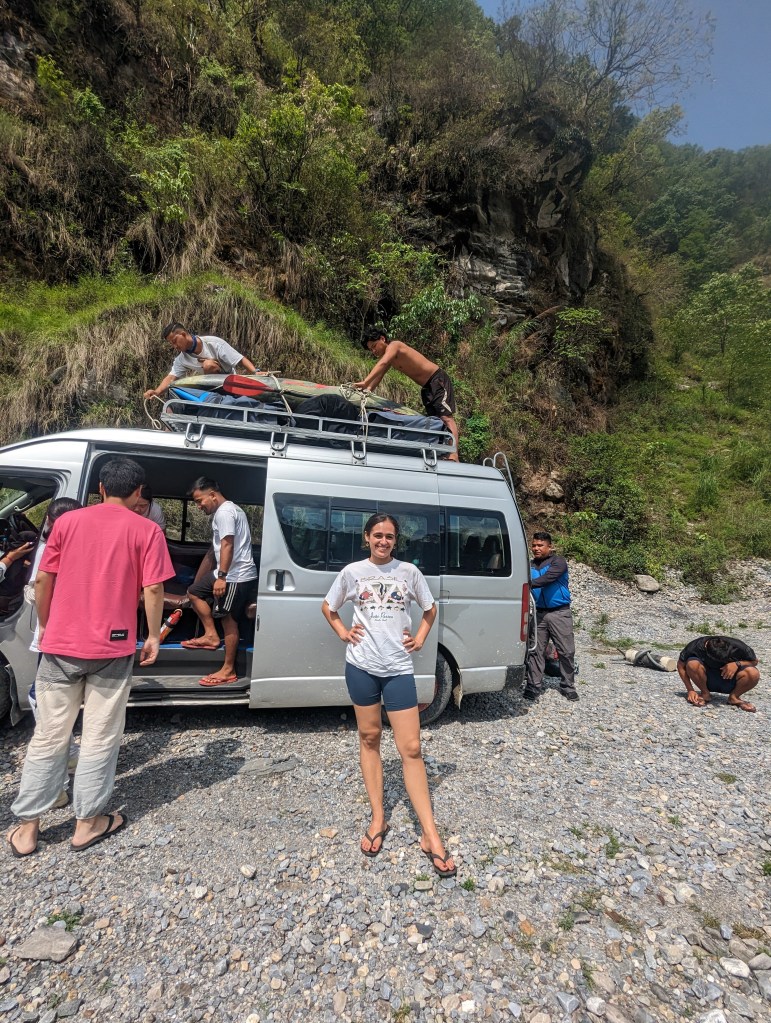
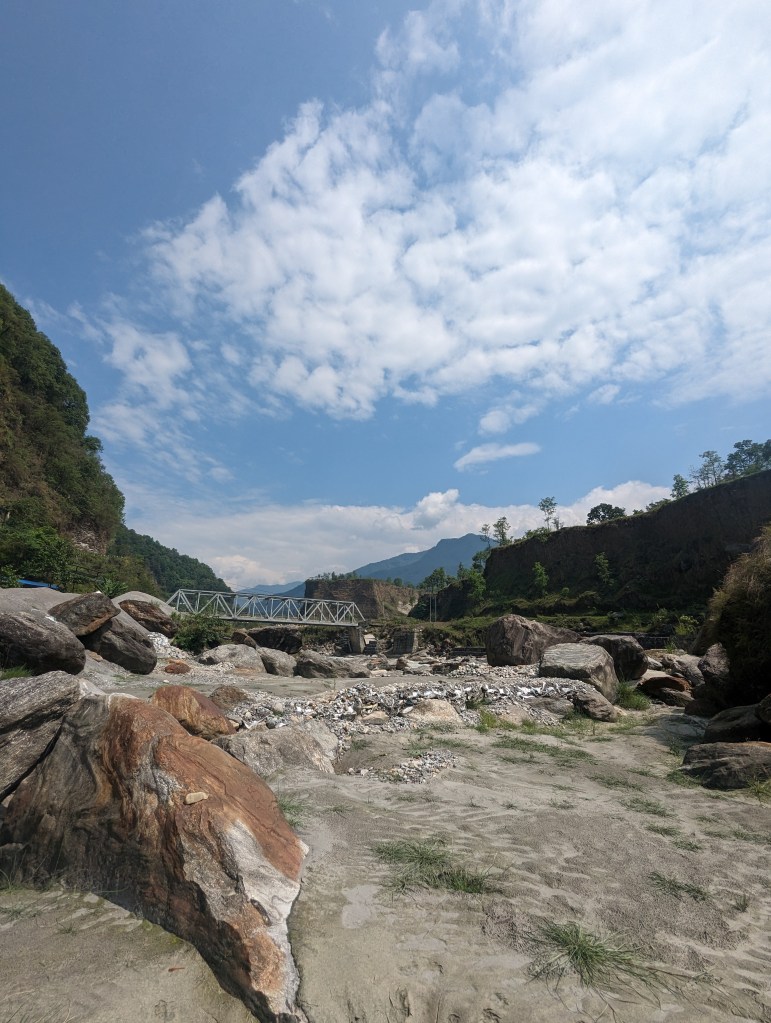
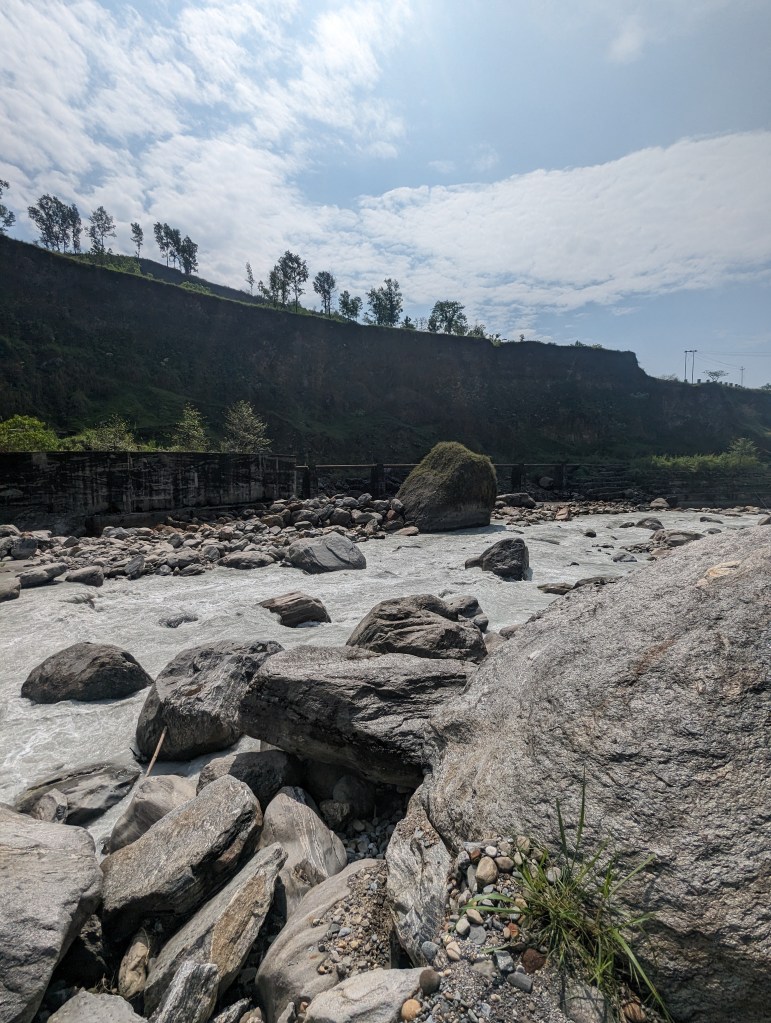
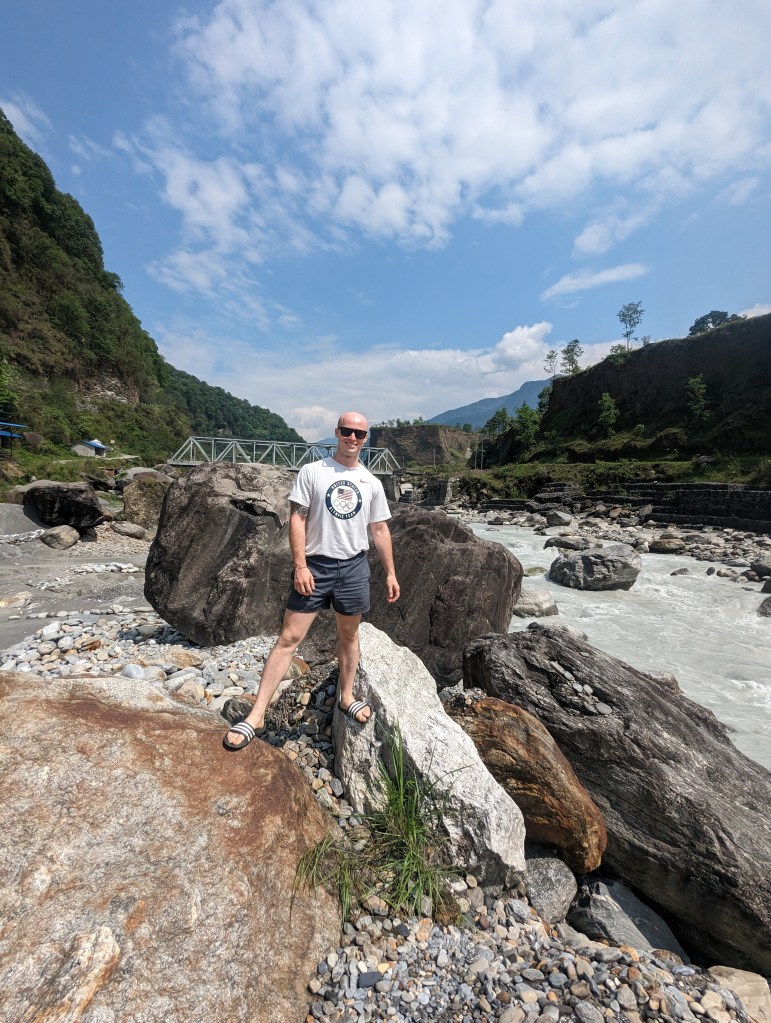
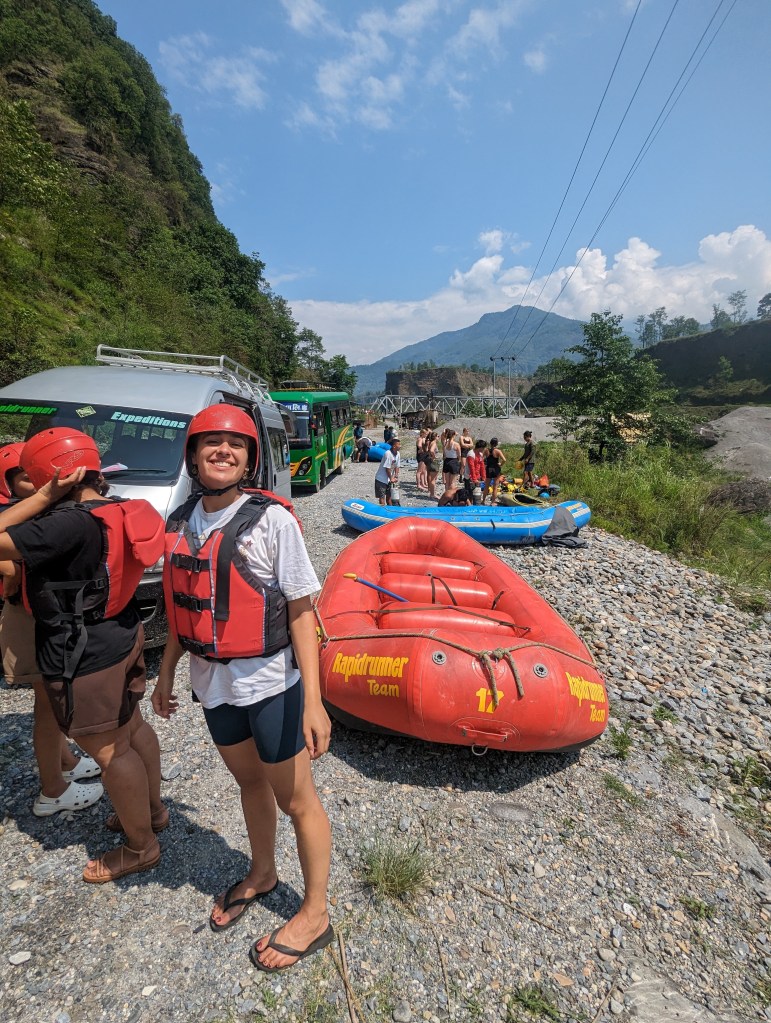
We all disembarked on the rocky riverbank, and waited while the guides pumped up the two rafts. The river was milky white, foaming with rapids, and looked a little concerningly shallow. Our head guide gave us a safety talk, though on several occasions had to stop as one of the Chinese women was talking over him to her partner. It was explained by her friend that she wasn’t listening to the safety instructions and instructions on how to paddle the boat because she didn’t speak any English, so we were quite relieved when they weren’t in our raft.
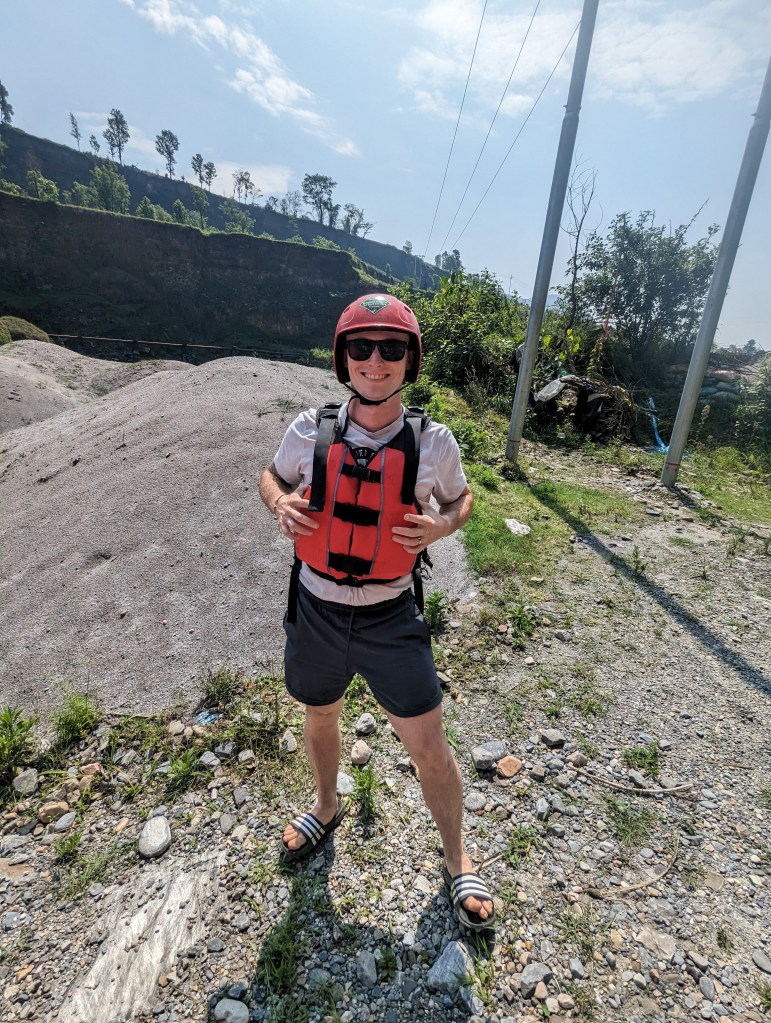
The paddling system seemed reasonably complex, and we were sat at the front on each side of the raft with one foot wedged under the seat to anchor ourselves and without which you could apparently “fall out at any time”. The raft guide sat at the back shouting commands like “go forward” – where everyone had to paddle in unison forwards, “go back” – every to paddle backwards in unison, – “jump left” – everyone on the right side of the boat had to jump to the left side, “jump right” – the same but other way around, “get down” – where we all had to get into the bottom of the raft and hope for the best.
Additionally, we were given brief and convoluted instructions about what to do if we were to fall out of the boat, which effectively were to try and get back in if at all possible, and if not to cross your arms, lie back and think of England until you hit a rock or ended up through the rapids. We were also instructed about a mysterious “safety kayak” that might come to our aid (although it was threatened that if you held on to the kayak in the wrong way, the kayaker would dislodge you back into the rapids with his paddle), but the kayak was never to be seen throughout the entire course of the rafting.
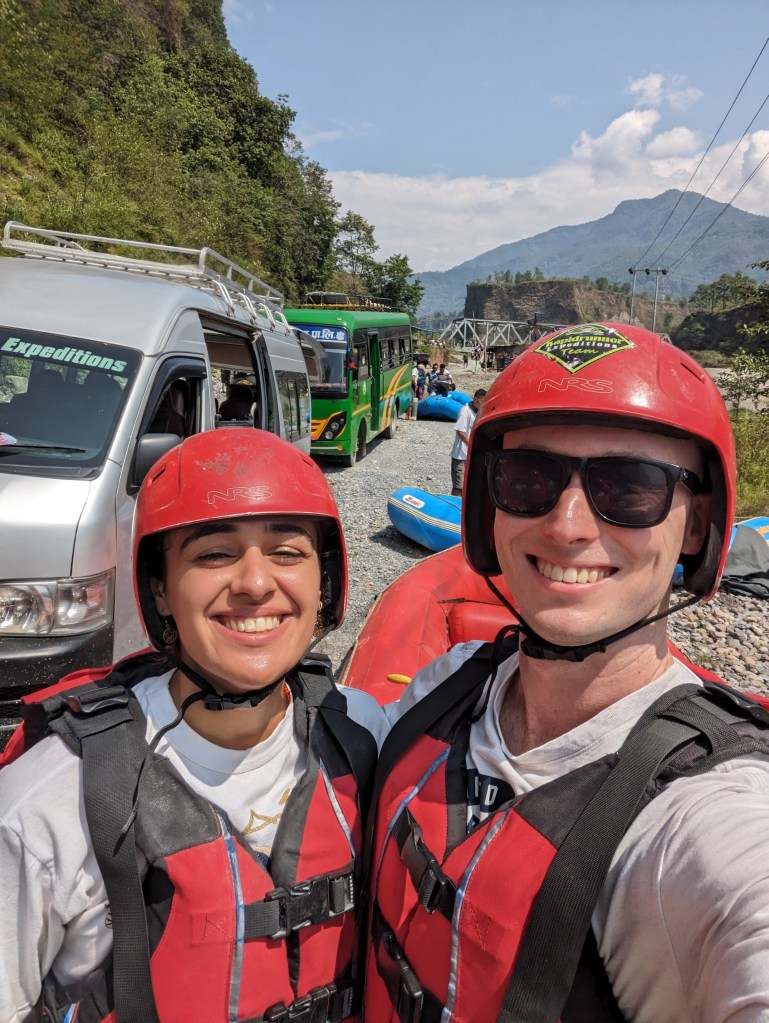
Anyway, Ellie and I were placed at the left and right front corner respectively, with the two young Nepalis who seemed as if they’d done it before behind us, and our two guides behind them. We set off down the river, and were immediately dodging large rocks and pelting down the white water. The head guide had taken the other boat, largely I think because he was the most experienced and it seemed that at least two of the Chinese party had absolutely no idea what was going on. Our guide was also good, but he had a tough job getting the commands just right in order for the boat to pass through the narrow gaps between rocks rather than going into them or over them.
The head guide later explained that the Seti river wasn’t a high volume river at this point, which meant that rafting it was like running an obstacle course. One missed paddle, or an imbalance of paddling of either side of the boat, was the difference between dodging and colliding with rocks, which became clear quite quickly into the course. We spent an alarming amount of time going down the rapids backwards after being turned around by a rock collision, and on several occasions the boat got wedged and one side would start filling up with water.
We were able to dislodge the boat most of the time, but about twenty minutes in we got ourselves properly stuck in the middle of the rapids. Our guides struggled to get us moving again, but the boat was largely submerged and so we were instructed to clamber out onto the small rock on which the boat was stuck. Ellie was the last to climb out on the slippery rock on all fours, and as soon as she was out the boat started moving and the guides shouted to get back in. Before Ellie had a chance to turn around, the guides and the Nepali girls were back in the boat and speeding away down the river, and Ellie and I were standing on the rock in the middle of the river.
The river was far too fast flowing to try to swim across, so we waited for the boat to pull up just past the section of rapids, and one the guides came along the bank to us. He produced a bag with a rope inside and threw us one end. I was hoping we would use this to hold onto as we tried to walk across, but to our slight dismay he told us to hold onto one end and jump into the middle of the rapids. Ellie let me go first to “see what would happen”, so after a moment’s hesitation I jumped off our little rock and into the river. I was submerged for a few seconds then came out gasping and swinging on the end of the rope. After a few moments I hit some rocks and was able to drag myself to shore.
It was Ellie’s turn next, and she threw herself in and disappeared under the white water for what felt like quite a long time. Finally, she emerged and was reeled in by our guide. We walked back to the raft with only a couple of bumps and still in good spirits, though entirely soaked through. We set back off down the river, with either us or our guide getting the hang of things as we only got stuck momentarily a couple more times.
A short while later we were instructed to get out of the boats and walk a short distance over the river bank which rose steeply into a canyon, then came back down again. Our guides took the boats through this section as it was deemed too narrow to be safe for us, then waited for us at the other side. As we came down off the hill, the head guide who was walking with us said that there was an opportunity for cliff jumping, and that we all should do it. Ellie looked at me and I said that I thought he must be joking. He was, in fact, not joking, and led us to the cliff face seven metres or so above the water. “Just jump down there”, he said. It became apparent that everyone was looking at me, though the Chinese group had already thought better of it and taken the walking route down. The height was dizzying to look down on, so I decided the best thing to do would be just to jump.
It felt like it took quite a while to hit the water, and then quite a while again to resurface, even with the lifejacket. I trod water whilst I watched the two Nepali girls jump, leaving Ellie at the top. I wasn’t sure if she would go through with it, as she likes heights less than me but, after a moment’s thought, she too plunged off the side of the cliff and into the water.
After that exhilarating interlude, we were back on the boats and barrelling, often still backwards, down the rapids. On two occasions we went down a drop or collided with an unseen rock whilst going at quite a pass. This jolted everyone, but always sent Ellie in particular cartwheeling out of her seat and colliding with either me or, at one point, the Nepali girl in the opposite corner of the boat. After being rebuked by our guide who at one point after hitting yet another rock said “when I say row, you have to row hard and not stop”, we were both going great guns whenever we were told to paddle, so as we pulled the boats up at the end of the course we were thoroughly exhausted.
The very last stretch the guide invited us to jump off of the boat and float down on our backs, an opportunity I took up but found no-one joined me for. This was just as well as getting back into the boat was no easy task. The hull of the boat was too high for me to get my arms around and had to be hoinked up like a fish by Ellie grabbing the collar of my life jacket and tugging me up out of the water.
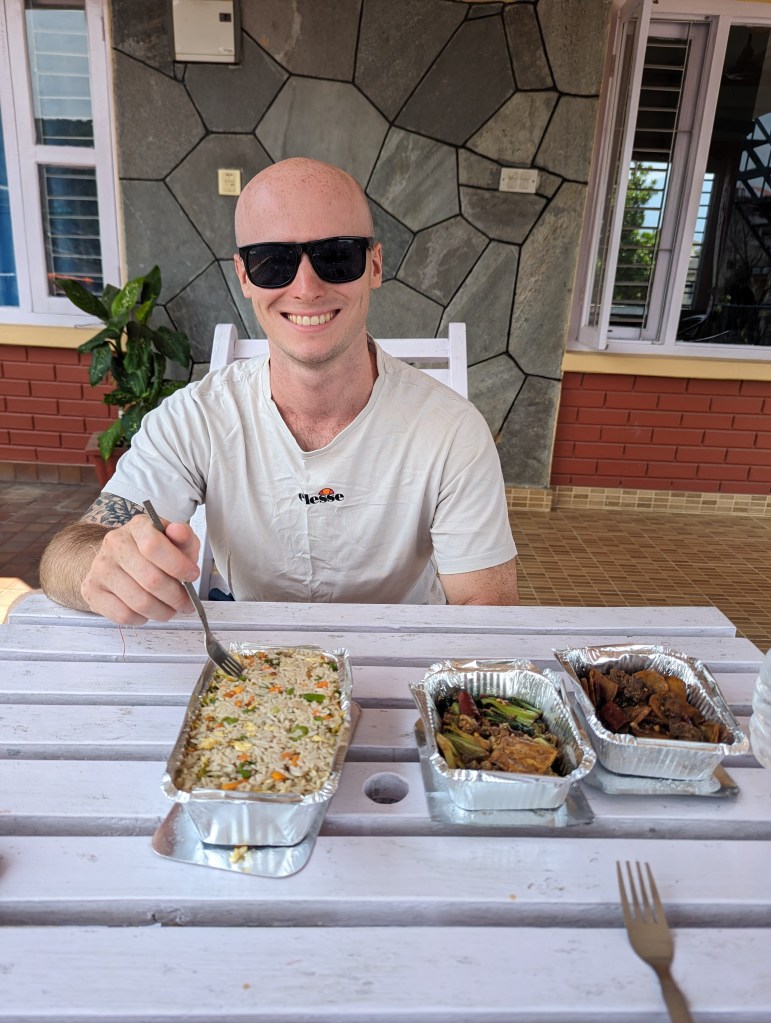
We were promised a picnic of fruit and cheese sandwiches at the end of course, but this turned out to be just a banana and a box of fruit juice each as we drove back into Pokhara. We didn’t mind this, however, as we had some leftover Chinese from the day before in the fridge at home which was a more appealing lunch in any case. I should say at this point that I had made the rafting sound like a disaster from beginning to end, but in actual fact it was an absolute scream and some of the most fun we’ve had.
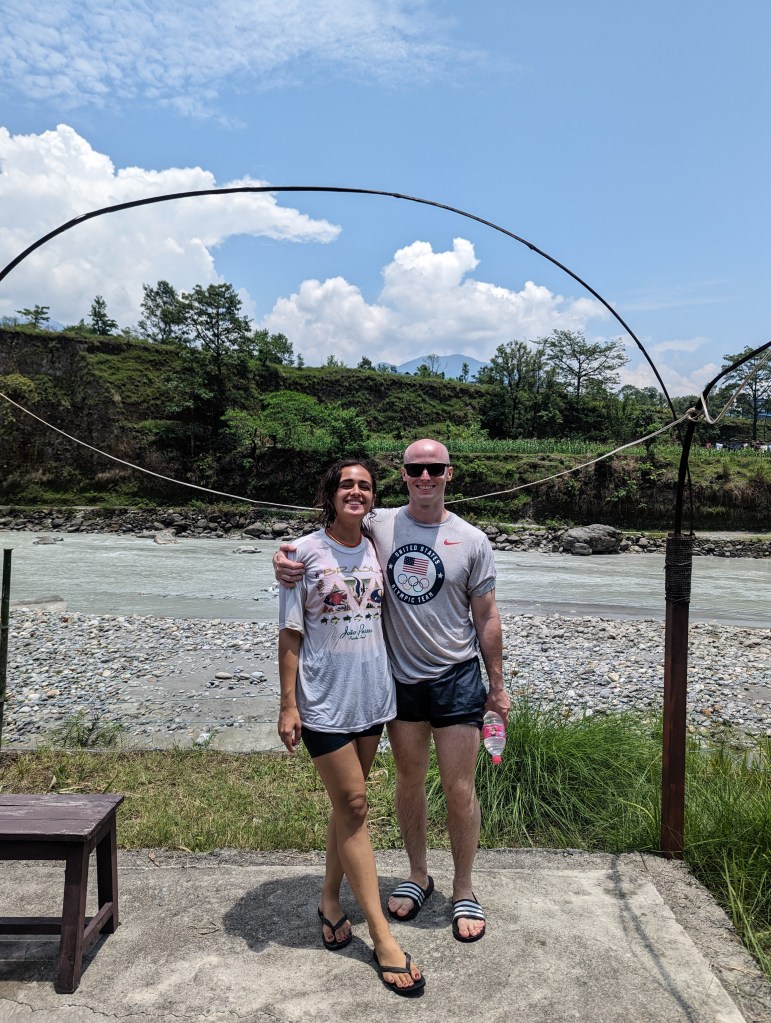
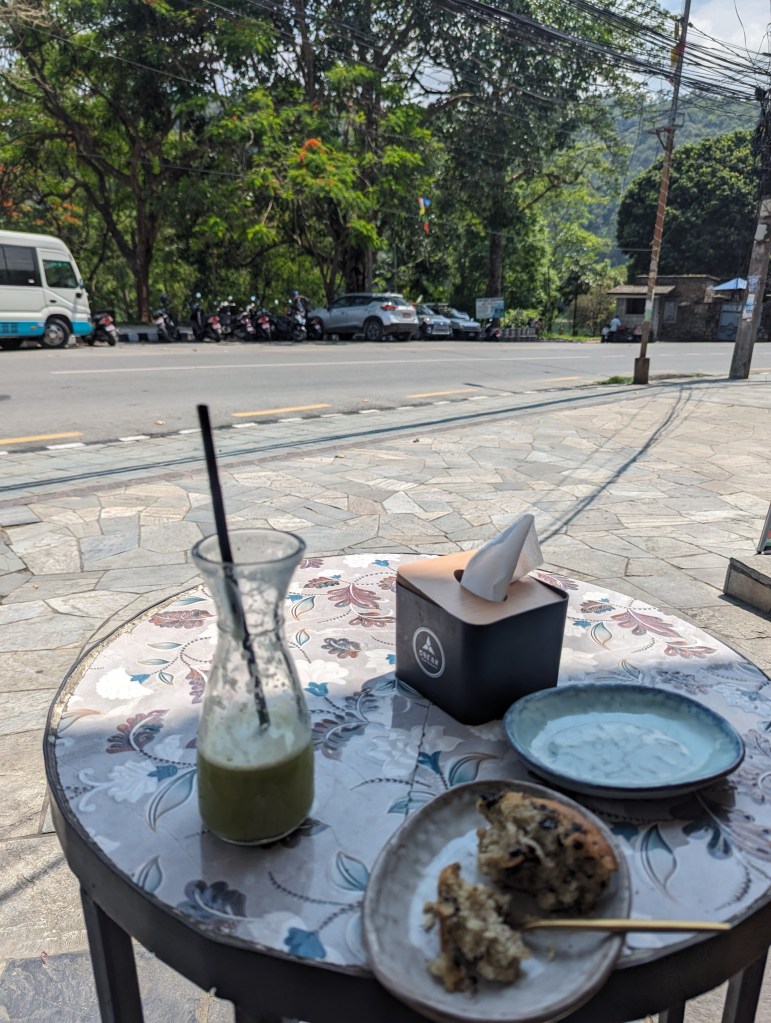
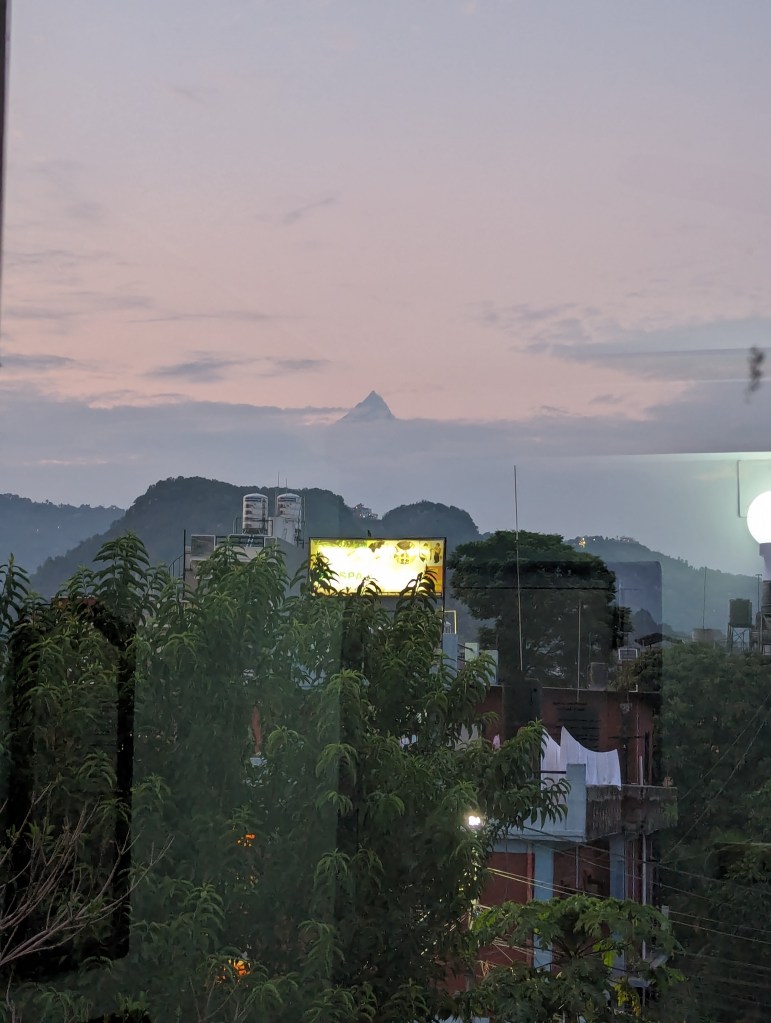
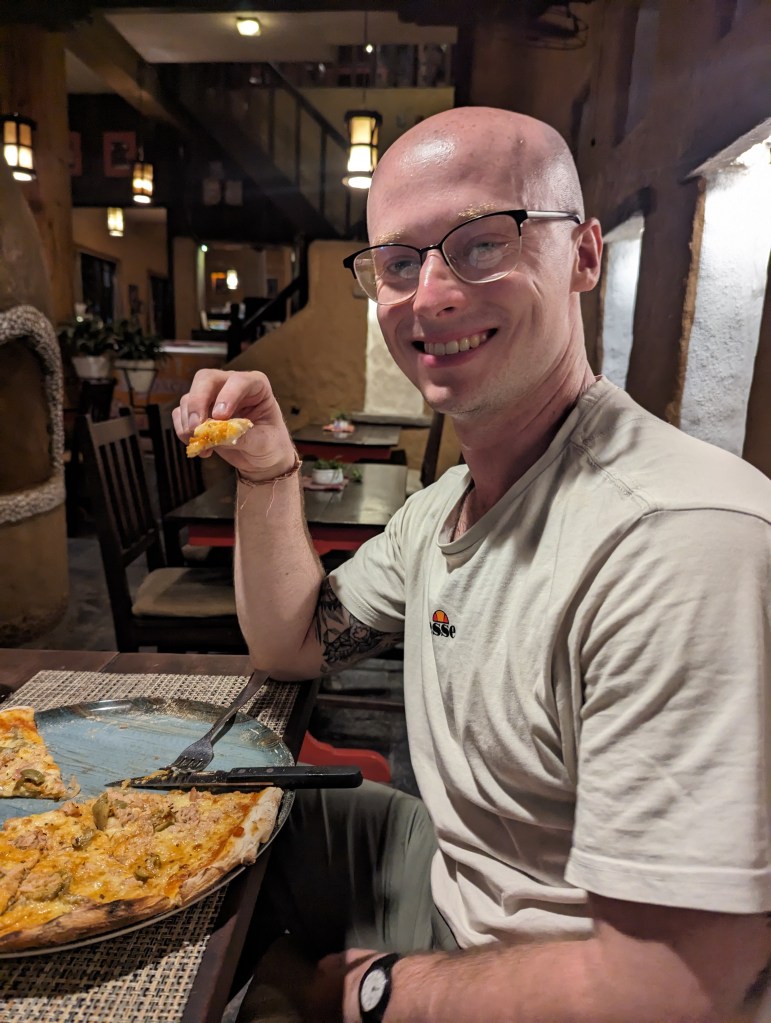
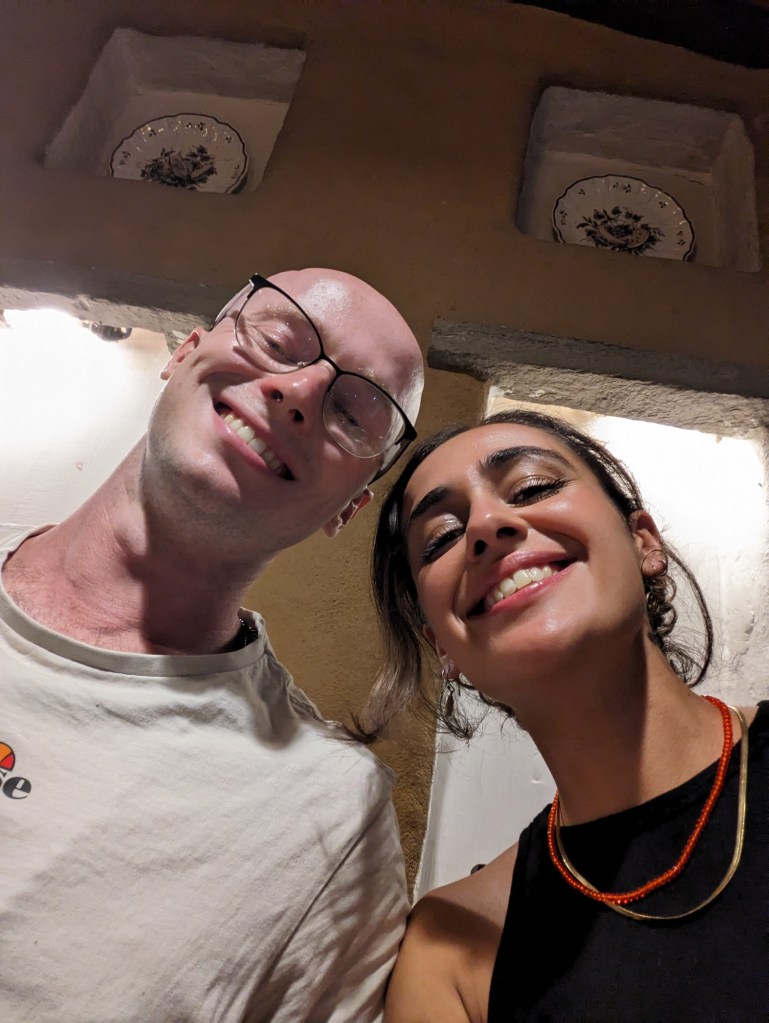
We came home, dried off, and had our Chinese. We just about managed to drag ourselves out of the room and to a nearby juice bar for a smoothie and a delicious banana muffin, but headed back to the room to lie down. It wasn’t until the early evening that we could summon the energy to get back out into Pokhara, and even then we made it the short way to a local Italian restaurant for a pizza and pasta for dinner. From there, we walked home with a chocolate ice-cream cone each, and made our way to bed.

Sunday –
Earlier in the week we’d overslept our alarms for a planned long walk so we were determined to get out for it on Sunday. We wanted to walk all the way around Phewa Lake, taking in the Buddhist Peace Pagoda on the way and circling round the various hillside settlements on the opposite, much less touristed side. Unfortunately we woke up to torrential rain, so spent the first part of the morning sitting on the bed eating hobnobs waiting for it to stop.
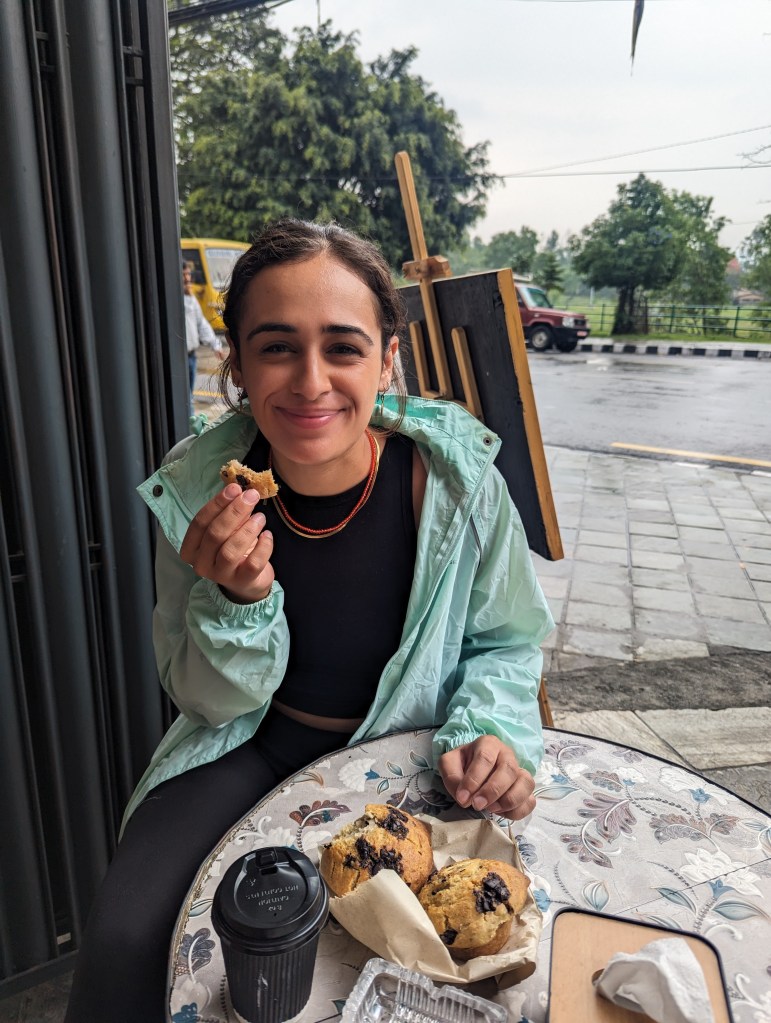
By 9 it had eased enough we decided to make a go of it, and after a small detour to grab another of the earlier mentioned banana muffins and to-go coffees we headed off around the lake. We were trying to follow a map we’d found online, which served us reasonably well most of the time. After some debate over whether we should attempt a slatted bridge with half of the slats missing (no prizes for who was on which side) we strolled through a small village and immediately felt we’d suddenly entered rural Nepal. We were briefly stumped by the path on our map seeming to walk off the edge of a hill but were quickly pointed in the right direction by a kind local man shouting “Peace Pagoda? That way!” – clearly not the first tourists to face this issue.

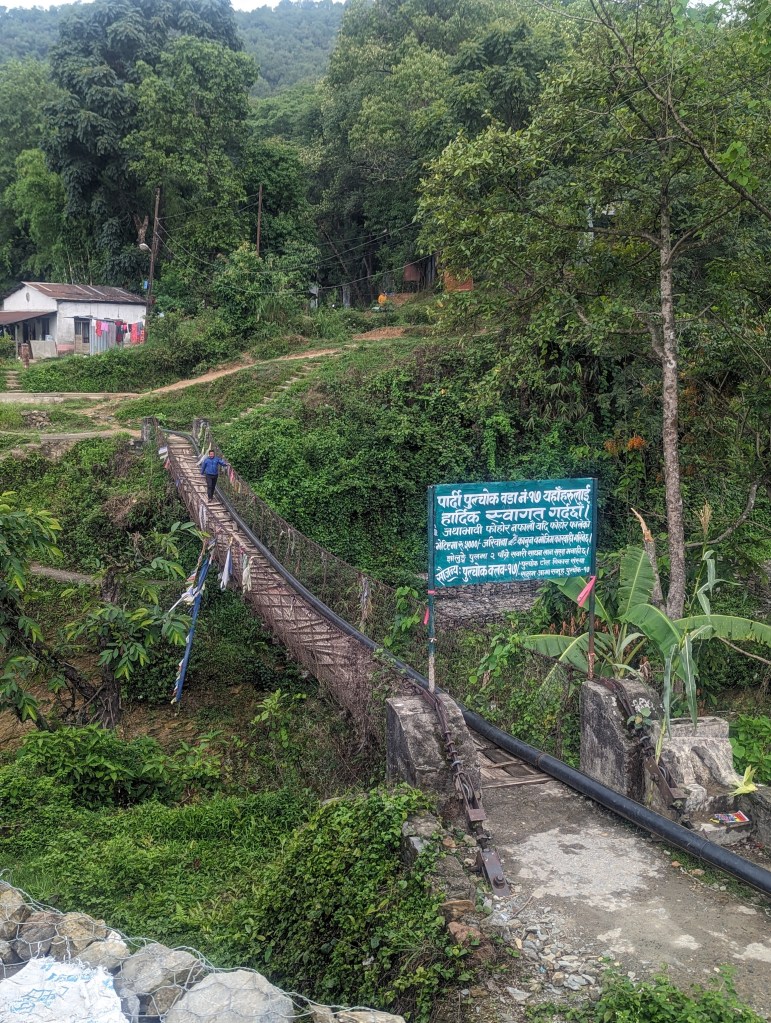
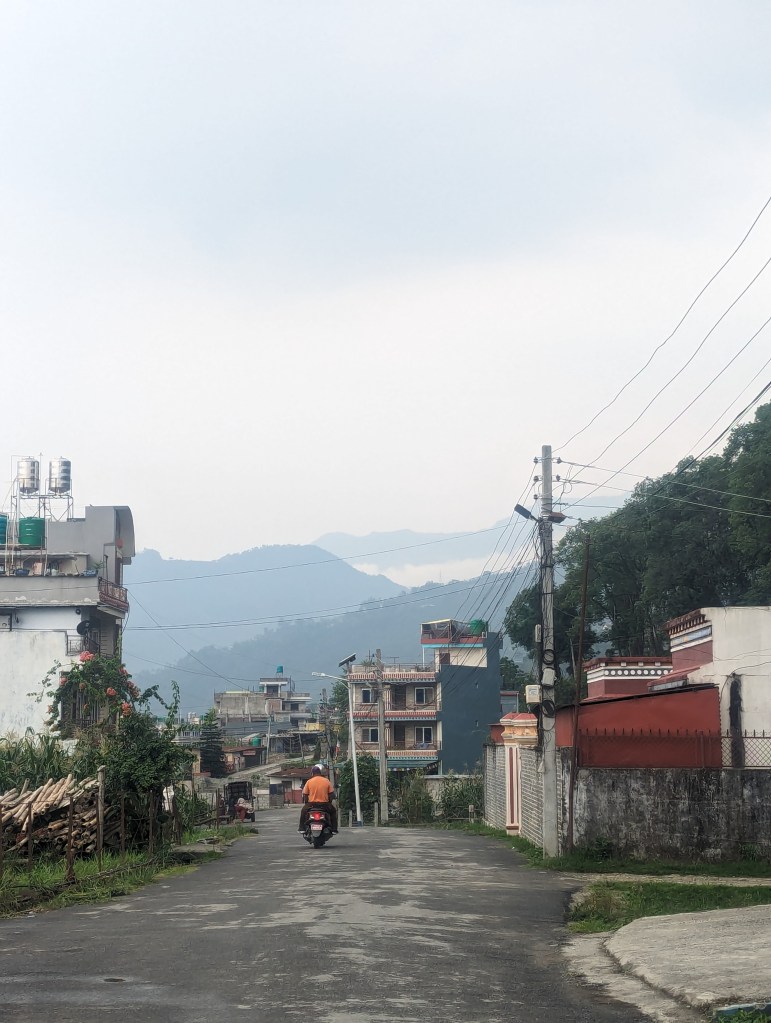
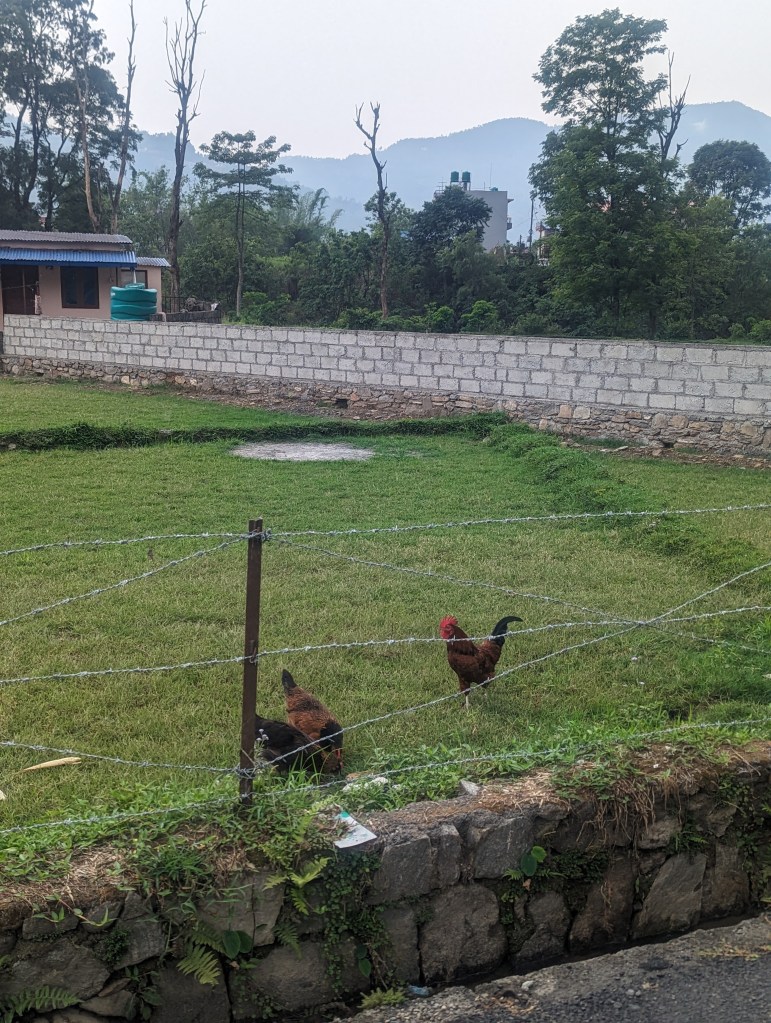
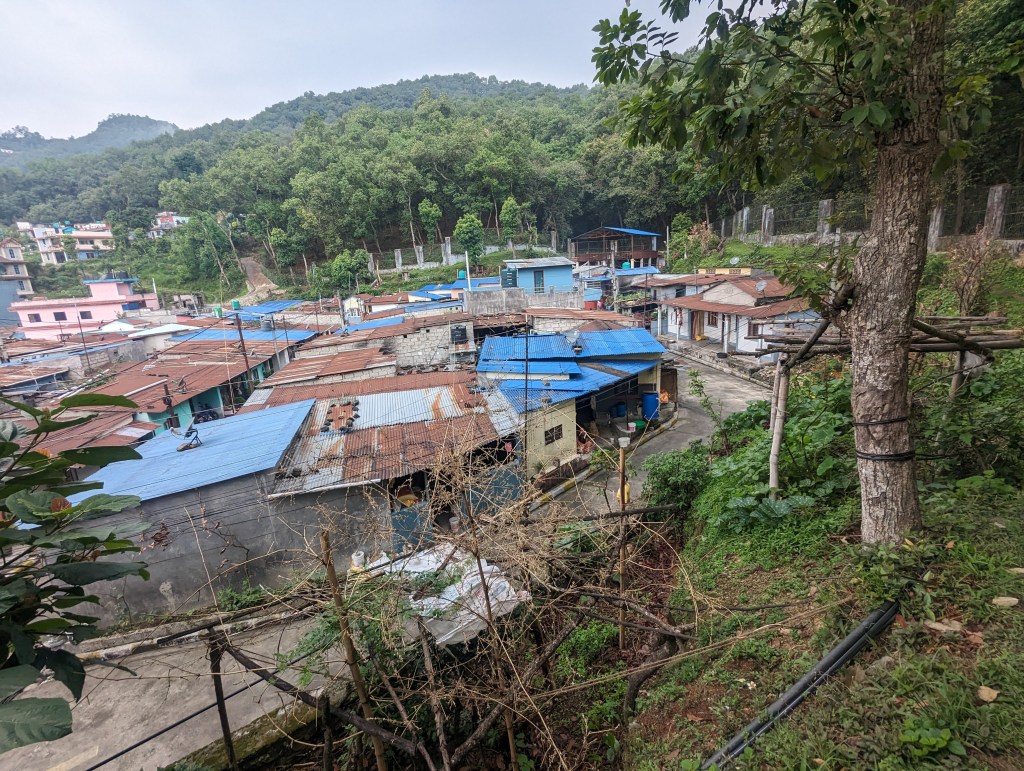
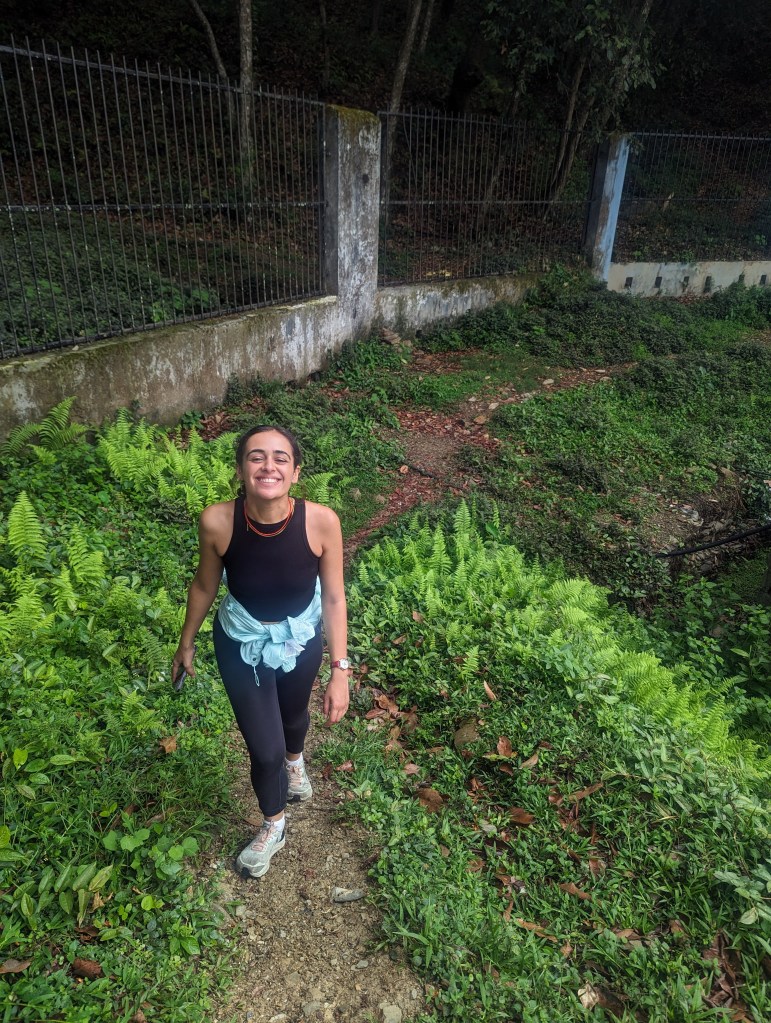
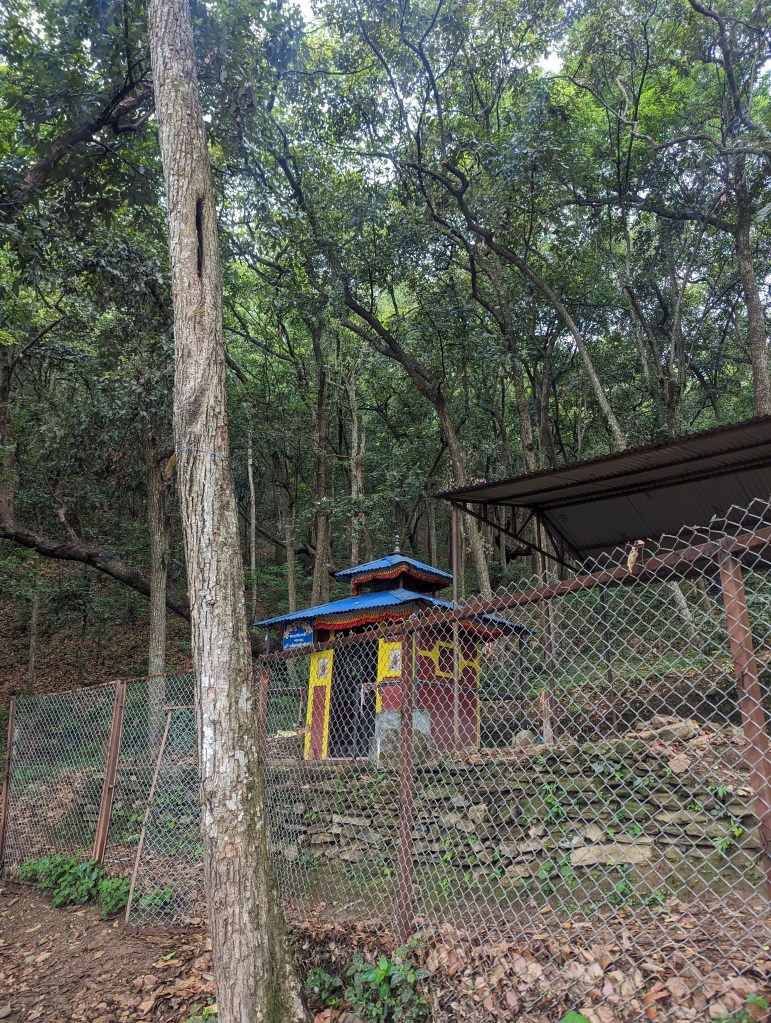
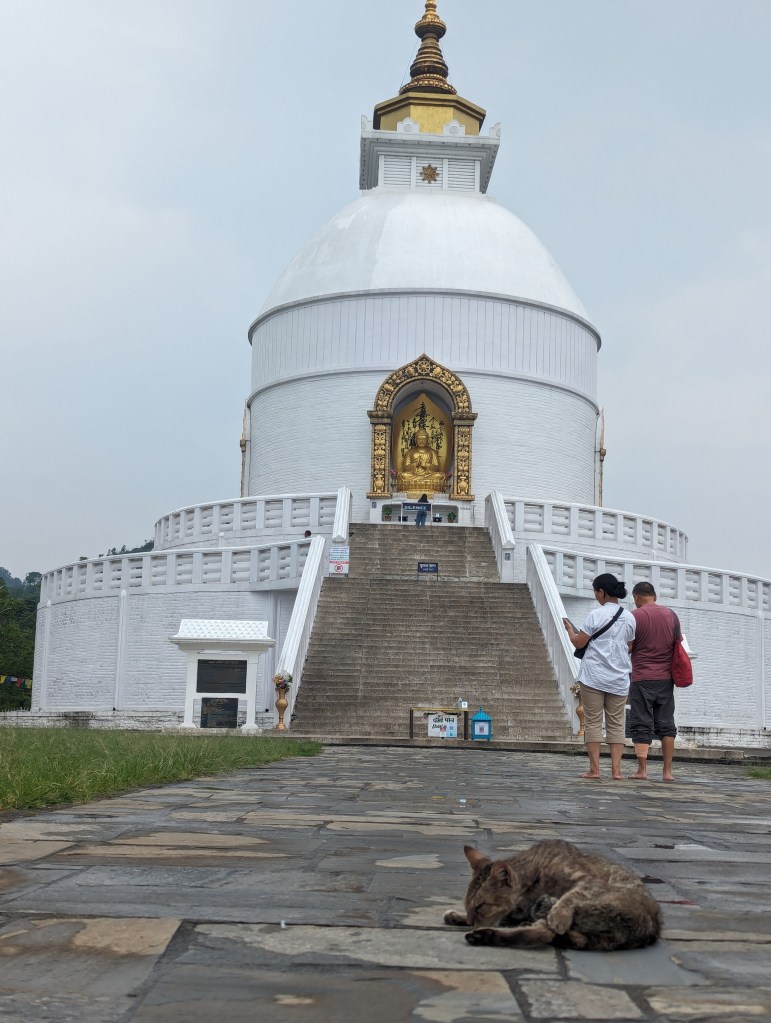
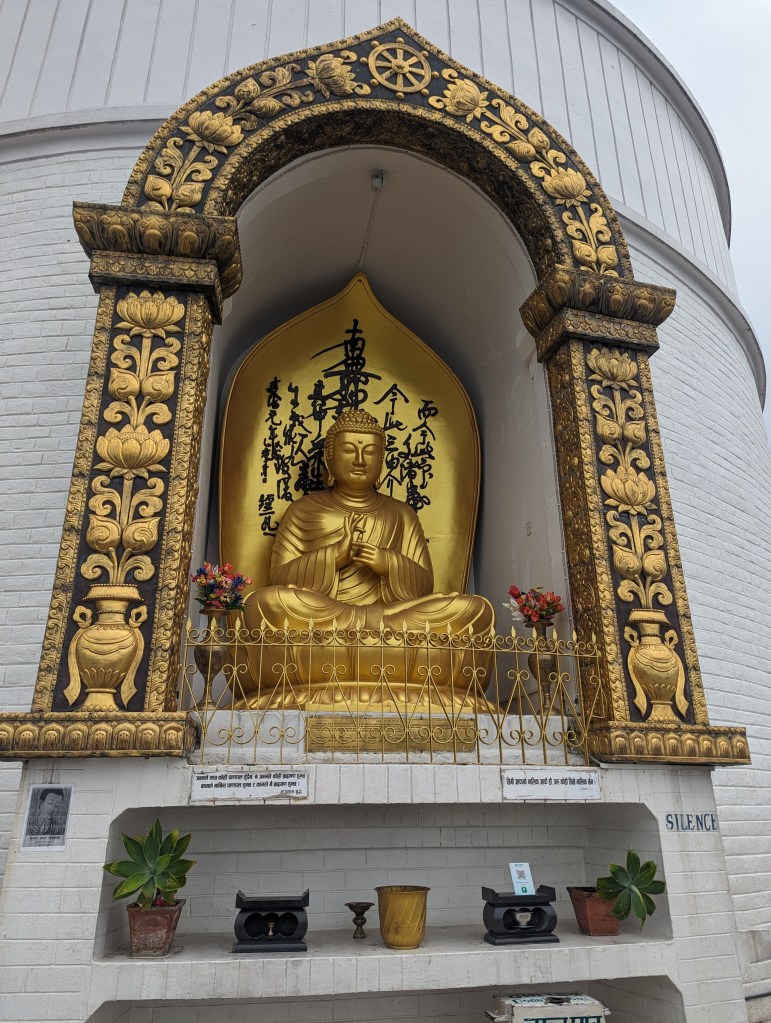
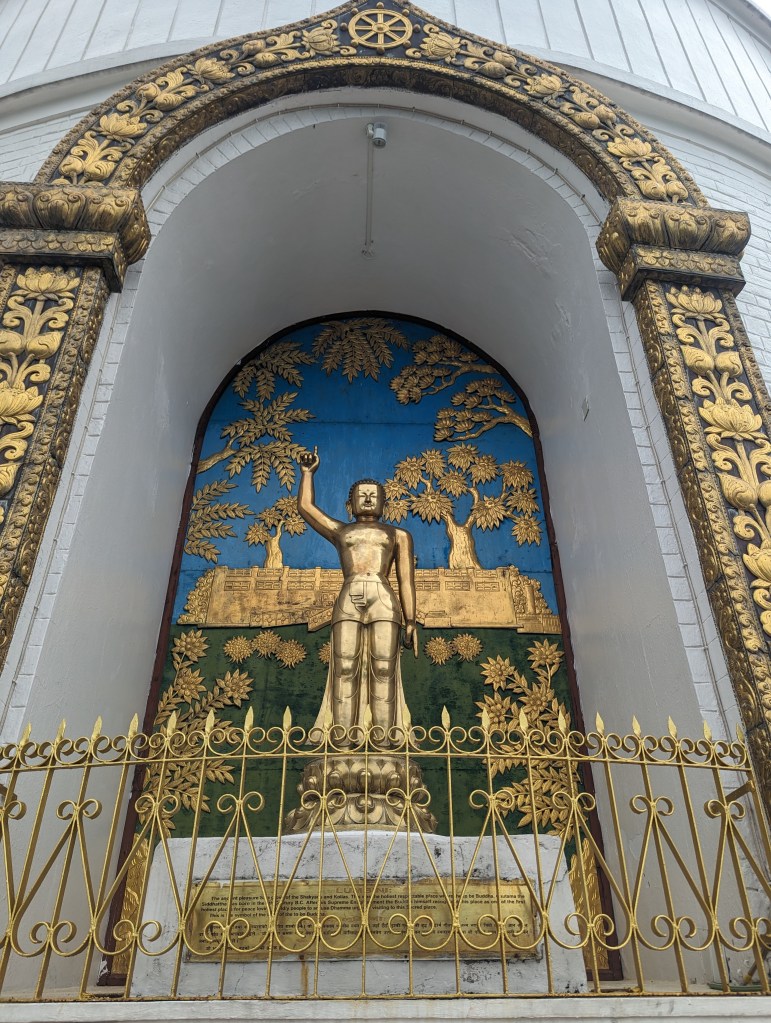
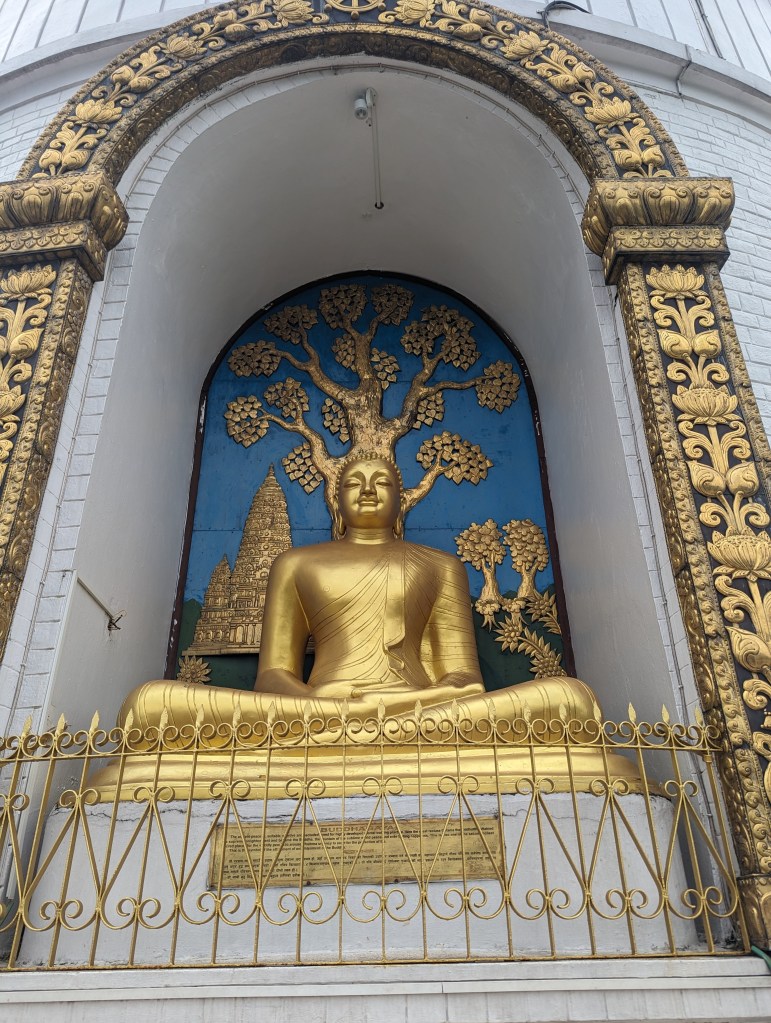
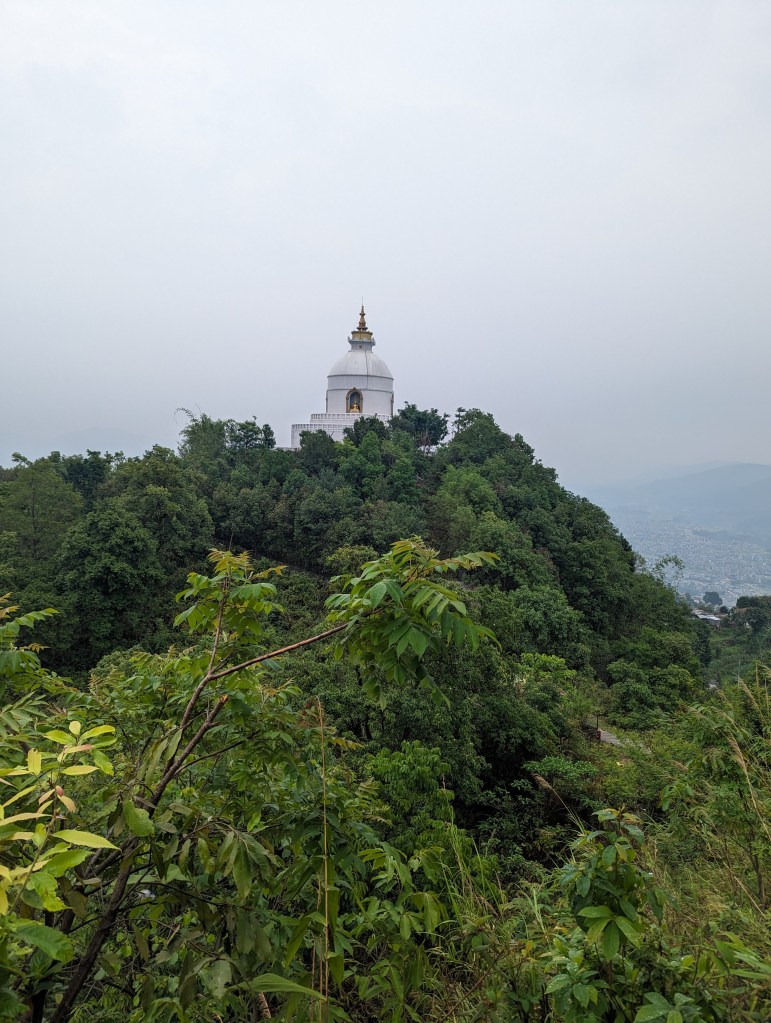
We walked a steep but mercifully clear path uphill through a forest passing only one very brave mountain biker (rather him than me). Before long we hit the Japanese Buddhist Peace Pagoda which was indeed very peaceful. We wondered whether the relative difficulty reaching it put off some of the hordes of tourists, and everyone who was there seemed to respect the requests for quietness, shoe removal etc. It made for a slightly damp but very impressive clockwise walk around the stupa, with golden statues of various Buddhas made in different parts of the world around the edge and beautiful views down into the valley on all sides.
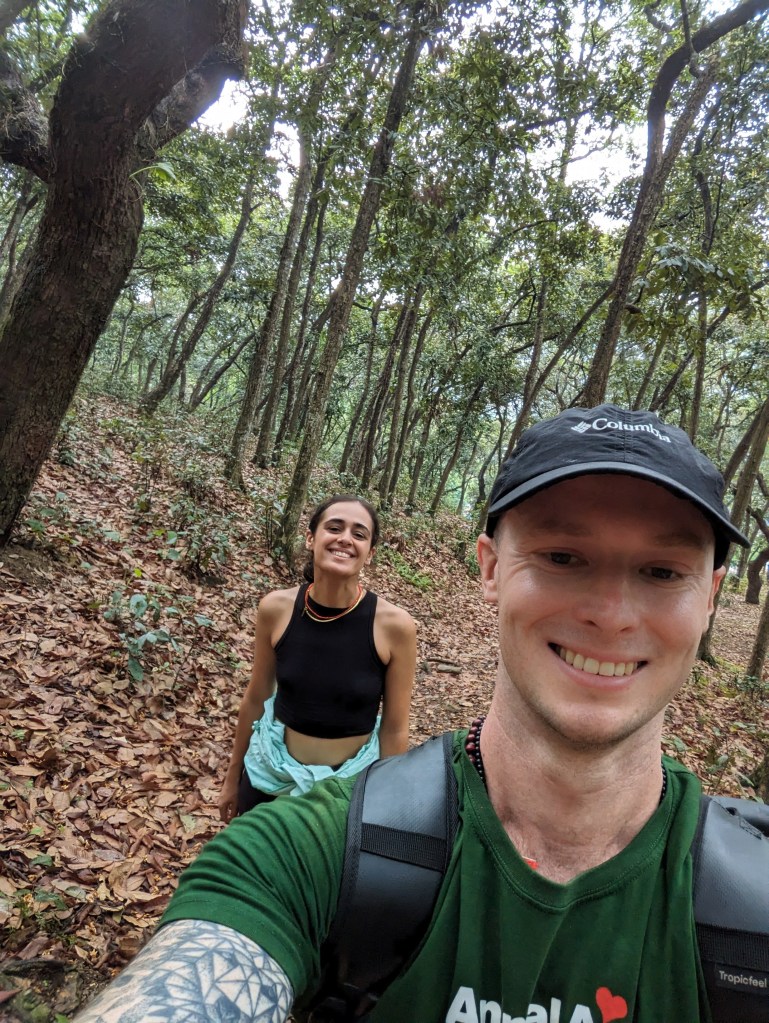
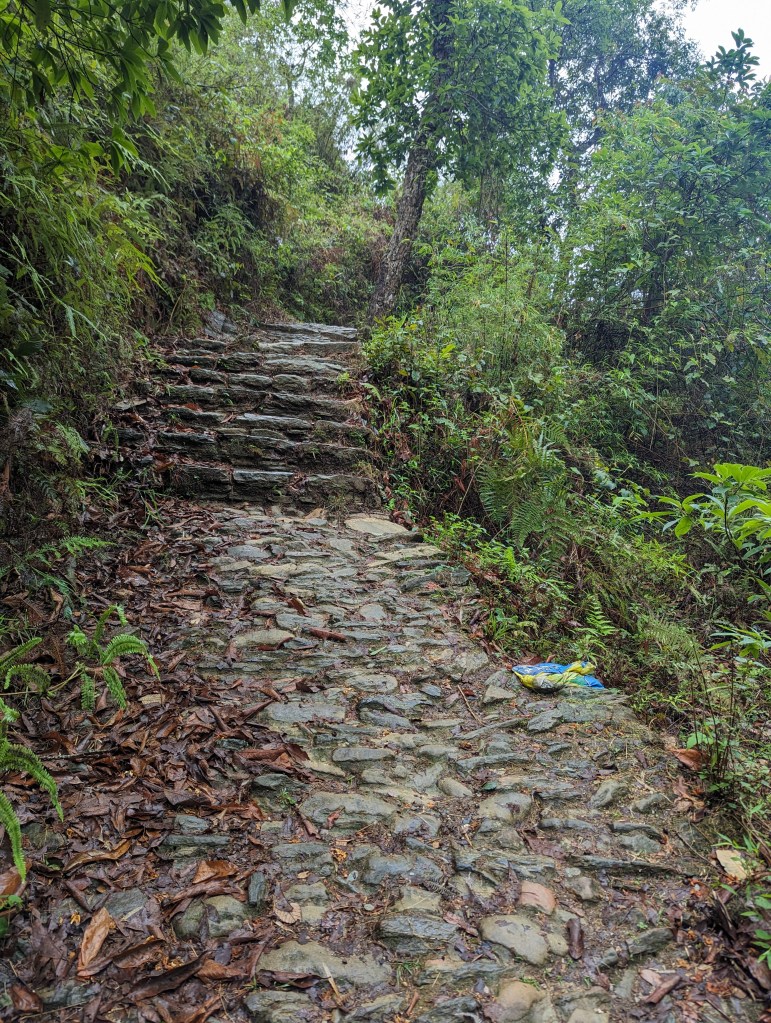


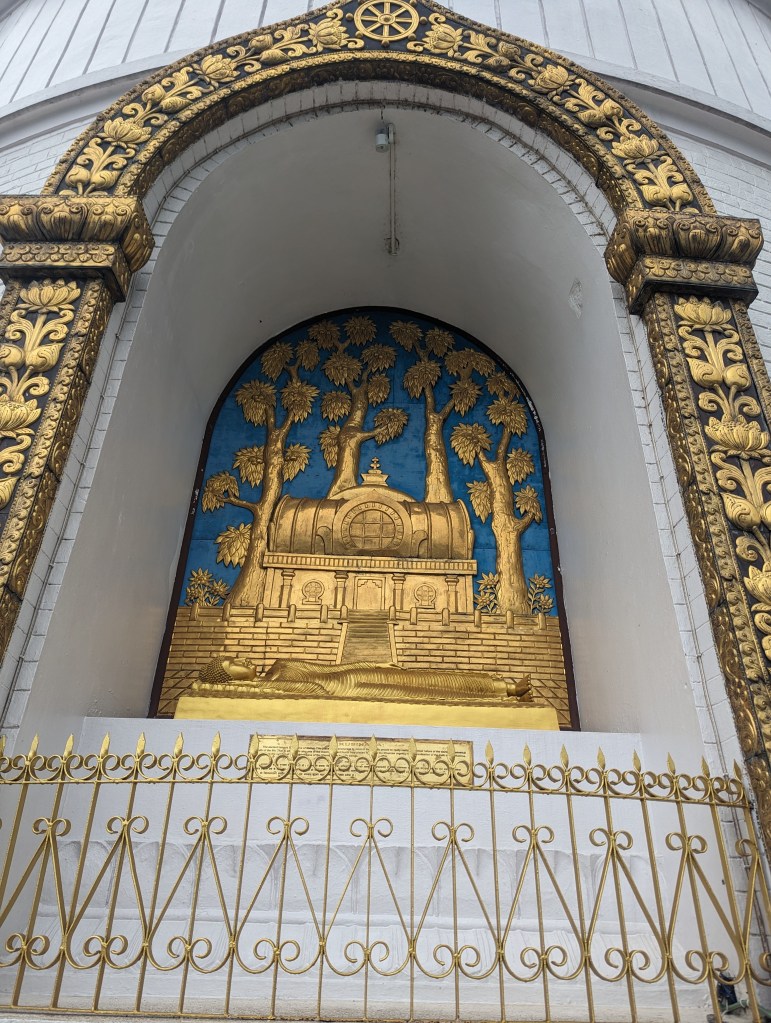
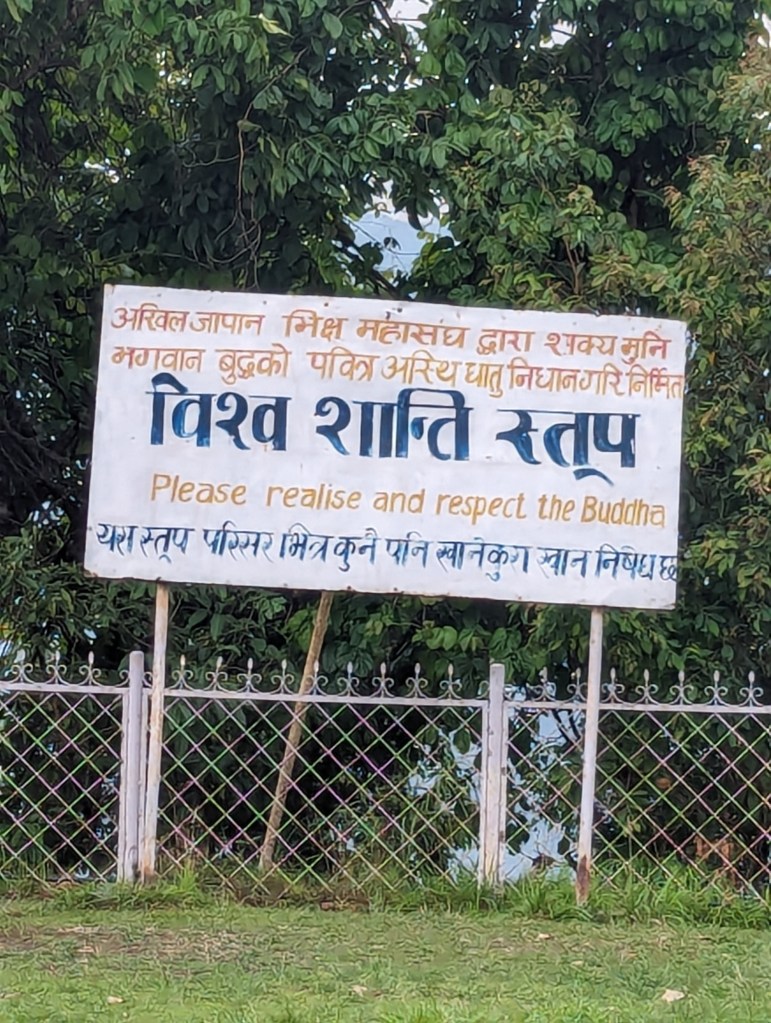
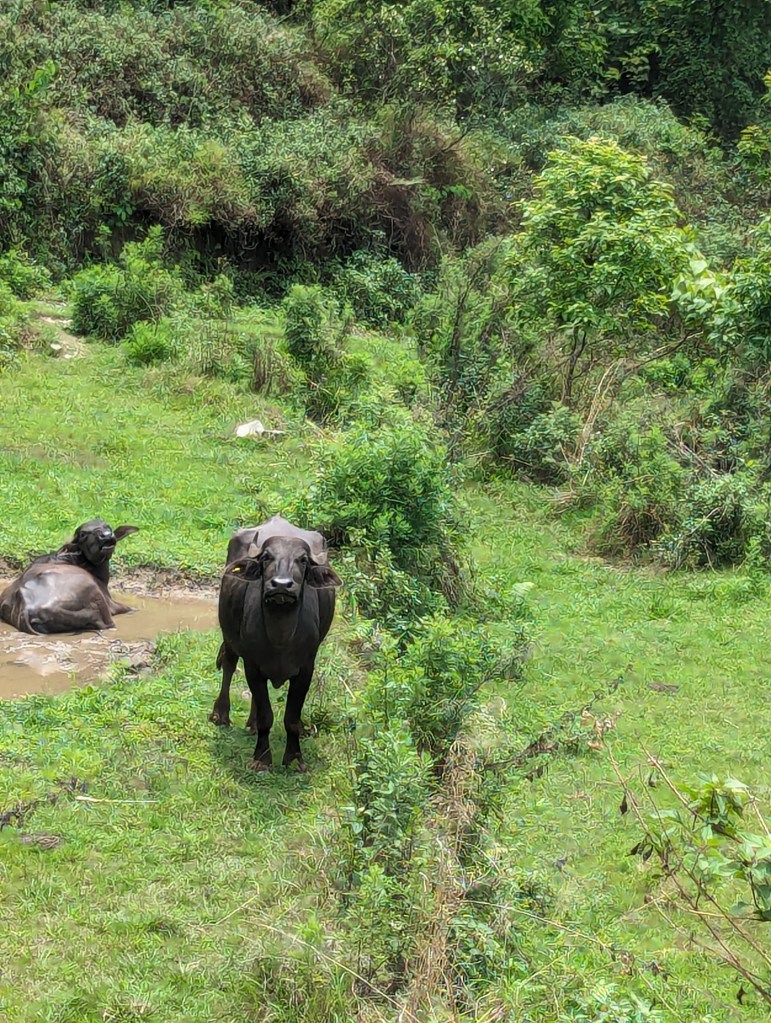
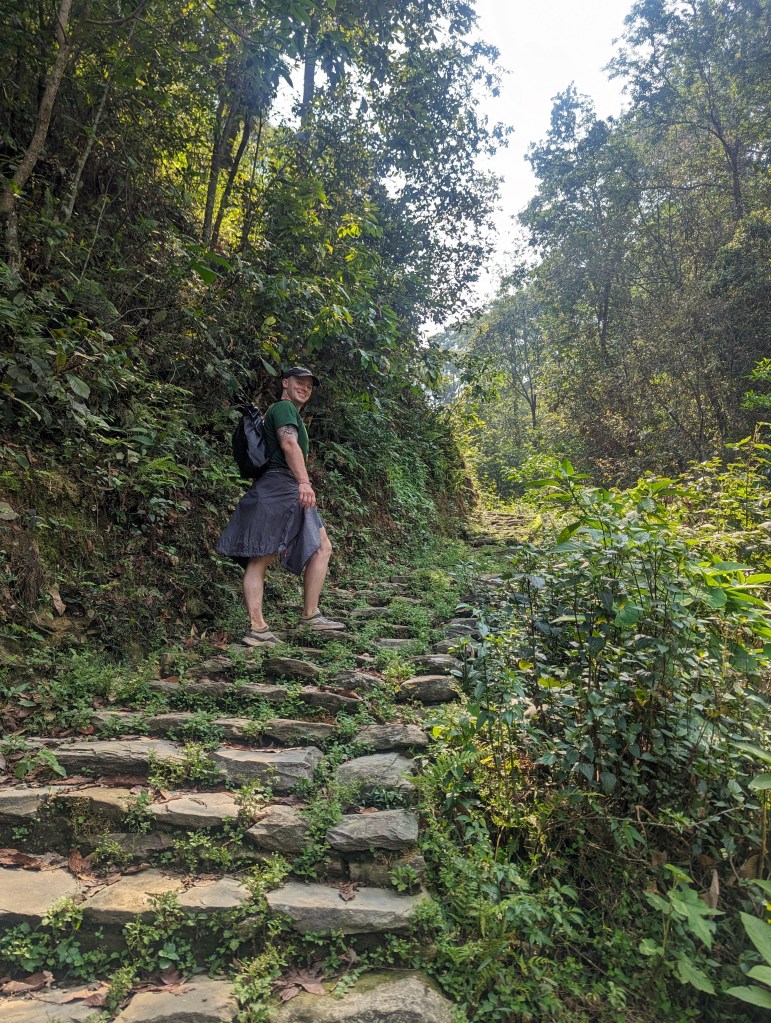
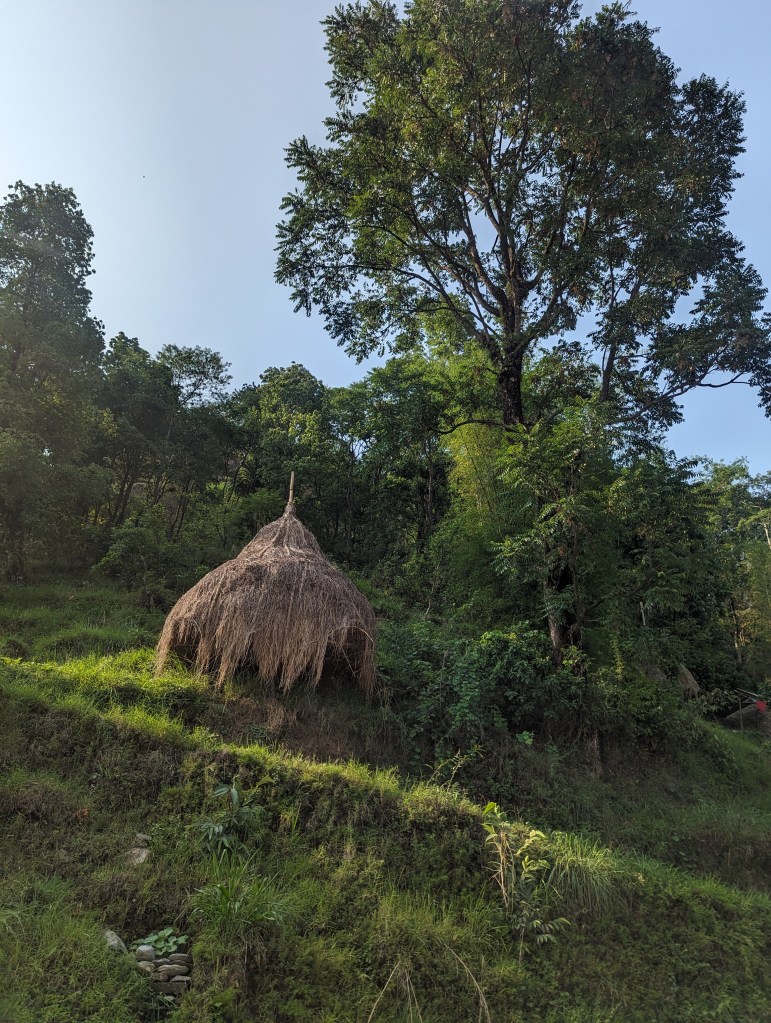
The walk onwards from here remained hilly and became increasingly more rural. We stopped passing any other walkers and all and enjoyed the birdsong and beautiful trees. In fact, the only people we passed were two young boys of about 10 tending to their buffalo. They gave us a namaste, then discussed amongst themselves for a moment before asking hopefully, “give me your money?”. Presumably it wasn’t supposed to sound like a threat, and they looked as if they expected for it not to work. After a couple of hours of working, we were beginning to get hungry for some lunch, and a look on google maps revealed a worrying lack of settlements never mind prospective cafes within the next couple of hours. Clearly we had not planned this.
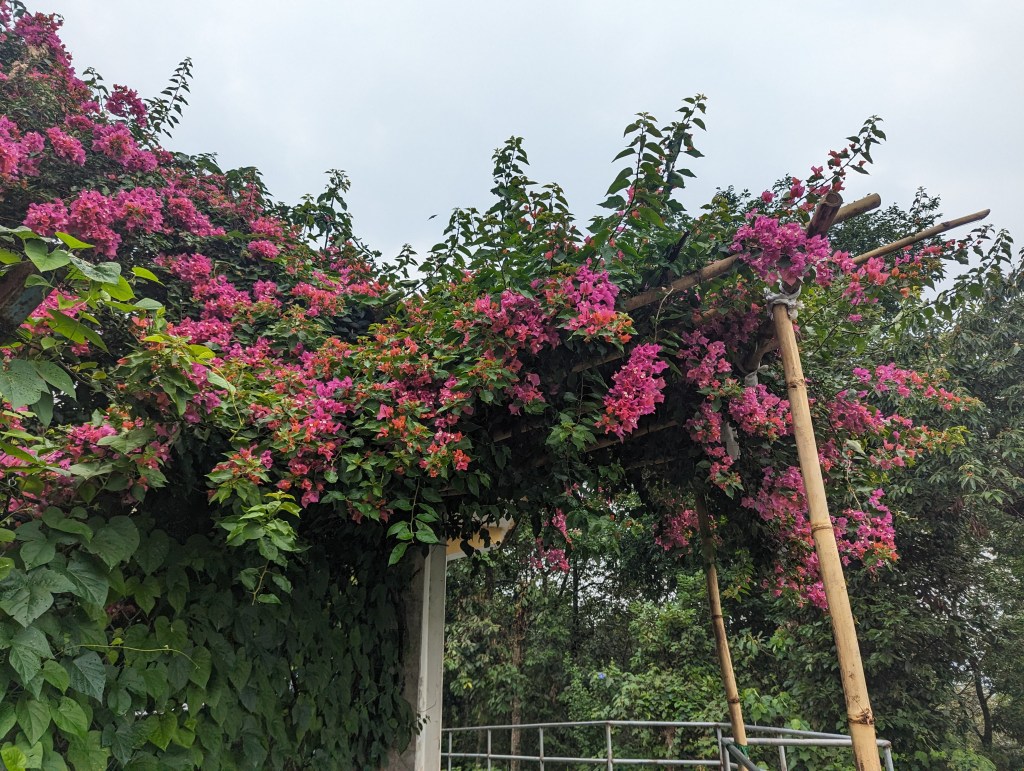
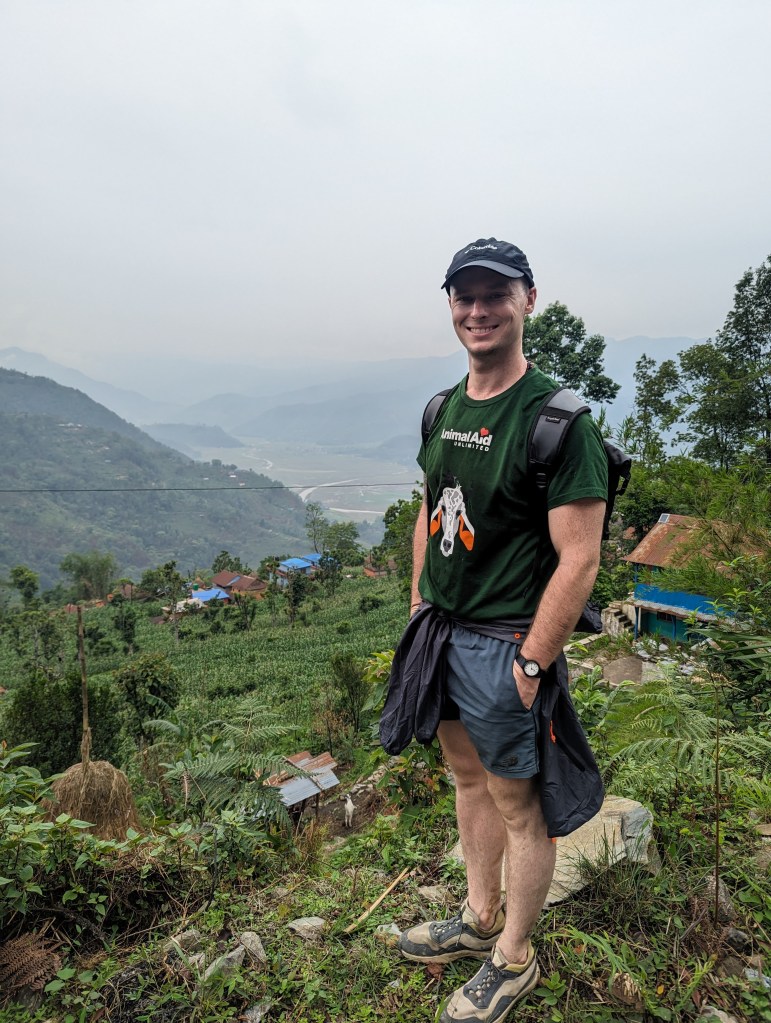
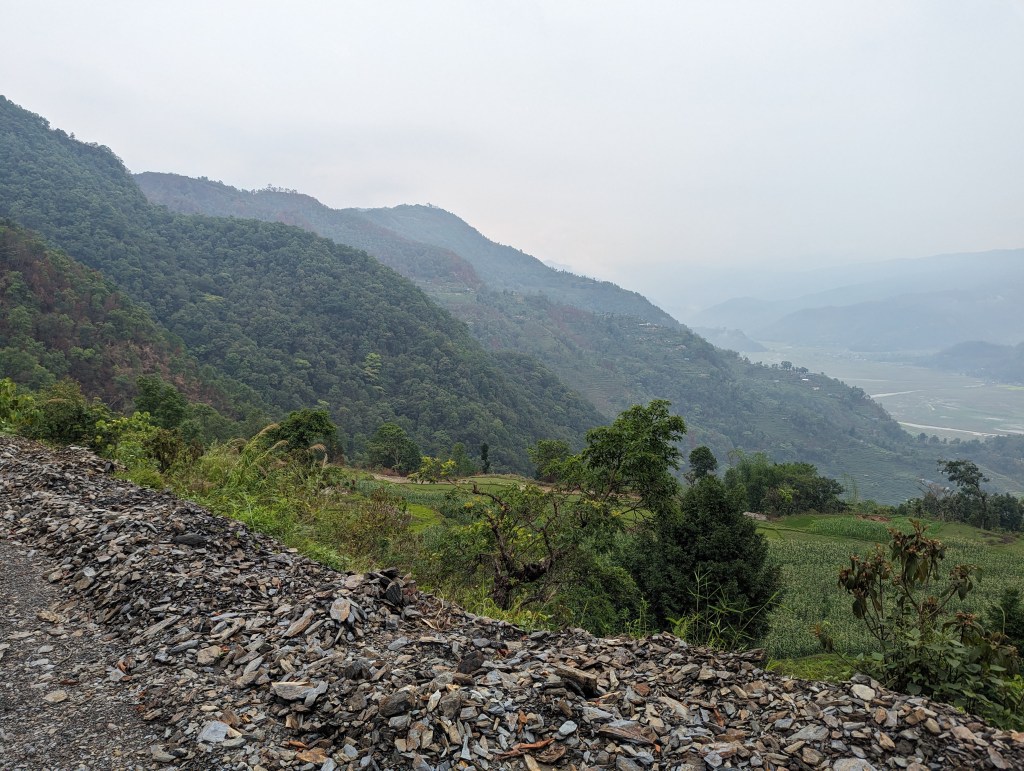
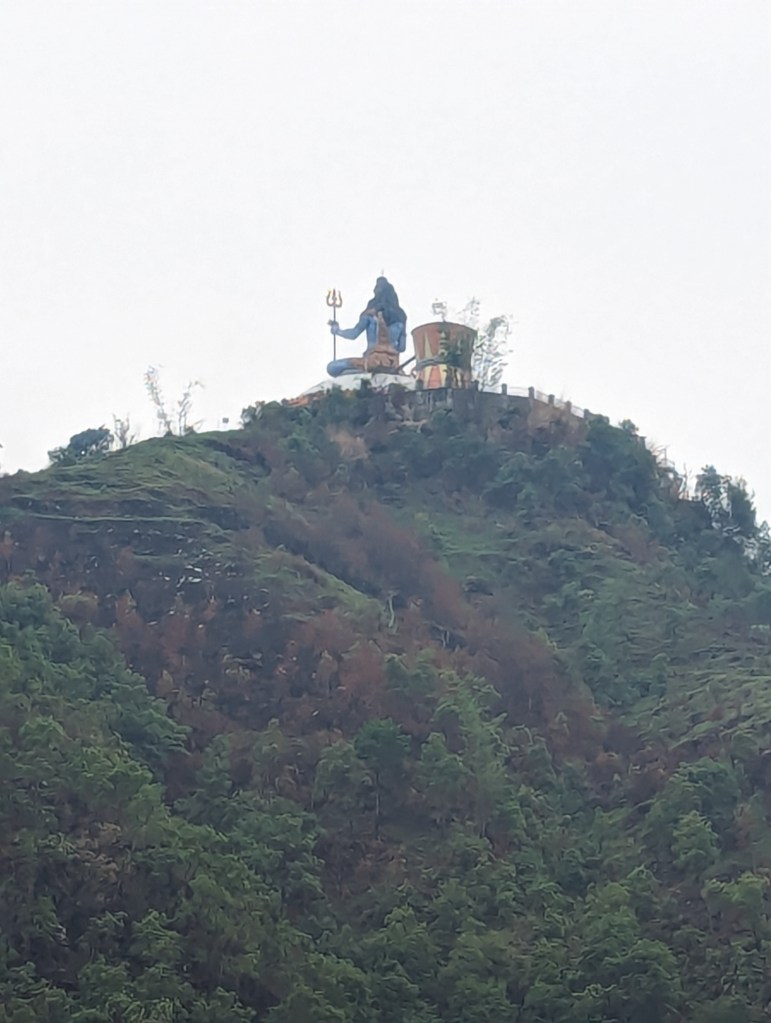
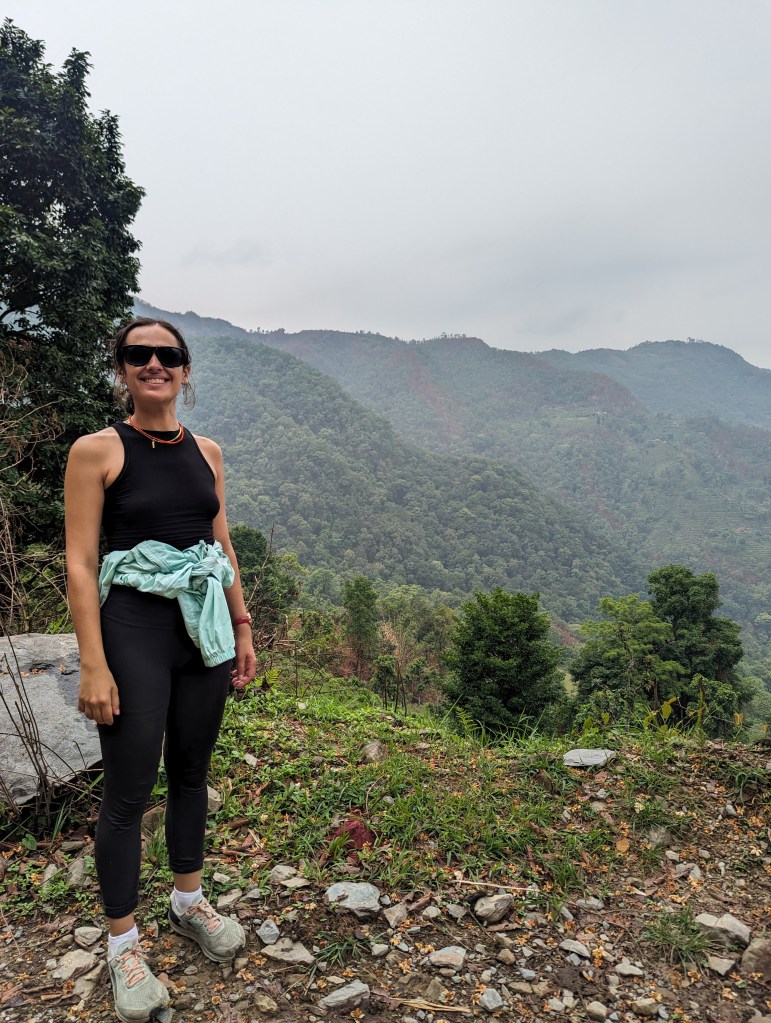


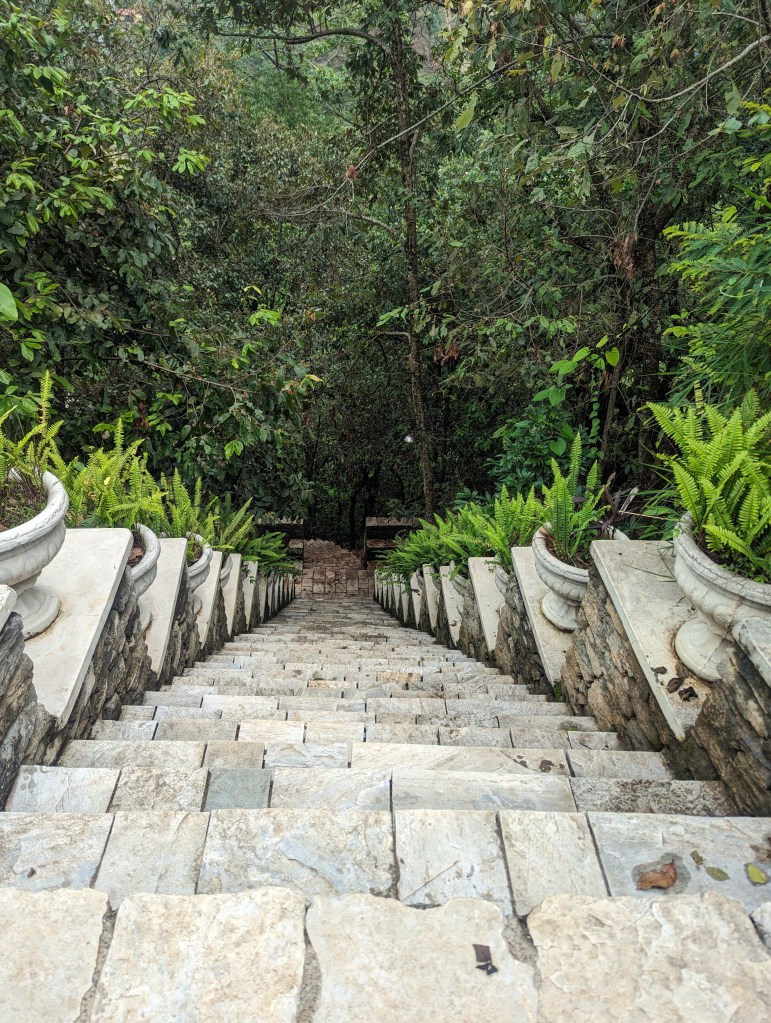
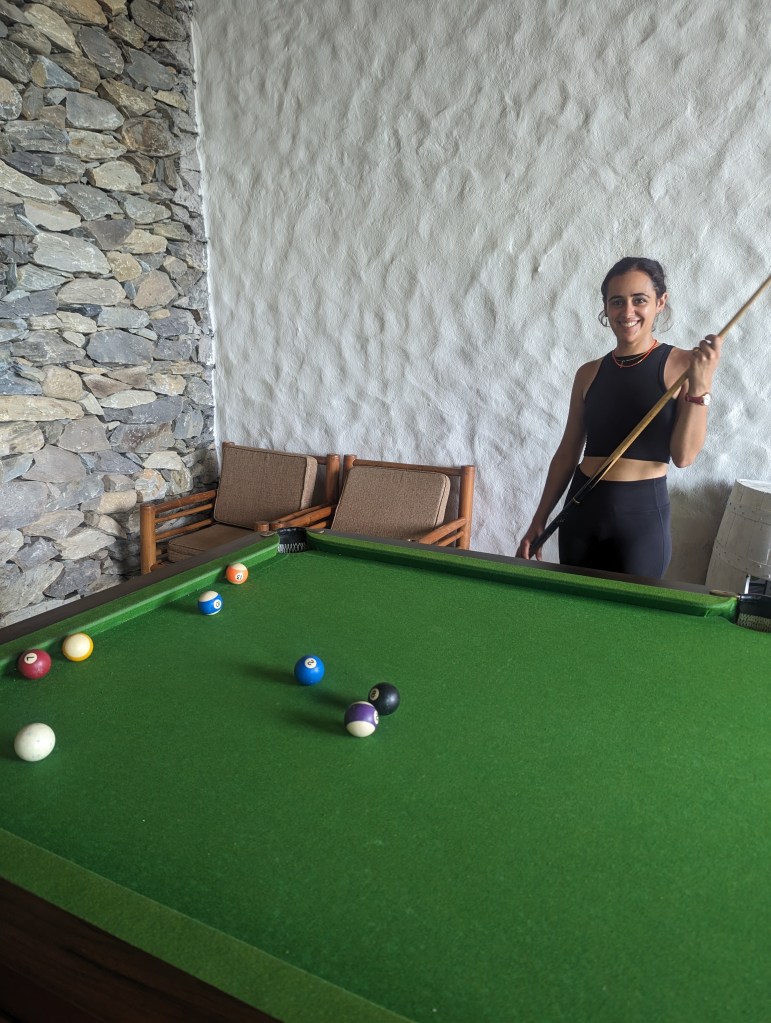
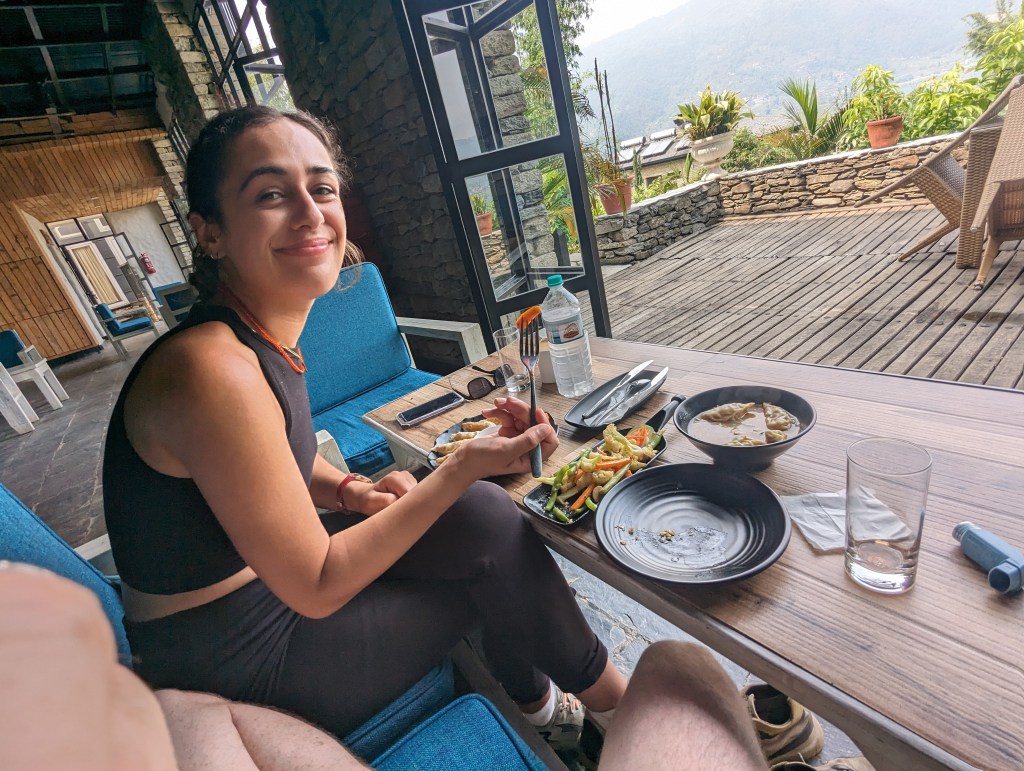
We saw something called ‘Hidden Camp’, a kind of campsite/accommodation which possibly did food, with about 5 reviews, a short detour but the only place under an hour away. Deciding to take the risk, we headed in that direction and soon saw signs to it leading us down some isolated fields. Eventually we turned a corner to a luxury-style yurt and cabin area, completely deserted, which had an equally deserted restaurant that was somehow open. Like so many places here it was almost impossible to believe they managed to stay afloat, with multiple staff members and zero customers, but we certainly weren’t complaining. We ordered momos which took about an hour to arrive but happily completed a game of pool while we waited (Ed. note – Ellie won handily, she’s just too modest to say).
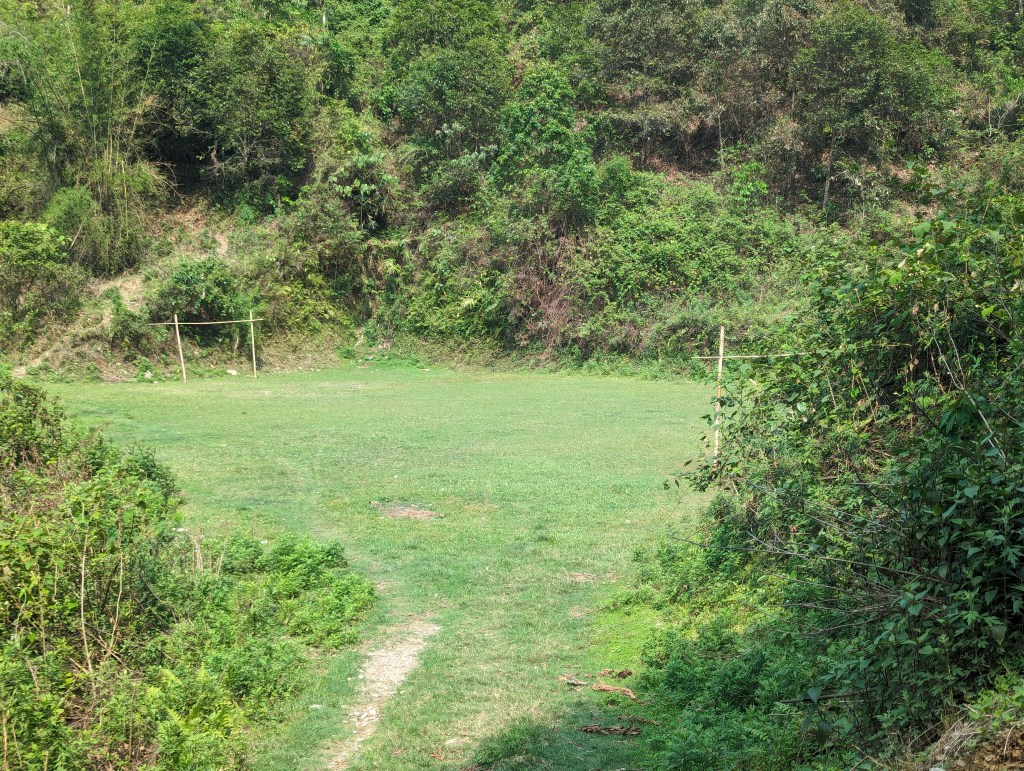
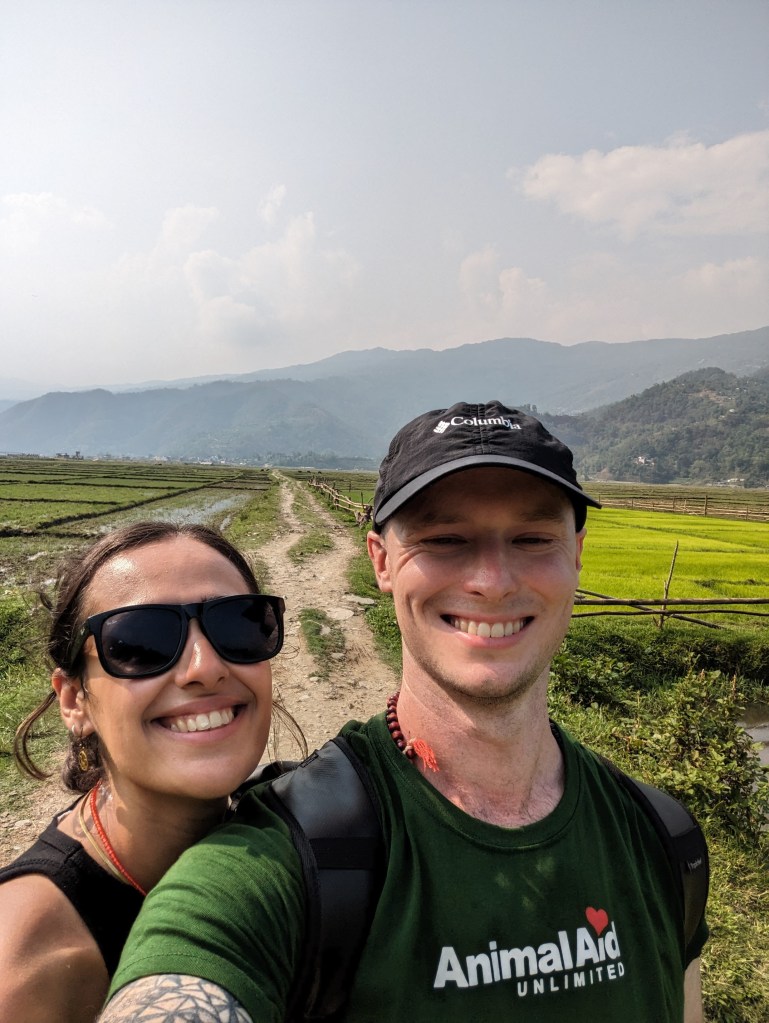
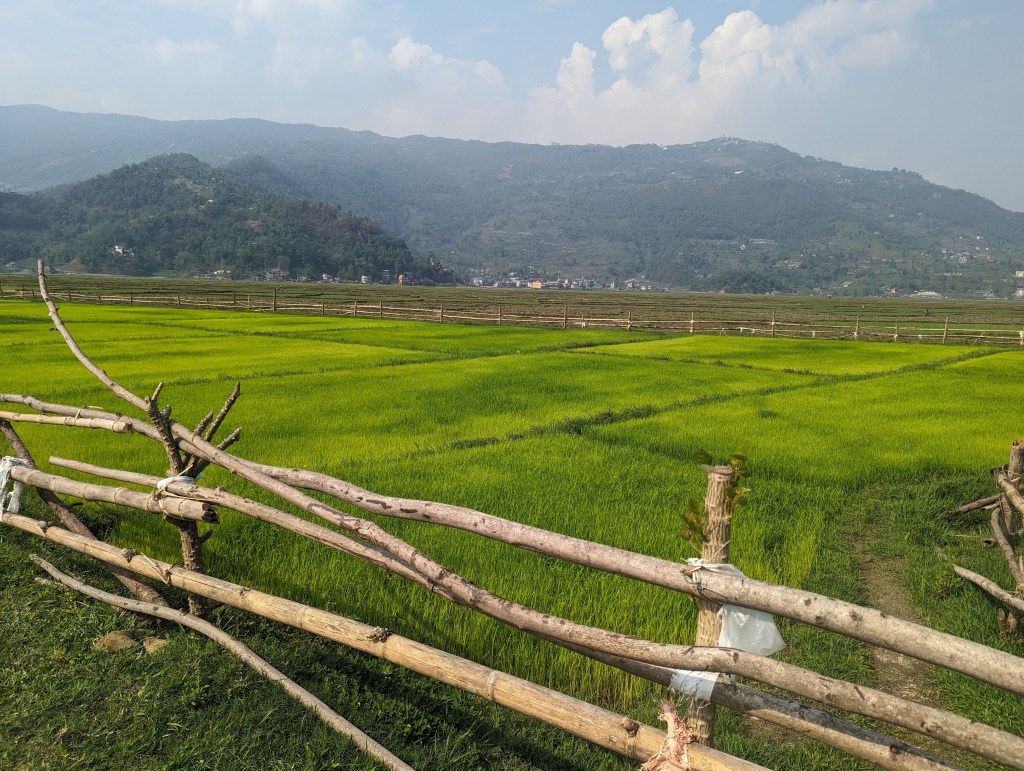
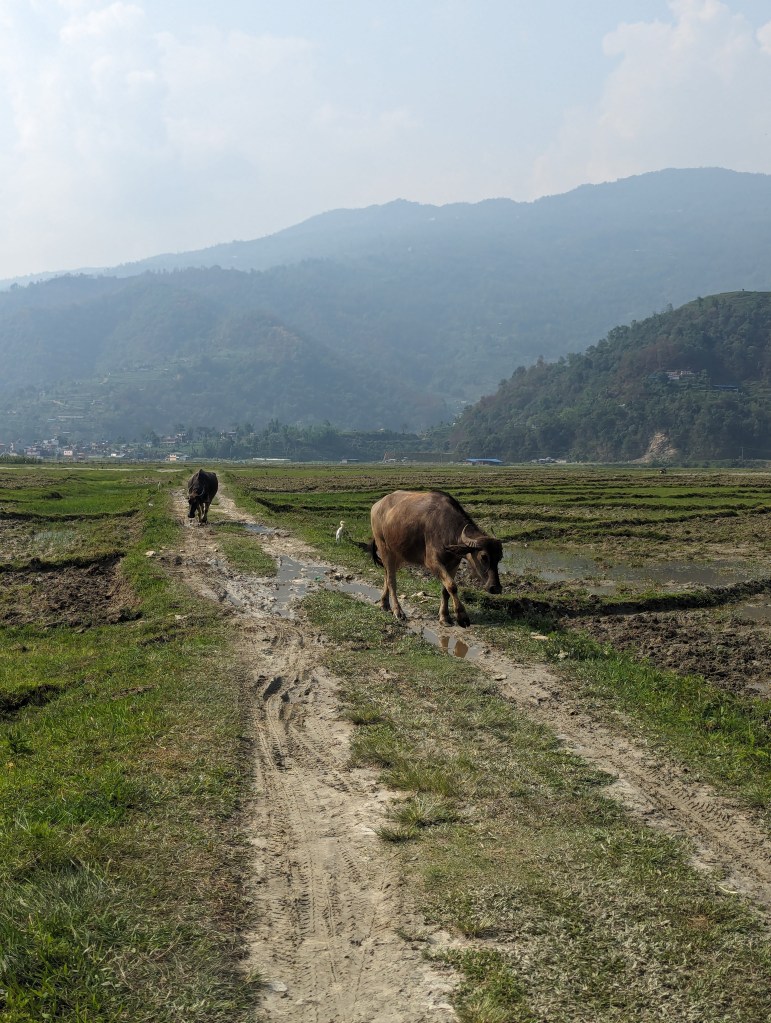
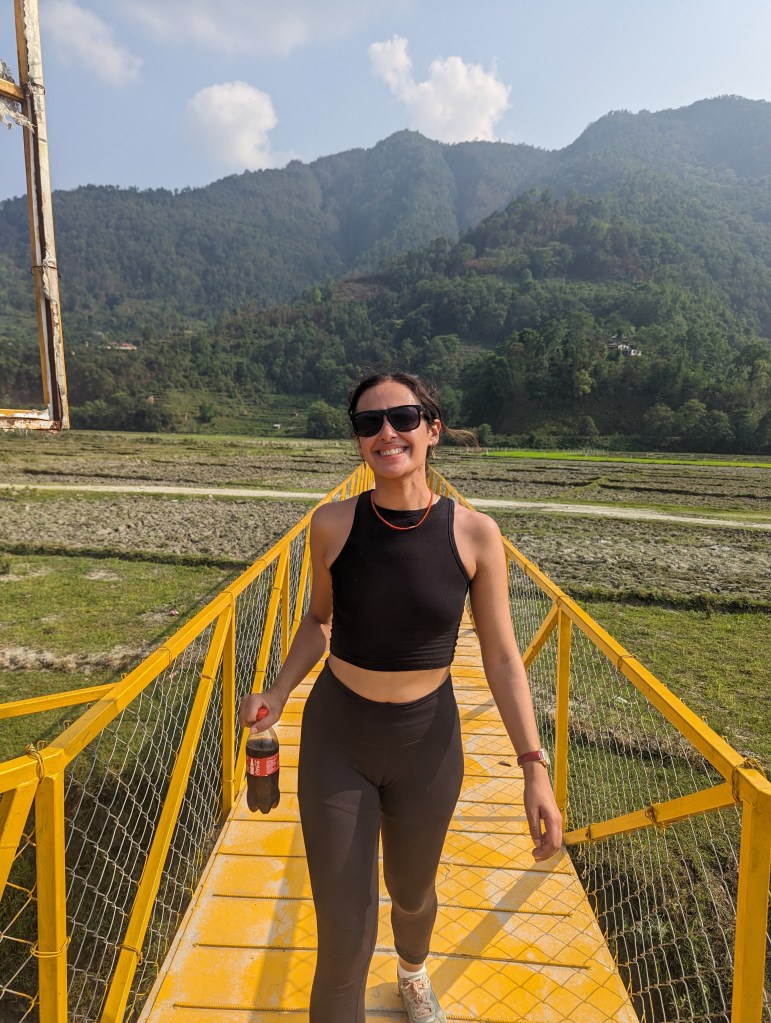
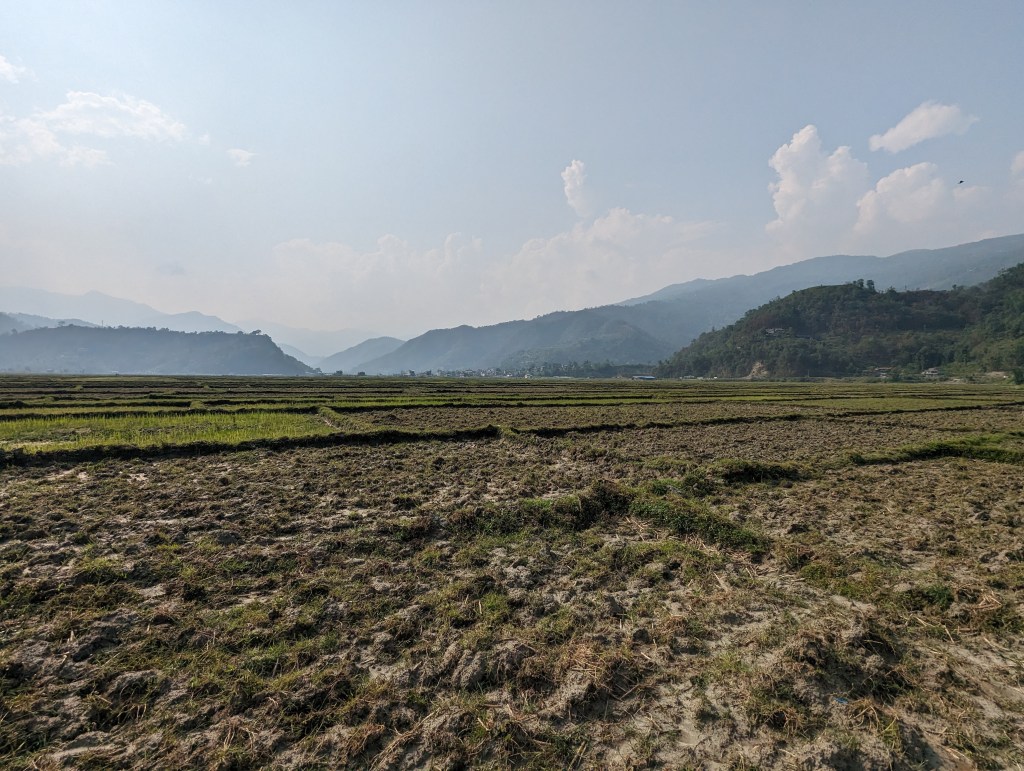
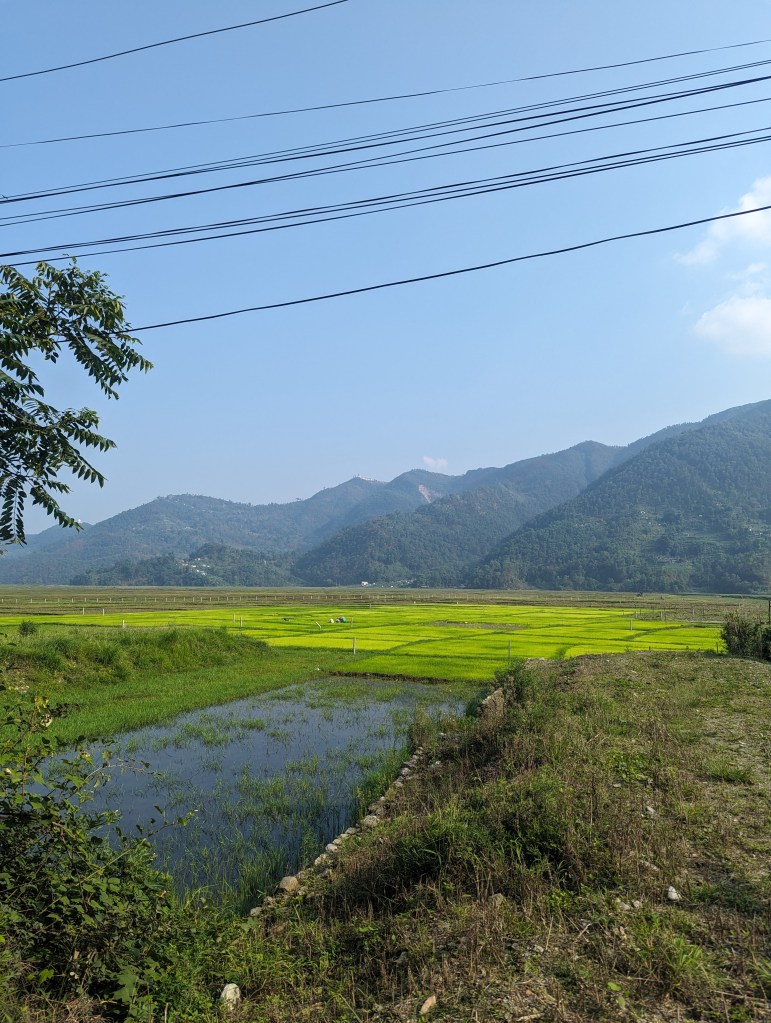
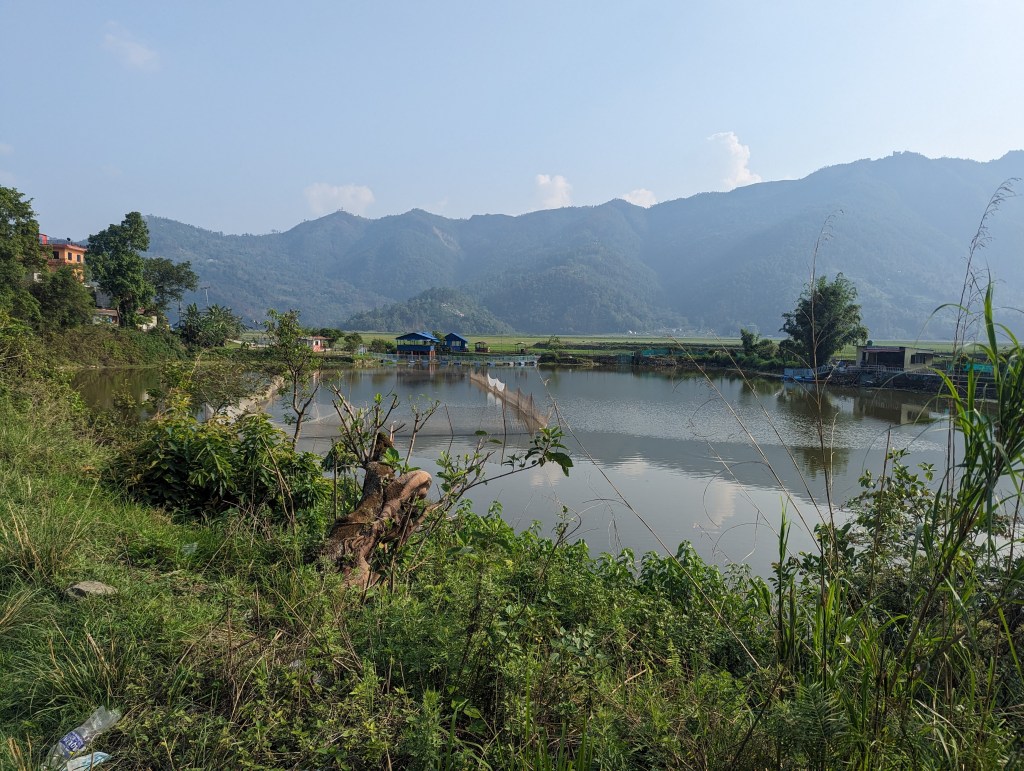
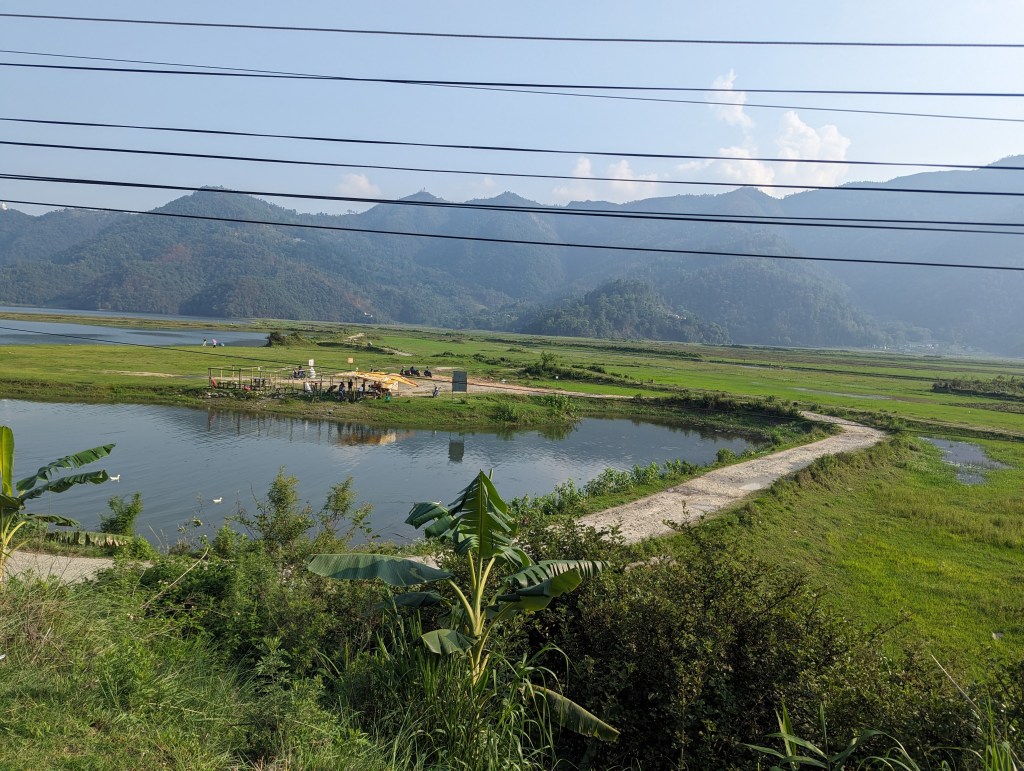
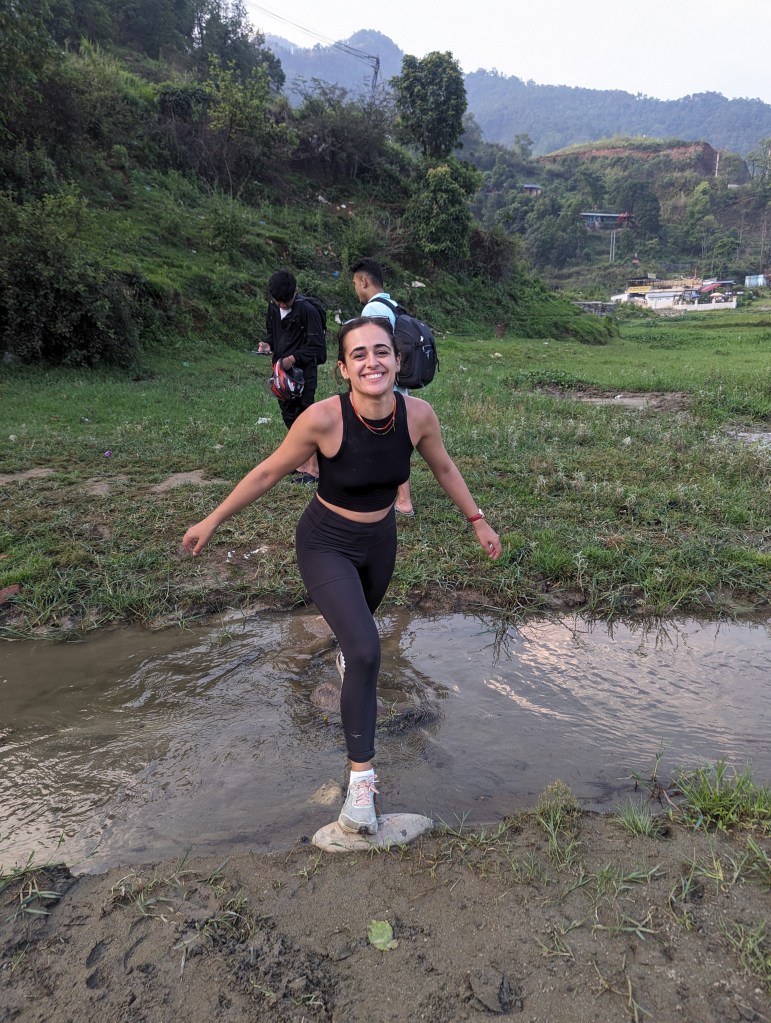
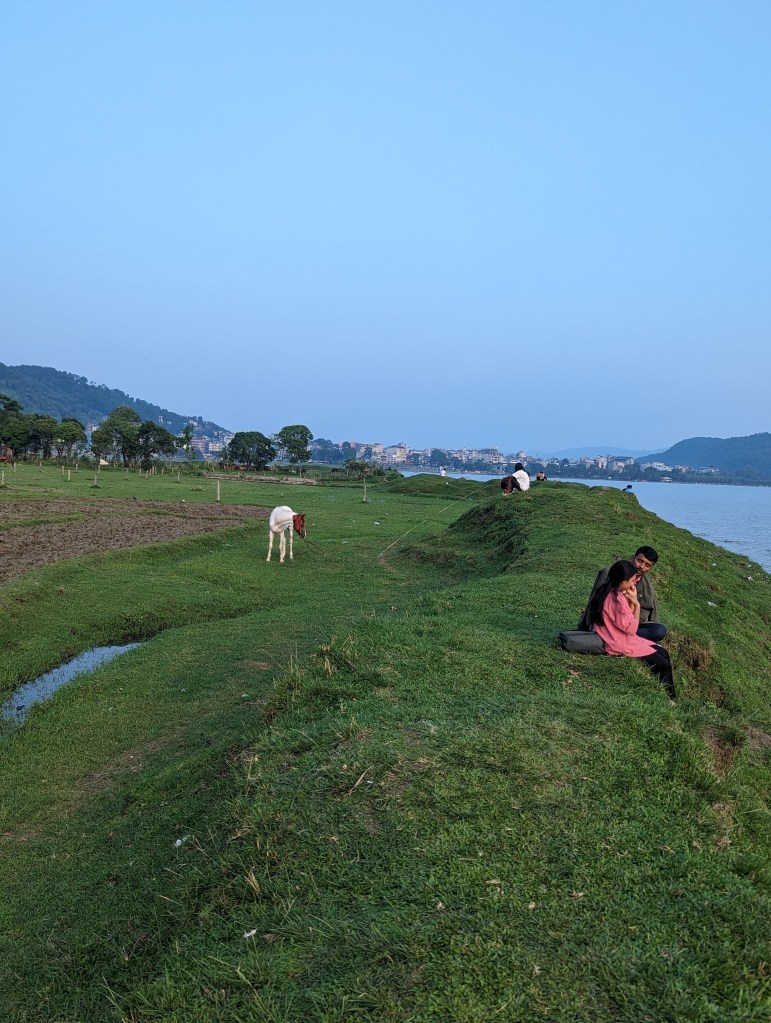
Replenished, we headed back out into what was now beautiful sunshine to continue our loop. We went right down to the lakeside rice fields, with some pretty magical scenery of locals working on them and curious deer amongst the trees on the outskirts in the afternoon sun. Other than passing a group of Nepali men on motorbikes who wished us “good luck” causing some mild trepidation, the lakeside path was empty and beautiful. We reached a tiny village near the point it looked like our map-man had crossed over a tributary river and cut off a large section of hike we were also hoping to, and a kind woman we bought cold water and emergency suncream from pointed us in the right direction as well. We crossed slightly swampy fields with grazing buffalo and plenty of egrets, over a big yellow bridge and back on to the path on the other side.


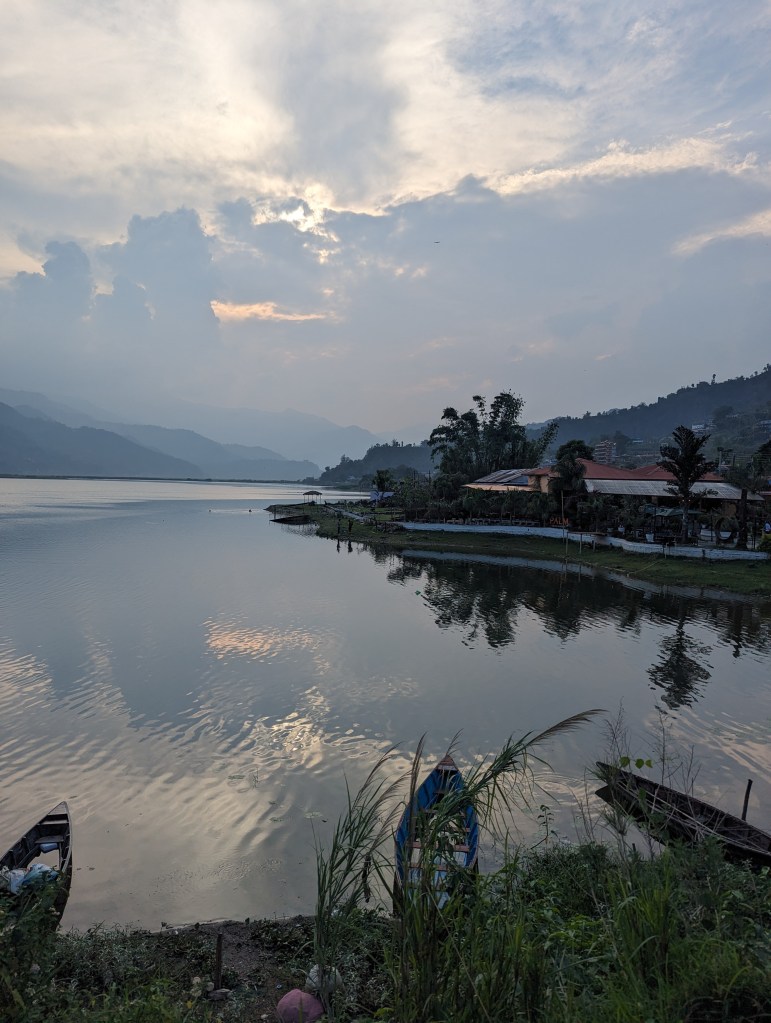
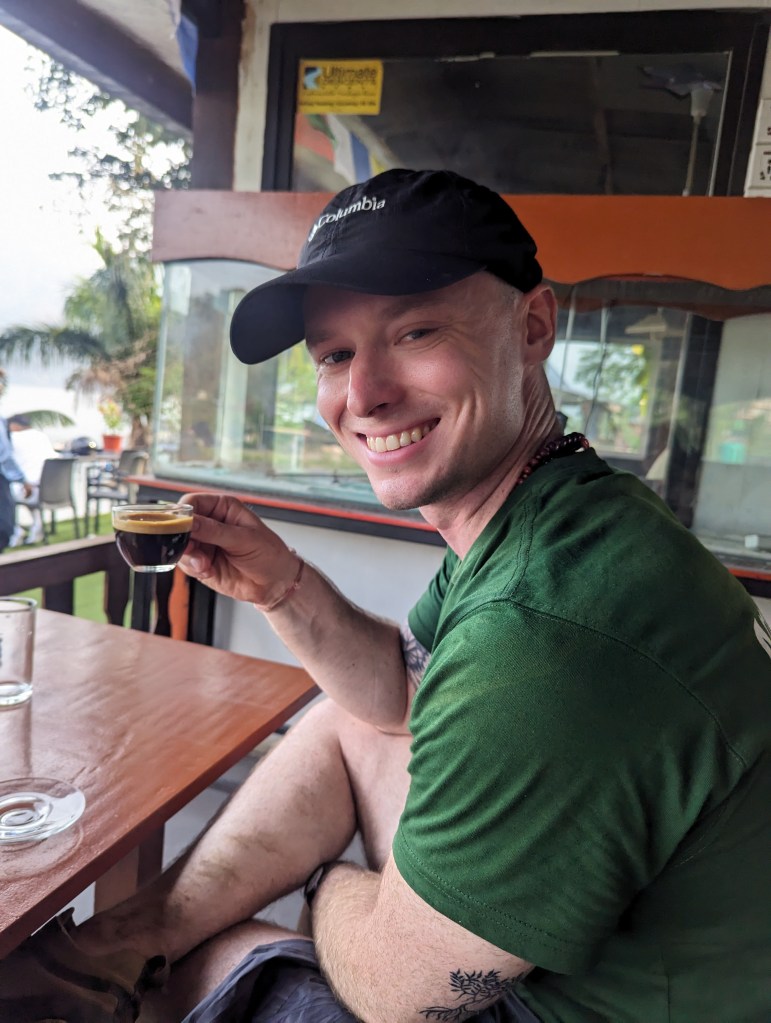
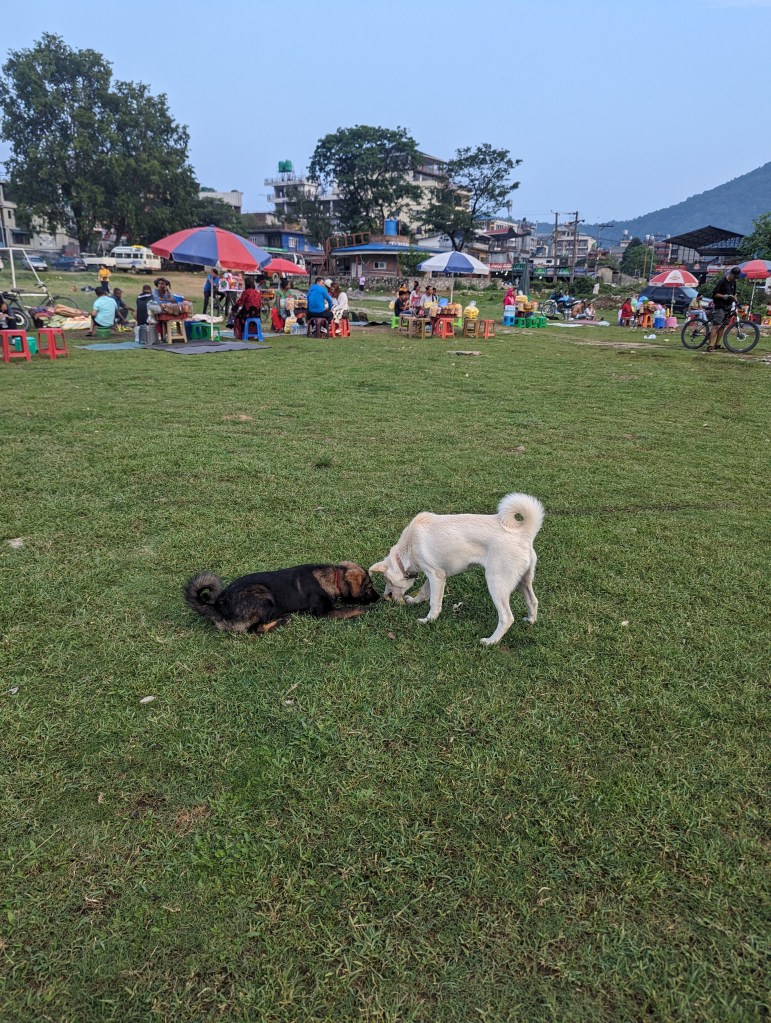
We stopped off at one of the literally hundreds of tourist establishments that again began to appear on this path back towards home for a coffee. We were pretty close to Sadhana and had considered popping in to joint one last chanting session, but were a little late and decided to leave the magic as it was. We found ourselves right by the buffalo fields we’d spend hours watching from Sadhana’s roof however, and detoured across them right by the water. From here we took a leisurely stroll back to the main tourist strip, along a small lakeside path absolutely packed with cafes restaurants clearly aimed and Pokhara’s hippie contingent with an obvious separation from those more mainstream tourist places further in.



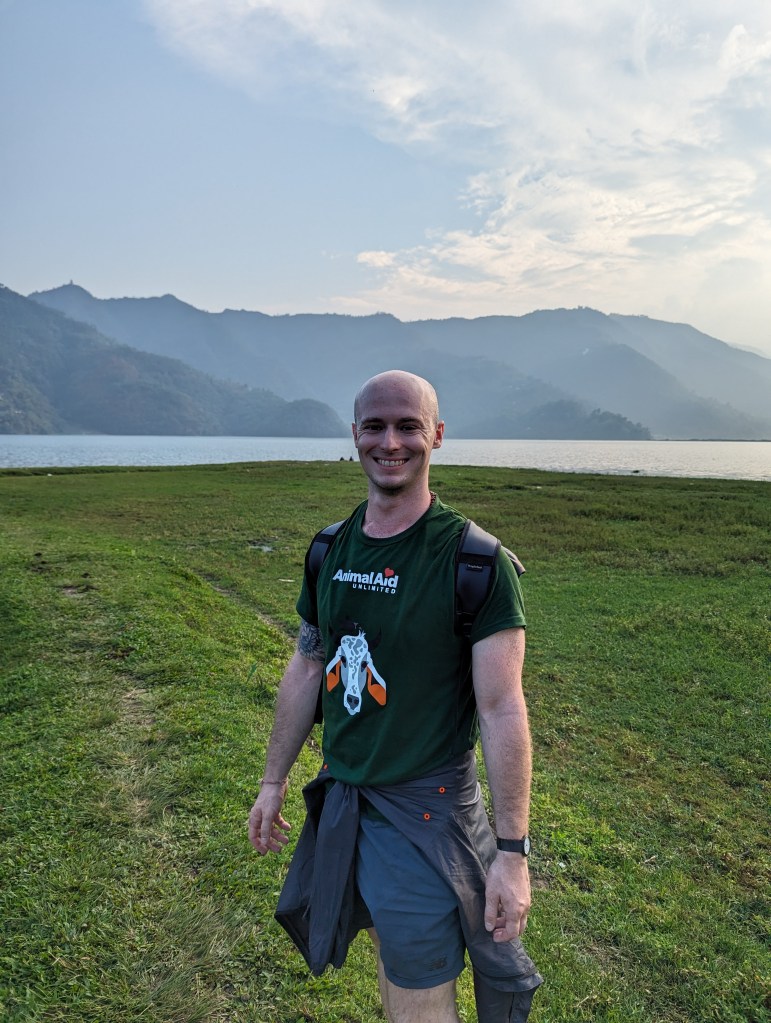
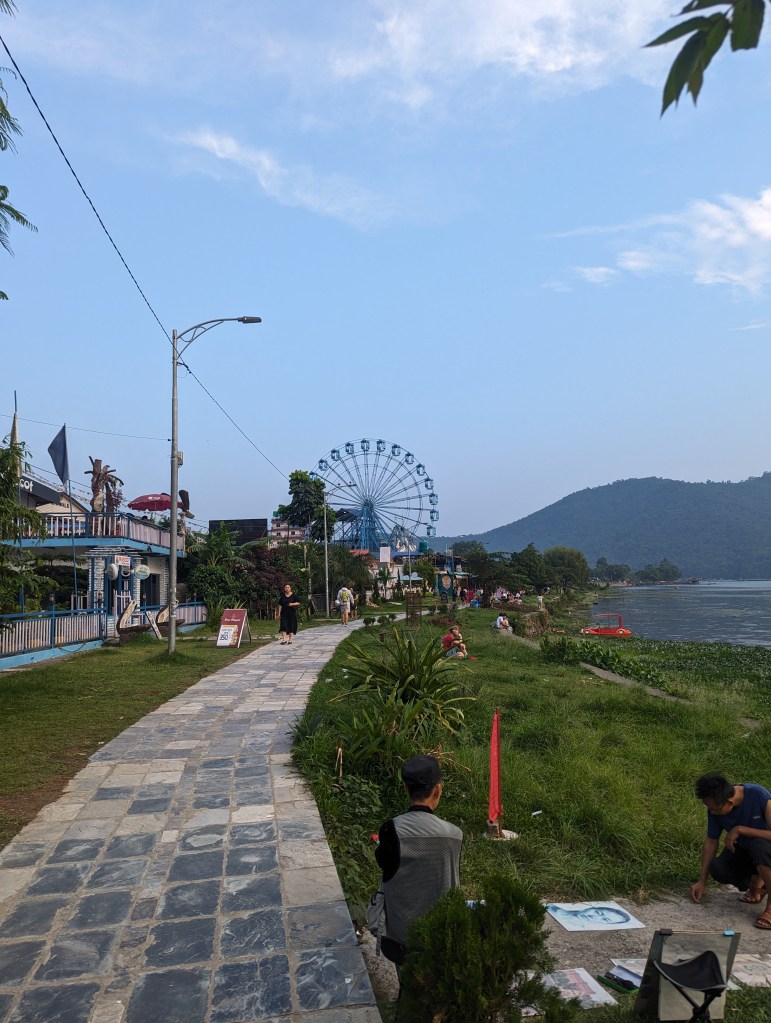

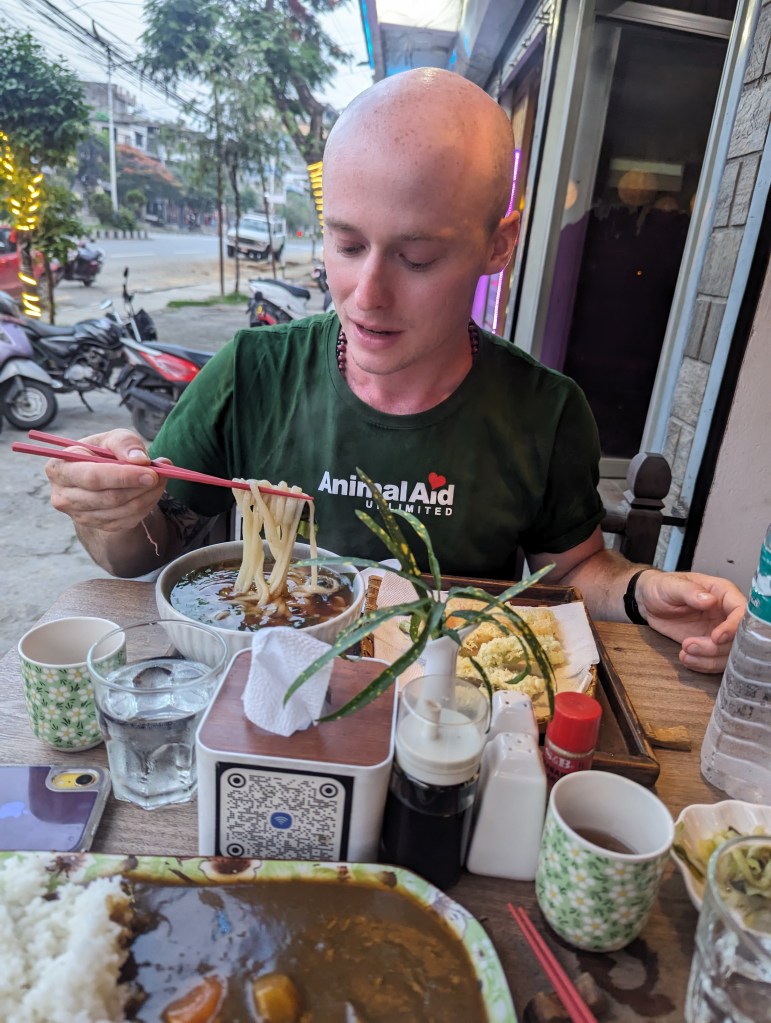
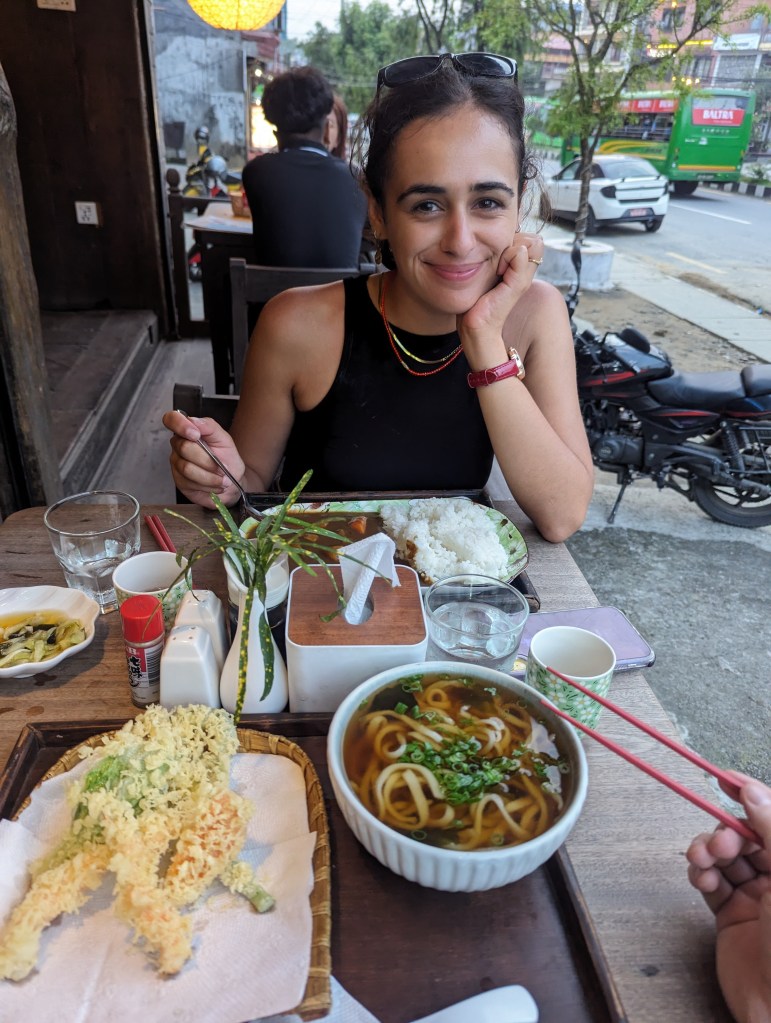
We decided to head straight to a Japanese restaurant for dinner, having walked 16 miles of hilly countryside by this point and knowing we’d have a hard time getting back out for dinner if we sat down at home! We inhaled some curry and noodles as mindfully as we could given our hunger and then hobbled home via the trusty Italian for some ice creams. Exhausted but happy, we were in bed before 10.
Monday –
It was an outrageously early morning on Monday, as we had arranged to go for a tour with a local Tibetan man around a monastery and Tibetan community just to the north of Pokhara. The alarm went off at 5am, and we got ready whilst I repeated that we were not doing another early morning on the trip, so help me god. I had cheered up a bit by 5.30, which was when we were due to meet Thupten, our guide, outside the hotel.
Thupten was a cheerful man in his 50s, and welcomed us with traditional white silk scarfs which are given by Tibetans as a sign of greeting. We were shown to the back of his minivan and we made out towards the Tibetan settlement, whilst Thupten gave us a brief history of Tibetans in Nepal and Pokhara from the front seat. It was remarkable that he was able to give such a clear and interesting narrative given it was pre 6am and the state of the roads outside the city centre meant it felt as if we were in a tumble-dryer.
Thupten told us that 20 000 or so Tibetan refugees made their way to Nepal after the Chinese invasion, and on instruction from the Dalai Lama had preserved their language, writing and culture by living in communities within the country. Shockingly, the Nepalese government has not granted a single Tibetan refugee citizenship, nor allows them to own businesses or work as professions in Nepal, despite many (like Thupten) having lived in Nepal for their entire lives.
We arrived at the Tibetan community after 25 minutes or so, and made our way to the monastery just in time for morning prayers, held in the meditation hall that looked much like others we’d seen in both Nepal and north West Bengal. The prayers were Tibetan chants read aloud from scrolls in front of a number of sleepy-looking boy monks, ranging from as young as five to perhaps sixteen years old. Every now and again, the chanting was interrupted by a frantic interlude of drum banging and horn blowing, after which the prayers would be taken up again. It was fascinating to watch, largely because the little monks that sat at the back and watched their elders kept nodding off and were woken by a clip round the ear by the attendant senior monk who paced the rows.
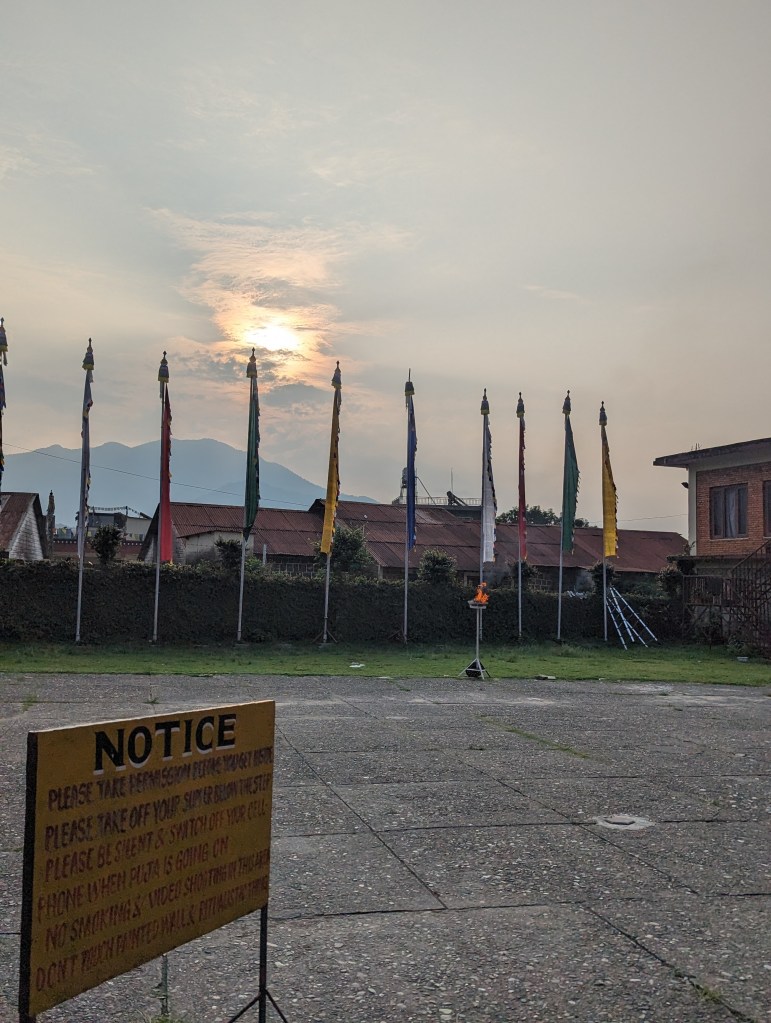
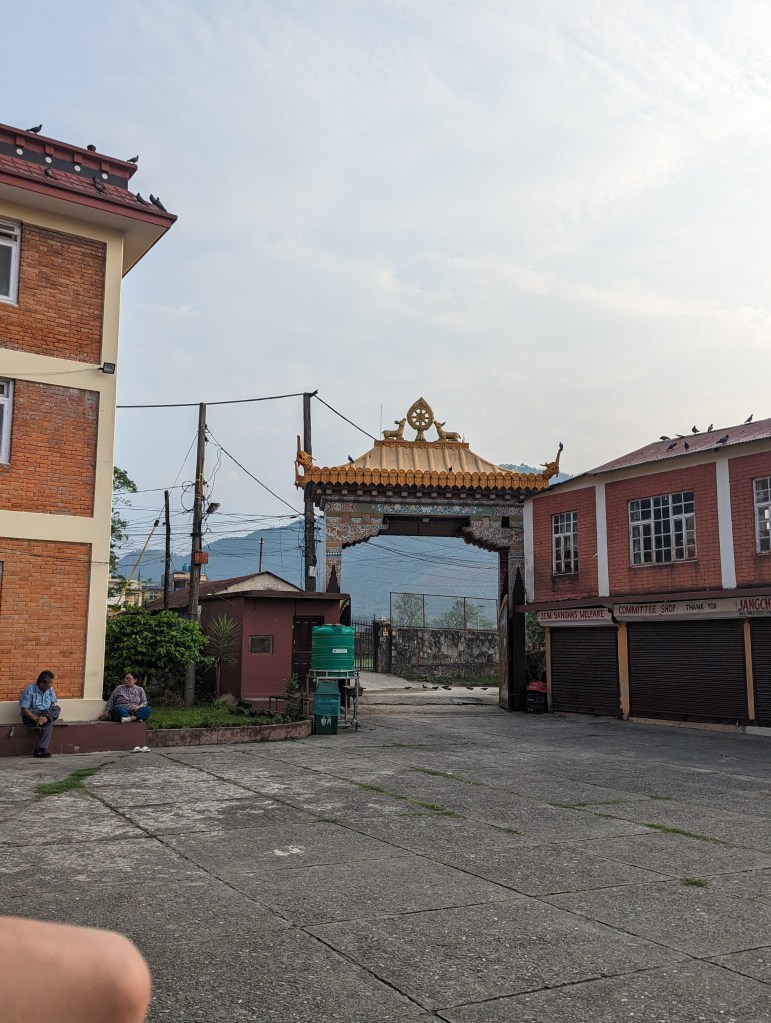
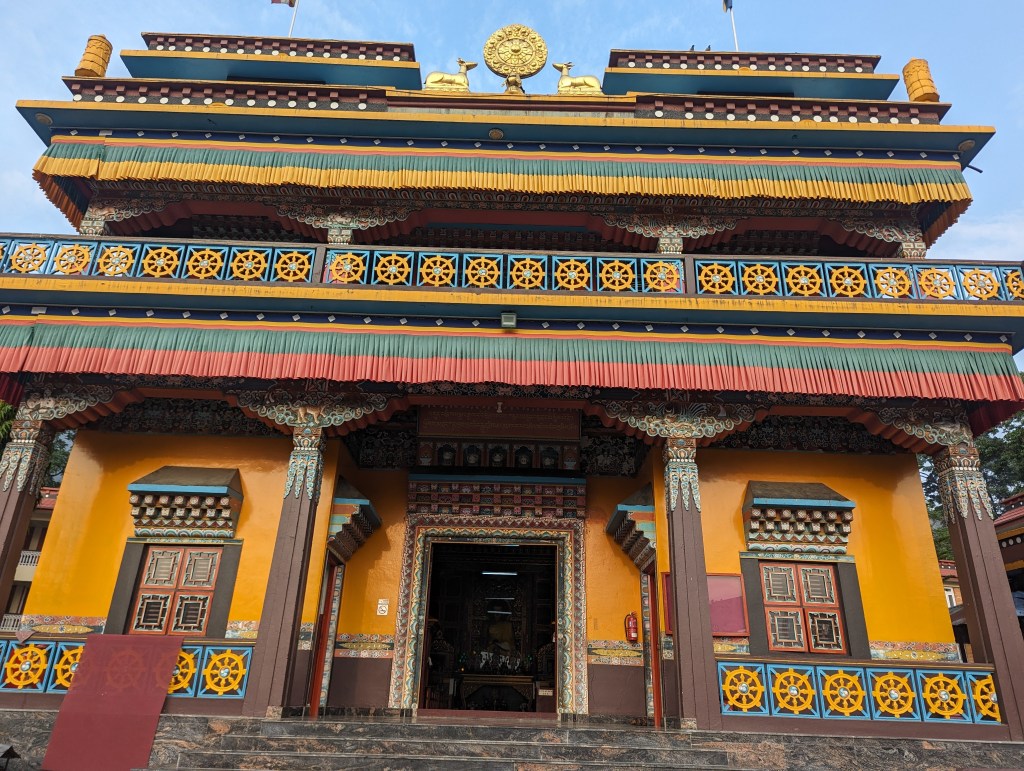

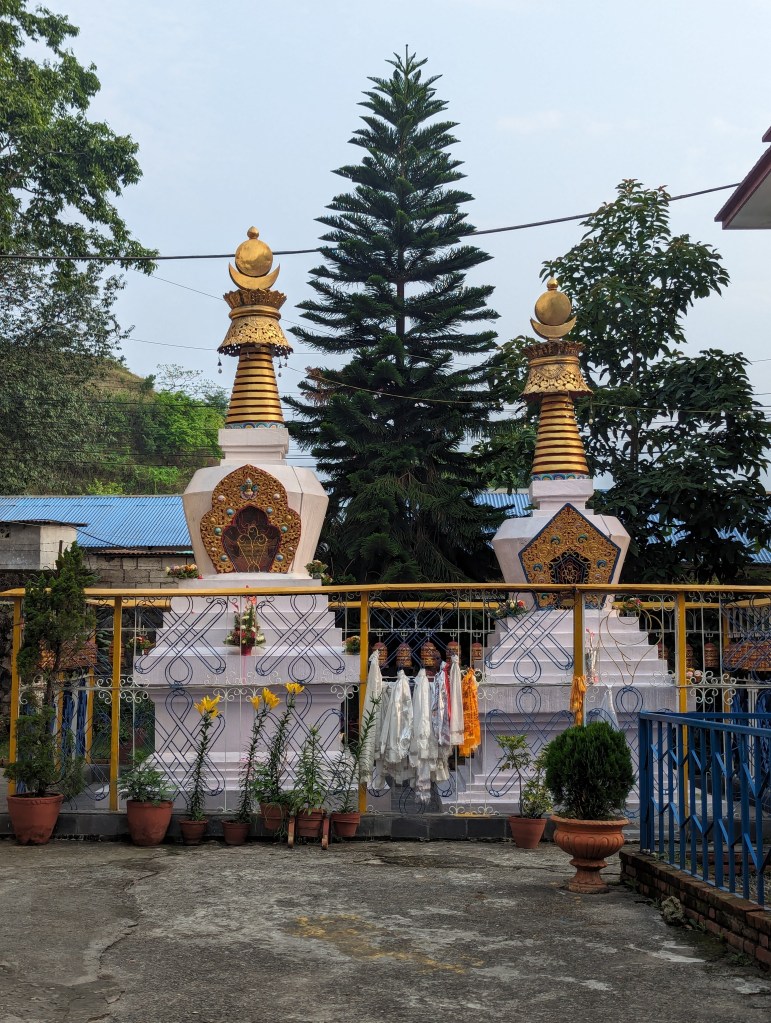
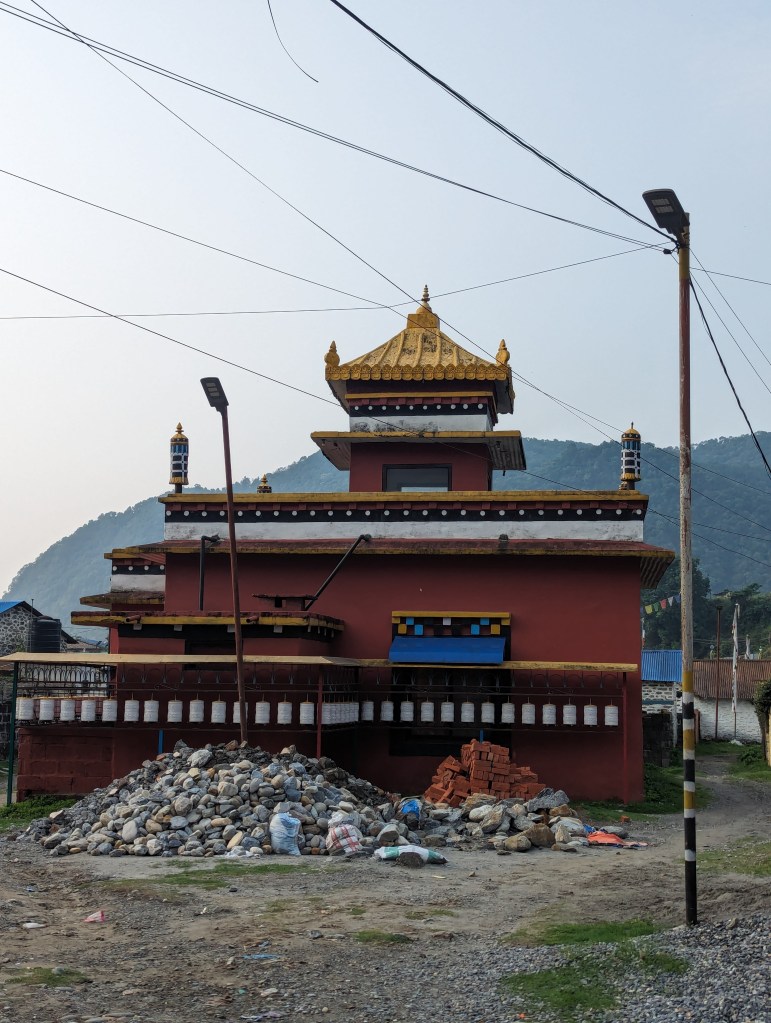
After we left the meditation hall, Thupten gave us a brief overview of Tibetan Buddhism in these areas. Interestingly, much of the laity had very little knowledge of the scriptures and teachings themselves, and believed mainly in the chants and mantras thought to be auspicious. The Dalai Lama (Thupten’s favourite topic of conversation, and someone who he quoted liberally throughout the tour) had disparaged some of these practices, and encouraged lay Tibetans to become more acquainted with Buddhist beliefs. The prayer wheels that can be seen outside the monastery was an example of this – they contain sheafs of paper with the popular “om mani padme hum” mantra, and so were supposed to give the blessings of thousands of these mantras all at once if spun. Apparently, the Dalai Lama had derided this as superstition, which didn’t seem to stop anyone spinning them as they went past, just in case.
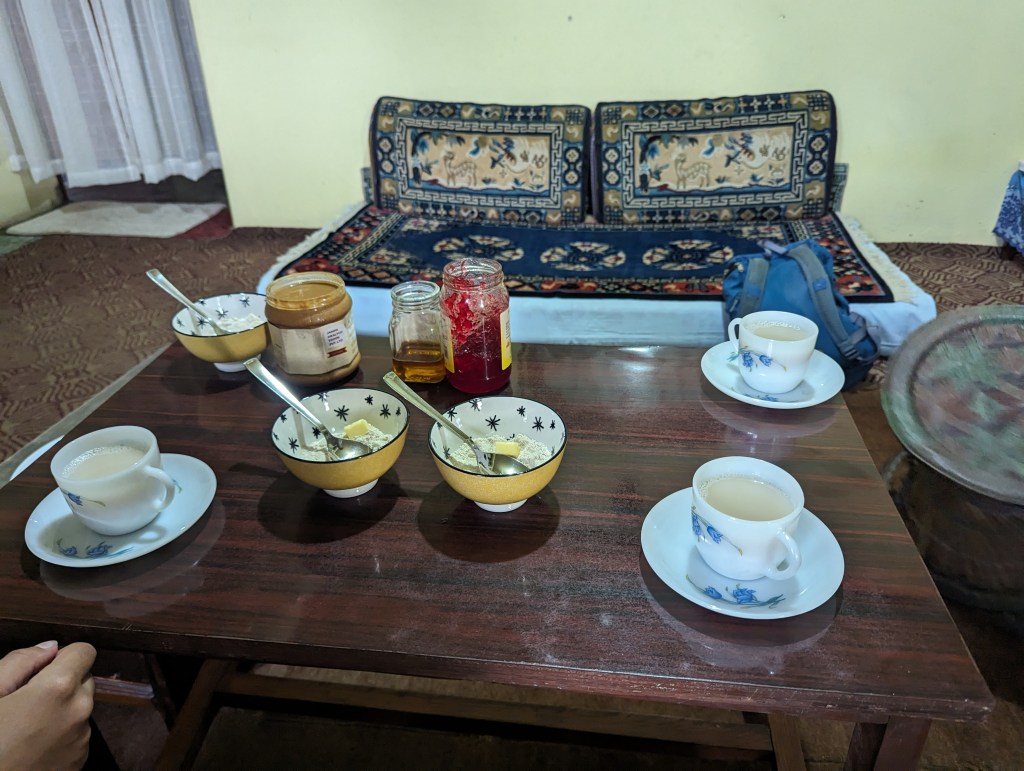
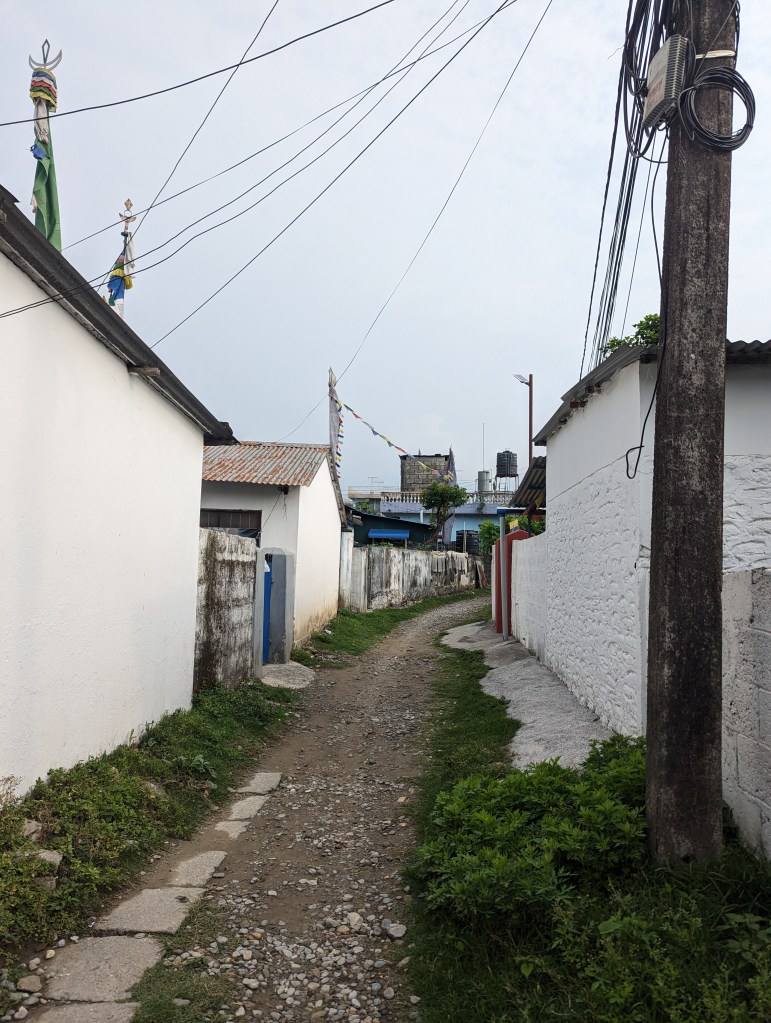
After the prayers, we walked through the community to a local house. The community once housed around a thousand people, but had dwindled to a few hundred. Thupten explained this was largely because young Tibetans could find better prospects in Western countries, and so had largely left once they were old enough to do so. In the local house, we had a traditional Tibetan breakfast with Thupten. This included generous lashings of butter tea, made with butter, salt, and black tea (in about that order of quantity). We had a paste made from barley flour and the tea mixed together which, although a little stodgy, was surprisingly good, and some Tibetan bread with butter and jam. As we ate, Thupten told us about daily life as a nomadic Tibetan on the steppe, and why all the food contained at least half a pound of butter to ward against the freezing temperatures (for example, the butter that separated and hardened on the surface of tea was skimmed off and rubbed into the hands and face to protect from the cold).

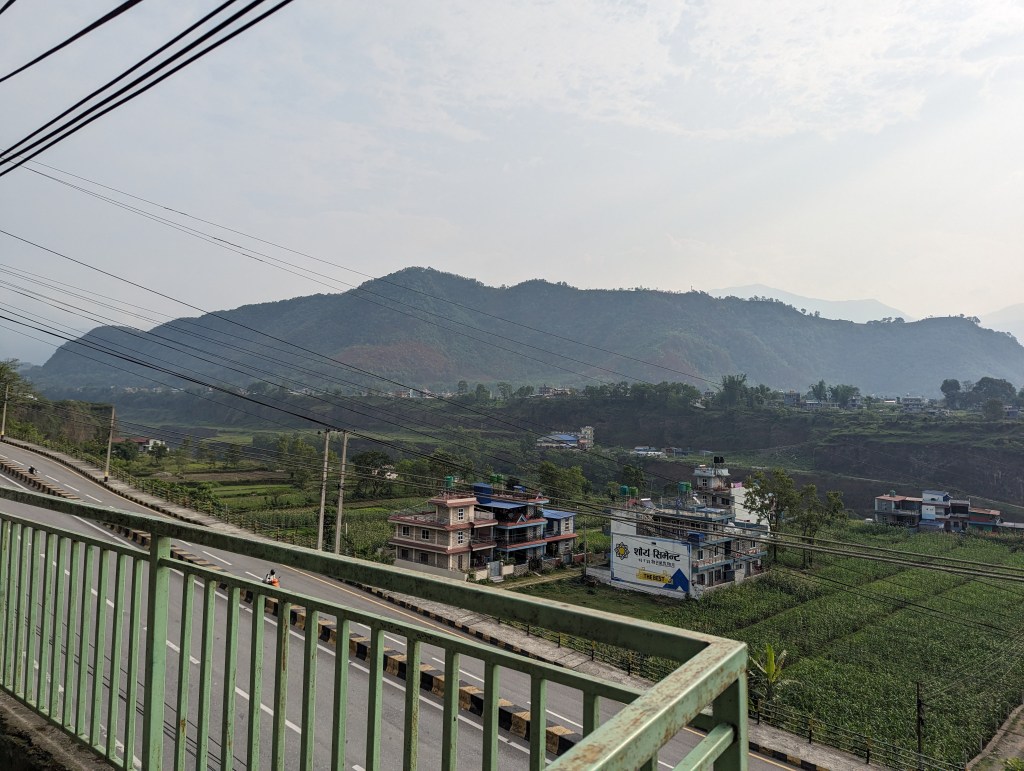
From the community, Thupten drove us to another nearby monastery, where we were to have an audience with one of the monks there. The monastery was still of Tibetan Buddhism, but of a different denomination to the first that placed more emphasis on learning and less on chanting. We walked to the large, concrete courtyard and were soon met by a man in his early 30s, wearing shorts and a t-shirt covered in paint. We were expecting the usual maroon robes of a monk, but he (I can’t remember his name) explained that he was running a project renovating the gardens and didn’t want to get his robes dirty.
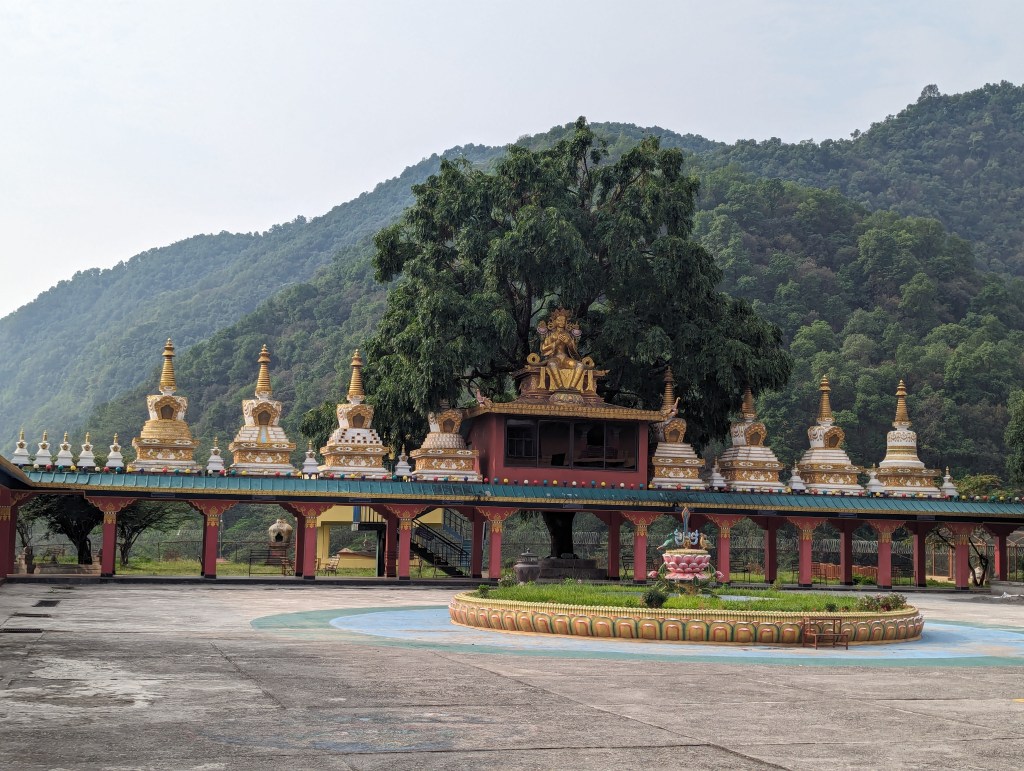
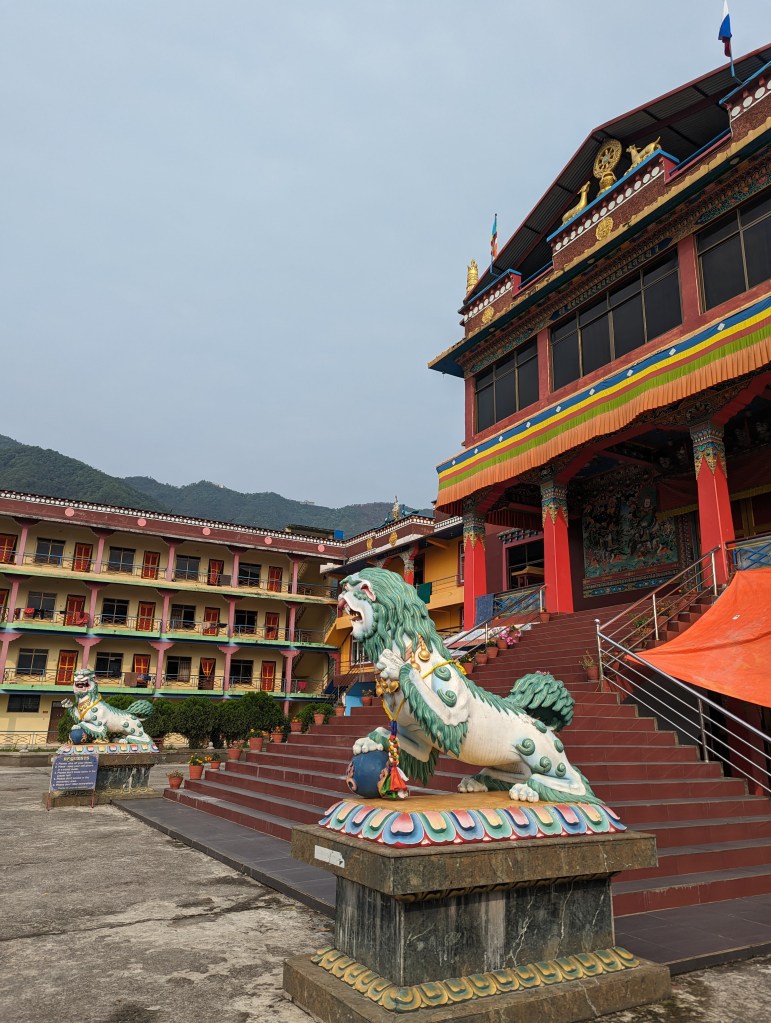
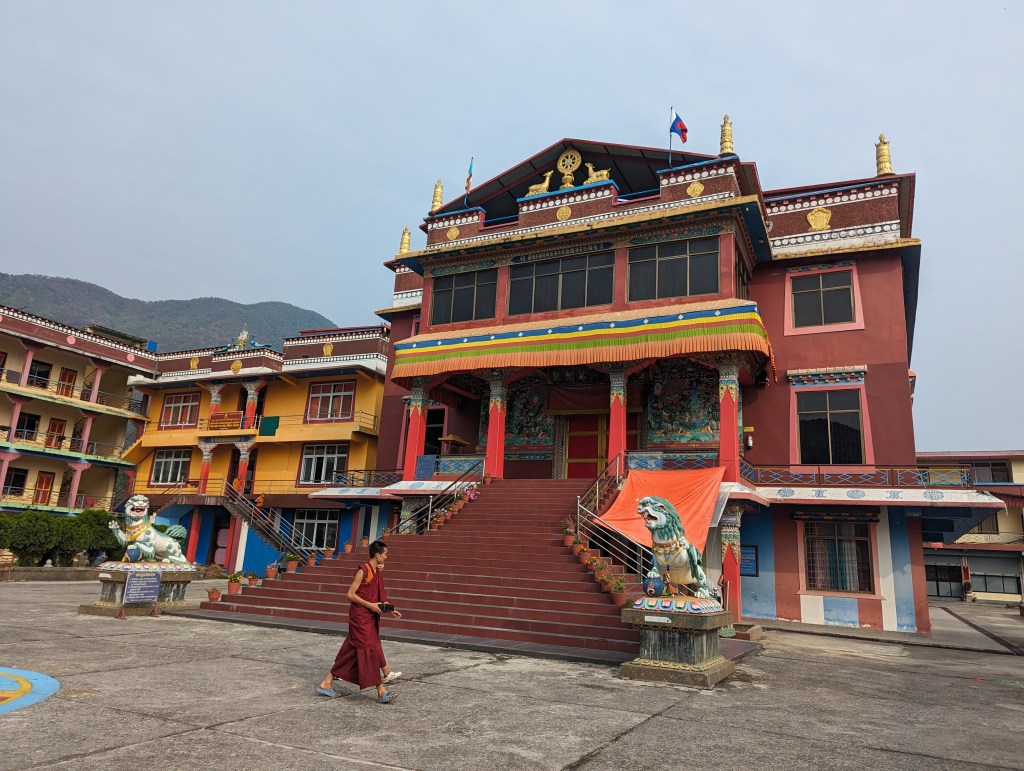
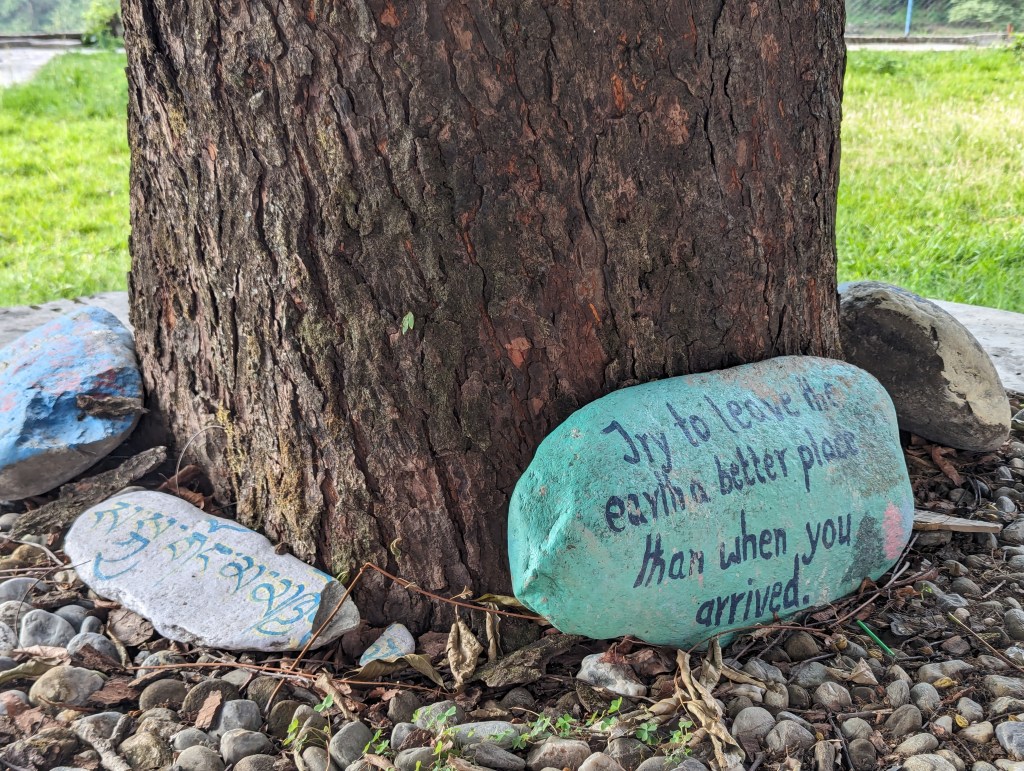
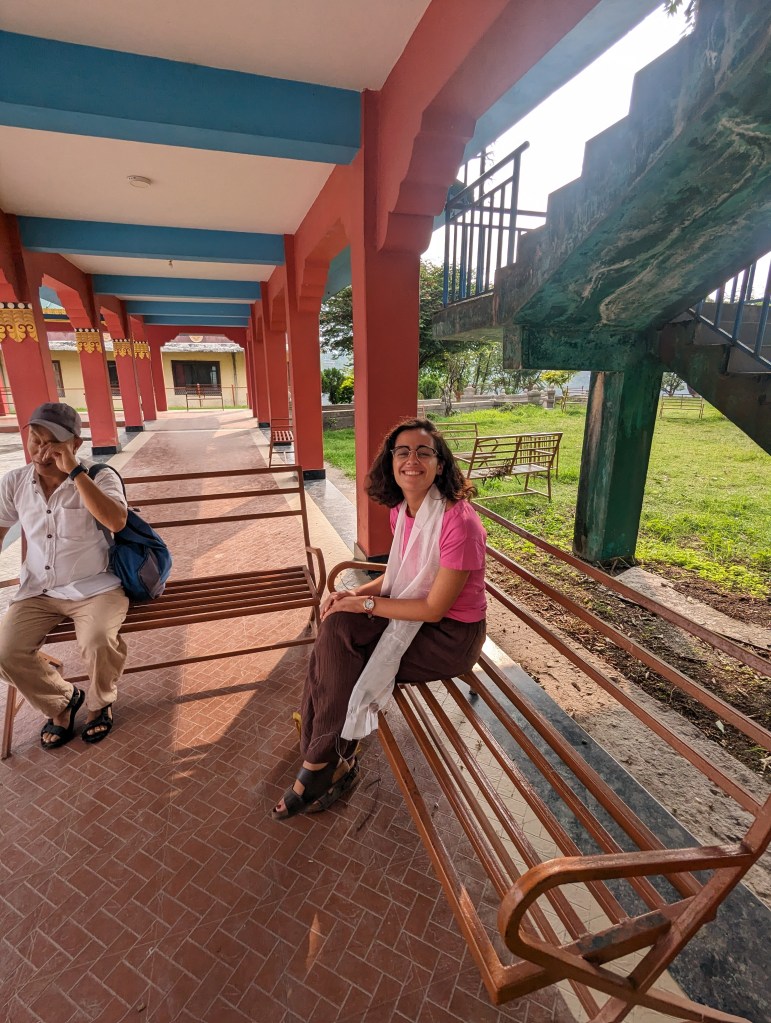
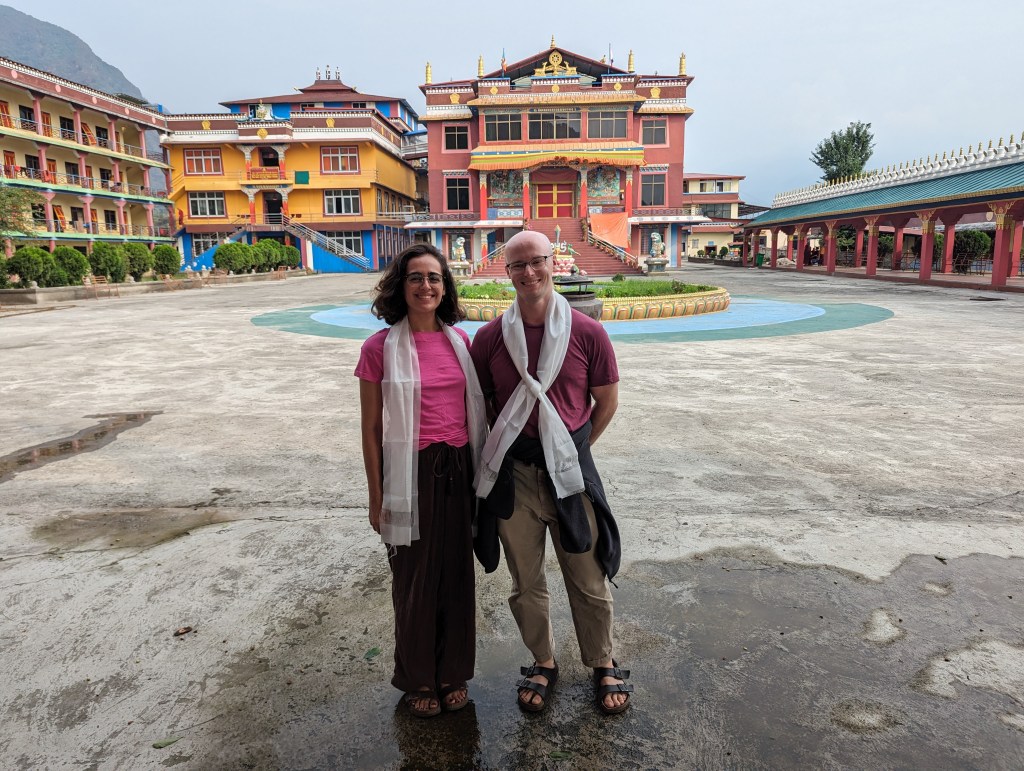
Thupten left us for an hour, which seemed like it would be a long time, to chat to the monk. The time went in a flash, however, and we talked to the young monk a little about his life in the monastery and a lot about his practices and beliefs. Many of the children in the monastery come from poor families that live in north Nepal and who (like our monk) are not born in Tibet itself but are of a largely Tibetan Buddhist faith. In a strangely tender moment, he mused about why his mother might have left him at the monastery as a young child, but seemed to harbour no resentment for it. The rest of the conversation turned to the Buddhism practised at the monastery, but I won’t attempt to expound on that here.
Before long, Thupten arrived back and joined our conversation for a short time, before shepherding us off back to the minivan and to home. On the way back, Thupten left us with a nice message about the importance of education in bettering the world, a topic the Dalai Lama has apparently been heavily involved in with his SEE project and other initiatives. We bid Thupten farewell at our hotel, and he kindly rang me 5 minutes later when he realised I’d accidentally paid him double, and walked back to our hotel to hand over the extra money.
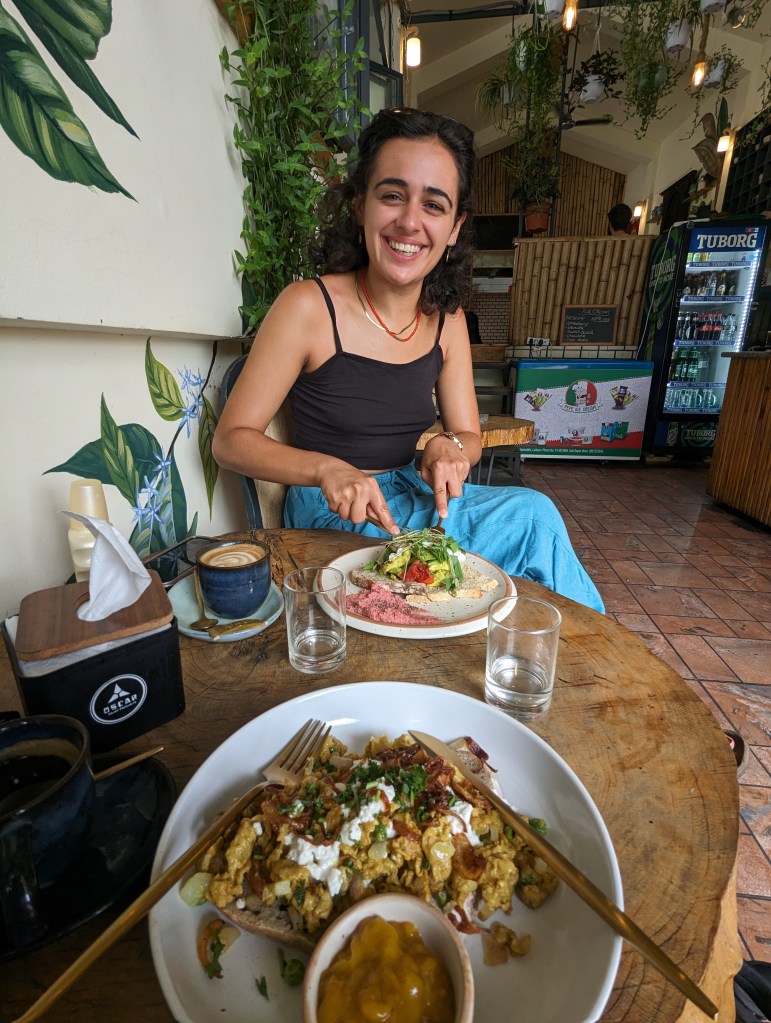
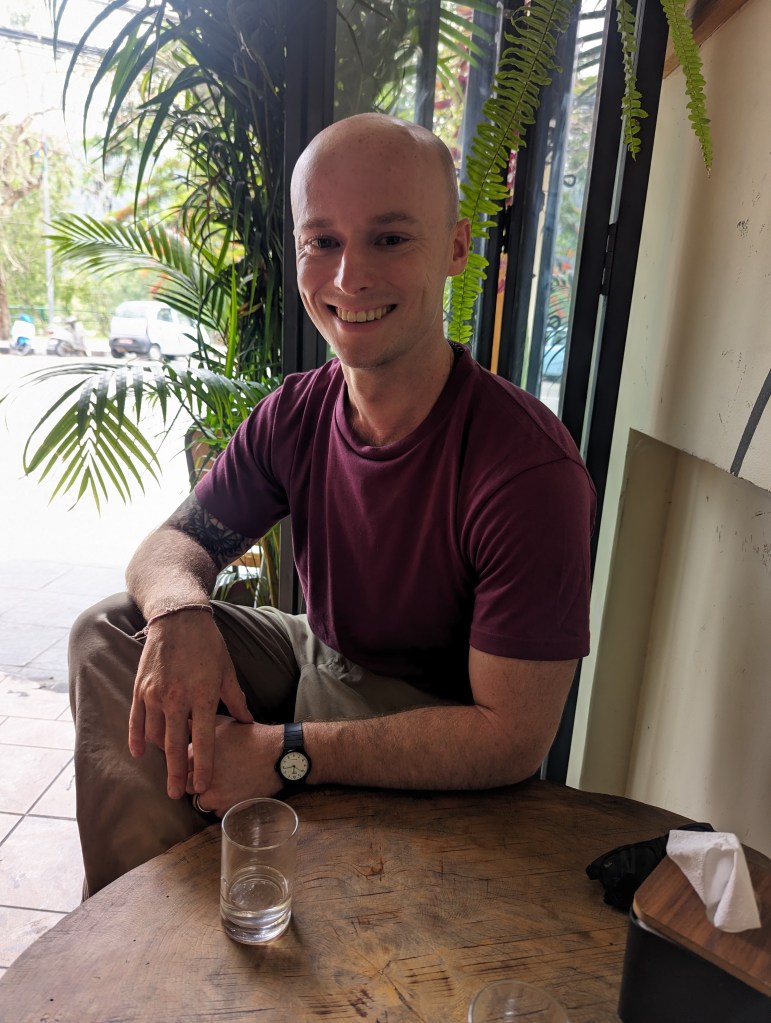
It was a really excellent trip, but we were exhausted from the early start and promptly fell asleep for nearly two hours back in the hotel room. Once roused again, we packed and popped out to a local coffee shop for brunch and a coffee. We said our goodbyes to the young men that ran Nanohana Lodge, and got in our taxi to the airport. Pokhara International airport was built with money loaned by the Chinese and finally finished in 2023, and has yet to have any routine international flights. Only a small corner of the departure building is used for the flights back and forth to Kathmandu, and we were quickly through the quiet check-in and security.
We sat in the little departure lounge as the time came and went for our flight to have departed. There were another two gates in use, each running a flight to Kathmandu with a different airline, which also seemed to be delayed. When it was thirty minutes or so after our departure time, a tannoy announcement told us that the weather conditions were poor, and so the flights would be grounded for the time being. As if on cue, outside the heavens opened and a deluge of rain fell for another hour or so.

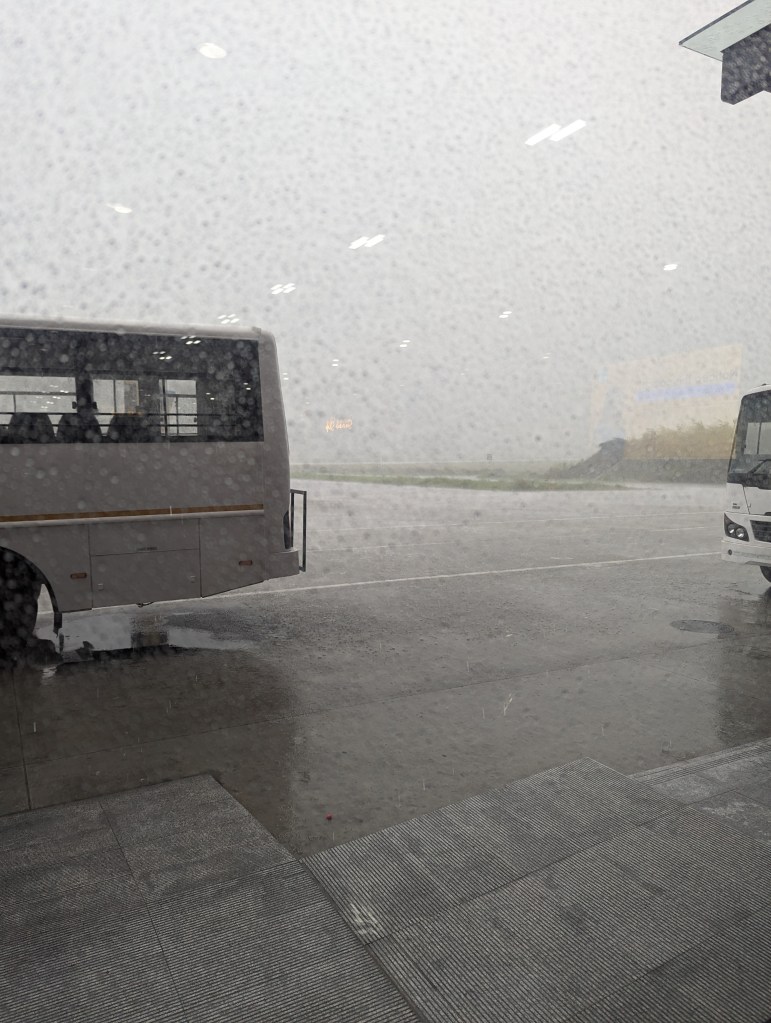
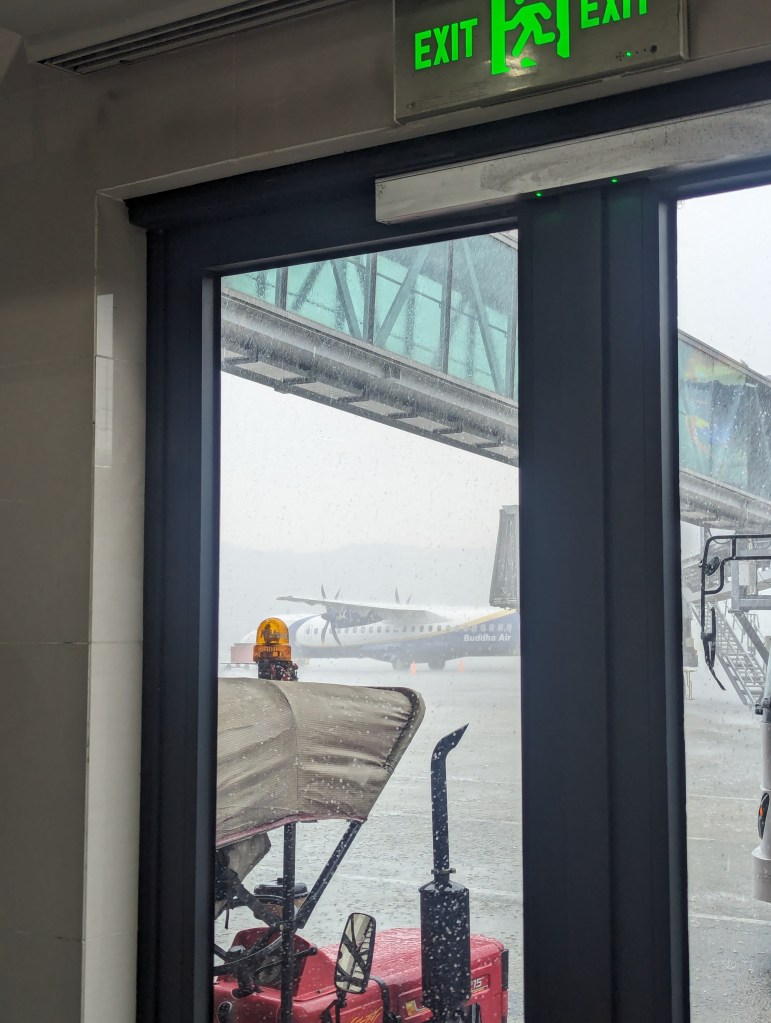
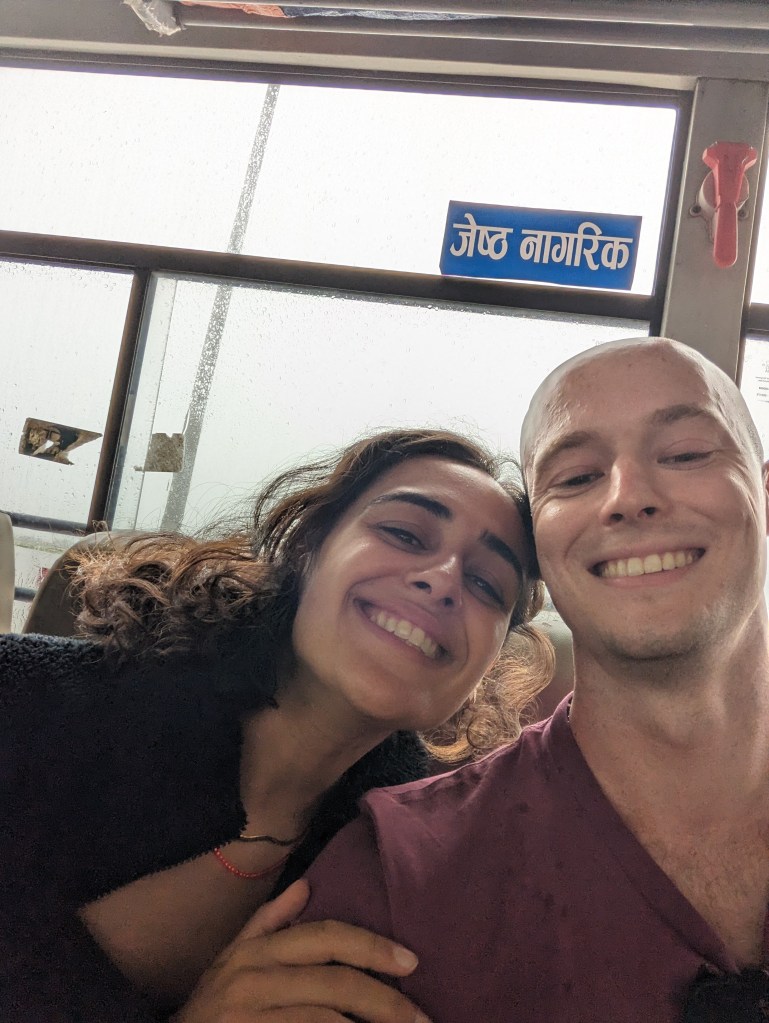
The wait was a long one, and very little information was offered by the airport staff. At one point, in fact, the tannoy announced our flight was boarding and so we all made for the gate, only to be told that the tannoy was wrong and our flight was not in the slightest ready for departure. It was until about two hours after our departure time that the skies lightened a bit, and we were all herded into the buses to take us to the planes (they seemed to be sending all three flights off at the same time in the gap between storms). We boarded, and before we knew it we were taxiing down the runway and off until the sullen looking skies. The flight was a bumpy one, and at one point we passed into a cloud and the plane lurched down and to the side for what felt like several seconds before it levelled out. Ellie was much braver than me, given I spent most of the flight saying “oh God”, and cutting off blood supply to Ellie’s hand with my grip.
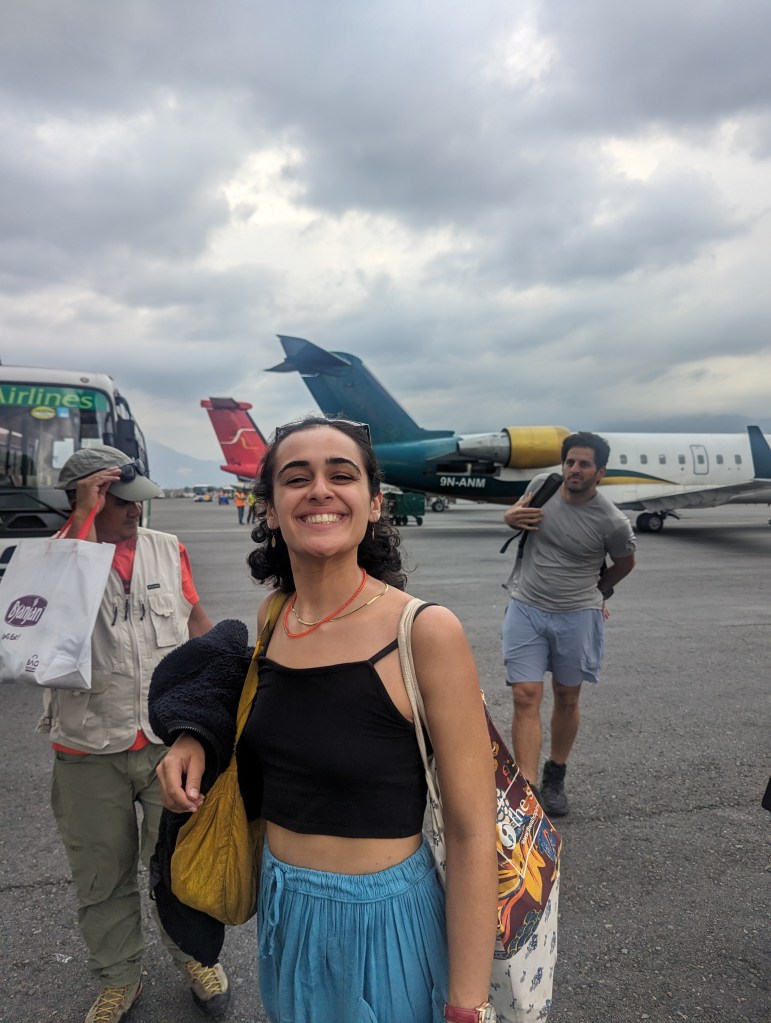
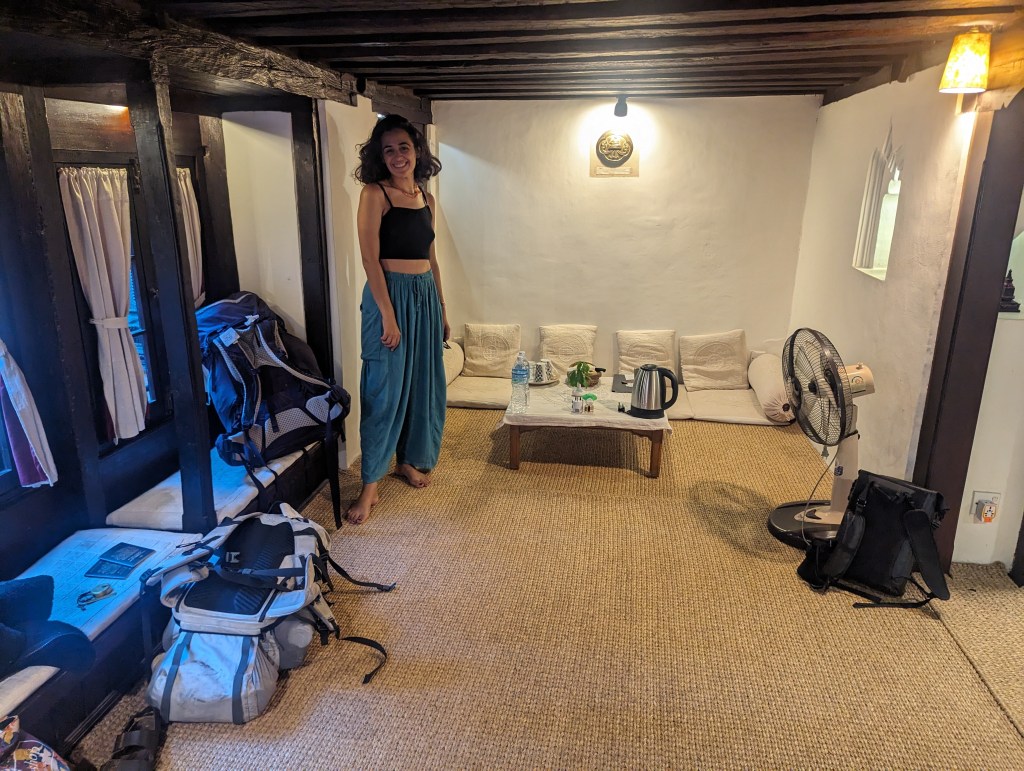
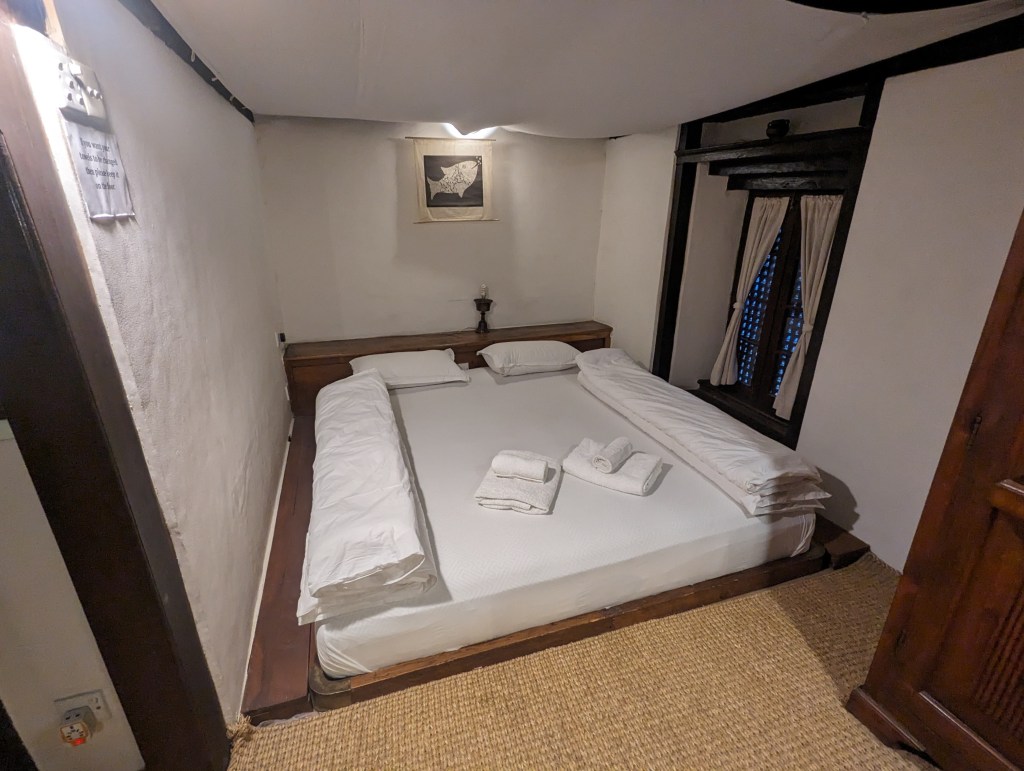
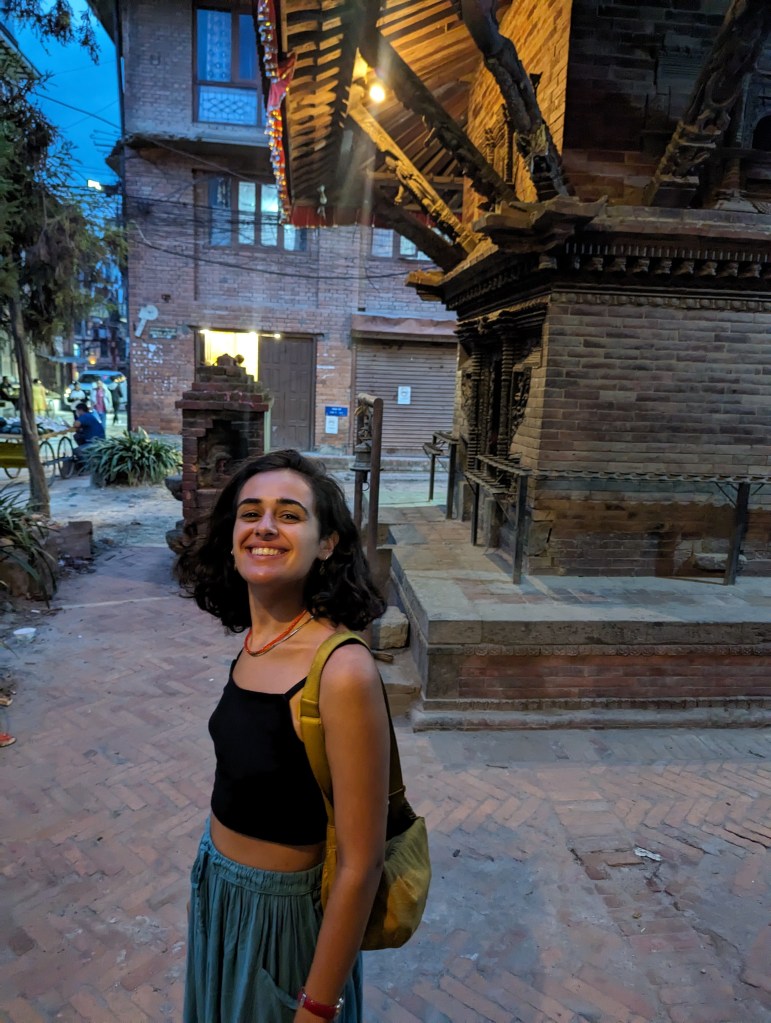
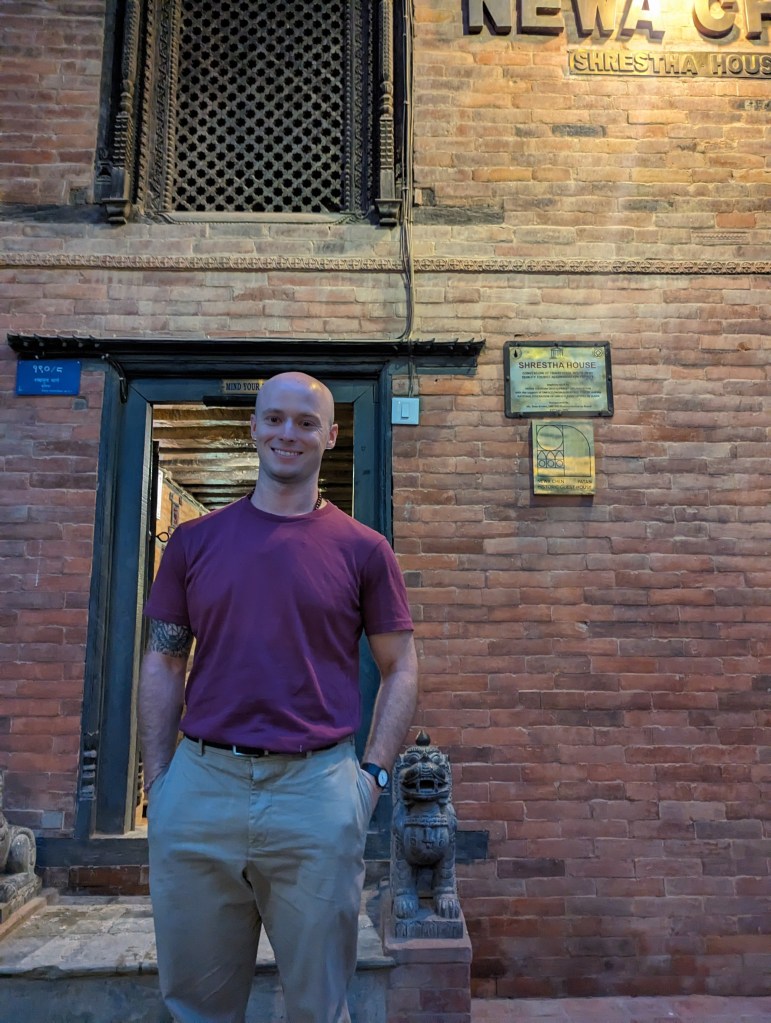
Mercifully, however, we were back on the ground in Kathmandu International Airport (a real international airport) after 25 minutes, and picked up our bags. It was a short taxi ride to Newa Chen, our next hotel. Newa Chen was in the historical Patan district, a previously independent city state but now incorporated into Kathmandu’s southern Lalitpur district. Newa Chen had been renovated to look like a traditional Newari (the Kathmandu valley Tibeto-Burman ethnicity) residence. It was a beautiful room, with a low bed on coir carpets, and a big living room in a similar style. We dropped our bags and walked a little way into Lalitpur to have a quick, and decidedly average, Singaporean meal, before walking the thirty minutes or so home. It had been a long day, notwithstanding the two hour nap, and so it was straight to bed when we got home.
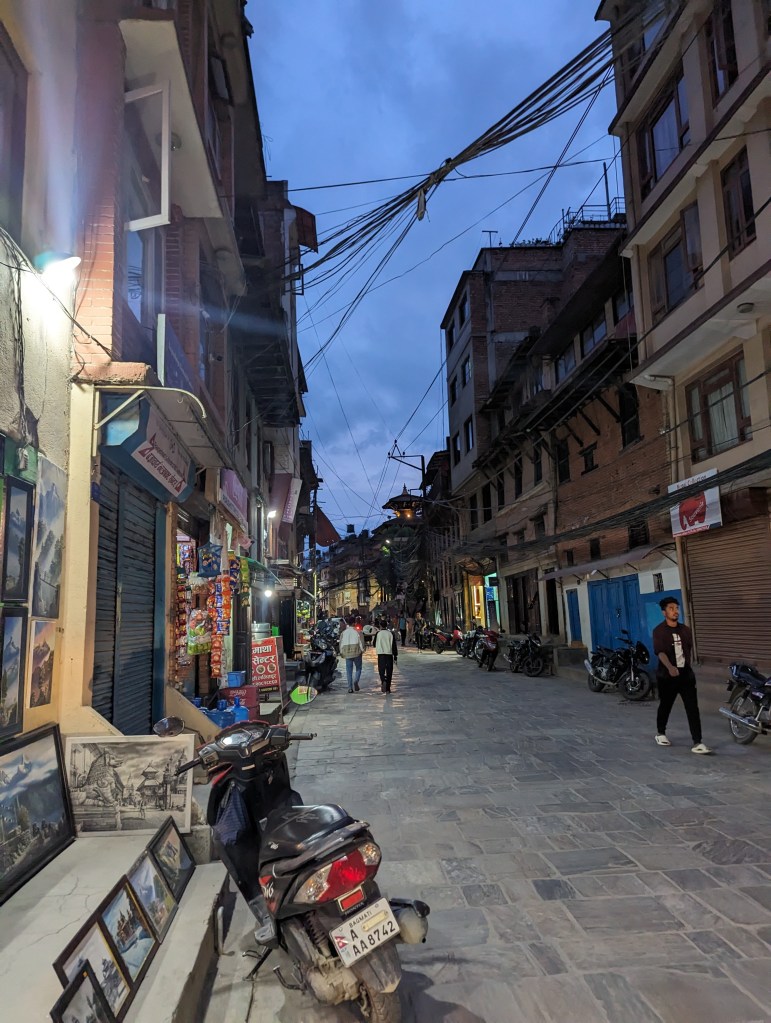
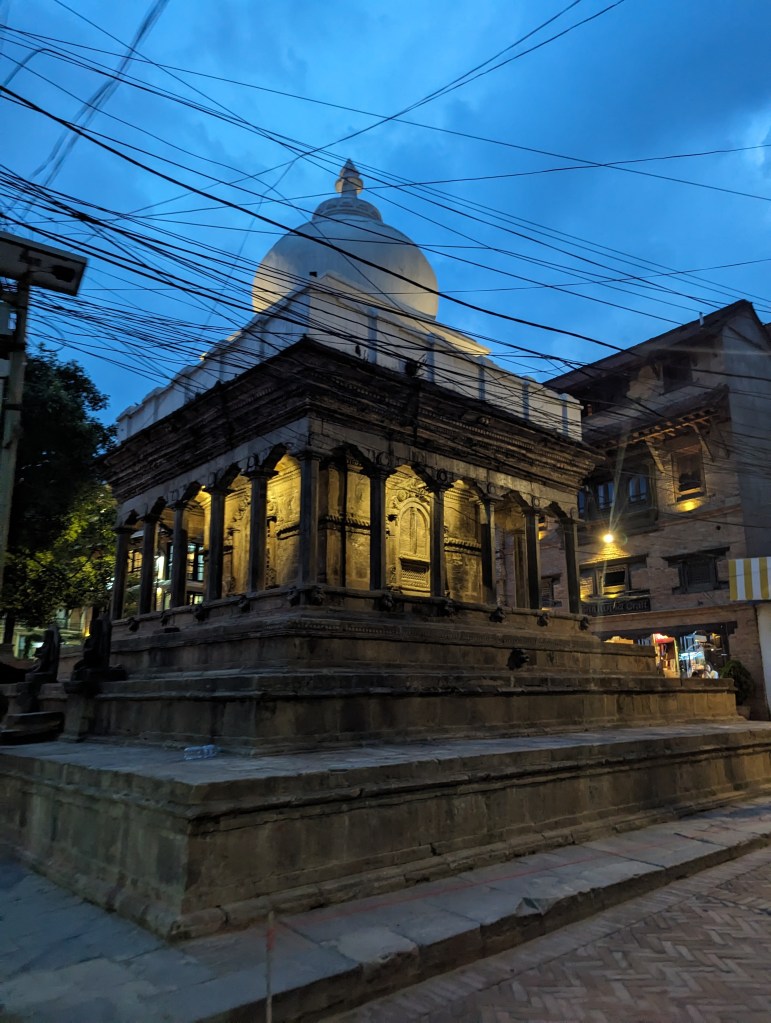
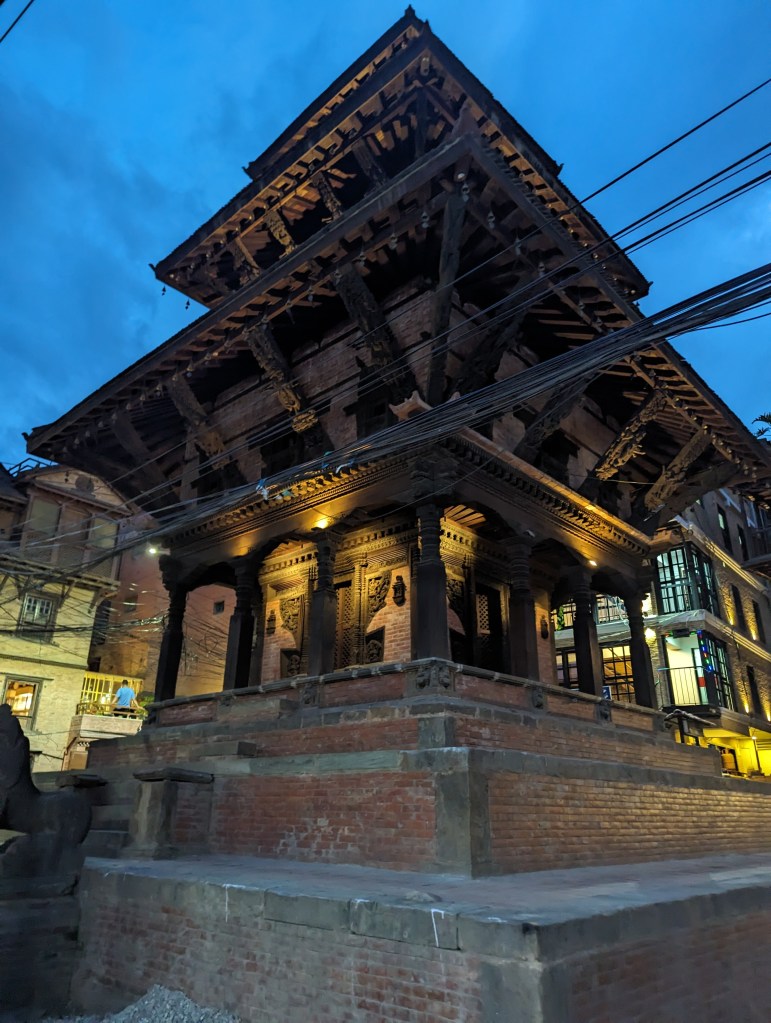
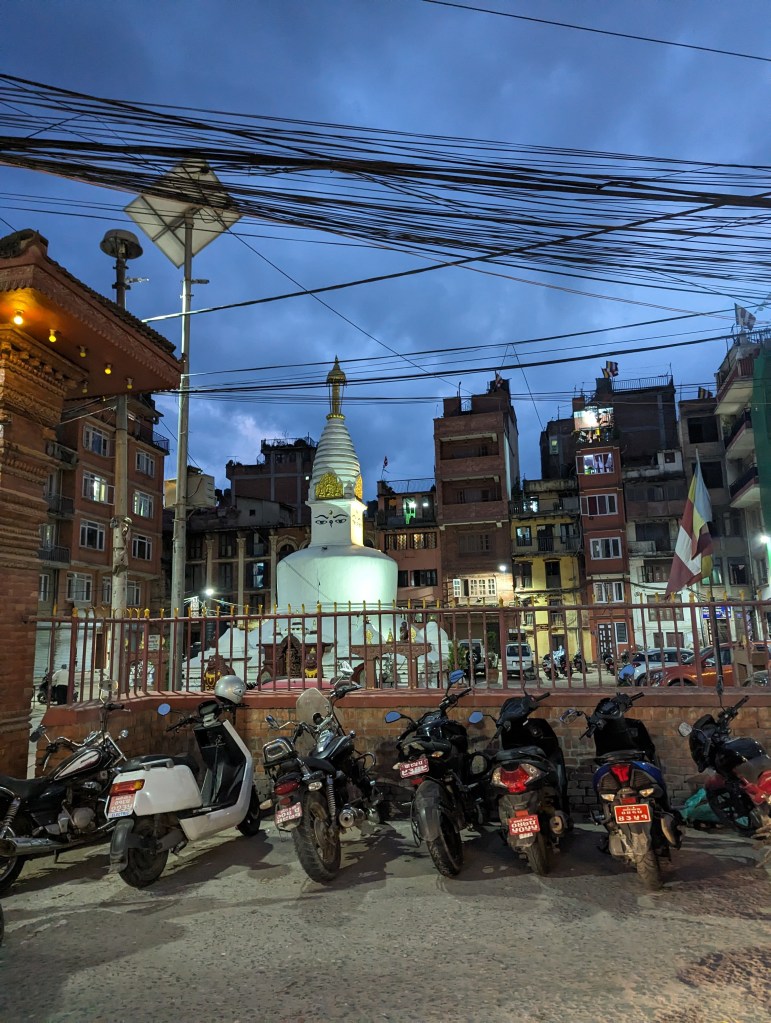
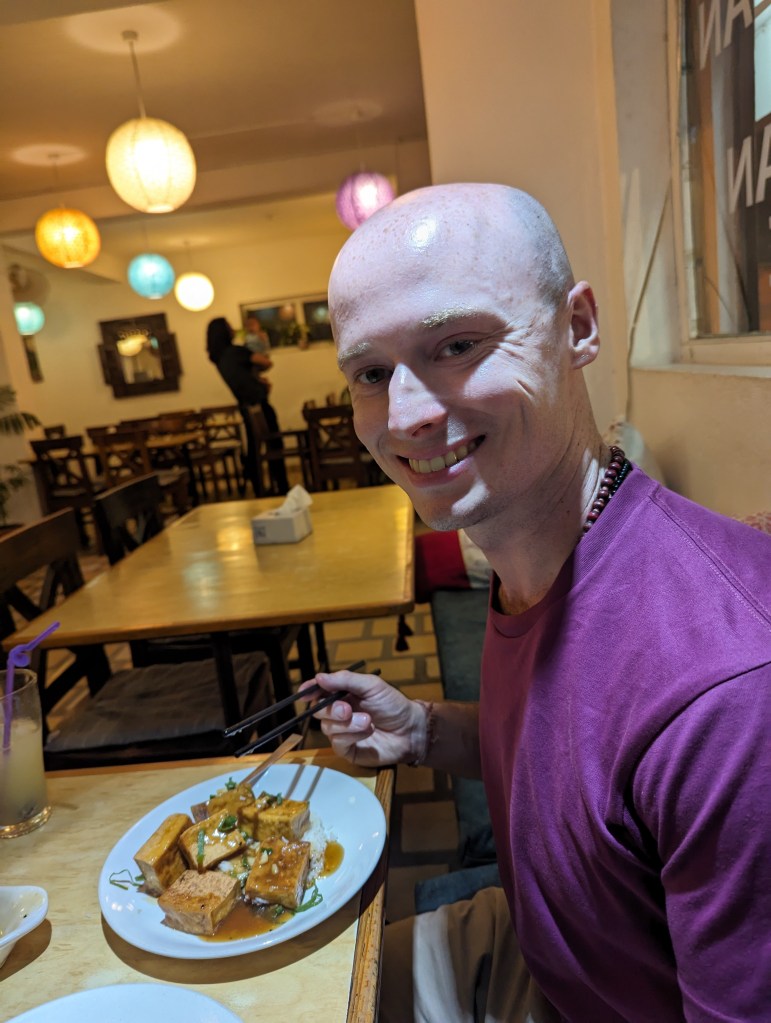
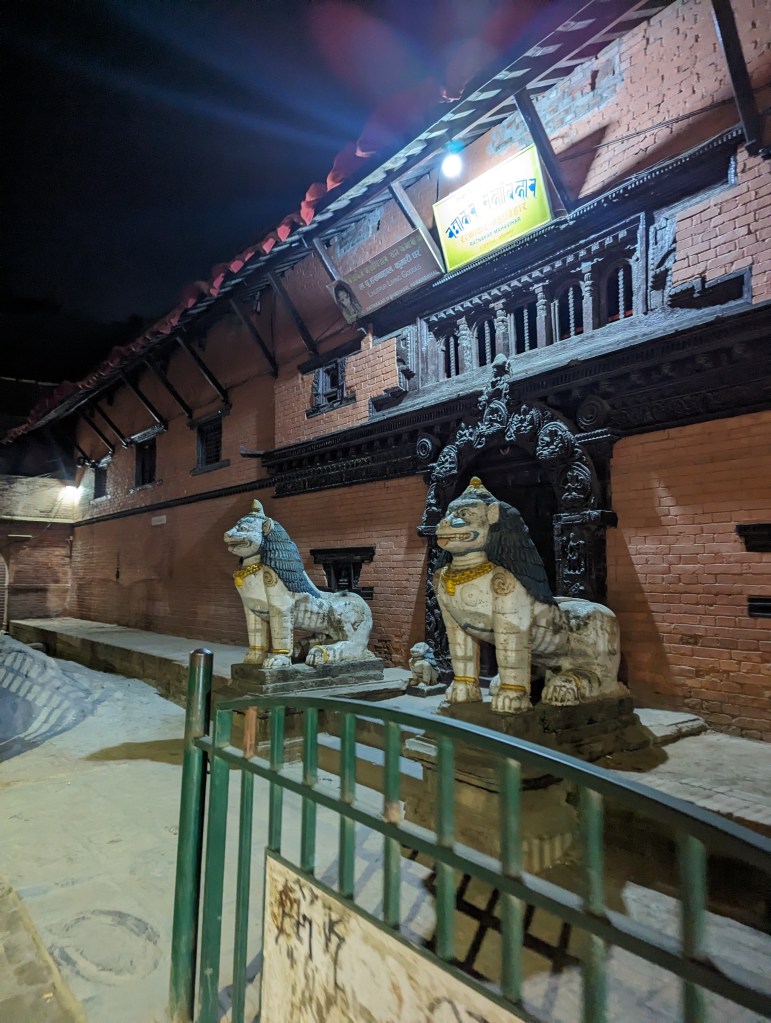
As you can see, the last three days in Pokhara were busy ones! And now we are in Patan, and we haven’t slowed down much. In the next blog we will cover the first three days (of six) of our adventures in Patan, in what are the closing stages of our extraordinary trip.
Until then,
Ellie & Rob xxx
 Rob's India & Nepal Blog
Leave a comment