Calcutta will be our longest stay of the trip, second only to our four weeks at YTT in Varkala. In this blog, I will cover our middle four days which have been slightly less eventful in part due to us taking it slowly in the heat, and in part due to the inevitable stomach bugs of North India. I would caveat that, although it sounds like we are constantly being stricken with diarrhoeal illness, we do spend the majority of the time well and it is a small price to pay for the excellent time we are having!
Sunday –
Since we’d had such a good time on our last guided walk with Tuhina, we decided to book another. Calcutta, when still the seat of the British Empire in India, was divided into the “White Town” for the English and other Europeans and the “Black Town” for the local residents. We had explored a bit of the White Town when we had seen the Victoria Memorial and St Paul’s Cathedral on our first evening, and some of the Black Town in our first guided tour. This tour was to cover the “Grey Town”, which was the areas between the White & Black Towns which were, and to some extent still are, home to Calcutta’s myriad minority groups.
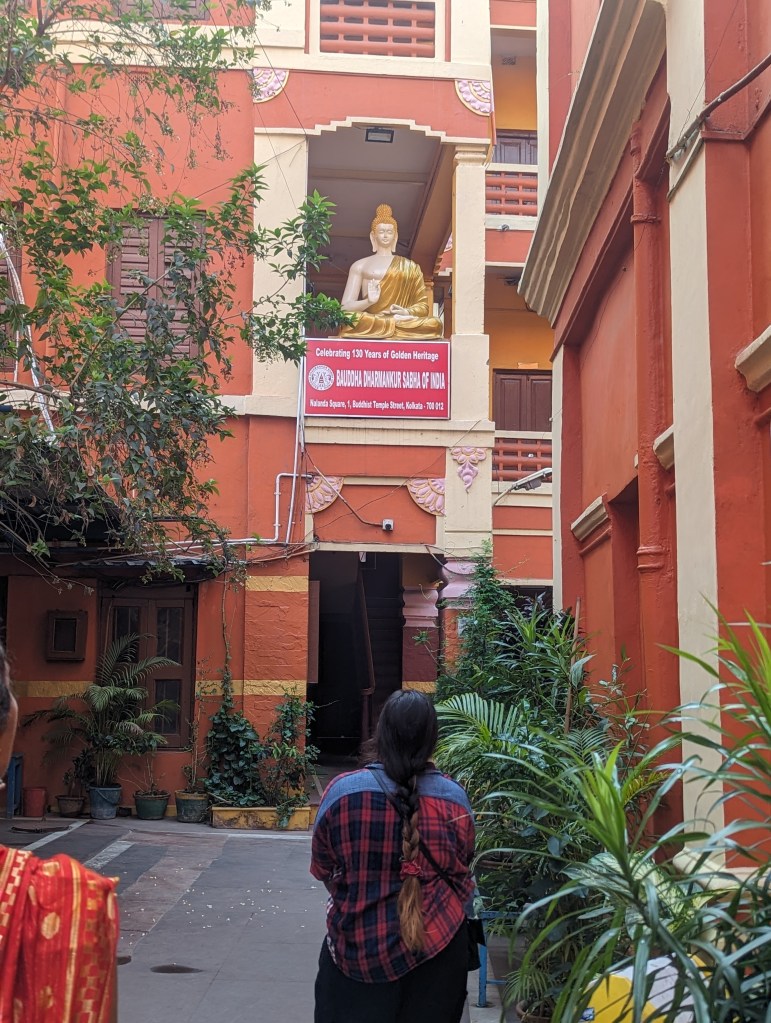
The tour started at 7am again, so crawled out of bed and into a taxi without breakfast and headed to the rendez-vous point a short drive away. We were joined by a few others for this tour – a couple of older couples and a younger woman on her own – and once all assembled we headed off down the local streets en masse. Our first stop was a Buddhist temple and dharamshala (a place that travellers of that particular group can stay for free or a nominal fee), which acted as a stopover point for Buddhist pilgrims on their way to the pilgrimage sites of Bodhgaya and Sarnath. We were met at the gates by an enthusiastic Myanmar monk who was staying for the night, and who, in concert with Tuhina our guide, showed us into the compound and explained the iconography and symbolism of the shrines (this wasn’t planned, he just happened to be hanging around).

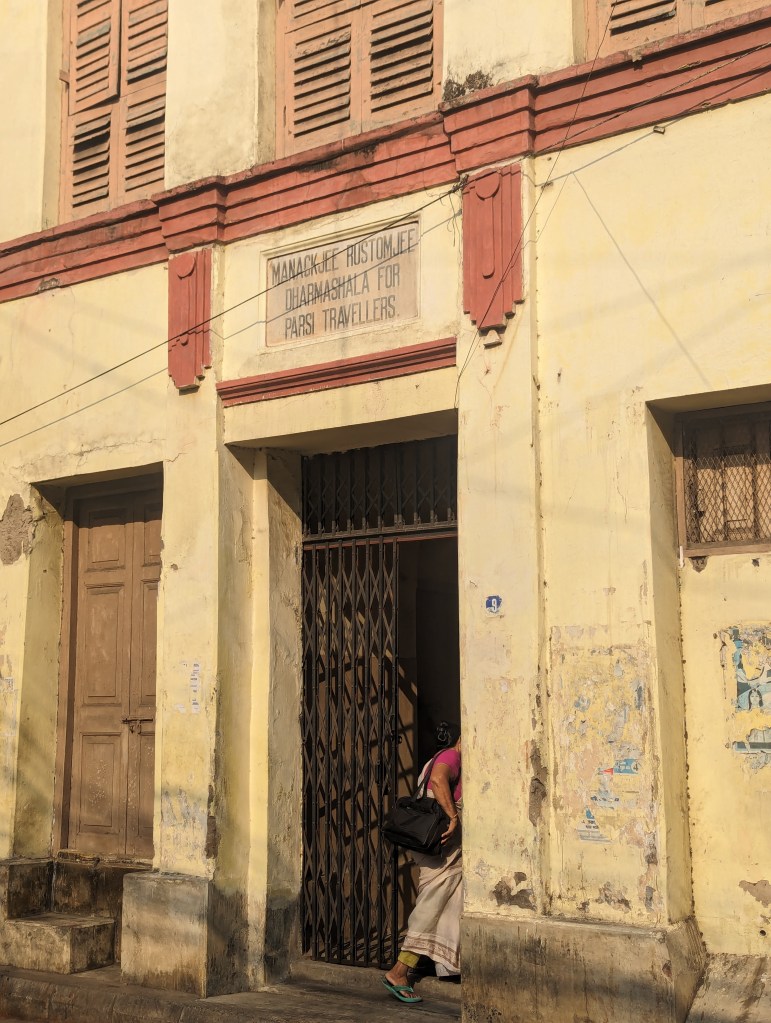
From the Buddhist dharamshala we crossed the road to the Parsi dharamshala. This was a small complex of rooms and a courtyard established again to house Parsi (Persian zoroastrian) travelers to Kolkata. The Farsi population in India is largely on the West coast, for example in Gujurat and Mumbai, given its proximity to Iran and tend to be at least descendants of the persecuted Zoroastrians. Apparently, when the Zoroastrians arrived in Gujurat after being forced out of Persia, they were admitted to the country on the grounds that they 1. contributed to the economy, 2. did not involve themselves in warfare, and 3. did not preach their religion (though they were free to practice it). These guidelines had clearly been taken seriously, as many of India’s giant corporations that employ swathes of the population are Farsi owned – notably Tata which is absolutely everywhere in India. Additionally, all Zoroastrian temples strictly forbid entrance to any non-Parsis lest they be accused of proselytising.
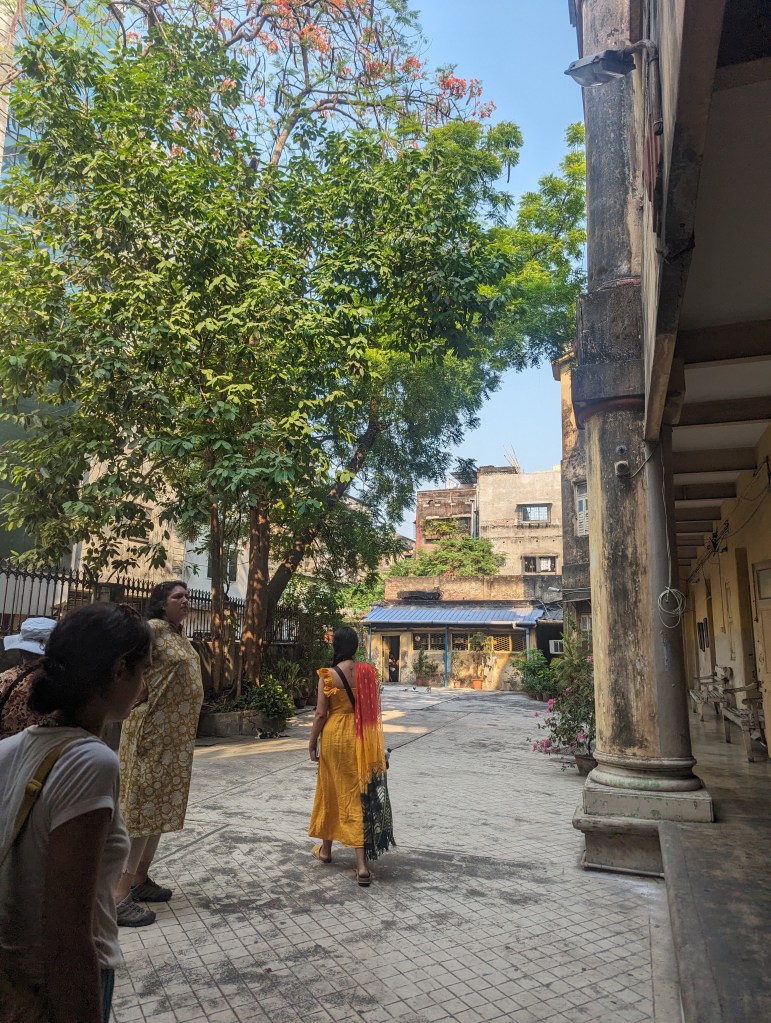
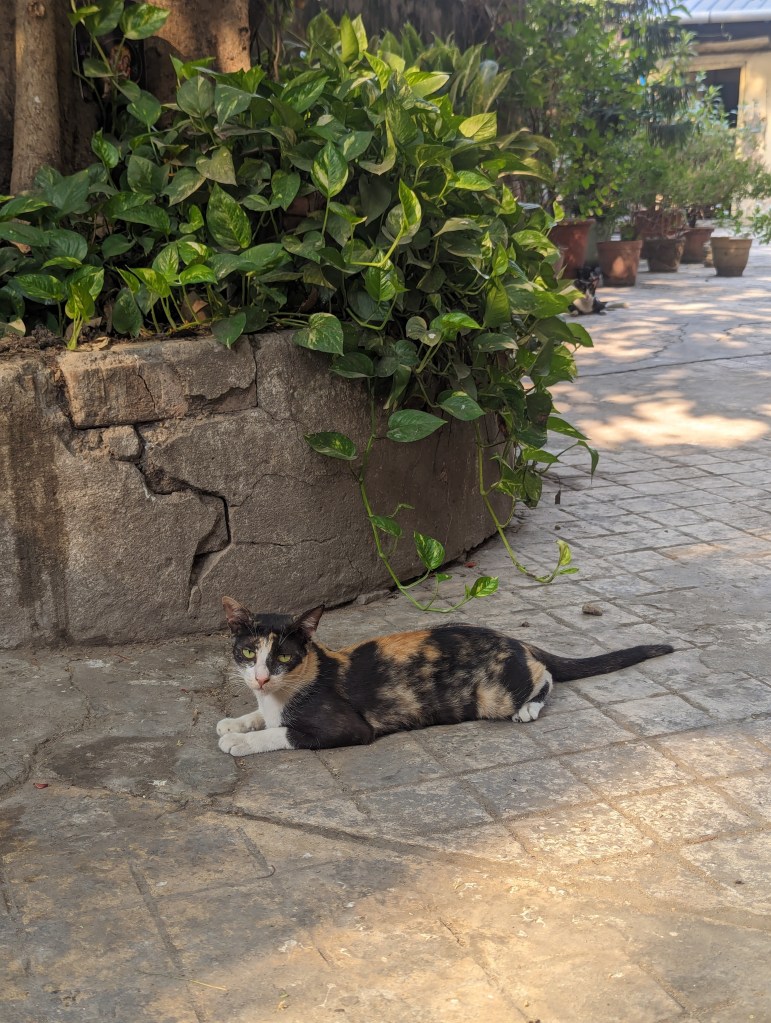
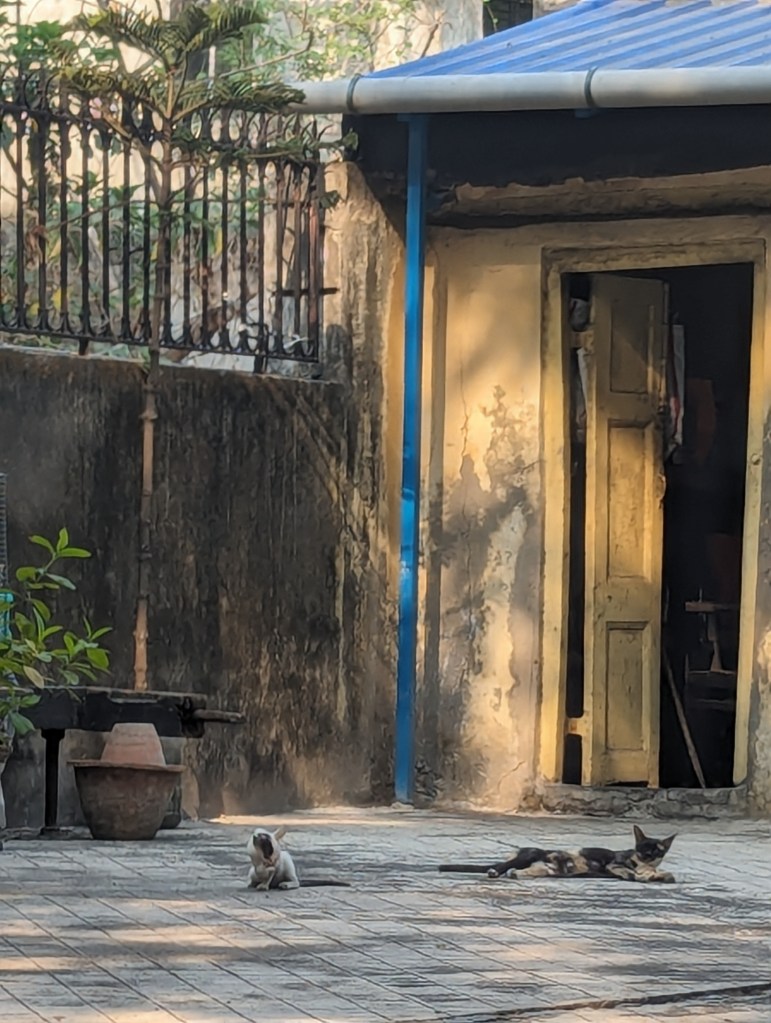
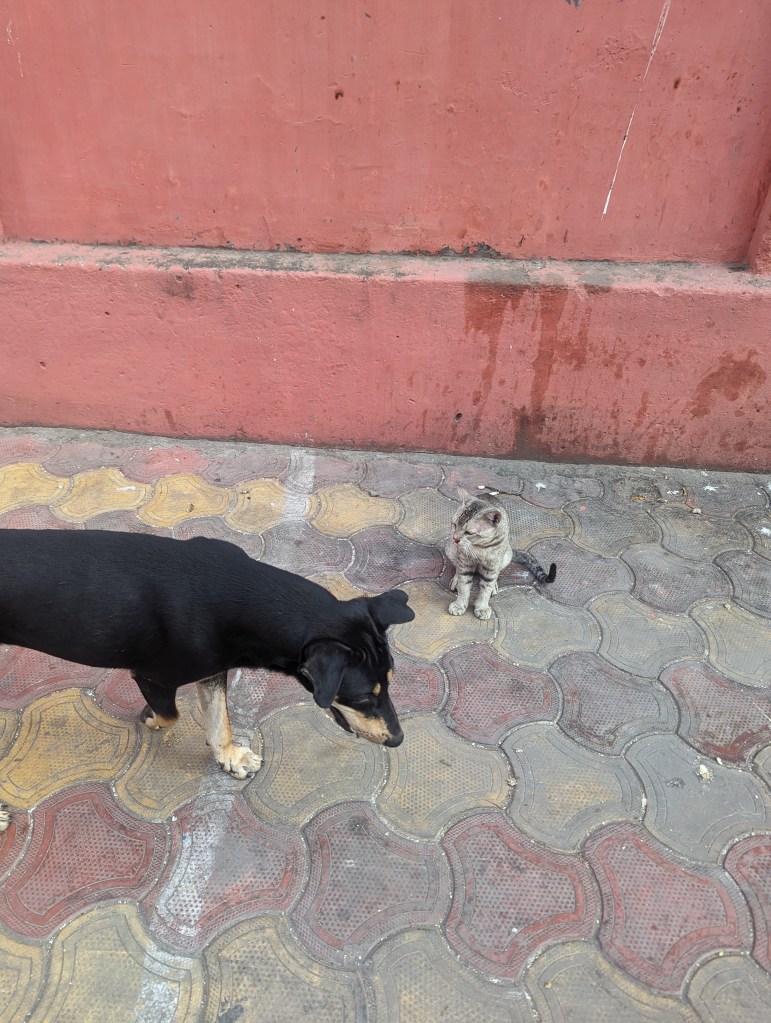
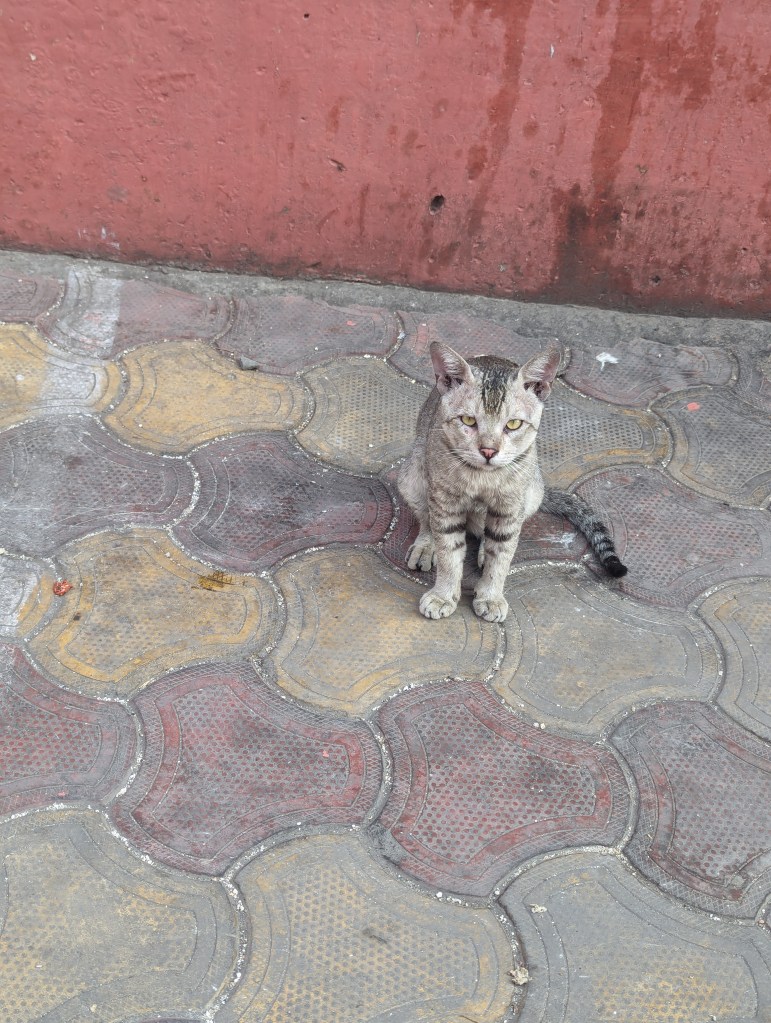
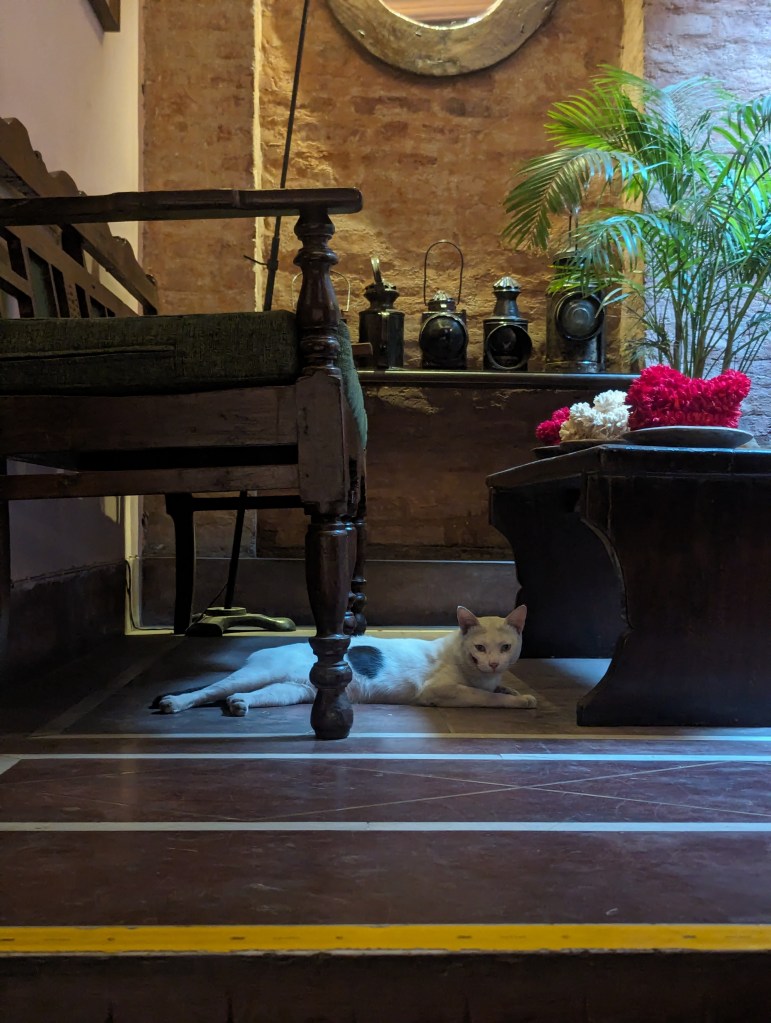
As these days any Parsis visiting Calcutta tend to have enough money to stay in hotels, the dharamshala has had to change its modus operandi. Instead, it now housed elderly Parsi women, often widows or those without family, as something of a care home which was sponsored and paid for by wealthy Parsi families throughout India. The courtyard was peaceful in the early morning, and filled with a number of lounging cats waiting for tidbits for the kitchens as they made breakfast. We lingered there for a little while as the day was already beginning to heat up, sitting on the verandah whilst Tuhina told us about the history of the place, before moving on to continue to explore.
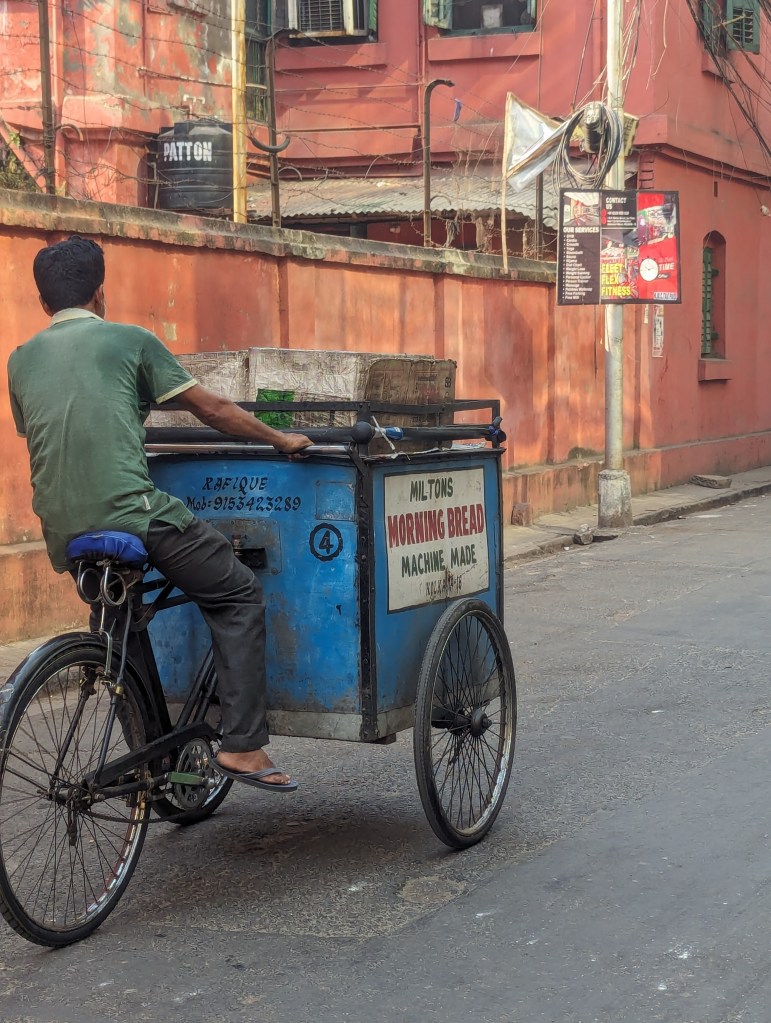
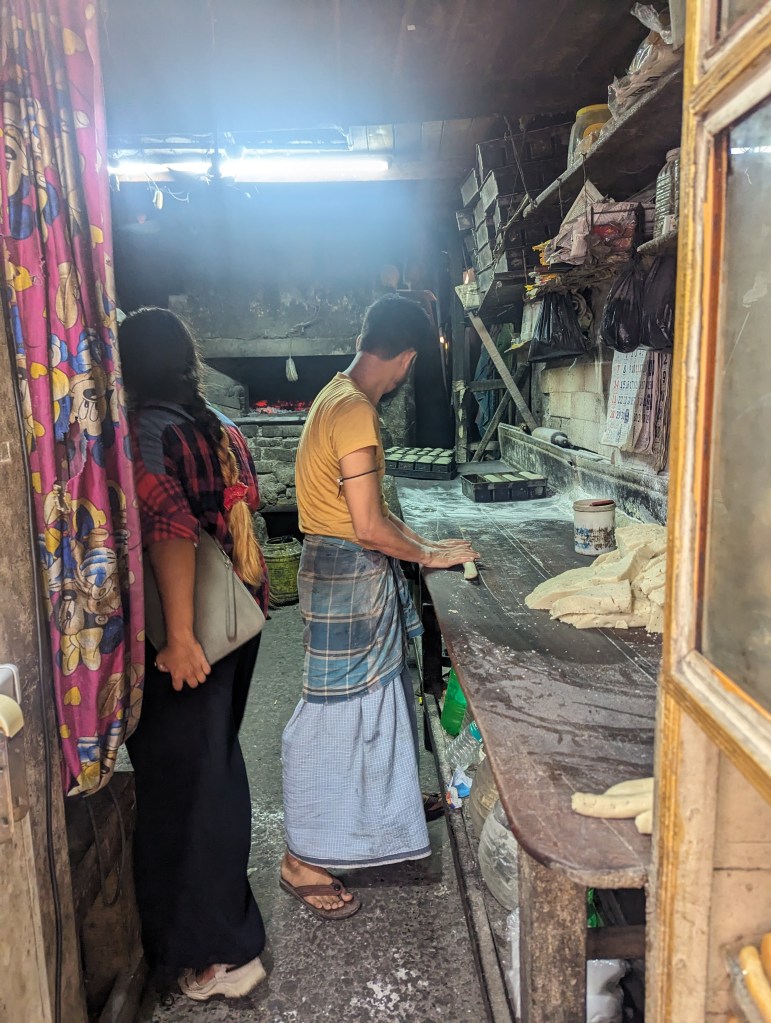
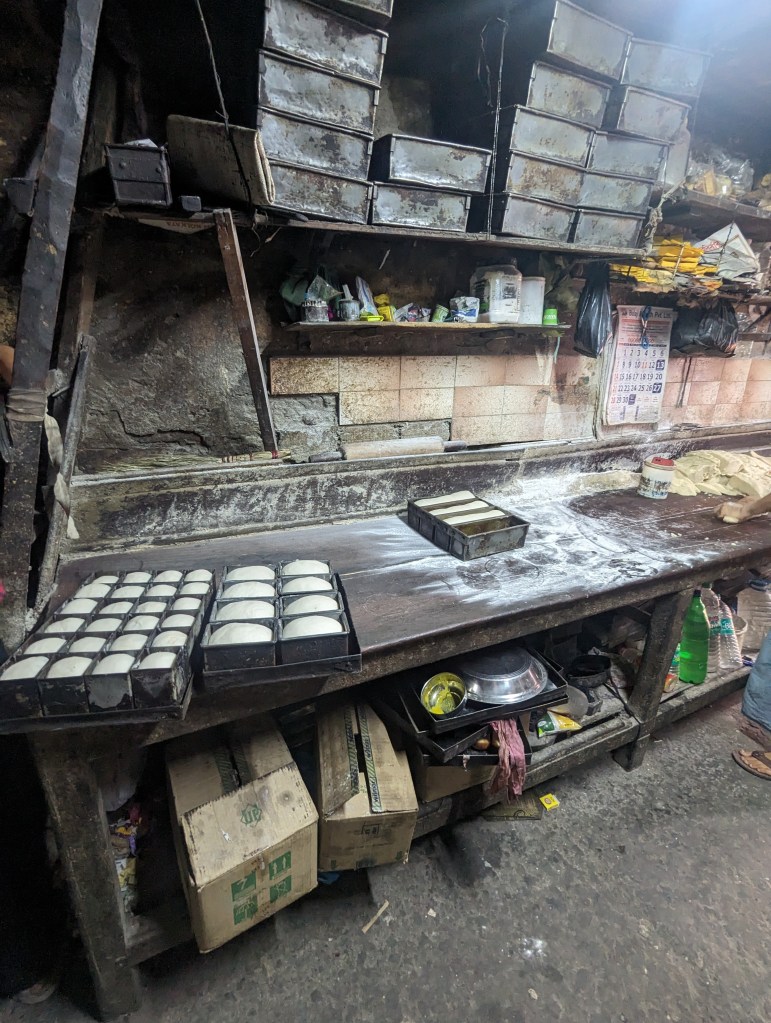
The next stop on the tour was a small bakery that specialised in British style loaves of bread, then headed to the nearby Bow Barracks. The Barracks were originally built for American GIs during the Second World War, but were never used and instead became the residence of the local Anglo-Indian population. Given the Anglo-Indians (usually children of white men and their Indian wives or mistresses) were often shunned by both the Indian population and the British, they established their own societies and clubs in the city. Hockey was the sport that the Anglo-Indians took up as their own, and the street in front of Bow Barracks still has the hockey pitch markings visible from where the annual hockey match is played.
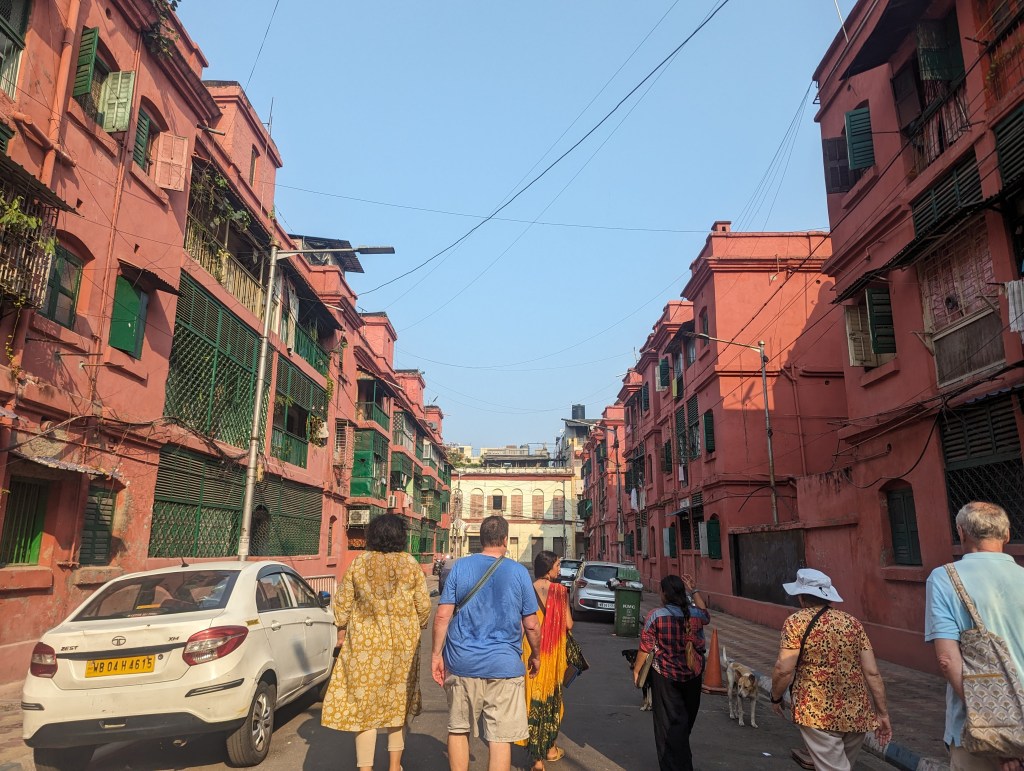
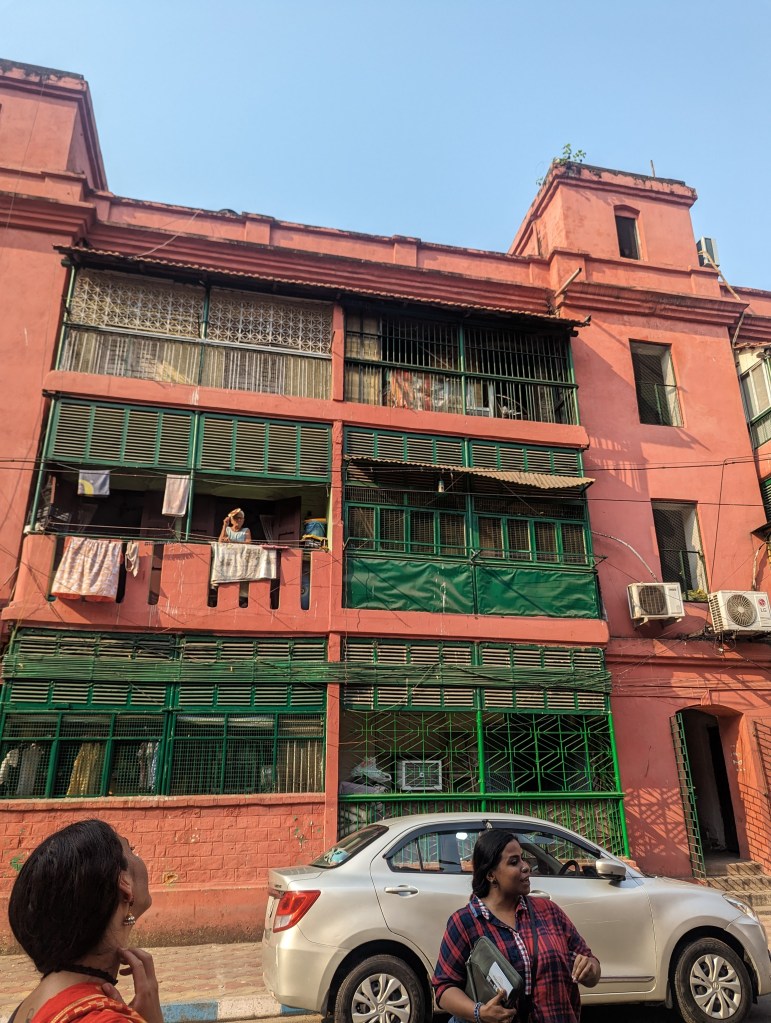
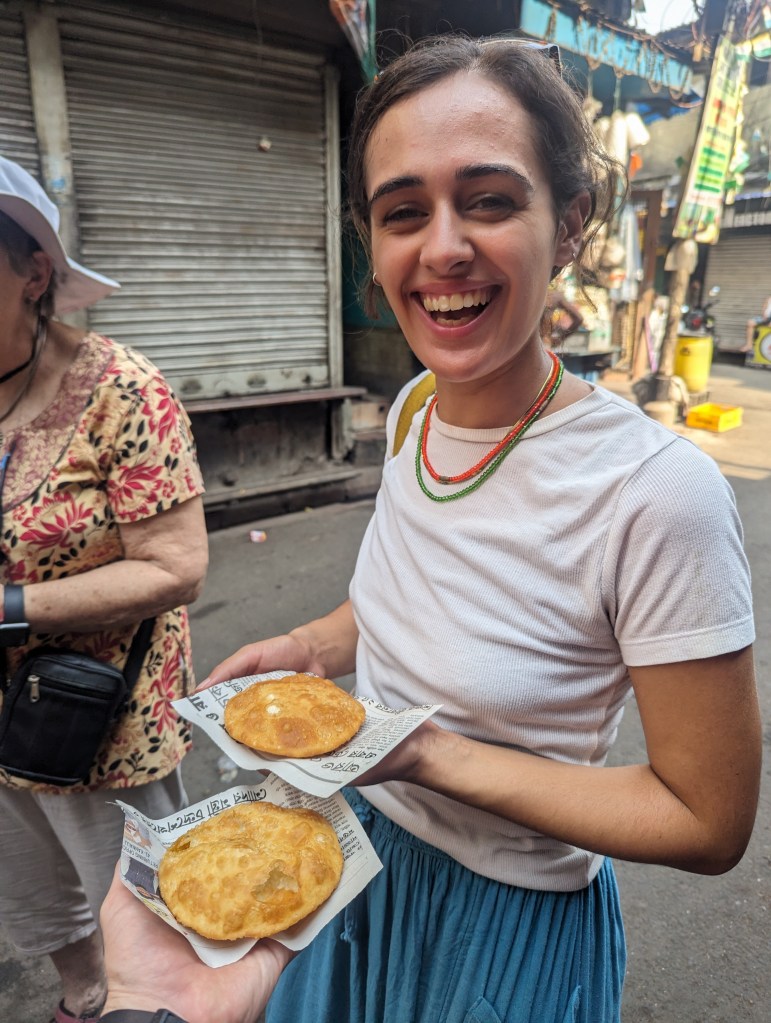
The tour took us past mosques, temples, and more dharamshalas, stopping only briefly for a breakfast of dhal puri and chai, until we found ourselves at a Zoroastrian Parsi temple and meeting hall. The temple itself was closed to visitors, but we could sit in the cool of the meeting hall and hear about some of the history and traditions of the Zoroastrian faith. It was at this point, however, that Ellie had to relatively urgently find a loo – which fortunately the meeting hall had at hand.


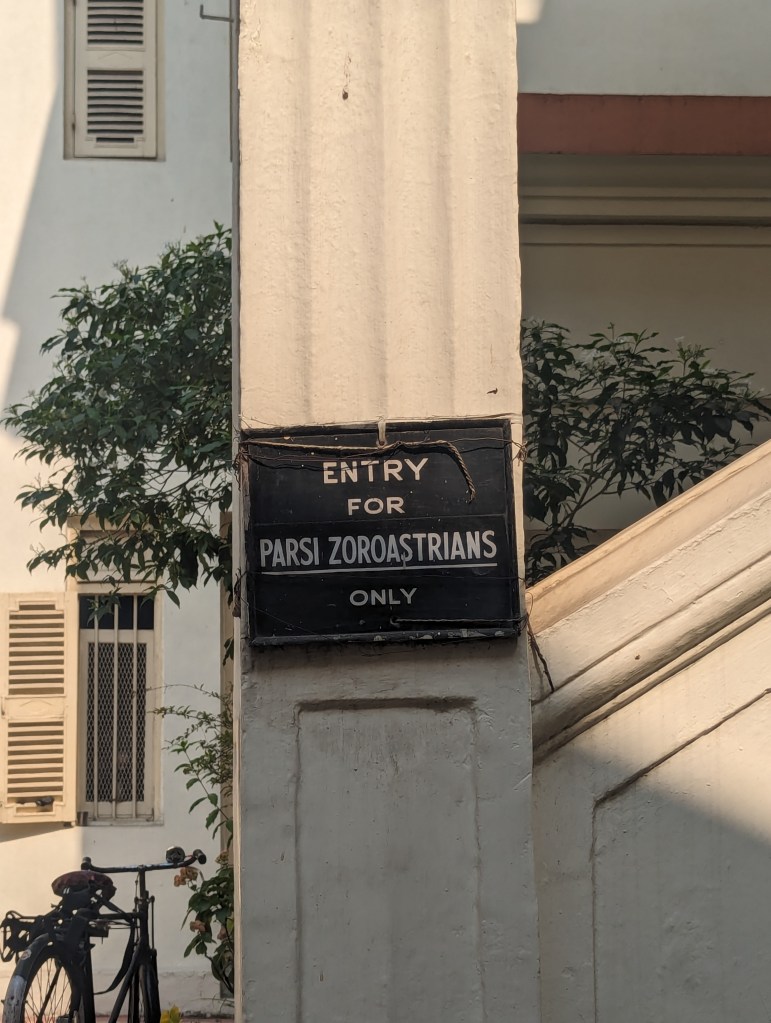
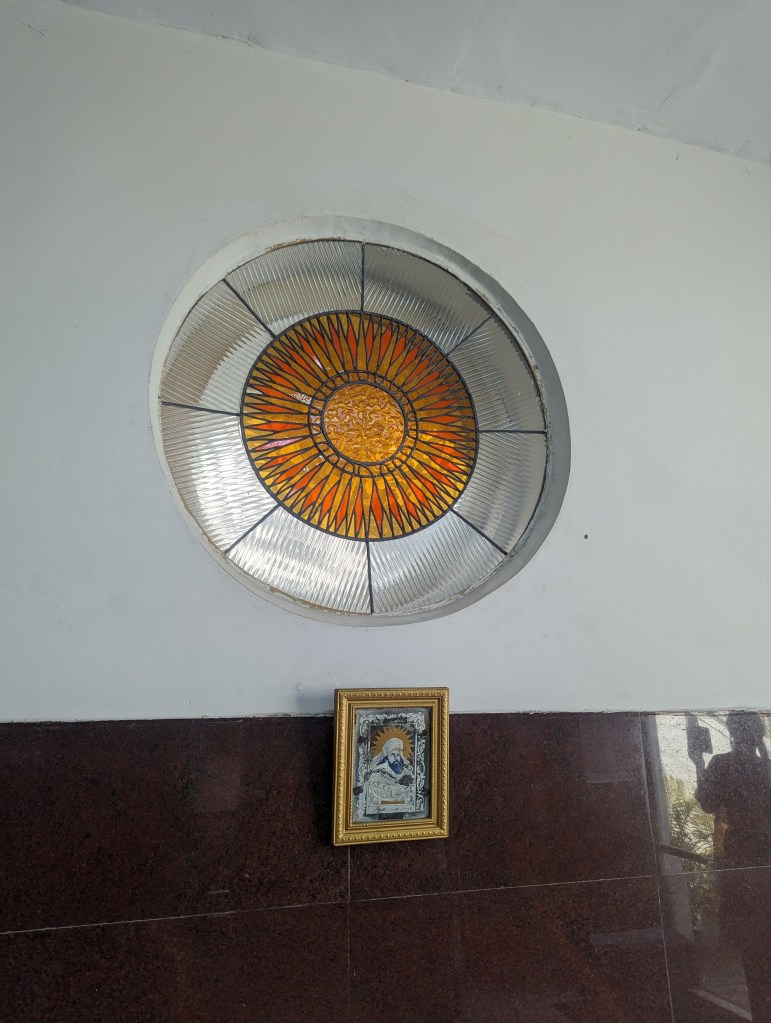
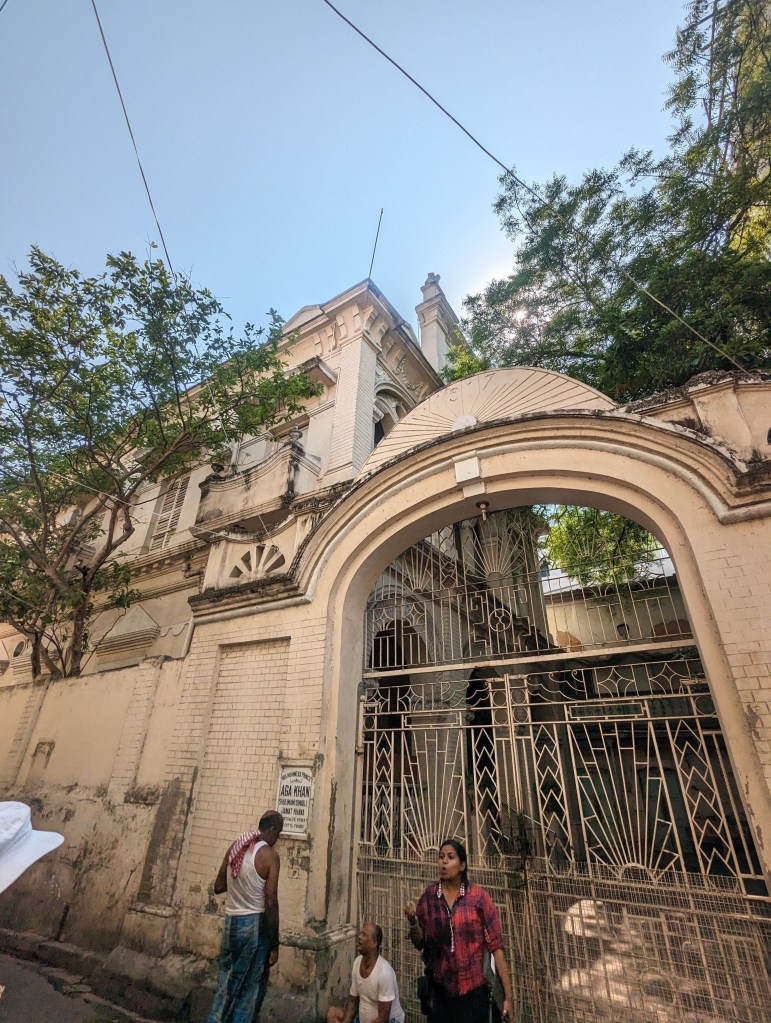
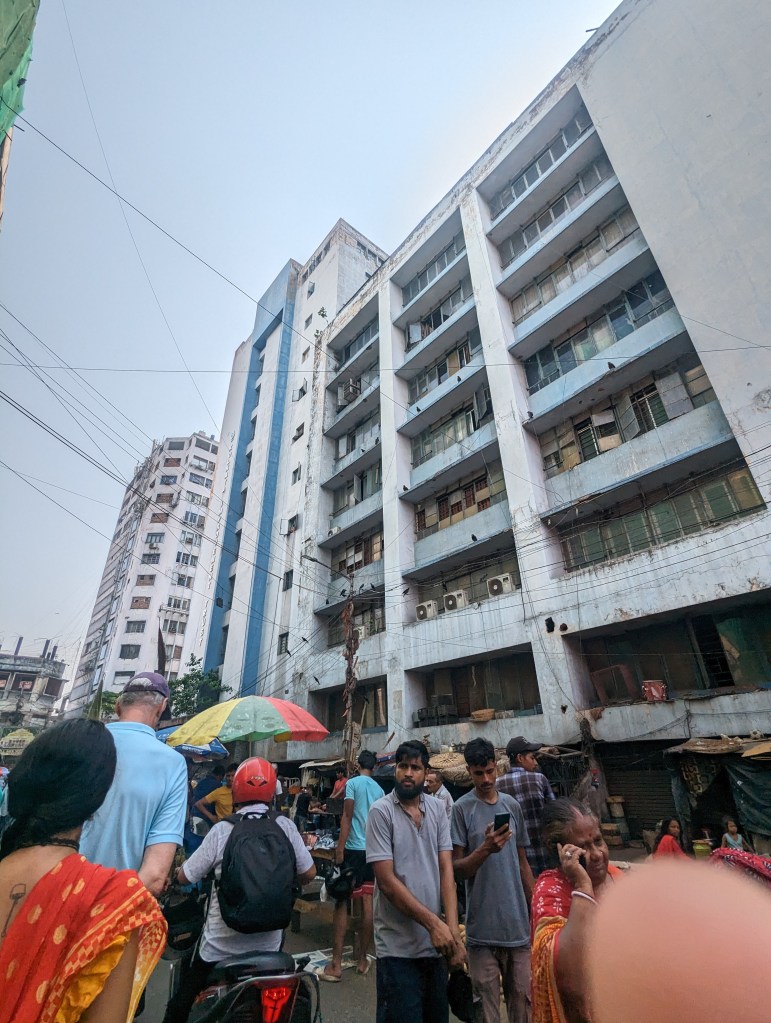
We stayed with the group for another ten minutes, passing the only Chinatown in an Indian city in which a market was thriving between Soviet-era looking apartment blocks. Unfortunately, Ellie then needed to practically run the 500m or so back to the Zoroastrian temple to make use of the facilities, so I made our excuses and joined her there. From the temple, we ordered an Uber to take us back to the hotel – a ride that Ellie I’m sure will be hoping to forget given how close we (by which I mean she) were to disaster.
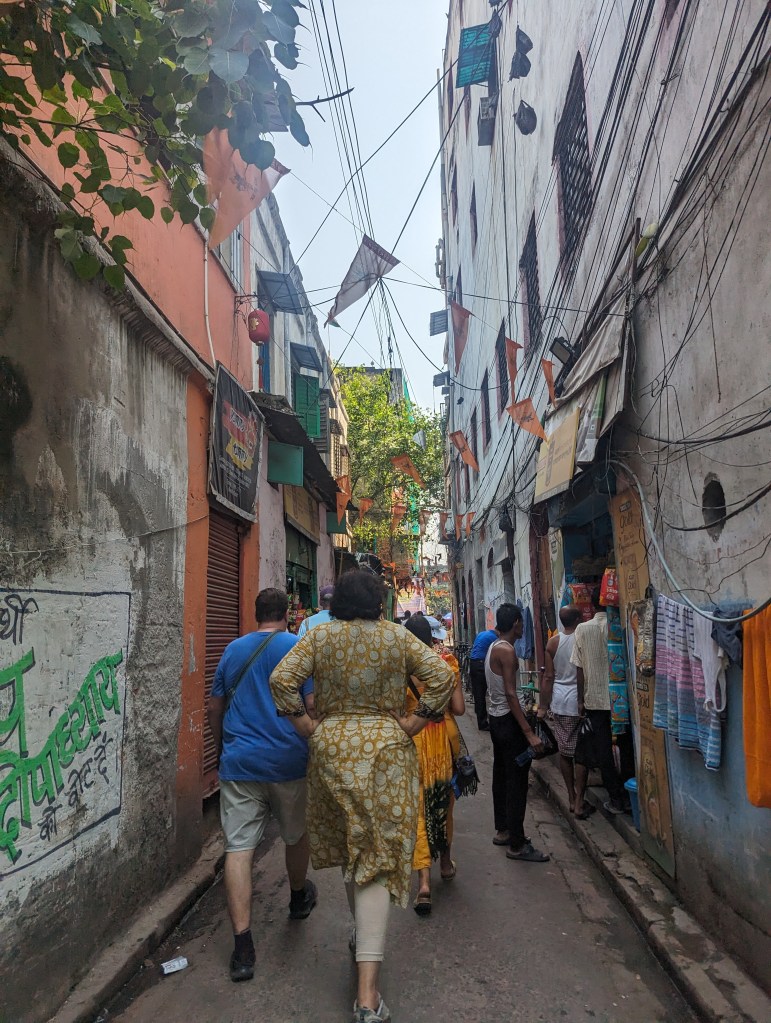
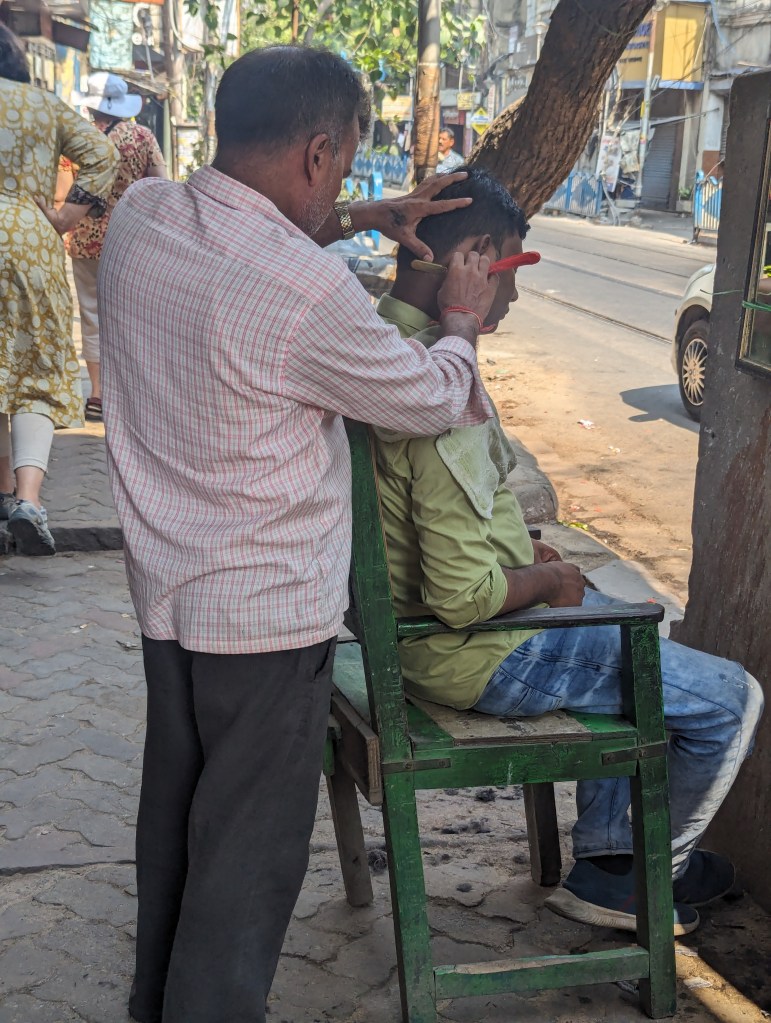
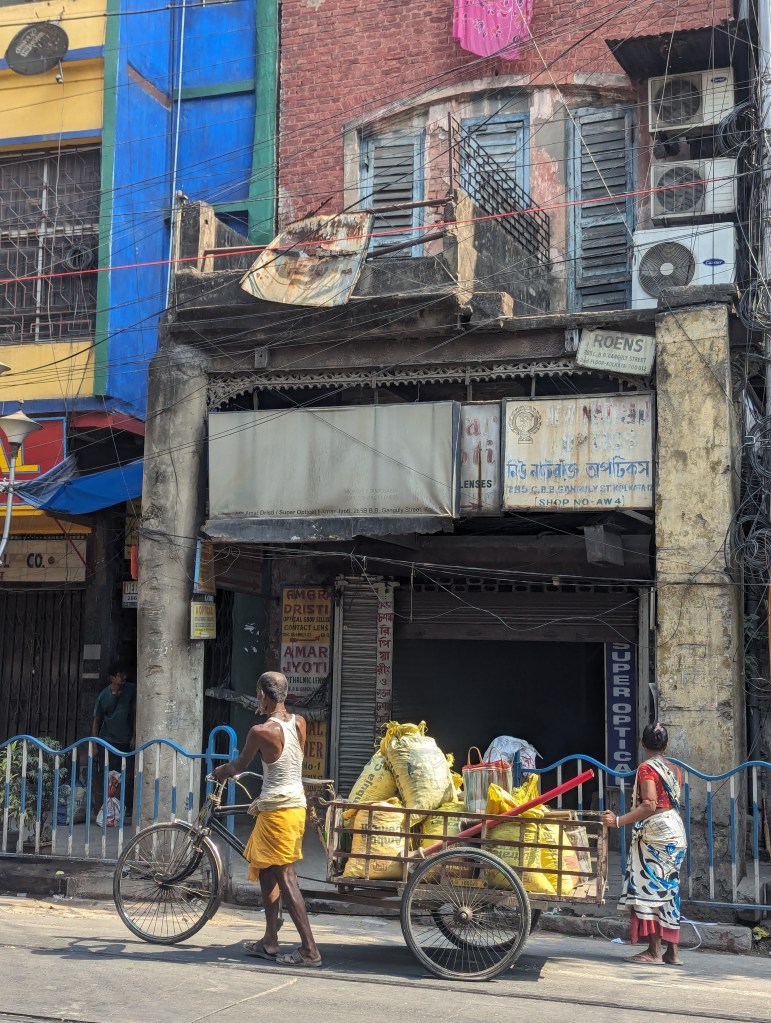
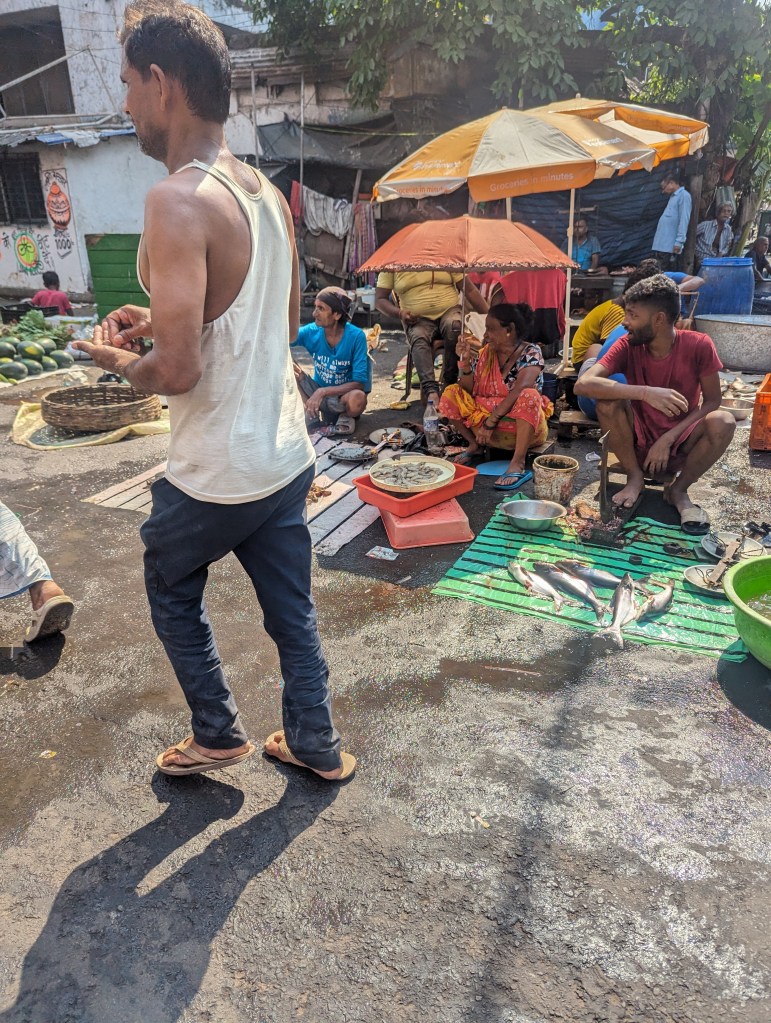

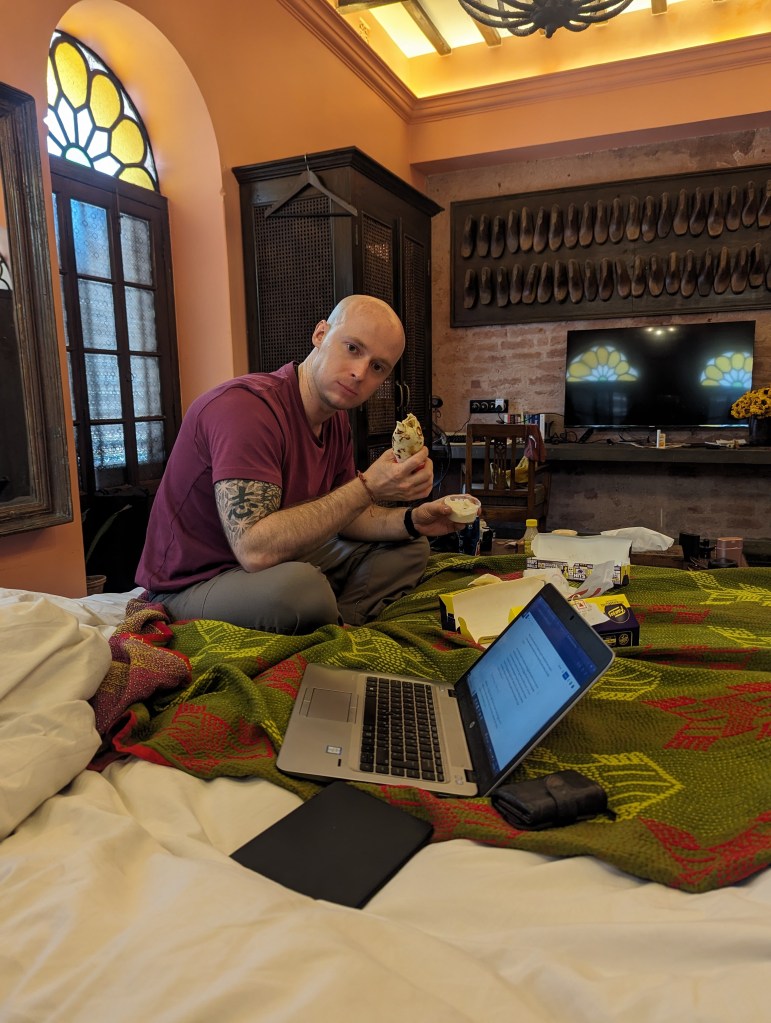
The majority of the rest of the day was spent in the room. Although Ellie didn’t feel particularly unwell, there were countless bathroom trips required and the idea of leaving the room let alone the hotel seemed untenable. Fortunately, our room in Calcutta Bungalow was a treat to stay in, so we had quite a good time convalescing – reading, watching TV, chatting etc.. By the evening, things were only slightly improved so I went upstairs to the rooftop for a bite to eat, then joined Ellie back in the room in time for bed.
Monday –
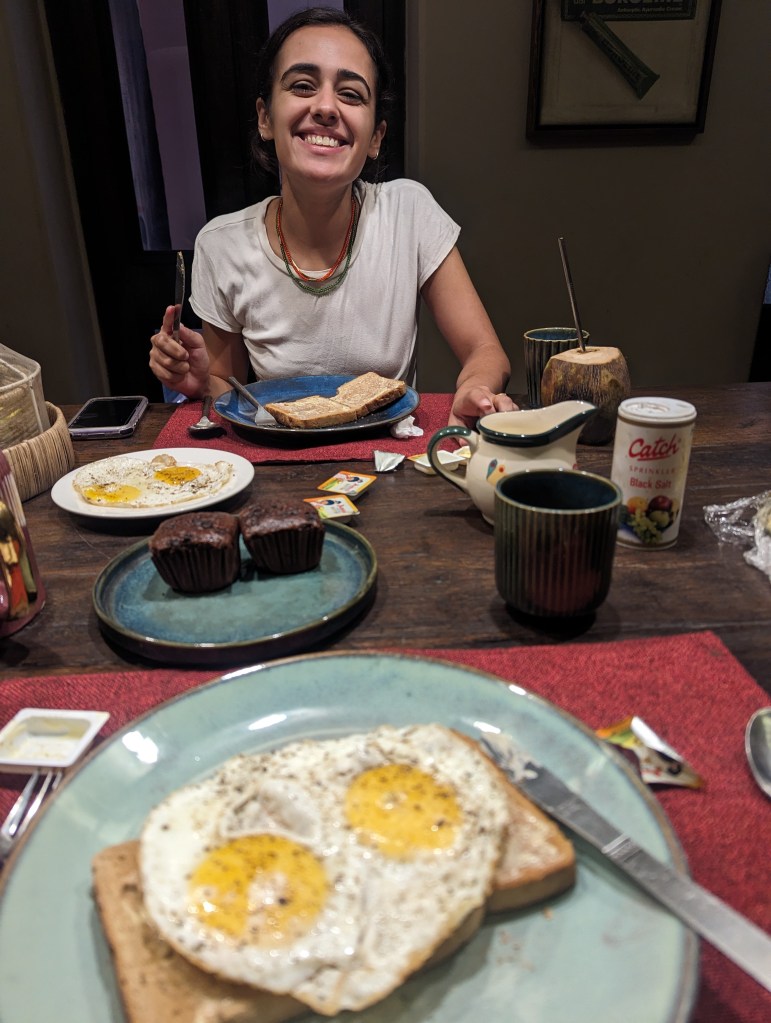
We were up for a leisurely breakfast on Monday morning in Calcutta Bungalow – the whole works of toast, egg, chicken sausage, fruit, muffin etc., for me, a couple of slices of toast with butter for Ellie. That said, Ellie was feeling a little better by the morning though leaving the safety of the ensuite still seemed too much of a risk. We stayed in for the morning and, since Ellie was not yet feeling up for lunch, I headed out via the metro to the city centre to eat and for a little explore.
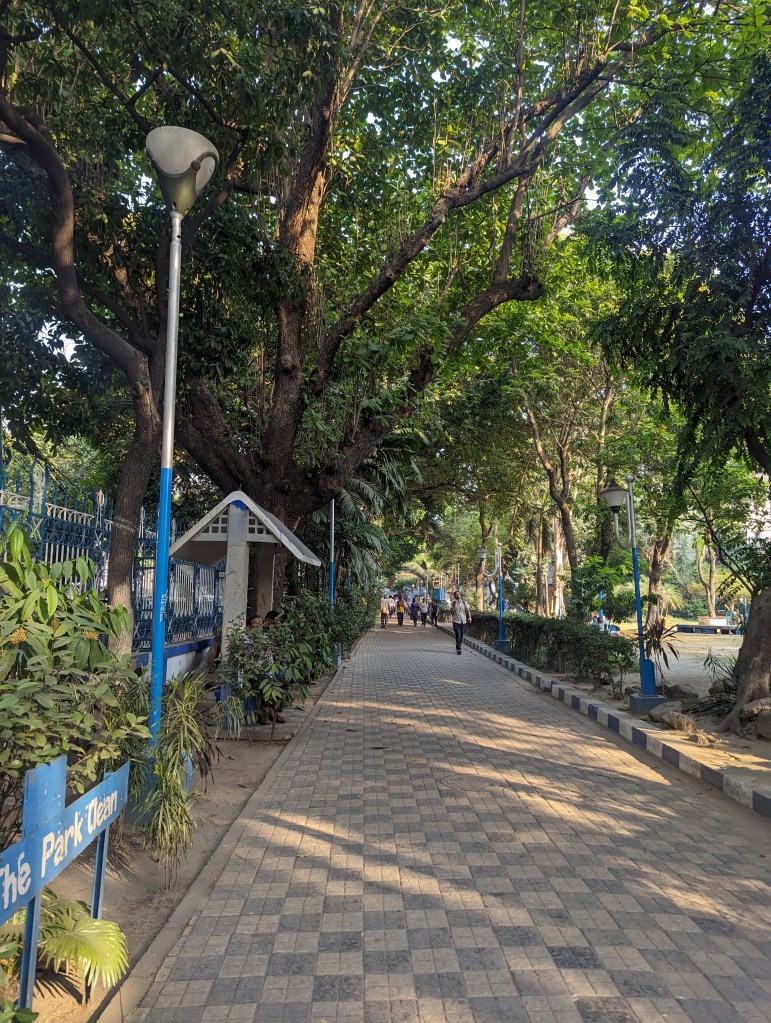
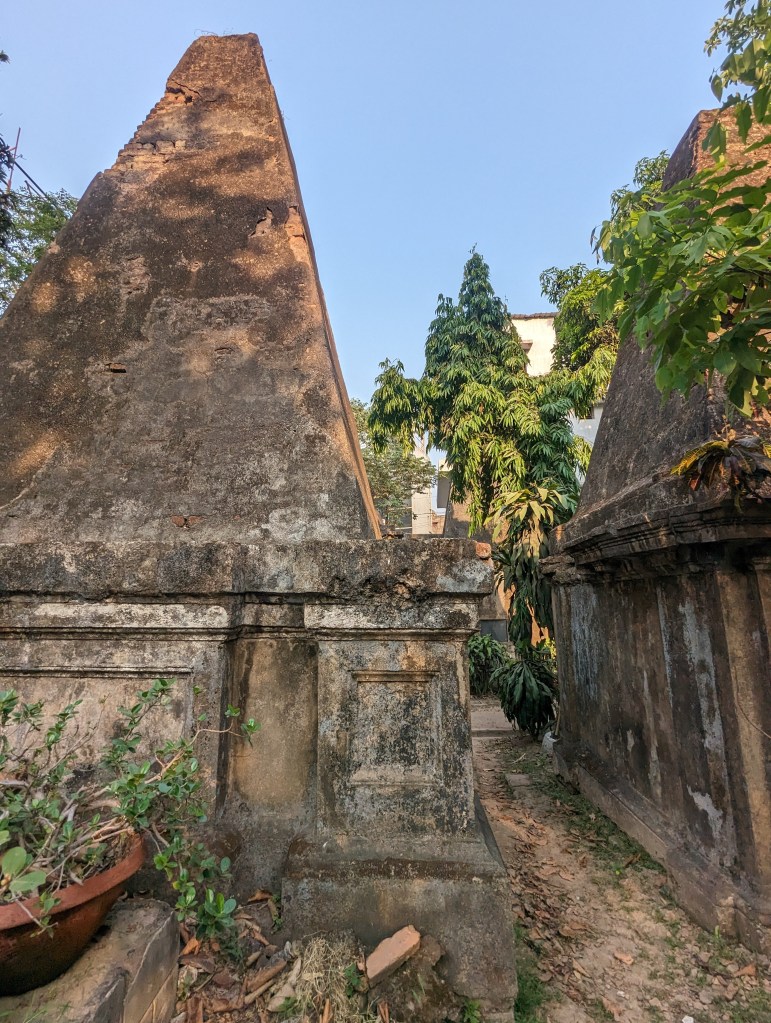
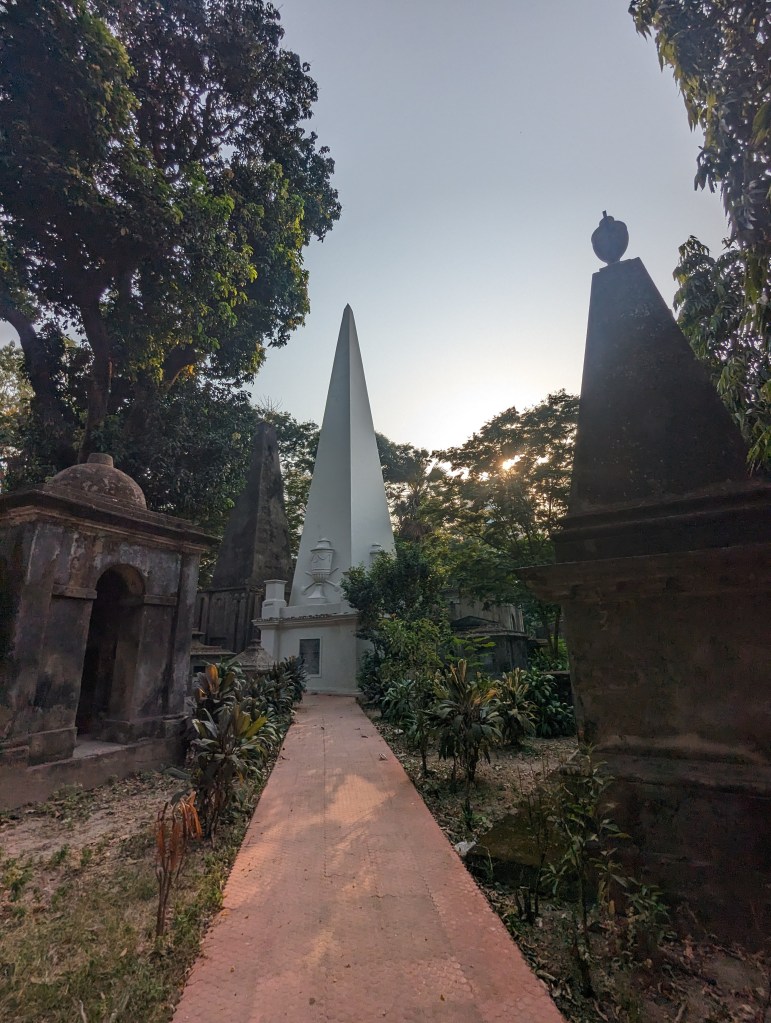
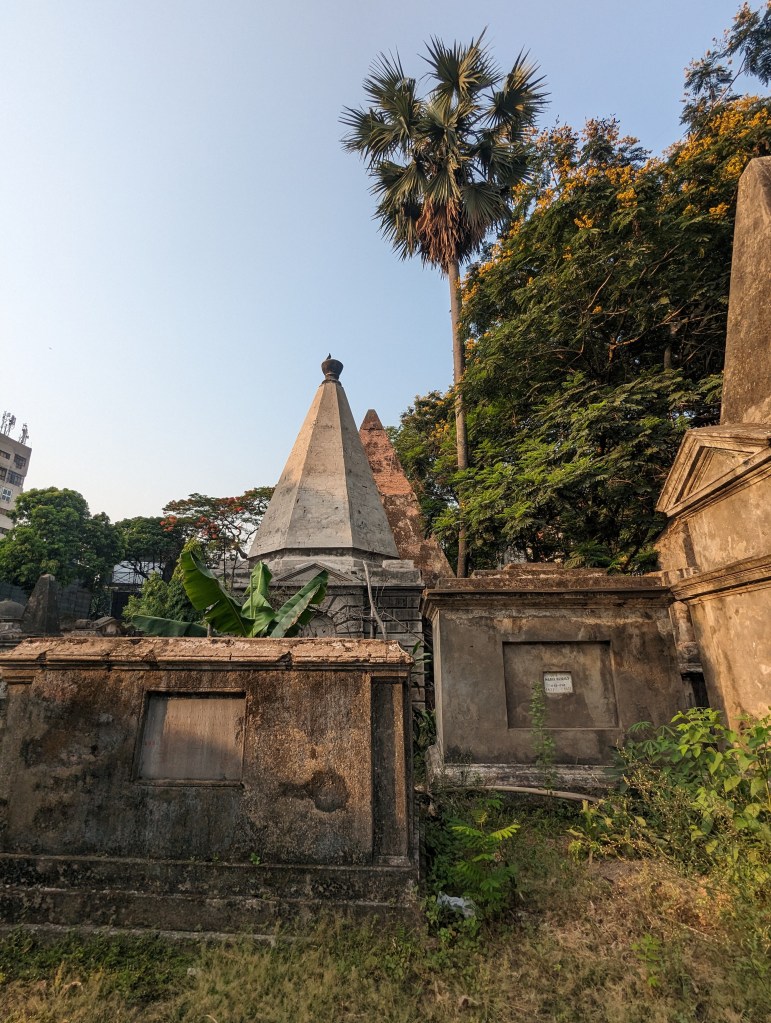
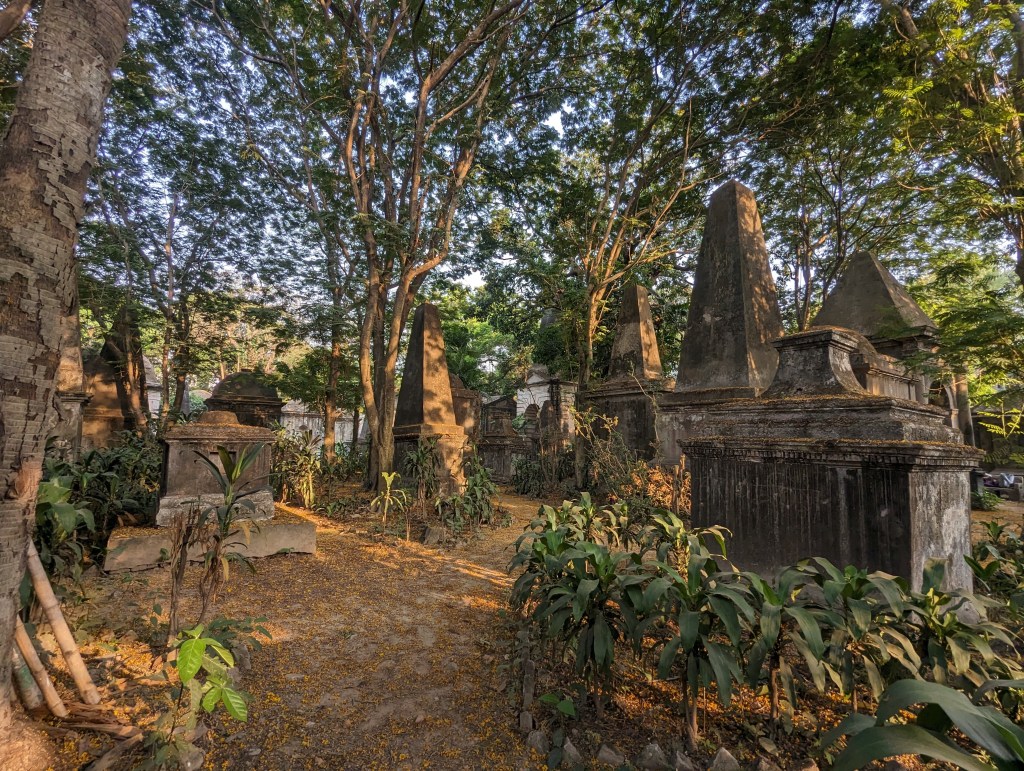
I ate at Flury’s, where we had been previously for the full English breakfast, then made my way further down Park Street to the South Park Street Cemetery. The cemetery was a relatively small, leafy, walled compound on the side of the main road which was crammed full of tombstones and memorials to the British who’d died in Calcutta during the Raj. The monuments clearly competed with each other to be the largest without requiring too large a footprint, leading to a peculiar pyramid design being adopted for many of the graves. A lot of the people laid to rest were very young, in their 20s or 30s with the oldest being only in their 50s. I pottered around for a short while reading those inscriptions that I could make out, then headed back towards the metro station and to home.

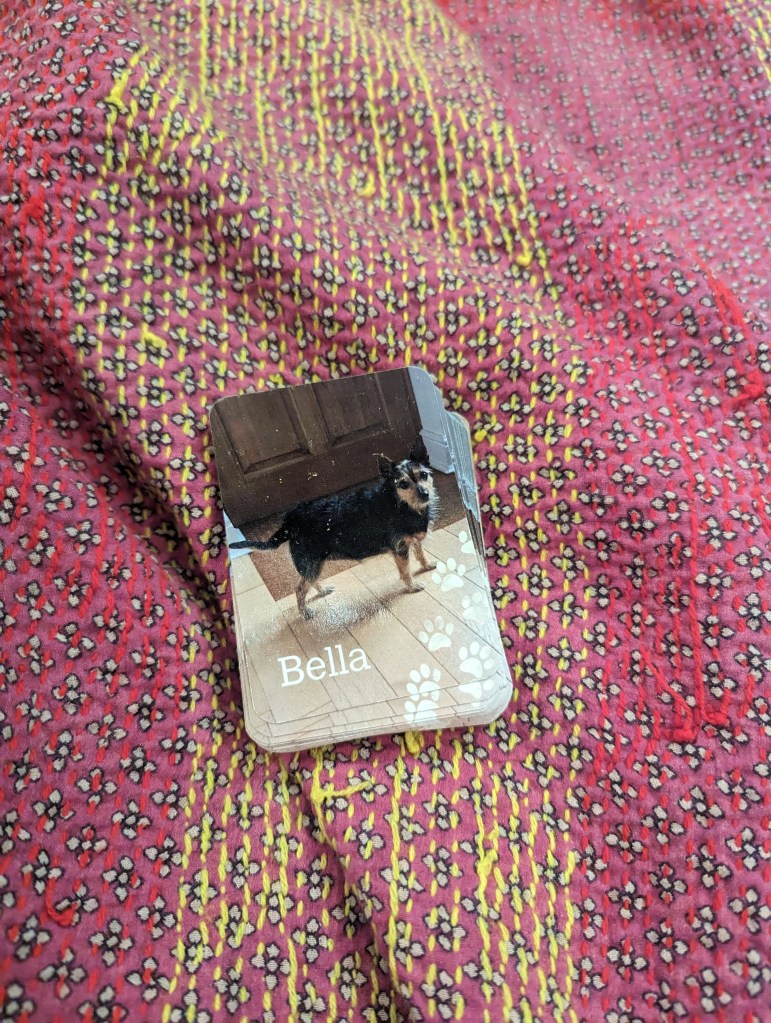
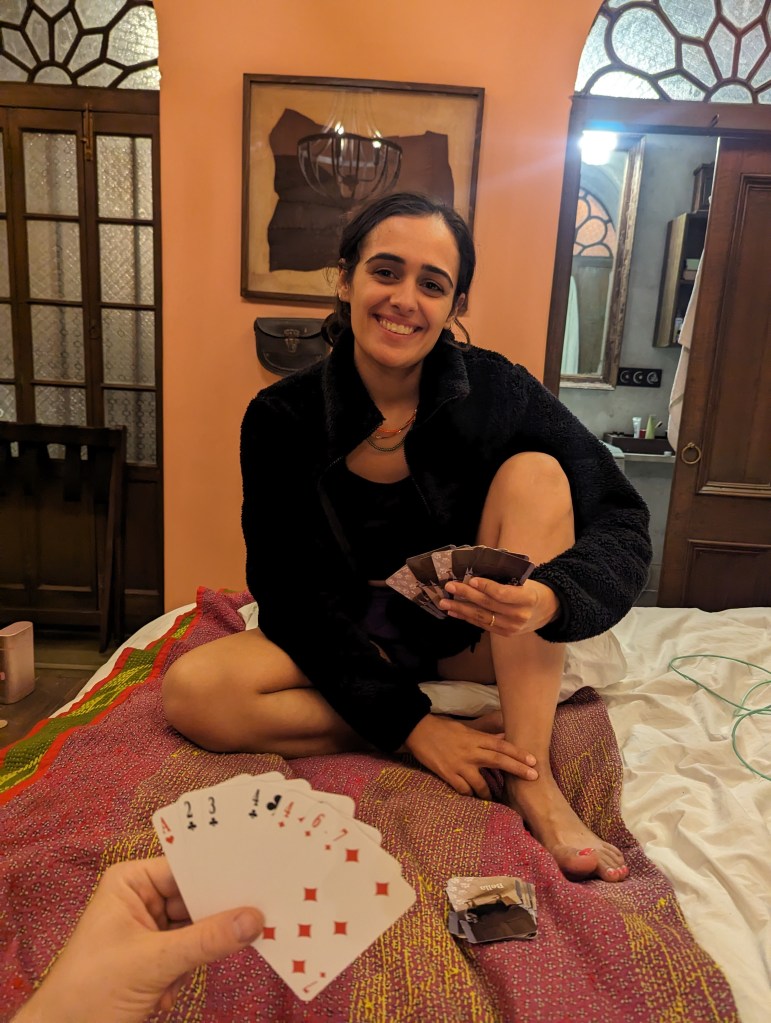
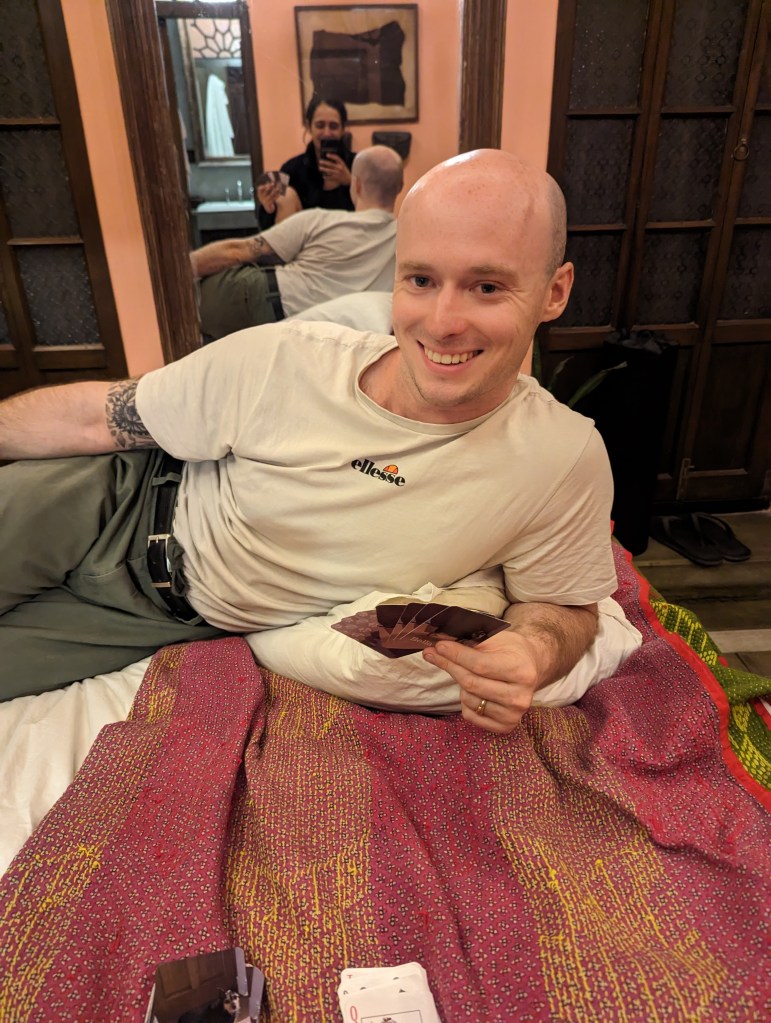
I found Ellie in the room feeling better again, having spent the afternoon enjoying Netflix on the room’s huge TV, and we decided to order some food to the room from Zomato (the Indian Deliveroo) for dinner as neither of us felt much like going out to eat. Given we’d enjoyed the food from the “Spanish Cafe” we had been to on our first day, we ordered some pasta and tapas from them and weren’t disappointed. We sat on the bed and played a few rounds of cards with Ellie’s Bella (the dog) pack, see pictured below. After being summarily defeated at Rummy by Ellie, who was starting to feel significantly better, we headed to bed looking forward to getting out and about the following day.

Tuesday –
I opted for the Bengali breakfast on Tuesday morning, which consisted of a potato curry and fried bread with the usual fruit and muffin. Ellie had much of her appetite back and had the standard continental breakfast before we headed out for a day of exploring. Calcutta, given its heritage, has a number of areas which are bristling with historical landmarks and grand buildings. Many of these can’t be looked around, but we were told it was worth exploring certain areas just to see what you could find.
We headed out to an area between us and the city centre, in the old White City, called BBG Bagh. We wanted to visit an old eccentric manor called the White Palace, for which we needed written permission from the West Bengal Tourist Agency. We arrived at the agency, the ground floor of which was a building site through which we were waved by a guard sitting out front apparently for that sole purpose. Upstairs we found a small office with a number of people working at desks, and we were asked to sit down. We explained why we had came, but were told that the White Palace had been closed since the pandemic, and so ended our audience. It’s something of a mystery what else the West Bengal Tourist Office does except have that conversation every few days with tourists with enough energy to seek them out.
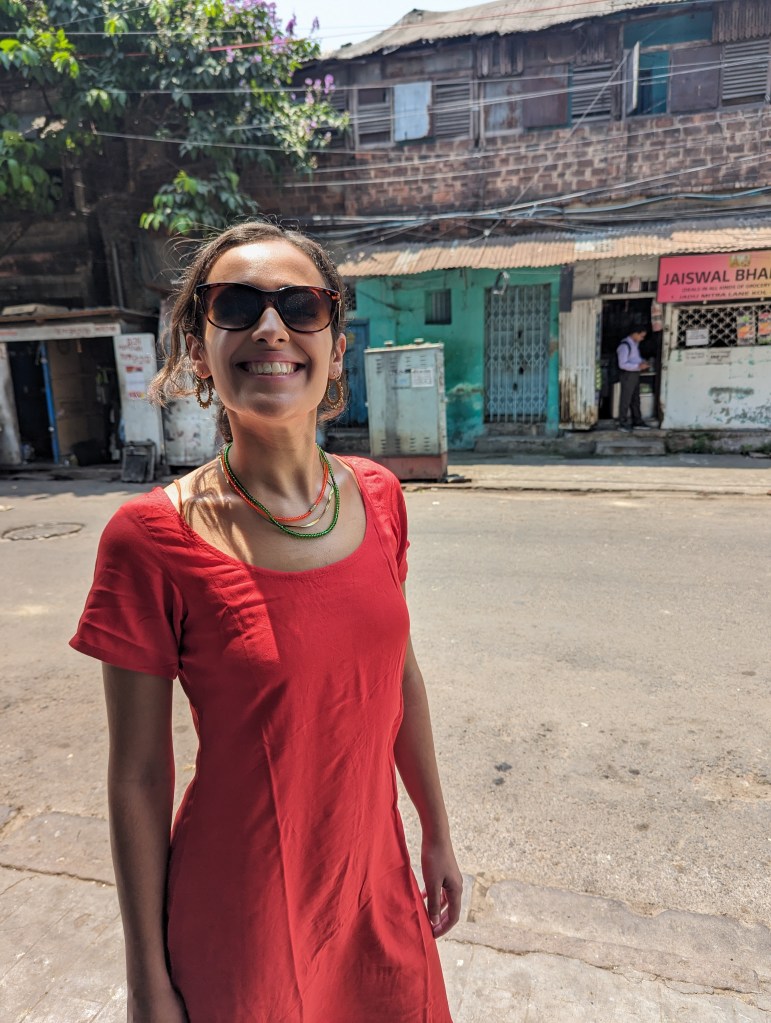
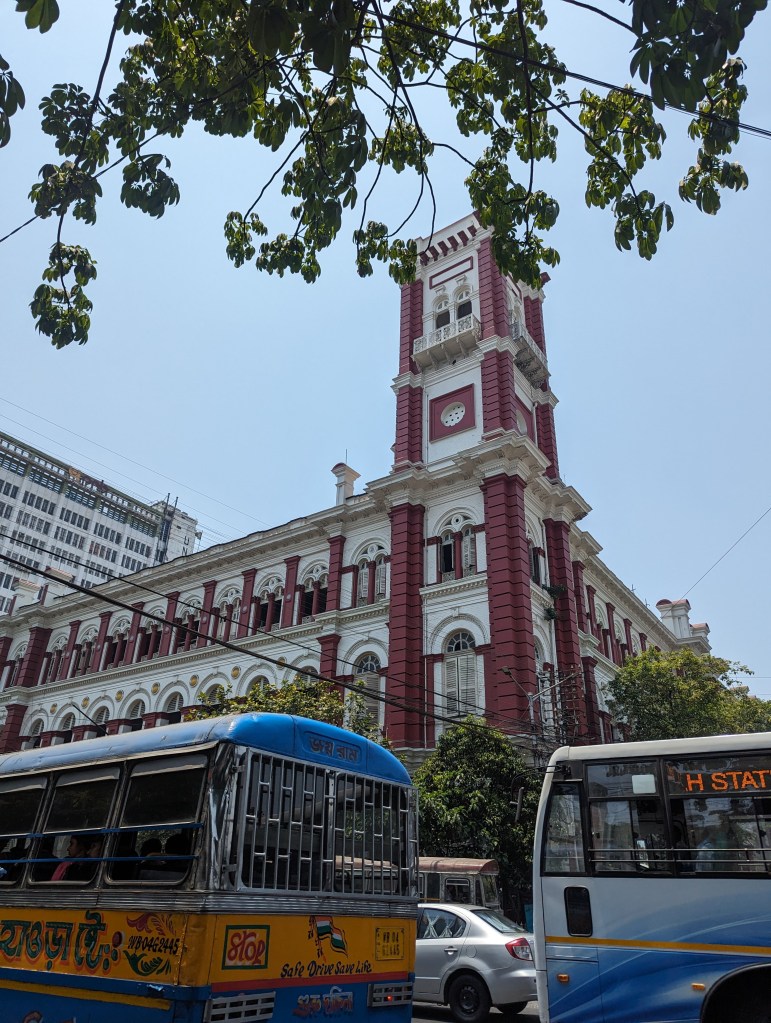
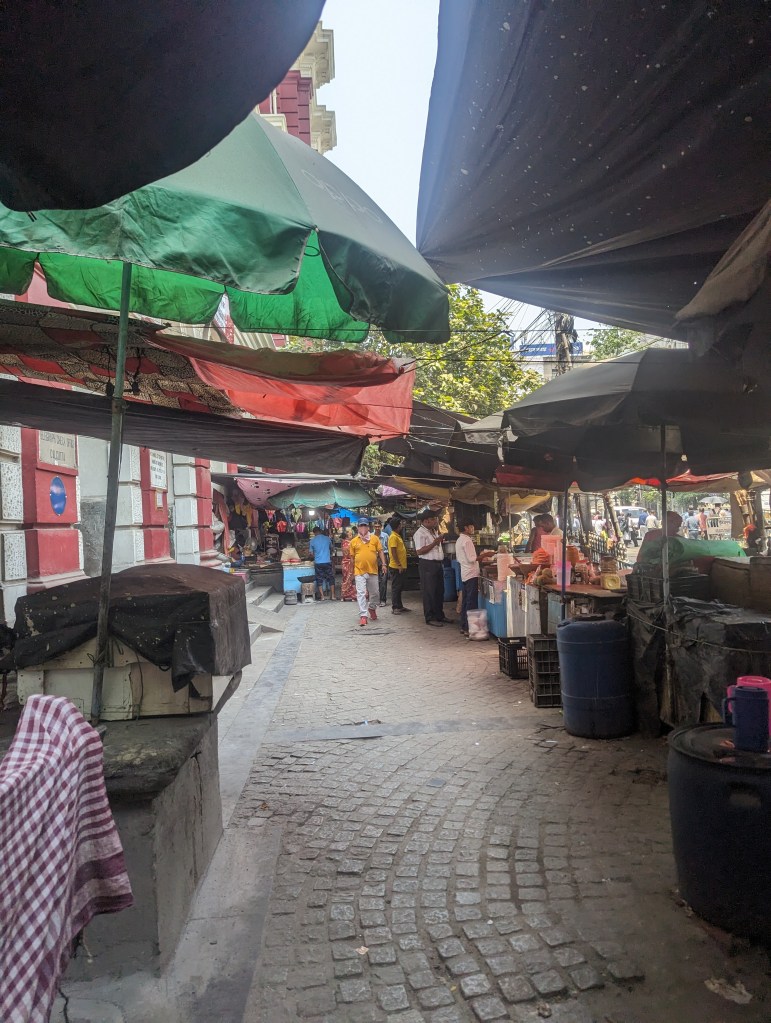
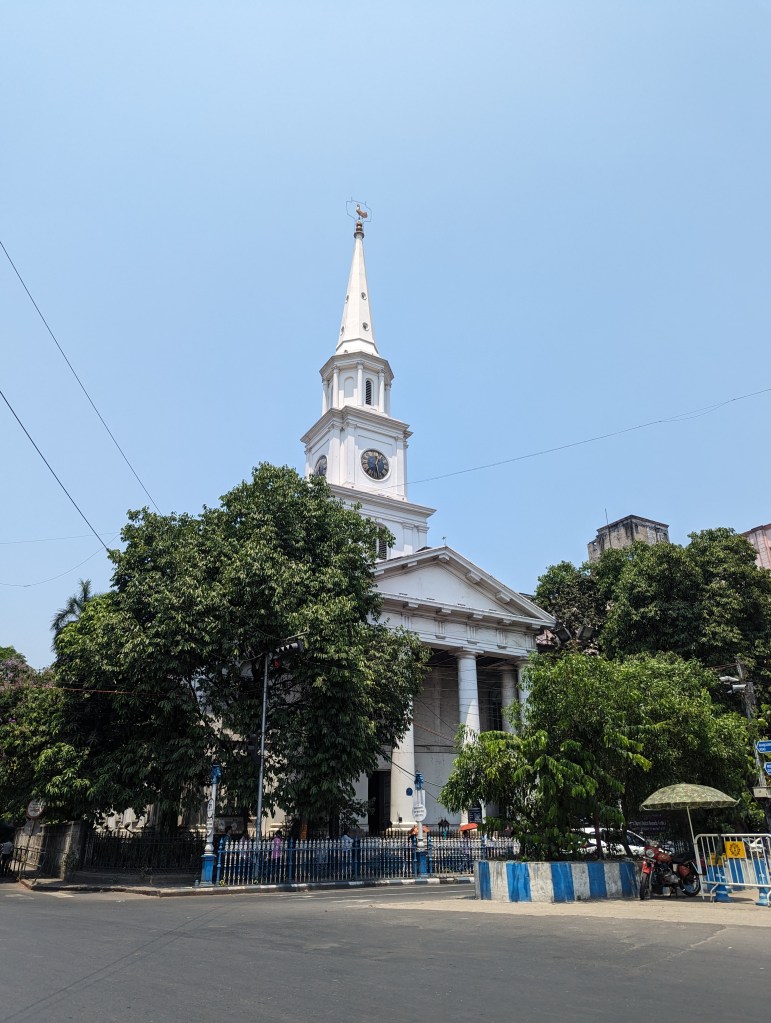
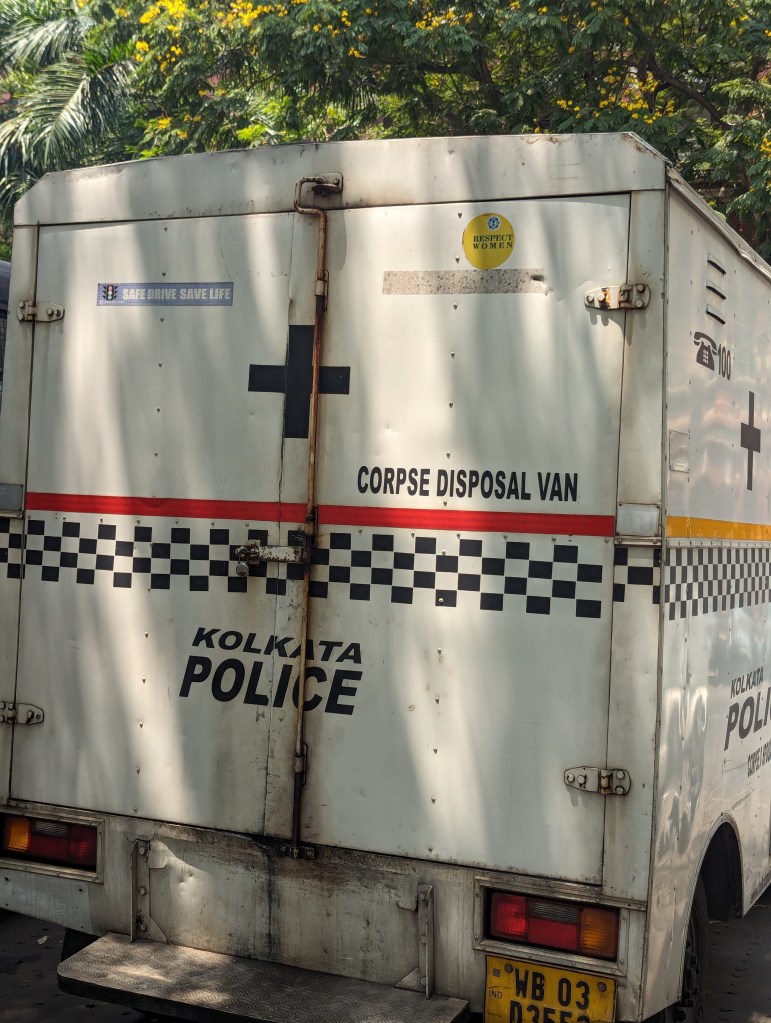
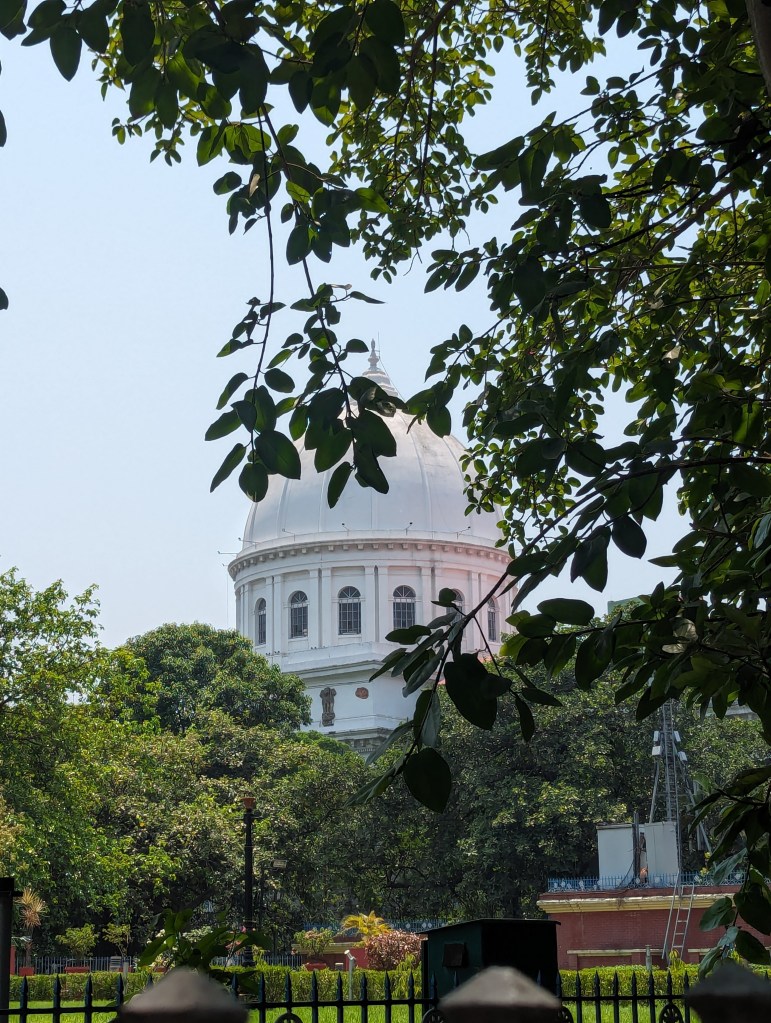
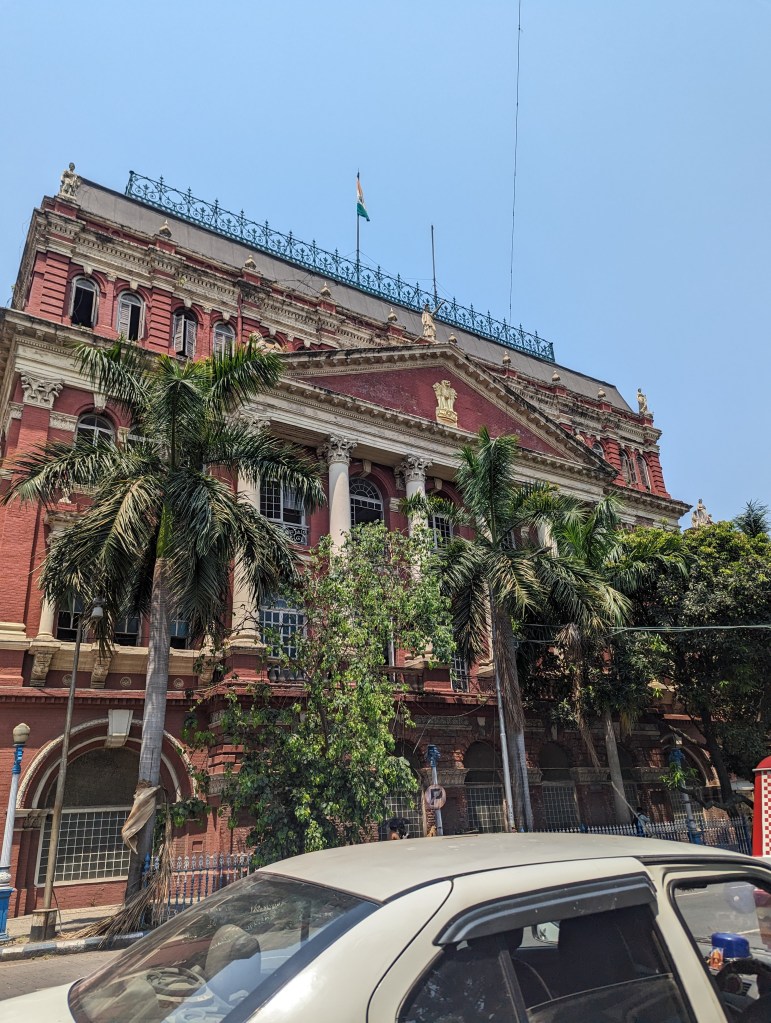
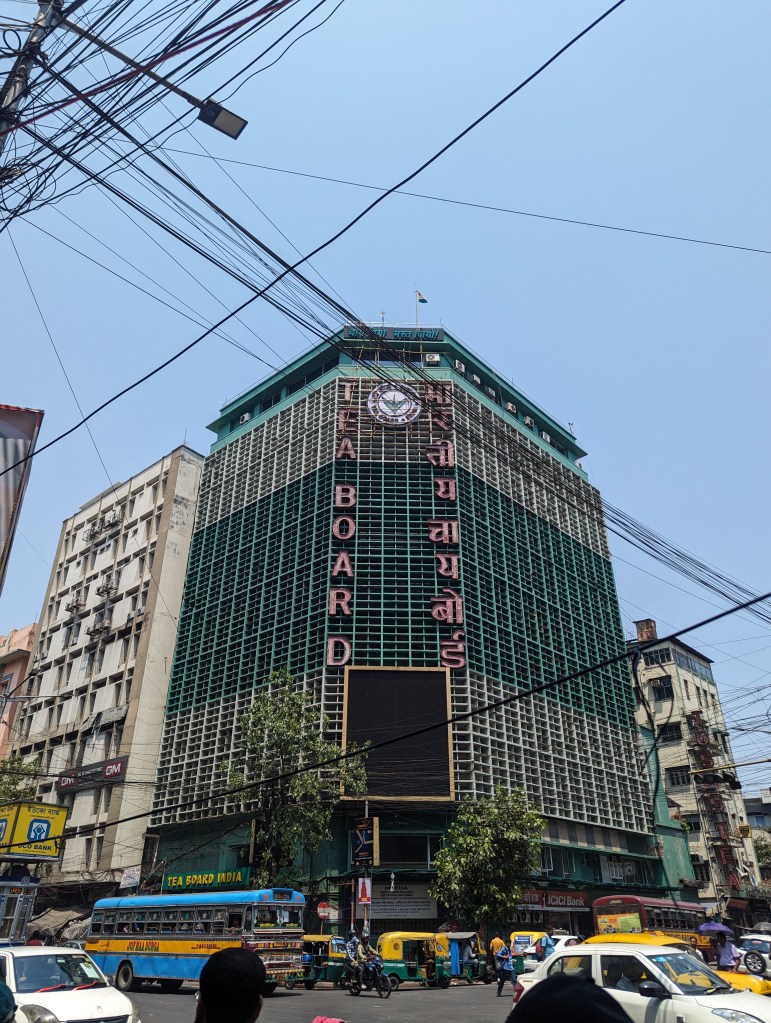
We retreated to a local coffee shop, called Piccadilly Square (which presumably was meant to be Picadilly Circus given that from a quick Google Maps search Picadilly Square seems to be a patch of grass in Burnley) to escape the heat and rethink the plan. Looking on the map, it was clear that there were a number of churches, mosques, synagogues, and other buildings of significance around us to warrant a wander. Heading out, we walked north up the main road. The pavement (a rarity in and of itself in India) was given over almost entirely to market stands, even when the pavement narrowed so much that you could only pass through in single file. We scouted around for a couple of old synagogues in the area – one you could see from the outside and one seemed to be completely obscured by the sprawling market stands.
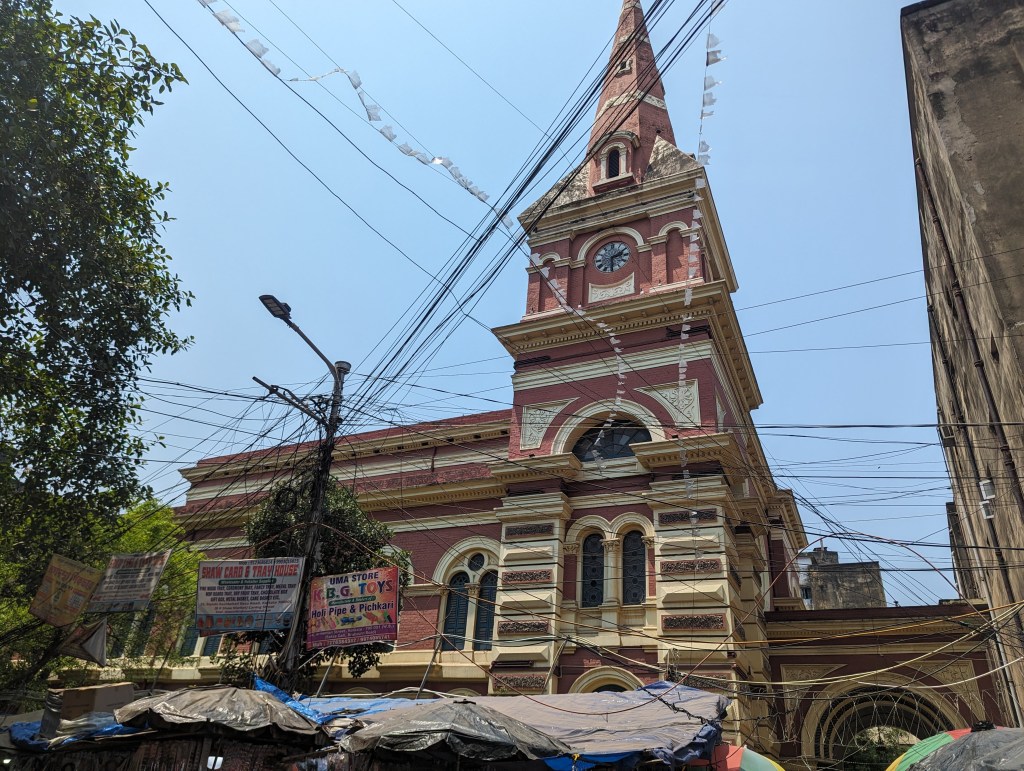
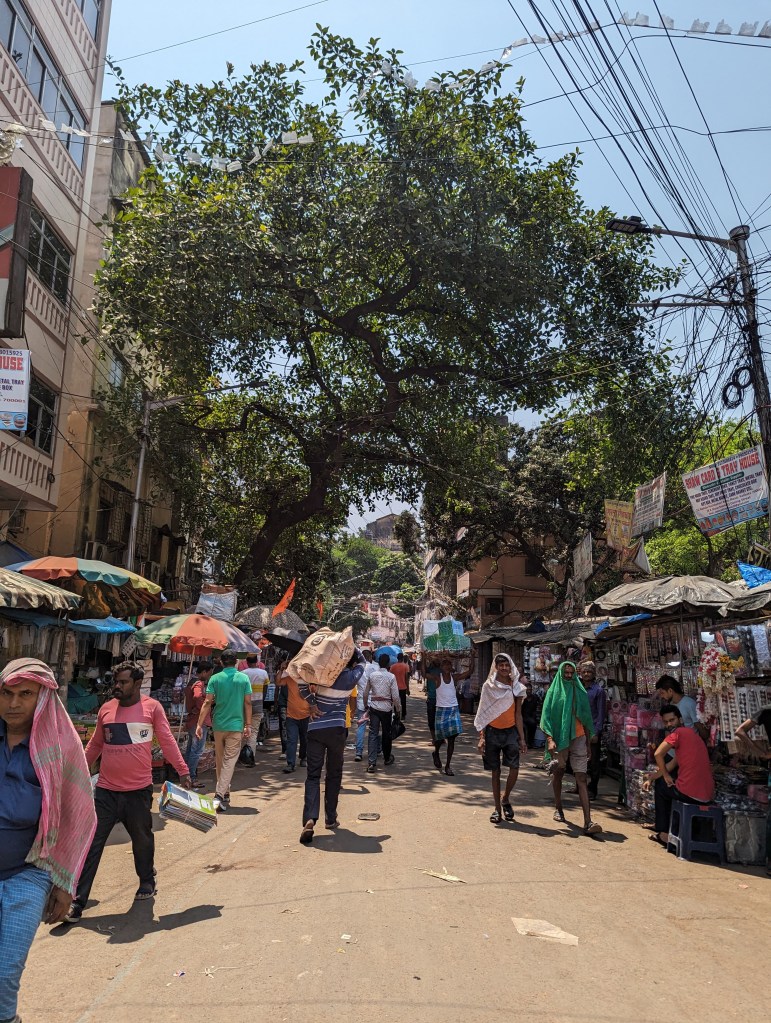


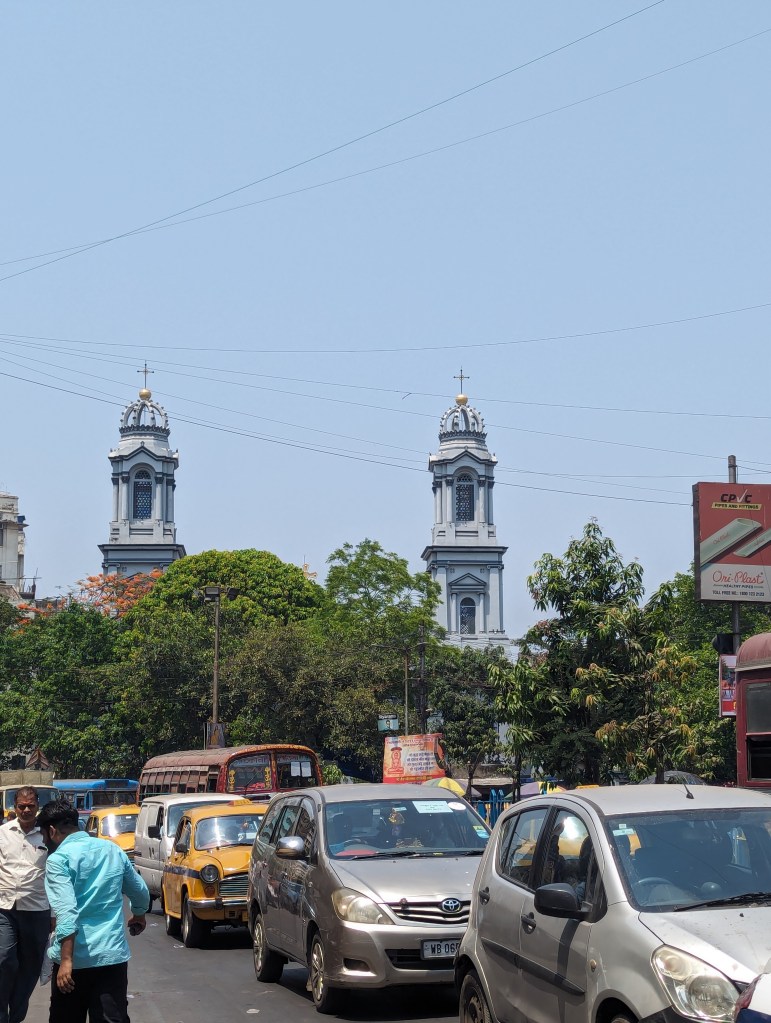
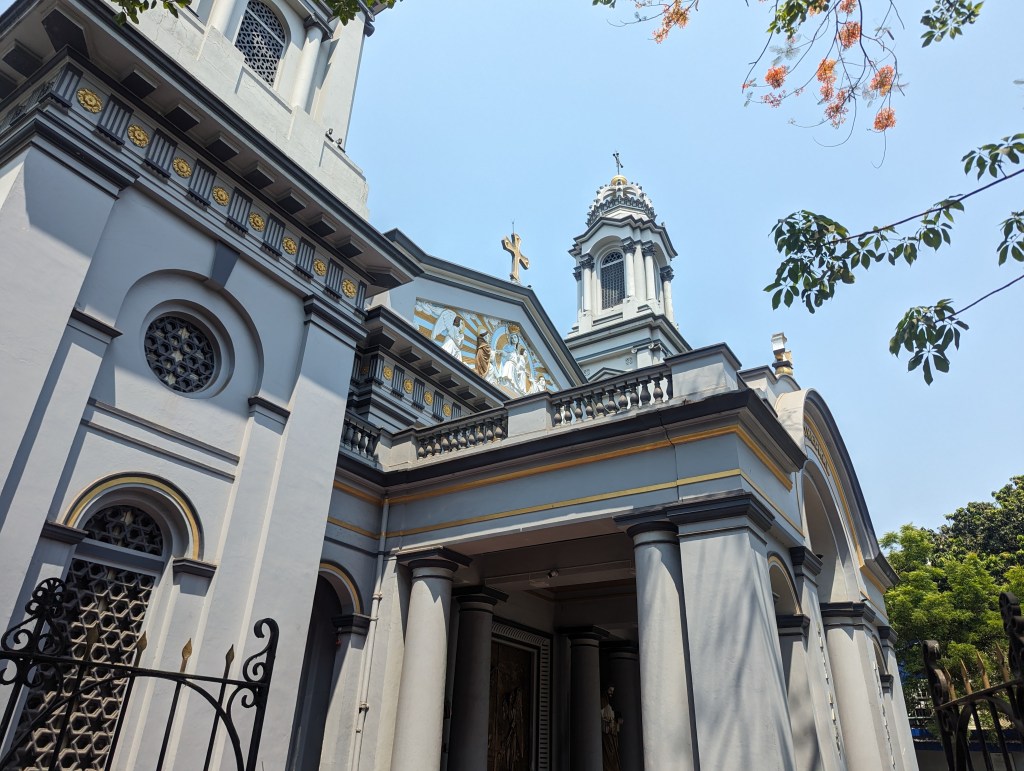
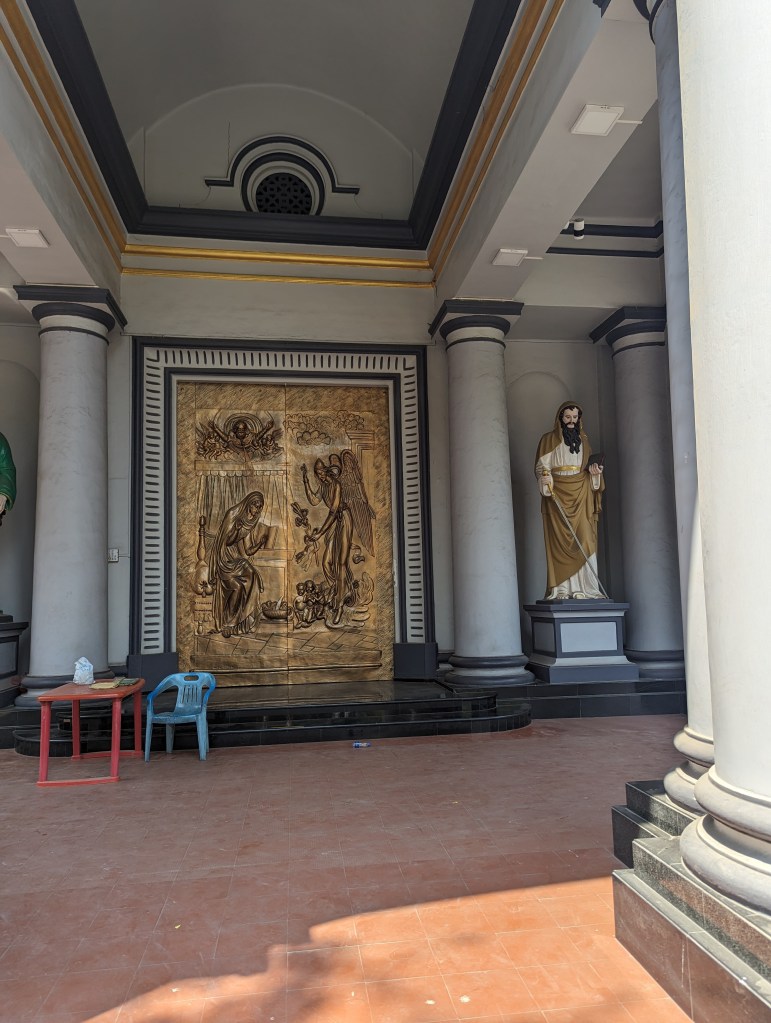
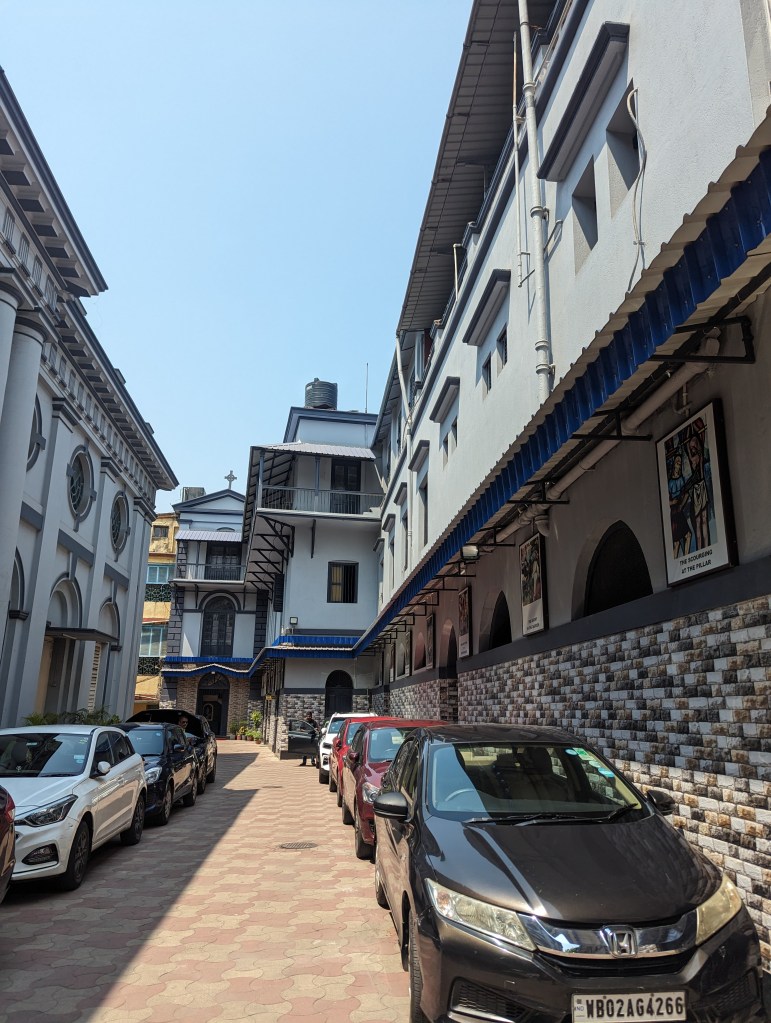
Moving further north, we looked for two churches in the area. The first, an Armenian church, was hidden behind a row of houses and could only be accessed through an alleyway guarded by men sitting out in plastic chairs. They were friendly enough, but told us that the only way to gain access was to travel to South Kolkata and have an audience with the Armenian bishop who may or may not grant permission. We obviously weren’t going to be doing that, so we tried for the nearby catholic cathedral called the “Cathedral of the Most Holy Rosary”. This we could at least see from outside, and could walk around the peaceful grounds, even though the ubiquitous man-in-plastic-chair told us we weren’t allowed inside.

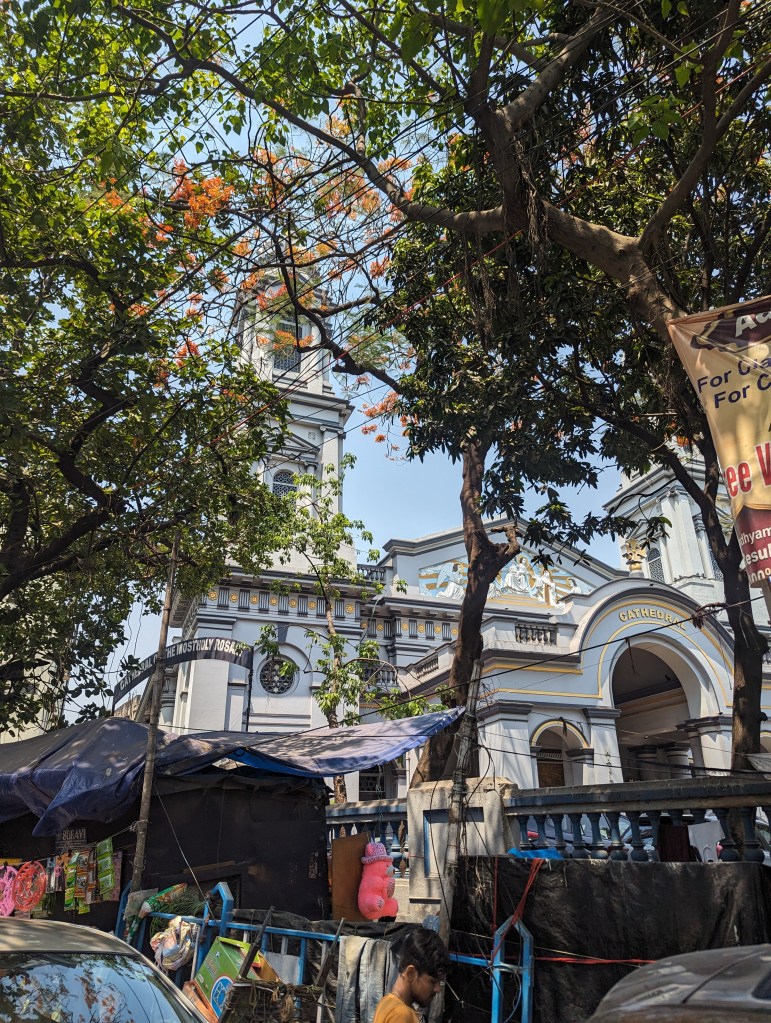
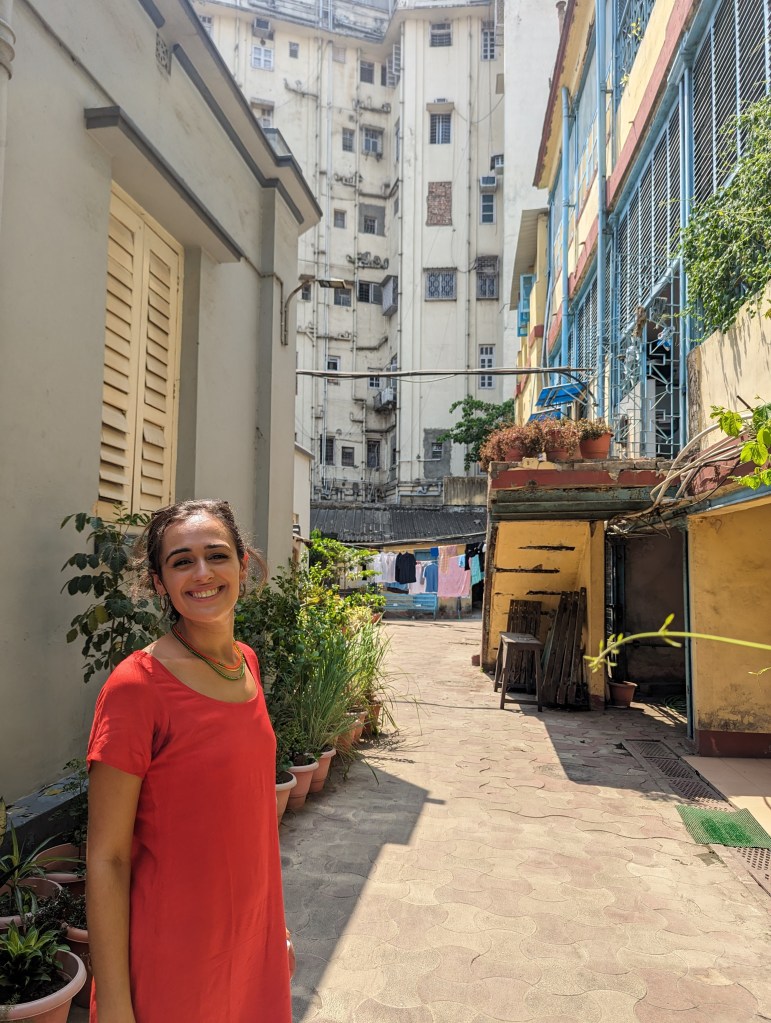
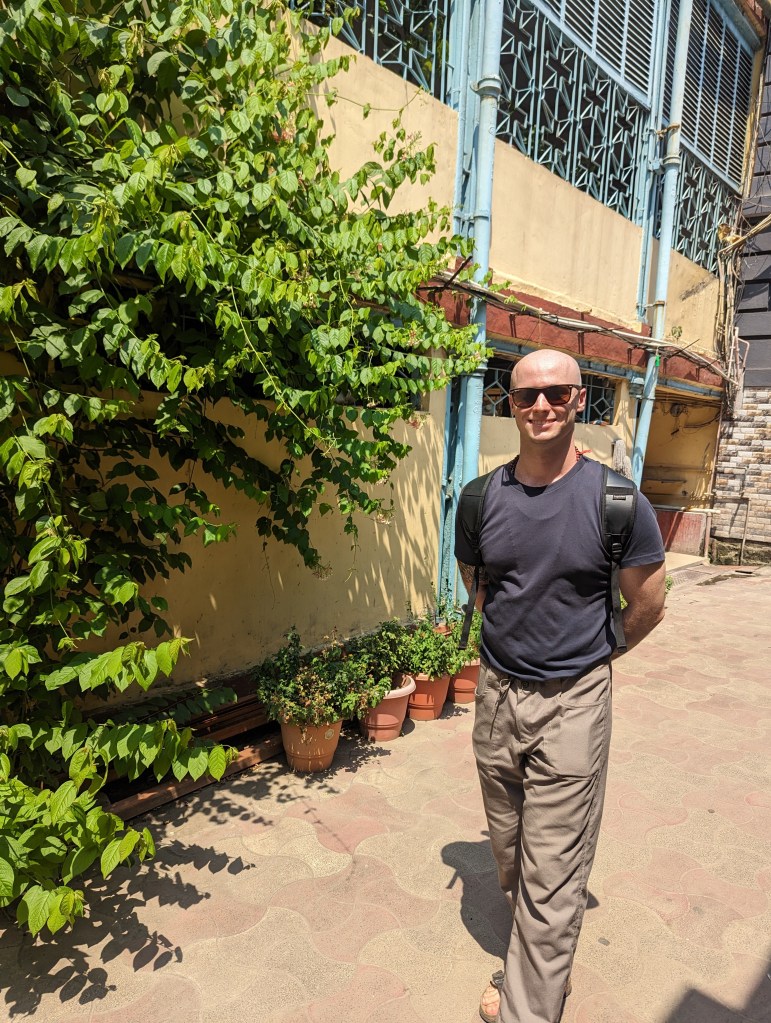
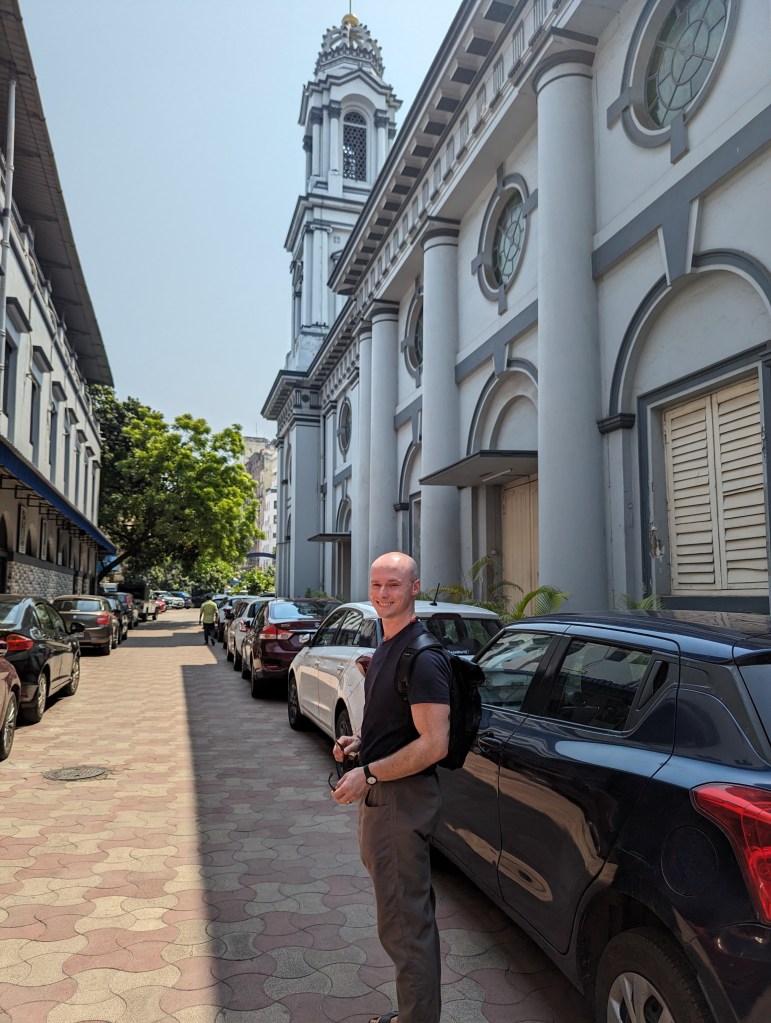
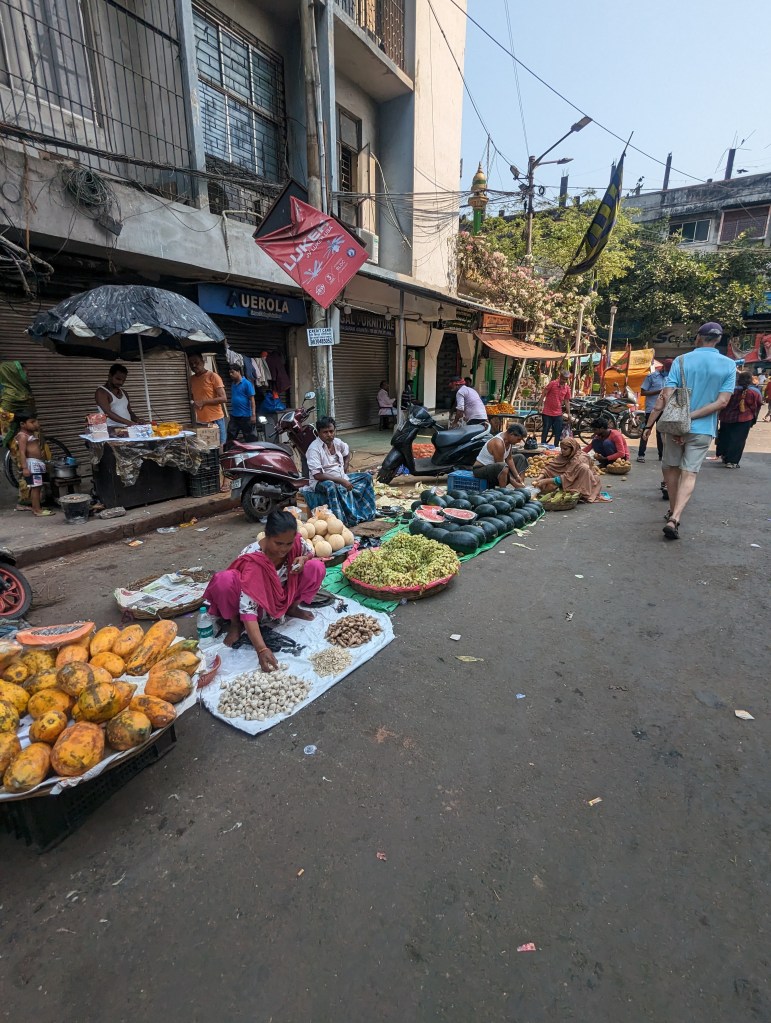
We left the main road and made our way through the backstreets. We were in the Bara Bazar area by this point, an area in which every street and alley is full of traders and shops selling every imaginable item wholesale. We were left alone given we weren’t the usual clientele, and it was fascinating to watch the trading and buying, not to mention the carrying of impossibly large packages of goods on the heads of the men working in the market. We passed a mosque which was still being actively used for worship, then dived down the tiny, parallel Pollock and Ezra Streets which had a “party market” selling balloons, banners and streamers, and a “lights market”, respectively.
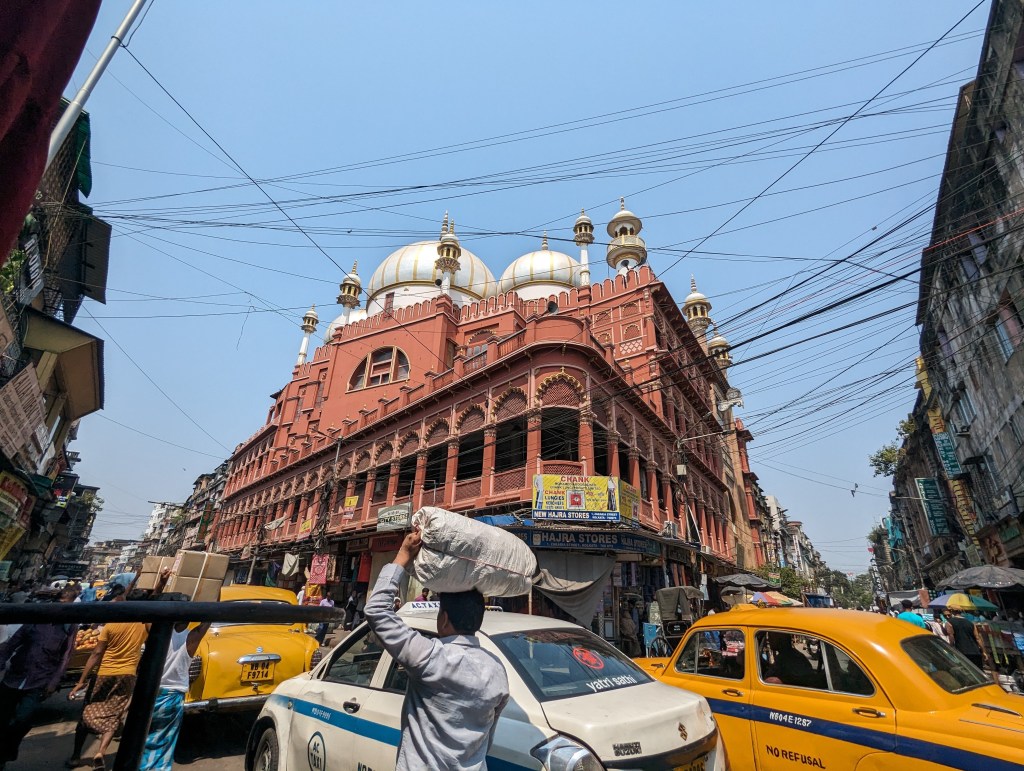

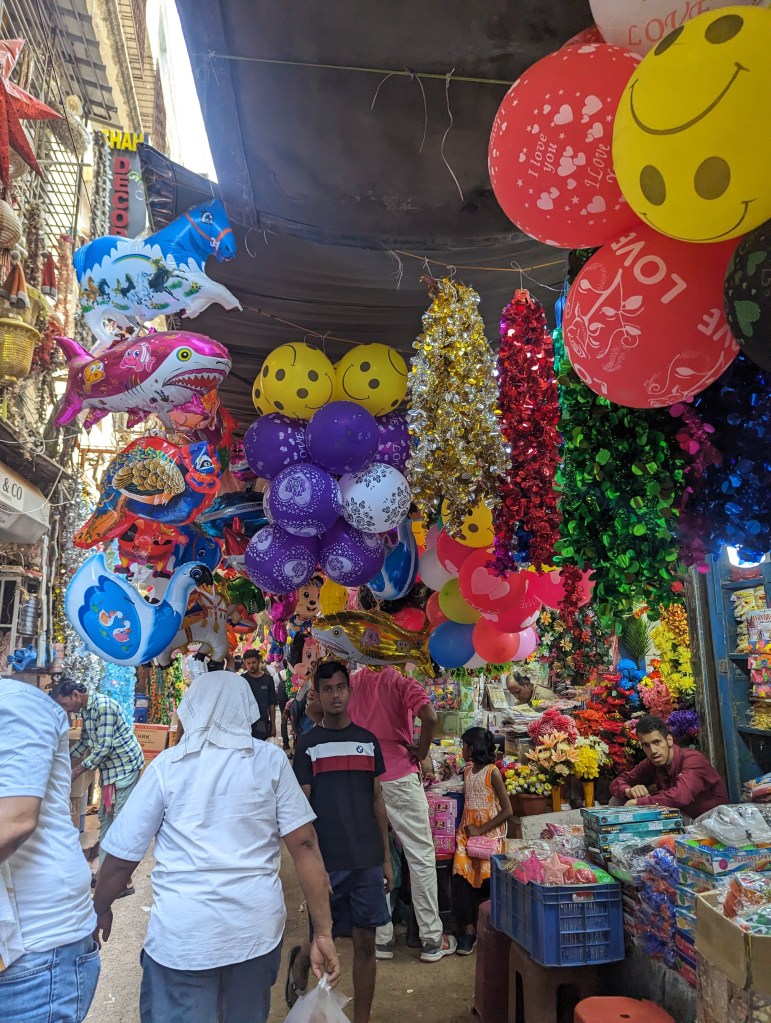
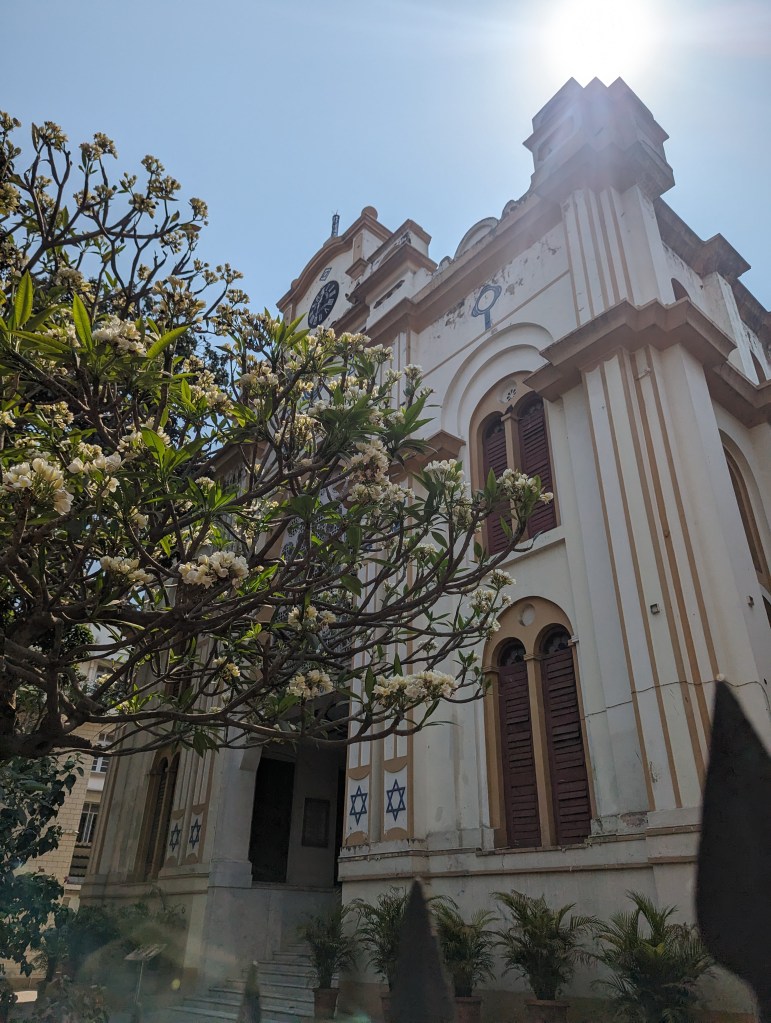
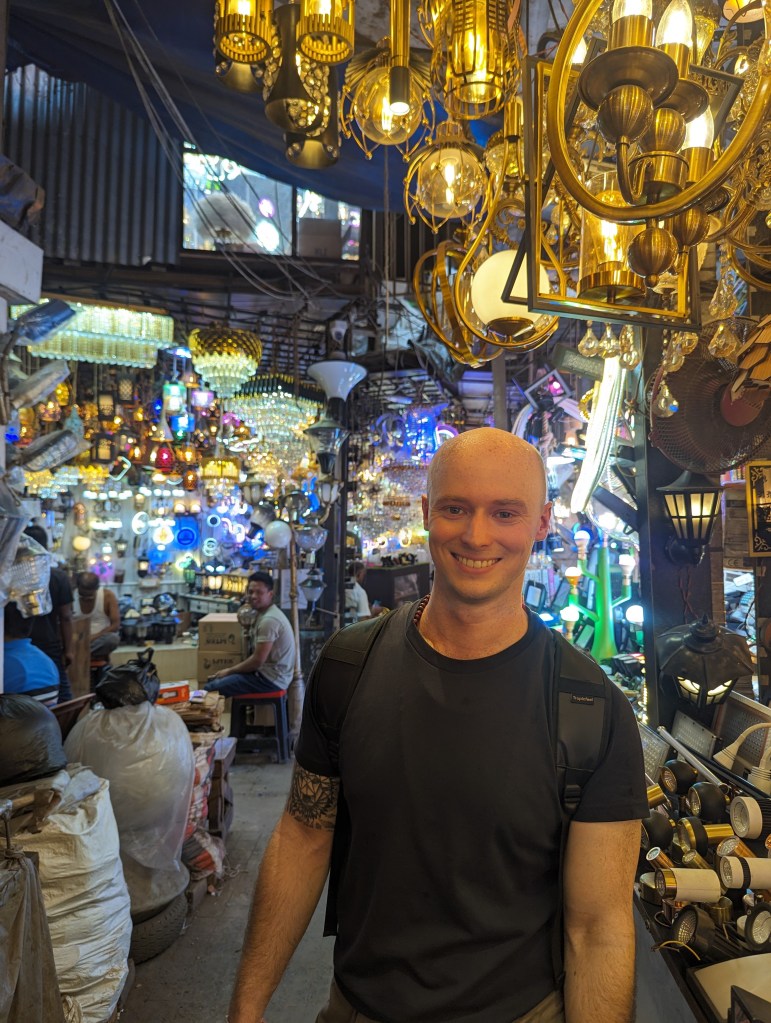
Although we’d been very much enjoying ourselves, the temperature was getting into the low 40s again and (as we have discussed several times) one suddenly gets too hot. I had such a moment, and revived myself temporarily with some cold water. We weren’t close to the metro station and the buses looked largely incomprehensible as they were often signed entirely in Bengali. Additionally, the roads were too narrow and busy to even dream of getting an Uber down them. Our best option, therefore, seemed to be to walk to and then across the nearby Maidan park and to the relative cool of the nearest metro station. It wasn’t my favourite walk, with the sun beating down on us for every second of the forty minutes or so it took us to get there, but we made it.
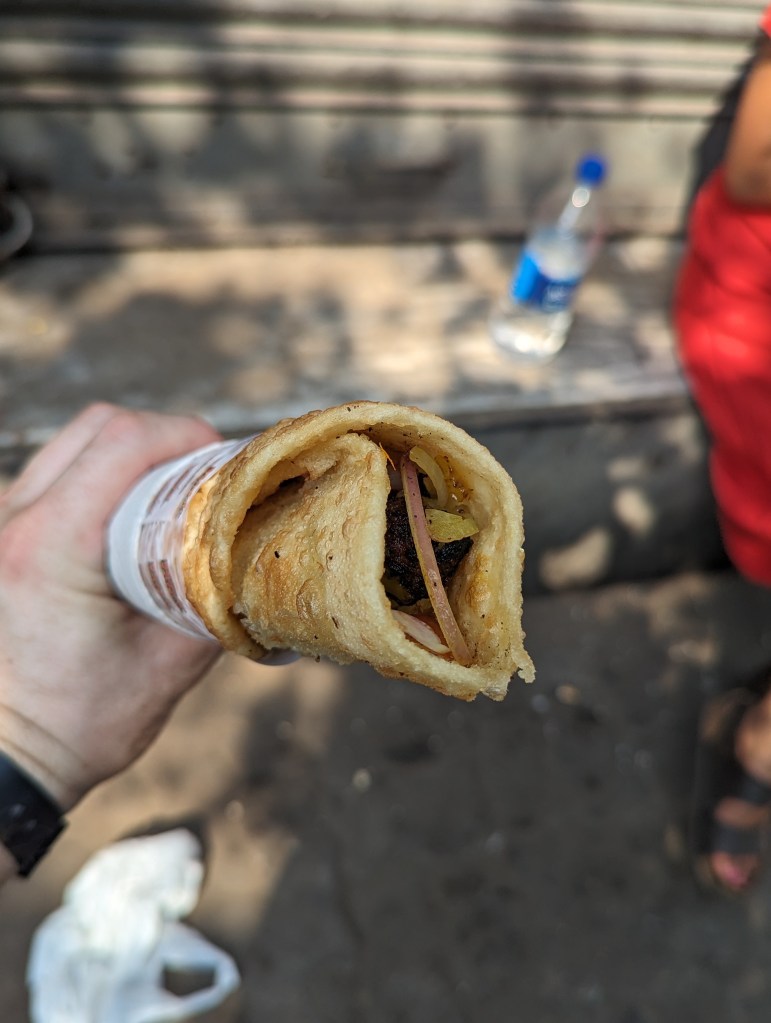
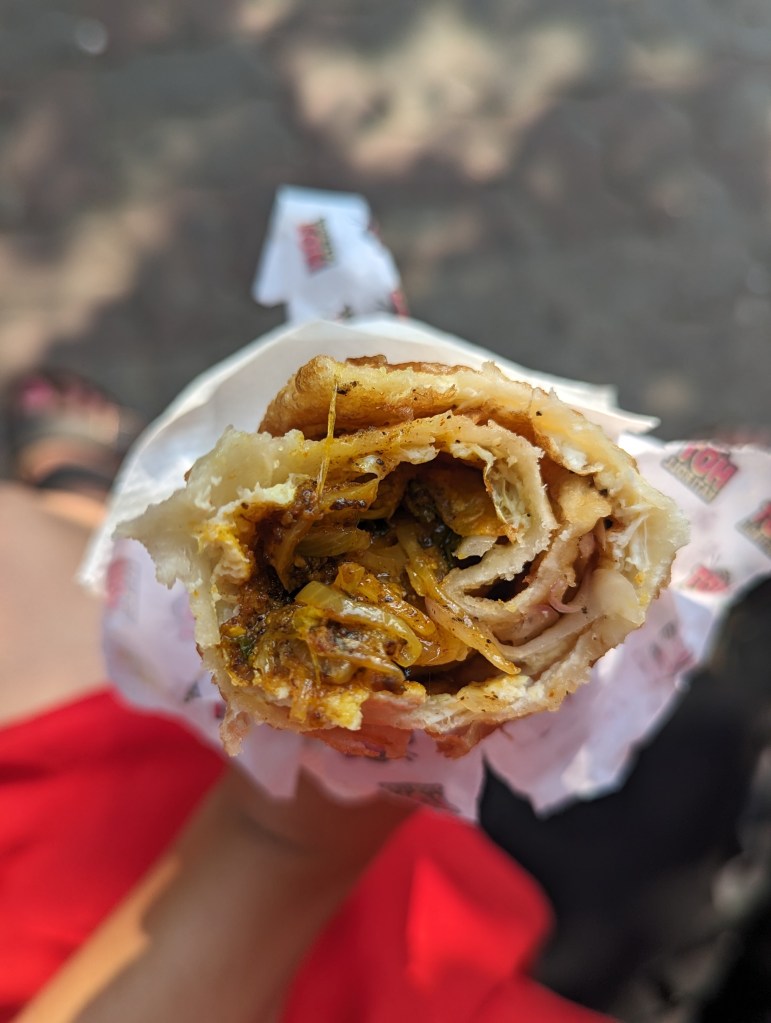
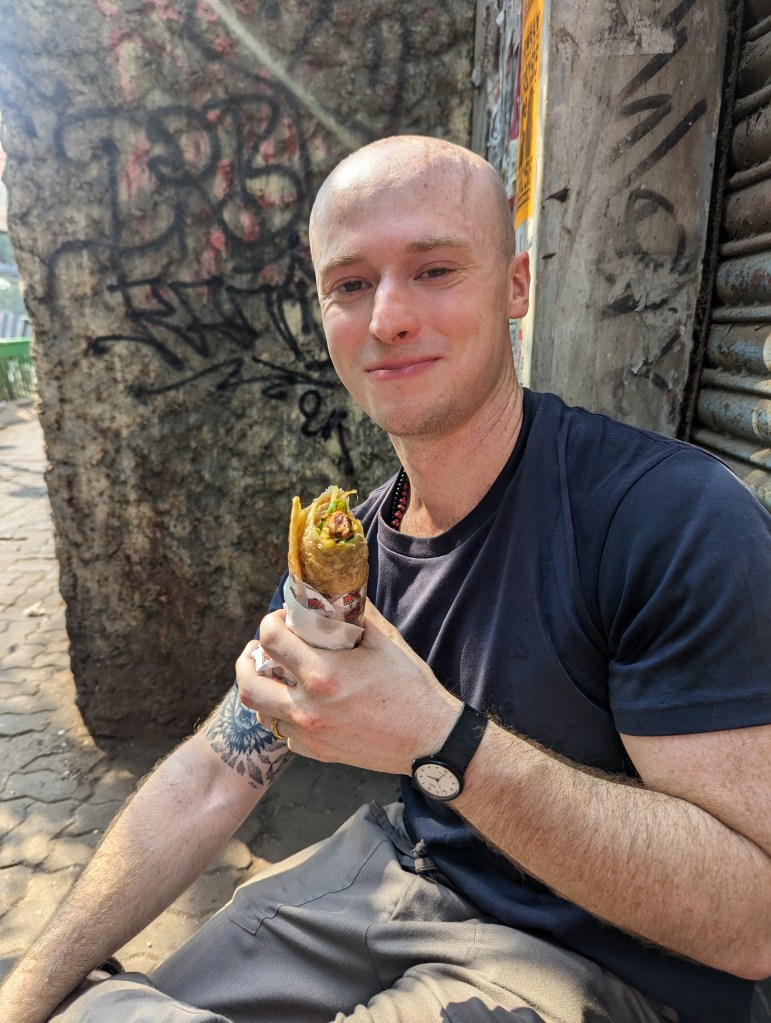
Whether my body’s temperature regulatory mechanisms had kicked into overdrive or whether I was delirious from heat stroke remains unclear, but by the time we reached the metro I was actually feeling quite a lot better. So, we decided to pop to a local hole-in-the-wall food stand just by the station that is apparently a bit of an institution. It sold and also was called “hot kati rolls”, which was the buttery, flaky paratha bread fried and used as a wrap for a variety of delicious of fillings. Ellie had an egg and paneer roll and I a double mutton, which we enjoyed immensely on a nearby step that had a little shade cover. Once we’d finished discussing how it was the best street food we’d yet had in India, we headed to the metro and back to the cool of the hotel.
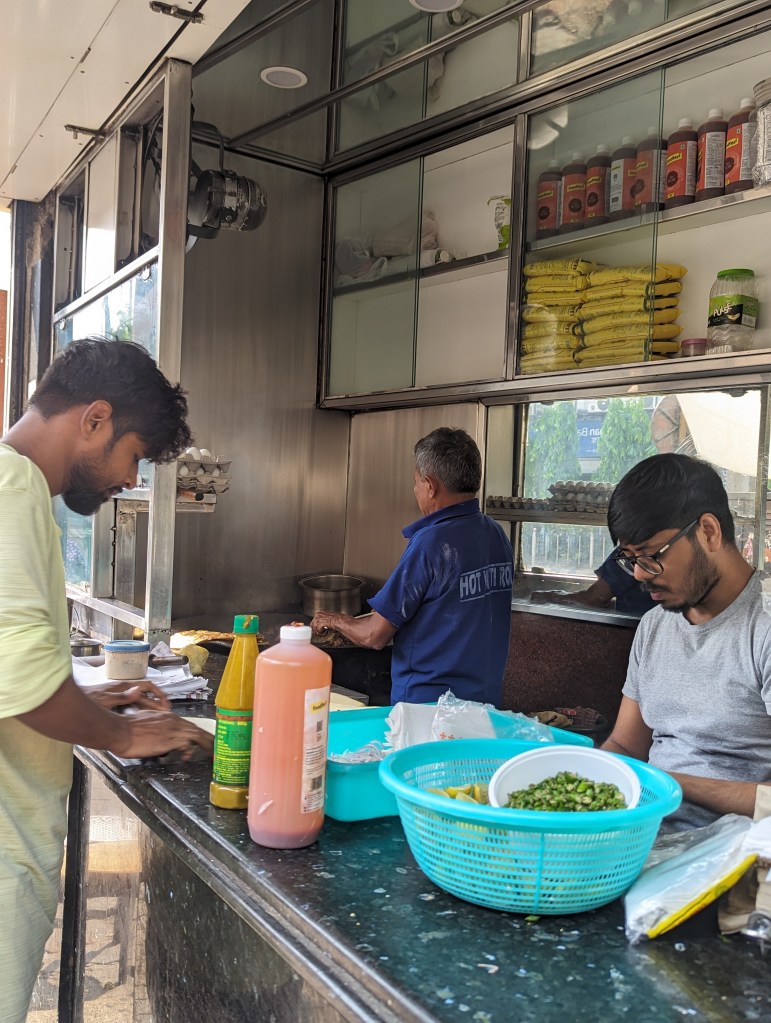
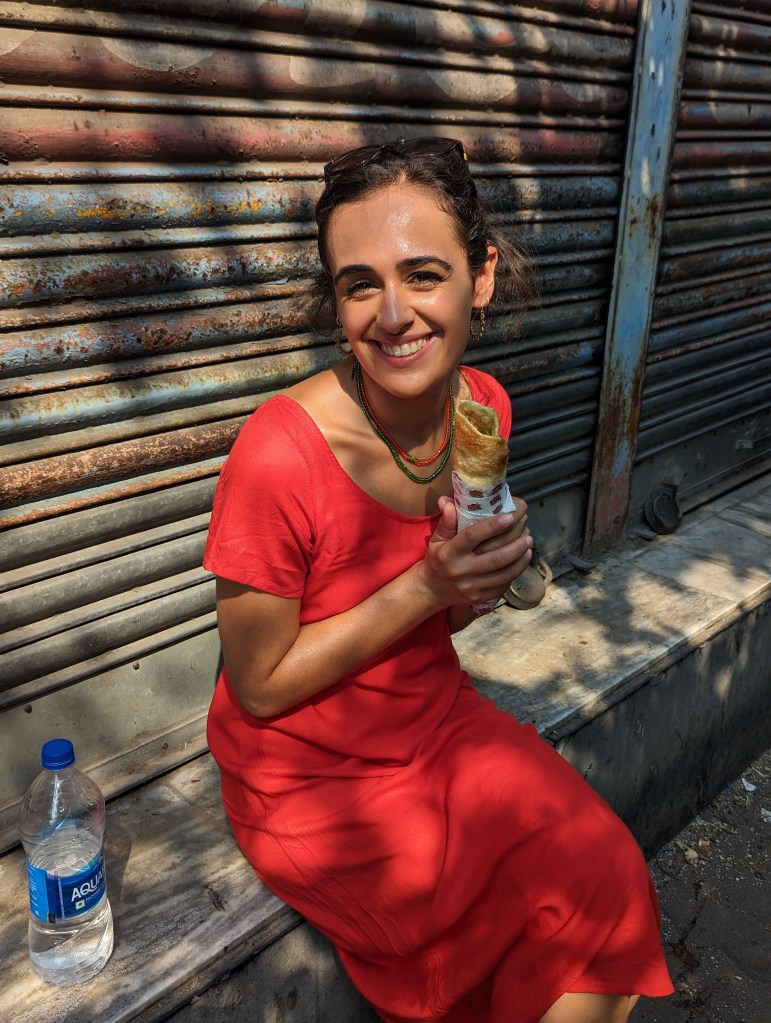
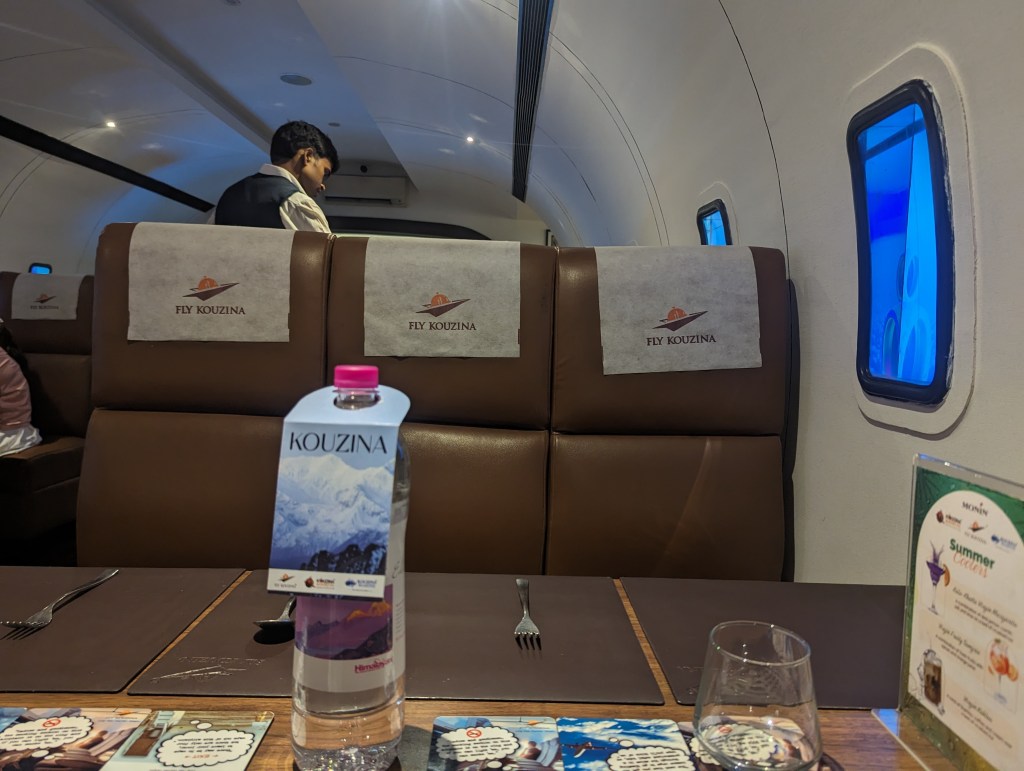
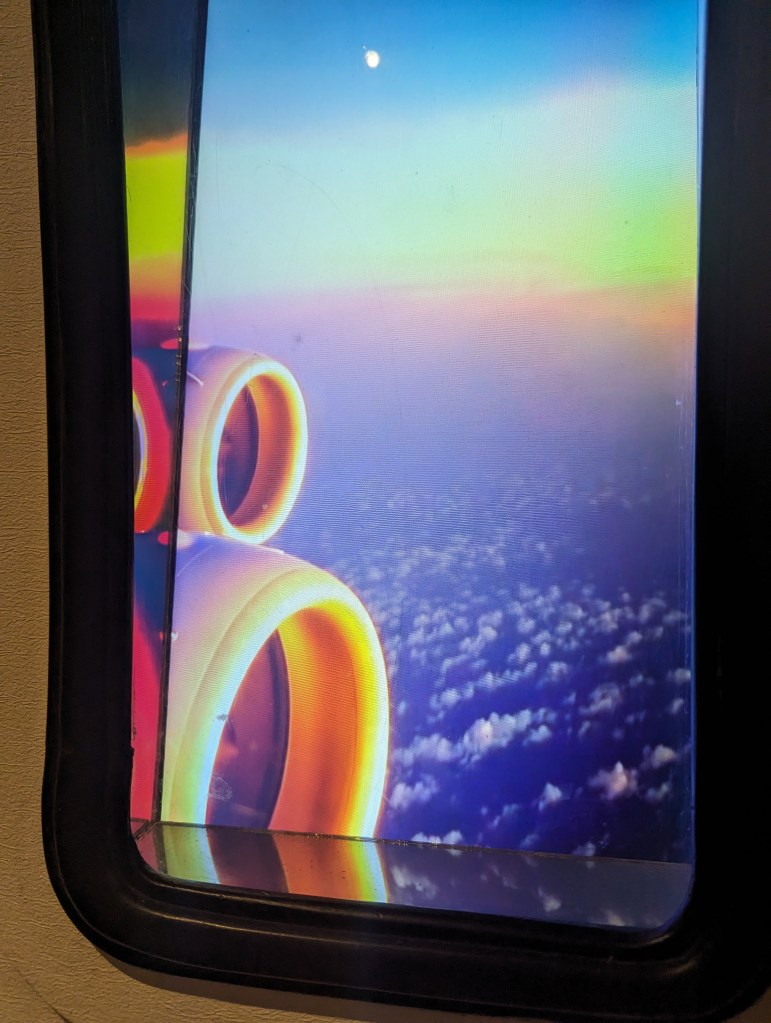
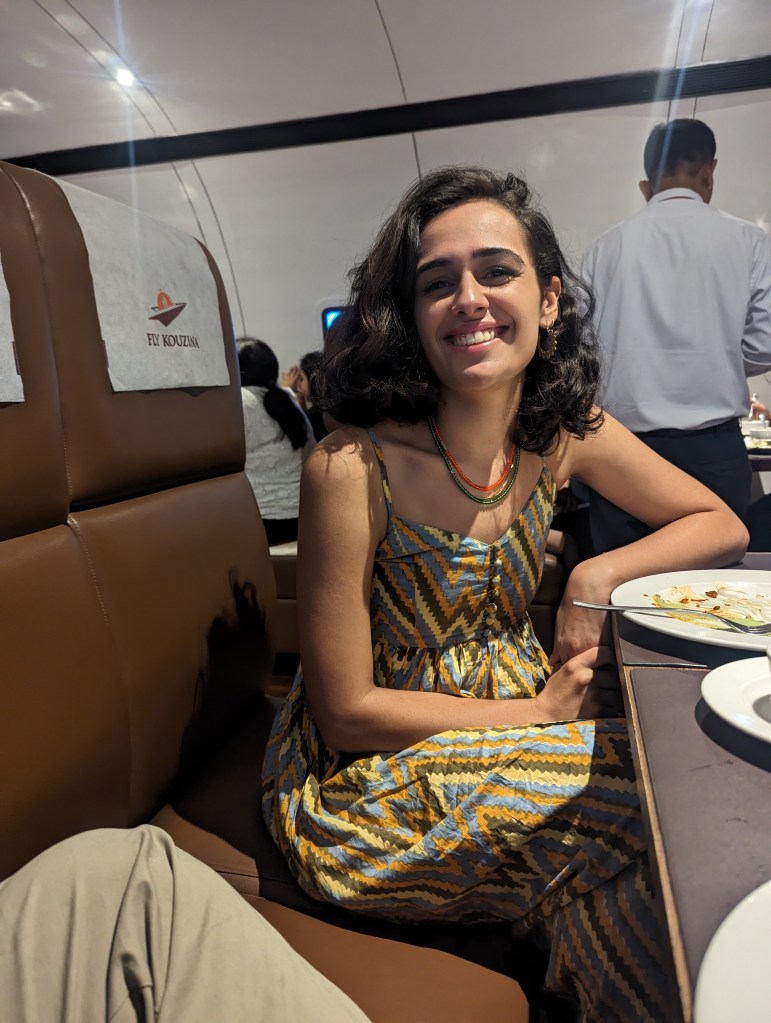
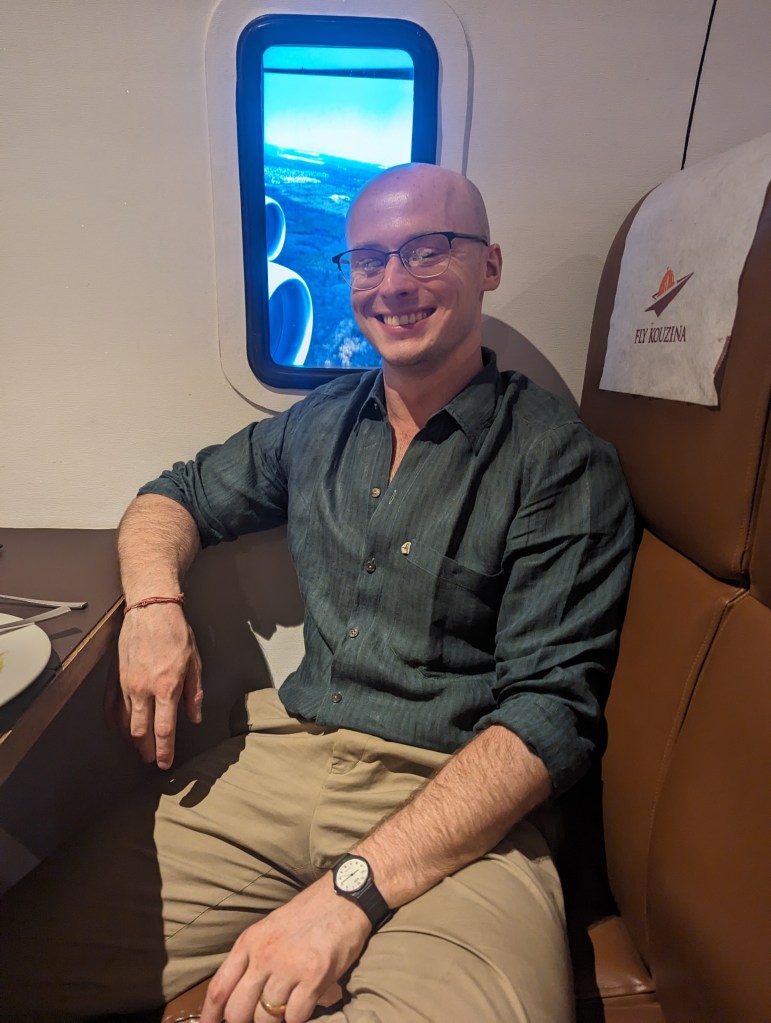
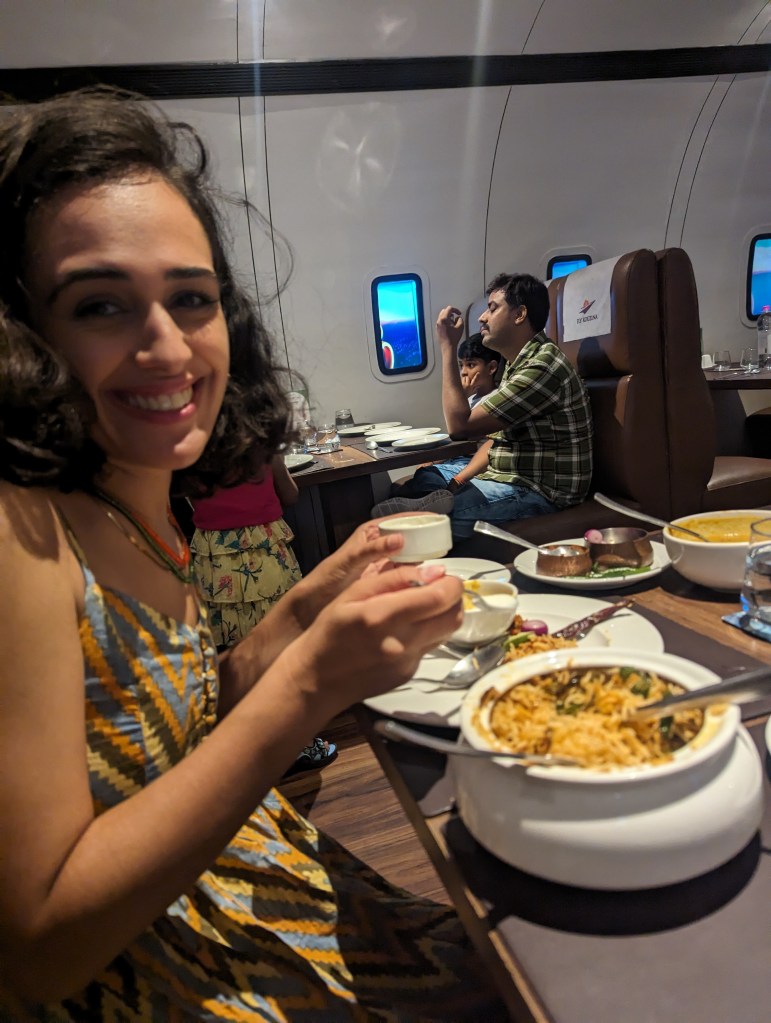
We were always offered a drink or refreshment when we came back to Calcutta Bungalow, and we always had the inevitable but wonderful fresh lime soda. Armed with these, we spent a few hours in the hotel as I had some tutoring to do in the evening. Once I was finished, I asked Ellie what we were going to do for dinner, to which she replied that she had “a bit of an unhinged idea”, which is usually either a really good sign or a really bad sign. So, we ordered an Uber (who had the remarkable and terrifying ability to drive a manual one handed at high speeds whilst on the phone) and headed into the new, planned Salt Lake area to a restaurant that was designed to look like an the inside of an aeroplane. It had the aeroplane seats, the little paper headrests, and the windows were little screens that showed videos the view from an aeroplane window on take-off and landing. That said, and notwithstanding that it was packed with kids given the novelty, the food and service was actually really good. We had a lovely meal, the usual Indian fare, before finding another Uber home (a slightly less death-defying journey this time), and to bed.
Wednesday –
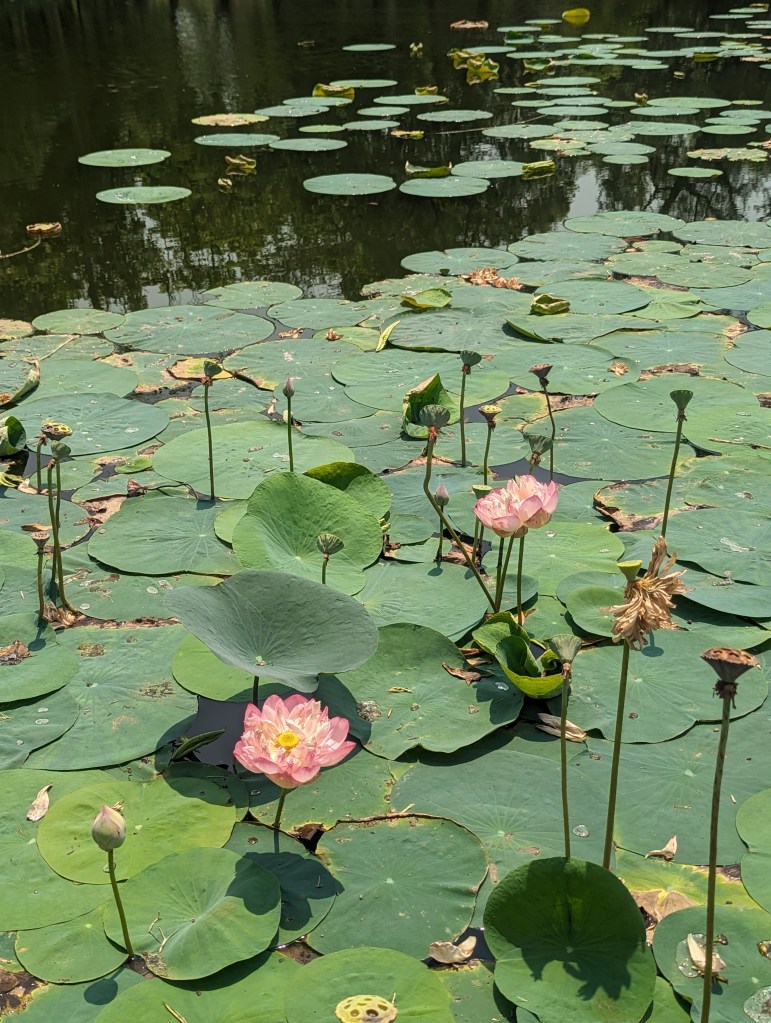
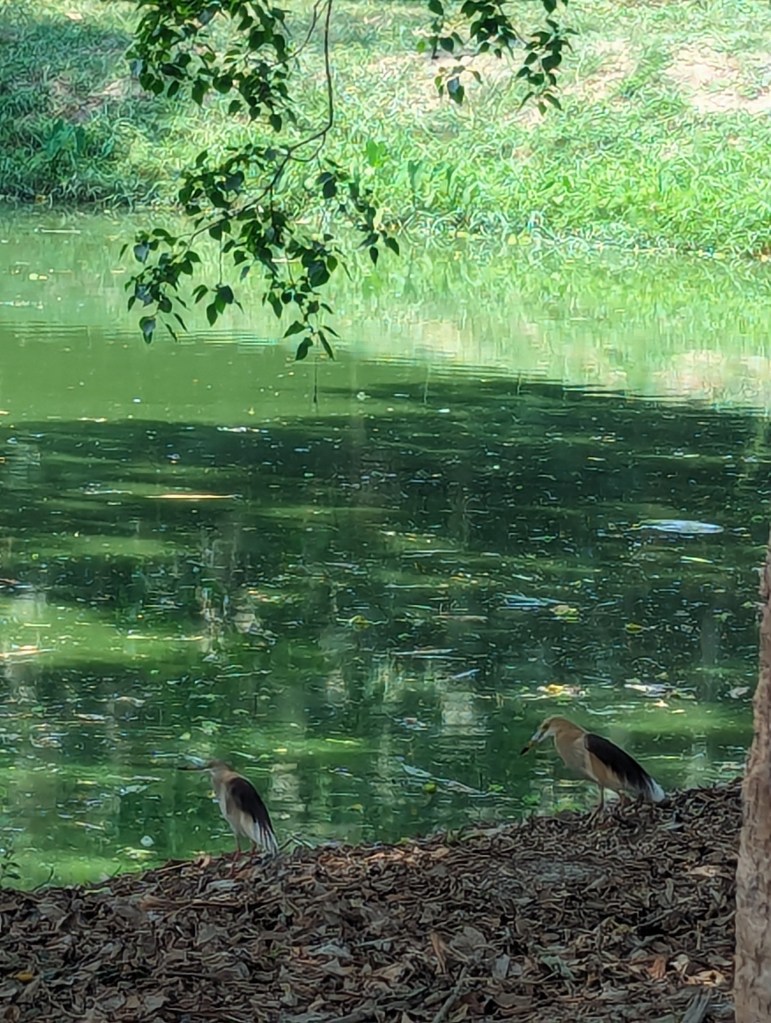
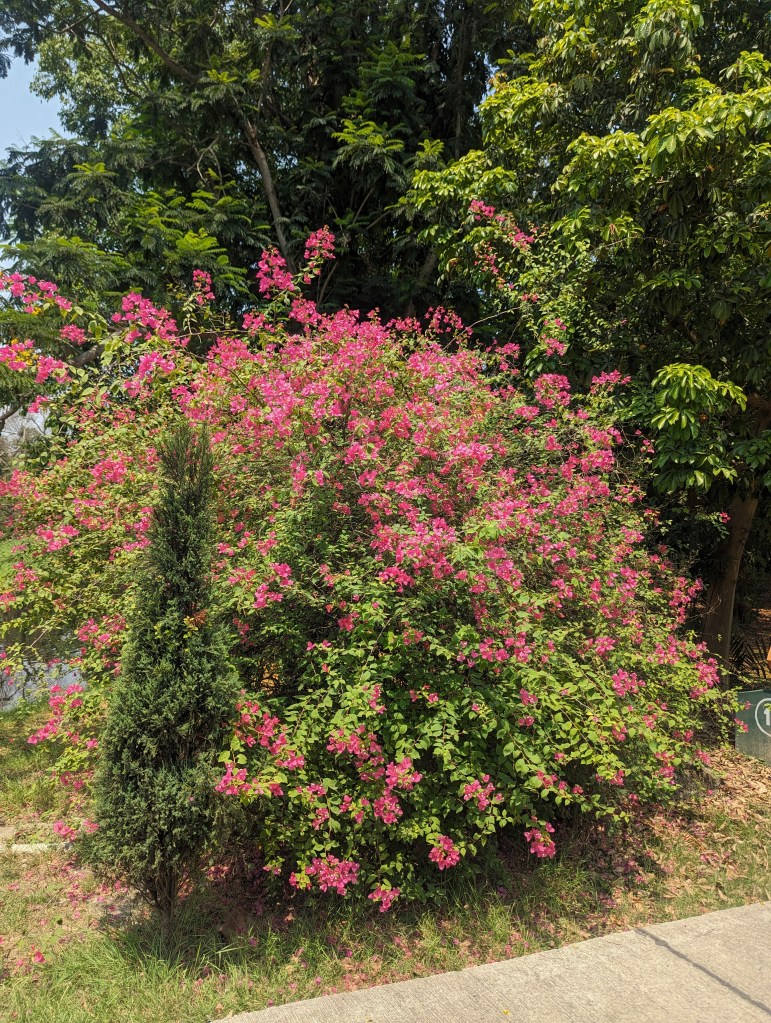
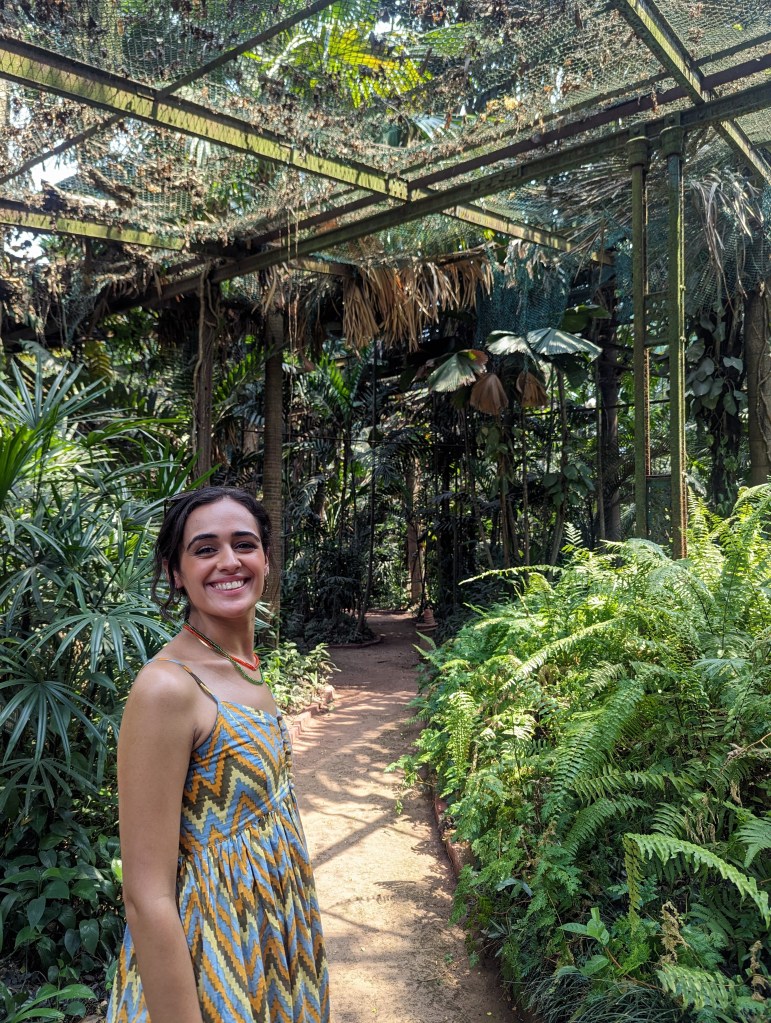
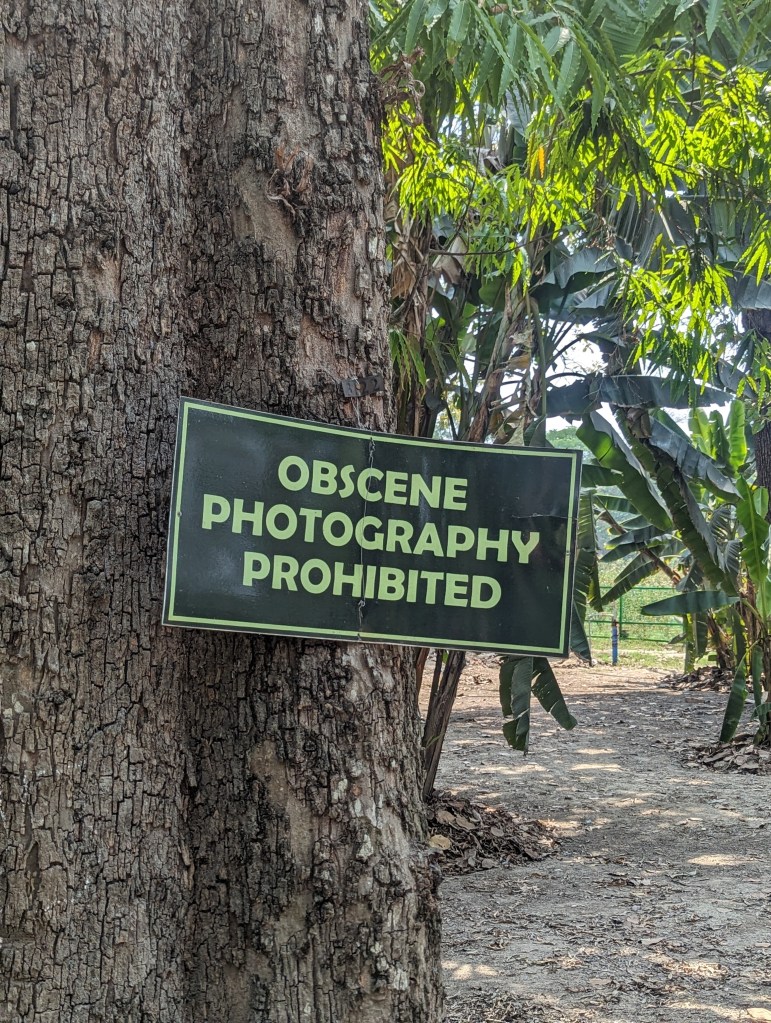
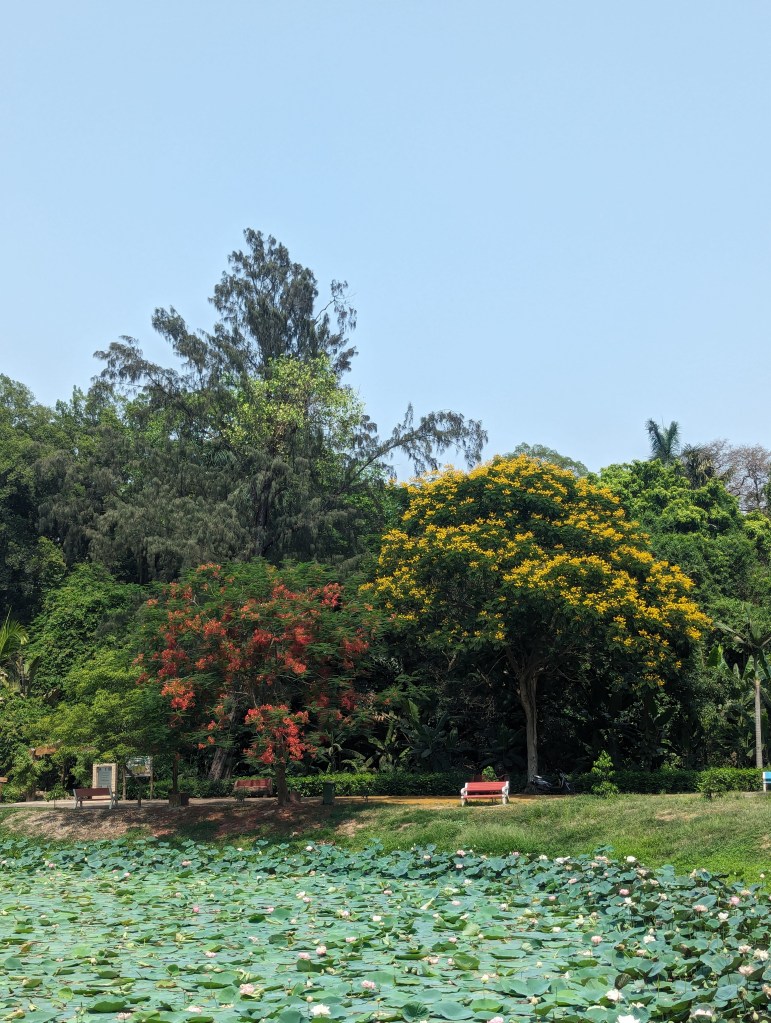
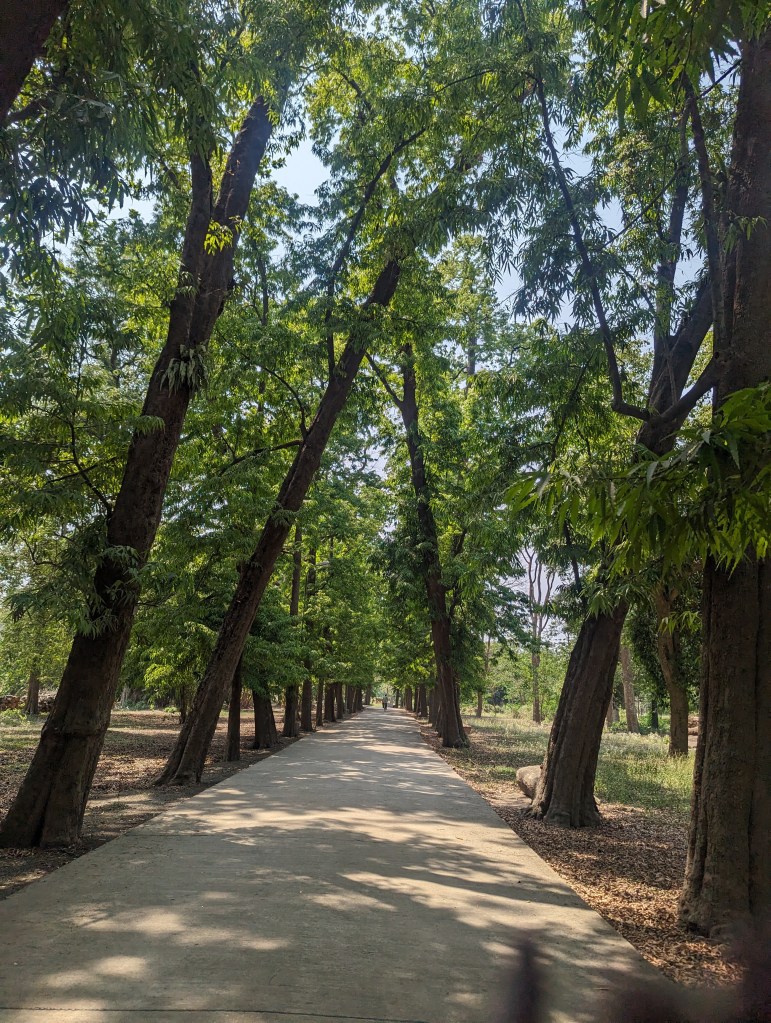
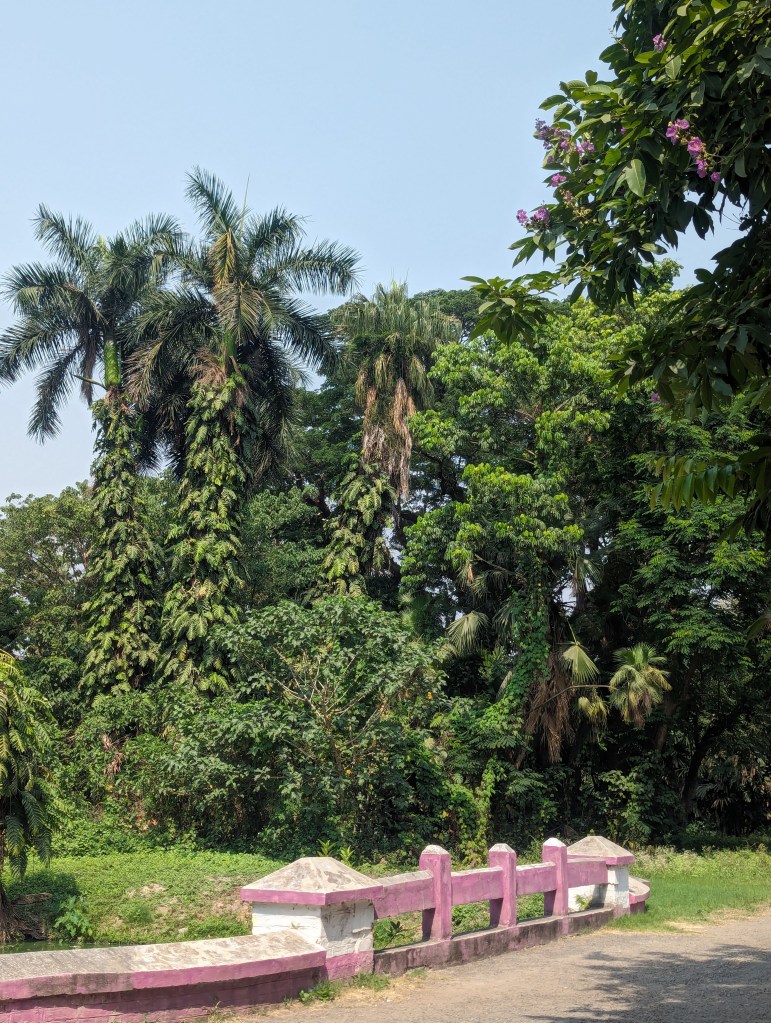
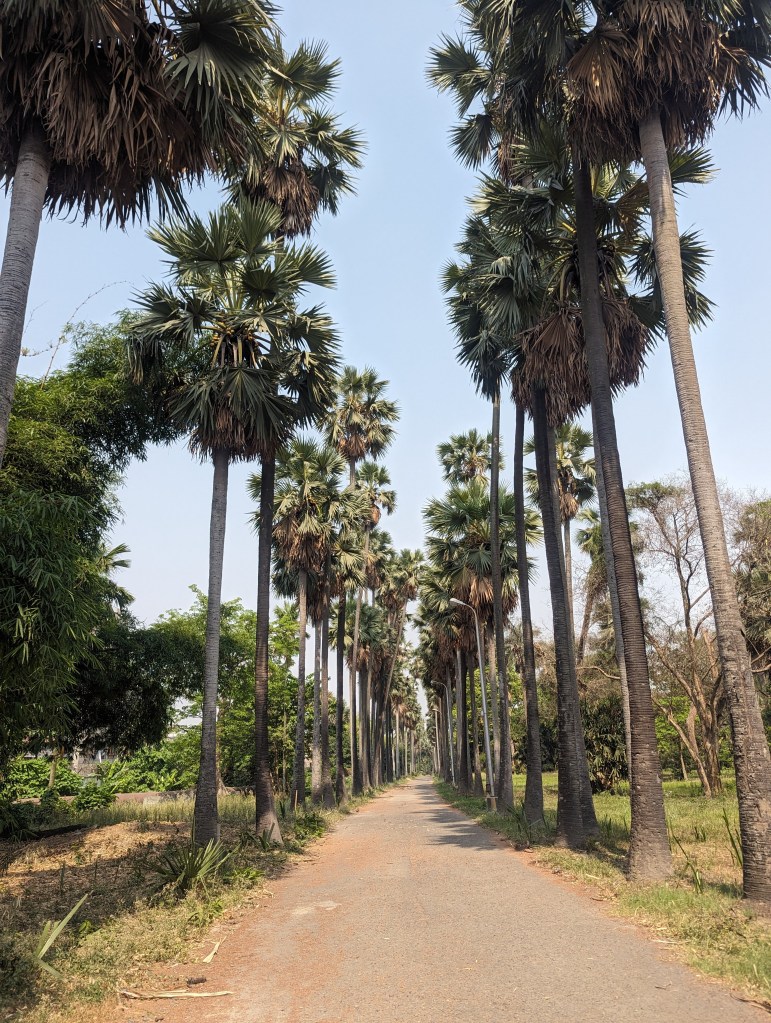
We had breakfast at usual at Calcutta Bungalow on Wednesday morning, and discussed our plans for the day. We had been in two minds about visiting the Botanical Gardens of Calcutta as it was a long way away and the public transport in that area of the city wasn’t particularly good. However, an Uber there was reasonably cheap and so we decided to head there in the morning, after a pit stop at a little cafe on the way down. The gardens were only 300/- (£3) entry each, and stretched over an area that took a comfortable two and half hours to walk around. It felt a little like Calcutta’s answer to Kew Gardens, and was immaculately tended to, with little rose gardens, lotus ponds, and greenhouses that had been reclaimed by the plants that grew in them.

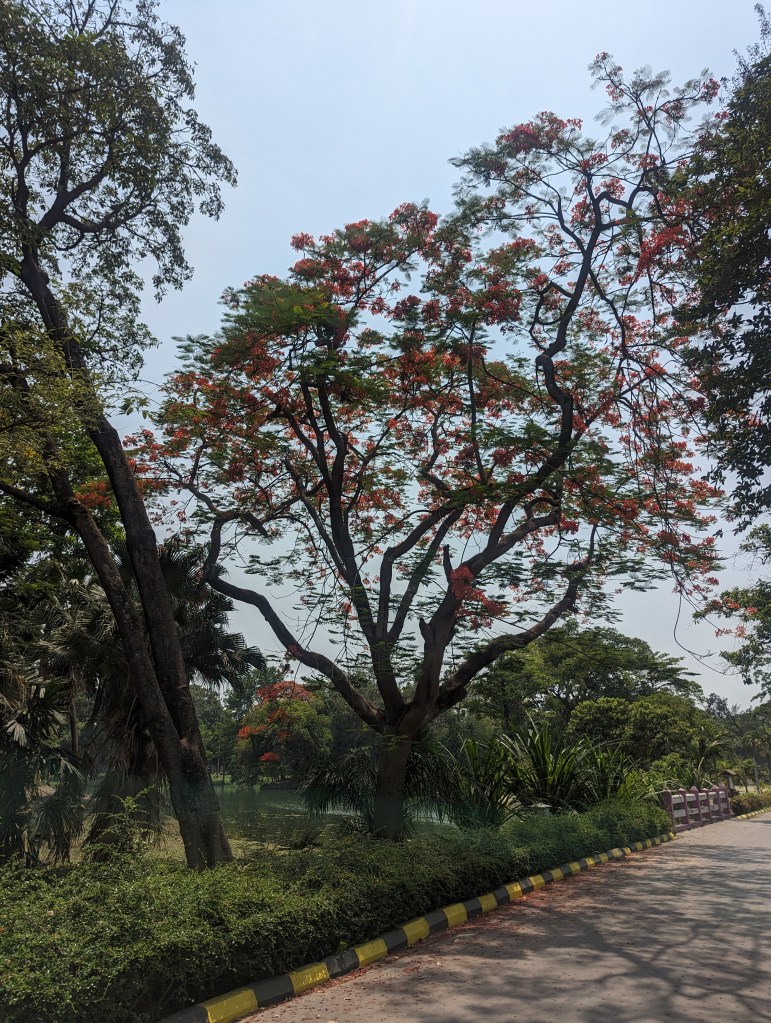
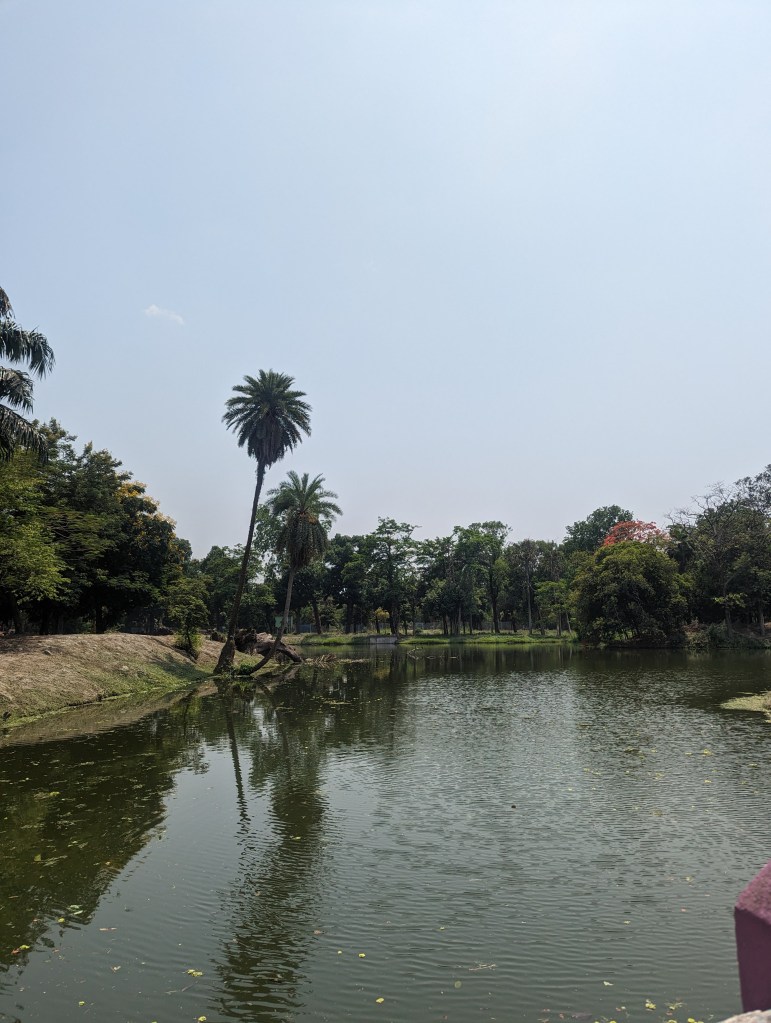
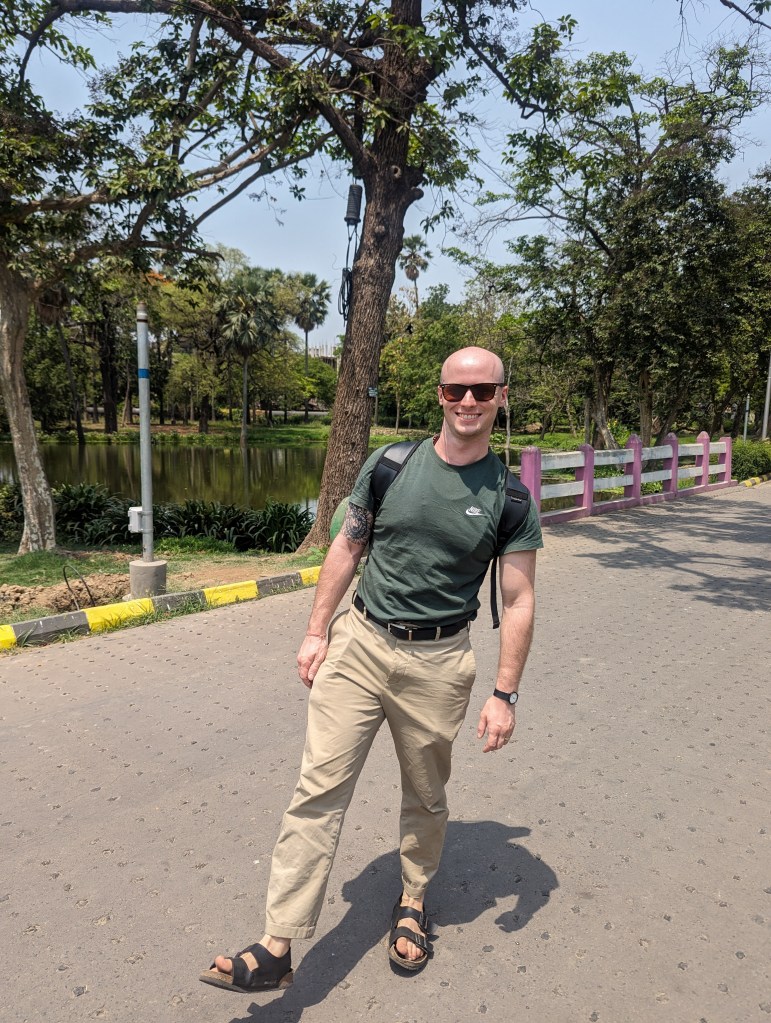

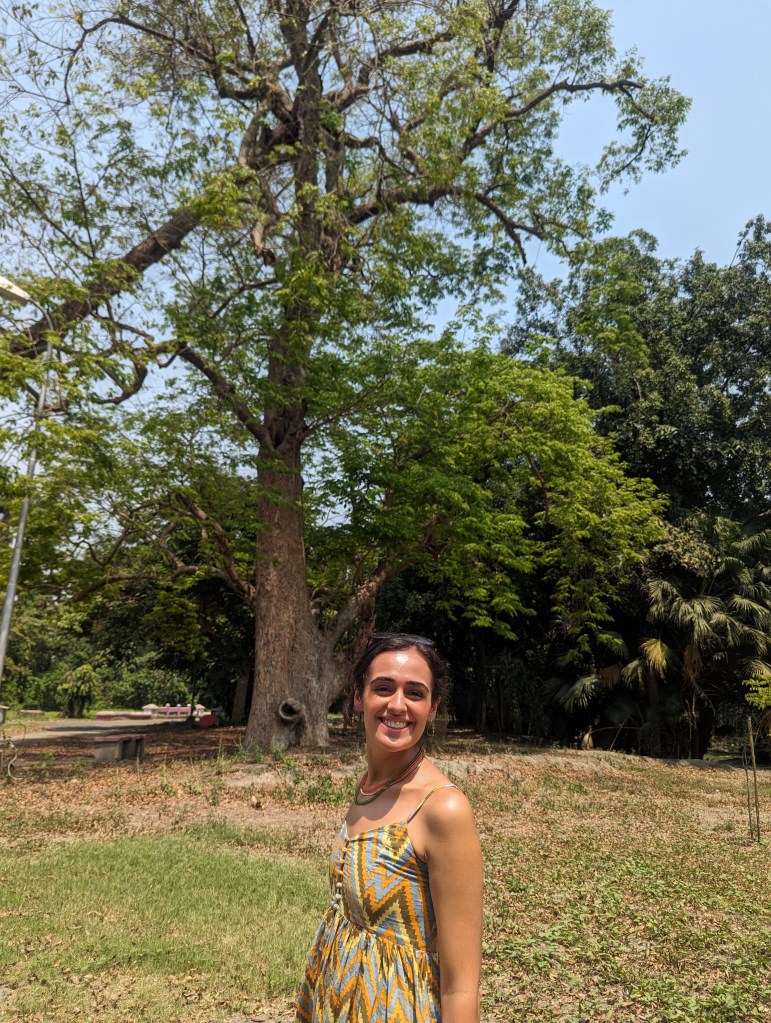
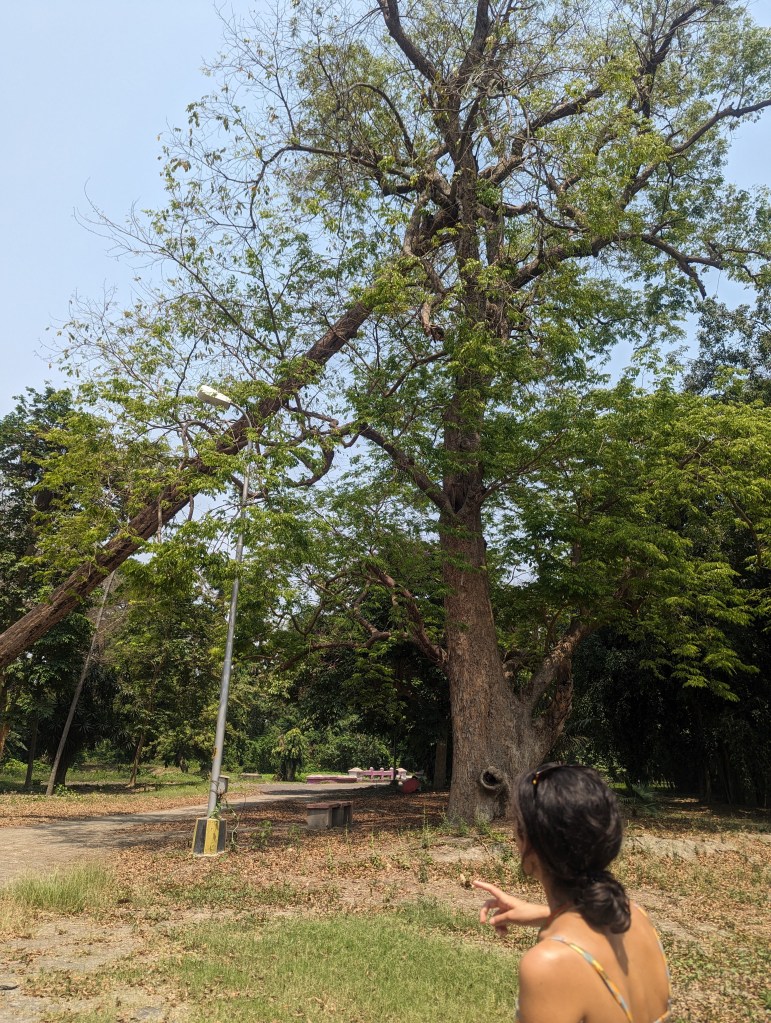
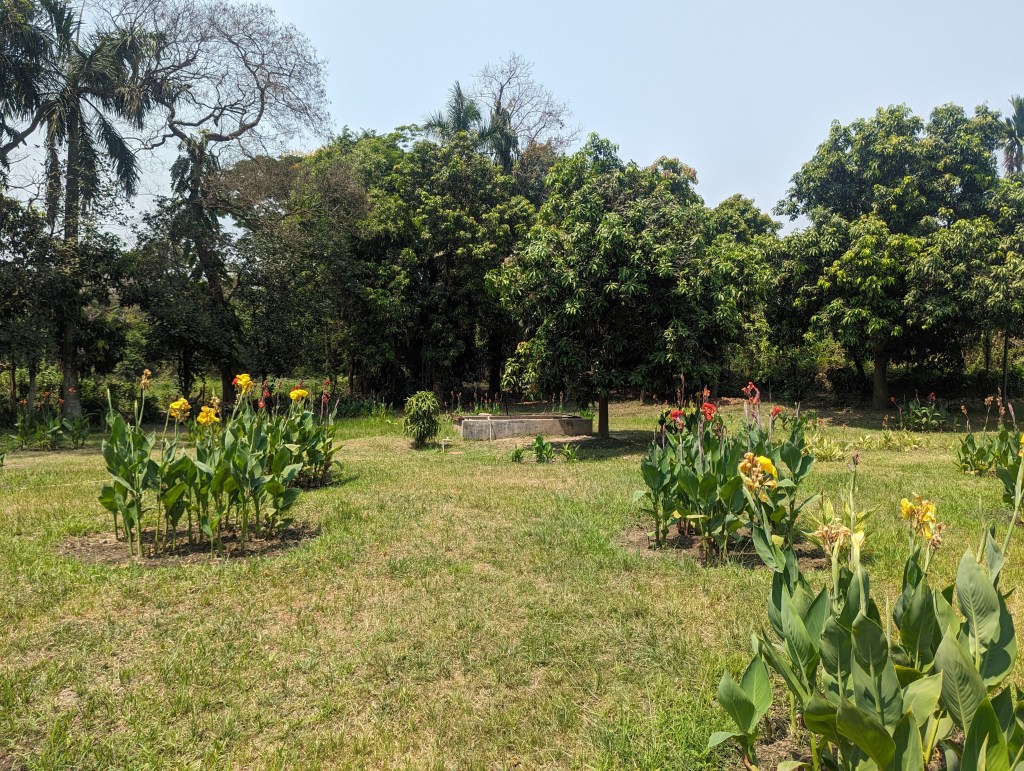
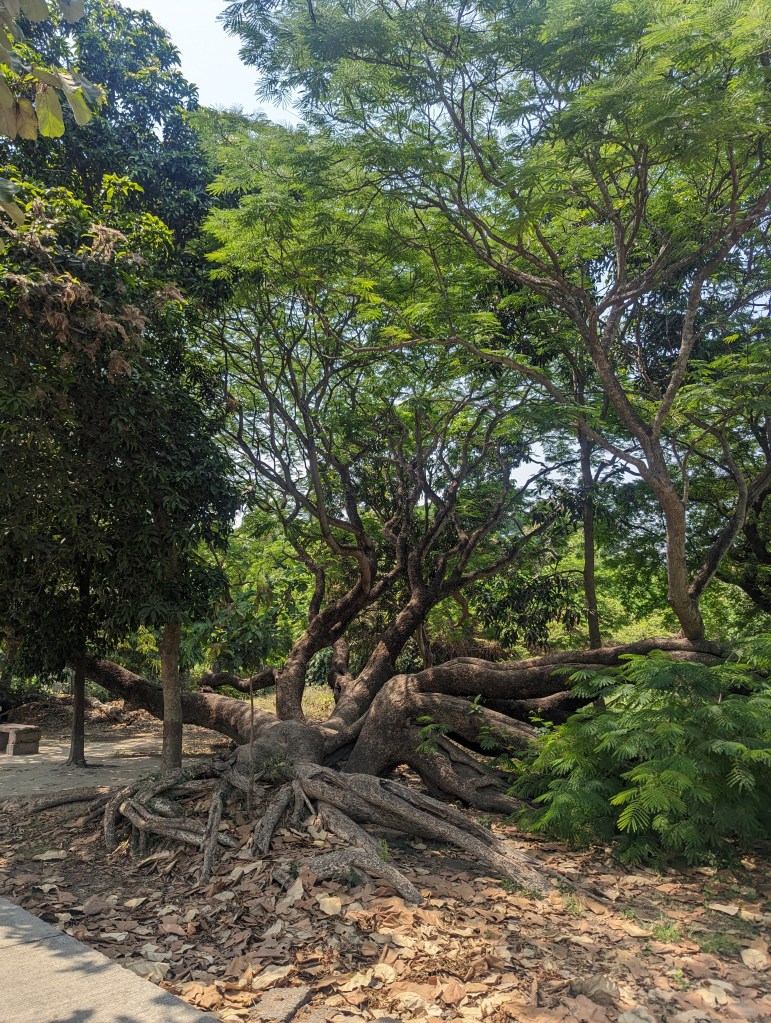
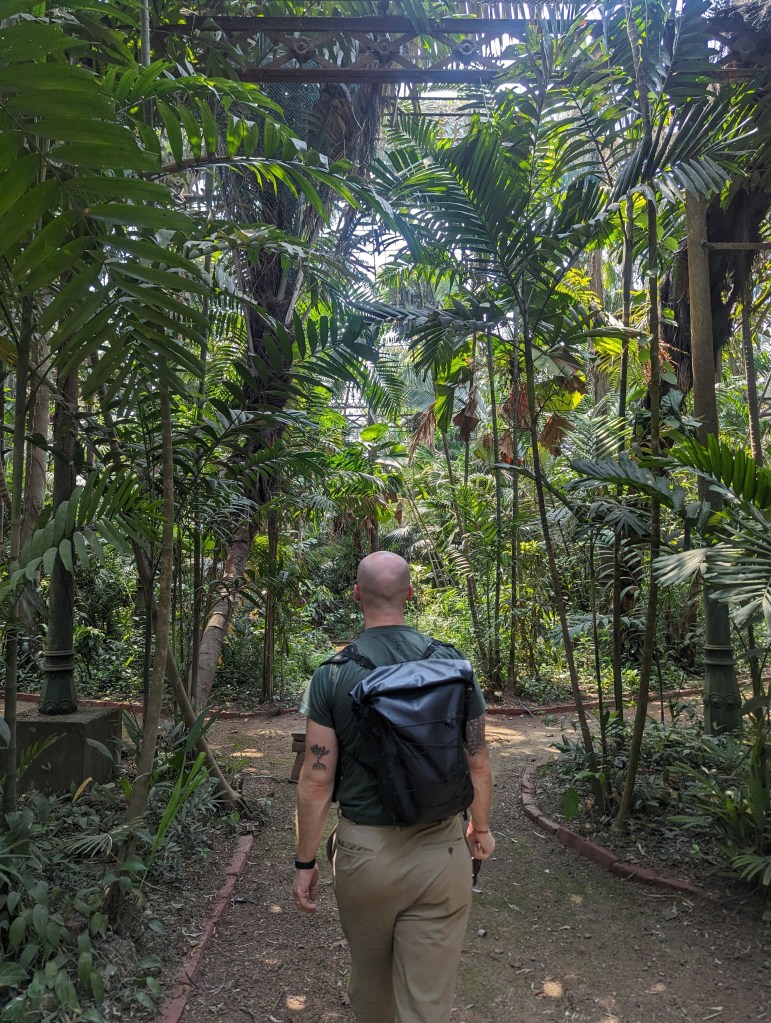
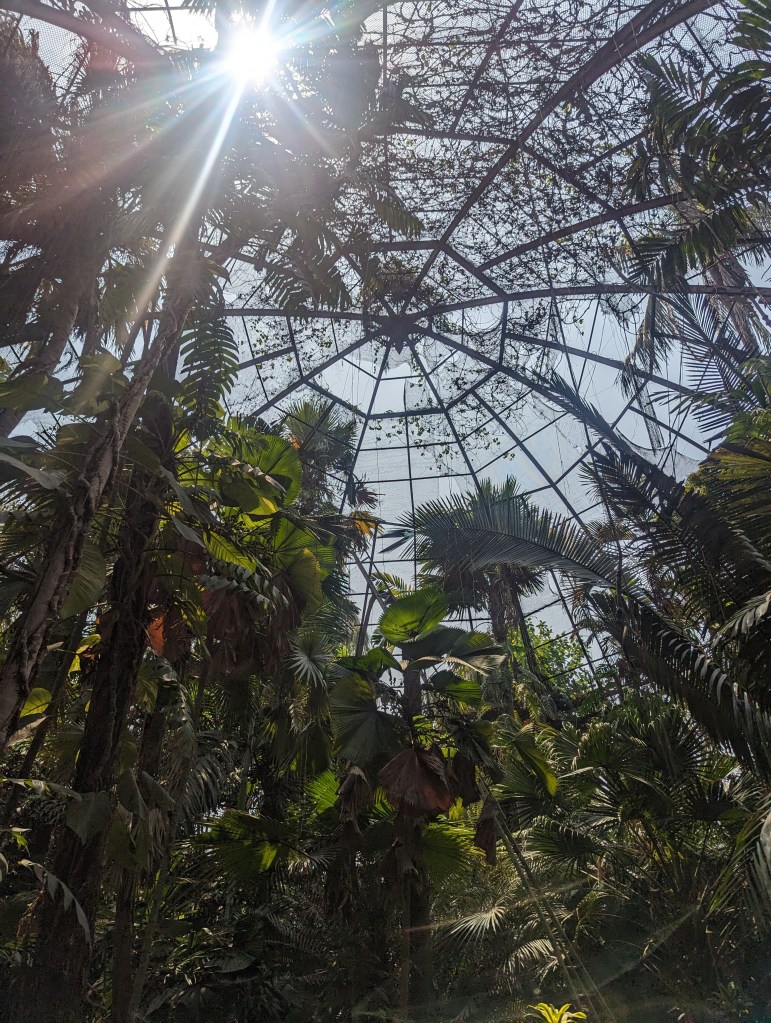

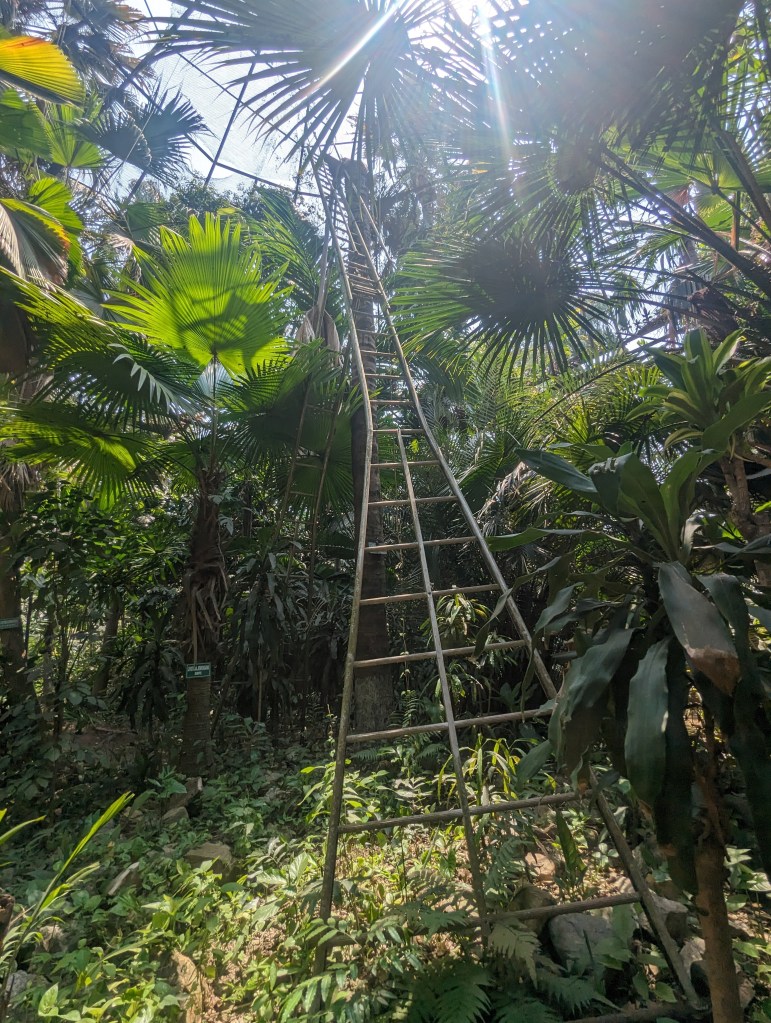
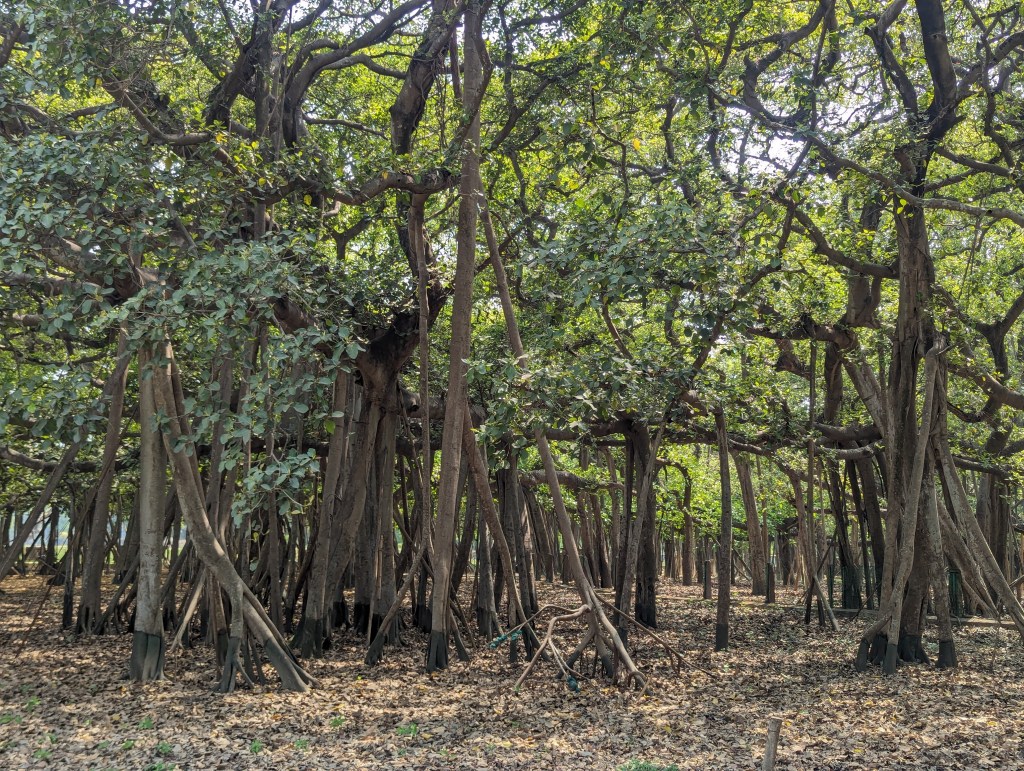
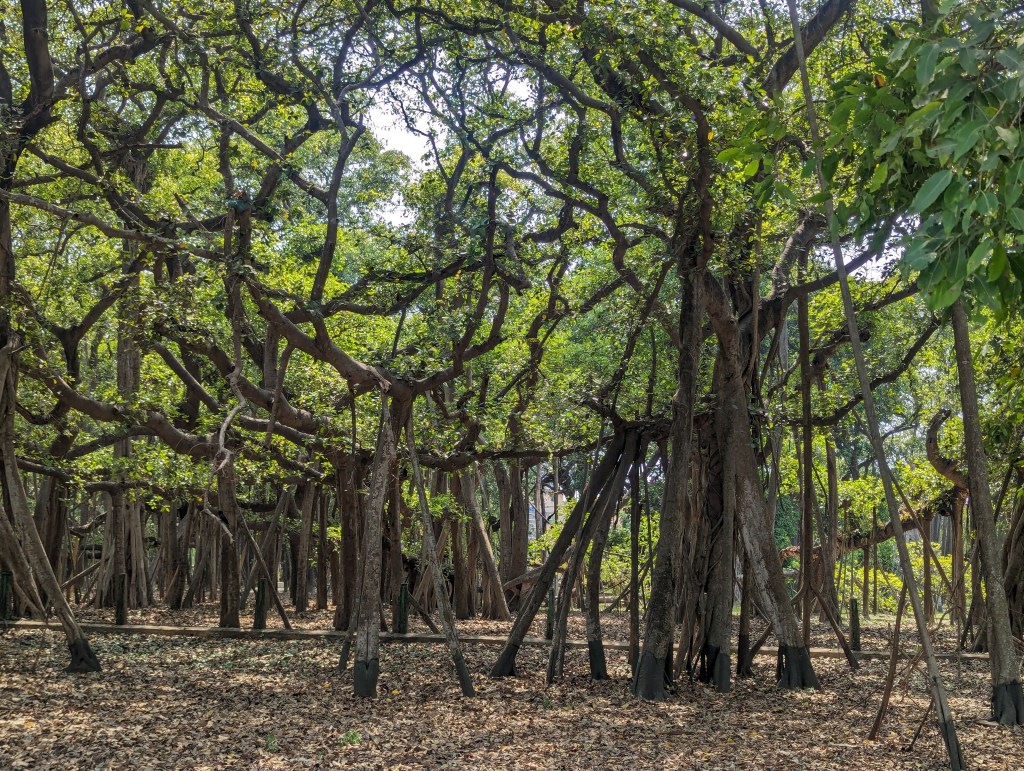
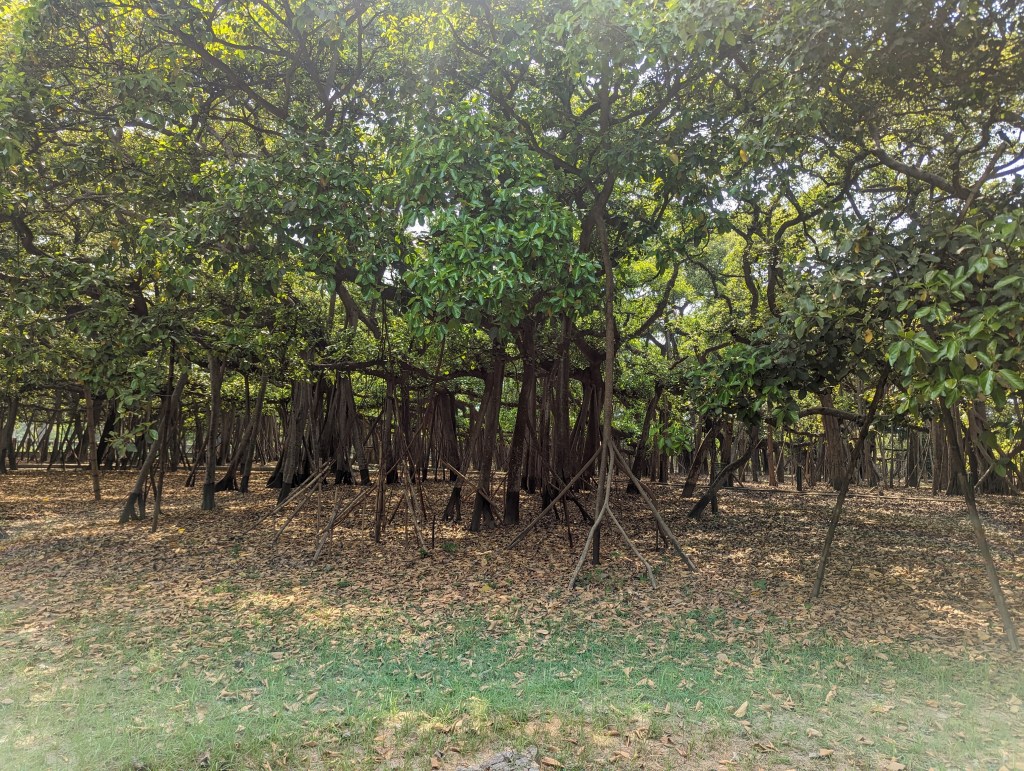
The parks main attraction was, however, the world’s largest Banyan tree. The tree was over 250 years old and had countless (not literally, I’ve just forgotten the number) prop roots that had grown from its fanning branches into the earth. The main trunk had actually succumbed to a fungal infection in the early 1900s, but in some ways that only added to its magic as it was impossible to get a sense of the tree as a single plant but seemed rather to be an interconnected forest of branches, roots and leaves.
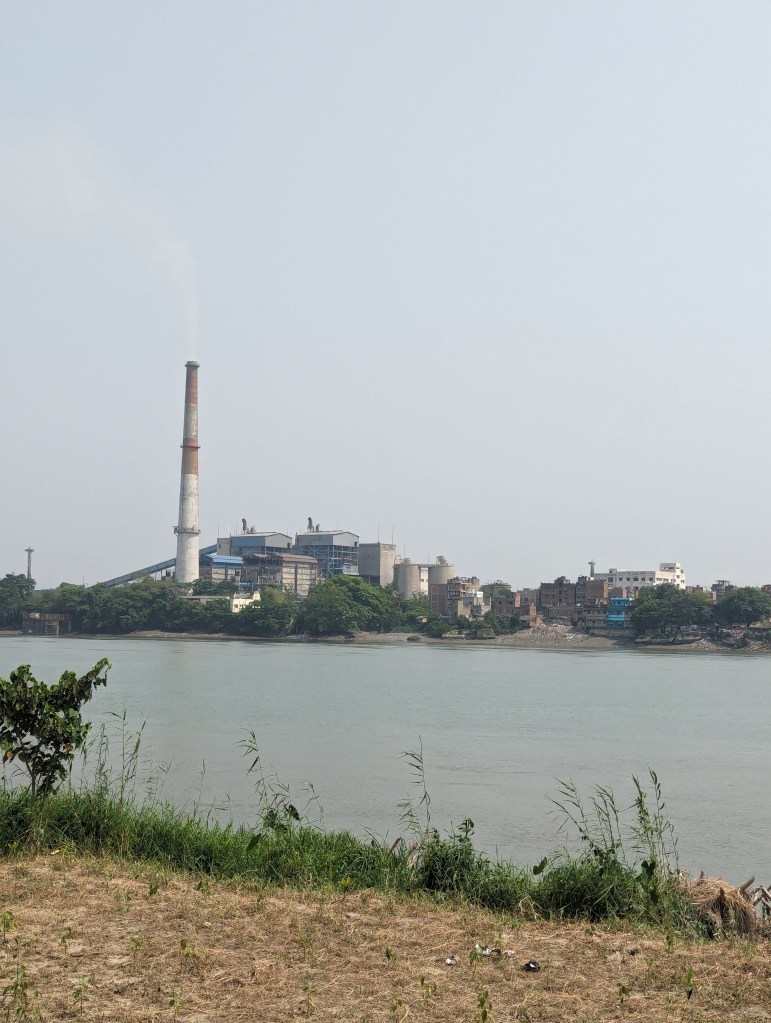
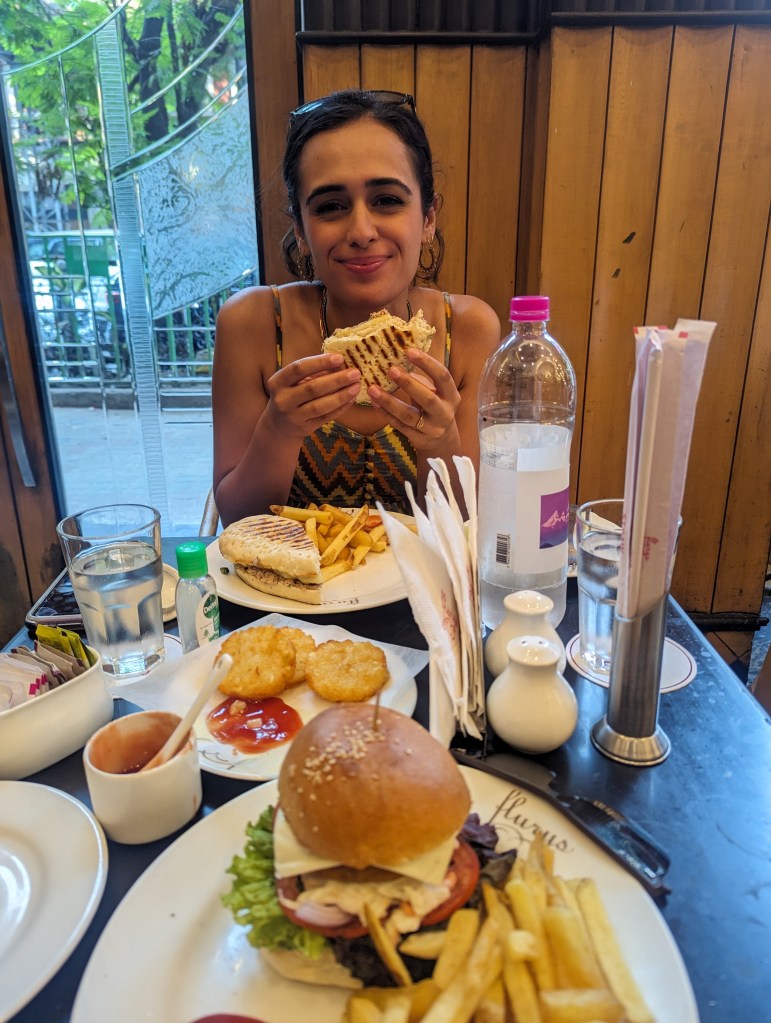
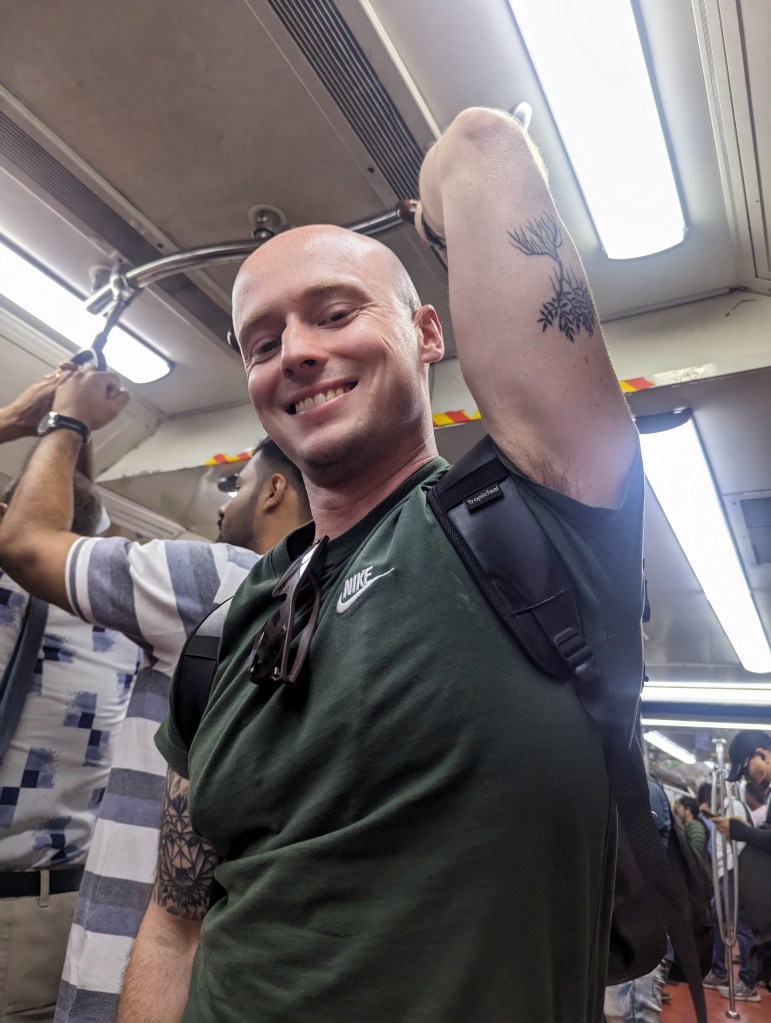
The day had reached its peak heat by the time we left the gardens, and we jumped into an Uber and made our way back across the Hooghly river to Park Street. We popped into Flury’s for lunch for the third time, smitten with its freezing air-con, reliably good food and handy location for the metro. Once we’d eaten and gone to a local bookshop to buy a journal each for our upcoming silent retreat (only two weeks away!), we caught the metro back to Shyambazar and to the hotel.

The heat in Calcutta has been something else, even compared to the heat of the summer in Rajasthan and Uttar Pradesh. It’s sapping, so often we’ve found that we can only have an morning or an afternoon out in the city before it gets too hot. Wednesday was no exception, and we spent the remaining afternoon and evening in the hotel reading, tutoring, lying around, and eating sushi and noodles we had ordered in via Zomato.
And so, we still have another three full days in Calcutta, though only one left in Calcutta Bungalow before we move to a different hotel in the south (the reason for this is due to changing plans that are too boring to elaborate on). After those three days, which will make up the content of the next blog, we will be taking our first flight for over a month to the tea-hills of Darjeeling where it is forecast for rain every day. In some ways, we are looking forward to it!
Until then,
Rob xxx
 Rob's India & Nepal Blog
Leave a comment