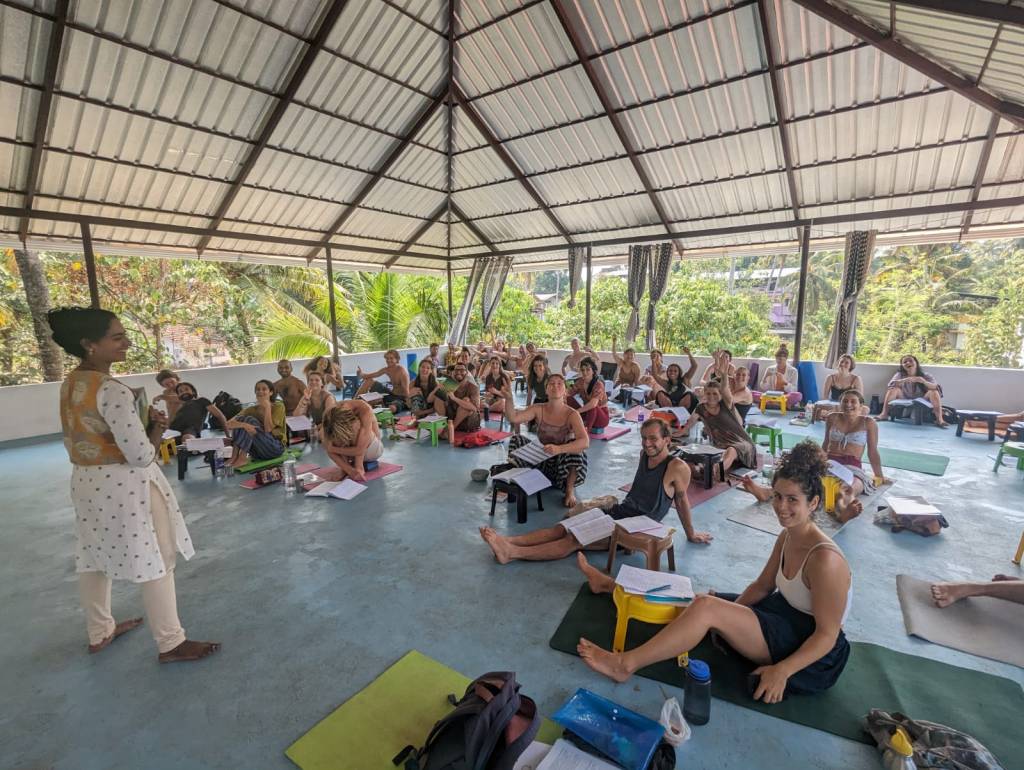
After our first two weeks of yoga teacher training, we’ve settled into the routine of the school. That said, the 5.30am alarm doesn’t get easier with practice and the 4 hours of yoga a day has a cumulative effect on the body so that, by Thursday or Friday, the stairs to the upstairs yoga shala feels like an effort, let alone 2 hours of Ashtanga. Life at the yoga school hinges around three main timings in the day (excluding meals). We have the Hatha Yoga class from 6am-8am, theory class from 10am-1pm, and Ashtanga Yoga class from 4pm-6pm. Hatha style yoga tends to be relatively slow paced and interspersed with plenty of rests, so suits the very early start. Ashtanga yoga follows a set sequence of challenging poses with instructions on where to move, look and even how to breathe.
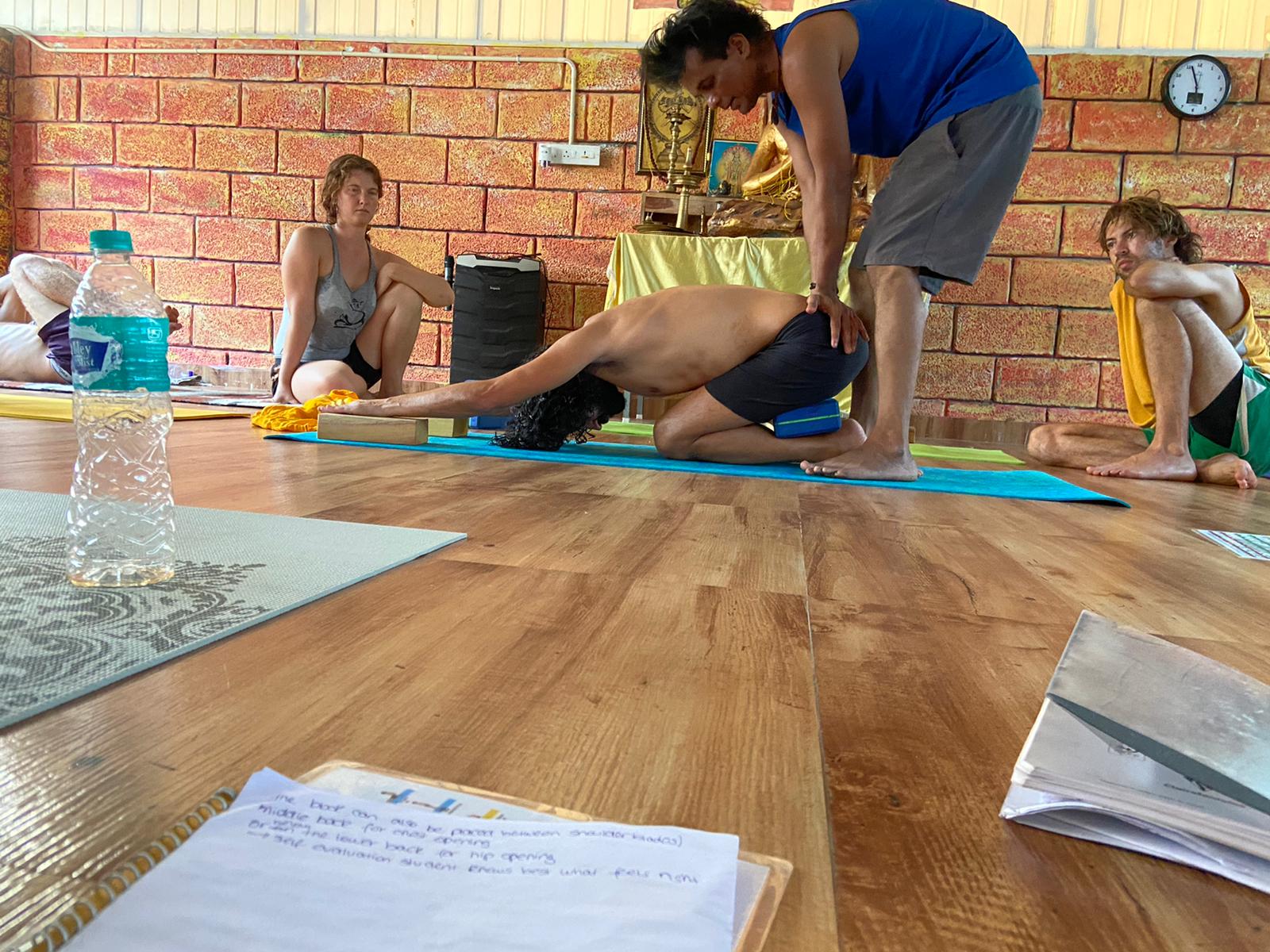
Given we are a group of 45, we have been split between the upstairs and downstairs yoga shalas. This week we are back to the downstairs shala with the yoga teacher that has, it is fair to say, split opinion. It’s not a yoga instructing style seen much in the UK, with his hands clasped behind his marching between the rows of students and commanding poses, rather than suggesting or explaining them. He also has made some interesting medical claims, including relating a exaggerated curve in the neck to a likely enlarged prostate. This aside, he is entertaining and you can’t fault his dedication to yoga.
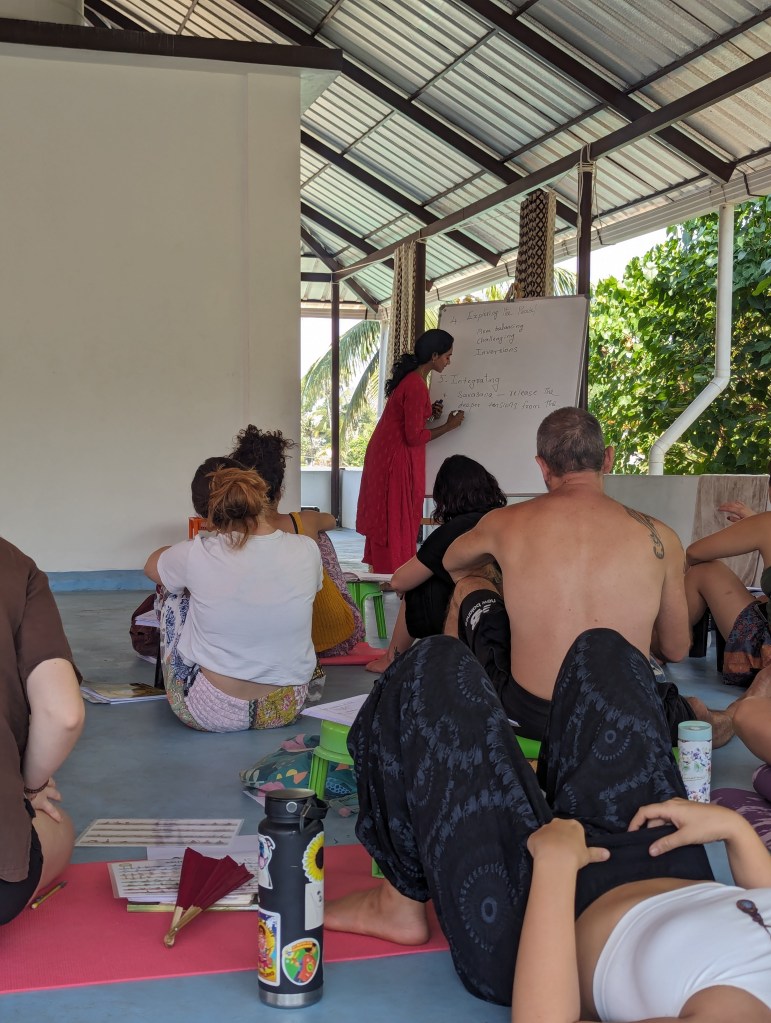
The theory teaching is led by Dr Malathi, the owner (with her husband, the manager) of the yoga school. Malathi is a ayurvedic doctor, which is based on the ancient Indian Vedic manuscripts (more on this later). Our lessons cover a range of topics from yoga philosophy to basic anatomy to an overview of the Hindu belief system, often swinging a little wildly between them. The class is taken in the upstairs yoga shala, so sitting cross-legged on the floor for 3 hours in the Keralan heat can be a challenge. That said, Malathi clearly puts a huge amount of time and effort into the school, and she is roundly liked and respected by the students.
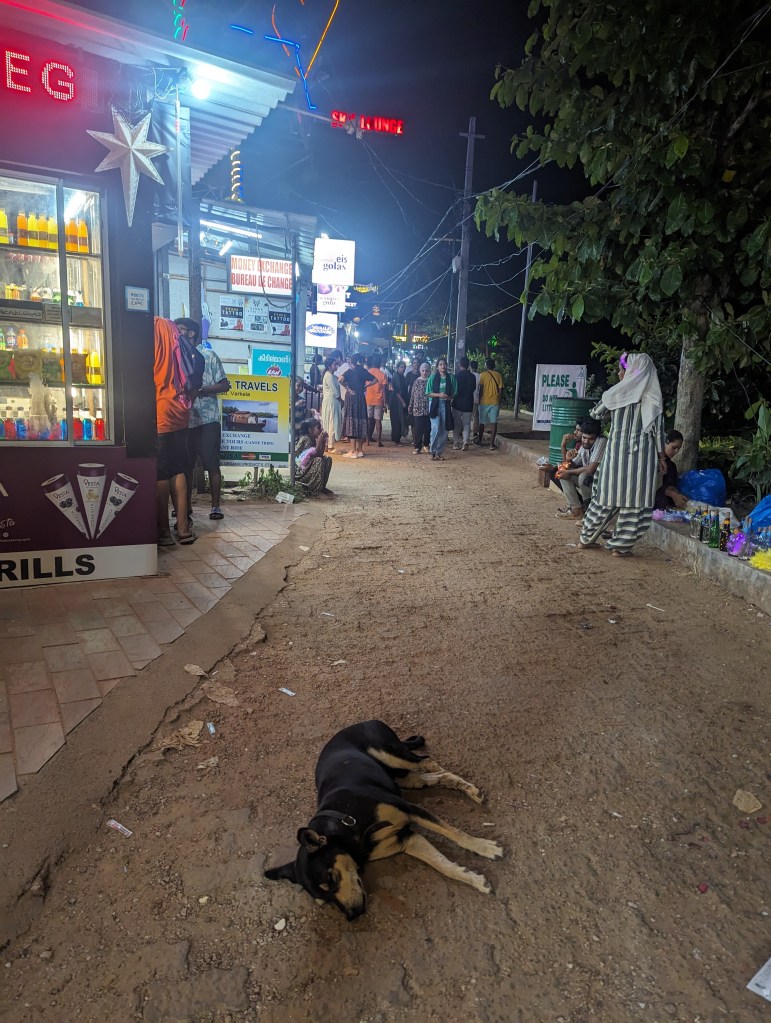
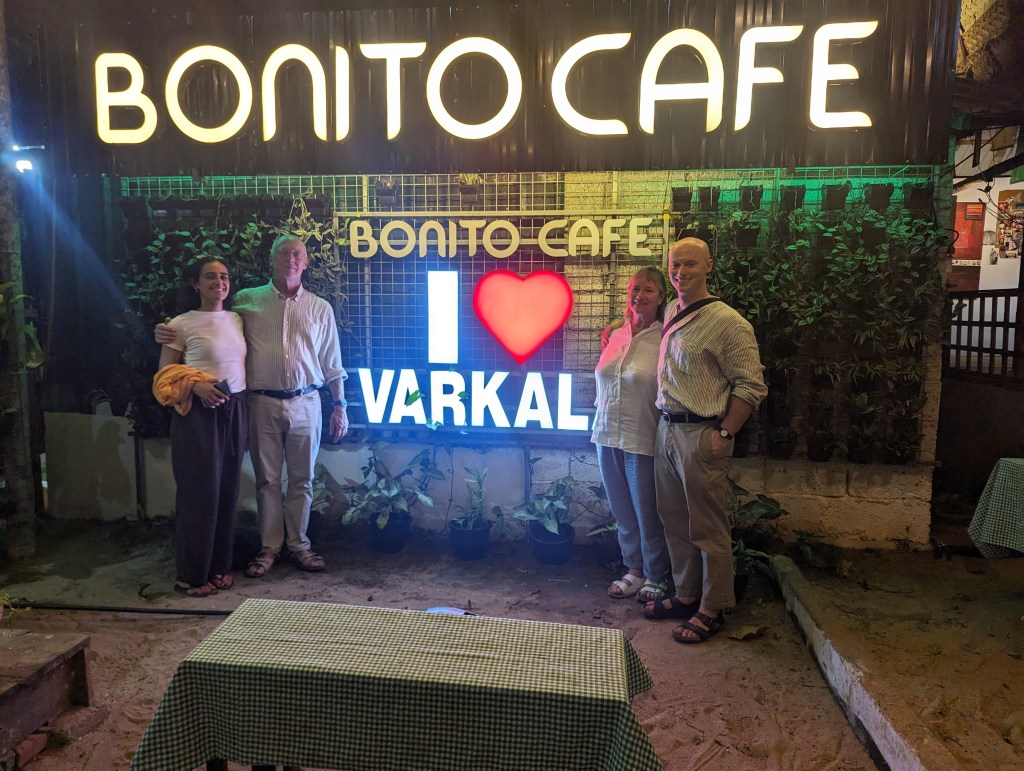
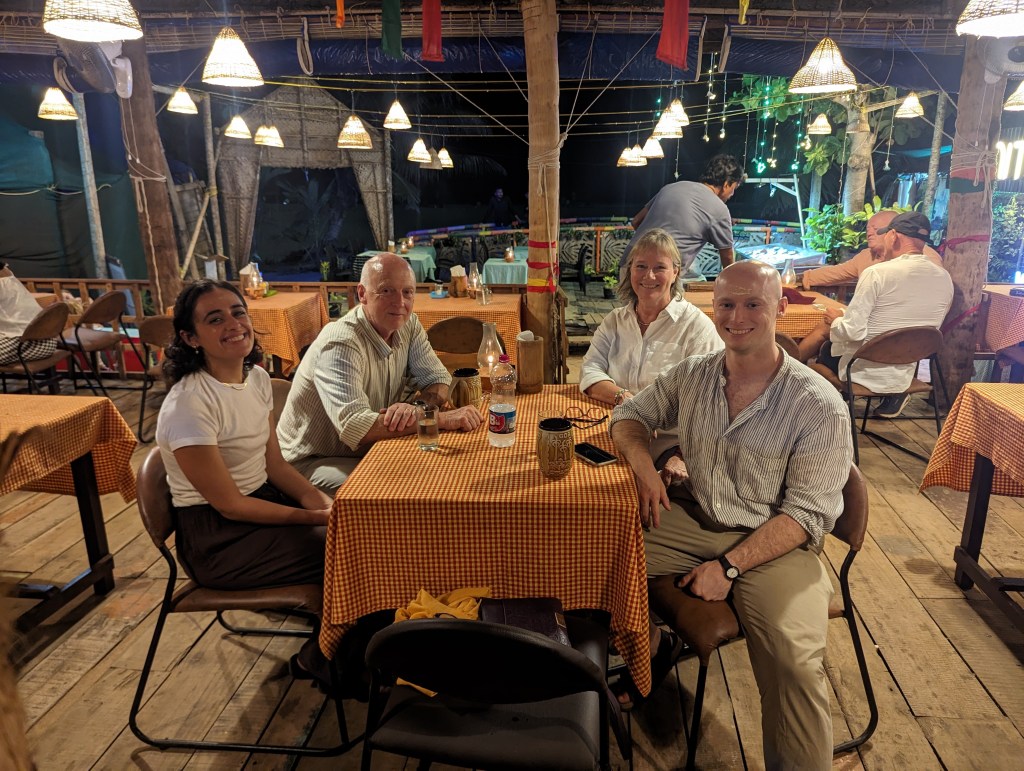
As I mentioned briefly in the previous blog, Mum and Dad had spent a week in Varkala and so we planned to meet them Monday evening to go to the local temple – we had been with Malathi once before so knew the ropes enough to not be obviously clueless. The temple is made up to shrines to a variety of Hindu dieties (Ganesha, Hanuman, Nagaraja, Shiva) around the outside, with an ancient inner temple to the protector god Vishnu. At 6.30pm, the priests process around the outer shrines and open them to allow people to pray to the dieties and give offerings. The procession then heads into the inner sanctum where a large metal door is opened to reveal Vishnu. The whole thing is accompanied by drums, horns, and a lot of people chanting different mantras. The experience is overwhelming and difficult to describe, but wonderful to experience. After, we had dinner at a local restaurant and said our goodbyes until June.
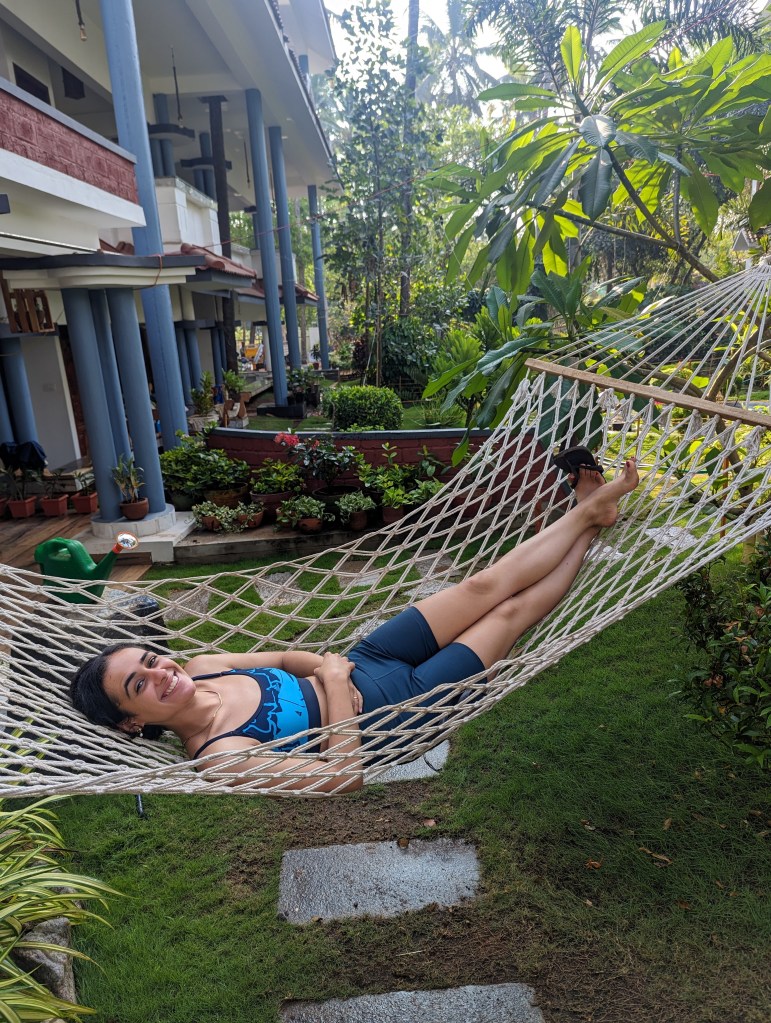
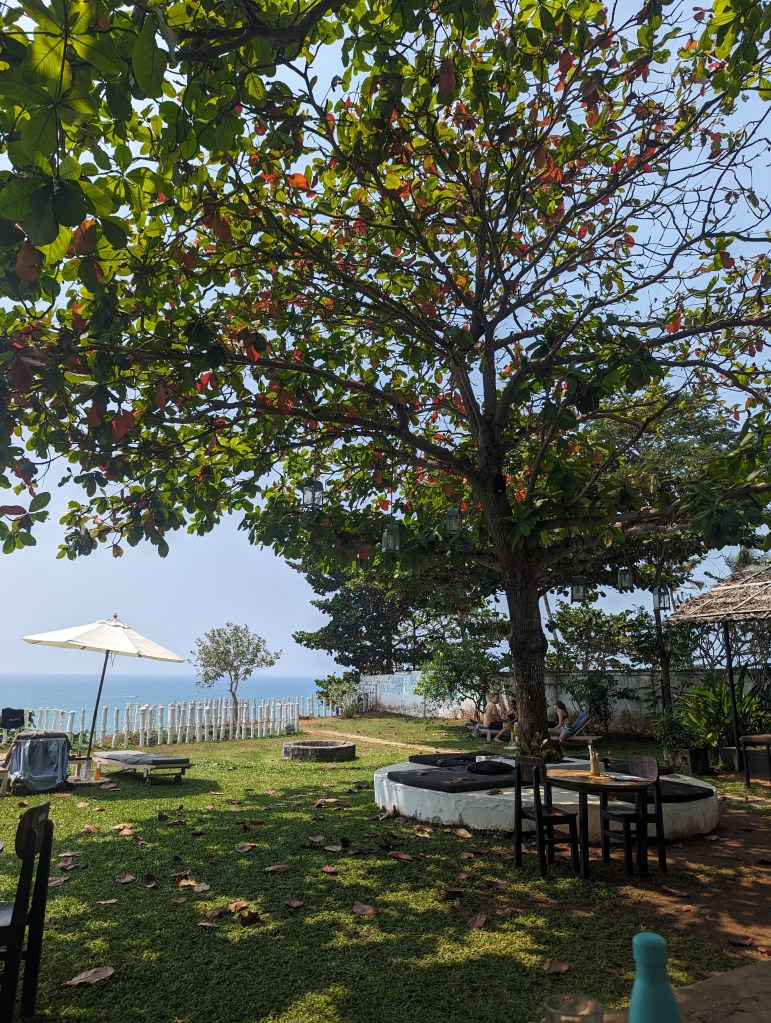
The following day we had a day of Vipasana. Vipasana is the practice of a silent meditation, where no phones, books, music, conversation, talking etc., is allowed. We also fasted except from lemon water and a banana from the previous night to the following morning. The plan was to go to the beach at 5.50am to watch the sunrise, then return to the beach at 6pm to watch the sun go down. The rest of the day was your own. It’s remarkable how quickly you run out of things to do when you have no phone, no books and no-one to talk to. By 9.30am I was looking at my watch every 2 minutes as I sat out on our balcony, wondering how I was ever going to see the next 8 hours out. But, gradually, you begin to let go of watching the clock and instead watch the world go by. After a busy 3 weeks, it was nice to lie in a hammock and watch the birds in the trees.
By the time the sunset came around, you began to see how people can do Vipasana for 10 day stretches, bar perhaps the fasting which I wasn’t a fan of. For the sunset meditation, we were each given a lemon into which we placed our all the things we wanted to discard (mentally) then ripped it apart and squeezed the juice out. It was a nice visualisation exercise whilst watching the sun go down, though Malathi seemed to suggest that it was some kind of Vedic black magic that we shouldn’t tell people (especially the police, she said) she’d taught us.
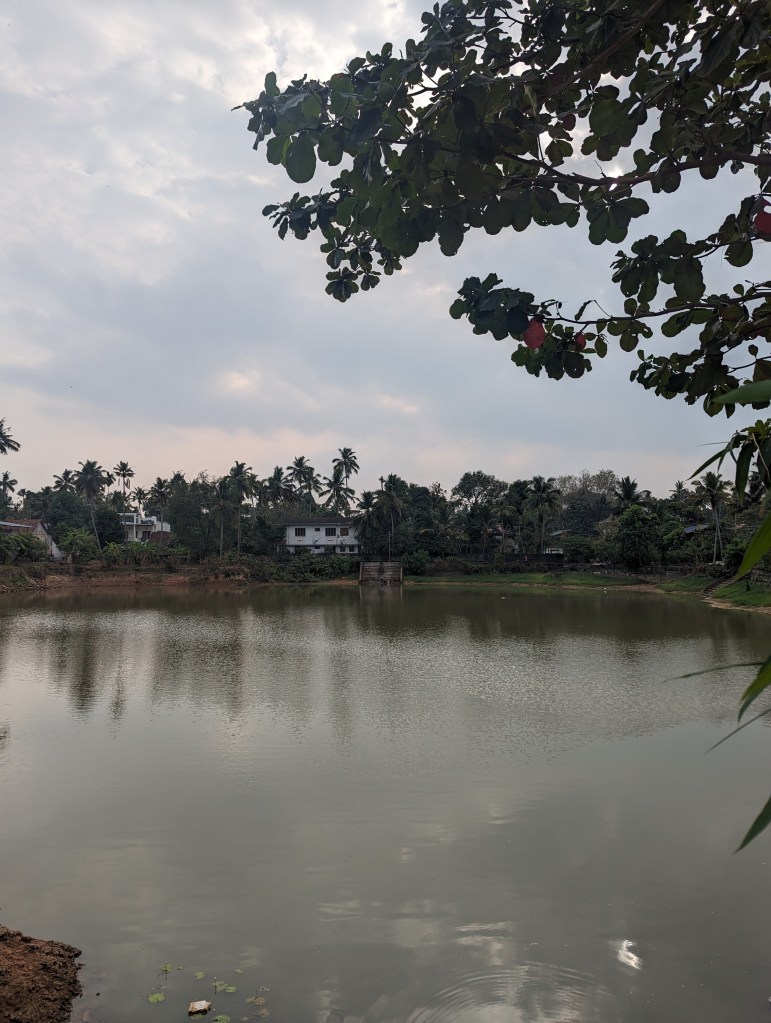
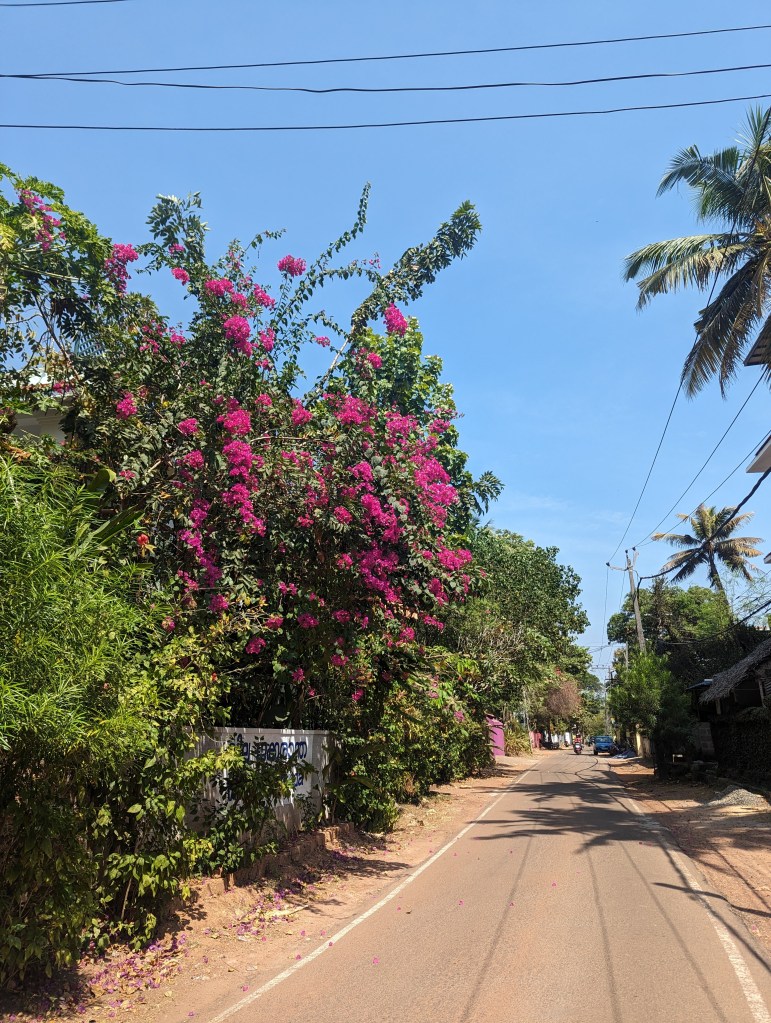
The rest of the week proceeded much as the previous two. I paid for an ayurvedic consultant with Malathi, which involves several questionnaires that categorise your “dosha” (basically your prevailing character) as a Vata (air + space), Pitta (fire + water), or Kapha (earth + water). It turns out I was primarily Pitta with a bit of Kapha, which basically means I am ambitious and competitive, but also have a hard time getting up in the morning – not entirely inaccurate. Malathi gave me some recommendations to balance my dosha, and suggested the use of coconut oil to cool the skin, which sounded quite nice at least. Otherwise, the weekend was spent planning our 90 minute yoga class we were scheduled to teach the following week as part of our assessment, a couple of well deserved beers, and some well needed rest.
Until next week,
Rob xx

 Rob's India & Nepal Blog
Leave a comment